

Guides · Chiang Mai
10 Top Things to Do in Chiang Mai

CEO and co-founder
This guide ranks the 10 top things to do in Chiang Mai - the temples, mountain shrines, ethical elephant experiences, and markets that genuinely deserve a place on your itinerary whether you have a weekend or a full week in Thailand's northern capital. Each entry includes the exact address, nearest transport stop, and a practical Pro Tip drawn from how locals and seasoned visitors actually navigate the city in 2026.
Chiang Mai sits 700 km north of Bangkok in a fertile valley ringed by mountains. The compact Old City (Mueang Kao) inside its 700-year-old square moat holds most of the major temples. Doi Suthep mountain temple sits 1000 metres above the city to the west; Doi Inthanon (Thailand's tallest mountain) lies 60 km south. Ethical elephant sanctuaries operate in the Mae Tang valley to the north. Plan 4-5 days minimum.
We have ordered the list to combine signature temples (Doi Suthep, Wat Phra Singh), mountain landscapes, hands-on cultural experiences (cooking class, Elephant Nature Park), and the famous walking street markets. Rent a scooter for flexibility or use songthaew shared trucks for the cheapest transport.
1Doi Suthep - The Mountain Temple Above Chiang Mai
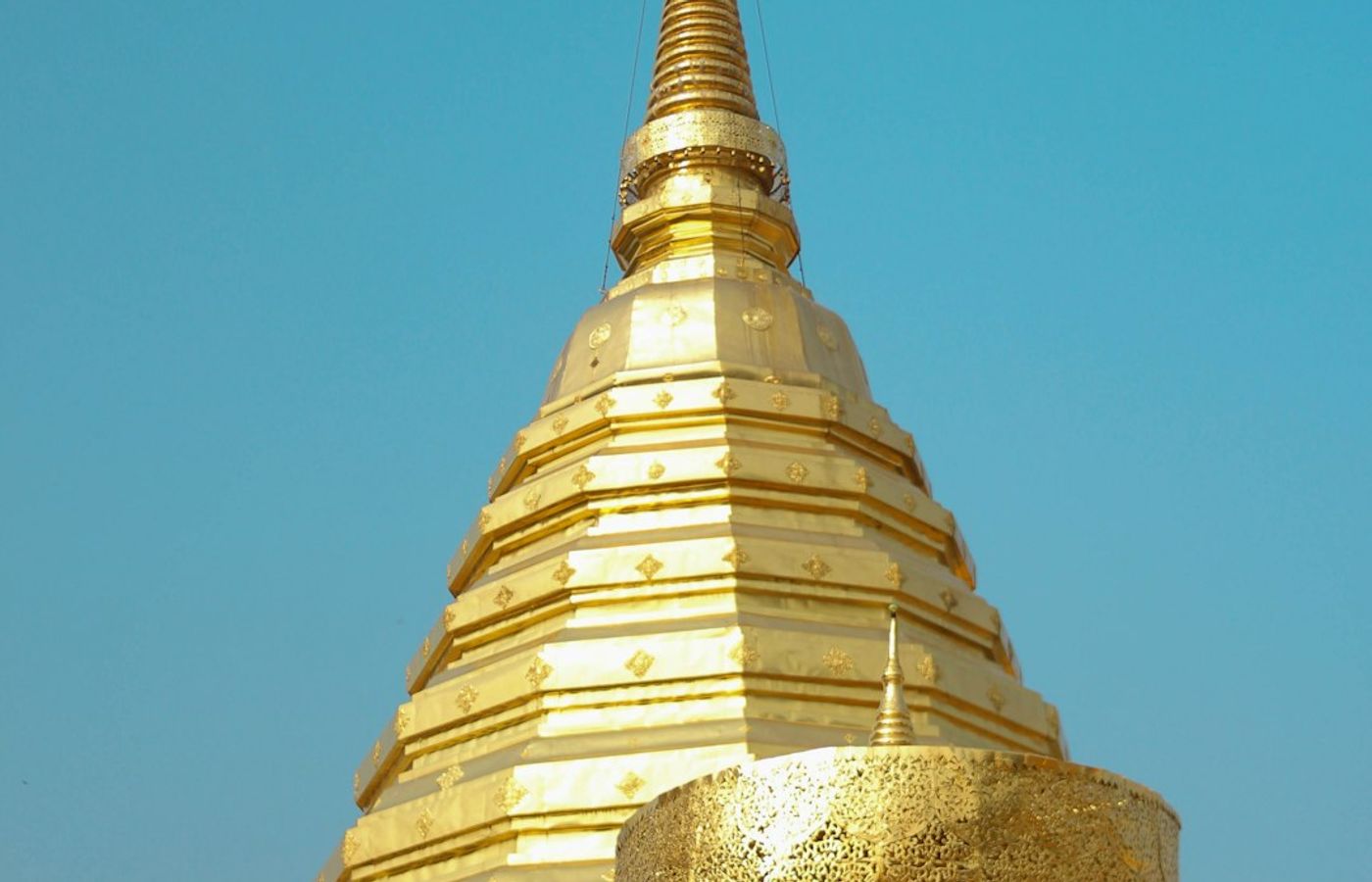

Wat Phra That Doi Suthep crowns a 1080-metre forested mountain 15 km west of the Old City and is the spiritual heart of northern Thailand. Founded in 1383 according to legend - a white elephant carrying a Buddha relic stopped here, trumpeted three times, and died, marking the site as sacred. The 306-step staircase guarded by 2 mythical naga serpents climbs from the car park to the temple platform; a cable car is the easier option.
The central golden chedi houses the Buddha relic. The temple platform offers a panoramic view east over Chiang Mai. Songthaew red trucks run from Chang Phueak Gate (50 THB each way) leaving when full. Cable car 50 THB. Temple entry 30 THB foreigners. Open daily 06:00-18:00. Dress code applies - covered shoulders and knees, sarongs available at the gate.
Pro Tip: Arrive at 07:00 for the morning monk chanting in the inner hall - free to observe respectfully and the most authentic Buddhist experience in Chiang Mai. The view is also clearest before the noon haze.
2Old City Chiang Mai - Inside the Square Moat
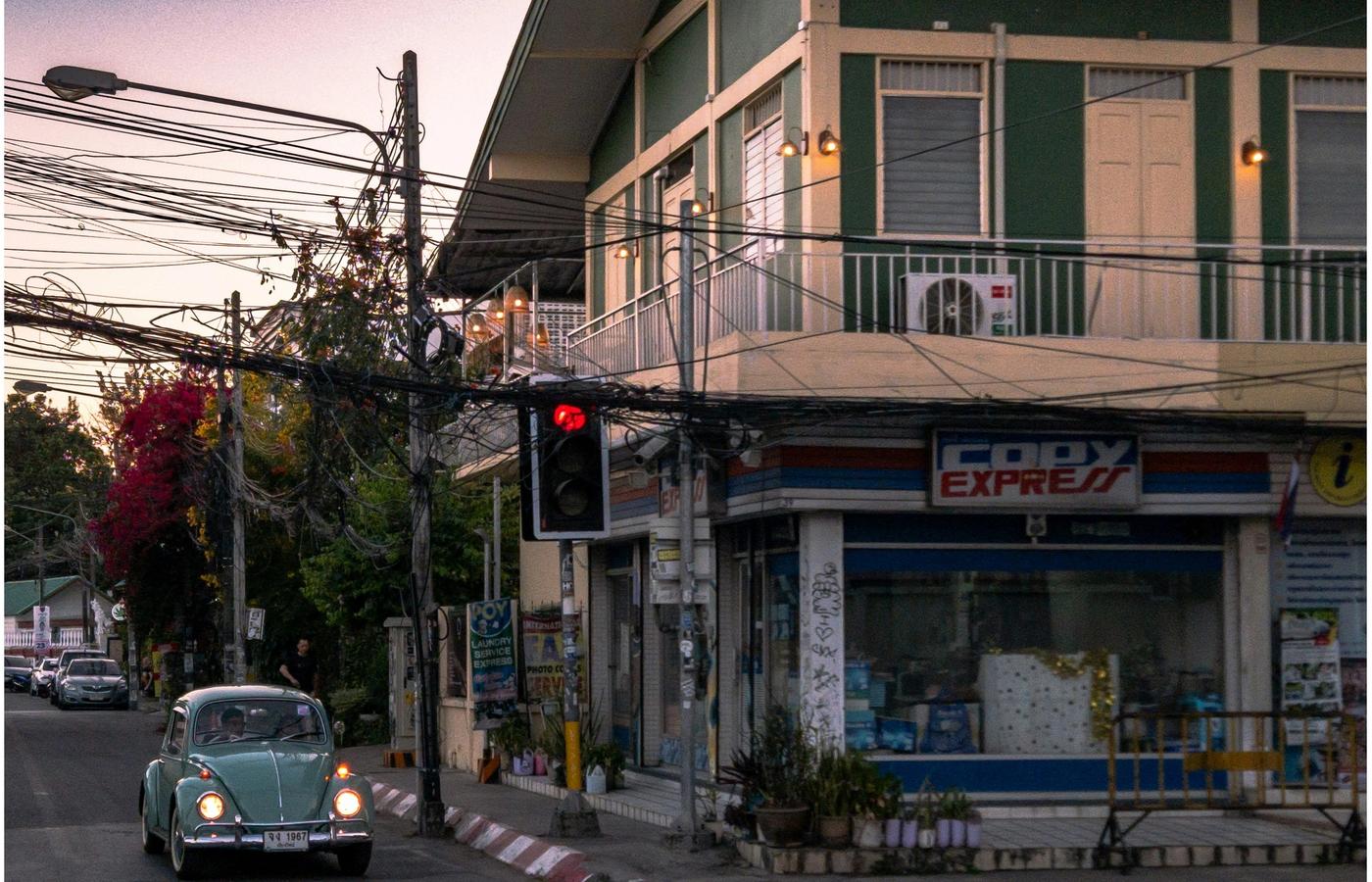

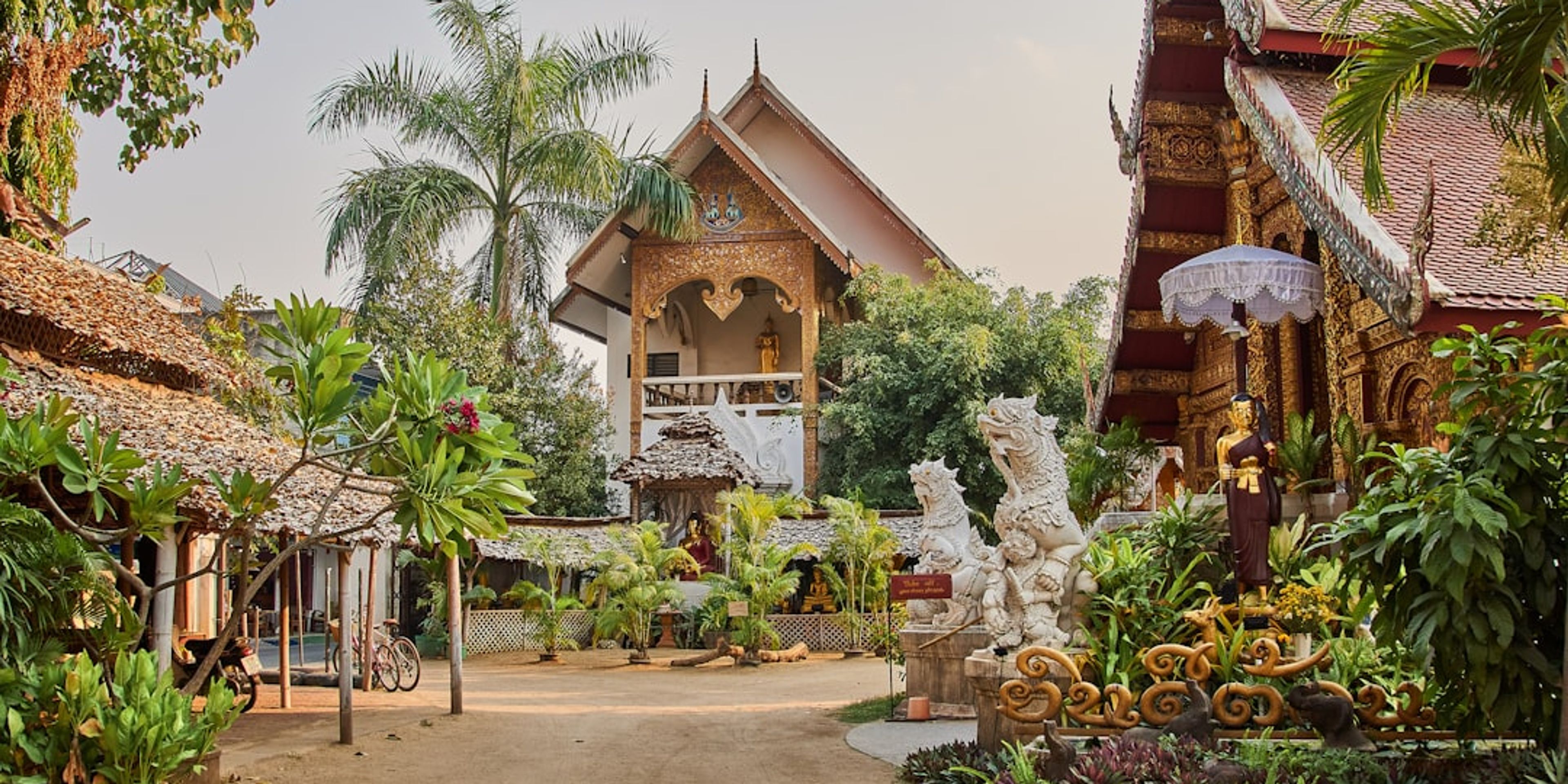
Chiang Mai's Old City (Mueang Kao) is a perfect 1.5 km square enclosed by a moat and remaining sections of the 700-year-old defensive wall. King Mangrai founded the city as the capital of the Lanna kingdom in 1296. The four gates (Tha Phae east, Suan Dok west, Chiang Mai south, Chang Phueak north) and 4 corner bastions still mark the original urban plan. Around 30 historic Lanna-style temples fill the interior streets.
The compact district is walkable end-to-end in 25 minutes. Key sights include Wat Chedi Luang, Wat Phra Singh, the Three Kings Monument on the central square, and the Lanna Folklife Museum. Tha Phae Gate on the east side is the social hub where weekend walking streets begin. Most temples are free; donations welcomed. Allow 3-4 hours for a slow loop.
Pro Tip: Walk the inner moat path (Si Phum Road) anticlockwise starting from Tha Phae Gate at sunset - the gates and bastions are floodlit and the temple silhouettes are at their most photogenic from 18:00.

3Sunday Walking Street - Chiang Mai's Best Night Market
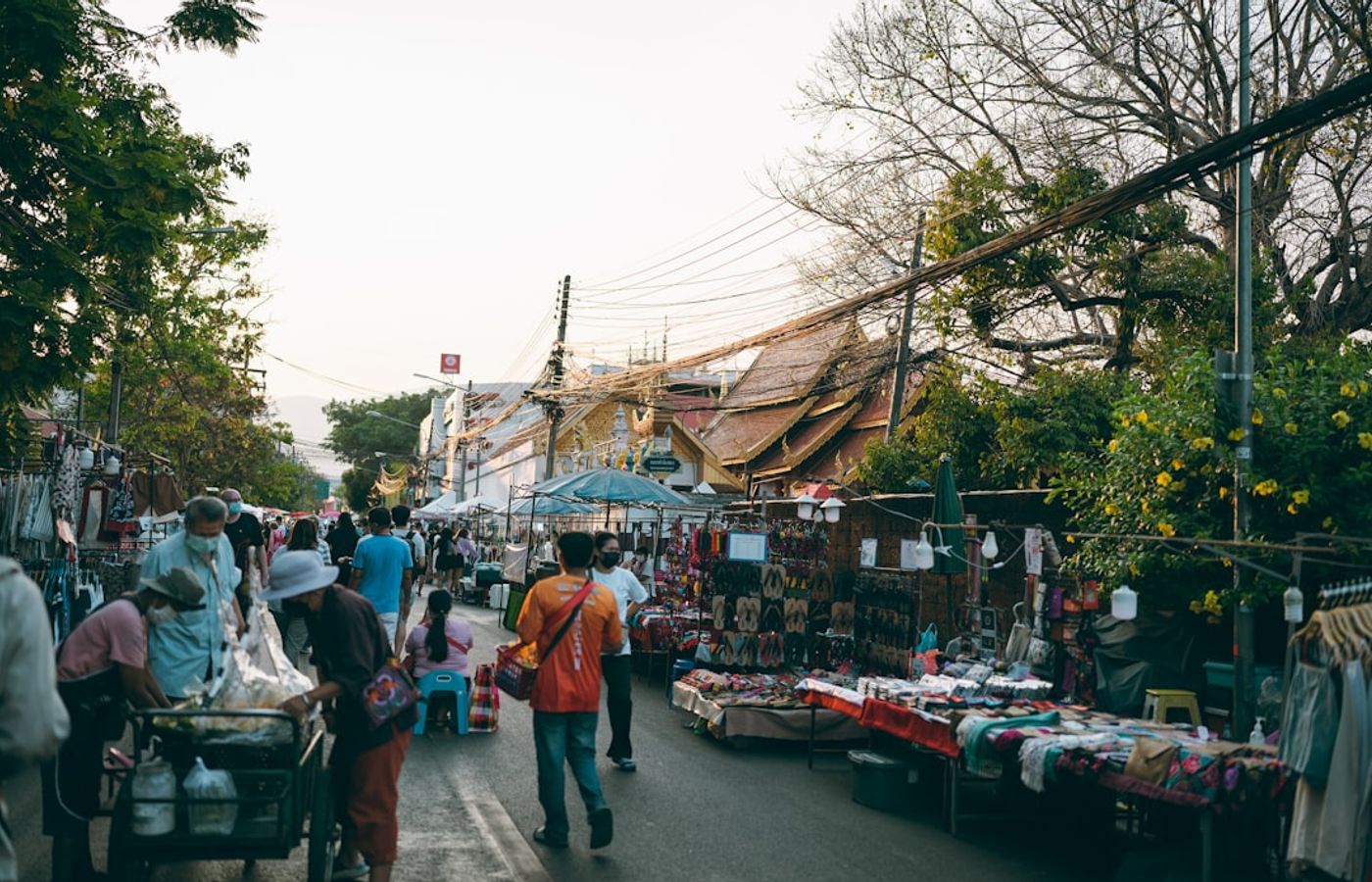

The Sunday Walking Street (Ratchadamnoen Road) is Chiang Mai's largest weekly market - a 1 km pedestrianised stretch through the Old City from Tha Phae Gate to Wat Phra Singh. From 16:00 to 22:30 every Sunday, around 1500 stalls fill the street selling Lanna handicrafts, silver jewellery, hand-woven textiles, street food, and original artwork. Live musicians and traditional dance performances run continuously.
Food stalls cluster in the temple courtyards along the route - khao soi (Chiang Mai coconut curry noodles), sai oua (northern Thai sausage), mango sticky rice, and grilled river prawns are the staples. Prices are tourist-leaning but still cheap (30-100 THB per dish). Free to enter; cash only at most stalls. The crowds are densest 19:00-21:00 - walk against the flow from the western end for shorter queues at popular stalls.
Pro Tip: The Saturday Walking Street on Wualai Road south of the Old City is significantly less crowded and features Karen and hill-tribe silver work not found at the Sunday market. Both run weekly so do one then the other if you stay long enough.
4Elephant Nature Park - Ethical Elephant Sanctuary
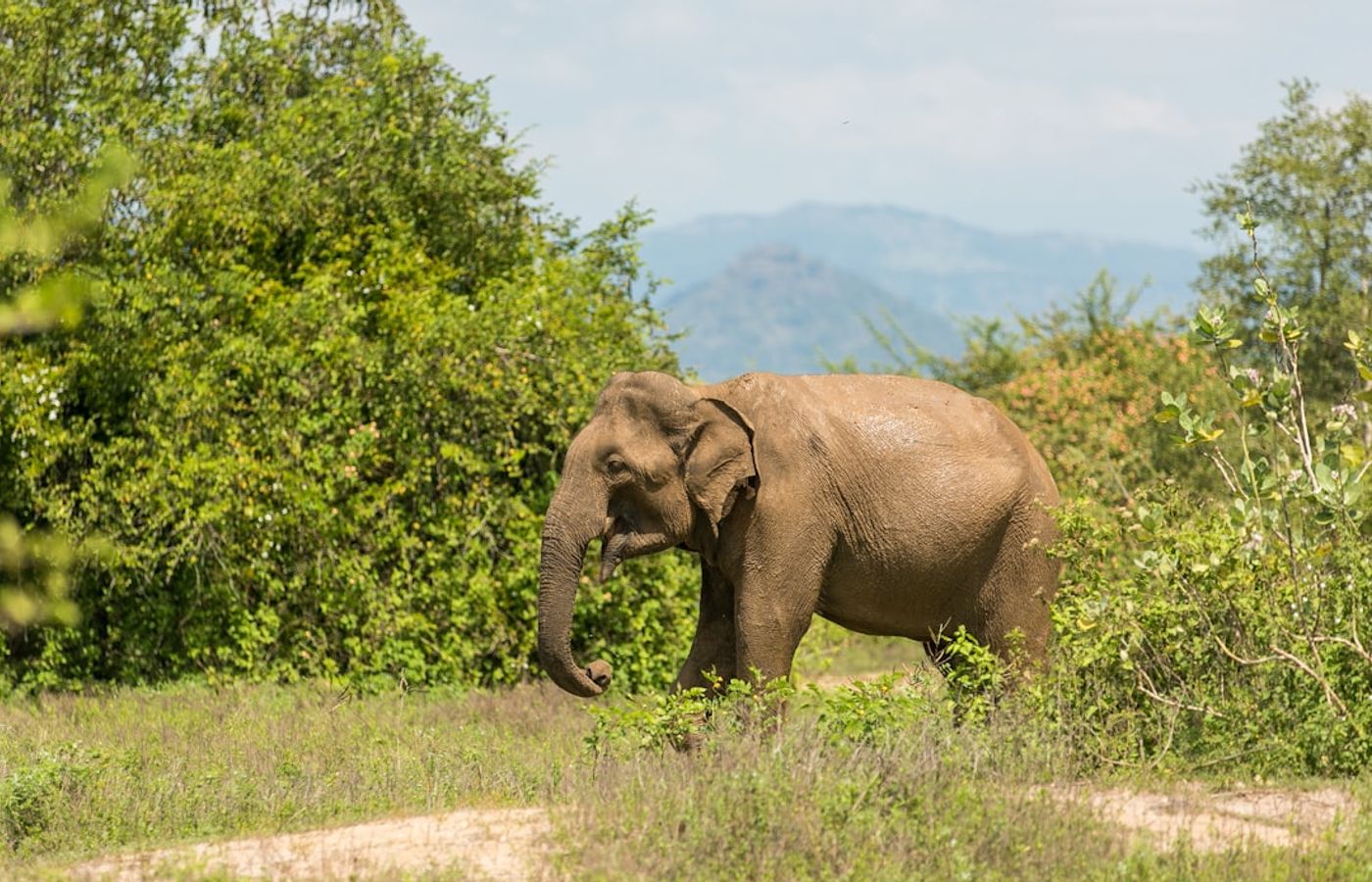
Founded in 1995 by Lek Chailert (a TIME magazine Hero of Asia), Elephant Nature Park covers 100 hectares of valley land 60 km north of Chiang Mai and is South-east Asia's most respected ethical elephant sanctuary. The park houses approximately 100 rescued elephants alongside dogs, cats, and water buffalo. Strict rules apply: no riding, no shows, no bullhooks, no chains. Visitors observe, feed, and walk alongside the elephants but never sit on them.
Programmes range from half-day visits (2500 THB) through the Pamper a Pachyderm full-day (3500 THB) to multi-day volunteer stays. All include transport from Chiang Mai, vegetarian buffet lunch, and an English-speaking guide. Book directly via elephantnaturepark.org 2-4 weeks ahead. The park is closed to riding-based visitors and refuses partnerships with venues that still allow riding.
Pro Tip: Choose the half-day morning visit (07:30-13:00) rather than full-day - same essential experience, half the cost, and you skip the often crowded afternoon group activities. Pickup from your Chiang Mai hotel is included.
5Wat Chedi Luang - The Old City's Ancient Stupa
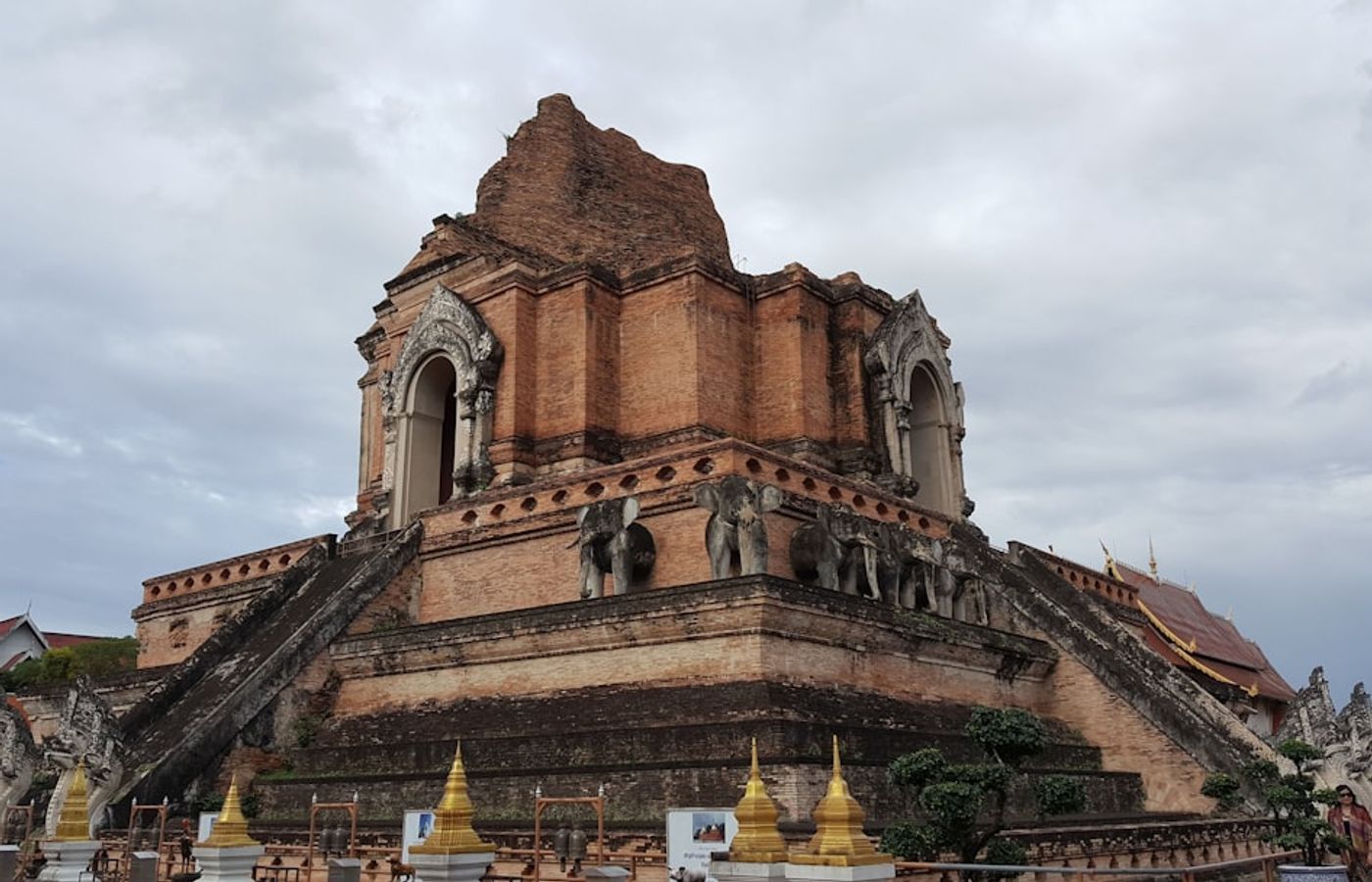
Wat Chedi Luang dates from 1391 and contains one of the largest religious monuments in northern Thailand - a 60-metre stupa (chedi) that originally housed the famous Emerald Buddha now in Bangkok's Wat Phra Kaew. A 1545 earthquake destroyed the top third of the structure; the remains tower over the Old City's centre, partially restored with the rough brick face visible. The temple grounds also hold the 700-year-old gum tree at the western edge and the city pillar (Lak Mueang).
Monk Chat sessions in the side hall (Wednesday and Sunday 17:00-19:00) let visitors talk informally with novice monks practising English - free, fascinating, and a unique cultural exchange. The main viharn (assembly hall) contains a 8-metre standing Buddha and intricate Lanna-style murals. Open daily 06:00-18:00; small entry fee 50 THB foreigners. Dress code applies.
Pro Tip: Time your visit for a Wednesday or Sunday afternoon to participate in Monk Chat - the novices are typically university-age and answer questions about Buddhism, monastic life, and Thailand. Photos are allowed only after asking permission.
6Wat Phra Singh - Chiang Mai's Most Revered Temple
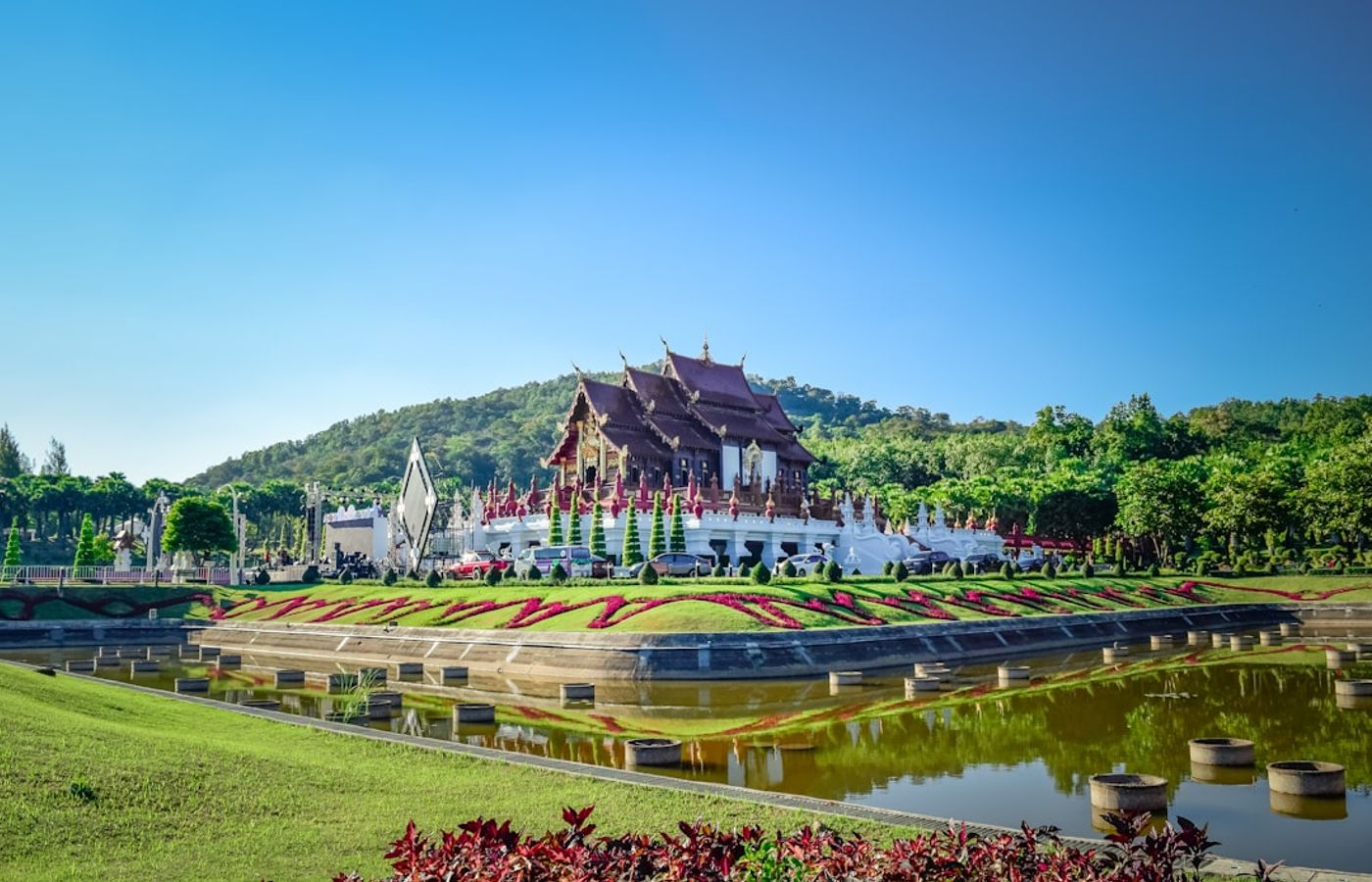
Wat Phra Singh (Temple of the Lion Buddha) at the western end of the Old City was founded in 1345 and is Chiang Mai's most revered Buddhist temple. The complex includes Wat Phra Singh proper, the small Lai Kham viharn famous for its murals depicting Lanna daily life from the 1820s, and a Lanna-style library on stilts. The temple houses the Phra Buddha Sihing statue, considered the most important Buddha image in northern Thailand.
The Lai Kham viharn (1345, restored) is the architectural masterpiece - its murals on the inner walls are among the only surviving examples of Lanna painted decoration. The main chedi at the rear is gilded and reflects sunlight dramatically in the afternoon. Songkran (Thai New Year, April 13-15) sees the Phra Buddha Sihing paraded through the streets. Entry 40 THB; main grounds free. Open daily 06:00-17:30.
Pro Tip: The Lai Kham viharn is often missed by visitors who go straight to the main hall - it sits to the south of the main viharn and is the architectural and artistic highlight. Photography is allowed in the inner sanctum but flash is forbidden.
7Doi Inthanon - Thailand's Tallest Mountain
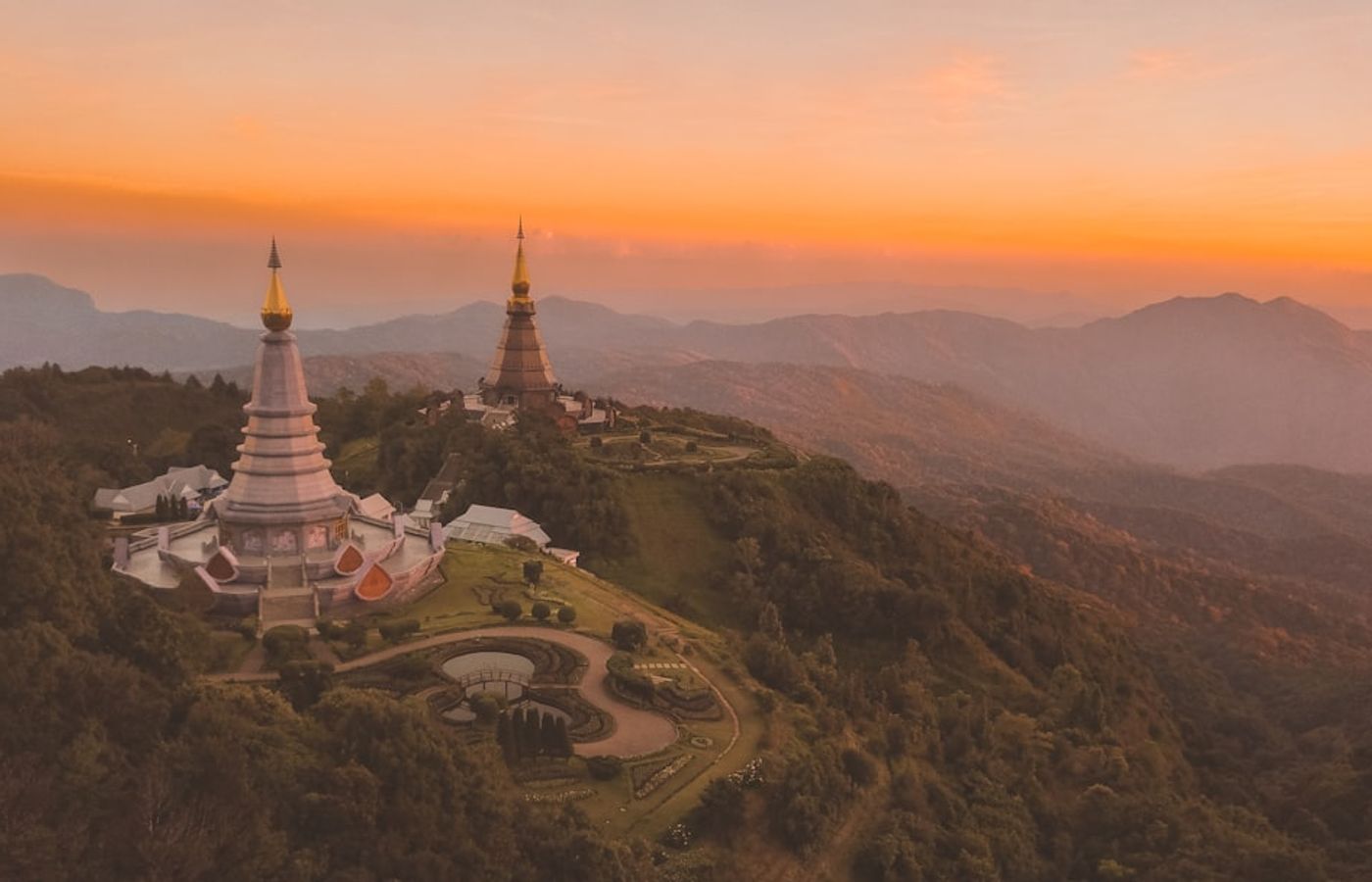
Doi Inthanon at 2565 metres is Thailand's tallest mountain and the centrepiece of Doi Inthanon National Park - a 482-square-km protected forest 60 km south-west of Chiang Mai. The summit holds the highest point in Thailand marker, a mossy cloud forest, and the twin chedis King Bhumibol and Queen Sirikit (built 1987 and 1992) standing on twin hills facing each other. The Royal Project agricultural station nearby has terraced flower gardens.
Standard day tours combine the summit, the twin chedis, Mae Klang Waterfall, the Royal Project gardens, and Wachirathan Waterfall in 8-10 hours. Park entry 300 THB foreigners plus 30 THB per vehicle. Temperatures at the summit drop to 5-10°C in December-January; the only place in Thailand with regular frost. Wear long sleeves. Pa Bong Piang rice terraces nearby are spectacular September-October.
Pro Tip: Take a guided Doi Inthanon day tour with hill-tribe village stop (1200-2000 THB from Chiang Mai) rather than self-driving - the steep mountain roads are difficult for inexperienced scooter riders. Tours include all entry fees and lunch.
8Nimman Road - Chiang Mai's Trendy Cafe and Art District
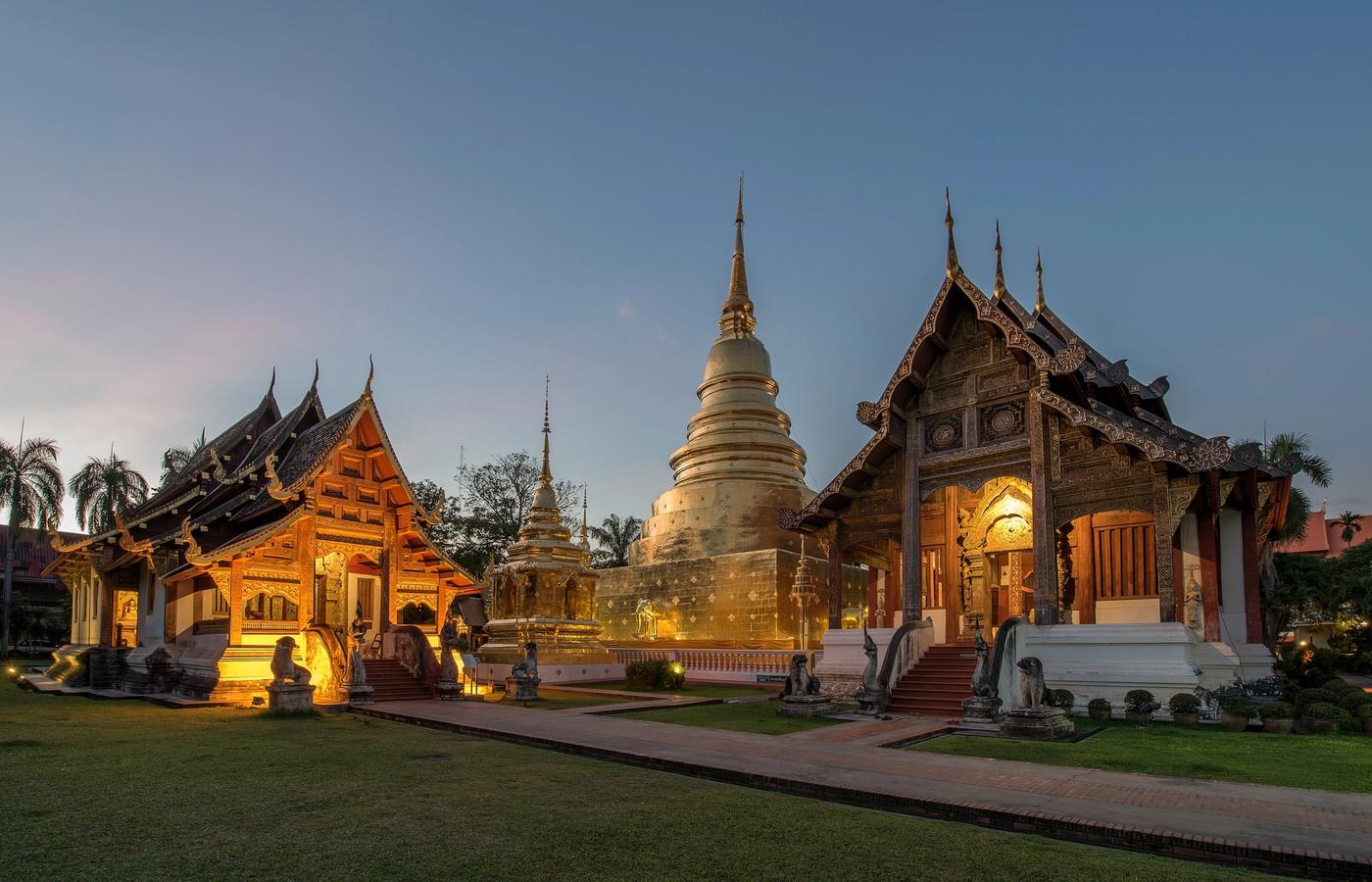
Nimmanhaemin Road (locally Nimman) west of the Old City is Chiang Mai's contemporary creative quarter - the centre of the city's digital-nomad community and home to its most innovative cafes, art galleries, design studios, and craft beer bars. The neighbourhood developed in the 2000s around Chiang Mai University on the western edge. The architecture mixes 1990s shophouses with newer concept-store conversions.
Highlights include the Maya Lifestyle Mall (rooftop bar with mountain views), the Ristr8to coffee shop (national-champion baristas, 90-150 THB), the One Nimman complex (boutique shops in a courtyard with restored shophouses), and the Hot Heads art gallery. Sois 1-17 branch off Nimmanhaemin Road - the higher numbers towards the south generally hold the most original independent spots.
Pro Tip: The Wednesday and Friday evening Think Park night market behind the Maya Mall has the cheapest dinner options in Nimman - around 60-100 THB for a full meal with much less tourist pricing than the main road cafes.
9Thai Cooking Class - Hands-On Northern Thai Cuisine
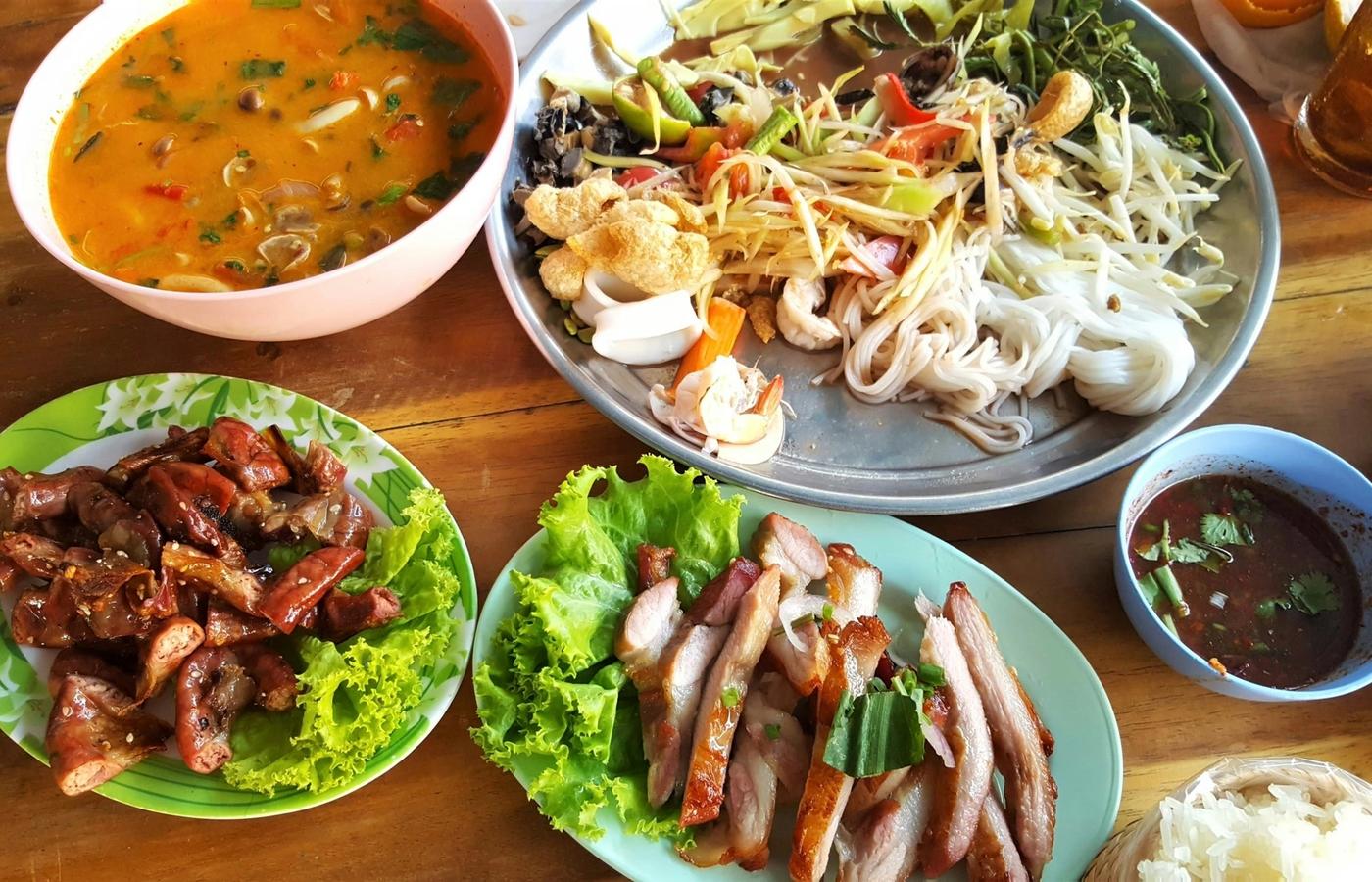
Chiang Mai has more dedicated cooking schools per capita than any city in Thailand - around 50 active schools running 1-day courses for foreign visitors. Northern Thai (Lanna) cuisine is distinct from central Thai: less coconut milk, more bitter herbs, and signature dishes like khao soi (curry noodles), sai oua (sausage), and gaeng hung lay (Burmese-Thai pork curry). Most schools offer half-day or full-day courses including a local market visit.
Top-rated schools: Thai Farm Cooking School (organic farm setting outside the city, 1200 THB half-day), Asia Scenic (in-town venue with garden, 1000 THB), and Sammy's Organic Thai Cooking School (boutique small groups, 1300 THB). Courses typically cover 5-6 dishes (curry paste from scratch, soup, stir-fry, curry, dessert) and take 4-6 hours. All include hotel pickup, market tour, ingredient knowledge, and a recipe book.
Pro Tip: Choose a school with a market visit and a farm visit included - learning to identify the herbs and produce live transforms the kitchen lesson afterwards. Book the evening class (15:00-20:00) if you want to maximise daytime sightseeing.
10Bua Tong Sticky Waterfalls - The Climbable Cascades
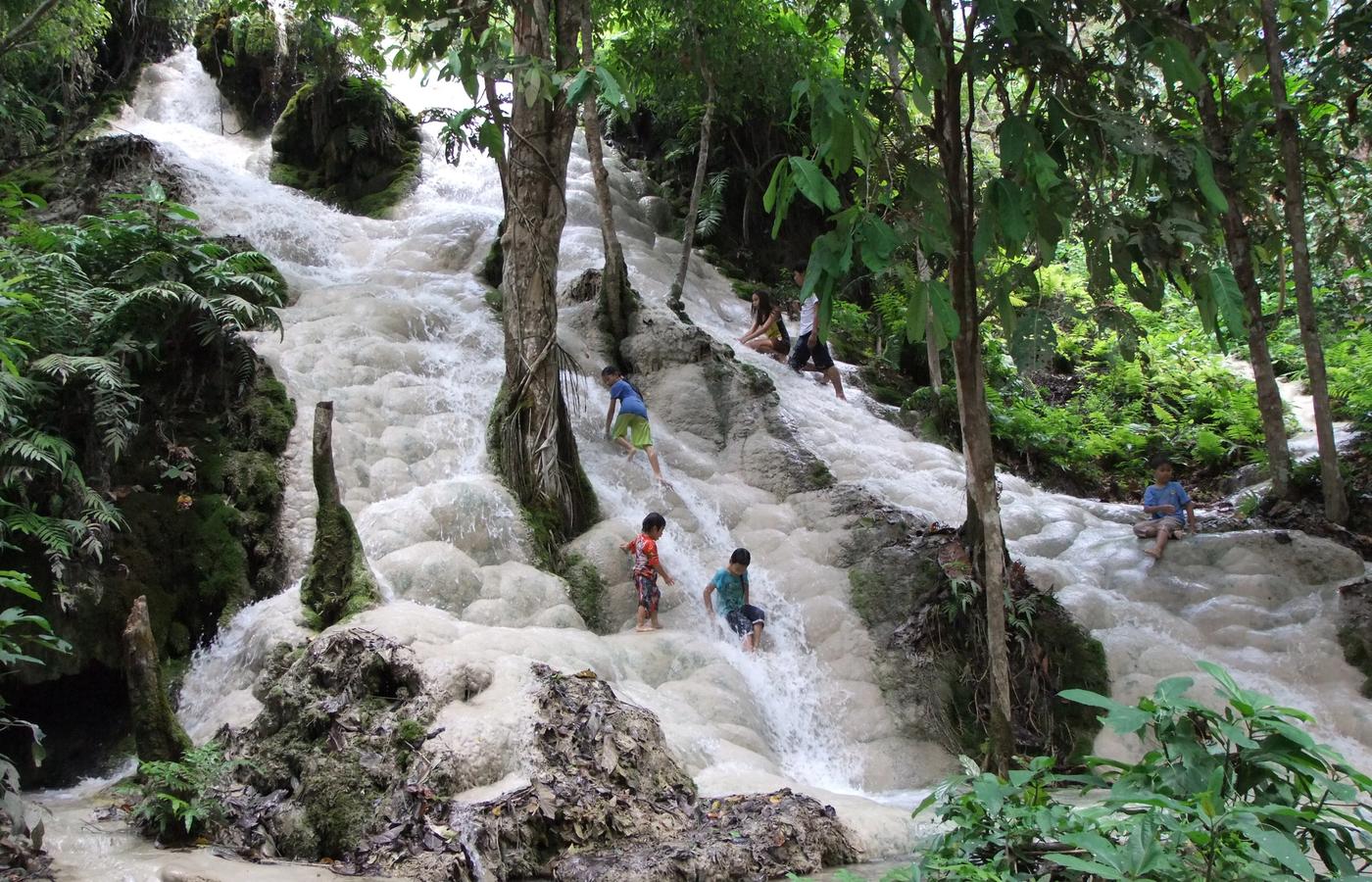
Bua Tong (Sticky Waterfalls) are a series of cascading limestone falls 60 km north of Chiang Mai that visitors can climb up barefoot. The high mineral content of the water deposits calcium carbonate on the rocks, creating a textured surface that grips like sandpaper - making it possible to walk up the falls without slipping. The falls drop in 3 levels through dense forest with deep pools at the base of each.
Knotted ropes are installed along steeper sections for additional grip. The complex sits within Si Lanna National Park (no entry fee for foreigners). A path circles around the falls for visitors who prefer not to climb. Most visitors come on a half-day tour from Chiang Mai (700-900 THB including transport) or rent a scooter for the 90-minute ride. Open daily 06:00-18:00. Bring water, a swimsuit, and waterproof phone protection.
Pro Tip: Visit weekdays before 11:00 to have the falls almost to yourself. Wear quick-dry clothes - you will get completely soaked climbing. The nearby Chet Si Fountain natural blue spring (3 km away) is a perfect cooling stop after.

CEO and co-founder
Tomas is the co-founder and director of trip1, an European company specializing in reservation services. He launched the company in 2025 with a focus on building scalable, efficient operations.
Climate averages · 1991–2020
When is the best time to visit Chiang Mai?
The best time to visit Chiang Mai is between October and March, the most comfortable stretch of the year on these averages.
Best time · October–MarchRainfall
- Jan23°
- Feb25°
- Mar28°
- Apr30°
- May29°
- Jun29°
- Jul28°
- Aug28°
- Sep28°
- Oct27°
- Nov26°
- Dec23°
More of Thailand
10 Top Things to Do in Chiang Mai, Thailand - FAQ
No - plan for 3-4 days minimum. Doi Suthep and Doi Inthanon are both half-day excursions outside the city. The Old City temples take a walking day; an Elephant Nature Park visit is a full-day trip. A reasonable split: Day 1 Old City temples, Day 2 Doi Suthep and Sunday Walking Street, Day 3 elephant sanctuary or Doi Inthanon.
Start in the Old City visiting Wat Chedi Luang and Wat Phra Singh in the morning before heat. Ride a songthaew up to Doi Suthep in the afternoon. Save the Sunday Walking Street for an evening from 16:00. Reserve a separate full day each for Elephant Nature Park (advance booking required) and Doi Inthanon National Park.
Elephant Nature Park requires booking 2-3 weeks ahead in peak season - only ethical certified sanctuaries that do not allow riding are recommended. All temples, the Old City walls, Sunday Walking Street, and Bua Tong Sticky Waterfalls accept walk-up visitors. Doi Suthep and Doi Inthanon national park fees (200-300 THB) are paid at the gate.
Budget around 4500-6500 THB (120-170 EUR) per person. Elephant Nature Park ethical day visit 2500 THB. Doi Inthanon tour or hire 1200-2000 THB. Doi Suthep songthaew round-trip 100 THB. Temple donations 20-40 THB each. Sunday Walking Street is free. Chiang Mai is one of Thailand's cheaper cities for food - 60-150 THB for a proper meal.
Old City temples are all walkable within the moat. Doi Suthep is reached by shared songthaew from Chang Phueak Gate (50 THB each way). Doi Inthanon and Elephant Nature Park require a tour or private car. The Sunday Walking Street is in the Old City. Most travellers rent scooters (200 THB/day) for flexibility - the city has no metro and Grab rides are limited.
Yes - Elephant Nature Park (founded 1995 by Lek Chailert) is one of South-east Asia's most respected ethical elephant sanctuaries and rescues elephants from logging and trekking camps. No riding, no shows, no chains. Visitors observe, feed, and walk with elephants in natural habitat. Half-day visit 2500 THB; full-day 3500 THB. Avoid any camp that allows riding or that uses bullhooks.
Worth adding: Nimman Road for cafes and art galleries, Bua Tong Sticky Waterfalls (60 km north, climbable cascades), Pai (3-hour drive into the mountains), an authentic Thai cooking class (1200-1500 THB), the Saturday Walking Street on Wualai Road, and a Mae Sa Valley waterfall day trip. Festival fans should time visits for Yi Peng lantern festival in November.

Related travel guides
5 Best Hikes Near Chiang Mai
The 5 best hikes near Chiang Mai for 2026, with trail distance, elevation gain, round-trip times, park fees, permits and exact trailhead addresses.
10 Top Places to Visit in Phuket
The top places to visit in Phuket in 2026 - Patong Beach, Phi Phi Islands, Big Buddha, Old Town, Phang Nga Bay. Pro Tips for each attraction.