
Get up to €50 off your staySubscribe and get up to €50 off your next stay
Browse and explore the best travel guides in Hvar.
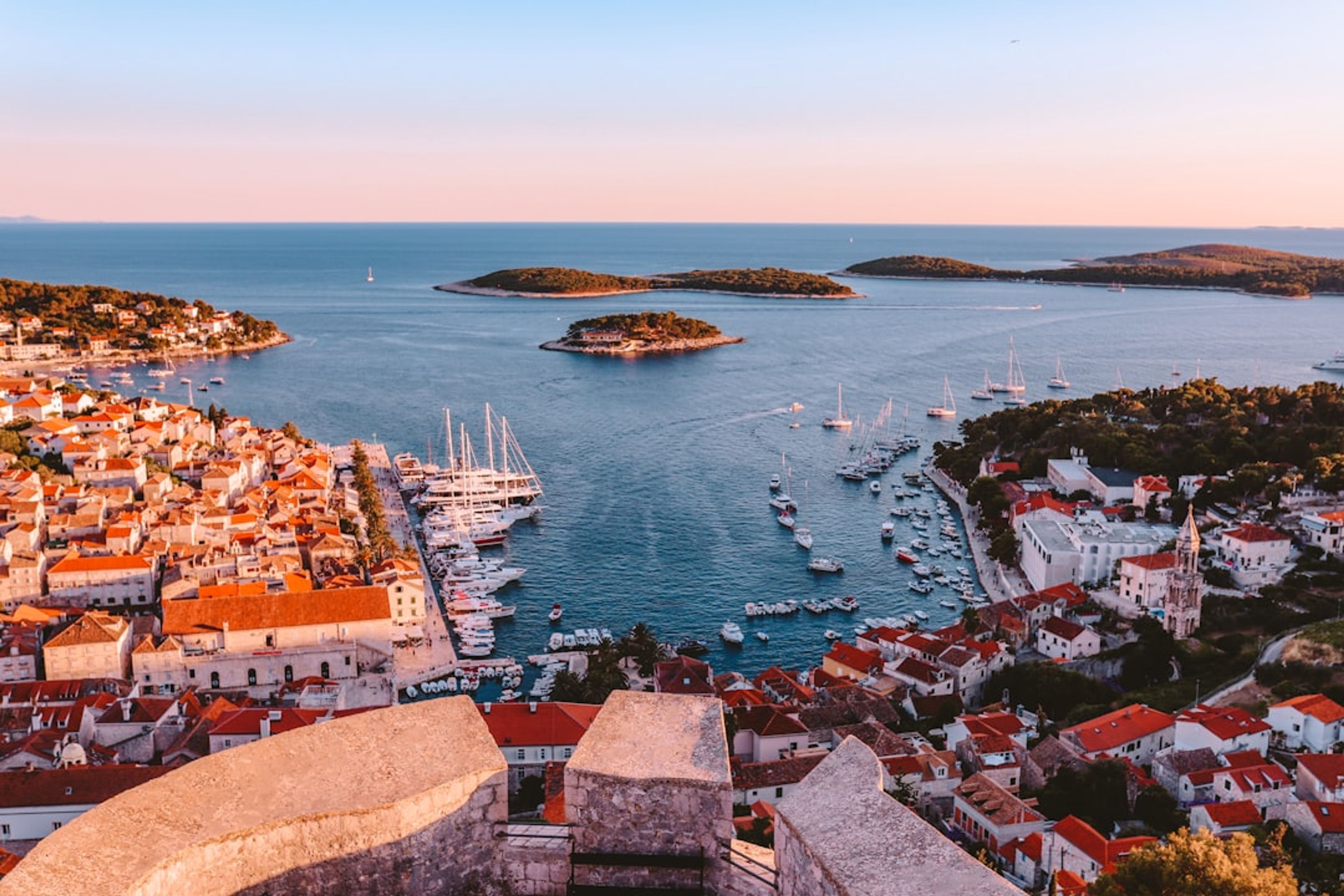
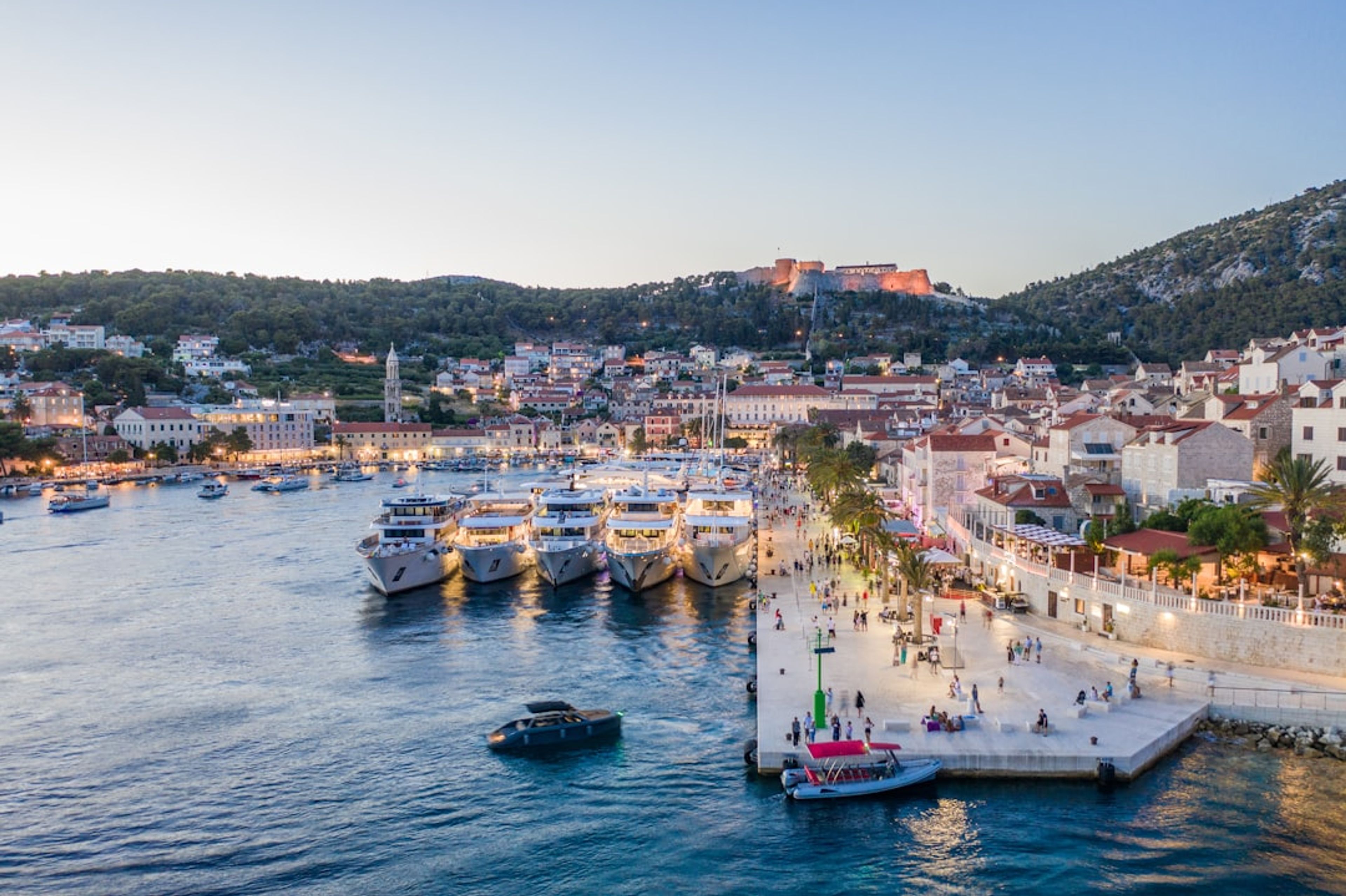
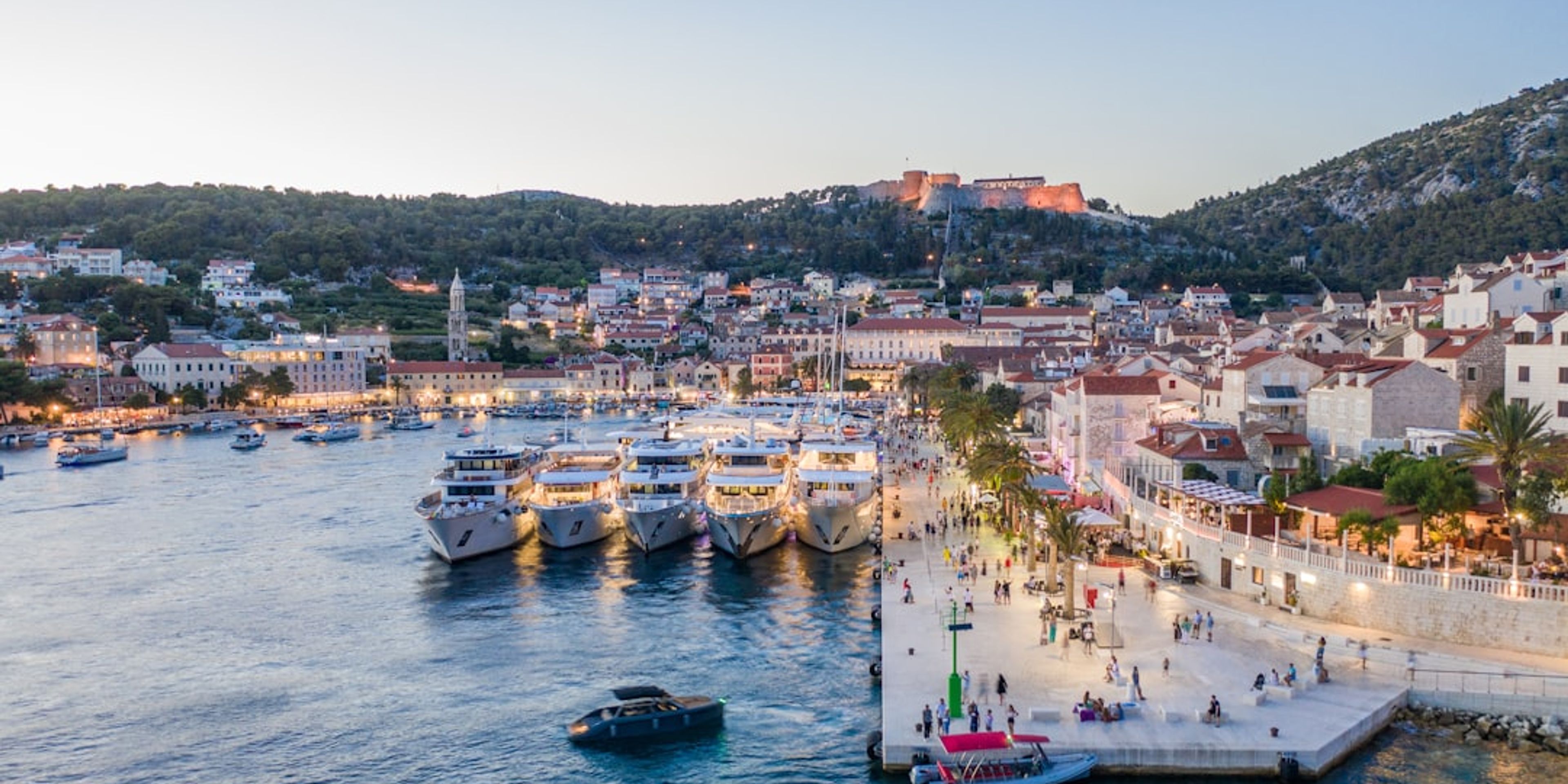
Hvar is a sun-soaked island town on Croatia's Dalmatian coast, known for its medieval old quarter, marble streets and lively harbour lined with palm trees and yachts. The town sits beneath a hilltop fortress on the southwest tip of Hvar Island, looking out across the Pakleni archipelago to the Adriatic. With more than 2,700 hours of sunshine a year, it's one of the sunniest spots in Europe.
The island's interior is patchworked with lavender fields, vineyards and olive groves, while the coastline shelters hidden coves and pebble beaches reached by water taxi. Hvar Town blends Venetian-era architecture, Gothic palaces and a thriving café culture with one of the Mediterranean's most talked-about nightlife scenes, drawing everyone from backpackers and sailors to celebrities anchoring offshore.
Beyond the main town, the island spreads east toward Stari Grad, one of the oldest settlements in Europe, and the wine villages of Jelsa and Vrboska. Whether you're after beach days, historic walks, sailing trips or late-night cocktail bars, Hvar offers a compact but varied slice of the Adriatic.
Country
Croatia
Region
Split-Dalmatia County (Dalmatia)
Population
~4,200 (Hvar Town); ~11,000 (island)
Elevation
Sea level (0-94 m old town)
Time Zone
CET (UTC+1) / CEST (UTC+2) in summer
Currency
Euro (EUR)
Language
Croatian (English widely spoken in tourism)
Nearest Airport
Split Airport (SPU), ~75 km via ferry
Airport to City Centre
~1.5-2 hours (bus/taxi to Split + ferry to Hvar)
Typical Cost Level
Mid-range to Upscale (high in summer)
Transport Pass
No city pass; walking + water taxis cover most needs
Spring (Mar-May)
12-21°C (54-70°F)
Summer (Jun-Aug)
24-30°C (75-86°F)
Autumn (Sep-Nov)
14-25°C (57-77°F)
Winter (Dec-Feb)
8-13°C (46-55°F)

Get the latest deals, new destinations, and travel tips delivered straight to your inbox.
No spam, unsubscribe anytime.
Entry rules, stay length and passport validity by nationality.
The best time to visit Hvar is from late May through late September, when the weather is warm and the sea is swimmable. July and August are the busiest and most expensive months, with peak nightlife and packed beaches, while June and September offer similar weather with fewer crowds and better hotel rates. Visit in May or October for quieter streets and lower prices, though some restaurants and ferry connections run on a reduced winter schedule outside the main season.
Hvar doesn't have its own airport, so most travellers arrive via Split Airport (SPU) and continue by ferry. From the airport, take a shuttle bus or taxi to Split's ferry port (about 30 minutes), then board a catamaran or car ferry to Hvar Town or Stari Grad. Krilo and Jadrolinija run fast passenger catamarans directly to Hvar Town in roughly 1 hour, while car ferries to Stari Grad take about 2 hours and require a 20-minute drive across the island.
Hvar Town itself is small and entirely walkable, with most sights, restaurants and beaches within 15 minutes of the main square. To reach the Pakleni Islands or beach coves outside town, hop on a water taxi from the harbour. For exploring the wider island, including Stari Grad, Jelsa and the lavender fields, hire a scooter, quad or rental car, or use the public buses that connect the main towns several times a day.
Three to four days is the sweet spot for Hvar. That gives you time to explore Hvar Town's old quarter and Spanish Fortress, spend a full day swimming and island-hopping in the Pakleni Islands, and take a day trip inland to Stari Grad, Jelsa, or the vineyards and lavender fields. If you're combining Hvar with other Dalmatian destinations like Split, Brac or Korcula, two nights is enough for a focused stop; stay a full week if you want to slow down and balance beach days with hikes and boat trips.
Hvar is very safe for tourists, with low crime rates and a strong police presence in summer. The main risks are minor: petty theft in crowded bars and ferry queues, slippery marble streets after rain, and sunburn or dehydration on long beach days. Take standard precautions with valuables, wear shoes with grip when walking the old town at night, and book official water taxis and tour operators rather than unmarked boats.
On trip1, you can book hotels across Hvar and pay with over 120 cryptocurrencies including Bitcoin, Ethereum, and USDC. trip1 covers 3 million+ hotels in 190+ countries, making it easy to find and book accommodation with crypto.
Hvar Town is the most popular base, putting you steps from the harbour, restaurants and nightlife, but it's also the busiest and priciest. For a quieter Old World feel, choose Stari Grad on the north coast, with its UNESCO-listed plain and laid-back cafés. Jelsa offers family-friendly beaches and a more local rhythm, while Vrboska, the so-called Little Venice of Hvar, suits travellers after small fishing-village charm. Hotels and apartments along the Hvar Town riviera (Majerovica, Krizna Luka) offer sea views with an easy walk to the centre.
The Pakleni Islands are the classic day trip, a short water-taxi ride from Hvar harbour to clear-water bays like Palmizana, Jerolim and Stipanska. Boat tours also run to the Blue Cave on Bisevo and the green-watered Stiniva Cove on Vis. Inland, head to Stari Grad's UNESCO plain, the medieval village of Velo Grablje and the lavender route, or hop a fast ferry to Split, Brac (Zlatni Rat beach) or Korcula for a different island feel.