

Guides · Venice
12 Top Places to Visit in Venice, Italy

CEO and co-founder
This guide ranks the 12 top places to visit in Venice - the sights that genuinely deserve a spot on your itinerary whether you have two days or a full week. Each entry includes the exact address, nearest vaporetto stop, walking time from the dock, and a practical Pro Tip for ticket booking, timing, or a less obvious angle. We have grouped the list to help you plan efficient routes - the San Marco core (Basilica, Piazza, Doge's Palace, Campanile, Bridge of Sighs) sit within 200 metres of each other and form day one; the Rialto Bridge and Dorsoduro museums (Accademia, Peggy Guggenheim, Salute) make a clean day two; and Murano and Burano are paired as a half-day or full-day lagoon trip.
Venice rewards walking. The historic centre is car-free and small enough to cross on foot in 45-60 minutes, but the maze of calli and canals means even seasoned visitors get lost. Consider that part of the experience - the most beautiful corners of the city are not on any itinerary. We have flagged the few attractions that need timed tickets booked in advance (St Mark's Basilica, Doge's Palace, Campanile lift) and the costs in EUR for everything paid. All addresses use the Venetian sestiere system, so a typical address looks like "San Marco 1" or "Dorsoduro 701" rather than a numbered street.
A note on timing in 2026: Venice now charges a day-tripper fee on peak dates for visitors not staying overnight, currently around EUR 5-10 depending on demand. Check the official Venice Access Fee site before arrival. The list below is ordered by location and significance - work it in the sequence given and you will minimise vaporetto rides and queue time.
1St Mark's Basilica - The Most Iconic Landmark in Venice
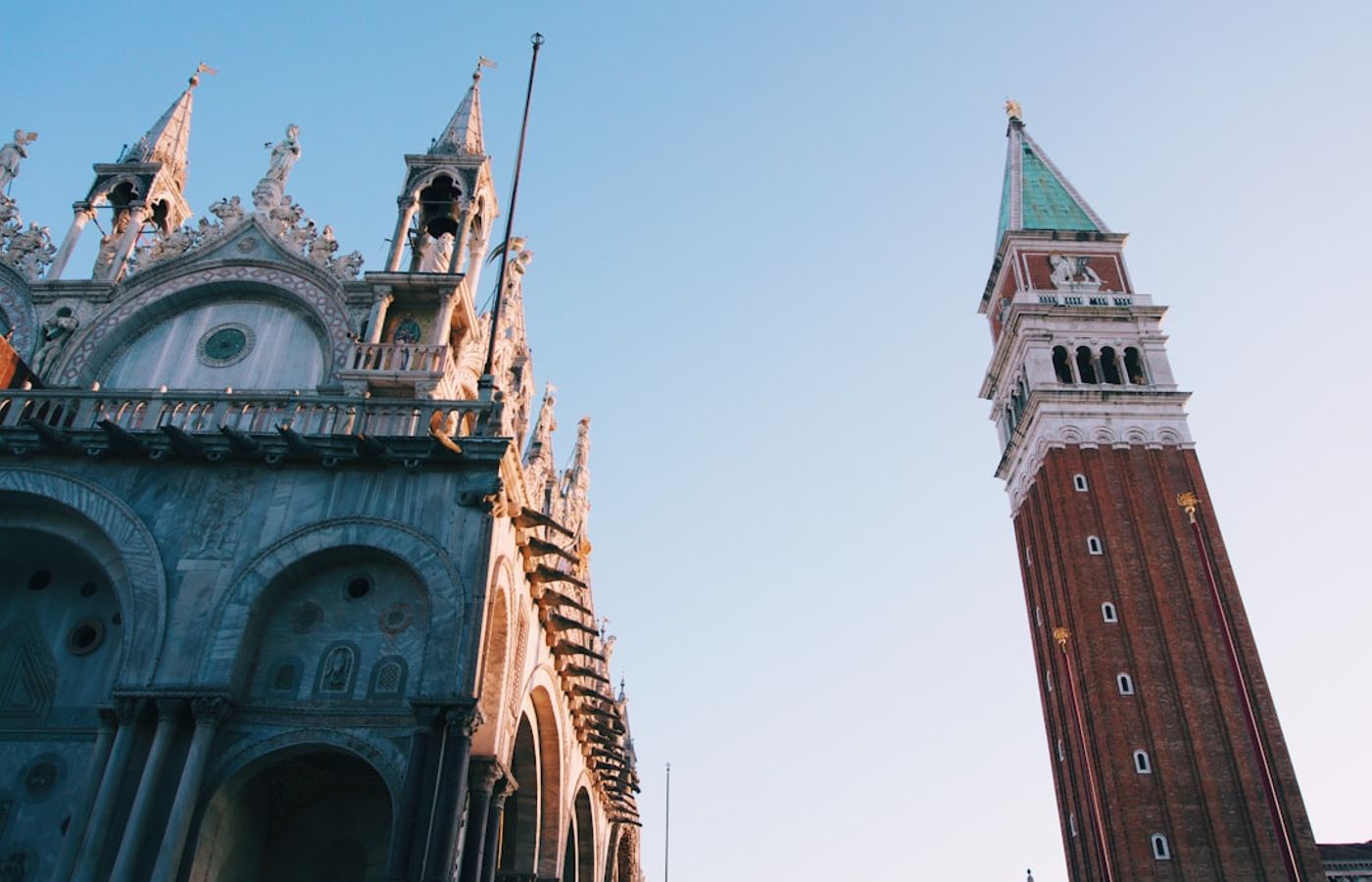

Topping every list of places to visit in Venice, St Mark's Basilica is the cathedral of the Venetian patriarchate and the city's central religious building since AD 828, when Venetian merchants smuggled the relics of St Mark the Evangelist out of Alexandria. The current Italo-Byzantine structure dates from 1063 and bristles with 8,000 square metres of golden mosaics, 500 marble columns looted from across the Mediterranean, and four bronze horses (replicas - the originals are inside) brought back from the sack of Constantinople in 1204.
The interior is dim, gilded, and otherworldly. Pay the small upgrade for the Pala d'Oro - the Byzantine altarpiece set with 1,927 gemstones and 250 enamel panels - and the upper terrace, which puts you eye-level with the bronze horses and gives a privileged view straight down Piazza San Marco. Standard entry is free but requires a timed reservation, and the basilica turns away walk-ins on busy summer days.
Pro Tip: Book the EUR 3 timed-entry slot for 9:30 am on the official Basilica website - you skip a 90-minute queue and the morning sun ignites the mosaics on the ceiling above the entrance.
2Piazza San Marco - The Heart of Venice
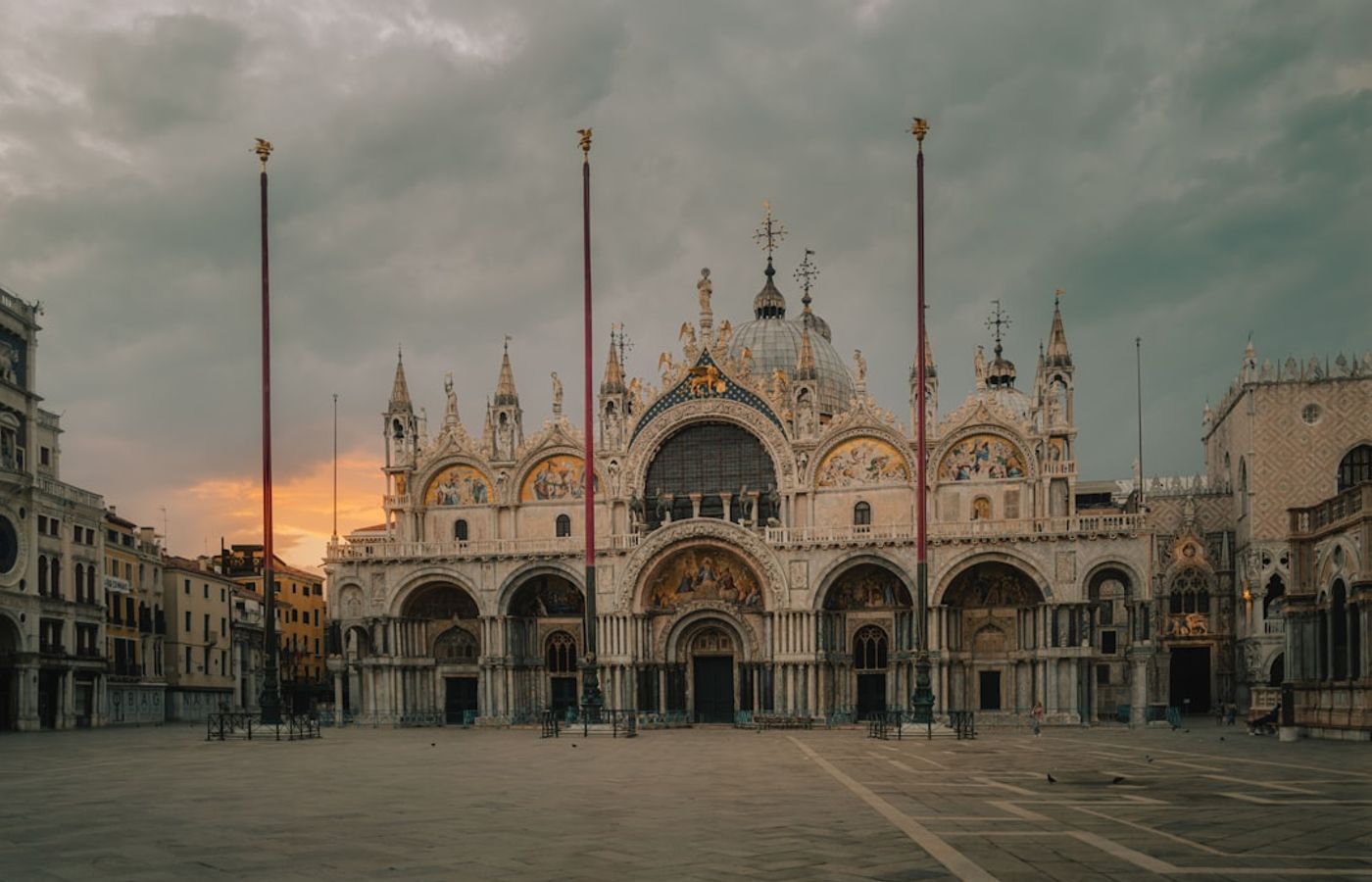

Napoleon famously called Piazza San Marco "the drawing room of Europe" and the description still fits. The 175-metre by 82-metre square is the only piazza in Venice (every other square is a campo) and the geographic and ceremonial centre of the city. It is bordered on three sides by the arcaded Procuratie - 16th-century buildings that once housed the procurators of St Mark - and on the fourth by the Basilica and Doge's Palace.
The square sees everything: pigeons and selfie sticks at midday, classical orchestras duelling between Caffe Florian (open since 1720) and Caffe Quadri at sunset, and full submersion under acqua alta tides several times a winter. A coffee at one of the outdoor tables runs around EUR 12-15, but you are paying for one of the most theatrical settings in Europe. For free, walk the perimeter and look up at the Torre dell'Orologio - the blue-and-gold astronomical clock from 1499 - and the Bocca di Leone postboxes once used for anonymous denunciations during the Republic.
Pro Tip: Visit at 7 am before the cruise crowds arrive. The square is empty, the cafe orchestras are silent, and the early light on the basilica's facade is the cleanest shot you will get all day.

3Doge's Palace - Seat of the Venetian Republic
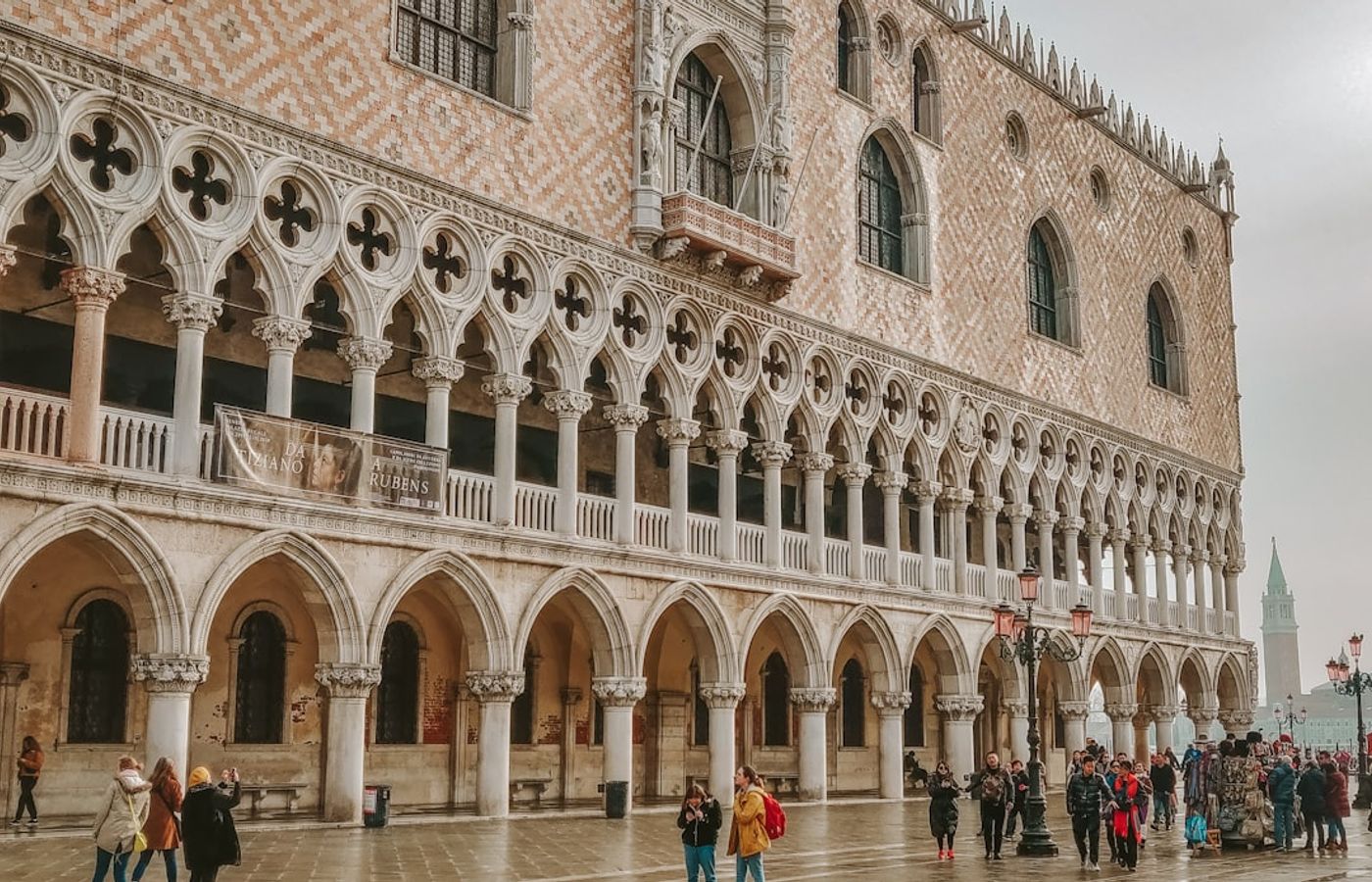

The Doge's Palace (Palazzo Ducale) was the seat of the Venetian government for nearly a thousand years - residence of the elected Doge, meeting hall of the Great Council, and headquarters of the law courts and prison. The current pink-and-white Venetian Gothic building dates from the 14th century, with later wings by Antonio da Ponte after the 1577 fire. Tintoretto's Paradiso, in the Hall of the Great Council, is one of the largest oil paintings in the world at 22 metres wide.
The standard ticket covers the state apartments, the council chambers with their Veronese and Tintoretto ceilings, the armoury, and a walk through the prison via the Bridge of Sighs. The Secret Itineraries tour (book separately, EUR 32 with audioguide) opens the doge's private rooms, the torture chamber, and the lead-roofed cells where Casanova was held in 1755 - small group, two hours, and the only way to see the working spaces of the Republic.
Pro Tip: The combined Doge's Palace ticket also covers Museo Correr across the square, the Archaeological Museum, and the Marciana Library - so use one ticket across two visits and avoid the single-entry scrum at the palace door.
4St Mark's Campanile - The Best View in Venice
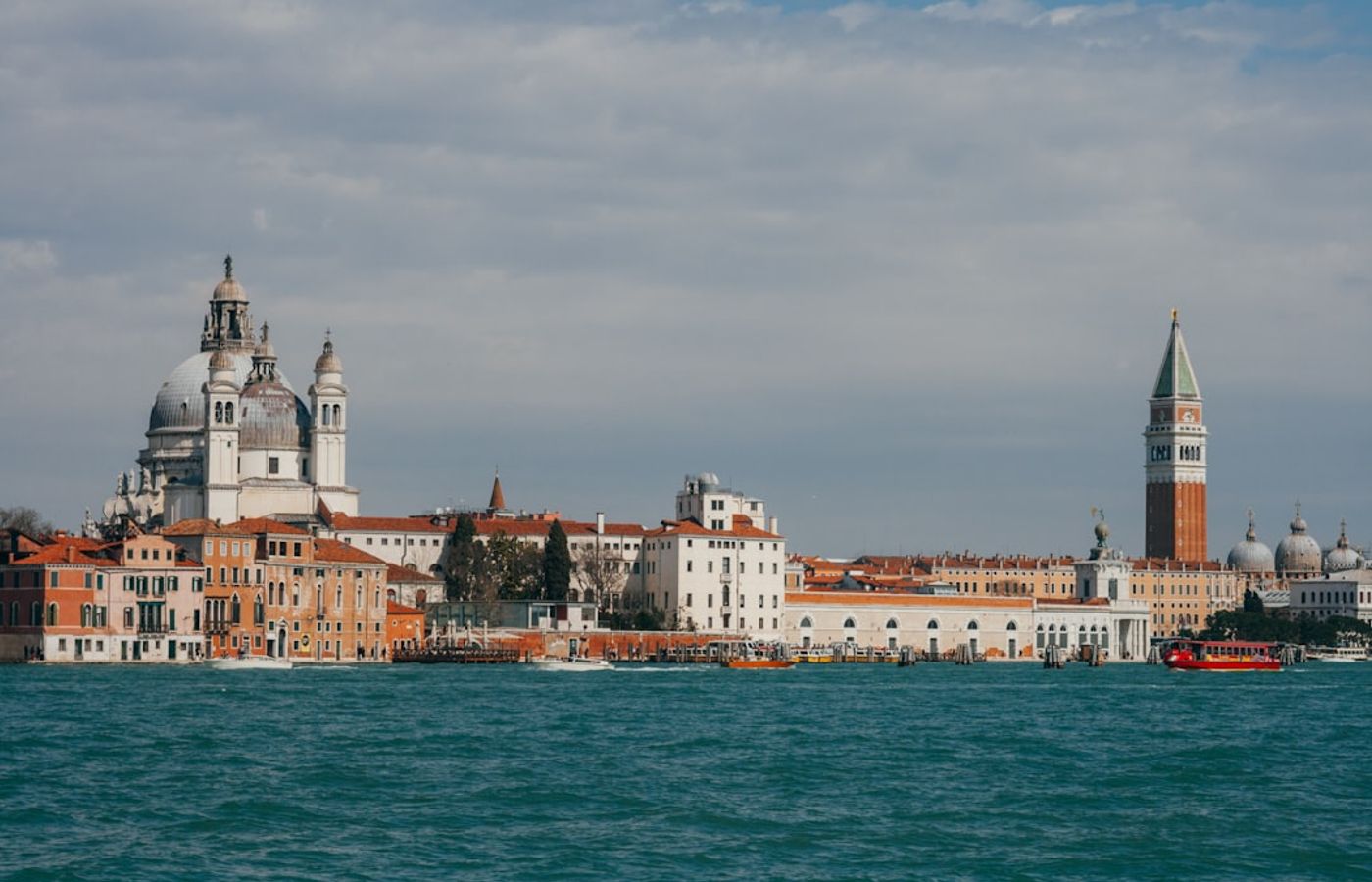
At 98.6 metres, St Mark's Campanile is the tallest structure in Venice and gives the only true bird's-eye view over the city, the lagoon, and on a clear day the Dolomites 100 km to the north. The original 9th-century bell tower stood for over 900 years before collapsing in a heap of rubble on 14 July 1902 - miraculously injuring no one. The current tower is a faithful 1912 reconstruction "dov'era e com'era" (where it was and how it was).
A lift takes you to the belfry in 60 seconds. From the top you see the labyrinth of red roofs, the Grand Canal's reverse S, the colourful houses of Burano on the horizon, and the five bell-loud chambers that still ring on the hour. Galileo Galilei demonstrated his telescope to the doge from this very tower in 1609. Climbing other Venice towers (San Giorgio Maggiore is the locals' alternative) gives you a different angle - but only the Campanile puts Piazza San Marco directly beneath your feet.
Pro Tip: Buy the EUR 12 timed-entry online slot for one hour before sunset. The lift queue at sunset can hit two hours in summer; the booked slot walks you straight in for the best light of the day.
5Bridge of Sighs - Venice's Most Photographed Bridge
The Bridge of Sighs (Ponte dei Sospiri) is a 17th-century enclosed limestone bridge that spans the Rio di Palazzo, connecting the interrogation rooms of the Doge's Palace to the New Prisons. Designed by Antonio Contino around 1600, it earned its romantic name from Lord Byron, who imagined convicts catching their last glimpse of the lagoon through its small windows on the way to the cells. In reality most prisoners by that date were petty offenders - the Republic had largely abandoned hard sentencing.
Two ways to experience it. From the outside, walk to the Ponte della Paglia just behind Piazza San Marco for the classic postcard view of the white facade arcing over the canal between two stone walls. From the inside, the Doge's Palace standard ticket lets you cross it from the magistrates' offices to the prison cells - a 30-second walk in worn limestone with two latticed windows looking out over the same view convicts saw four centuries ago.
Pro Tip: For the best outside photo, stand on Ponte della Paglia just after sunrise when the canal is empty of gondolas and the early light hits the bridge's white Istrian stone full-on.
6Grand Canal - Venice's Main Waterway
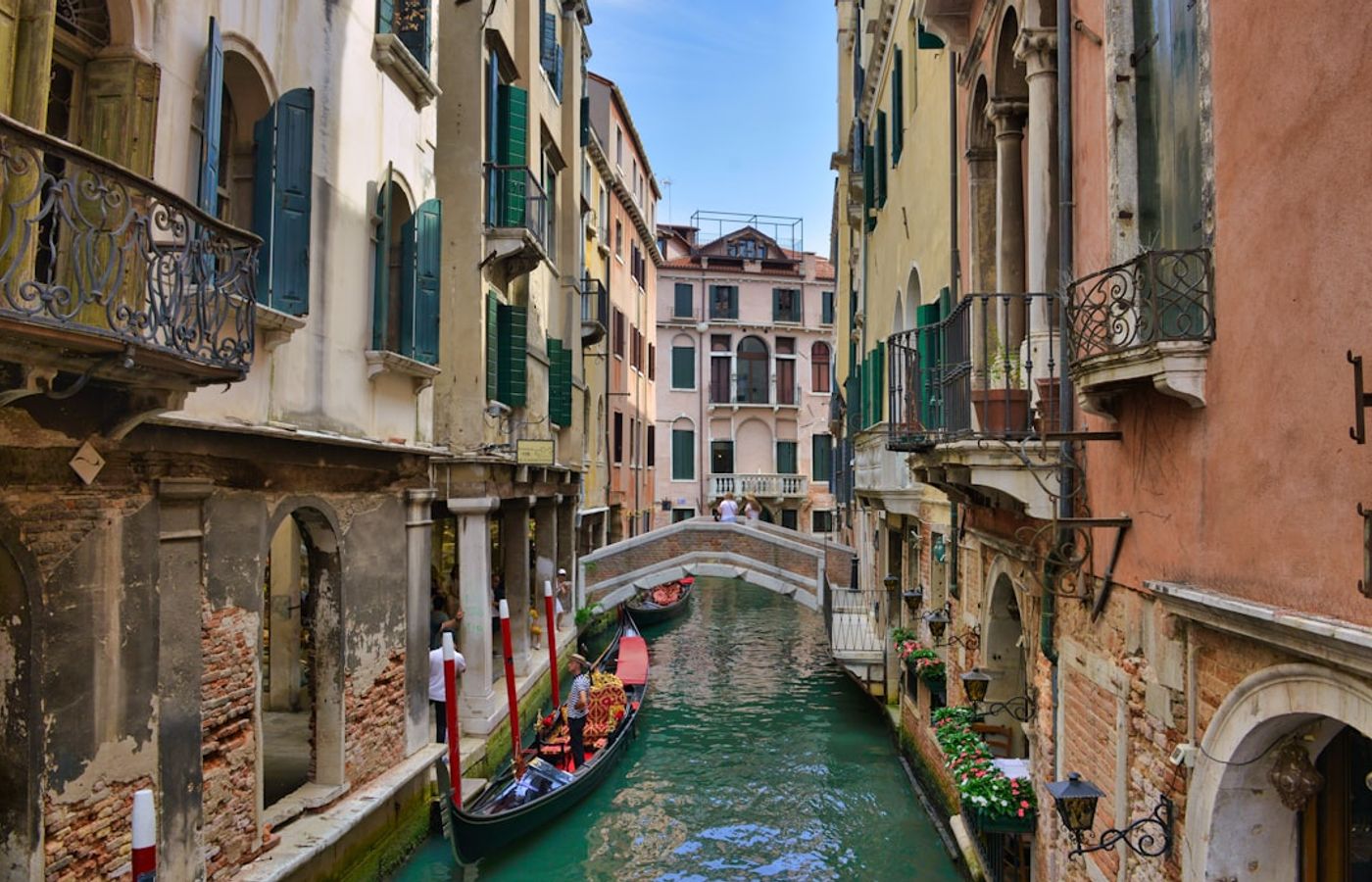
The Grand Canal (Canal Grande) is Venice's main artery - a 3.8-km, S-shaped waterway 30-90 metres wide that splits the historic centre between the sestieri. Roughly 170 buildings face it, most dating from the 13th to 18th centuries: the Gothic Ca' d'Oro, the Renaissance Palazzo Grimani, the Baroque Ca' Pesaro, and the Byzantine Fondaco dei Turchi where Turkish merchants traded silk for spice. Just four bridges cross it - the Rialto, Accademia, Scalzi, and the modern 2008 Calatrava bridge at Piazzale Roma.
The single best way to see the canal is also the cheapest. Take Vaporetto Line 1 from Piazzale Roma to San Marco - it stops 14 times along the route in 45 minutes, costs EUR 9.50 with a single ticket, and takes you under every bridge with a palace-by-palace view from water level. Sit at the rear in the open-air seats. The slow night version is better still: lights spill out of the palaces' first-floor halls, where Venetian families still live above the boarded-up water gates.
Pro Tip: Take Line 1 the full route in late afternoon, then ride it again the same evening after dark for two completely different experiences - the all-day vaporetto pass means each ride is included.
7Rialto Bridge - The Oldest Crossing of the Grand Canal
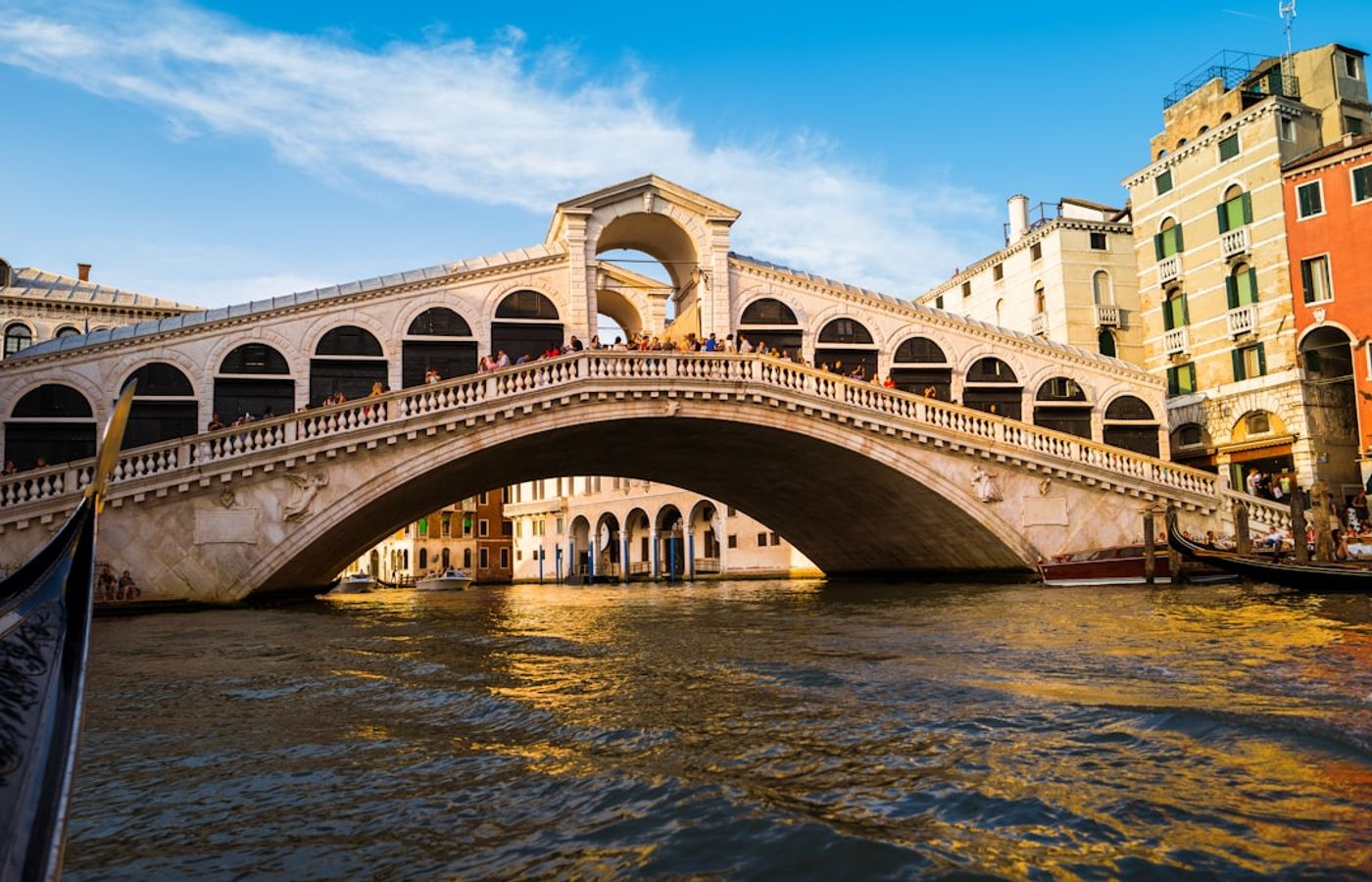
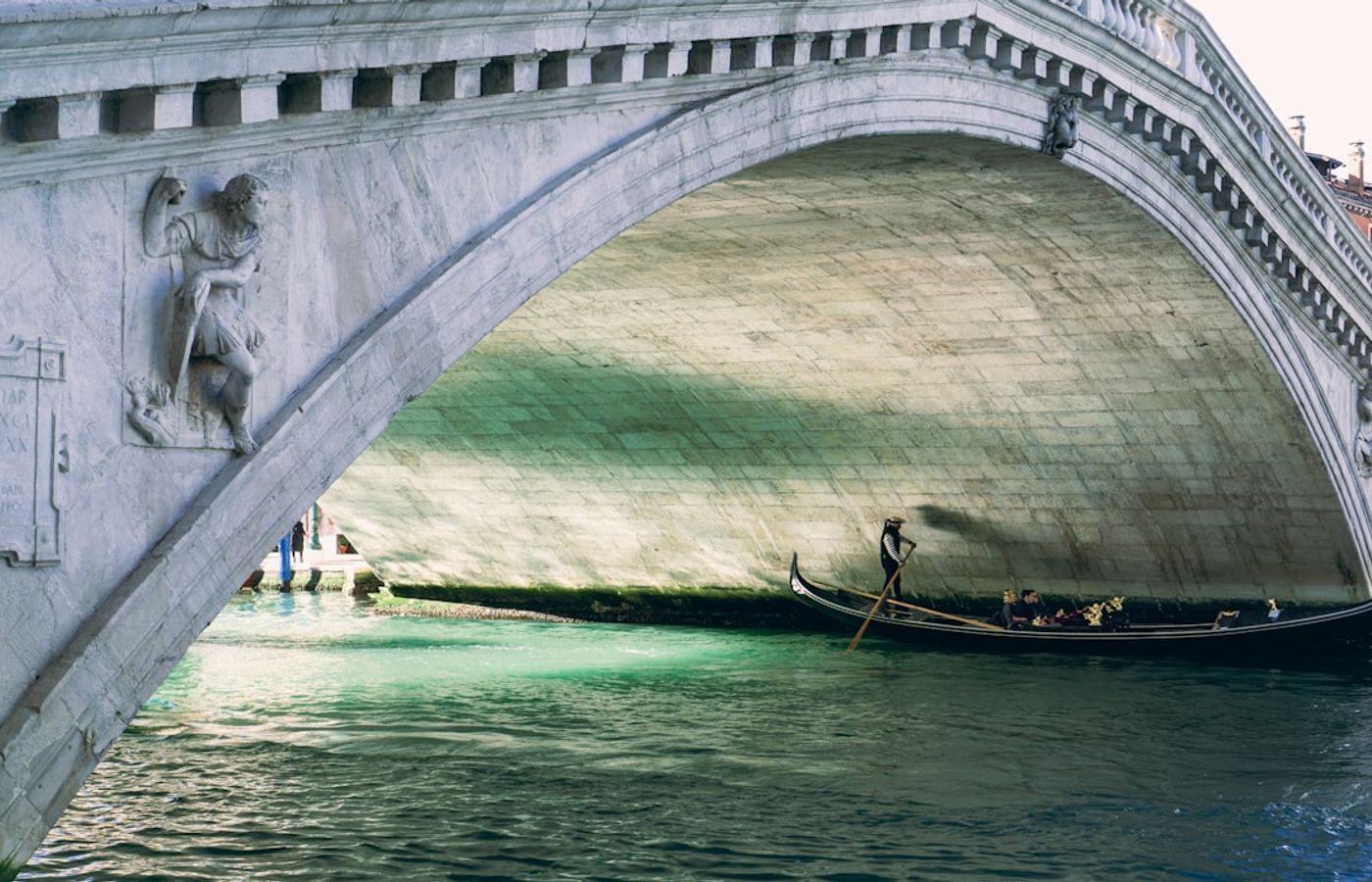
The Rialto Bridge is the oldest of the four bridges spanning the Grand Canal and was the only crossing for nearly 600 years. The current single-span stone bridge by Antonio da Ponte opened in 1591, replacing four earlier wooden bridges that had repeatedly collapsed or burned. Its 28-metre arch has to support a covered arcade of 24 shops and three pedestrian walkways - a gamble at the time that Michelangelo himself reportedly bid against. The bridge held; today it carries 30,000 people a day.
Crossing the Rialto Bridge is part of any Venice itinerary, but the area around it deserves time too. The Rialto Market on the San Polo side is one of Europe's oldest food markets - the Pescheria fish stalls open 7:30 am-12:30 pm Tuesday to Saturday with red mullet, langoustines, and soft-shell moeche crabs straight from the lagoon. The arcaded fruit and vegetable market opens earlier and runs longer. Bacari (Venetian wine bars) line the streets behind the market, serving cicchetti - small bites with a glass of ombra wine - from EUR 1.50.
Pro Tip: Stand on the bridge at 6:30 am when the only sound is gulls and the Rialto Market porters wheeling fish crates. By 10 am the whole structure is solid bodies and impossible photos.
8Gallerie dell'Accademia - Venetian Art from the 14th to 18th Century
The Gallerie dell'Accademia holds the world's finest collection of pre-19th-century Venetian painting - 800 works housed in three former religious buildings on the south bank of the Grand Canal. The collection follows the Venetian school from the 1300s Byzantine icons through Bellini, Carpaccio, Giorgione, Titian, Tintoretto, Veronese, Tiepolo, and Canaletto. Highlights include Veronese's gigantic Feast in the House of Levi (commissioned as a Last Supper, then renamed after the Inquisition objected), Titian's Pieta (his last work, finished by Palma il Giovane after Titian died of plague in 1576), and Leonardo da Vinci's Vitruvian Man (only displayed in rotation due to its fragility).
Allow at least 2 hours. The galleries are spread across 24 rooms grouped chronologically and the building itself - a former church, monastery, and Scuola Grande della Carita - is part of the experience. Audioguides cost EUR 6 and are useful given that few labels are translated to English. The Accademia is also one of the few major Venice attractions that is genuinely well lit and air-conditioned in summer.
Pro Tip: Skip the morning rush and arrive at 4 pm - the museum closes at 7:15 pm and the last 90 minutes are the quietest of the day, with proper time in front of the Veronese.
9Peggy Guggenheim Collection - Venice's Modern Art Museum
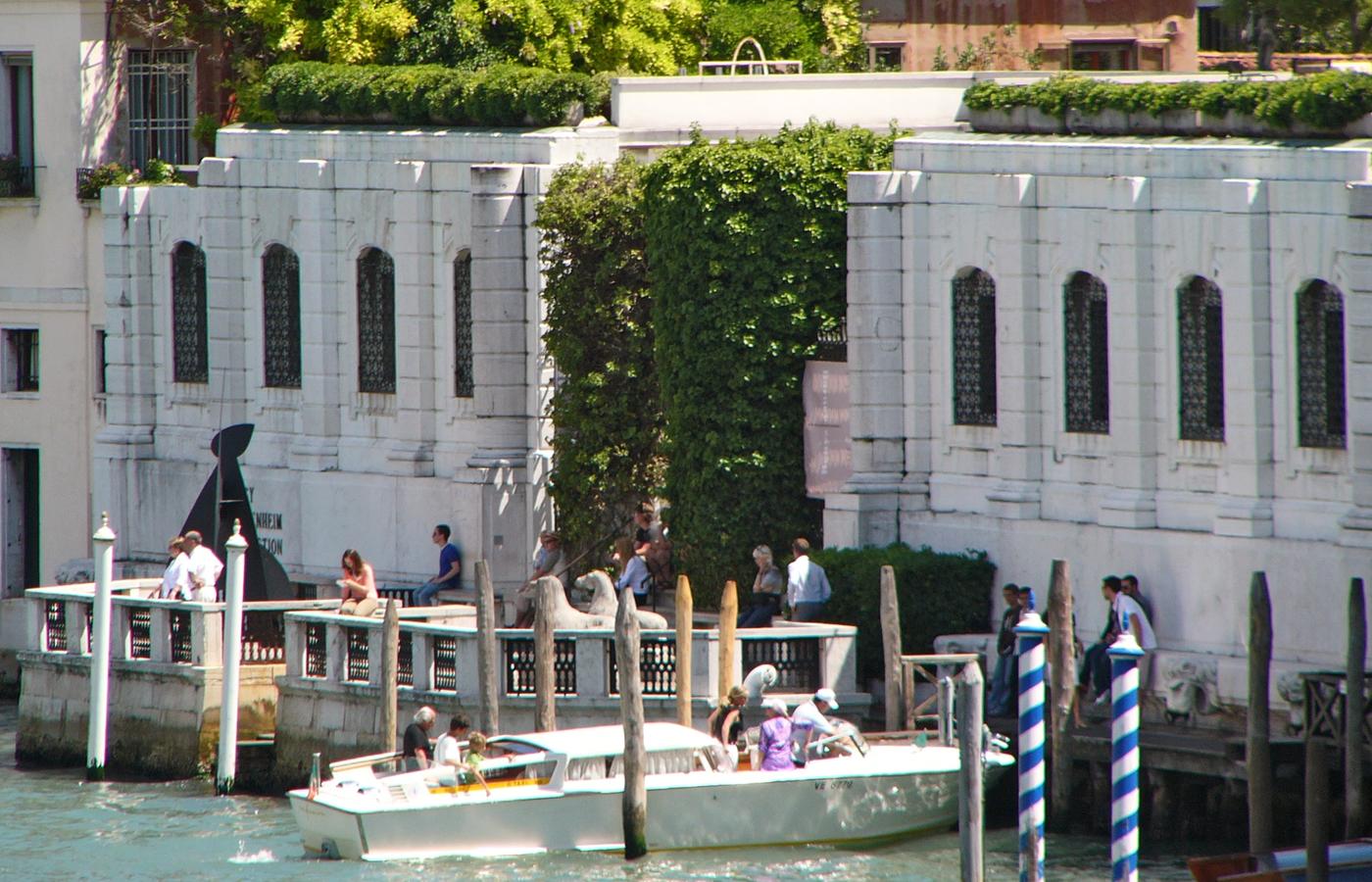
The Peggy Guggenheim Collection occupies the unfinished one-storey Palazzo Venier dei Leoni on the Grand Canal - the home Peggy Guggenheim (niece of Solomon R. Guggenheim) bought in 1949 and lived in until her death in 1979. The museum displays her personal collection of 20th-century art: Picasso, Pollock, Magritte, Mondrian, Dali, Ernst, de Chirico, Brancusi, and Calder, plus key Italian Futurists like Boccioni and Severini. The works hang in the rooms where she lived with them, alongside her dressing table and her sunglasses collection.
The sculpture garden facing the canal includes the Marini bronze Angel of the City - the rider whose detachable phallus Peggy used to remove when nuns were due to visit. A glass pavilion on the garden hosts rotating exhibitions of contemporary artists. The whole museum is small enough to do in 90 minutes and offers a striking palate-cleanser after a day of Tintoretto and Titian. Peggy and her 14 dogs are buried in the garden.
Pro Tip: Combine with Santa Maria della Salute next door - they are 3 minutes apart on foot, share the Salute vaporetto stop, and pair into a full day of Dorsoduro art and architecture.
10Santa Maria della Salute - Venice's Plague Church
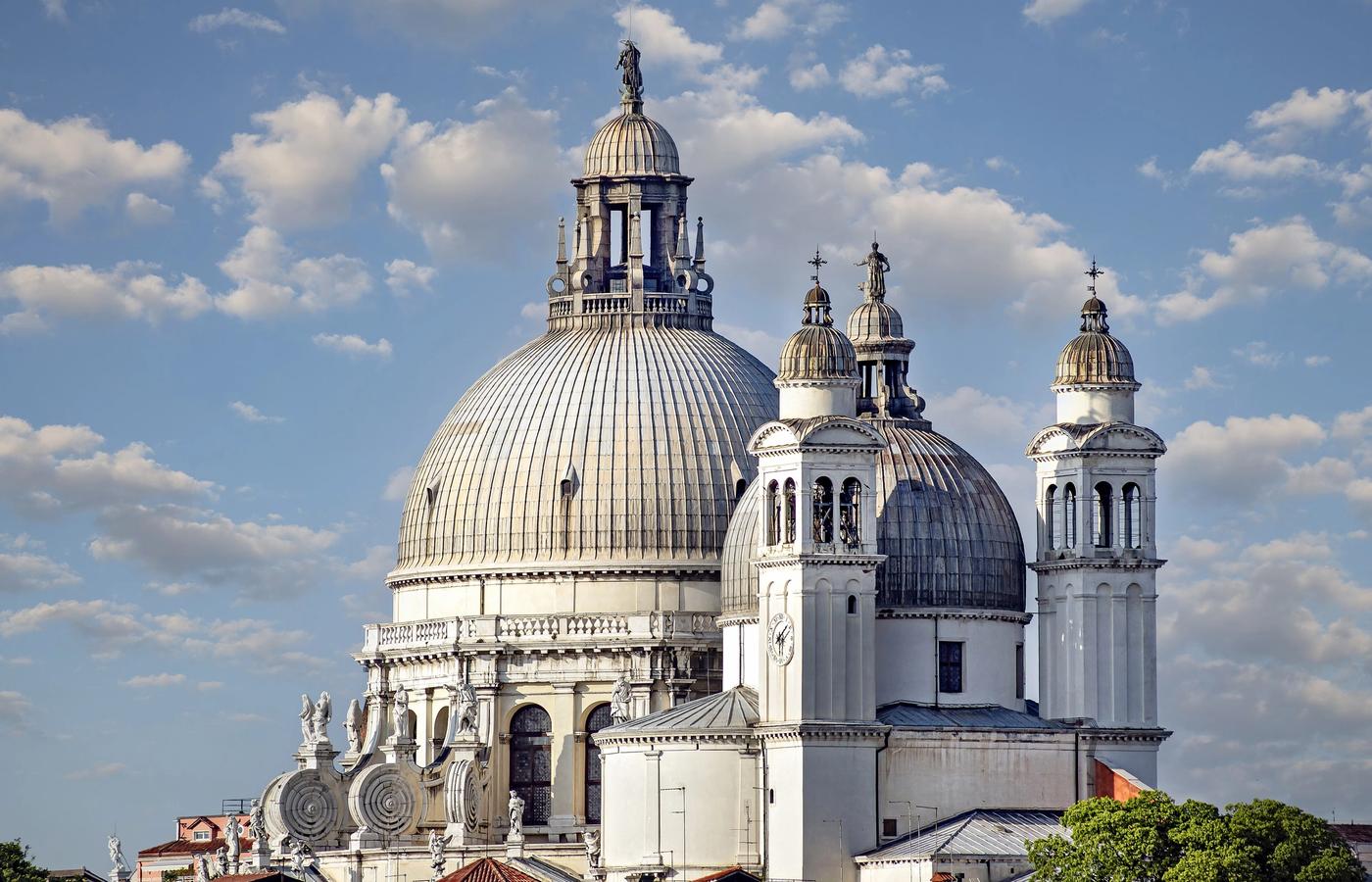
Santa Maria della Salute is the great octagonal Baroque church that anchors the south side of the Grand Canal entrance - the white-domed silhouette in every postcard sunset over Venice. The Venetian Senate commissioned it in 1631 as a votive offering for deliverance from the plague that killed roughly a third of the city's population. Architect Baldassare Longhena, just 32 at the time, won the design competition; construction took 56 years and required driving over a million wooden piles into the lagoon mud as foundations. The church was consecrated in 1687.
Entry to the main church is free. The interior is a vast circular space under the great dome with eight chapels around the perimeter - lighter and airier than most Venetian churches because Longhena designed it specifically to be experienced as a single grand circular procession. The sacristy (EUR 6) holds Titian's early works including St Mark Enthroned, and Tintoretto's Wedding at Cana with portraits of his contemporaries as the wedding guests. On 21 November each year - Festa della Salute - a temporary pontoon bridge is built across the Grand Canal so Venetians can walk to the church to give thanks.
Pro Tip: Walk to the Punta della Dogana sea-wall behind the church at sunset - one of the last truly free, uncrowded views in Venice, looking back across the basin to San Giorgio Maggiore and the Doge's Palace.
11Murano Island - The Home of Venetian Glass
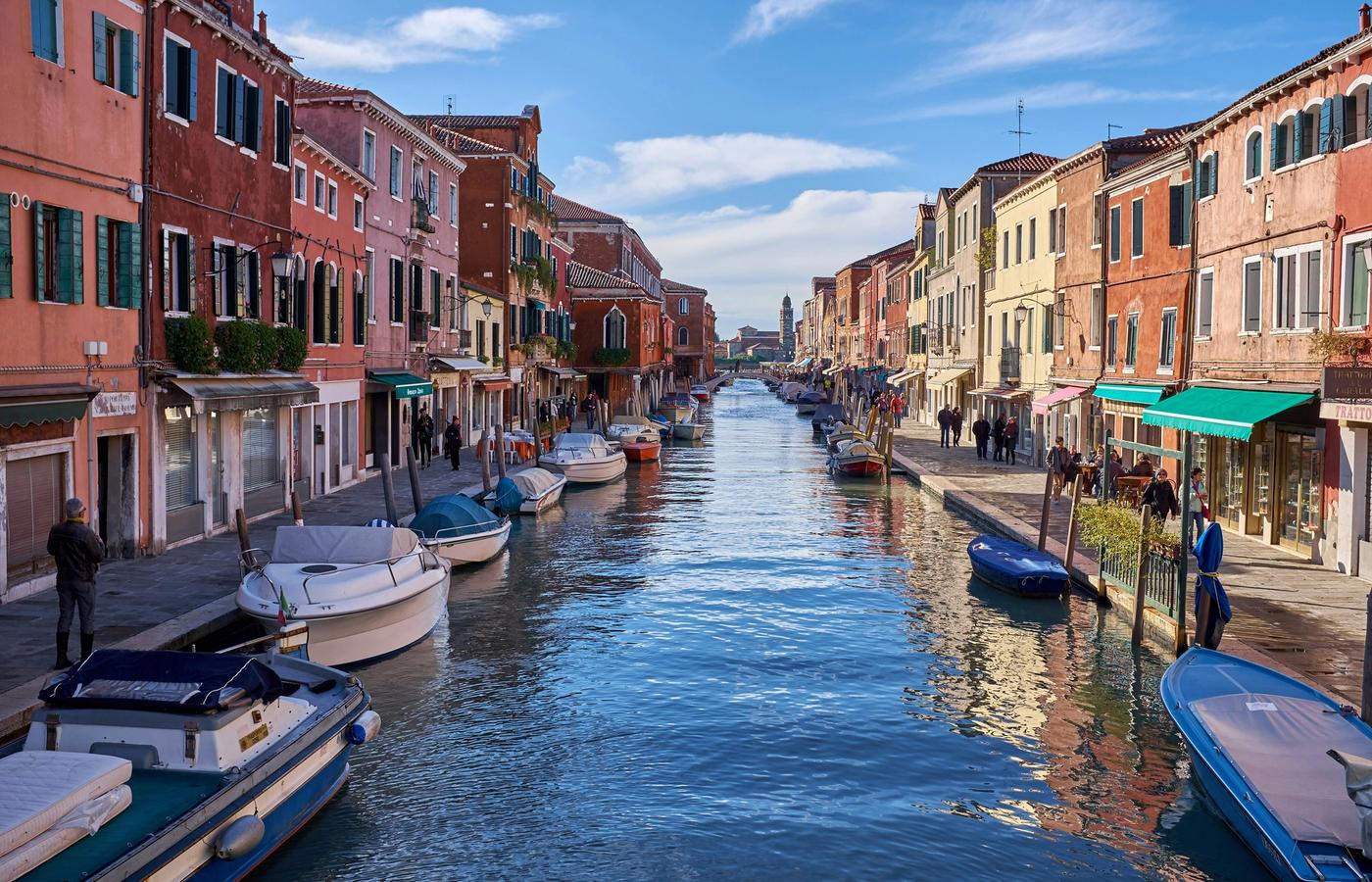
Murano is a cluster of seven small islands in the Venetian Lagoon and has been the centre of European glassmaking since 1291, when the Republic relocated all glass furnaces here to prevent fires destroying timber-built Venice. For five centuries Murano glassmakers were forbidden under penalty of death from leaving the island - and equally forbidden from disclosing their techniques. The result is a craft tradition of millefiori beads, fluted goblets, gold-leaf inlay, and chandeliers that still drives the island's economy.
Most visitors come for two reasons. Watch a master glassblower at work in one of the working furnaces along Fondamenta dei Vetrai - free demonstrations run daily, with an obligation-free sales pitch afterwards. Then walk to the Museo del Vetro (Glass Museum, EUR 12) for 700 years of context, including Roman pieces from the 1st century AD and the famous Barovier Wedding Cup from 1470. Buy from shops marked with the Vetro Artistico Murano trademark - a blue-and-yellow seal that guarantees authentic Murano-made glass and not Asian imports.
Pro Tip: Skip the free hotel-touted shuttle to "show you a glass demo" - it dumps you at one specific factory with a hard sell. Take Vaporetto Line 4.1 from Fondamente Nove for EUR 9.50 and walk where you want.
12Burano Island - Painted Houses and Lacework
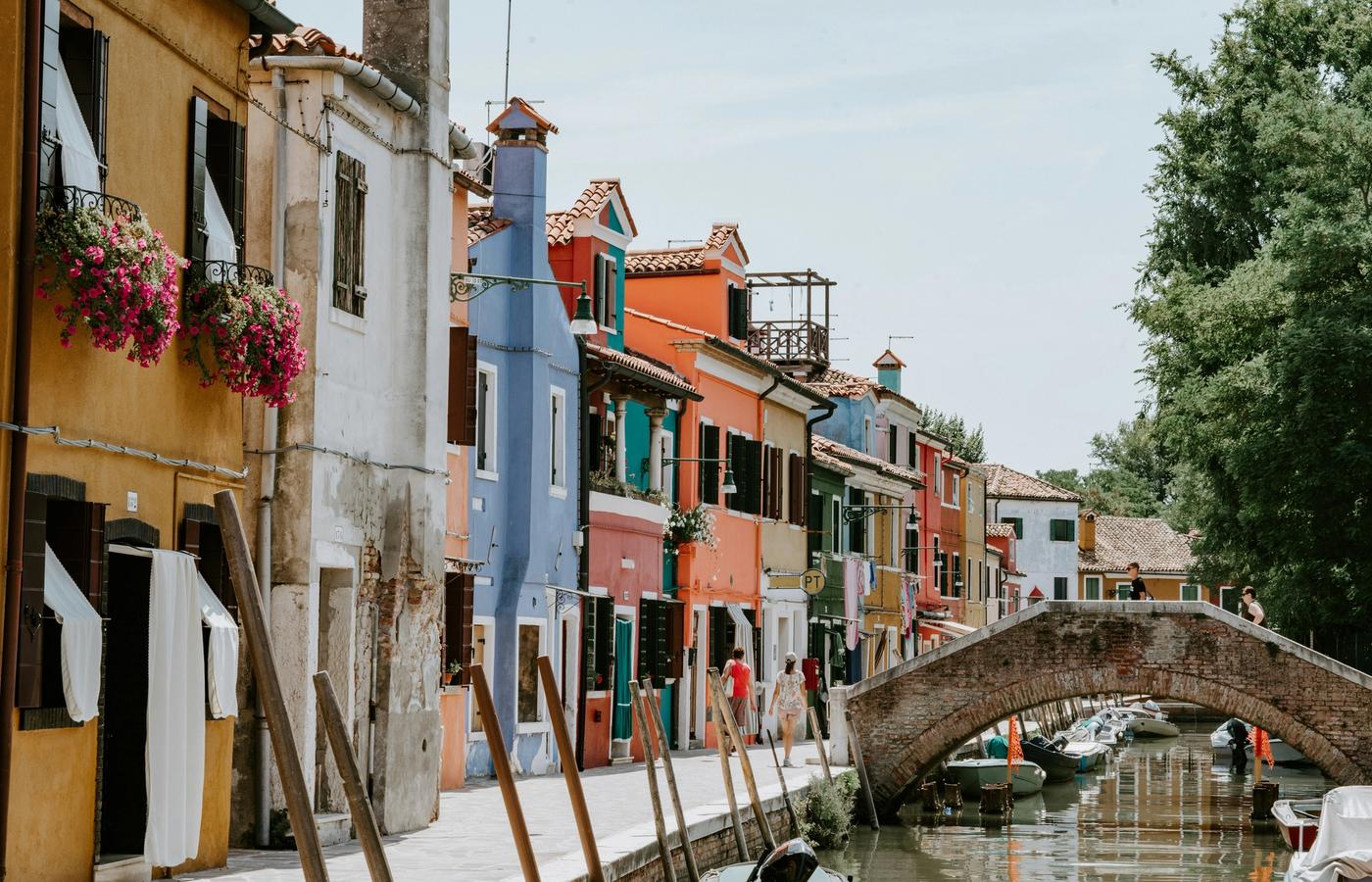
Burano is a small fishing island 40 minutes by vaporetto past Murano and famously the most photogenic spot in the entire Venetian Lagoon. Its 2,800 residents live in pink, lemon, mint, sky-blue, and crimson houses tightly packed along a network of narrow canals. Local legend says fishermen painted their homes in bright colours so they could spot them through the lagoon fog when returning at night. The colour scheme is now protected by city ordinance: residents must apply to the council for permission and choose from the approved palette for their plot.
Beyond the houses, Burano has a centuries-old lacemaking tradition - the Lace Museum (Museo del Merletto, EUR 5) on Piazza Galuppi traces it from the 16th century through to the few elderly women who still produce handmade pieces. The leaning bell tower of San Martino Vescovo is the tallest structure on the island and tilts visibly at 1.83 metres off vertical due to subsiding foundations. Lunch on Burano is a tradition - try risotto de go (with goby fish from the lagoon) at Trattoria al Gatto Nero, the island's best-known restaurant.
Pro Tip: Cross the wooden bridge to the adjacent island of Mazzorbo for an empty 30-minute walk through vineyards back to a quieter vaporetto stop - half the cruise crowds skip this and you avoid the return queue at peak hours.

CEO and co-founder
Tomas is the co-founder and director of trip1, an European company specializing in reservation services. He launched the company in 2025 with a focus on building scalable, efficient operations.
Climate averages · 1991–2020
When is the best time to visit Venice?
Monthly temperatures, rainfall and sunshine — not a live forecast.
See Venice weatherMore of Italy
12 Top Places to Visit in Venice, Italy - FAQ
No - one day is not enough for all 12 attractions. A realistic plan covers 4-5 places per day. Day one handles the San Marco core (Basilica, Piazza, Doge's Palace, Campanile, Bridge of Sighs). Day two takes in the Grand Canal, Rialto Bridge, Accademia, Peggy Guggenheim, and Santa Maria della Salute. Day three reserves a vaporetto trip out to Murano and Burano. Cramming everything into one day means standing in queues and missing each site's atmosphere.
Group by location to avoid wasting time on the vaporetto. Start in San Marco (Basilica, Piazza, Doge's Palace, Campanile, Bridge of Sighs) - these sit within 200 metres of each other. Walk over the Rialto Bridge to reach the markets, then continue to Dorsoduro for the Accademia, Peggy Guggenheim Collection, and Santa Maria della Salute. Save Murano and Burano for a dedicated half-day or full-day lagoon trip on Vaporetto Lines 4.1 and 12 from Fondamente Nove.
Book three sites well in advance. St Mark's Basilica requires a timed entry slot reserved through the official website (a small EUR 3 fee skips the queue, which can hit two hours in peak season). The Doge's Palace combined ticket - which also covers the Bridge of Sighs interior - sells out same-day in summer. The St Mark's Campanile lift slots also benefit from pre-booking. The Accademia, Peggy Guggenheim, and the lagoon islands rarely need advance tickets outside July-August.
Budget around EUR 100-130 per adult for entry fees alone. The main paid sites: St Mark's Basilica (EUR 3 reservation + EUR 7 for upper terrace and Pala d'Oro), Doge's Palace combined ticket including Bridge of Sighs (EUR 30), Campanile lift (EUR 12), Gallerie dell'Accademia (EUR 15), Peggy Guggenheim Collection (EUR 16), Santa Maria della Salute sacristy (EUR 6). Piazza San Marco, the Grand Canal, Rialto Bridge exterior, and the streets of Murano and Burano are free. Vaporetto passes add EUR 25-45 depending on length of stay.
Three additions are worth a half-day each. Torcello, the original lagoon settlement with a 7th-century Byzantine cathedral, sits five minutes by vaporetto past Burano. The Jewish Ghetto in Cannaregio, established in 1516 as the first ghetto in Europe, has five surviving synagogues and an excellent museum. The Church of the Frari in San Polo houses Titian's Assumption altarpiece and his tomb. For something different, the Lido is Venice's beach and hosts the Venice Film Festival in late August.
Yes - Murano and Burano are routinely visited as a single half-day or full-day loop. From Fondamente Nove, take Vaporetto Line 4.1 or 4.2 to Murano (10 min), spend 2 hours visiting glass furnaces and the Glass Museum, then connect to Line 12 for the 30-minute ride to Burano. Allow 90 minutes there for the painted houses, the leaning San Martino bell tower, and the Lace Museum. Add Torcello in the same trip if you have a full day - it is just five minutes from Burano on the same Line 12.
All 12 are reachable by ACTV vaporetto and short walks. The San Marco cluster (Basilica, Piazza, Doge's Palace, Campanile, Bridge of Sighs) shares the San Marco-Vallaresso and San Zaccaria stops served by Lines 1, 2, 5.1, and 5.2. The Rialto Bridge has its own stop on Lines 1 and 2. For Dorsoduro (Accademia, Peggy Guggenheim, Salute) use stops Accademia or Salute on Line 1. Murano and Burano require Lines 4.1, 4.2, 12, or 14 from Fondamente Nove.

Related travel guides
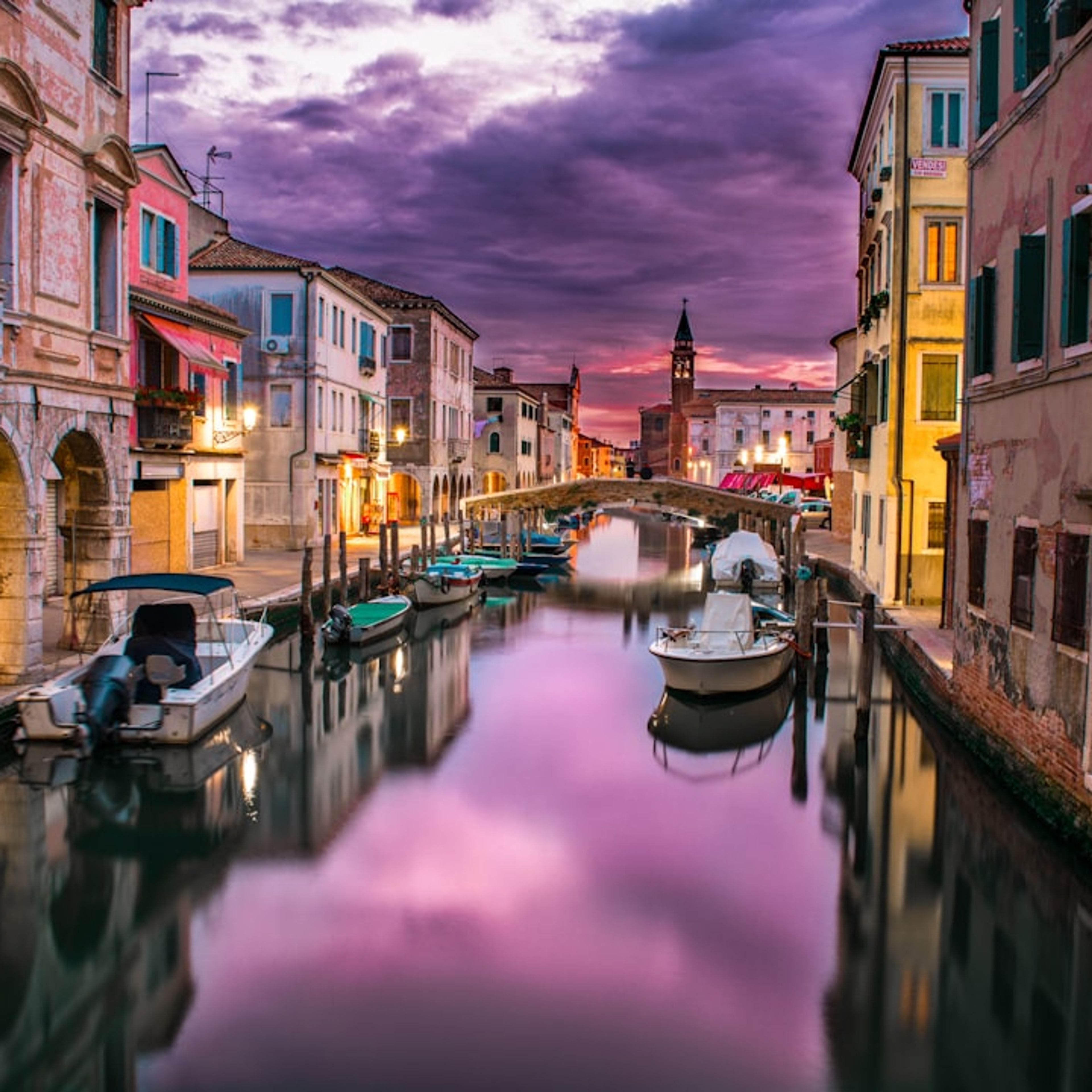
5 Best Things to Do in Venice During the Venice Carnival
The best things to do in Venice during the Venice Carnival, away from Piazza San Marco: five picks with exact addresses, hours, prices and 2027 dates.
5 Best Hikes in the Dolomites Near Cortina d'Ampezzo
The 5 best hikes in the Dolomites near Cortina d'Ampezzo for 2026, with distance, ascent, difficulty, trailhead parking, bus lines and toll road rules.