
Guides · Sicily
10 Top Places to Visit in Sicily, Italy

CEO and co-founder
This guide ranks the 10 top places to visit in Sicily for a 2026 trip - the sights that genuinely deserve a spot on your itinerary whether you have a long weekend on one coast or two weeks circling the whole island. Each entry includes the exact address, nearest train station or bus route, distance from the closest major city, and a practical Pro Tip with real prices and times. We have ordered the list to help you plan efficient routes - eastern Sicily attractions like Mount Etna, Taormina, and Syracuse cluster within an hour or two of Catania Fontanarossa Airport (CTA), while western Sicily highlights such as Palermo, Monreale, and Cefalù share the Palermo airport (PMO) catchment.
Two of the most spectacular places to visit in Sicily - the Valley of the Temples in Agrigento and Villa Romana del Casale near Piazza Armerina - sit in the centre and south of the island, awkwardly placed for any single base, so a day trip or one-night stop is built into our suggested order. The list balances volcano hiking, Greek temples, baroque towns, Norman cathedrals, beach time, and ferry trips to the Aeolian Islands - each entry below tells you exactly how long to allow and the cheapest realistic way to get there.
1Mount Etna - Europe's Most Active Volcano
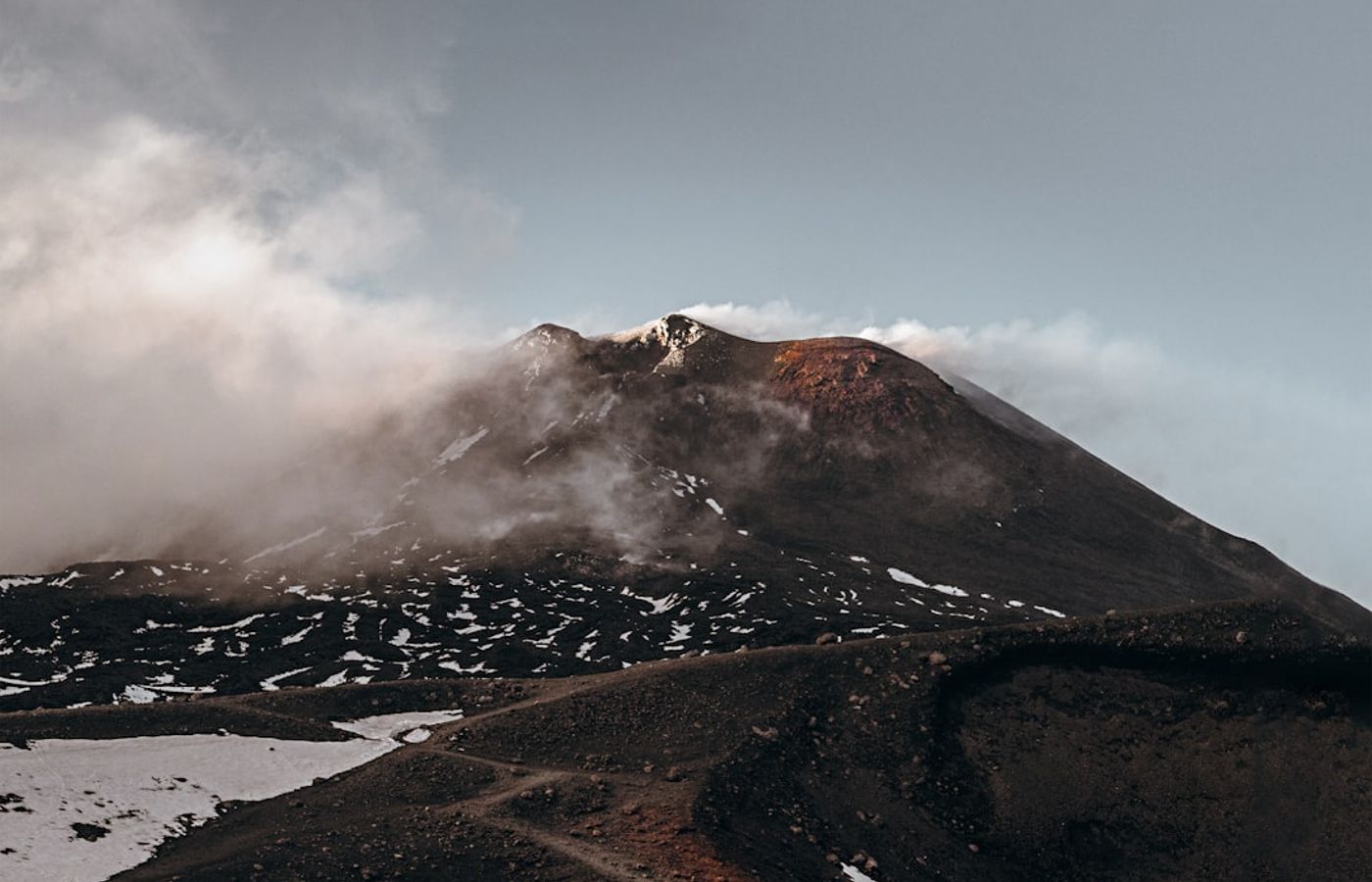

Mount Etna towers 3,357 m above eastern Sicily, the tallest active volcano in Europe and a UNESCO World Heritage Site since 2013. Mount Etna erupts somewhere between dozens and hundreds of times each year - usually mild Strombolian activity at the summit craters, occasionally producing ash plumes that briefly close Catania Fontanarossa Airport (CTA). The volcano's slopes are a strange composite of black lava fields, snow patches, dense pine and chestnut forests, and the vineyards that produce Etna Rosso DOC.
Most visitors start at Rifugio Sapienza on the southern flank at 1,910 m, where the Funivia dell'Etna cable car climbs to 2,500 m for 28 EUR return. From there, registered alpine guides run 4WD jeep transfers and walking tours up to the active craters at around 2,920 m - the only legal way to climb above the Torre del Filosofo barrier without permits. The northern approach via Piano Provenzana is quieter, with similar guided trips from Linguaglossa and unbeatable views toward the Strait of Messina.
Pro Tip: Book your guided summit hike with a CAI-registered Etna company a day in advance - same-day spots fill in summer. Wear closed shoes (lava rock shreds trainers) and bring a fleece even in August; it can be 15 °C colder at the top than in Catania.
2Valley of the Temples (Agrigento) - Best Greek Temples Outside Greece
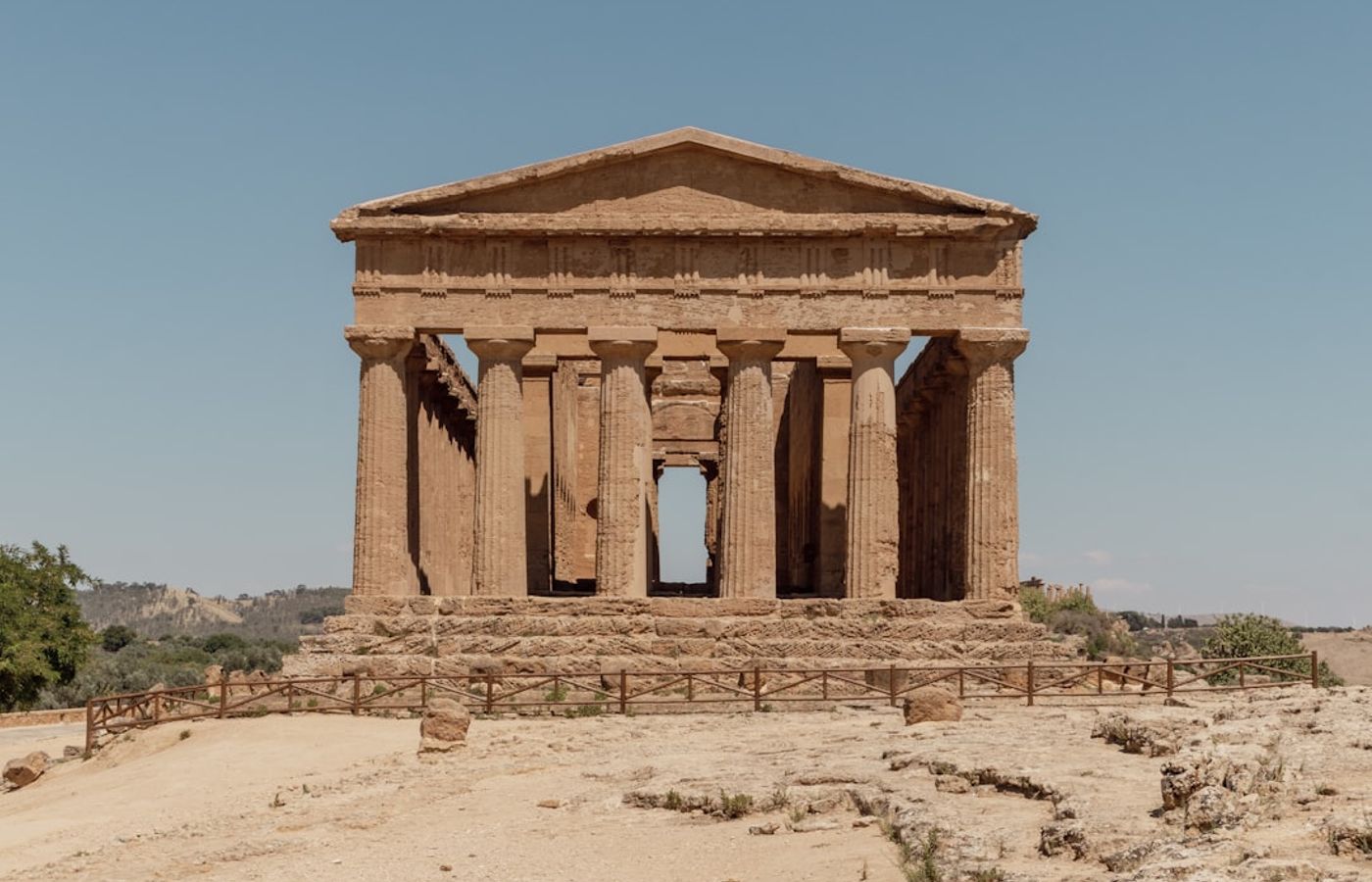

The Valley of the Temples in Agrigento is the most complete surviving Doric temple complex outside mainland Greece - and a UNESCO World Heritage Site since 1997. Eight temples line a 1.5 km ridge above the Mediterranean, built in the 5th century BC when the Greek colony of Akragas was the fourth largest city in the Hellenic world. The Temple of Concordia, finished around 440 BC, is the best-preserved of all - it survived because early Christians converted it into a basilica.
The site stretches from the Temple of Juno at the eastern entrance (Porta V) downhill past the Temple of Concordia, the giant ruined Temple of Olympian Zeus, and the Temple of Castor and Pollux. The on-site Museo Archeologico Pietro Griffo holds the original sculpture and the famously intact 8 m telamon statue from the Zeus temple. Combined park and museum entry costs around 17 EUR; the park alone is 13.50 EUR. Plan three to four hours minimum to walk the full ridge in the heat.
Pro Tip: Enter from the Porta V (eastern) gate near the Temple of Juno and walk downhill to the Tempio di Vulcano exit - it saves a brutal uphill return on hot afternoons. Visit at sunset when the temples turn golden against the sea, or during the late-evening summer openings (8:30 PM-11:00 PM, July-August).

3Taormina - Sicily's Most Photogenic Hilltop Town
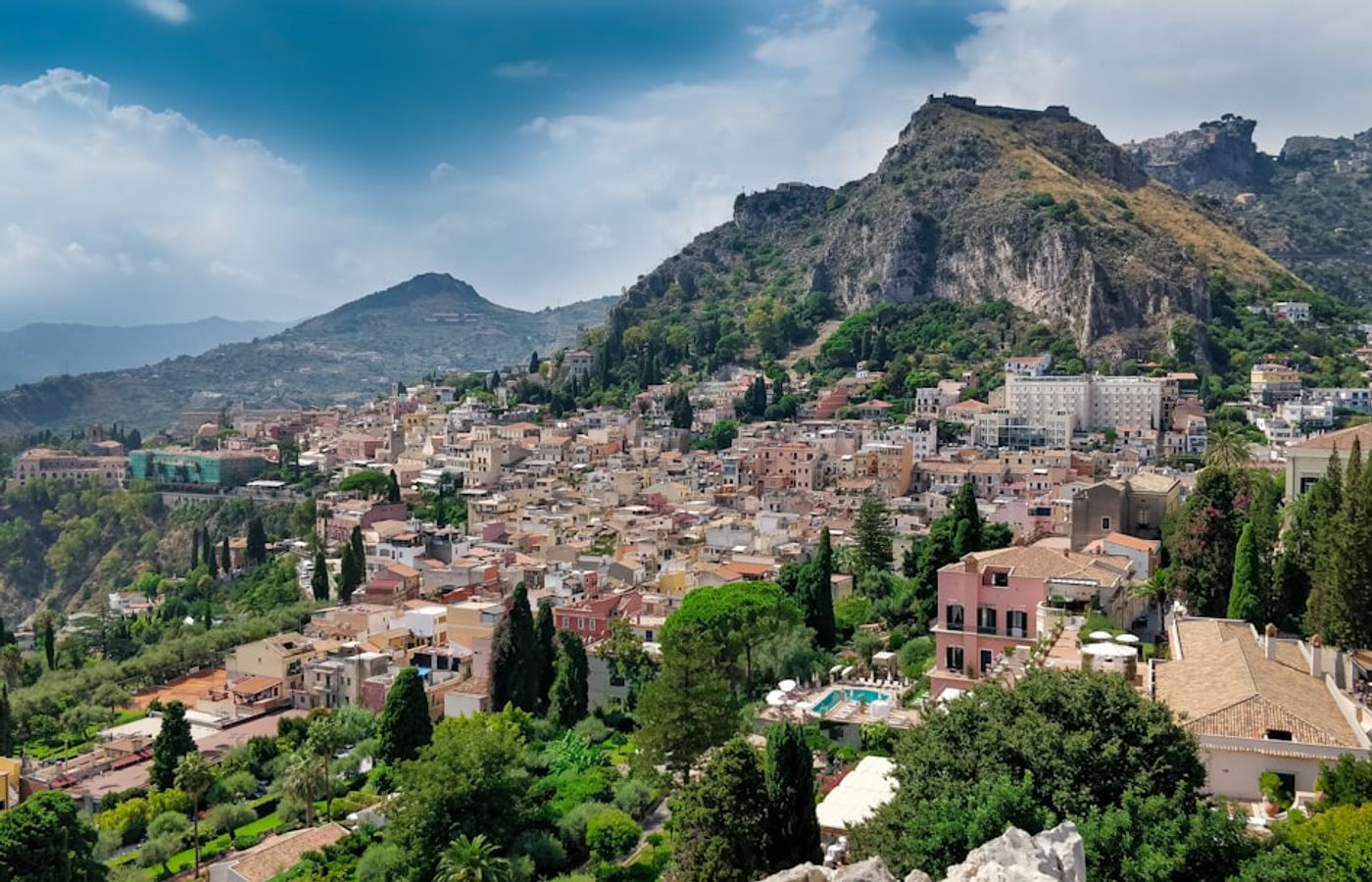
Taormina sits on a Monte Tauro spur 200 m above the Ionian Sea, the most photogenic small town in Sicily and the destination that put the island on the international tourism map in the 19th century. The Teatro Antico - a 3rd-century BC Greek theatre rebuilt by the Romans - frames Mount Etna and the coastline through its broken stage wall, and is one of the most-photographed views in Italy.
The pedestrianised Corso Umberto links Porta Catania to Porta Messina, lined with palazzi, granita cafes, and the cake shops where you should try a cassata siciliana. Piazza IX Aprile gives the classic balcony view over the bay. Below the cliff, the small Isola Bella nature reserve is reachable by a steep stair from Via Pirandello or by the Funivia cable car (3 EUR each way) to Mazzarò beach. Greek Theatre entry costs 14 EUR. HBO's The White Lotus filmed its second season here in 2022, sending visitor numbers up sharply.
Pro Tip: Book the Greek Theatre online to skip the entrance queue, then take the Funivia cable car down to Mazzarò beach in the afternoon - 3 EUR each way and dramatically faster than the switchback footpath. Drivers should park at Lumbi or Porta Catania (around 20 EUR for a full day) since Taormina's old town is car-free.
4Syracuse and Ortigia - Ancient Greek City and UNESCO Old Town
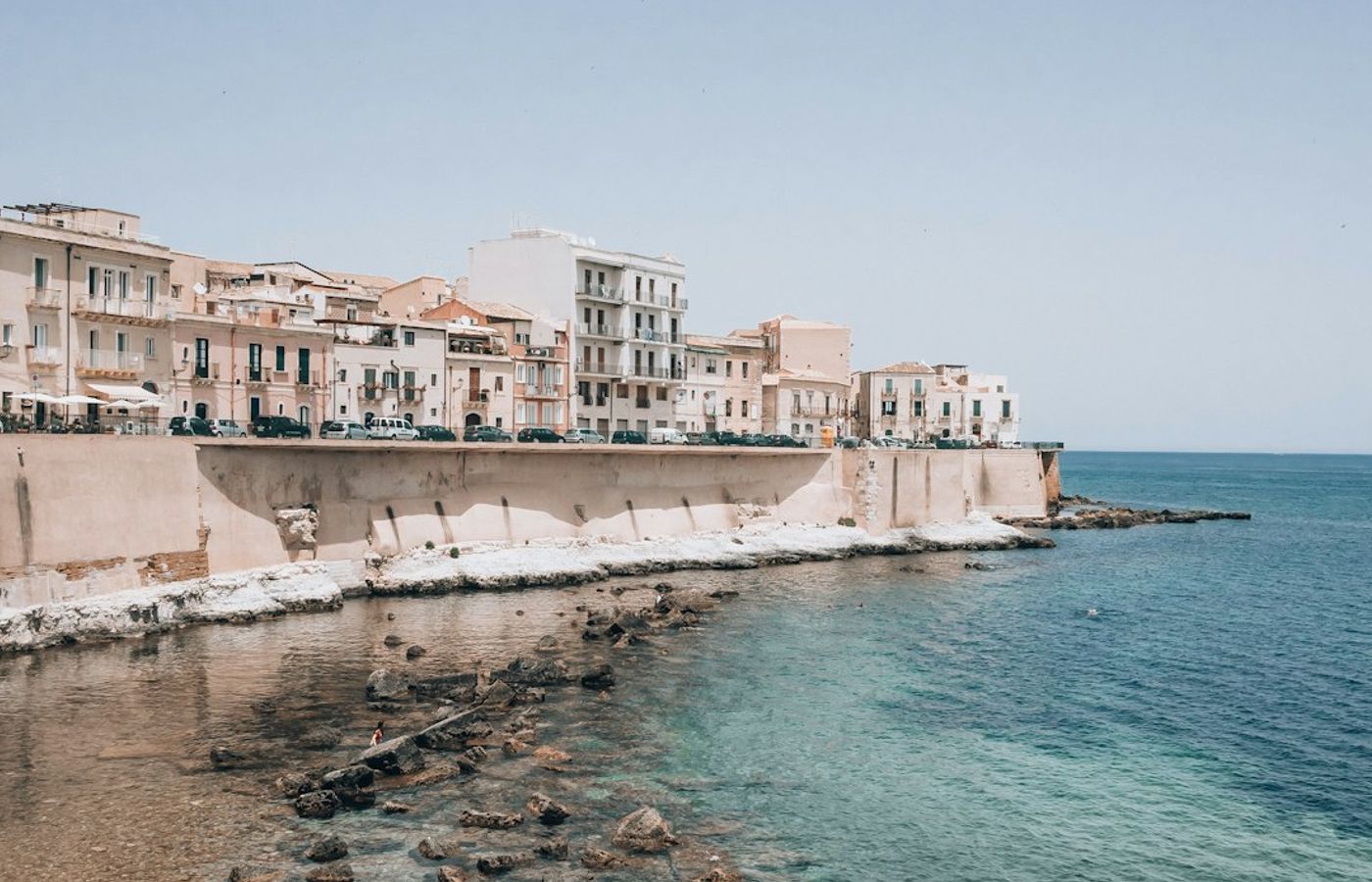
Syracuse was, in Cicero's words, the largest and most beautiful Greek city in the Mediterranean - and the archaeological park together with the offshore island of Ortigia have formed a UNESCO World Heritage Site since 2005. The Parco Archeologico della Neapolis on the modern town's north side holds the 5th-century BC Greek theatre, still used for the annual classical drama festival in May and June, plus the Roman amphitheatre and the dramatic limestone quarry known as the Ear of Dionysius.
Ortigia, the historic island linked by two short bridges, is where you actually spend evenings. The Piazza del Duomo is built around a 7th-century cathedral that incorporates the standing Doric columns of a Greek Temple of Athena. The Fonte Aretusa freshwater spring on the western shore is a working papyrus marsh in central Italy. Combined Neapolis and Paolo Orsi Museum tickets cost 17 EUR. The Mercato di Ortigia (closed Sundays) is the best fish and produce market in eastern Sicily.
Pro Tip: Buy the Neapolis park plus Paolo Orsi Museum combined ticket and use it across two days - the museum is overwhelming after a hot morning at the Greek theatre and quarry. Stay in Ortigia rather than the modern town; B&Bs around Via della Maestranza put you 5 minutes from the cathedral, the market, and aperitivo on the seafront.
5Palermo - The Capital and Its Arab-Norman Heart
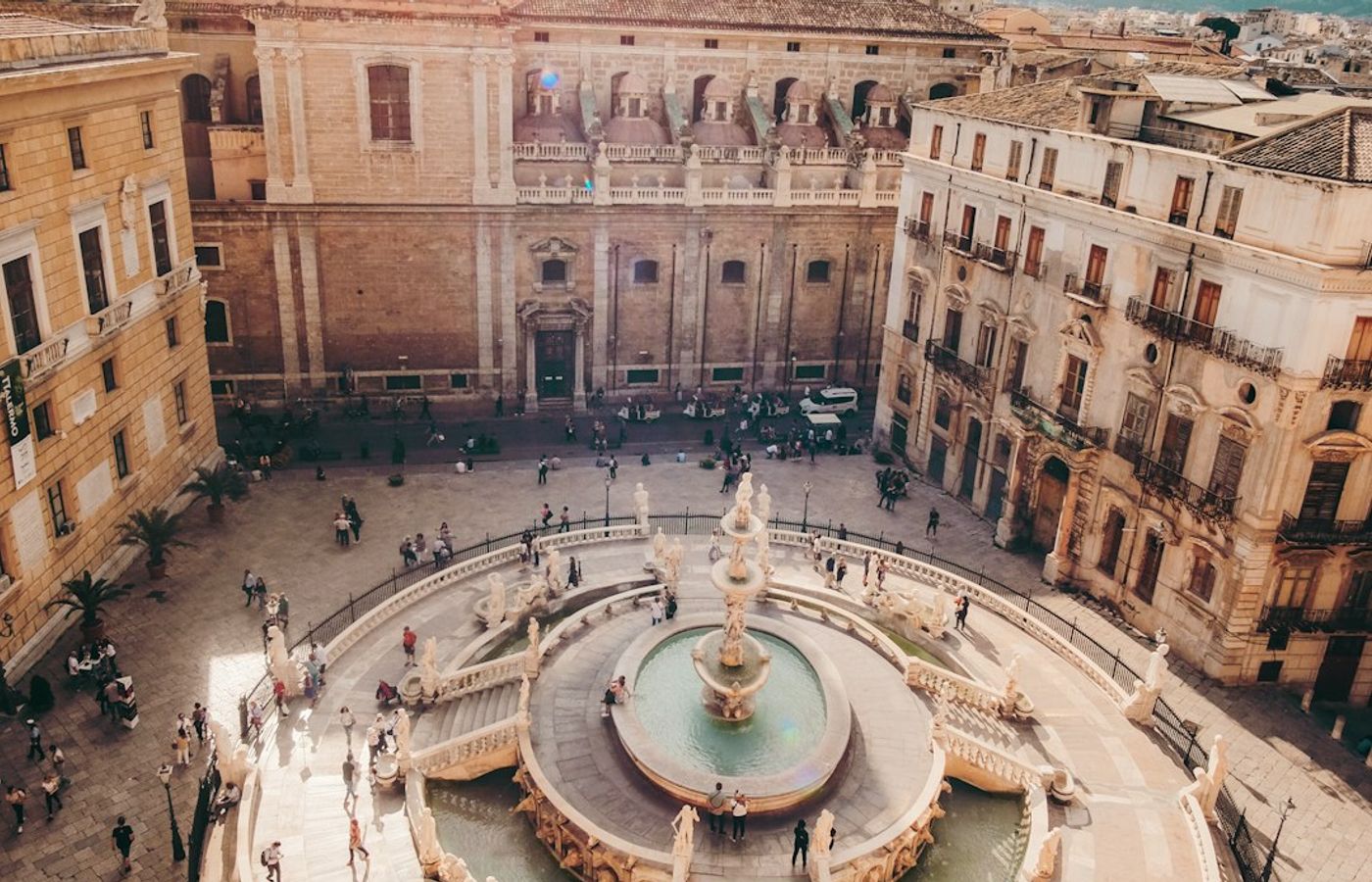
Palermo is Sicily's chaotic, food-obsessed capital, founded by the Phoenicians around 734 BC and shaped most spectacularly by Norman and Arab rulers between 1072 and 1194. UNESCO listed nine of the city's Arab-Norman monuments together in 2015, including the Cappella Palatina inside the Norman Palace (Palazzo dei Normanni) - a small chapel covered floor to ceiling in Byzantine gold mosaics that even rivals Ravenna.
Walking tours start at the Quattro Canti baroque crossroads, then past Piazza Pretoria, the Palermo Cathedral on Via Vittorio Emanuele (free entry, 7 EUR for the rooftop), and the Teatro Massimo - Italy's largest opera house. The street-food markets are the city's beating heart: Ballarò operates Tuesday to Saturday around Piazza del Carmine, Capo runs daily near Porta Carini, and Vucciria has the late-evening drinking scene around Piazza Caracciolo. Try a panino con la milza at Antica Focacceria San Francesco, arancina at Bar Touring, and pane e panelle from any street cart.
Pro Tip: Order arancina (the rounded Palermo version) at Bar Touring or I Cuochini before 10:00 AM, then walk the Capo market - it has fewer cruise tourists than Vucciria. For the Cappella Palatina, book the morning slot online to avoid the queue and to see the gold mosaics in their best natural light before midday.
6Cefalù - Norman Cathedral Town with Sicily's Best City Beach
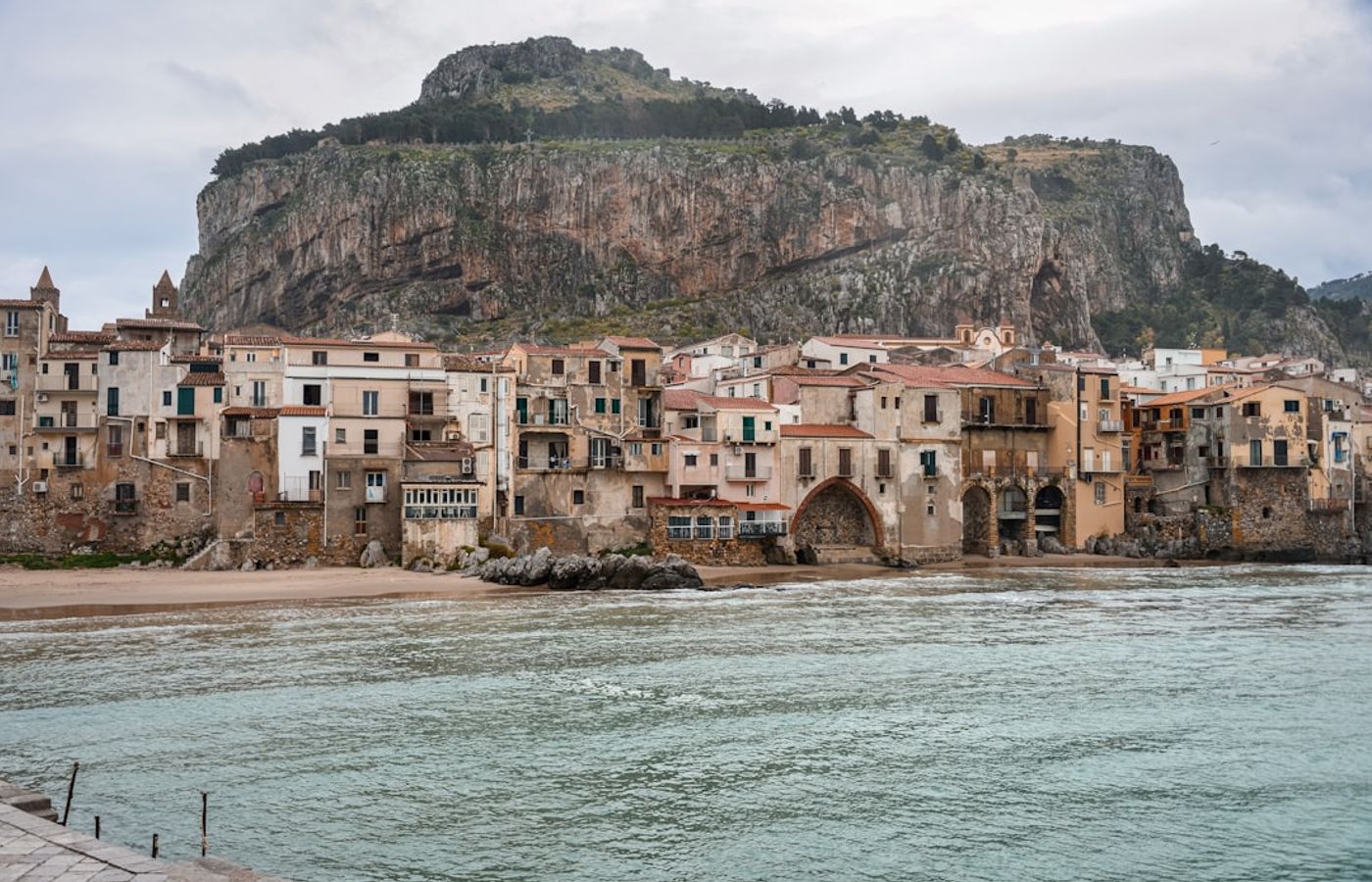
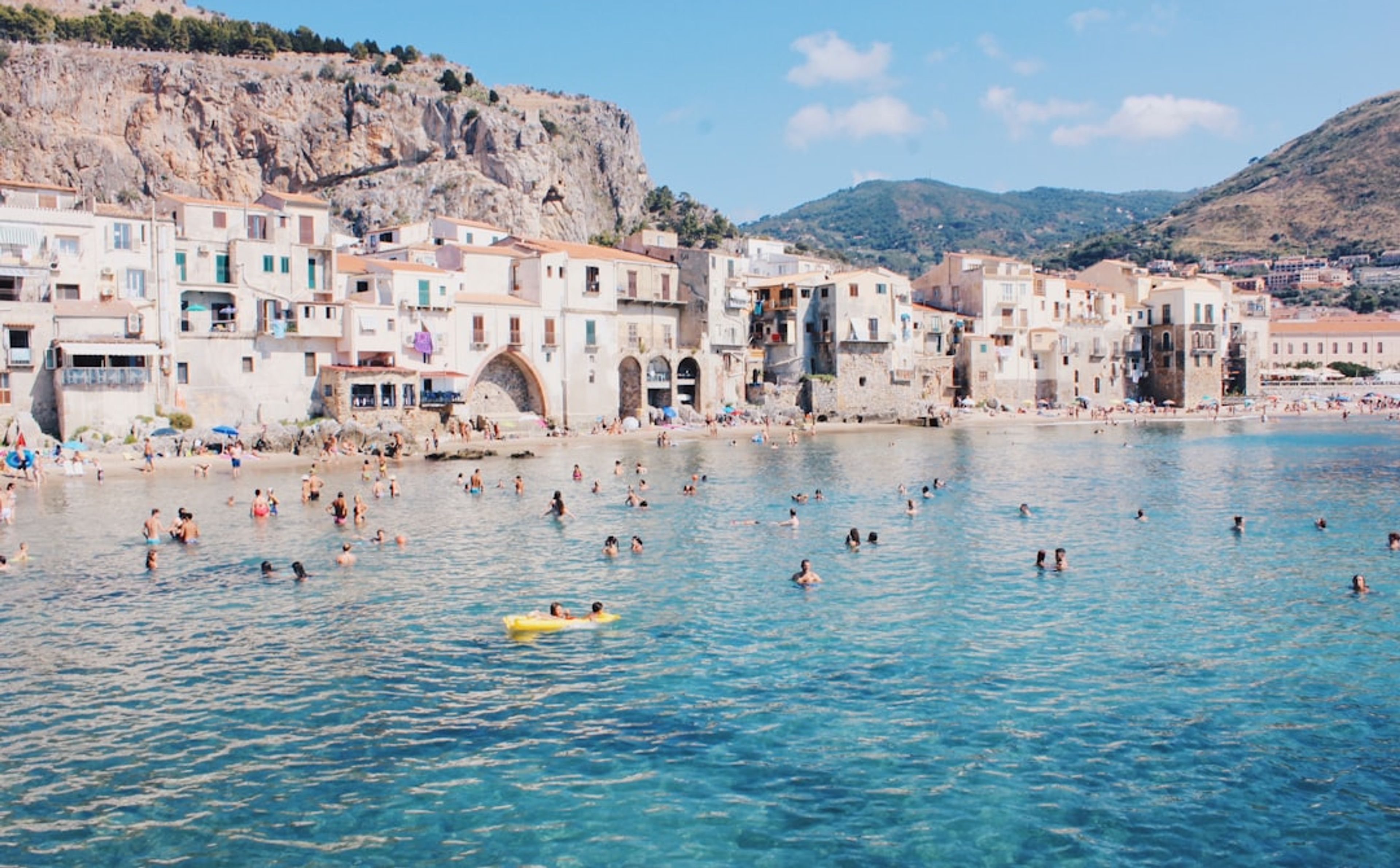
Cefalù sits 70 km east of Palermo on the Tyrrhenian coast - a small fishing town with a Norman cathedral that is one of three Sicilian buildings sharing the Arab-Norman UNESCO listing. King Roger II commissioned the Duomo di Cefalù in 1131; the apse mosaic of Christ Pantocrator, completed by 1148, predates and is generally considered superior to the more famous version at Monreale.
The town stretches between the cathedral and a long sandy public beach (La Spiaggia di Cefalù) - a rare combination on the same morning in Sicily. La Rocca, the 270 m limestone headland behind the town, is a 45-minute climb to a ruined Norman castle and panoramic views back over the red roofs and harbour. The 16th-century Lavatoio Medievale stone-vaulted public laundry on Via Vittorio Emanuele is a quirky free stop. Cefalù makes a relaxed day trip from Palermo or a quieter base for two or three nights than the capital.
Pro Tip: Take the 9:00 AM Trenitalia regional train from Palermo Centrale (45 min, 5.60 EUR) to see the cathedral before the 11:00 AM tour buses, then have a long lunch at one of the Lungomare seafood restaurants and stay for an evening swim before the last train back at around 9:30 PM.
7Aeolian Islands - Volcanic Archipelago Off the North Coast
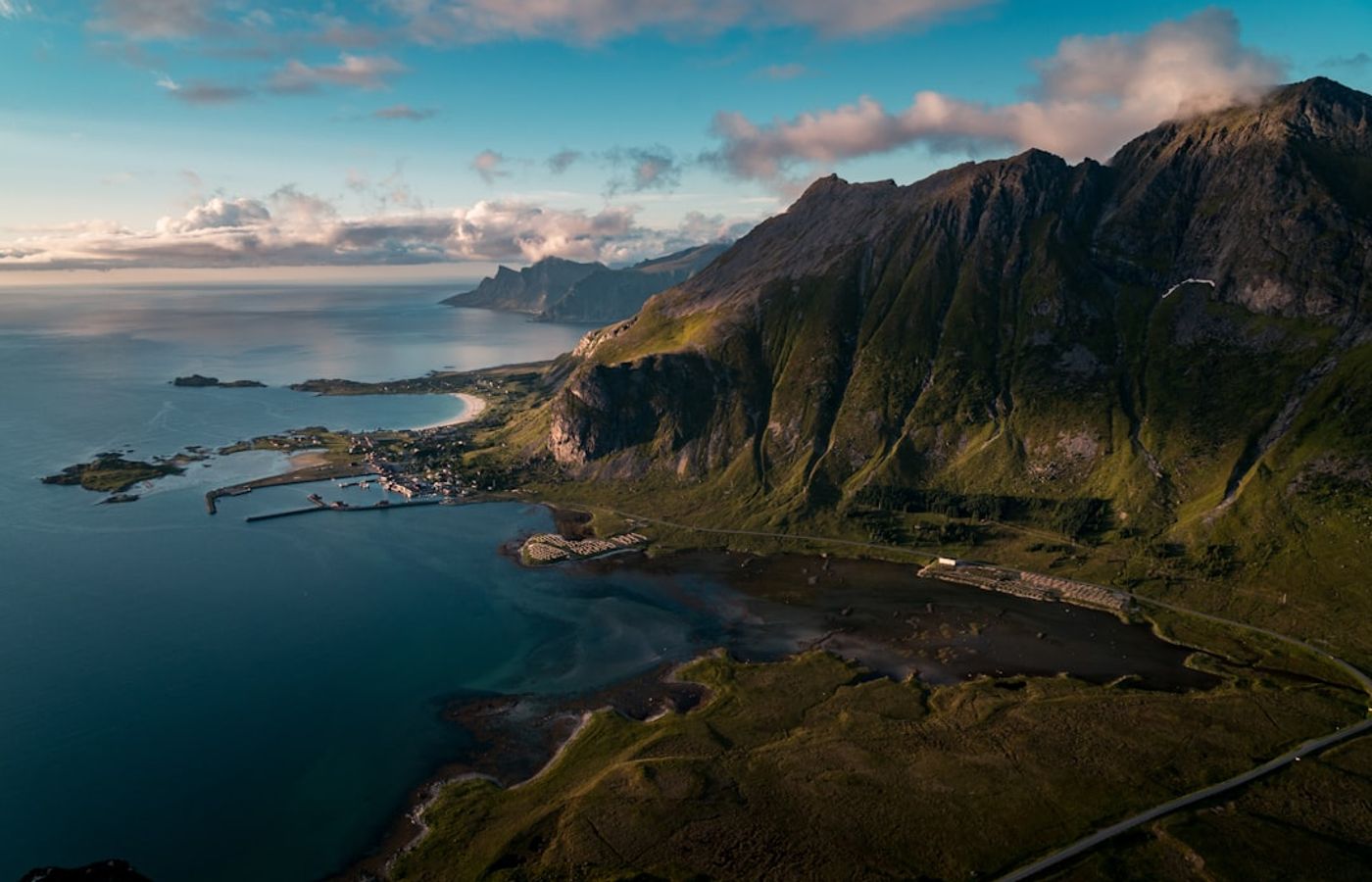
The Aeolian Islands are seven volcanic islands strung off Sicily's northern coast, listed by UNESCO in 2000 for their textbook volcanic geology. Lipari is the largest and most populated, with the small but excellent Museo Archeologico Eoliano. Vulcano has a smoking grand crater you can climb in 90 minutes. Stromboli is one of the world's most consistently active volcanoes, with regular small explosions visible from boats after dark. Salina, Panarea, Filicudi, and Alicudi are progressively quieter, smaller, and more dramatic.
Ferries and faster hydrofoils run year-round from Milazzo on the Sicilian mainland, with summer connections from Messina, Palermo, Naples, and Reggio Calabria. Liberty Lines hydrofoils take 1 hour to Vulcano and 1h45m to Lipari from Milazzo (around 22 EUR each way). Many travellers visit as one-day trips from Sicily, but the magic is staying overnight on Stromboli or Panarea after the day trippers leave. The capers, sweet Malvasia wine from Salina, and bottarga at island restaurants are reason enough to visit on their own.
Pro Tip: For a day trip from the mainland, take the 8:30 AM Liberty Lines hydrofoil from Milazzo to Vulcano (1h, around 22 EUR), climb the Gran Cratere in the cool morning before it heats up, then cross to Lipari for late lunch and catch a 6:00 PM hydrofoil back. Buy tickets the day before in summer.
8Noto - Late Baroque Showpiece of the Val di Noto
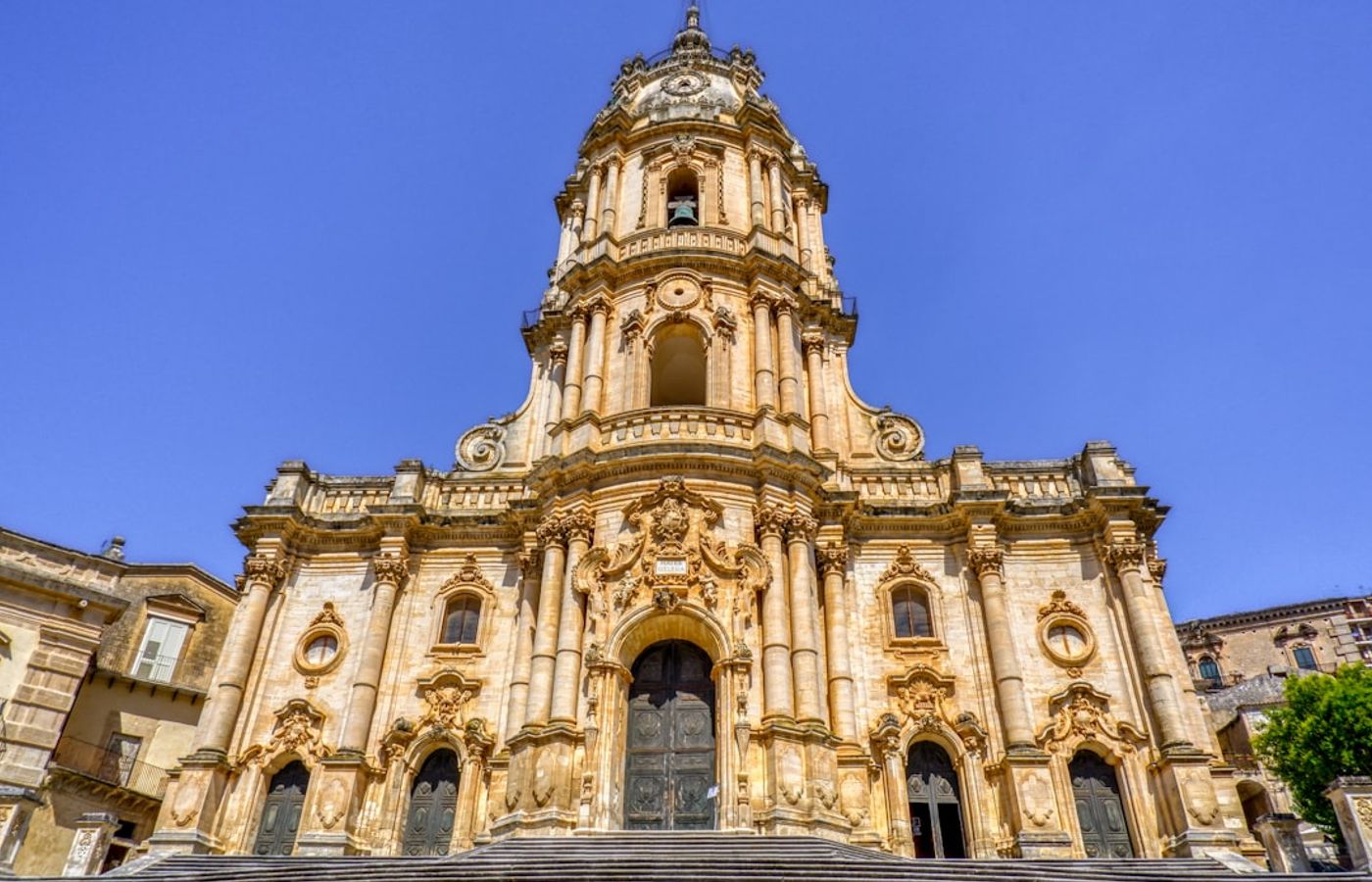
Noto is the showpiece of the late-baroque towns of the Val di Noto, a UNESCO World Heritage Site since 2002 covering eight south-eastern Sicilian towns rebuilt in honey-coloured limestone after the 1693 earthquake levelled the region. The architects had a blank slate, an extraordinary budget, and a single coherent plan - so Noto reads as a single set-piece rather than the medieval palimpsest most Italian towns are.
The Cathedral of San Nicolò sits at the top of a wide flight of steps above Piazza Municipio, framed by the rococo Palazzo Ducezio opposite. Walk west along Corso Vittorio Emanuele to the Chiesa di Santa Chiara (climb its bell tower for the rooftop view) and the Palazzo Nicolaci di Villadorata, with its riot of grotesque limestone balcony brackets. The whole historic centre is small enough to see in a long afternoon, but Noto is best at golden hour when the local stone glows orange. The Infiorata flower festival in mid-May carpets Via Nicolaci in petals.
Pro Tip: Visit during the Infiorata festival in mid-May or skip the midday heat and arrive at 5:00 PM when the baroque facades turn honey-gold in the late sun. Modica and Ragusa Ibla, both UNESCO Val di Noto towns, are an easy combined day trip from Syracuse if you have a car.
9Monreale Cathedral - Sicily's Greatest Norman Mosaic Church
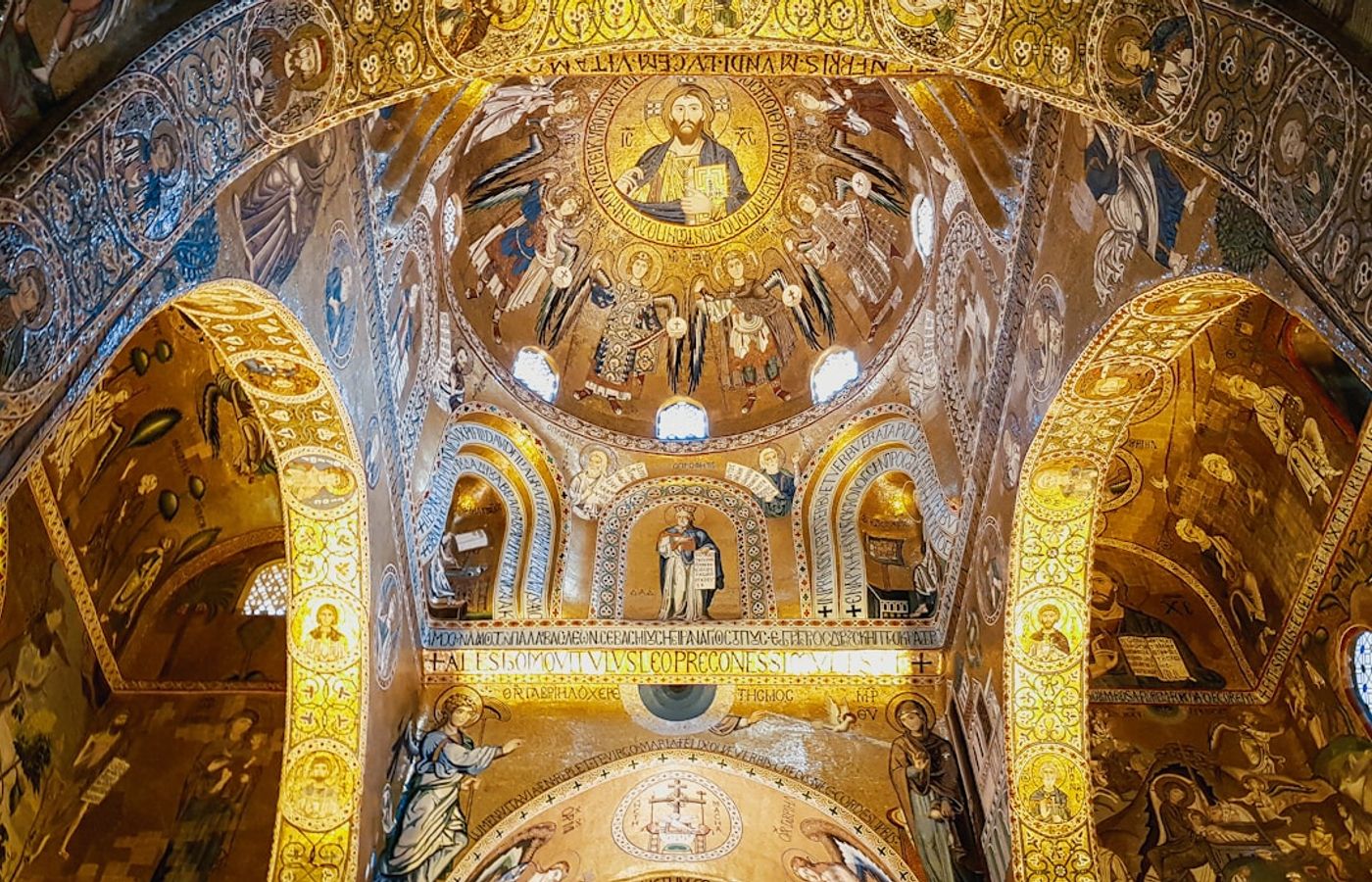
Monreale Cathedral, 10 km southwest of Palermo, is the third Sicilian Arab-Norman UNESCO monument - and it holds the largest cycle of Byzantine gold mosaics in Italy. King William II commissioned the church in 1174; the 6,400 square metres of mosaics were finished by 1267 and depict the entire Old and New Testament around walls, apses, and central nave. The Christ Pantocrator in the apse is 13 m high and visible from the back of the church.
The cathedral itself is free to enter, with paid sections including the rooftop walk (around 5 EUR), the treasury, and the cloister - 228 paired columns inlaid with mosaic and topped by carved capitals depicting biblical scenes, mythical creatures, and medieval everyday life (10 EUR). The square outside is small and almost always packed with coach groups, but the cloister is calmer and a clear highlight. Combine Monreale with the Palazzina Cinese and Capo Gallo nature reserve for a half-day out of Palermo by car or local bus.
Pro Tip: Take the AMAT bus 389 from Palermo Piazza Indipendenza (1.80 EUR for a 90-minute ticket) rather than driving - parking in Monreale's old town is brutal. Aim for arrival before 10:30 AM to see the mosaics in the best natural light and to beat the worst of the cruise-day crowds.
10Villa Romana del Casale - Roman Mosaics on a Grand Scale
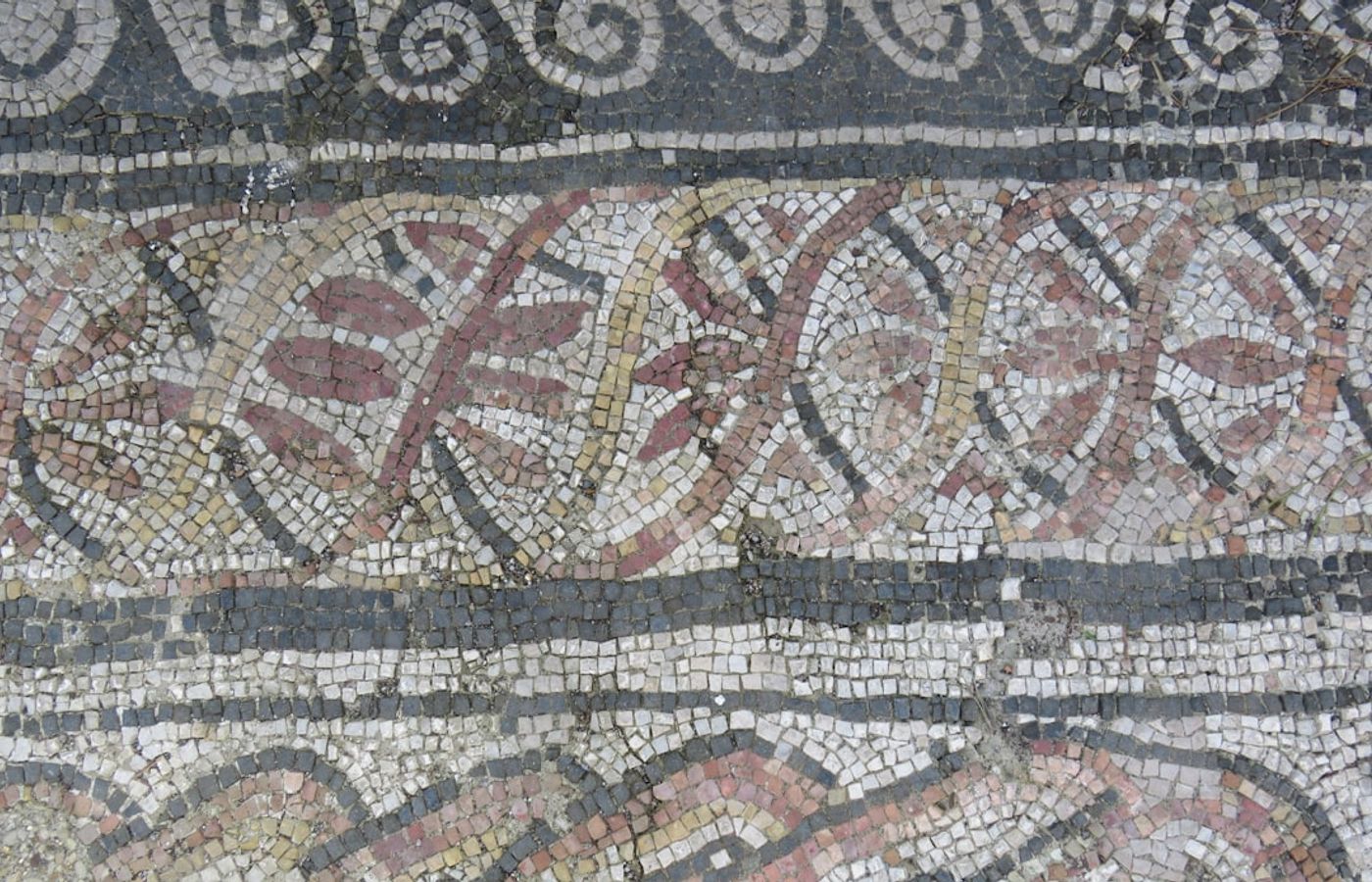
Villa Romana del Casale outside Piazza Armerina holds the most extensive set of Roman mosaics anywhere in the world - around 3,500 square metres covering 50 rooms, listed as a UNESCO World Heritage Site in 1997. The villa was a 4th-century country residence of an unusually wealthy Roman, possibly a member of the Tetrarchy, and was preserved for centuries by a 12th-century landslide that buried it in mud.
The so-called Great Hunt corridor (Ambulacro della Grande Caccia) is a 60 m mosaic showing North African animals being captured for the Roman games. The famously well-preserved Sala delle Dieci Ragazze depicts ten women in what look unmistakably like modern bikinis, exercising and competing in athletic events. The site is fully covered by elevated walkways that protect the mosaics and let you see the geometry from above. Entry costs 12 EUR; allow 90 minutes inside, plus another two hours of driving from Catania or Palermo round-trip - it sits inland in Enna province with no fast train link.
Pro Tip: Take the SAIS bus from Catania to Piazza Armerina (1h45m, 11 EUR) and then a local taxi to the villa (5 km, around 10 EUR each way) - the public navetta minibus is unreliable. Go on a weekday to avoid the coach groups; the mosaics also photograph far better in the cooler morning light from 9:00 AM to 11:00 AM.

CEO and co-founder
Tomas is the co-founder and director of trip1, an European company specializing in reservation services. He launched the company in 2025 with a focus on building scalable, efficient operations.
Climate averages · 1991–2020
When is the best time to visit Sicily?
The best time to visit Sicily is between May and October, the most comfortable stretch of the year on these averages.
Best time · May–OctoberRainfall
- Jan6°
- Feb6°
- Mar8°
- Apr11°
- May16°
- Jun21°
- Jul24°
- Aug25°
- Sep20°
- Oct16°
- Nov11°
- Dec8°
More of Italy
10 Top Places to Visit in Sicily, Italy - FAQ
Yes, in 10-14 days at a comfortable pace. Eastern attractions (Mount Etna, Taormina, Syracuse, Noto, Villa Romana del Casale) can be covered from a Catania base in 5-6 days. Western attractions (Palermo, Monreale, Cefalù, Valley of the Temples) take another 3-4 days from Palermo. The Aeolian Islands need 1-2 extra nights. Cramming all ten into a single week is possible only with a rental car, very long days, and minimal time inside each site.
Start east. Fly into Catania Fontanarossa (CTA), base 3 nights to cover Mount Etna and Taormina, then move to Syracuse for 2 nights to cover Ortigia, Noto, and a side trip to Villa Romana del Casale on the way west. Drive across to Agrigento for one night to see the Valley of the Temples, then north-west to Palermo for 3-4 nights covering Monreale, Cefalù, and an Aeolian Islands ferry day from Milazzo. Fly out of Palermo (PMO).
Three should be booked in advance during summer (June-August): Mount Etna's guided summit hikes (often 1-2 days ahead via a CAI-registered company), the Greek Theatre at Taormina, and the Cappella Palatina inside the Palazzo dei Normanni in Palermo. Valley of the Temples, Syracuse Neapolis, Cefalù Cathedral rooftop, Monreale cloister, and Villa Romana del Casale rarely sell out. Aeolian Islands hydrofoils book up on summer weekends - reserve them the day before at Liberty Lines or Siremar.
Entry fees alone run roughly 130-150 EUR per person across the ten. Mount Etna cable car costs 28 EUR plus 70-90 EUR for a guided summit trip; Valley of the Temples 17 EUR; Greek Theatre Taormina 14 EUR; Syracuse Neapolis 17 EUR; Cappella Palatina 19 EUR; Cefalù Cathedral rooftop 5 EUR; Monreale full ticket 15 EUR; Villa Romana del Casale 12 EUR; and Aeolian Islands hydrofoil from Milazzo about 22 EUR each way. Add transport, accommodation, and food and a 10-day Sicily trip totals around 1,500-2,200 EUR per person without flights.
This list focuses on the absolute top 10 places to visit in Sicily. Strong runners-up include Erice (medieval mountain town near Trapani), the Trapani salt flats, San Vito Lo Capo and the Zingaro nature reserve for beaches, the baroque towns of Modica and Ragusa Ibla in the south-east, Mozia (Phoenician island near Marsala), and the Catacombs of the Capuchins in Palermo. Wine lovers should plan an Etna Rosso vineyard or Marsala visit. With two weeks on the island, you can fit several of these alongside the main 10.
Most are, though slowly. Mount Etna, Taormina, Syracuse, Noto, Cefalù, Monreale, and Palermo are all reachable by Trenitalia regional trains plus AST or AMAT buses. The Aeolian Islands need a Liberty Lines hydrofoil from Milazzo. Valley of the Temples needs a TUA city bus from Agrigento Centrale station. Villa Romana del Casale is the hardest leg - SAIS bus to Piazza Armerina, then a taxi or unreliable navetta minibus for the final 5 km. A rental car halves total transit time and is strongly recommended for trips of seven days or more.
Yes - it is the most popular full-day excursion in eastern Sicily. Drive 90 minutes from Taormina or Catania to Rifugio Sapienza in the morning, take the Funivia dell'Etna cable car and a guided crater trip up Etna by 11:00 AM, descend by 3:00 PM, then drive 45 minutes north to Taormina for an evening on Corso Umberto and dinner in the Old Town. Day-tour operators in both Catania and Taormina run combined coach trips for 80-130 EUR per person if you do not want to drive.

Related travel guides
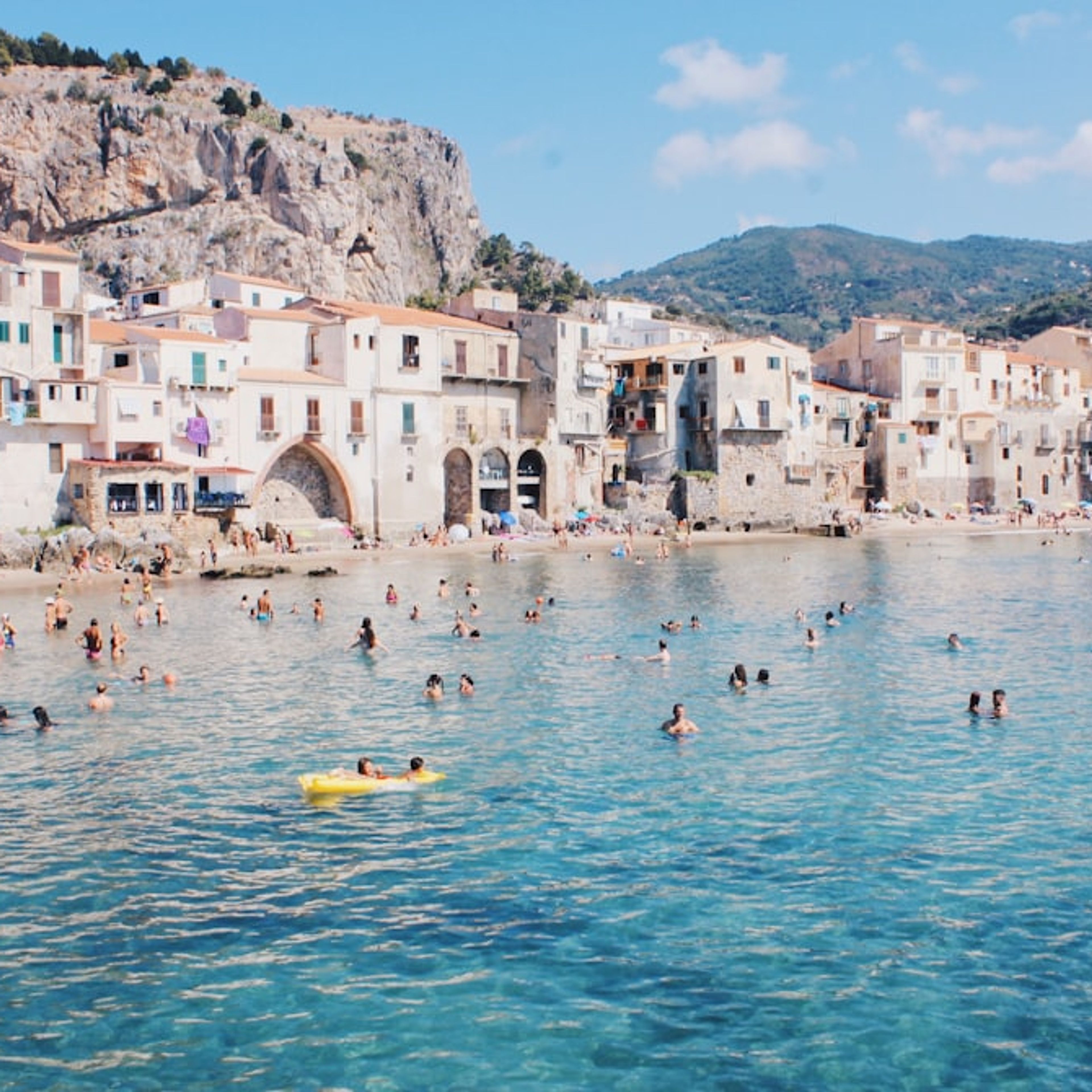
5 Best Beaches in Sicily
The 5 best beaches in Sicily in 2026 - from Scala dei Turchi's white marl cliffs to San Vito Lo Capo's crystal water and the Zingaro nature reserve.
5 Best Hikes in the Dolomites Near Cortina d'Ampezzo
The 5 best hikes in the Dolomites near Cortina d'Ampezzo for 2026, with distance, ascent, difficulty, trailhead parking, bus lines and toll road rules.