
Guides · Mallorca
12 Top Places to Visit in Mallorca, Spain

CEO and co-founder
This guide ranks the 12 top places to visit in Mallorca - the sights that genuinely deserve a spot on your itinerary whether you have a long weekend in Palma or a full week touring the island. Each entry includes the exact address, nearest bus or train stop, distance from Palma de Mallorca, and a Pro Tip with insider detail on timing, tickets, or where to park. The list is ordered to help you plan efficient sightseeing routes - start with Palma's compact Old Town and Cathedral, loop through the Serra de Tramuntana mountains in one or two days, then drop down to the east coast caves and the wild Cap de Formentor in the north.
Mallorca is the largest of the Balearic Islands, and its 3,640 square kilometres pack remarkable variety: a UNESCO-listed mountain range in the northwest, broad farming plains in the centre, dramatic limestone caves in the east, and over 550 km of coastline punctuated by sandy bays and sheltered coves. You will not see all of it in one trip, so we have stuck to the 12 places that combine cultural depth, natural drama, and the practical accessibility most travellers actually need.
A rental car makes the mountain and east-coast destinations much faster to reach, but every entry below is reachable by TIB public buses or the historic Palma-Soller train if you prefer to skip driving. Distances quoted are road distance from central Palma de Mallorca.
1Cathedral of Palma (La Seu) - The Most Iconic Landmark in Mallorca
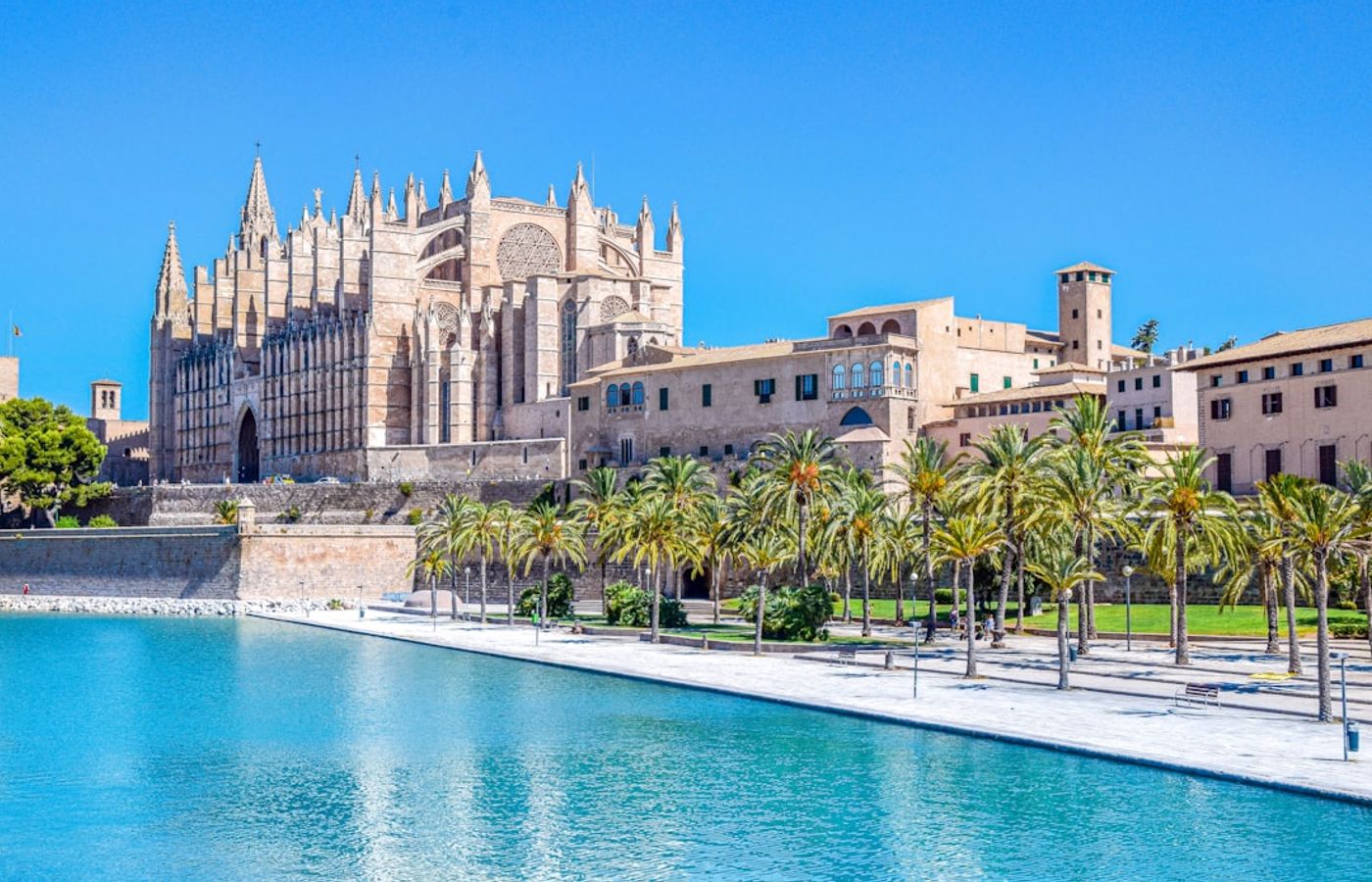

Towering above Palma's harbour, the Cathedral of Palma, known locally as La Seu, is the most photographed building in the Balearic Islands and the obvious starting point for any list of places to visit in Mallorca. Construction began in 1229 under King Jaume I of Aragon and continued for nearly 400 years, leaving a Catalan Gothic exterior with the world's largest rose window (12.5 metres in diameter) and a soaring nave 44 metres high.
Inside, two later interventions transform the experience. Antoni Gaudi oversaw a controversial 1904-1914 restoration that suspended a wrought-iron canopy above the high altar. In 2007 Mallorcan artist Miquel Barcelo completed a ceramic mural in the Chapel of the Holy Sacrament - 300 square metres of clay seascape that splits opinion locally. Climb to the rooftop terraces (separate ticket, advance booking essential) for sweeping views over the bay of Palma.
Pro Tip: Time your visit for the spring or autumn equinox (around 2 February or 11 November), when sunlight passes through the east rose window and projects its image onto the wall directly beneath the west window - locals call it the 'Figure of Eight' and it draws crowds from 8:30 am.
2Old Town of Palma de Mallorca - Tangled Streets, Patios and Markets
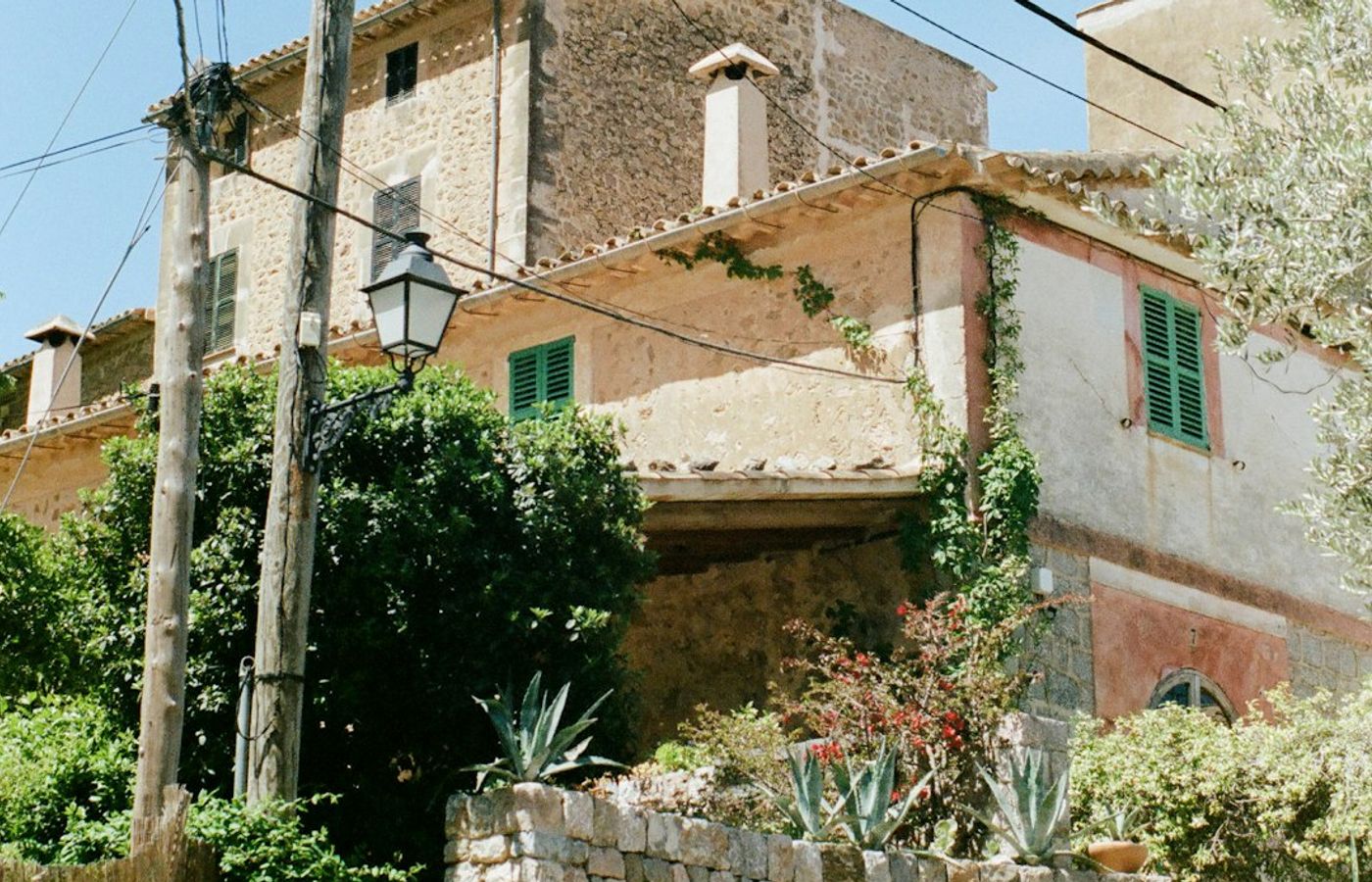

Palma's Old Town (Casc Antic) wraps around La Seu in a maze of Arab-era alleys, Renaissance courtyards, and Modernista facades. Walk from the cathedral up Carrer del Palau Reial to the Almudaina Royal Palace - originally a Moorish fortress, now a working royal residence and museum. From there cut through the Jewish quarter (Sa Calatrava) and Placa Sant Francesc with its 13th-century Gothic basilica.
The heart of the area is Placa Major, a clean Neoclassical square ringed by cafes. Carrer Sant Miquel runs north and is the best street for ensaimada bakeries (Forn des Teatre and Ca'n Joan de S'Aigo are the institutions), while Passeig del Born has the higher-end shopping. Don't skip the Banys Arabs, an intact 10th-century Arab bathhouse on Carrer Can Serra, and the Mercat de l'Olivar food market for tapas at lunch.
Pro Tip: Many private patios on Carrer Can Savella and Carrer Morey only open during the Ruta dels Patis in May - check Palma's tourism office calendar before you travel if you want to see the inside of these courtyards.

3Bellver Castle - The 14th-Century Round Fortress Above Palma
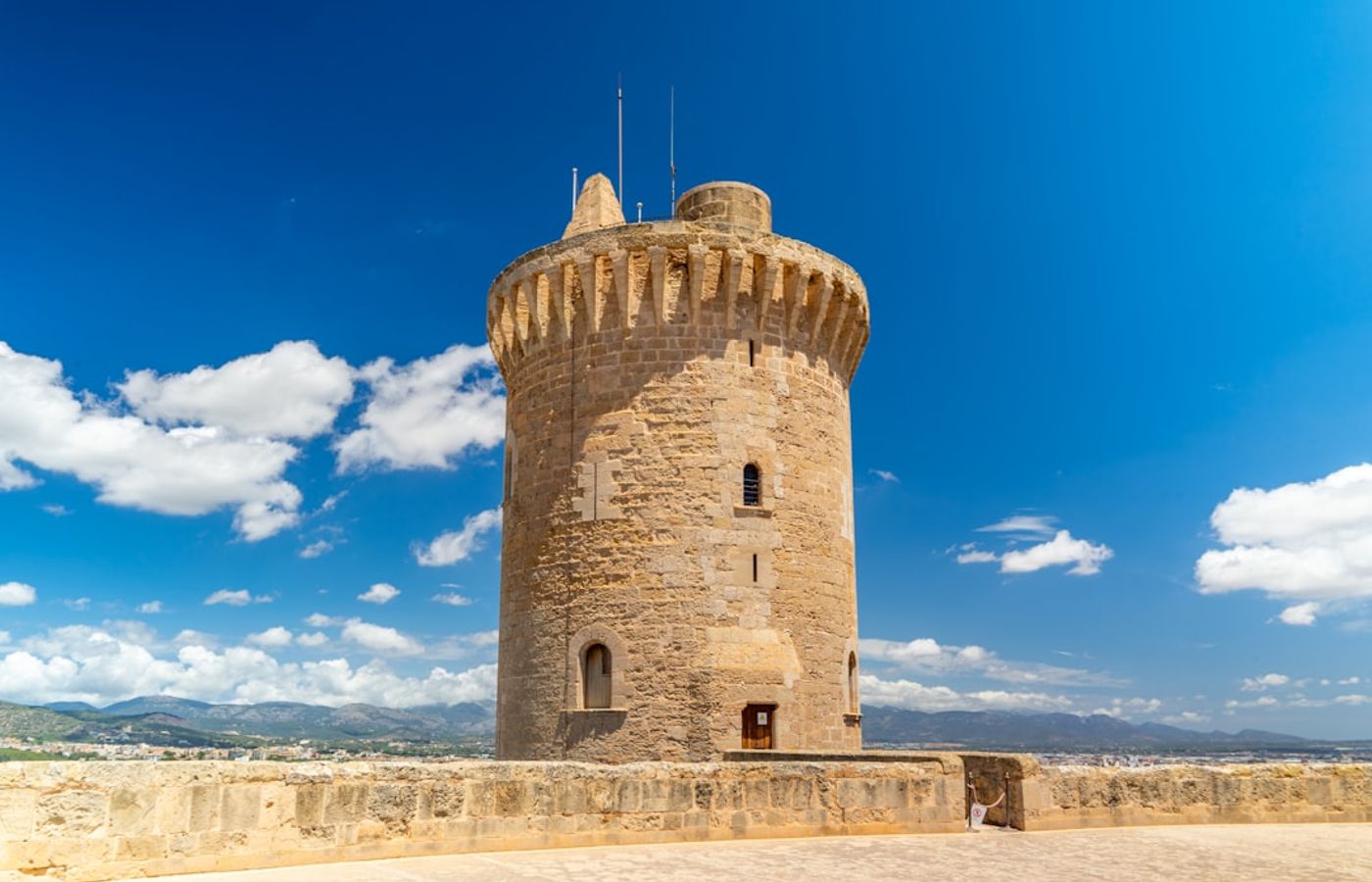

Bellver Castle is one of only four circular medieval castles in Europe and the most distinctive piece of architecture in Palma after the cathedral. Completed in 1311 for King Jaume II of Mallorca, it sits 112 metres above sea level on a wooded hill and has served as a royal summer residence, a prison (the writer Jovellanos was held here from 1802 to 1808), and a mint.
The castle's circular plan with four towers and a deep moat is unusual for medieval Spain - the design borrowed from earlier French and Crusader fortresses. Inside, the two-storey courtyard with Gothic arches is the photographic highlight. The City History Museum on the ground floor covers Palma from Talayotic times to the 19th century, but the real draw is the 360-degree view from the rooftop terrace: Palma bay, the Cathedral, the Tramuntana foothills, and on clear days the cruise terminal.
Pro Tip: Sunday entry is free for residents of the Balearic Islands and very crowded - non-residents pay 4 EUR and avoid the queues. The walk up from Placa Gomila through the pinewoods takes 25 minutes if you want to skip the bus.
4Serra de Tramuntana - The UNESCO Mountain Range of Northwest Mallorca
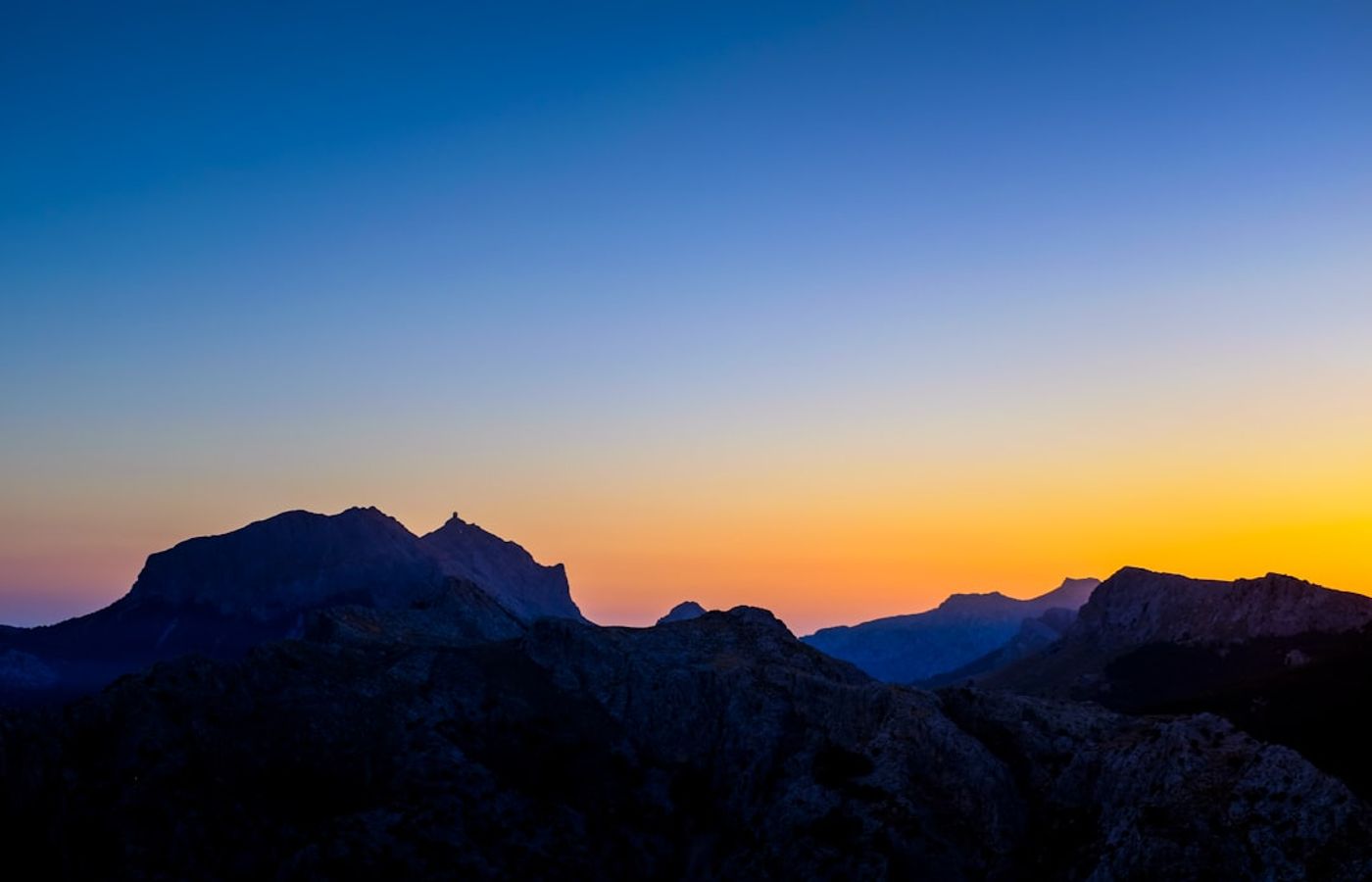
The Serra de Tramuntana runs 90 km along Mallorca's northwest spine and was inscribed as a UNESCO World Heritage cultural landscape in 2011. The range tops out at Puig Major (1,445 m) and shelters terraced olive groves, dry-stone walls, and the stone villages that define inland Mallorca: Banyalbufar, Estellencs, Deia, Valldemossa, Soller, Fornalutx, and Pollenca.
The scenic MA-10 road links most of these settlements and is one of Europe's great driving routes. Time-pressed visitors can sample it in a half-day loop from Palma de Mallorca: Valldemossa for the Carthusian monastery, lunch in Deia overlooking the sea, then Soller via the hairpin descent. Hikers walk sections of the GR221 long-distance trail (the 'Dry Stone Route'), which runs the full length of the range over 8 stages. The 5-km circuit from Cuber Reservoir to Tossals Verds is a manageable taster with no scrambling.
Pro Tip: The Sa Calobra road (MA-2141) and the climb to Lluc Monastery require steady driving - hire a small car, not an SUV, and start before 9 am to beat coach traffic. Read the UNESCO World Heritage listing for the route's cultural significance before you go.
5Valldemossa - The Stone Mountain Village Where Chopin Wintered
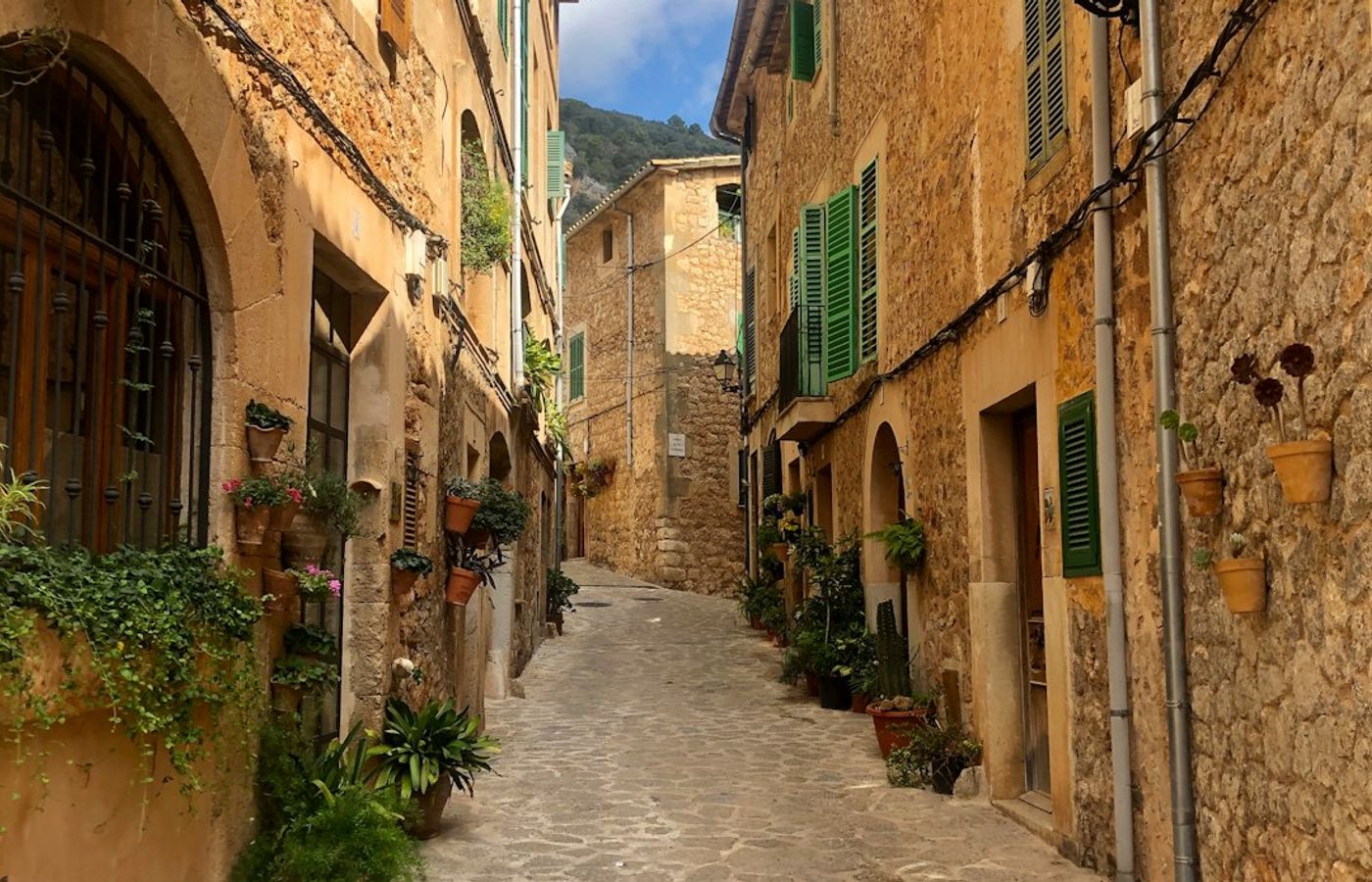
Valldemossa sits 400 metres up in the Tramuntana foothills and is the most visited mountain village on the island, packing 2,000 residents into a tight grid of green-shuttered stone houses. The pull is the Real Cartuja - a former Carthusian monastery converted into private cells in the 1830s, where Frederic Chopin and the writer George Sand spent the winter of 1838-1839 trying (and largely failing) to keep warm.
Chopin wrote 24 Preludes here, and his original Pleyel piano, manuscripts, and the cell decoration are preserved in cells 2 and 4 of the monastery. The complex also includes a Baroque pharmacy, the prior's library, and a small museum of contemporary art. After the Cartuja, walk the Costa de la Cartuja and stop at the bakery on Carrer de la Rosa for a coca de patata, the village's signature potato bun. The neighbouring Palau del Rei Sanxo hosts daily piano recitals (10:30, 11:30, 12:30) included in the monastery ticket.
Pro Tip: Park at the lower municipal car park (Aparcament Valldemossa, around 4.50 EUR for the day) and walk up - the upper streets are pedestrianised and the village is too small to absorb a coach park's worth of cars at peak season.
6Soller and the Vintage Train - Wooden Carriages Through the Mountains
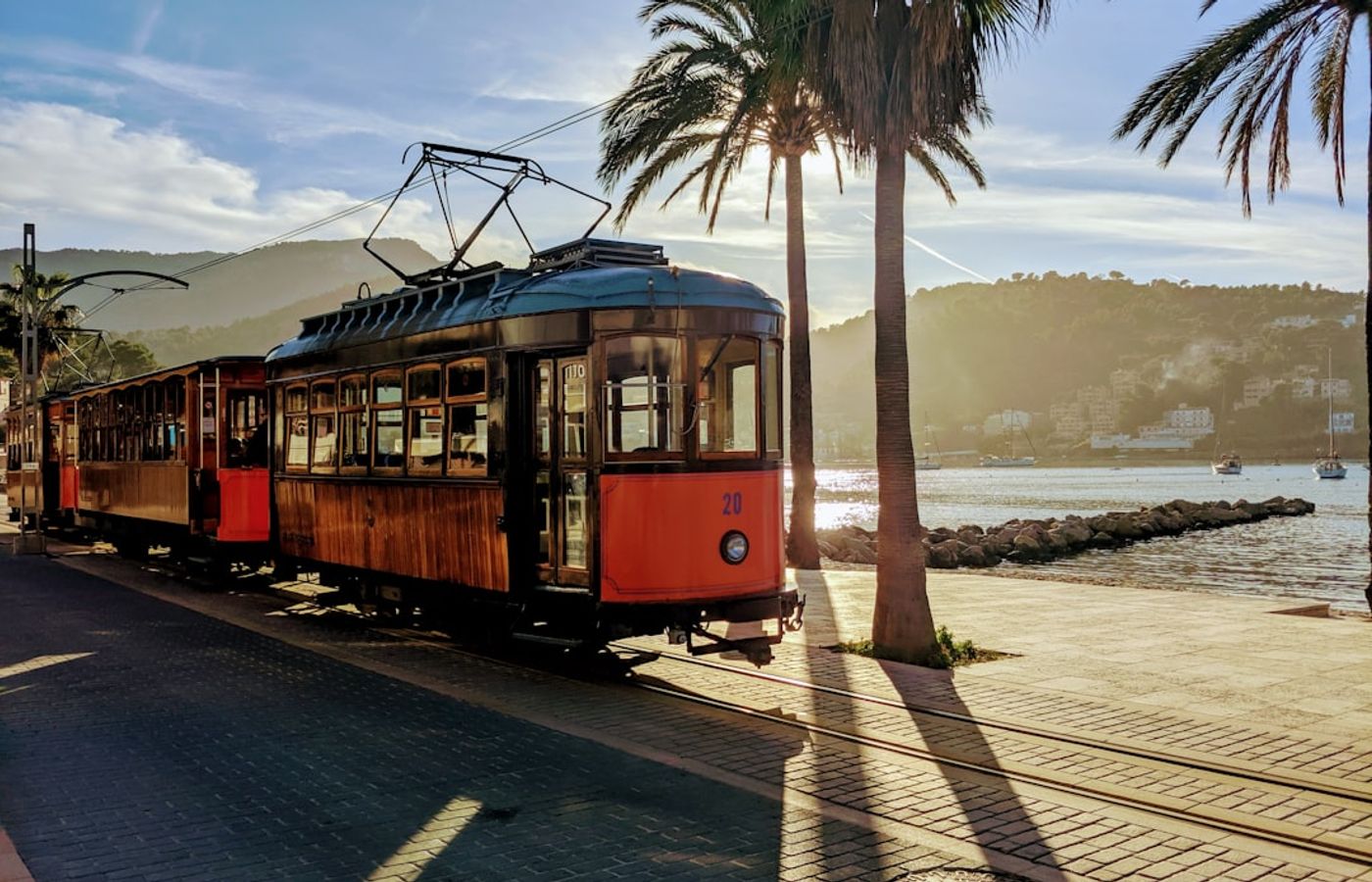
The Ferrocarril de Soller has run wooden carriages between Palma de Mallorca and Soller since 1912, climbing 199 metres through orange groves and 13 hand-cut tunnels in the Tramuntana foothills. The 27-km journey takes 60 minutes and ends at Soller's Placa d'Espanya station, where a 1913 wooden tram continues to the Port de Soller beachfront in another 25 minutes - both run on the original tracks and infrastructure.
Soller itself is a sandstone town set in a valley of orange and lemon orchards. The Modernista facade of the parish church on Placa Constitucio (designed by a Gaudi pupil) is the photographic centrepiece, and the Botanical Garden on Carretera Palma-Port de Soller has a strong Mediterranean plant collection. Most visitors do the train down, eat in Soller (the Placa cafes serve fresh-pressed local orange juice), then ride the tram to Port de Soller for a swim before the return train.
Pro Tip: Buy a return ticket combining train, tram and boat (the 12:00 boat from Port de Soller to Sa Calobra is the highlight, currently around 30 EUR adult round trip). Reserve the morning train (10:10 from Palma) - afternoon services fill with cruise passengers.
7Sa Calobra and Torrent de Pareis - The Sheer Gorge on the North Coast
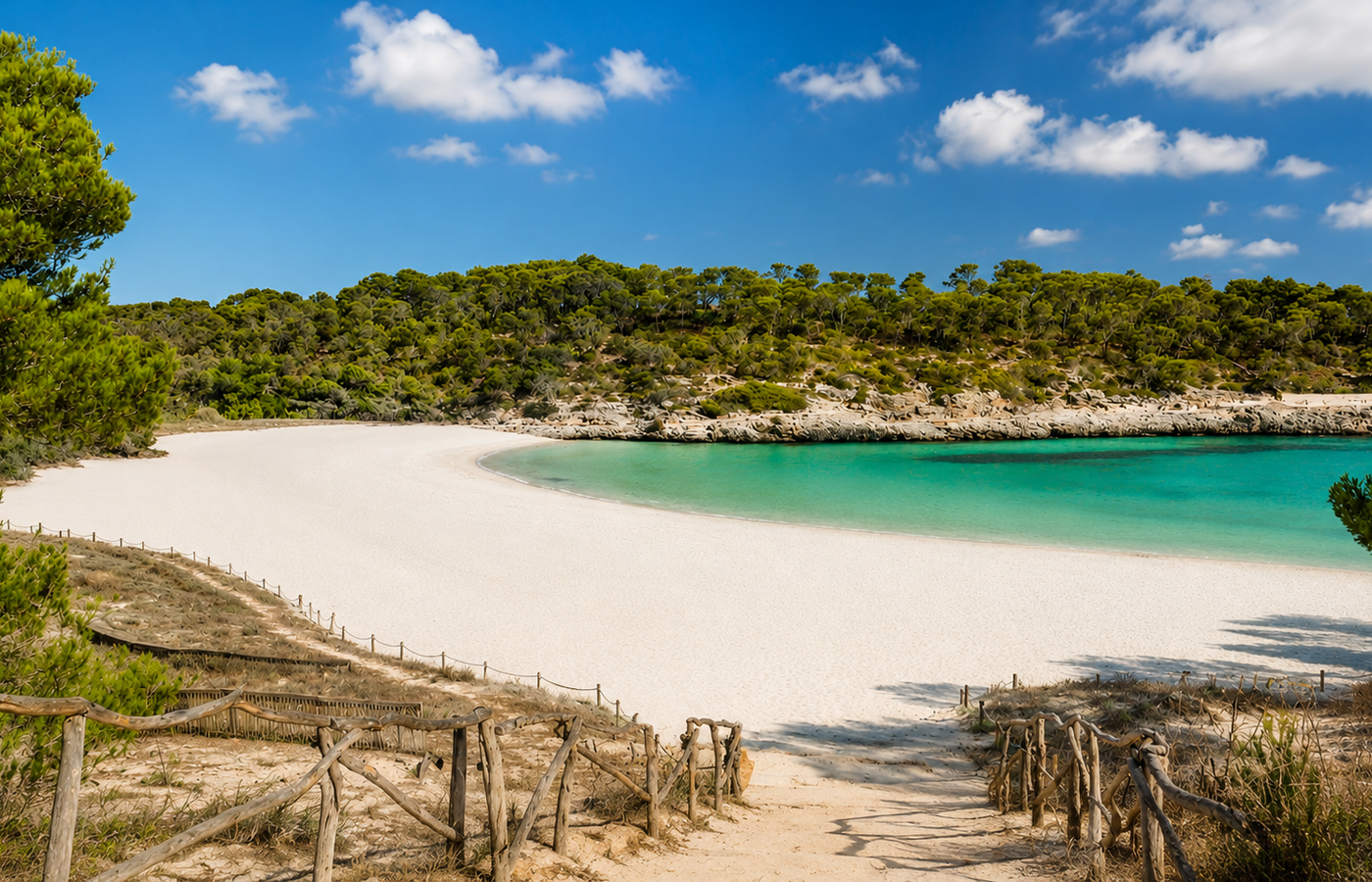
Sa Calobra is a horseshoe-shaped cove at the foot of the Tramuntana range, accessed either by the famous MA-2141 mountain road (the 'Snake Road') or by ferry from Port de Soller. The road plunges 800 metres in 13 km, including the 270-degree spiral known as the Nus de Sa Corbata ('Tie Knot') - on its own one of the great drives in Europe.
The village itself is small but the real reason to come is the Torrent de Pareis - a deep limestone gorge that meets the sea at the second cove, reached on foot through two short tunnels. Walls rise 200 metres on either side of a stony riverbed, and in summer the dry watercourse turns into a natural amphitheatre that hosts an annual classical concert in early July. Strong walkers can hike the gorge from Escorca down to Sa Calobra (5-6 hours, technical scrambling, only safe between June and October).
Pro Tip: Drive only if you have the patience for full-day traffic in summer - tour buses descend in convoys from 11 am. The boat from Port de Soller (departures at 10:00, 12:00, 15:00, around 30 EUR adult round trip) is the more relaxed option and lets you photograph the road from below.
8Cap de Formentor - The Wild Northern Tip of the Island
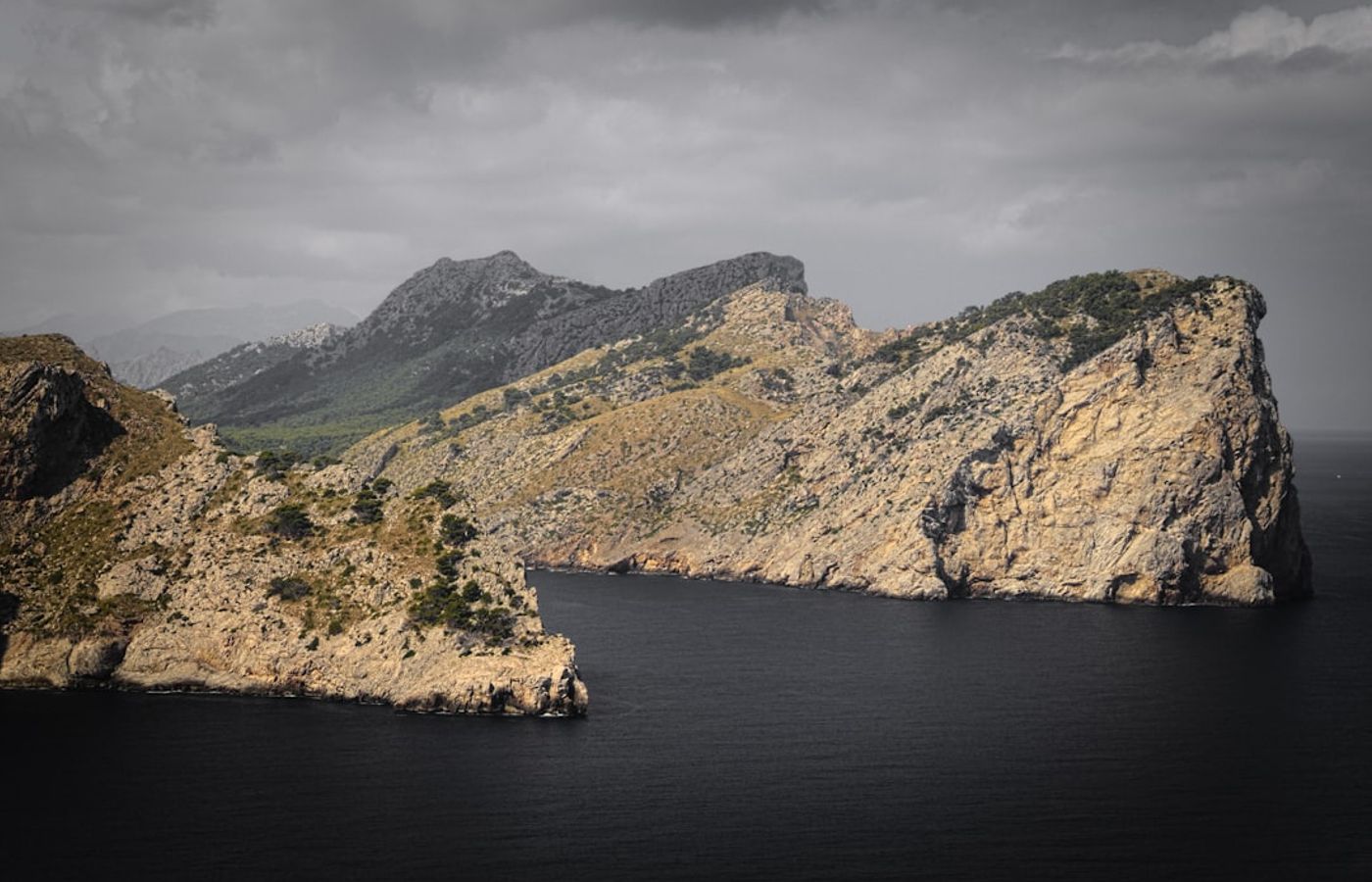
Cap de Formentor is the long, narrow peninsula that forms Mallorca's most northerly point - 14 km of sheer cliffs, pine forest, and turquoise coves. The MA-2210 road runs the spine of the cape, ending at the Far de Formentor (Formentor Lighthouse), in service since 1863 and perched 210 metres above the Mediterranean.
Two viewpoints justify a stop on the way out. The Mirador des Colomer looks over a 200-metre rock pillar where peregrine falcons nest. Cala Figuera can be glimpsed from a smaller pull-out further along, and the sandy Platja de Formentor is the only beach on the cape - white sand, calm water, no road noise. From mid-June to mid-September the cape road is closed to private cars from 10:00 to 19:00 to control traffic; visitors take the shuttle bus from Port de Pollenca (returns every 30 min).
Pro Tip: Sunrise at the lighthouse is the experience of the trip - the cape catches the first light over the open Mediterranean. Drive out before 09:30 to beat both the shuttle restriction and the coach groups, and bring sturdy shoes for the short trail behind the lighthouse.
9Drach Caves (Coves del Drac) - Underground Lakes on the East Coast
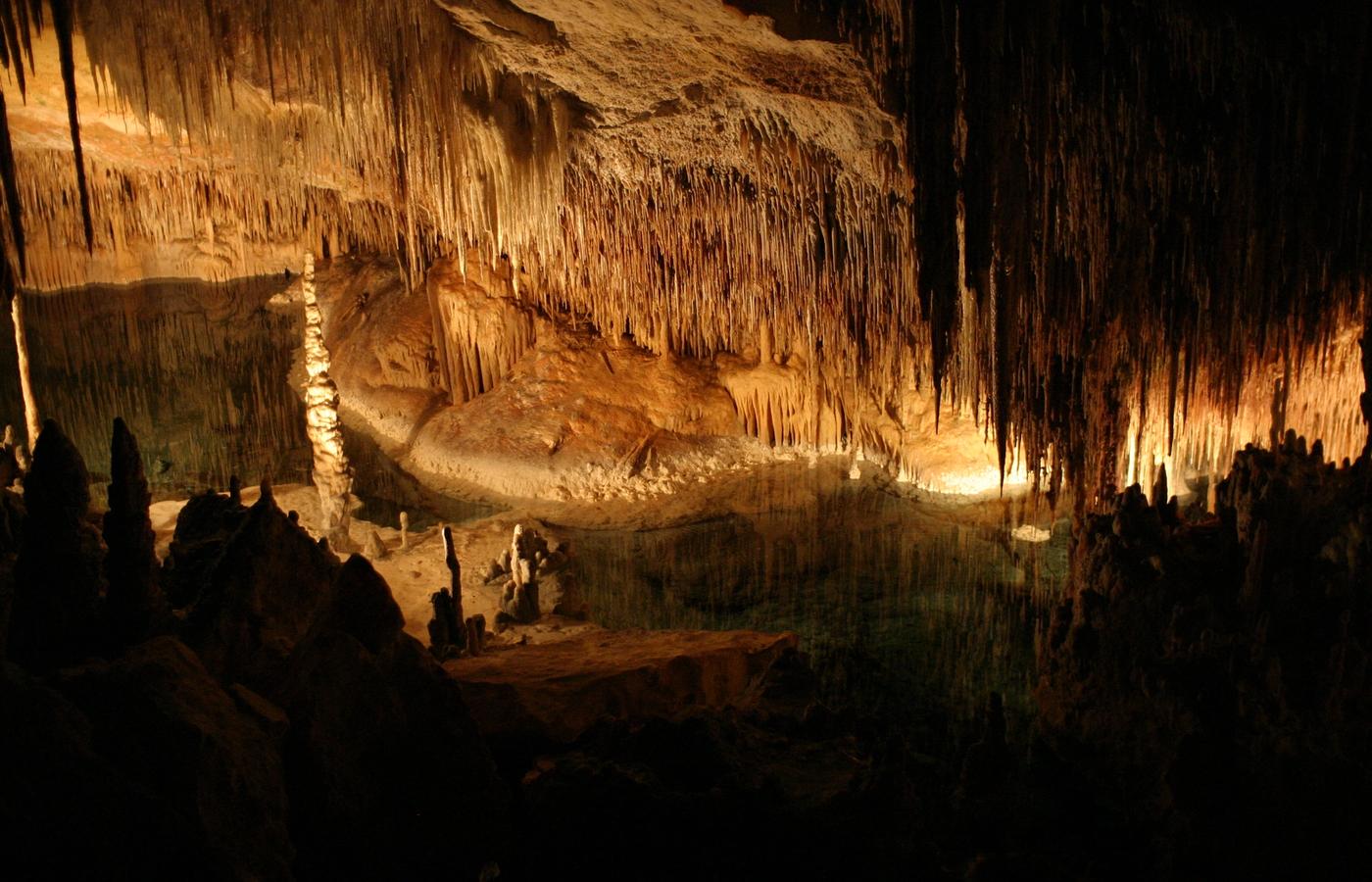
The Drach Caves, also written Coves del Drac ('Caves of the Dragon'), run 1.2 km under the east-coast town of Porto Cristo and contain one of the largest underground lakes in the world. Speleologist Edouard-Alfred Martel mapped the system for the Archduke Ludwig Salvator in 1896, naming the central body of water Lake Martel - 177 metres long, 30 metres wide, and up to 12 metres deep.
The standard one-hour visit follows a lit walkway past stalactite chambers (Black Cave, White Cave, Cave of Luis Salvator) and ends in a 1,000-seat auditorium overlooking Lake Martel. Lights dim, four classical musicians glide across the lake in illuminated boats, and play a short Bach-Chopin programme on the water - cheesy on paper, oddly moving in person. After the concert visitors can take an optional rowboat across the lake to the exit. The Hams Caves nearby and the Arta Caves further north use similar formations but skip the concert.
Pro Tip: Tickets sell out in summer - book online for a morning slot (10:00 or 11:00) to beat the cruise groups arriving from Palma. Wear a layer; the cave holds steady at 21 C and feels cool after a hot car park.
10Cala Mondrago - Protected Cove Beach in the Southeast
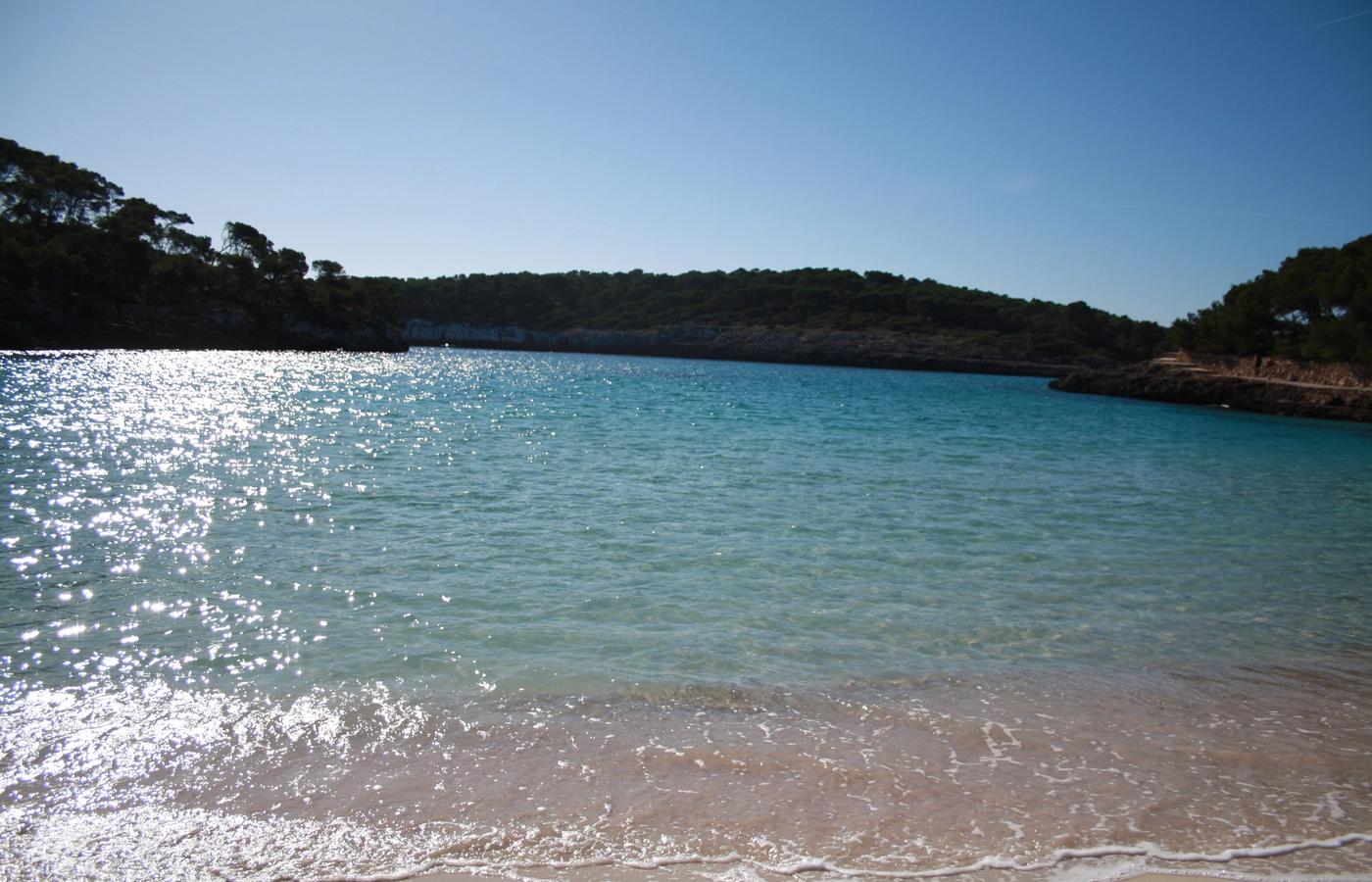
Cala Mondrago is the photogenic centrepiece of the Parc Natural de Mondrago, a 785-hectare protected coastal reserve declared in 1992 to halt the resort development that consumed much of Mallorca's south coast. The bay actually consists of two adjacent coves separated by a low headland: S'Amarador (the larger, more open beach) and Cala Mondrago itself (smaller, with two simple beach restaurants).
Water is genuinely turquoise here - shallow over white sand, sheltered from north winds by limestone cliffs - and the sand is fine enough for children. Behind the beach a network of marked paths runs through pine and juniper to the next cove, Calo d'en Garrot, in 15 minutes. There are no high-rise hotels, no nightclubs, just two car parks (around 3 EUR per day, fill by 11 am in July-August) and a wooden boardwalk between the two beaches.
Pro Tip: Park at the smaller Mondrago lot (signposted from the MA-19) rather than S'Amarador - it is a 5-minute walk to either beach and tends to fill last. Bring water shoes; the path between coves crosses sharp limestone.
11Pollenca and Port de Pollenca - Old Town Stairs and a Calm Family Bay
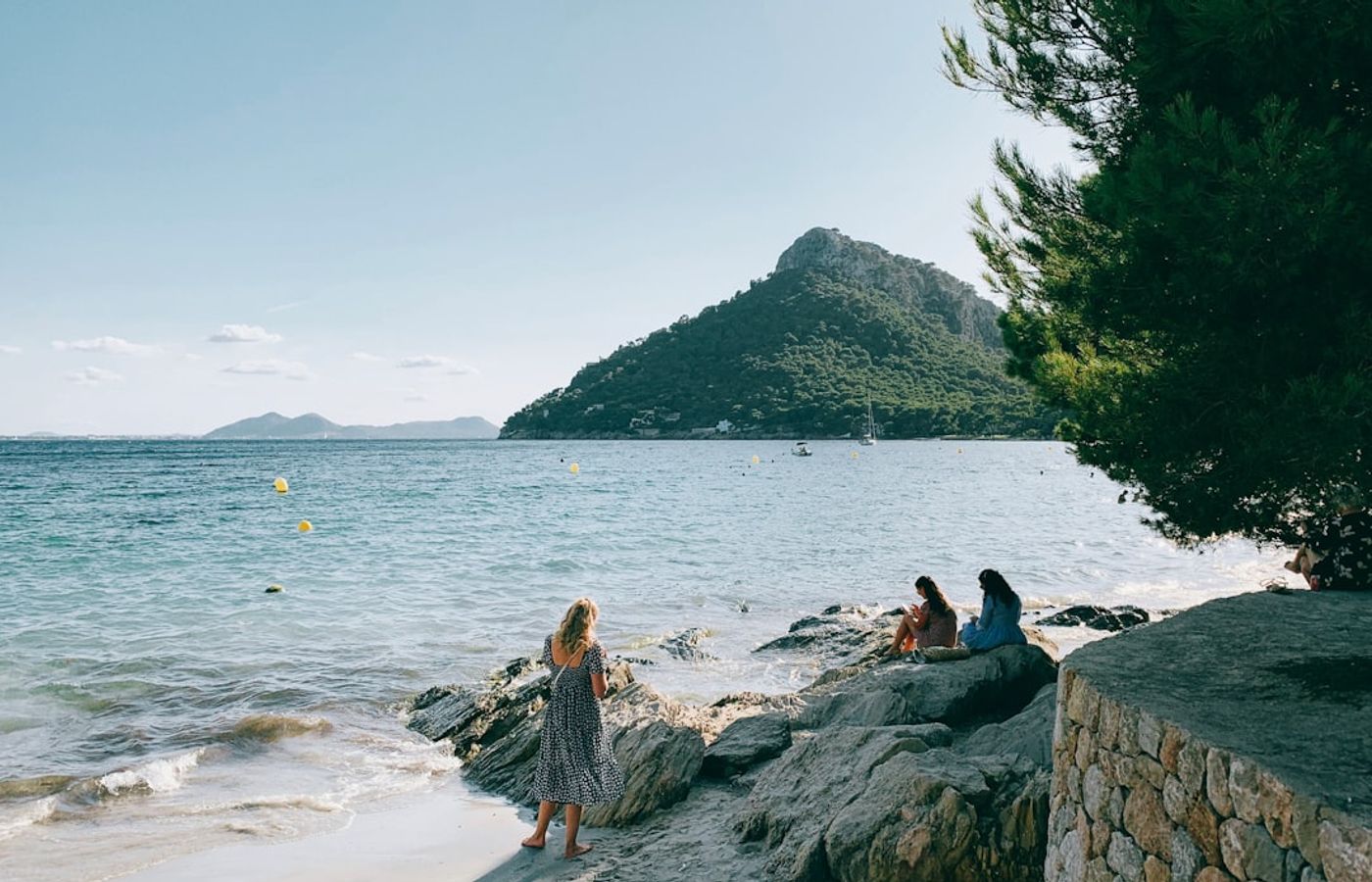
Pollenca is two places. The inland old town (population 16,000) sits 6 km from the coast at the foot of the Tramuntana - sandstone houses, a Sunday morning market on Placa Major (one of the largest on the island), and the famous Calvari steps, a stone staircase of exactly 365 cypress-flanked steps climbing to a small chapel with a 14th-century crucifix. The view from the top covers the Bay of Pollenca and the Tramuntana ridge.
Port de Pollenca, 6 km away on the coast, is the calmer family side of the town. The bay is shallow and sheltered, the Pine Walk (Passeig Anglada Camarasa) runs 1.5 km along the water past low pine trees and 1920s villas, and the small fishing harbour still operates. Both halves of Pollenca are connected by a regular shuttle bus, and Port de Pollenca is also the road head for the Cap de Formentor shuttle in summer.
Pro Tip: Climb the Calvari steps before 09:00 - it is exposed and brutal in the afternoon sun. Sunday morning timing also lets you combine the climb with the weekly market on Placa Major (07:00-13:30).
12Alcudia Old Town - Roman Ruins and a 14th-Century Walled City
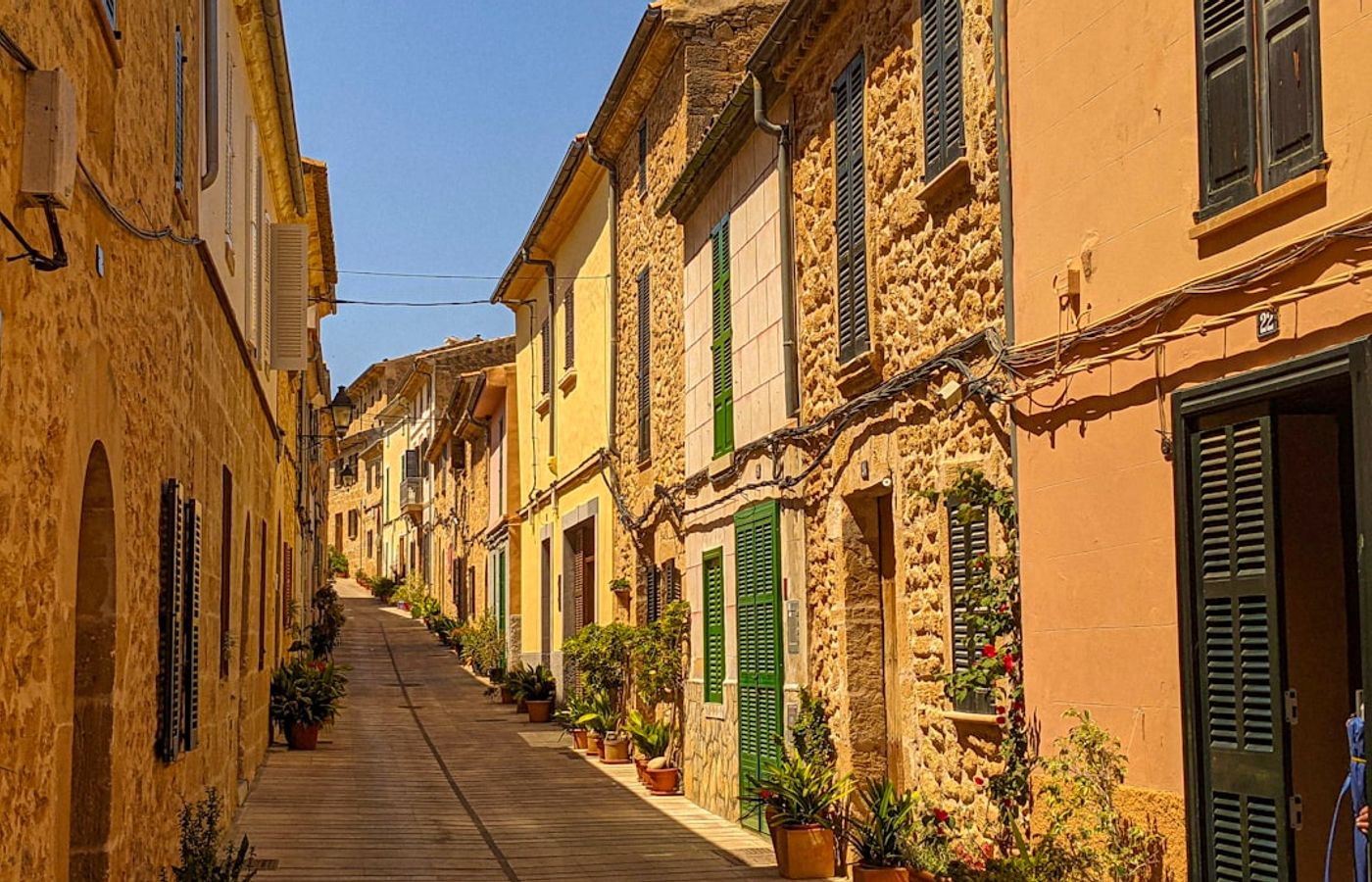
Alcudia is the only Mallorcan town with intact medieval walls - a 1.5-km circuit of sandstone built between 1298 and 1660, with 26 towers and two original gates. Walk the wall on the Cami de Ronda walkway (free, accessible from the Porta del Moll) and circle the entire old town in 30 minutes, dropping down at the Porta de Sant Sebastia for the Tuesday and Sunday morning markets that fill the streets with stalls.
The town's older history sits 500 metres south at Pollentia, the Roman provincial capital founded in 123 BCE. The site preserves a forum, two domestic insulae, and a small Roman theatre carved into bedrock, all explained by the on-site Museu Monografic de Pollentia. From the old town a flat 2-km walk leads down to Platja d'Alcudia, one of the longest sandy beaches on the island and the main reason families base themselves here.
Pro Tip: The combined ticket (around 5 EUR) covers the museum and the Pollentia archaeological site - cheaper than buying them separately. Visit Pollentia in late afternoon when the carved theatre catches warm western light.

CEO and co-founder
Tomas is the co-founder and director of trip1, an European company specializing in reservation services. He launched the company in 2025 with a focus on building scalable, efficient operations.
12 Top Places to Visit in Mallorca, Spain - FAQ
No - covering all 12 places to visit in Mallorca takes a minimum of 5 full days, and 7 days is more comfortable. The list spans the entire island, from Palma de Mallorca in the southwest to Cap de Formentor in the north and Drach Caves on the east coast. Drive times alone exceed 6 hours if you tried to chain them in one day. A realistic plan covers 2-3 attractions per day, grouped by region.
The most efficient order follows three regional clusters from a Palma base. Day one covers central Palma de Mallorca - the Cathedral, Old Town, and Bellver Castle. Day two loops through the Serra de Tramuntana for Valldemossa, Soller, and Sa Calobra. Day three runs north for Pollenca, Cap de Formentor, and Alcudia. Day four heads to the east coast for the Drach Caves, and day five takes in Cala Mondrago. This order minimises backtracking and lets you keep one accommodation base for the whole trip.
Three attractions need advance booking between June and September. The Cathedral of Palma rooftop terraces and the Drach Caves concert in Porto Cristo regularly sell out morning slots, and the Real Cartuja monastery in Valldemossa runs guided tours that fill quickly in summer. Bellver Castle, Pollentia, the museums, and the natural sites are walk-in. The Soller train should also be reserved online if you plan to travel between 10:10 and 12:00 in peak season - cruise passenger groups absorb the standard tickets.
Budget around 95-110 EUR per adult in entry fees for the 12 places. The breakdown: Cathedral of Palma 9 EUR, Bellver Castle 4 EUR, Real Cartuja Valldemossa 11.50 EUR, Drach Caves 17 EUR, Pollentia combined ticket 5 EUR, Cap de Formentor summer shuttle 6 EUR, and the Soller train-tram-boat combo 32 EUR. The remaining attractions (Palma Old Town, Serra de Tramuntana viewpoints, Sa Calobra, Cala Mondrago, Alcudia walls, Pollenca Calvari steps) are free to access. Add 30-50 EUR per day for fuel and parking if you rent a car.
Most are reachable on TIB or EMT buses, with two practical exceptions. Sa Calobra and Cap de Formentor sit at the end of long winding mountain roads with summer car restrictions, so a guided coach or the boat from Port de Soller is the easier option for both. The other ten attractions all have direct bus or train service from Palma de Mallorca. The TIB Intermodal card lets you pay across all bus and train operators on the island in one tap, which is faster than buying singles. Plan on 60-90 minutes for trips to Pollenca, Alcudia, or Porto Cristo.
Yes - the Drach Caves and Cala Mondrago pair naturally as a single east-coast day from Palma de Mallorca. The two sites sit 30 km apart on the MA-14 road, and neither needs more than two hours on site. A practical schedule is the 10:00 Drach Caves concert (book ahead), lunch in Porto Cristo or Cala d'Or, then an afternoon swim and walk at Cala Mondrago before driving back. Total round-trip distance from Palma is about 130 km, or roughly 2 hours 30 minutes of driving.
Three Mallorca highlights almost made the list. Es Trenc on the south coast is the largest undeveloped white-sand beach on the island and is the better choice if you prefer open beaches to coves like Cala Mondrago. Deia, on the Tramuntana coast between Valldemossa and Soller, is one of the prettiest stone villages in the Mediterranean and the burial place of writer Robert Graves. The Caves of Hams near Drach run a quieter version of the underground concert. Wine tasting in Binissalem and a half-day in the market town of Sineu also reward extra time.