Guides · Corfu
10 Top Places to Visit in Corfu, Greece
By Tomas Achmedovas · CEO and co-founder

CEO and co-founder
Corfu is the greenest of the Greek islands and one of the most layered places to visit in the Ionian Sea in 2026, shaped by 400 years of Venetian rule, brief British protectorate status from 1815 to 1864, and a starring role as the summer retreat of Empress Sissi of Austria. The 588 sq km island sits 2 km off the Albanian coast, has its own international airport (CFU) and packs a UNESCO Old Town, two giant fortresses, palaces, panoramic mountain peaks and family beaches into a 64 km north-south footprint.
Travellers fly direct from London, Berlin and Athens, then base themselves in Corfu Town, Paleokastritsa or one of the northern resorts like Kassiopi. Hotels in 2026 cost around 70-120 EUR per night for a comfortable mid-range room outside July and August, and the local cuisine - influenced by Italy, Greece and the Balkans - includes specialties like sofrito, pastitsada and bourdeto that you will not find on other islands.
This guide ranks the 10 top places to visit in Corfu by historical weight, scenery and access. It leads with the UNESCO Old Town, then loops south, west and north along a route a rental car can complete in 4-5 days. Each entry has the full address, opening hours, 2026 ticket prices, distance from Corfu Town and exact green KTEL bus or driving directions, plus a Pro Tip.
Check dates for Corfu
See what is available on your dates.
1Corfu Old Town (UNESCO)


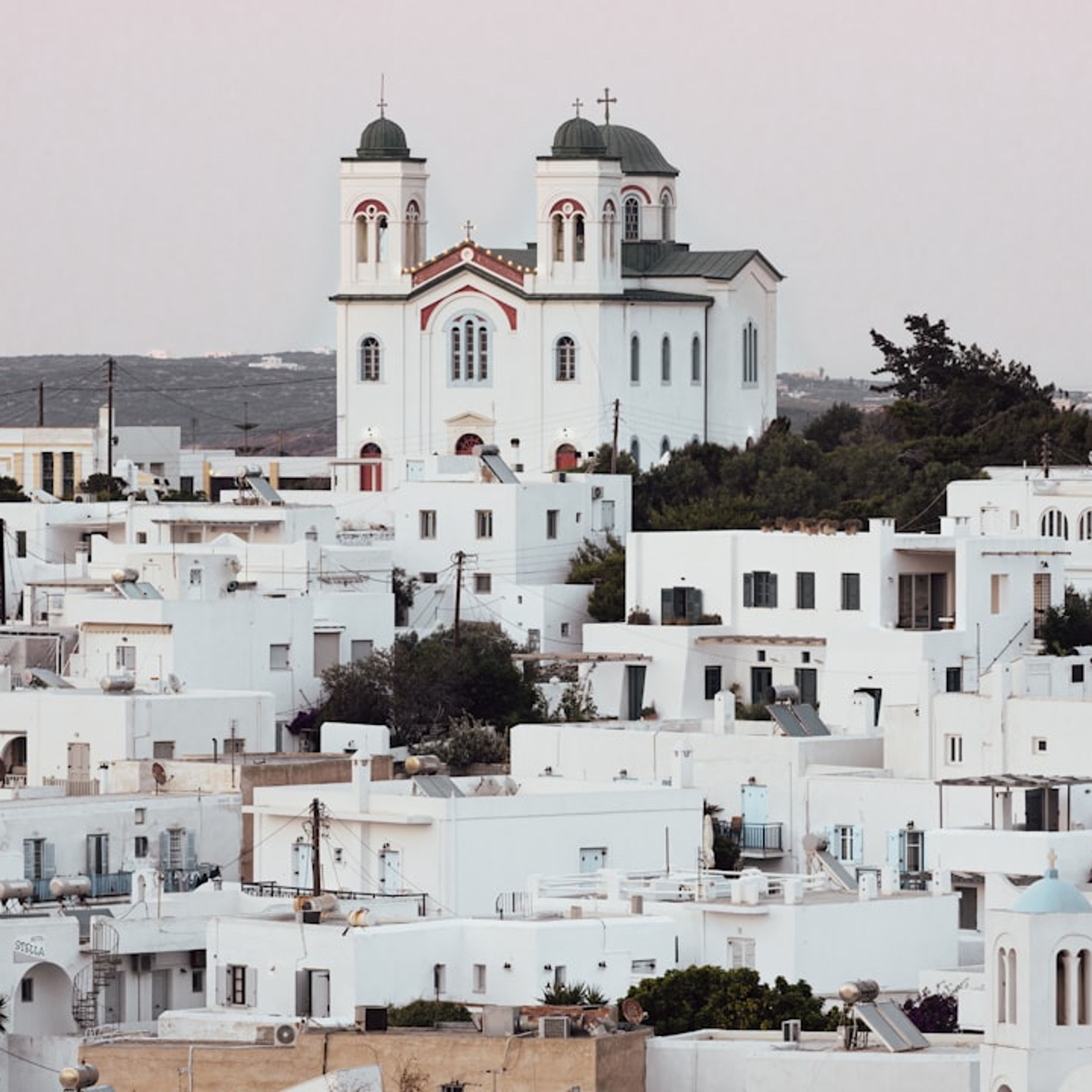
Corfu Old Town has been inscribed as a UNESCO World Heritage site since 2007, recognising the only surviving example of a complete Venetian fortified town in the Mediterranean. Read the full UNESCO criteria at the Old Town of Corfu listing. Wander the kantounia (narrow alleys), visit the Church of Saint Spyridon with the patron saint's relics, and end at the Campiello quarter where six-storey Venetian houses lean over washing-strung lanes. Plan a full day on foot. Most museums charge 4-6 EUR; opening hours run 08:30-15:30 in winter and 08:30-19:30 in summer.
2Old Fortress of Corfu (Palaio Frourio)


The Old Fortress is the dramatic twin-peaked rock fortress on the eastern tip of Corfu Old Town, separated from the city by a Venetian-era moat called the Contrafossa. Built initially as a Byzantine fortification and expanded by the Venetians from 1546, it later served as a British military base and now hosts the Public Library, a Byzantine Collection and a small chapel. The 30-minute climb to the upper bastion (Land Tower) gives 360-degree views over the Old Town, the channel to Albania and the harbour. Entry is 6 EUR in 2026, opening 08:00-20:00 in summer; the combined ticket with the New Fortress costs 8 EUR.
3Achilleion Palace (Empress Sissi)


Achilleion Palace was built between 1889 and 1891 as the summer retreat of Elisabeth of Austria-Hungary, known as Sissi, after the death of her son Crown Prince Rudolf. Designed by Italian architect Raffaele Caritto in a neoclassical Pompeian style, the villa overlooks the Ionian Sea from the village of Gastouri. After Sissi's assassination in 1898 the palace passed to Kaiser Wilhelm II, then served as a hospital and a casino. Today the ground floor is a museum filled with Sissi's personal effects, statuary including the famous Dying Achilles by Ernst Herter, and Pompeian frescoes. Entry costs 10 EUR in 2026, opening 09:00-19:00 in summer.
Check dates for Corfu
See what is available on your dates.
4Paleokastritsa (Beaches and Monastery)

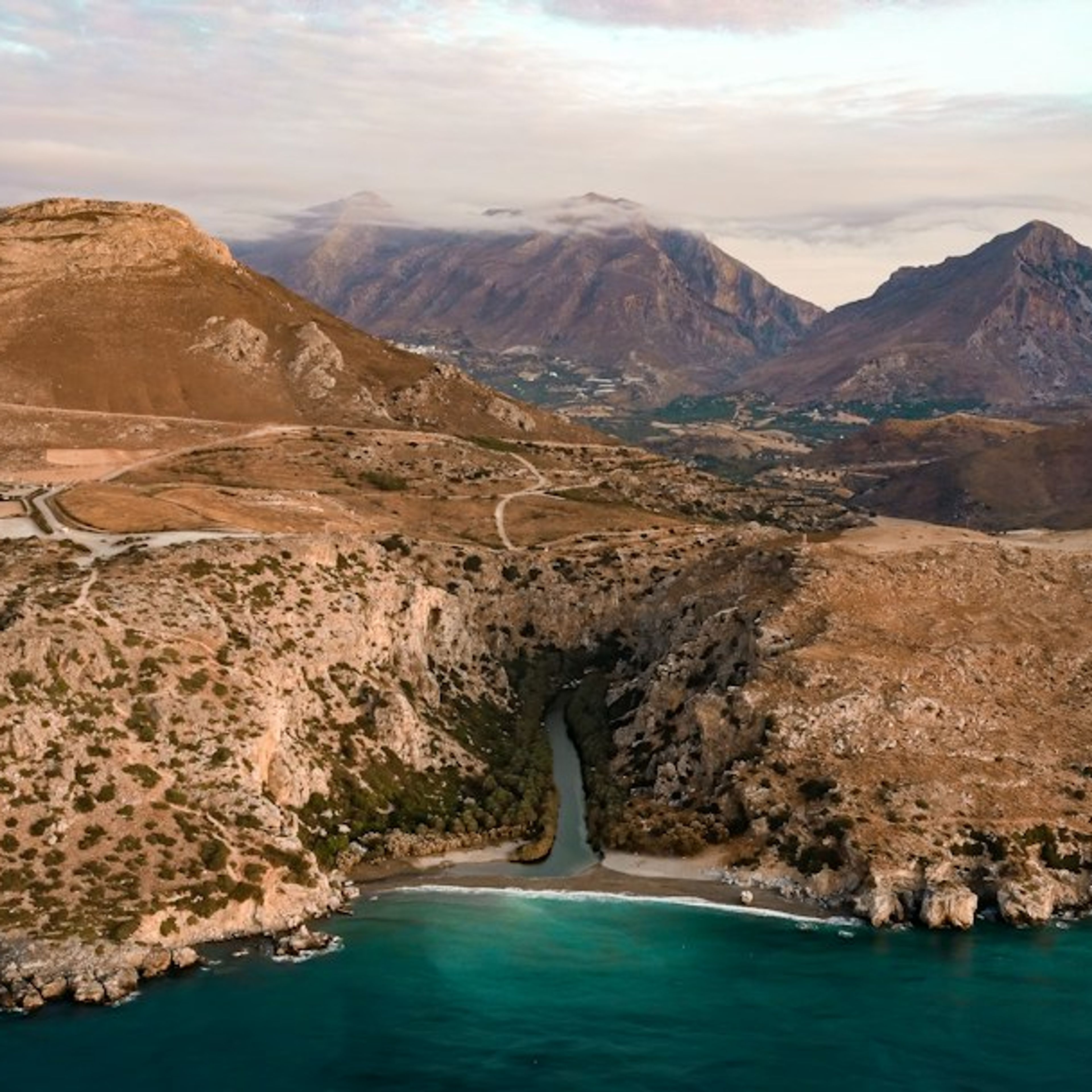
Paleokastritsa is a horseshoe-shaped resort village on the west coast where six small bays cut into pine-covered cliffs to make some of the most photographed coves in the Ionian. The 13th-century Theotokos Monastery of Paleokastritsa sits on the headland above the main bay, free to enter (donations welcome) with a small icon museum, an old olive press and resident peacocks. Below, you can rent a kayak (15 EUR per hour) or join a boat tour to the offshore caves at Agia Triada and Nausicaa (15-20 EUR for 90 min). The Bella Vista taverna in nearby Lakones village 4 km uphill has the famous panoramic view back over the bays.
5Cape Drastis Cliffs

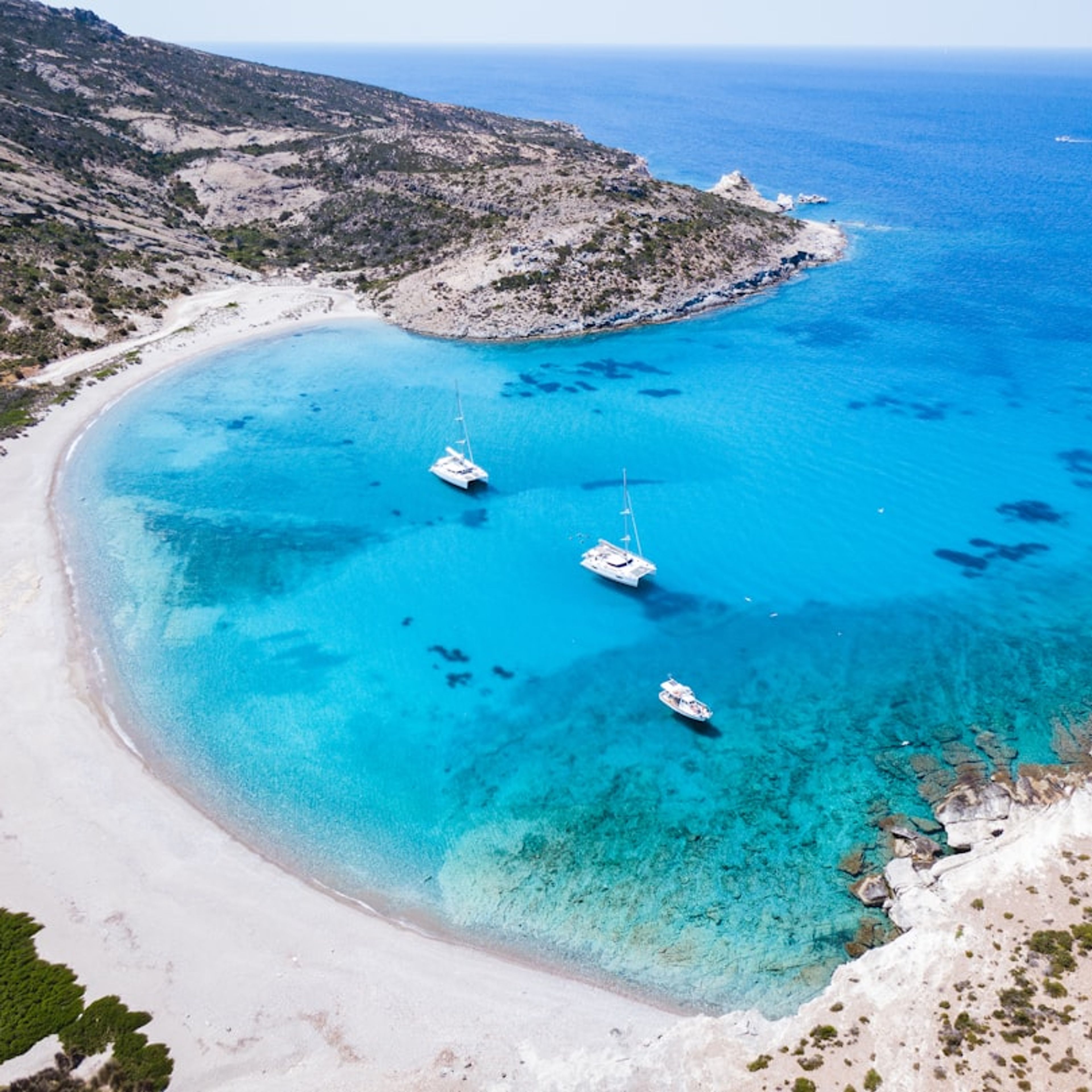
Cape Drastis is the wild north-western tip of Corfu, where strange chalk-white cliffs and stratified rock fingers drop into deep turquoise water. The cape is the geological opposite of the green inland: erosion has cut narrow inlets and razor ridges that look almost lunar. Drive 4 km west from Peroulades village and park at the small dirt area; from there a 200 m walk on a marked path leads to the main viewpoint. There are no facilities, no entry fee and no crowds outside golden hour. Wear closed shoes - the path is loose and steep in places. The nearby Loggas (Sunset) Beach has a popular cliff-top bar that gets crowded after 19:00.
6Mount Pantokrator

Mount Pantokrator is the highest point on Corfu at 906 m, with a 14th century monastery on the summit and a 360-degree view that on clear mornings stretches across to the Albanian Acrocorinth peaks and south to Paxos. The monastery (free to enter, modest dress required) was rebuilt in 1689 and houses Byzantine icons. The drive from Corfu Town takes about 50 minutes along narrow switchback roads from Strinilas village (worth a stop for sage tea); a short steep walk from the upper car park reaches the chapel. The summit is crowned with telecommunications antennas which intrude on photos but the view itself is genuinely vast. There is a small canteen but no fuel station, so top up in Strinilas.
7Canal d'Amour Sidari

Canal d'Amour is a series of narrow sandstone channels just west of Sidari on the north coast, where wave erosion over thousands of years has cut deep blue passages between honey-coloured cliffs. Local legend says couples who swim through the main channel together will marry within a year - hence the name. The water inside the channels is sheltered, calm and turquoise, but the rocks are slippery so wear water shoes. Sidari itself is a busy resort town with bars, cafes and a 1.5 km sandy beach. Free parking is at the cliff-top above the channels and a wooden staircase leads down. There are no entry fees and the area is open year-round.
8New Fortress (Neo Frourio)

The New Fortress is the larger of Corfu Town's two Venetian forts, built between 1572 and 1645 on the rocky hill of Saint Mark to defend the western approach to the city. Despite the name it is older than the British-era additions to the Old Fortress. Massive bastioned walls in honey-coloured limestone enclose former barracks, vaulted underground tunnels and the small Britannia gate carved with the lion of Saint Mark. From the upper terrace you have an unmatched view of the Old Town's red roofs and the harbour. Entry is 4 EUR in 2026, or 8 EUR combined with the Old Fortress; opening 08:30-19:30 in summer. The site occasionally hosts evening concerts.
9Liston Arcade and Spianada Square

Liston is the elegant arcade of seven-bay neoclassical buildings built between 1807 and 1814 by French engineer Mathieu de Lesseps under Napoleon's brief occupation. The colonnaded ground floor is now a row of cafes (Aegli, Olympia and Liston are the historic names) where a coffee costs 4-6 EUR and a glass of wine 7 EUR. Behind Liston is Spianada Square, the largest plateia in Greece, used for cricket matches (a British legacy from 1823) and free band concerts on summer Sundays. The Maitland Rotunda monument honours the first British High Commissioner. Together Liston and Spianada are the social heart of Corfu Town, free to walk and busy from breakfast until past midnight.
10Vidos Island Day Trip

Vidos is a small uninhabited island just 1 km from the Corfu Old Port, often overlooked even by Corfiots. The 12-minute ferry ride costs 5 EUR return. Once on the island, a 4 km circular walking trail loops past pine forest, the World War One Serbian mausoleum (paying tribute to the 6,000 Serbian soldiers who died here in 1916 after retreating from the Albanian Alps), three small pebble beaches and the modest Pantocrator chapel. There is one canteen near the dock with cold drinks and souvlaki at 4 EUR, and shaded picnic tables under the pines. The island is car-free and feels remote despite being five minutes from a Mediterranean capital.
Take this guide with you
Get every place in this guide, with addresses and map links, in your inbox — easy to open on your phone during the trip.
One email to the address on your account. No newsletter.

CEO and co-founder
Tomas is the co-founder and director of trip1, an European company specializing in reservation services. He launched the company in 2025 with a focus on building scalable, efficient operations.
10 Top Places to Visit in Corfu, Greece - FAQ
Corfu Town for history and the west and north coasts for scenery. The UNESCO Old Town, its two Venetian fortresses and the Liston arcade fill a full day. On the west coast, Paleokastritsa has six small bays below a 13th-century monastery, and Cape Drastis in the north-west has white cliffs over deep turquoise water. In the north, Sidari has the Canal d'Amour.
Its Old Town, a UNESCO World Heritage Site since 2007, shaped by 400 years of Venetian rule and a British protectorate from 1815 to 1864. Corfu is also known as the greenest Greek island, for Achilleion Palace, the summer retreat of Empress Sissi of Austria, and for dishes like sofrito and pastitsada that you won't find on other islands.
Four to five days with a rental car. Spend one day in Corfu Old Town with the two fortresses and Liston, one on Achilleion Palace and the south, one on Paleokastritsa and Cape Drastis in the west, and one on Mount Pantokrator and Sidari in the north. Vidos Island adds an easy half-day from the Old Port.
Vidos Island, a car-free island 12 minutes by ferry from the Old Port, with a 4 km trail, pebble beaches and a First World War Serbian mausoleum. Also Cape Drastis, quiet outside golden hour, the small cove at Agia Triada near Paleokastritsa's main beach, and the coves 200 metres west of the main Canal d'Amour channel, which almost no one visits.
Corfu Town. Its Old Town is a UNESCO World Heritage Site of narrow alleys called kantounia, Venetian houses up to six storeys high in the Campiello quarter and the Liston arcade beside Spianada Square. Walk it once in the morning and again after 21:30, when the lanterns come on. Among the villages, Paleokastritsa on the west coast has the most photographed bays.
May to mid-June, or September to early October. The weather is warm, the sea is good for swimming and boat trips are running, with far fewer visitors than in July and August, the hottest and busiest months. Outside those two months, a comfortable mid-range hotel room costs around 70 to 120 euros a night.