

Guides · Cappadocia
12 Top Things to Do in Cappadocia
By Tomas Achmedovas · CEO and co-founder

CEO and co-founder
Choosing the right things to do in Cappadocia means balancing surreal volcanic landscapes with deep Byzantine history, and getting both right takes a little planning. The region in central Anatolia (province of Nevsehir, around 730 km southeast of Istanbul) is famous for fairy chimney rock formations, frescoed cave churches dating to the 9th century, and underground cities that once sheltered up to 20,000 people. In 2026, daily flights from Istanbul Sabiha Gokcen and Ankara Esenboga land at Kayseri (ASR) or Nevsehir (NAV), with shuttle transfers to Goreme costing EUR 12 to 18.
Most travellers base themselves in Goreme village, where cave hotels carved into the tuff start at EUR 90 per night and put you within walking distance of the Open Air Museum and the Red Valley trailhead. Uchisar suits couples wanting quieter sunsets, while Urgup is the pick for foodies and wine tastings of local Emir and Okuzgozu varietals. Three days hits the highlights without burnout; four days lets you slow down with horse riding or a Turkish pottery workshop in Avanos.
This 2026 guide ranks twelve experiences by a mix of cultural significance, photogenic appeal, and practical accessibility. Spring (April to mid-June) and autumn (September to early November) bring the most reliable balloon flight weather, with morning temperatures of 8 to 16 degrees Celsius. Skip mid-July and August when daytime heat hits 32 degrees and inland dust dulls the long views.
Check dates for Cappadocia
See what is available on your dates.
1Hot Air Balloon Sunrise Flight


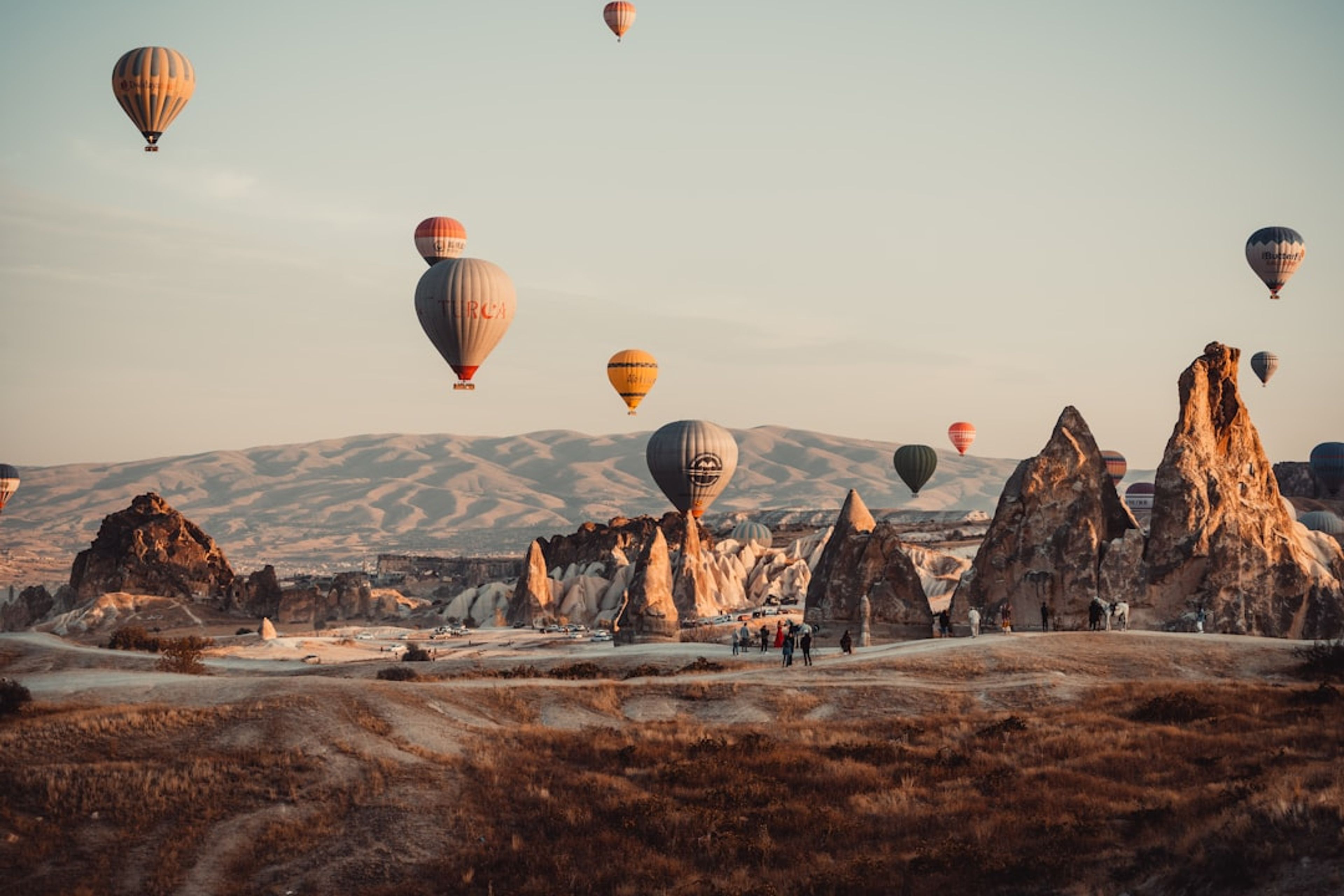
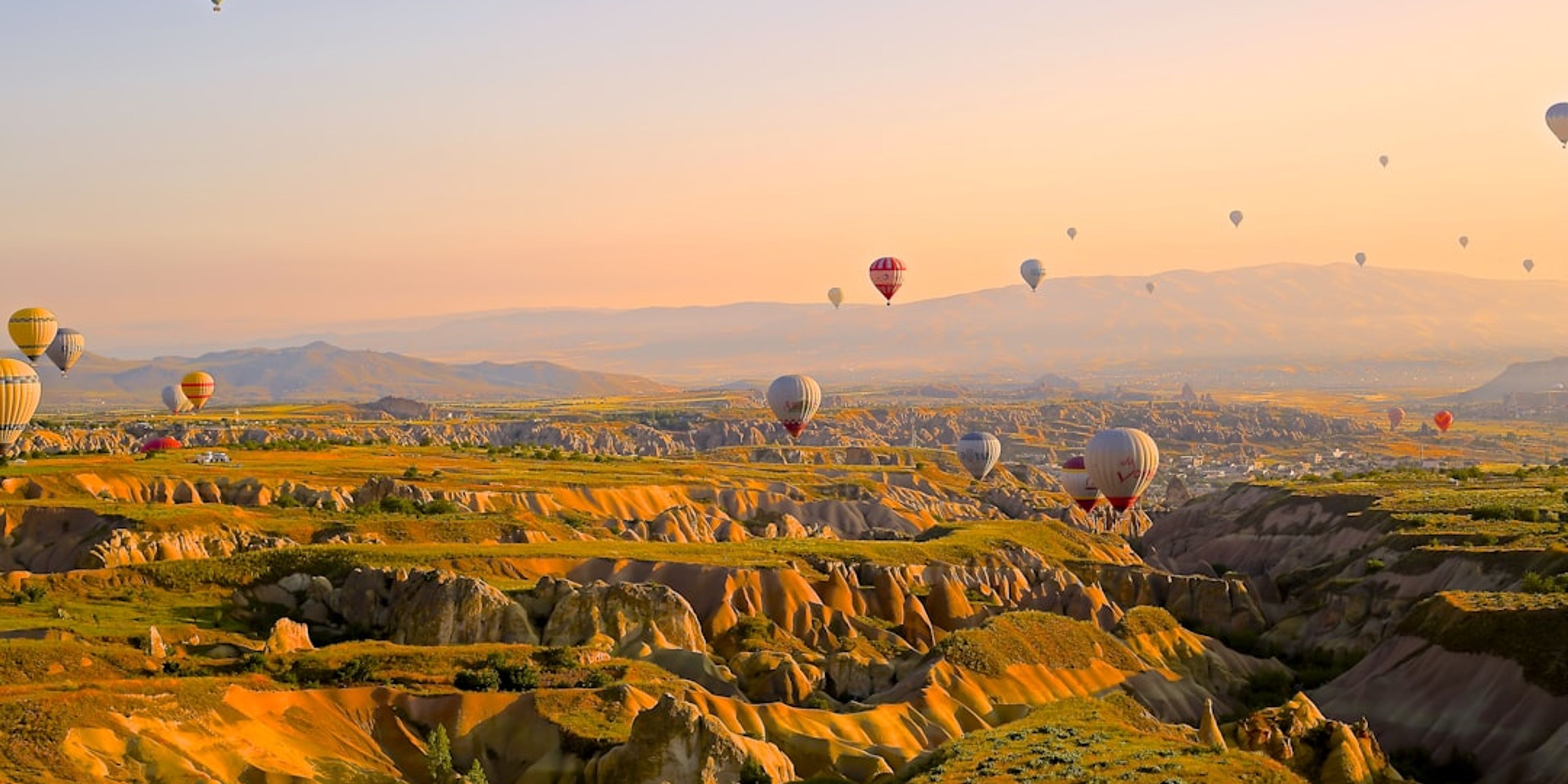
A pre-dawn balloon flight over Goreme is the single most iconic experience in Cappadocia. Pickup from your hotel happens around 04:30, and you watch the burners spark to life as the basket inflates beside roughly 100 other balloons across the launch fields between Goreme and Cavusin. Standard flights last 60 to 75 minutes, climb to about 800 metres, and drift across Love Valley, Red Valley, and the fairy chimneys around Pasabag depending on wind direction. Operators land with a champagne toast and a flight medal. Voyager Balloons, Royal Balloon, and Kapadokya Balloons all hold civil aviation safety ratings. Pricing in 2026 sits at EUR 220 to 280 for standard 16-passenger baskets, or EUR 320 to 380 for deluxe 8-passenger flights with a longer airtime. Flights cancel for wind above 18 km/h, so build in flexibility.
2Goreme Open Air Museum


Carved into a cluster of volcanic tuff cones, the Goreme Open Air Museum holds the densest concentration of frescoed cave churches in Anatolia. The complex was a Byzantine monastic settlement between the 9th and 12th centuries, and roughly 30 churches and refectories survive within a 0.4 km loop. Highlights include the Dark Church (Karanlik Kilise), whose pigments stayed brilliant because of minimal natural light, and the Sandals Church (Carikli Kilise) with its detailed Crucifixion scene. The site is part of the UNESCO-listed Goreme National Park and Rock Sites of Cappadocia, inscribed in 1985. Allow 90 minutes; the Dark Church requires a separate TRY 100 supplement on top of the TRY 600 main entry. Audio guides at the gate cost TRY 200 and run about an hour.
3Uchisar Castle


Towering 60 metres above the surrounding plateau, Uchisar Castle is the highest point in Cappadocia and the easiest panoramic viewpoint of the region's geology. The fortress is a hollowed volcanic outcrop riddled with cave dwellings, tunnels, and pigeon coops that once held a Byzantine garrison. From the summit terrace at 1,390 metres, you can see Mount Erciyes (3,917 m) on clear mornings, plus the entirety of Pigeon Valley below. Climbing takes 15 to 20 minutes via stone steps and a final metal stair; railings exist but vertigo sufferers should pace themselves. Entry costs TRY 200 in 2026, and opening hours run 08:00 to 19:00 in summer, 08:00 to 17:00 in winter. Combine the visit with lunch at the village's stone-walled restaurants like Center Cafe or Elai for traditional testi kebab cooked in a sealed clay pot.
Check dates for Cappadocia
See what is available on your dates.
4Derinkuyu Underground City

Derinkuyu plunges 85 metres below the surface across at least eight excavated levels, making it the deepest of Cappadocia's roughly 200 underground cities. Carved by Phrygians in the 8th century BC and expanded by early Christians fleeing Roman and Arab raids, it once sheltered as many as 20,000 people along with livestock, food stores, wine presses, a school, and a cruciform church on level seven. Ventilation shafts plunge through every floor, and circular stone doors up to 1.5 metres wide could be rolled shut to seal corridors. Entry in 2026 is TRY 600 (covered by the Museum Pass Cappadocia), and visits take 60 to 90 minutes. Tunnels are narrow with 1.6 metre ceilings in places; skip if you struggle with claustrophobia or knee bends.
5Pasabag Valley (Monks Valley)

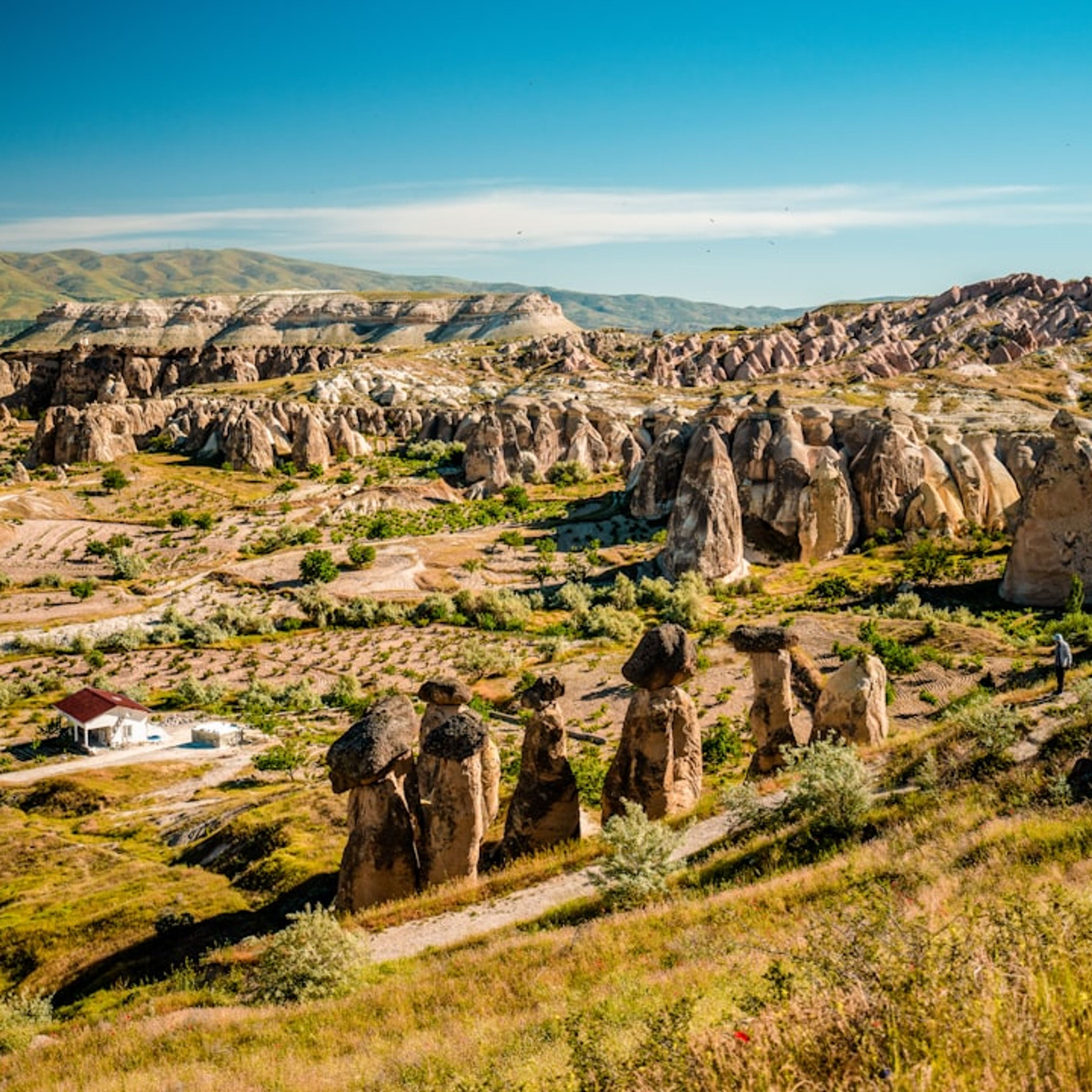
Pasabag, also called Monks Valley, holds the most photographed multi-headed fairy chimneys in the region. Three- and four-capped cones rise 15 to 20 metres above the floor, formed when erosion stripped softer tuff from beneath protective basalt caps. Early Christian hermits hollowed the cones into chapels and cells; the Chapel of Saint Simeon, named for the 5th-century stylite, sits inside one of the larger formations. The site is free to enter and stays open from sunrise to sunset, with paved paths suitable for strollers near the entrance. Two cafe stands sell pomegranate juice (TRY 60) and gozleme (TRY 80). Allow 45 minutes to walk the loop. The valley pairs naturally with neighbouring Devrent and the Avanos pottery district, all within a 5 km radius.
6Devrent Valley (Imagination Valley)

Devrent earned its nickname Imagination Valley because the rock shapes resemble animals: visitors point out a camel (the most photographed), a seal, dolphins, and a Virgin Mary cradling Jesus. The site has no churches and no human carvings; it is purely a geology stop where wind and rain have sculpted the soft tuff for around 30 million years since the eruption of Mount Erciyes deposited the underlying ash beds. Entry is free and the valley sits beside the road, so most visitors spend 20 to 30 minutes here before continuing to Pasabag or Avanos. The terrain is flat and accessible, and a small parking area accommodates ten cars. Sunset light reddens the western faces and is the best time for photography.
7Avanos Pottery Workshops

The town of Avanos has produced terracotta pottery for at least 4,000 years, drawing red iron-rich clay from the Kizilirmak (Red River), the longest river in Turkey. Traditional Hittite-style kick wheels still operate in family workshops along the riverbank. Chez Galip on Firin Sokak is the best-known studio for both demonstrations and the eccentric Hair Museum below the showroom (free entry). A 90-minute hands-on workshop including throwing, shaping, and a finished cup or bowl costs TRY 400 to 800 in 2026. Larger studios like Sultan Ceramics and Avanos Seramik also handle international shipping (around EUR 35 to 70 for a small parcel to the EU). Saturday is the local market day on the bridge plaza, with handmade textiles and copper alongside the ceramics.
8Love Valley Walk

Love Valley owes its name to the unusual phallic-shaped fairy chimneys that rise 30 to 40 metres above the valley floor, the tallest of any Cappadocian valley. The 4 km hiking trail starts at the Love Valley viewpoint on the Goreme to Uchisar road and finishes near the Goreme Open Air Museum. Allow 90 minutes to two hours including photo stops. The path is mostly flat with one gentle 60-metre descent into the valley, and runs alongside small vineyards and apricot orchards used by villagers from Goreme. Bring 1.5 litres of water in summer; there are no taps once you leave the viewpoint. Horse riding tours from Dalton Brothers Ranch traverse the same valley if you prefer four legs to two.
9Kaymakli Underground City

Kaymakli is the wider, shallower counterpart to Derinkuyu and the most accessible underground city for travellers nervous about tight spaces. The site descends across four open levels (a fifth and sixth remain closed for stabilisation), with tunnels averaging 1.7 metres in height and clearly marked one-way arrows preventing the bottlenecks common at Derinkuyu. Highlights include a stable on level one with iron tethering rings, a kitchen with soot-blackened ceilings on level two, and a winery with two basalt grinding stones on level three. Tickets cost TRY 600 in 2026 (Museum Pass Cappadocia accepted), and the visit takes 45 minutes. Crowds peak between 11:00 and 14:00 when day tours arrive; aim for opening at 08:00 or after 16:00 in spring and autumn for a near-private experience.
10Ihlara Valley Hike

The Ihlara Valley canyon cuts a 14 km gorge 100 metres deep through volcanic plateau, carved by the Melendiz River and lined with around 105 rock-cut churches dating from the 6th to the 13th centuries. Most visitors hike the central 4 km section between Ihlara village and Belisirma, which takes two to three hours and passes the frescoed Agacalti, Yilanli, and Sumbullu churches. The 382 stone steps from the main entrance descend into the canyon; an alternate flat entrance starts at the Ihlara village mosque if your knees prefer level ground. Entry is TRY 250 in 2026. Bring water and a hat; shade exists only near the river. Lunch at the Anatolia Restaurant in Belisirma serves trout (TRY 350) on stilt platforms over the river.
11Selime Monastery

Selime Monastery is the largest religious cave complex in Cappadocia, often described as the regional Star Wars set because the rock-cut domes and corridors inspired Tatooine moisture farms in the 1977 film. Built between the 8th and 9th centuries, the monastery housed up to 1,000 monks and contains a basilica with three apses, a kitchen with carved chimneys, stables for camels (caravan stops on the Silk Road branch), and a refectory long enough for 50 diners. The climb up the stone gully to the upper chapel involves a moderate scramble and a low overhang; closed-toe shoes help. Entry is TRY 250 in 2026. Most visitors arrive at the end of the Green Tour and stay 60 to 75 minutes. The hilltop terrace beside the monastery offers a viewpoint over the Selime fairy chimneys and the village below.
12Red and Rose Valley Sunset

The adjoining Red Valley (Kizil Vadi) and Rose Valley (Gul Vadisi) form Cappadocia's signature sunset destination, where iron-oxide-rich tuff turns deep crimson and rose-pink as the sun drops. The Red Valley sunset viewpoint sits at the end of a 1.2 km gravel road off the Cavusin road and accommodates around 80 visitors at peak times in 2026. Walking trails of 4 to 7 km link the two valleys and pass at least seven hidden cave churches including the Cross Church (Hacli Kilise) and the Column Church (Direkli Kilise), both with 11th-century frescoes and free to enter. Sunset times vary from 17:15 in late autumn to 20:30 in midsummer; arrive 45 minutes early to claim a rock perch. A small van sells Turkish tea (TRY 30) at the viewpoint until 30 minutes after sunset.
Take this guide with you
Get every place in this guide, with addresses and map links, in your inbox — easy to open on your phone during the trip.
One email to the address on your account. No newsletter.

CEO and co-founder
Tomas is the co-founder and director of trip1, an European company specializing in reservation services. He launched the company in 2025 with a focus on building scalable, efficient operations.
12 Top Things to Do in Cappadocia, Turkey - FAQ
Three days covers the highlights. Spend one on the Goreme valleys, with the Open Air Museum, Pasabag, Devrent and a Red Valley sunset, and one in the south, with Derinkuyu, Ihlara Valley and Selime Monastery, and keep a dawn for the balloon flight. A fourth day gives you a back-up morning if the balloons are cancelled, plus time for horse riding or pottery in Avanos.
A sunrise hot air balloon flight over Goreme, the frescoed cave churches of the Goreme Open Air Museum, the Derinkuyu underground city, 85 metres deep, the multi-capped fairy chimneys of Pasabag Valley, and sunset in the Red and Rose valleys. With more time, add Uchisar Castle for the view and the Ihlara Valley hike past rock-cut churches.
Yes. Few places combine fairy chimney valleys, Byzantine cave churches with frescoes from the 9th century on and underground cities that sheltered up to 20,000 people, all within a short drive of Goreme. Even without a balloon flight, you can watch around 100 balloons rise at dawn from the hills for free, and the valley walks and sunset viewpoints cost nothing.
April to mid-June, or September to early November. These months bring the most reliable balloon weather and mornings of 8 to 16 degrees. Mid-July and August are hot, up to 32 degrees, with dust that dulls the long views, and winter brings the most cancelled flights. Book the balloon at least two weeks ahead for spring and autumn.
Usually about 220 to 280 euros per person in 2026 for a standard flight in a basket of around 16 people, or 320 to 380 euros for a deluxe flight in a smaller basket with longer airtime. Prices change daily with demand and drop in winter. Flights last 60 to 75 minutes, with hotel pickup around 04:30.
Often enough to plan for it. Turkey's civil aviation authority decides each morning whether balloons may fly, and flights are cancelled for wind above about 18 km/h, fog, rain or snow. Cancellations are most common from December to March and rarest in summer. Book two mornings in a row with the same operator, so a cancelled first day still leaves a second chance.