
Sicily travel guides
Browse and explore the best travel guides in Sicily.
Sicily travel facts
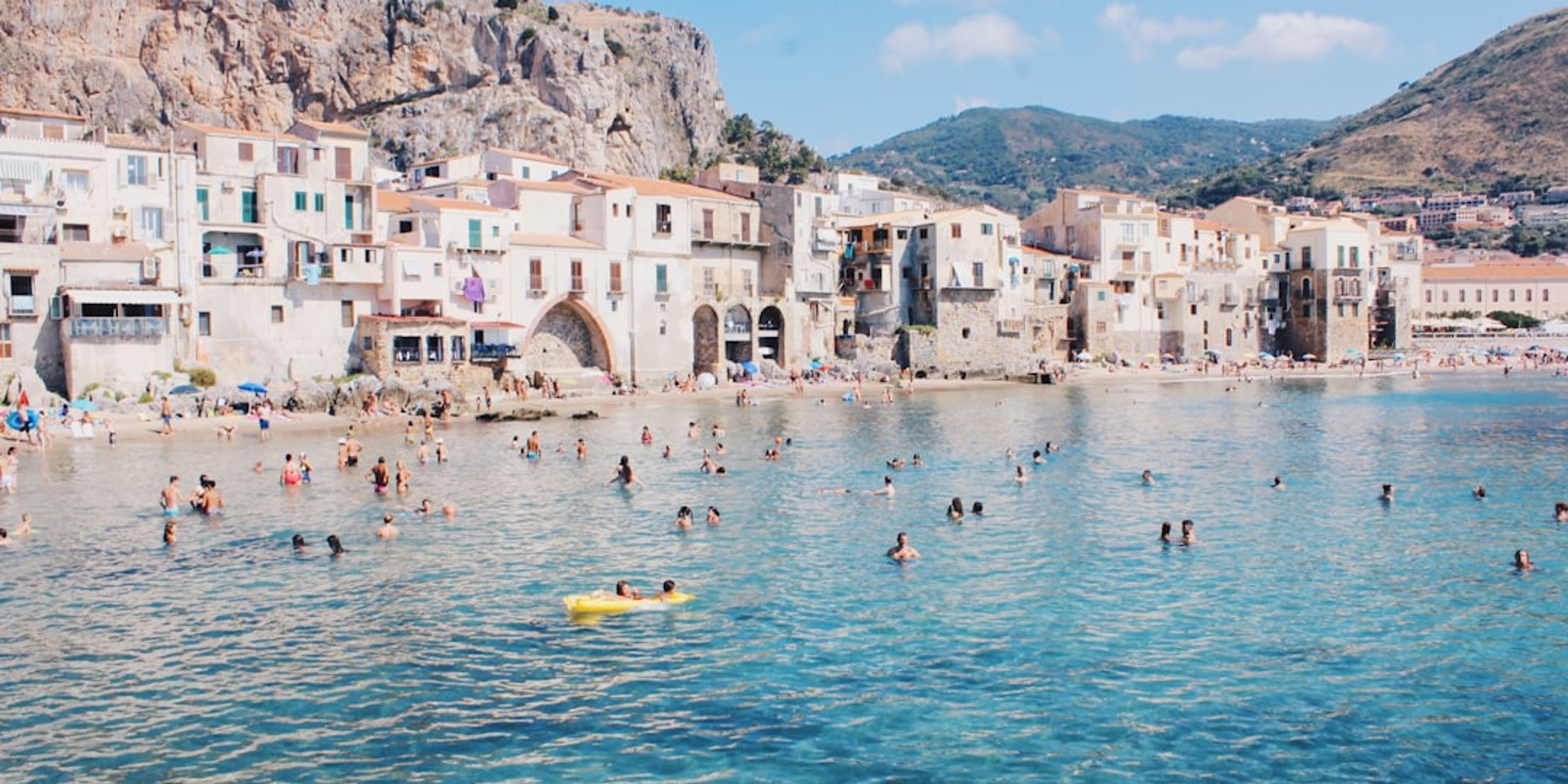
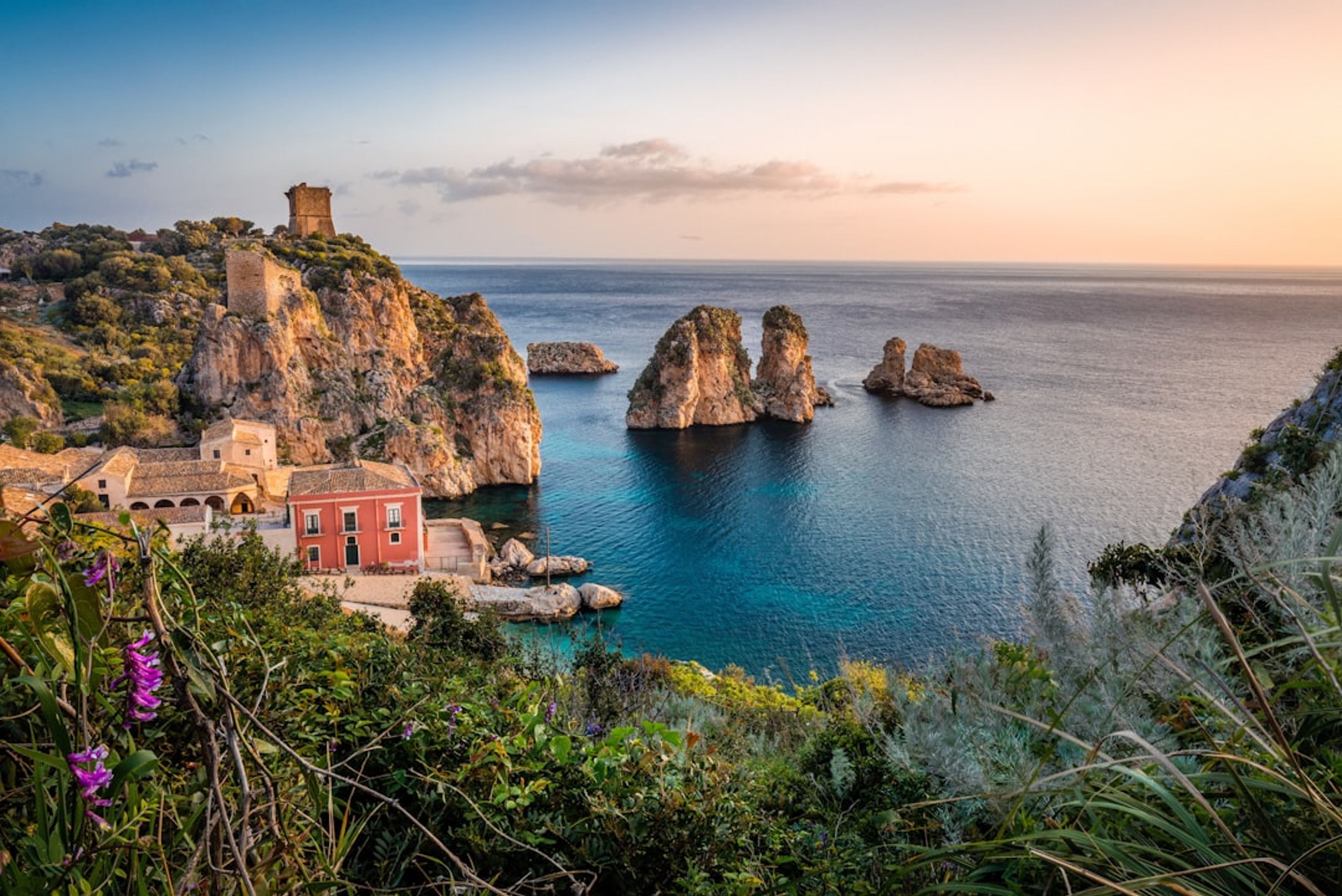
Sicily is the Mediterranean's largest island and an autonomous region of Italy, separated from the toe of the peninsula by the 3 km Strait of Messina. The island spans 25,711 square kilometres of mountains, vineyards, archaeological sites, and roughly 1,500 km of coastline. Mount Etna - Europe's most active volcano at 3,357 m - dominates the eastern skyline, while Palermo, Catania, and Syracuse anchor a network of historic cities shaped by Greek, Roman, Arab, Norman, and Spanish rule.
A trip to Sicily pairs serious archaeology with modern beach life. The Valley of the Temples in Agrigento preserves some of the best-surviving Doric architecture outside mainland Greece, the late-baroque towns of the Val di Noto form a UNESCO World Heritage Site, and the Aeolian Islands deliver volcanic hiking, black-sand coves, and cliff-edged swimming. Sicilian food is a destination in its own right - arancini, pasta alla Norma, fresh seafood from Catania's fish market, and pistachio specialities from the village of Bronte.
Two main airports serve the island: Palermo Falcone-Borsellino (PMO) on the west coast and Catania Fontanarossa (CTA) on the east. A rental car is the most flexible way to explore beyond the major cities, since regional trains and buses can be slow. Spring and autumn deliver the most comfortable weather for sightseeing, while summer is busy and hot but ideal for the beaches, the Aeolians, and the Egadi Islands off the western coast.
Country
Italy
Region
Sicily (autonomous region of Italy)
Population
~5 million
Elevation
Sea level to 3,357 m (Mount Etna summit)
Time Zone
CET (UTC+1), CEST (UTC+2) Mar-Oct
Currency
Euro (EUR)
Language
Italian, Sicilian
Nearest Airports
PMO (Palermo), CTA (Catania), TPS (Trapani), CIY (Comiso)
Airport to City Centre
Palermo PMO: 35 km / 50-min Trinacria Express bus; Catania CTA: 7 km / 20-min AMT Alibus
Typical Cost Level
Mid-range (cheaper than northern Italy)
Transport Pass
No regional pass - buy Trenitalia regional tickets or AST/SAIS bus tickets per leg
Spring (Mar-May)
14-22 °C, occasional rain, wildflowers across the interior
Summer (Jun-Aug)
26-35 °C, very dry, peak crowds and beach season
Autumn (Sep-Nov)
16-26 °C, warm sea, harvest season, fewer tourists
Winter (Dec-Feb)
8-15 °C, mild, snow on Mount Etna, off-season pricing
Sicily travel guides
Stay in the loop
Get the latest deals, new destinations, and travel tips delivered straight to your inbox.
No spam, unsubscribe anytime.
Do you need a visa for Italy?
Entry rules, stay length and passport validity by nationality.
Climate averages · 1991–2020
When is the best time to visit Sicily?
The best time to visit Sicily is between May and October, the most comfortable stretch of the year on these averages.
Best time · May–OctoberRainfall
- Jan6°
- Feb6°
- Mar8°
- Apr11°
- May16°
- Jun21°
- Jul24°
- Aug25°
- Sep20°
- Oct16°
- Nov11°
- Dec8°
Latest travel guides
Sicily Destination FAQ
Late April to June and September to October are the best months to visit Sicily. Daytime temperatures sit around 20-26 °C, the sea is warm enough for swimming from June onwards, and the major sites are far less crowded than in peak summer. July and August are hot (often above 35 °C inland) and the busiest months for the beaches and the Aeolian Islands. Winter (December-February) is mild on the coast at 10-15 °C, ideal for cultural sightseeing and ski trips on Mount Etna, but many island ferries and rural agriturismi reduce service.
Sicily has four main airports, each connected to its city by a dedicated bus. From Palermo Falcone-Borsellino (PMO), the Trinacria Express bus reaches central Palermo in about 50 minutes for around 6 EUR; the Trinacria train runs roughly hourly for a similar fare. From Catania Fontanarossa (CTA), the AMT Alibus runs every 25 minutes to Catania Centrale in about 20 minutes for 4 EUR. Trapani (TPS) connects to the city via the AST bus, and Comiso (CIY) is served by buses to Ragusa. Taxis from Palermo airport to the city centre cost a fixed 50-55 EUR; from Catania airport about 25-30 EUR.
A rental car is the most efficient way to see Sicily beyond the major cities. Public transport works for city-to-city moves between Palermo, Catania, Syracuse, and Taormina via Trenitalia regional trains, and AST and SAIS buses link inland towns. But sites like the Valley of the Temples, Villa Romana del Casale, and the rural baroque towns of the Val di Noto are awkward to reach without a car. Inside Palermo and Catania, walking plus the local bus network is enough. Taormina is small and mostly pedestrianised. For the Aeolian Islands you must switch to ferries or hydrofoils from Milazzo, Messina, or Palermo.
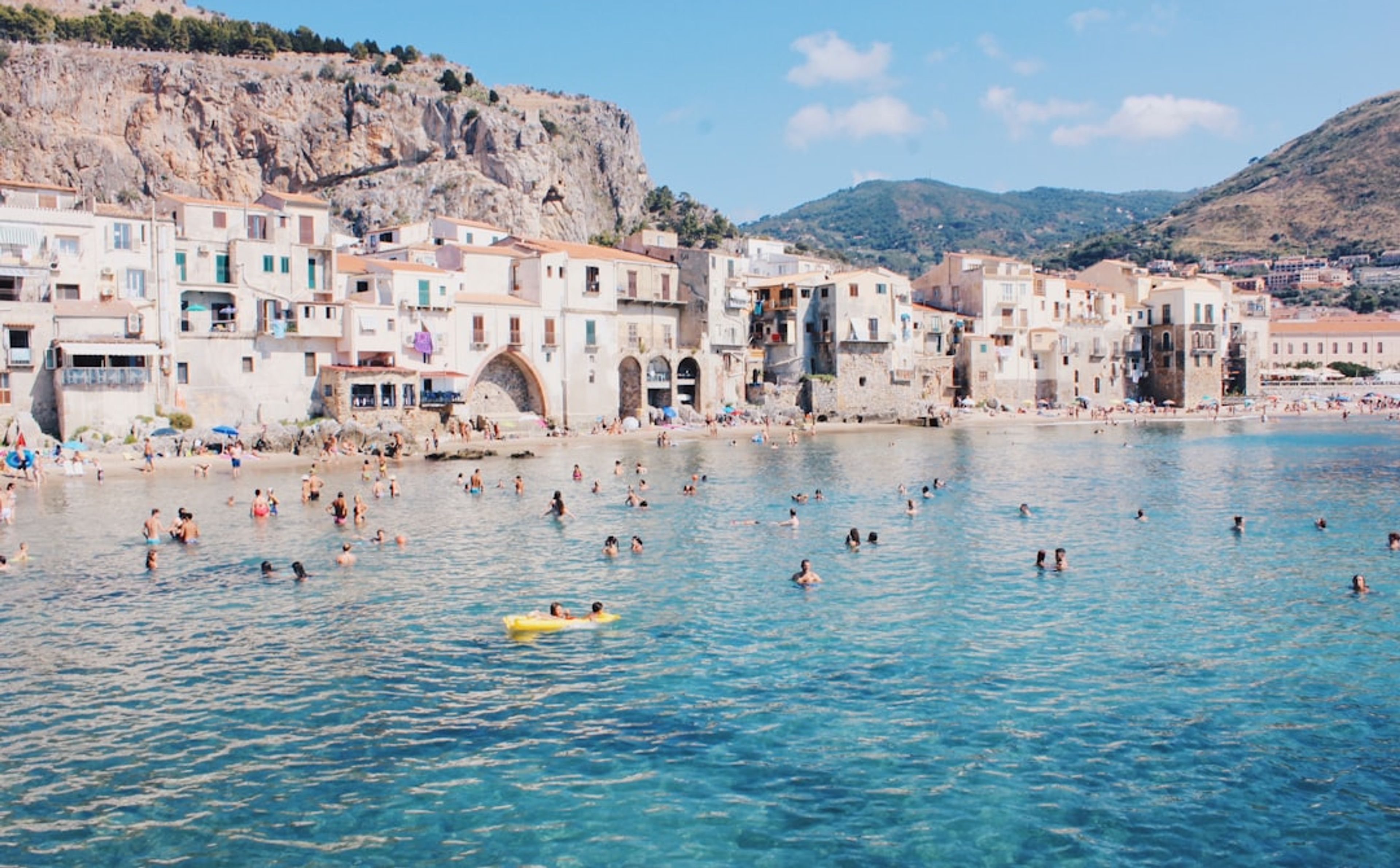
Plan at least 7-10 days for a full Sicily trip. A one-week itinerary covers the eastern side comfortably - Catania, Mount Etna, Taormina, Syracuse, Noto, and the Valley of the Temples - flying in and out of Catania. Ten days lets you cross the island to Palermo and Cefalù on the western coast and add a day for Erice or Trapani. Two weeks opens up the Aeolian Islands, the western beaches around San Vito Lo Capo, and slower stops in baroque hill towns like Modica and Ragusa Ibla. A long weekend (3-4 days) is realistic only for one base such as Catania-Etna-Taormina or Palermo-Cefalù-Monreale.
Sicily is broadly safe for tourists, with violent crime rates well below the European average. Most issues are petty: pickpocketing in Palermo's Ballarò and Vucciria markets, around Catania's Piazza del Duomo, and on crowded city buses. Drive defensively - Sicilian traffic is fast and signage in the interior can be sparse. Mount Etna is an active volcano; only walk above 2,500 m with a registered alpine guide and check the INGV (National Institute of Geophysics and Volcanology) bulletin before climbing. Beach safety is generally good but rip currents do occur on the southern coast, so swim where local lifeguards are present in July and August.
Yes, you can book Sicilian hotels and pay with crypto on trip1. trip1 supports over 50 cryptocurrencies including Bitcoin, Ethereum, and USDC, and covers 3 million+ hotels across 190+ countries - including properties in Palermo, Catania, Taormina, Syracuse, Cefalù, and the Aeolian Islands. You search and book the same way as any other travel platform; the only difference is that you settle the booking in your preferred cryptocurrency at checkout.
Sicily splits into three practical regions for travellers. The east covers Catania, Mount Etna, Taormina, Syracuse, and the baroque towns of Noto, Modica, and Ragusa - the most popular base for first-time visitors. The west centres on Palermo, Monreale, Cefalù, Trapani, and Erice, with stronger Arab-Norman heritage and the wilder Zingaro nature reserve. The south, anchored by Agrigento and the Valley of the Temples, has the longest beaches and the warmest sea but the fewest train connections. Most week-long trips combine east and south by flying into Catania; longer trips add the west or the Aeolian Islands.