

Guides · Petra
10 Top Things to Do in Petra, Jordan

CEO and co-founder
This guide ranks the 10 top things to do in Petra - the carved tombs, mountain monastery, ancient Nabatean engineering, and Wadi Rum desert excursion that genuinely deserve a place on your itinerary whether you have 2 days or a full week in southern Jordan. Each entry includes practical access notes and a Pro Tip drawn from how seasoned visitors actually navigate Petra in 2026.
Petra was the capital of the Nabatean Arab kingdom from the 4th century BC until the 1st century AD - a wealthy desert trading city carved directly into rose-coloured sandstone cliffs. After the Roman annexation of 106 AD and a devastating 363 AD earthquake, the city fell into ruin until rediscovered by Swiss explorer Johann Burckhardt in 1812. UNESCO World Heritage Site since 1985; one of the New 7 Wonders of the World.
The 264-square-km archaeological park needs 2-3 days minimum. The 1.2 km Siq leads to the iconic Treasury; the deeper trails go to the Monastery and High Place of Sacrifice. Base yourself in Wadi Musa town immediately outside the visitor centre. The Jordan Pass is the best ticket value.
1The Treasury (Al-Khazneh) - Petra's Iconic Tomb
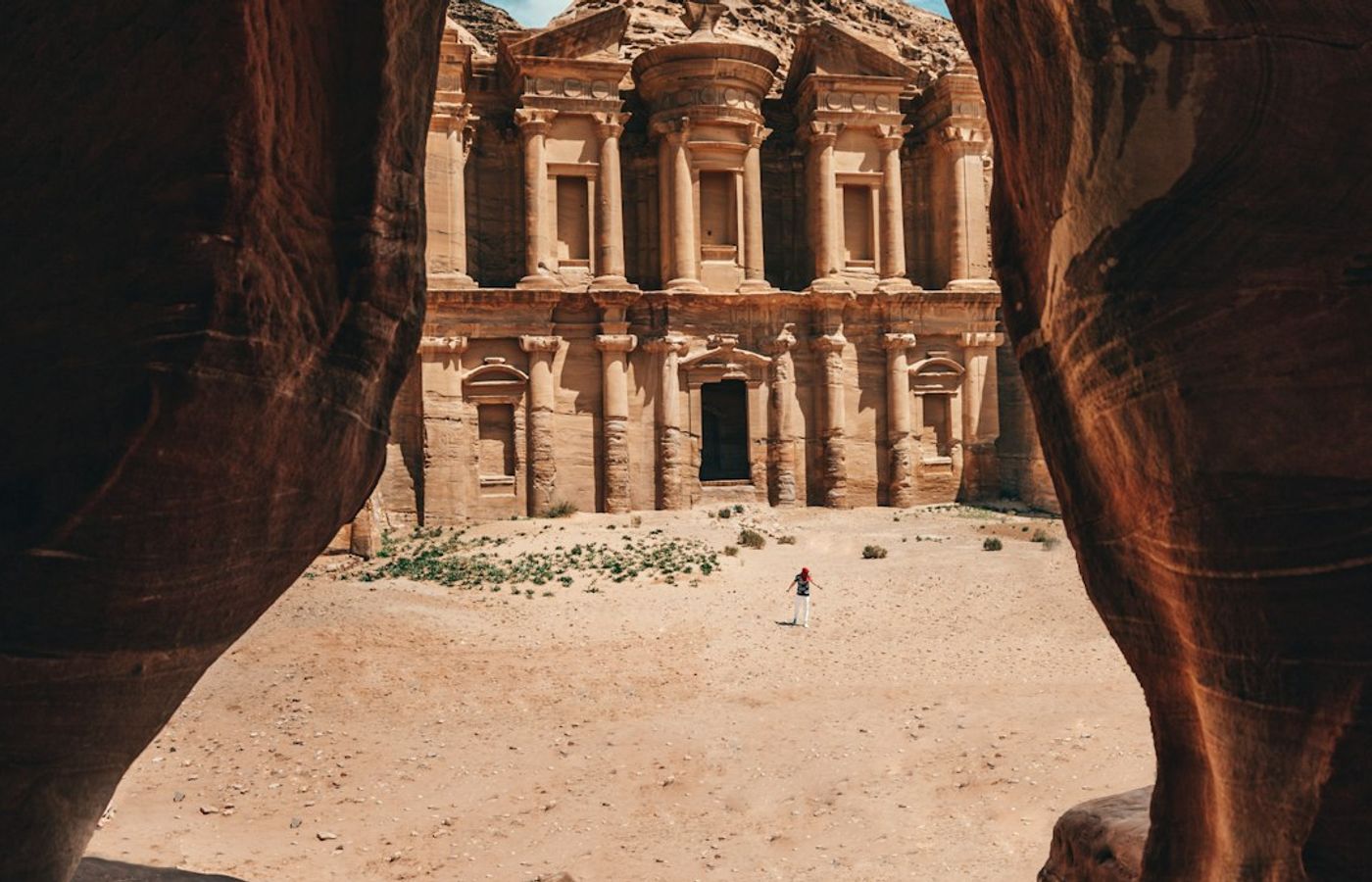

The Treasury (Al-Khazneh) is the iconic 1st-century BC tomb facade carved into the cliff at the end of the Siq - the photograph that defines Petra and a UNESCO World Heritage Site icon. The 39-metre-tall facade is carved entirely from solid sandstone in Hellenistic style with Nabatean modifications. Built as the mausoleum of King Aretas IV (8 BC-40 AD). The interior is a single empty chamber; the elaborate exterior is the masterpiece.
The name Treasury comes from a Bedouin legend that pirates hid loot in the urn at the top - visible bullet holes show centuries of attempts to break it open. The Treasury appeared as the Holy Grail location in Indiana Jones and the Last Crusade (1989). Free with Petra ticket. Best photographed 09:00-10:30 when sunlight illuminates the facade. The dramatic Siq emergence reveal is the standard first-glimpse moment.
Pro Tip: Climb to the Treasury Viewpoint - a 30-minute hike up the unmarked path to the left of the Treasury - for the postcard aerial view down onto the facade. The path starts behind a small Bedouin tea tent; pay 5-10 JOD for a guide or follow other hikers.
2The Monastery (Al-Deir) - The Mountain Peak Tomb
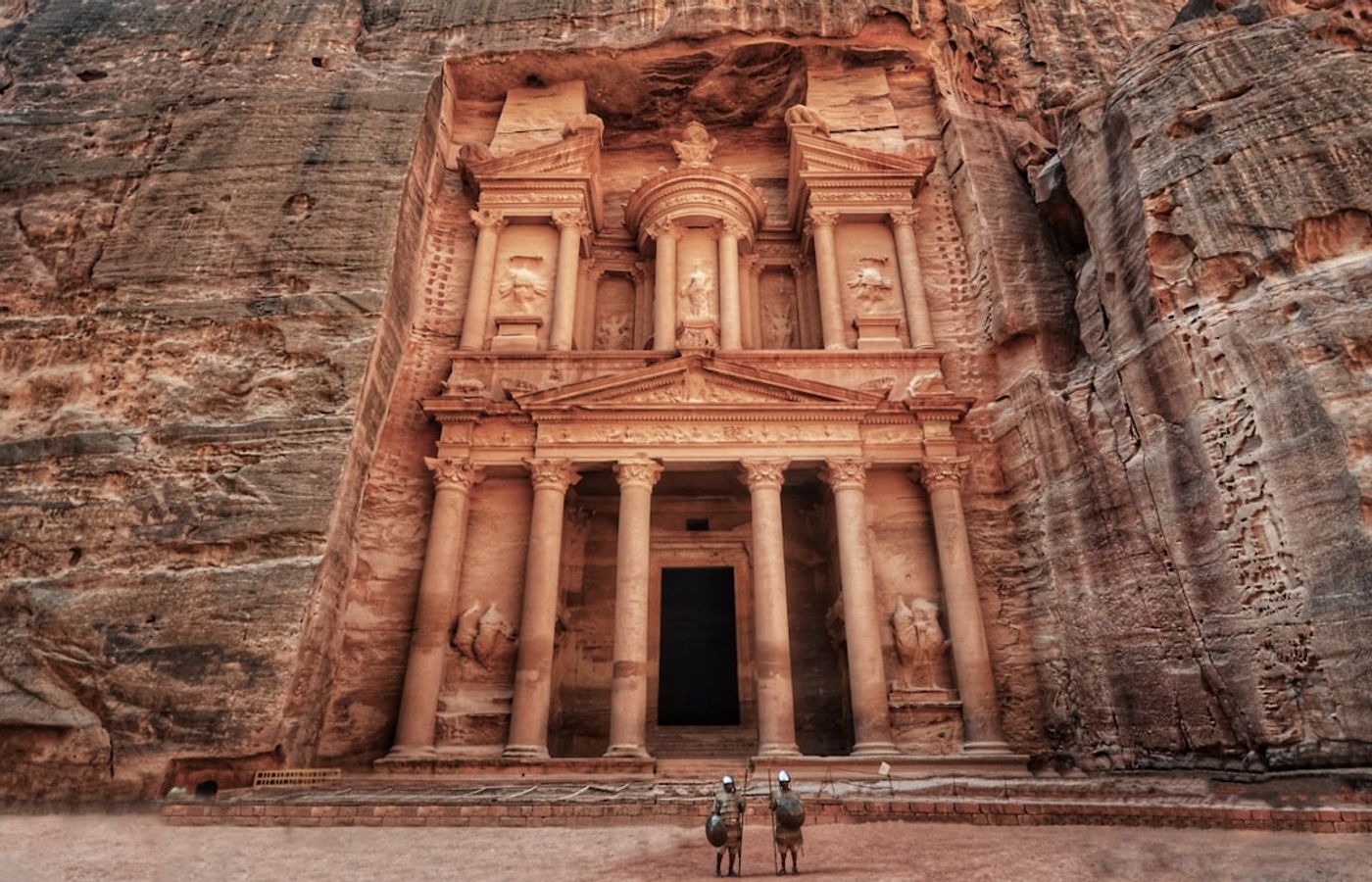

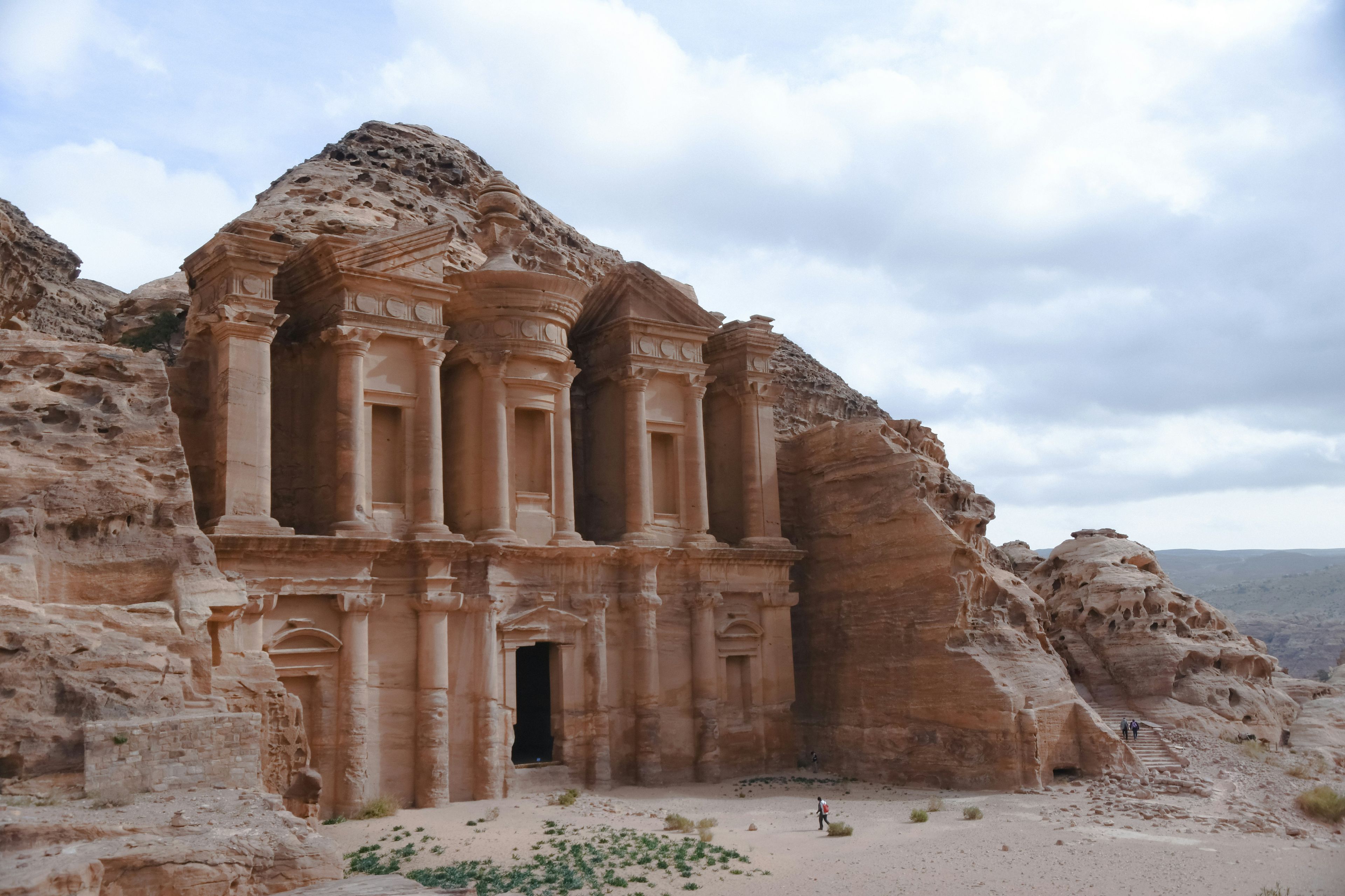
The Monastery (Al-Deir) is the largest carved monument in Petra - 47 metres wide and 48 metres tall, even bigger than the Treasury. The structure was likely a Nabatean temple from the 1st century BC, later used by Byzantine monks (hence the name). The 800+ rock-cut steps from the lower city take 45-90 minutes to climb; donkeys can be hired (10-15 JOD) for those who can't manage the steps. The reward is one of Petra's most spectacular sights, away from the main tourist crowds.
The cafe directly opposite the Monastery (Al-Deir Cafe) serves tea and Bedouin coffee with the best view in Petra. From here, the Best View in the World trail leads 10 minutes further up to a cliff edge overlooking Wadi Araba and the distant Israeli mountains - one of the most-photographed vistas in Jordan. Free with Petra ticket. Allow 4-6 hours including the climb.
Pro Tip: Start the climb at 08:00 to beat the heat (the steps face west). Walk down via the alternative back route towards the High Place of Sacrifice - it cuts a separate trail and lets you cover 2 major sites in one strenuous day. Bring 2 litres of water.

3The Siq - The Narrow Canyon Entrance
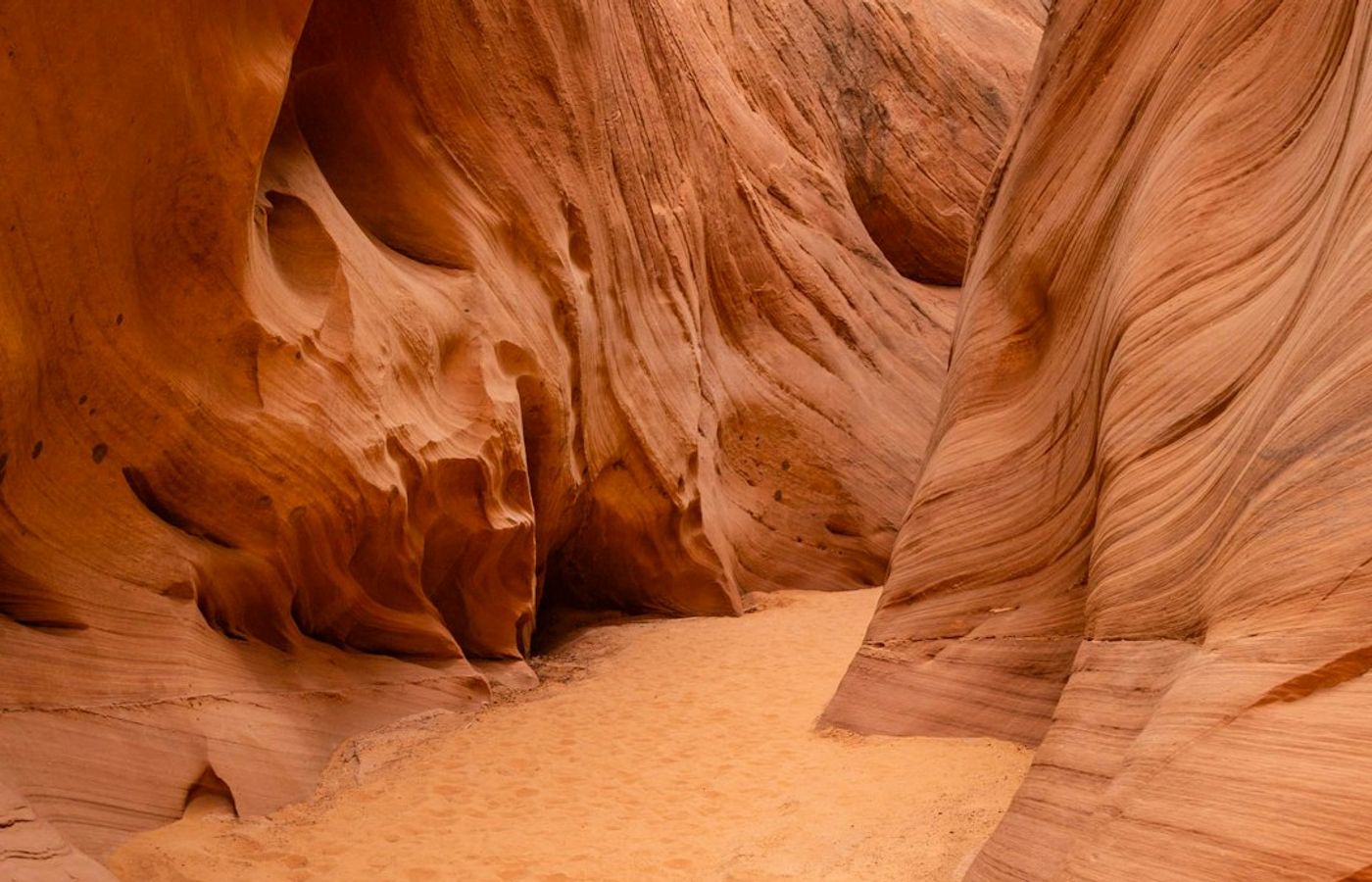

The Siq is the 1.2 km natural canyon that serves as the main entrance to Petra - a narrow split in the sandstone cliffs created by tectonic forces and water erosion. The canyon walls reach 80 metres tall in places; the path is just 3-5 metres wide at its narrowest. Nabatean engineers carved 30-metre water channels along both walls to bring spring water into the city - parts of these channels and the original Roman-era stone pavement remain visible.
The walk takes 20-30 minutes. Carved niches along the walls held statues of gods; god blocks remain in several sections. The dramatic moment when the canyon opens to reveal the Treasury at the end is one of the great architectural reveals in world tourism. Horse-drawn carriages take the route at 25 JOD round-trip but you miss the slow build-up. Walking is recommended.
Pro Tip: Walk the Siq at 06:15 (just after sunrise opening) to see the morning light strike the Treasury through the slot - the most photographed moment in Petra. Carriage drivers tout aggressively at the entrance; walk past them confidently.
4Royal Tombs - The Cliff-Carved Burial Monuments
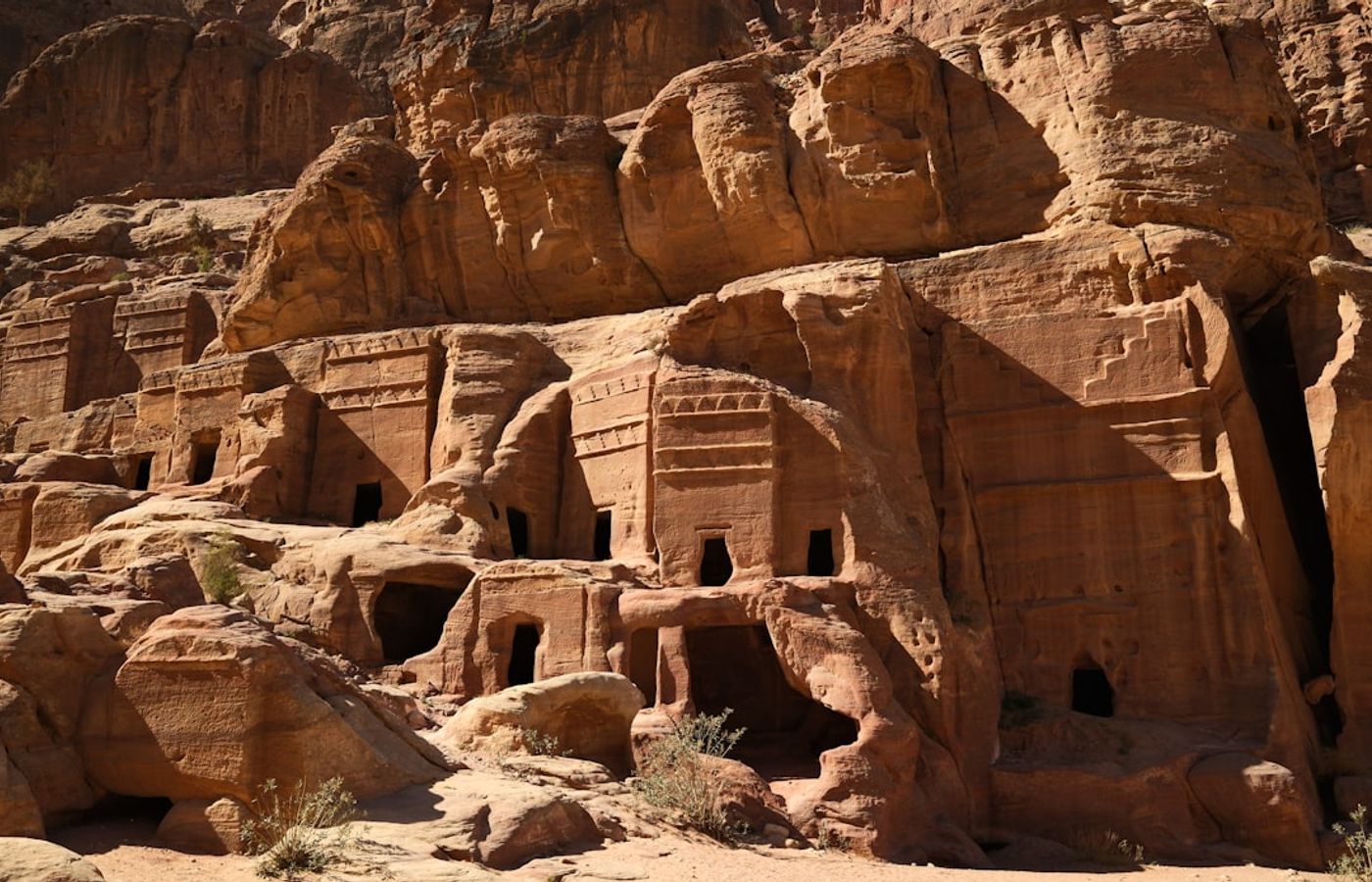
The Royal Tombs are a group of large carved tomb facades cut into the eastern cliff opposite the Theatre - the burial monuments of Nabatean kings and aristocrats from the 1st century BC and 1st century AD. The four main tombs are the Urn Tomb, Silk Tomb, Corinthian Tomb, and Palace Tomb. The Urn Tomb (later converted to a Byzantine church in 446 AD) is the largest. The Silk Tomb is named for its colourful naturally-banded sandstone interior.
The tombs are reached by a steep flight of carved steps from the main Nabatean street. The Urn Tomb's elevated terrace offers the best Petra panorama - looking down on the Theatre and across to the Treasury (the angle reverses the Siq entry view). Allow 90 minutes for a full Royal Tombs visit. Free with Petra ticket. Best 15:00-17:00 when light strikes the eastern facades.
Pro Tip: From the Urn Tomb's upper terrace, walk the unmarked goat path north along the cliff for 5 minutes to reach a less-visited overhang with a panoramic view back to the Treasury - the standard photo angle few visitors find.
5High Place of Sacrifice - The Mountain Altar
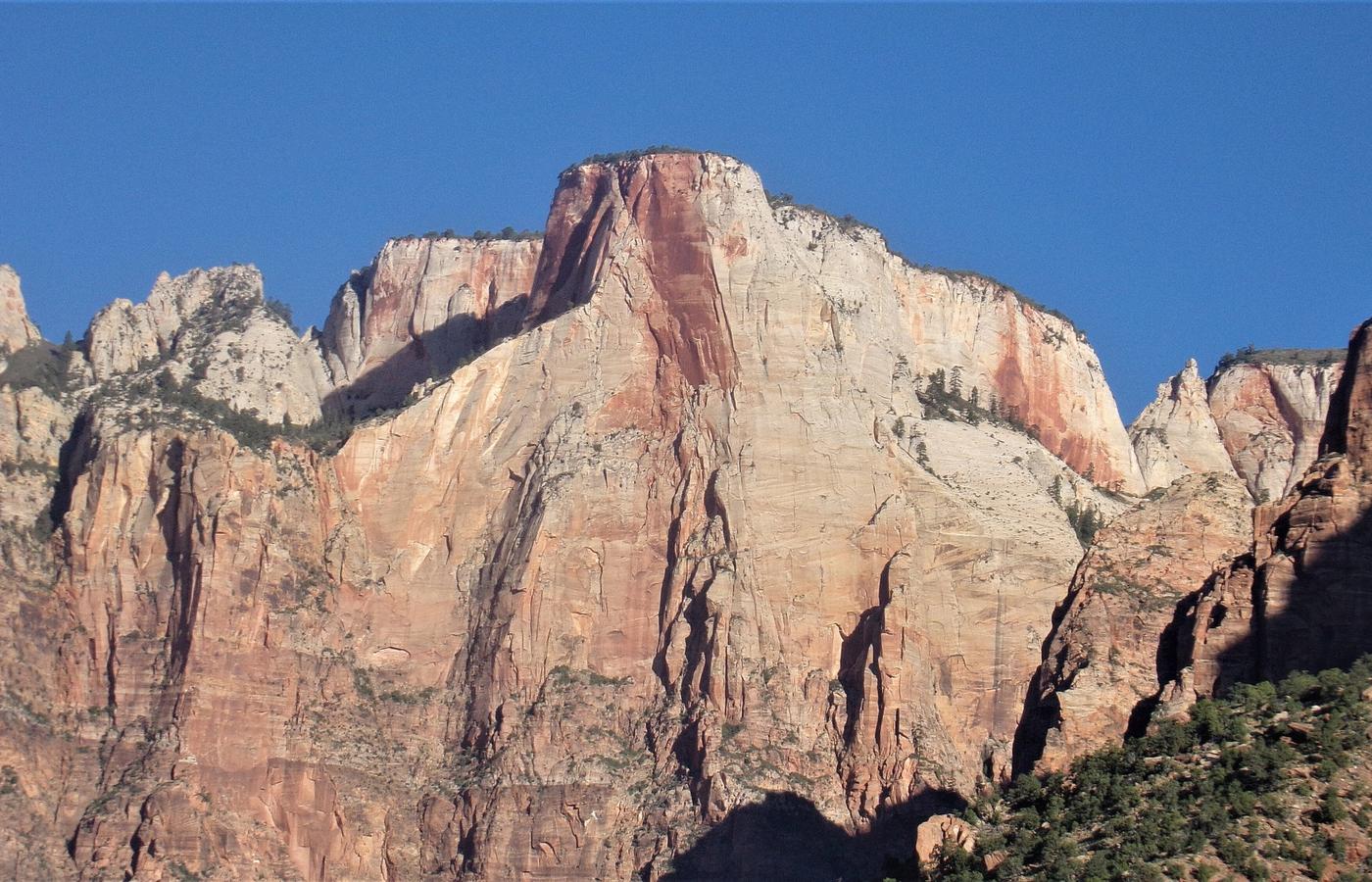
The High Place of Sacrifice (Al-Madbah) is the best-preserved Nabatean ceremonial altar in Petra - perched on the summit of Jebel Madhbah mountain (about 200 m above the city centre). The flat-topped platform features 2 carved obelisks (each 6 metres tall, cut from the bedrock), a stone-carved altar, and channels designed to drain the blood of sacrificed animals. The Nabateans used the platform for religious ceremonies dedicated to their main god Dushara.
Reached by 600+ ancient steps cut into the cliff (50 minutes up; 30 minutes down). The summit offers a sweeping 360-degree view of the entire Petra archaeological zone - the best panorama of the city, much better than ground level photos. Best descended via the Wadi Farasa back route which passes the Renaissance Tomb, Soldier's Tomb, and Lion Triclinium - a quieter alternative to retracing the climb.
Pro Tip: Climb at 14:00-16:00 - the afternoon light hits the altar from the west and the temperature at the summit drops 5-8 degrees due to elevation. The Wadi Farasa descent route is one of Petra's most beautiful walks and almost empty of tourists.
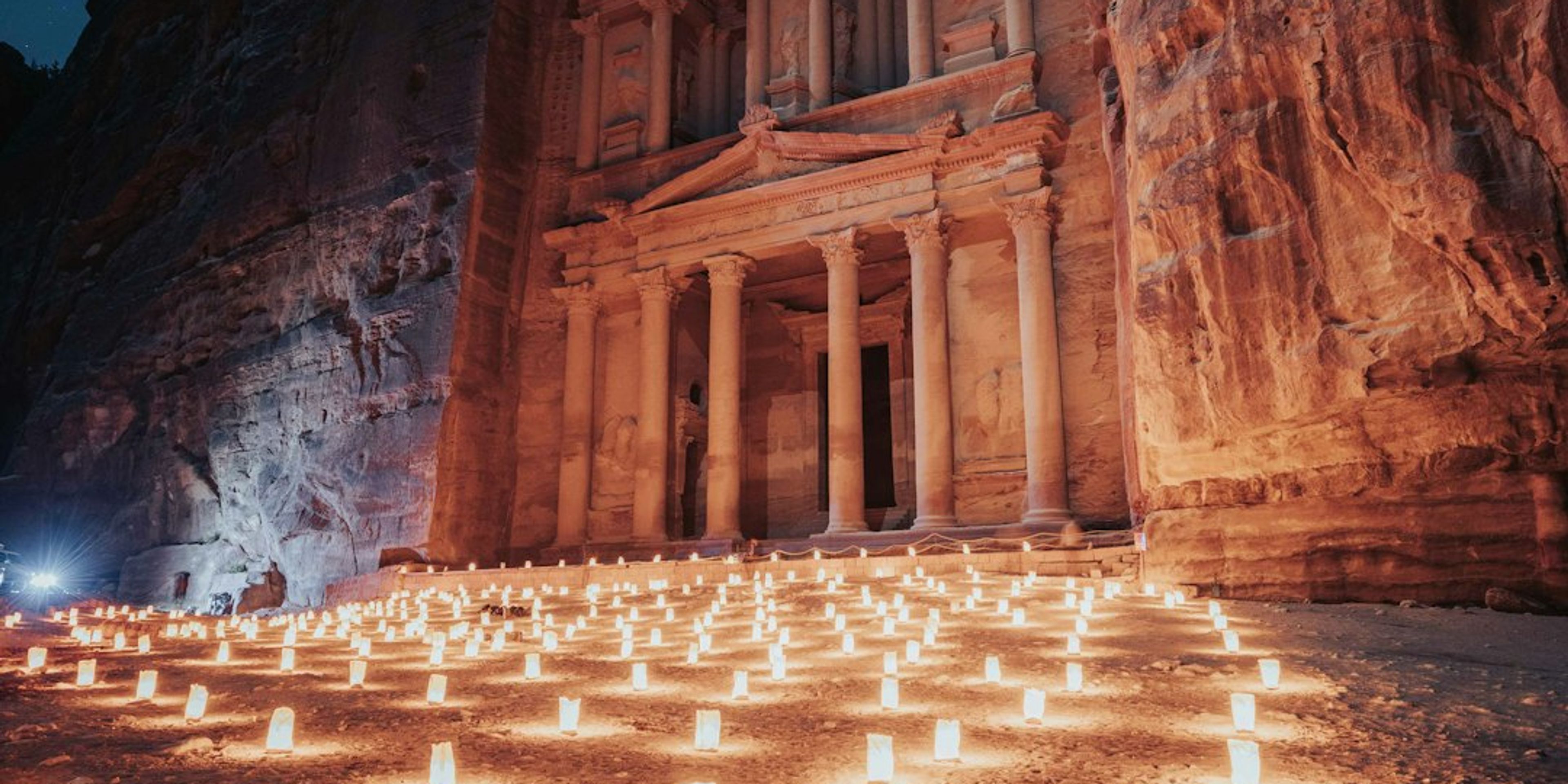
6Petra by Night - The Candlelit Treasury Experience
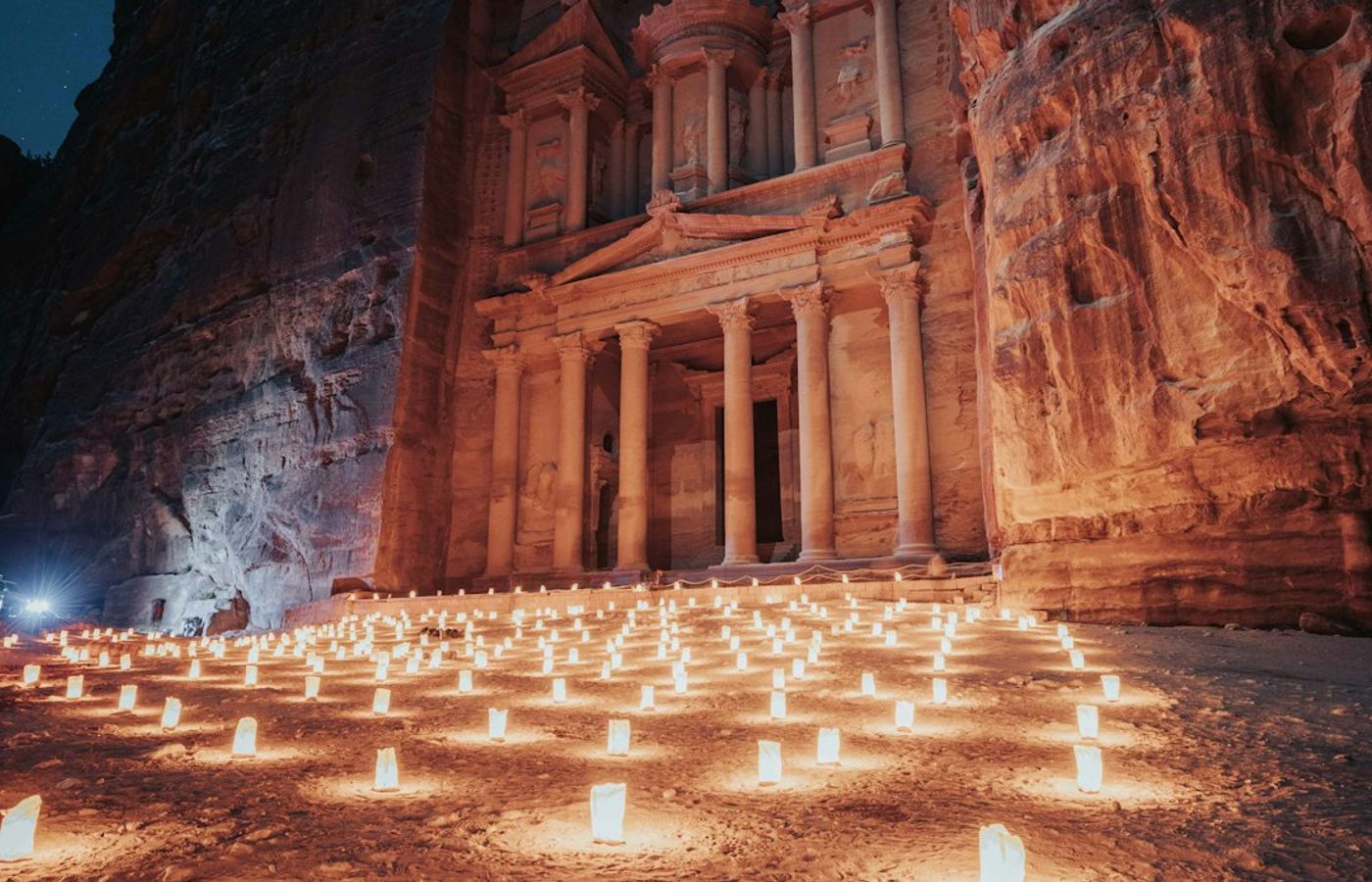
Petra by Night is a 2-hour evening experience held Monday, Wednesday, and Thursday from 20:30 to 22:30 - the Siq and Treasury Square are illuminated by 1500 paper candles, and Bedouin musicians perform traditional Bedouin music in front of the Treasury. The experience starts at the visitor centre and follows the standard daytime route, just in moonlight and candlelight.
Ticket 17 JOD per person, purchased separately from the Petra day ticket. Tea is served at the Treasury during the 45-minute musical performance. Crowds typically reach 200-300 visitors per night; arrive 30 minutes early at the visitor centre to walk the Siq before the main group. The Treasury is dimly lit so professional photographs require tripod and slow shutter; standard phone photography is challenging.
Pro Tip: Walk fast through the Siq to be in the first 20 visitors at the Treasury - position on the right side facing the facade for the best music-watching angle. Bring a torch for the Siq walk after the musicians stop playing - the candles burn out by 22:00.
7Wadi Rum - The Desert Day Trip from Petra
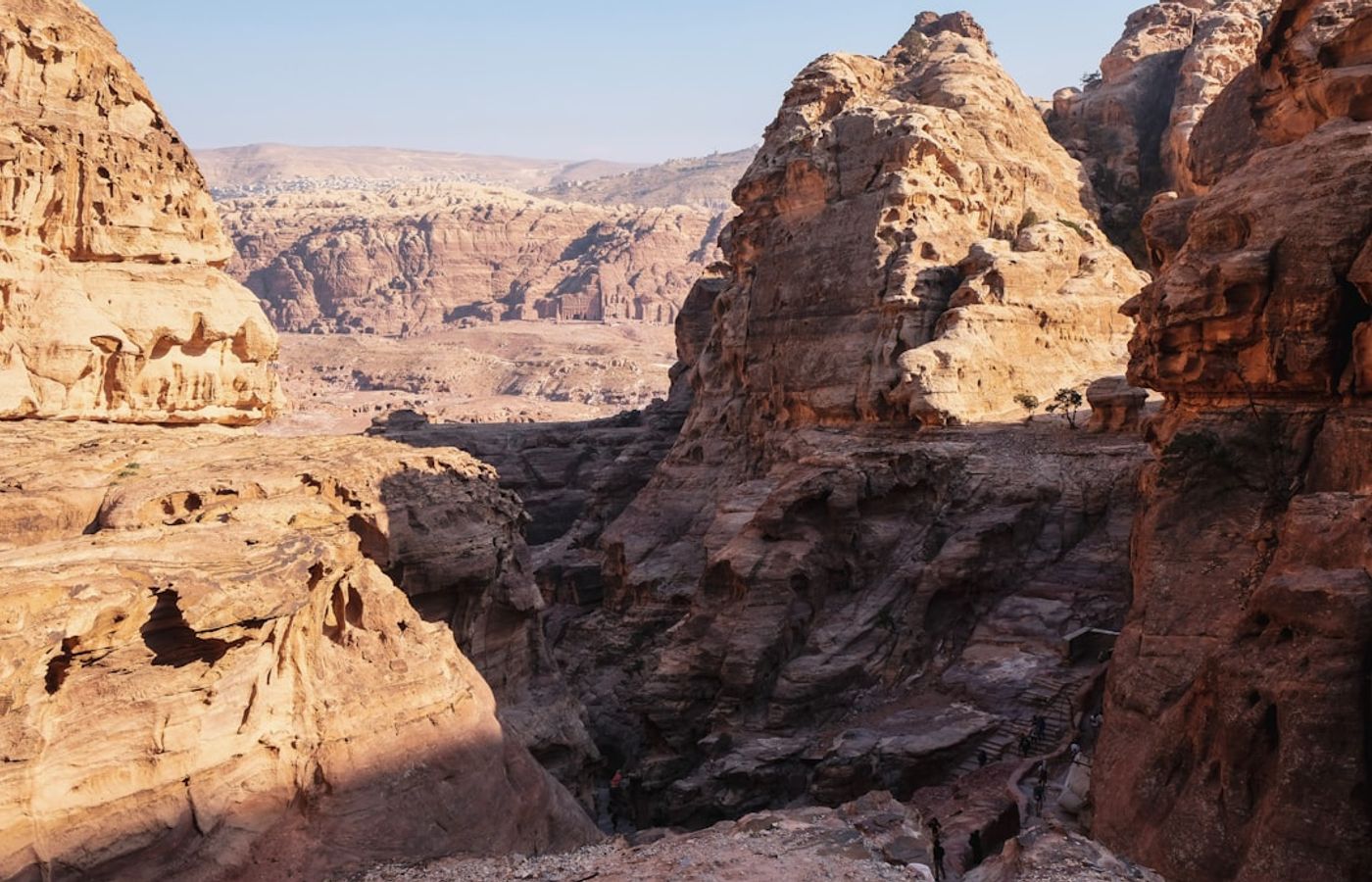
Wadi Rum is the protected desert valley 90 minutes south of Petra - a UNESCO World Heritage Site of red sandstone mountains, granite cliffs, and Bedouin camps. T.E. Lawrence (Lawrence of Arabia) operated from here during the 1916-18 Arab Revolt, and the area has appeared in films including The Martian, Star Wars: Rise of Skywalker, and Dune. The desert is best experienced from a 4WD jeep with a Bedouin driver-guide.
Day trips from Petra 75-100 JOD per person including 4-5 hour jeep tour, lunch in the desert, and Bedouin tea. Standard stops include the Lawrence Spring, Khazali Canyon rock inscriptions, the natural Burdah Rock Arch, and a sunset viewpoint. Overnight Bedouin camps (200-400 JOD all-in) extend the experience with stargazing and traditional zarb (Bedouin pit oven cooking).
Pro Tip: The overnight Bedouin bubble tent stay at one of the Wadi Rum Night Luxury Camp (300-500 JOD) lets you watch the Milky Way through the transparent dome ceiling - the best stargazing experience in the Middle East. Book 2-3 weeks ahead in peak season.
8Street of Facades - The Tomb-Lined Avenue
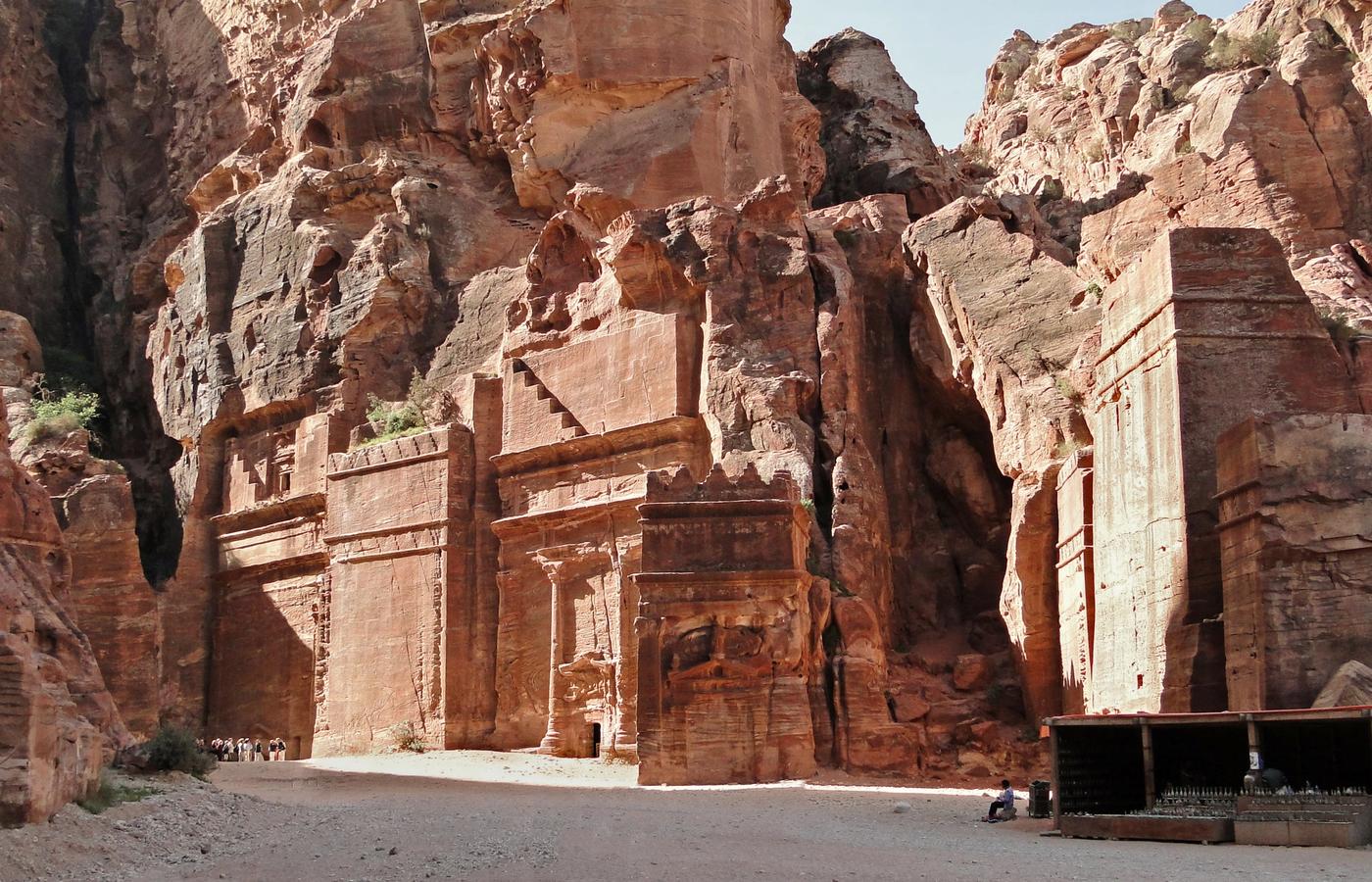
The Street of Facades runs immediately past the Treasury and continues for 300 metres along a sandstone cliff lined with 40+ Nabatean tomb facades. These are smaller and simpler than the Treasury - mostly mid-1st century BC family tombs of wealthy Nabatean merchants. The architecture combines Egyptian (stepped tops, the Crow Step Style), Assyrian (cornices), and Hellenistic (column capitals) influences - a visual record of Nabatean trading connections.
The facades are climbable in several places - the Bedouins sometimes offer scrambled access to the upper viewing terraces. The route continues to the Theatre (a Roman-era amphitheatre carved into the cliff) and the main Nabatean street. The cliff face contains carved doorways at multiple levels showing how the city was 3-dimensional. Allow 30 minutes for the walk. Free with Petra ticket.
Pro Tip: The third tomb on the southern side has an interior chamber large enough to walk through to the back wall - one of the best-preserved Nabatean tomb interiors in Petra. The Bedouin tea sellers near the Theatre offer surprisingly good cardamom tea for 1 JOD.
9Little Petra (Siq al-Barid) - The Trading Suburb
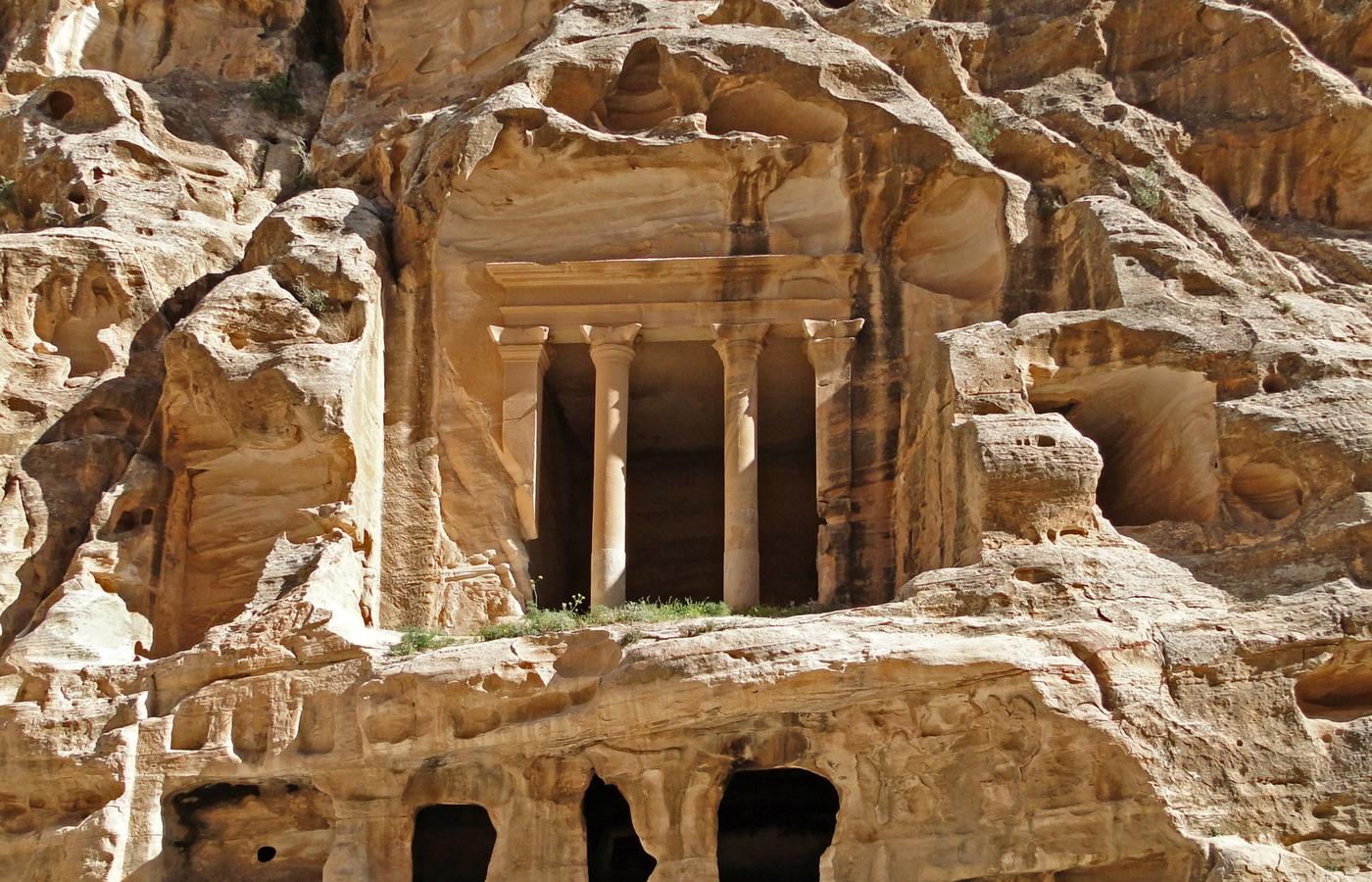
Little Petra (Beidha or Siq al-Barid, meaning Cold Canyon) is a 1-km Nabatean trading suburb 8 km north of main Petra - similar carved-tomb architecture but on a smaller scale. The site was the caravan stop where merchants stayed before entering Petra proper. The site features the only known surviving Nabatean wall paintings (in the Painted House, 1st century BC) - faint floral motifs and figurative scenes in red, white, and yellow.
Highlights include the entrance Siq (similar to but smaller than main Petra's), 3 large biclinium banquet halls, the Painted House at the canyon's end, and the rock-cut Nabatean cisterns. The nearby Beidha Neolithic Village ruins date to 7200 BC - among the world's oldest known villages. Free entry. Taxi from Petra 8-15 JOD; the back trail from main Petra takes 2-3 hours one way.
Pro Tip: The 2-hour back trail from Petra's Monastery to Little Petra is one of the most scenic walks in Jordan - mostly downhill but unmarked, requiring a Bedouin guide (40-60 JOD). The walk ends with Little Petra and a taxi back to Wadi Musa.
10Petra Theatre - The Hellenistic-Roman Amphitheatre
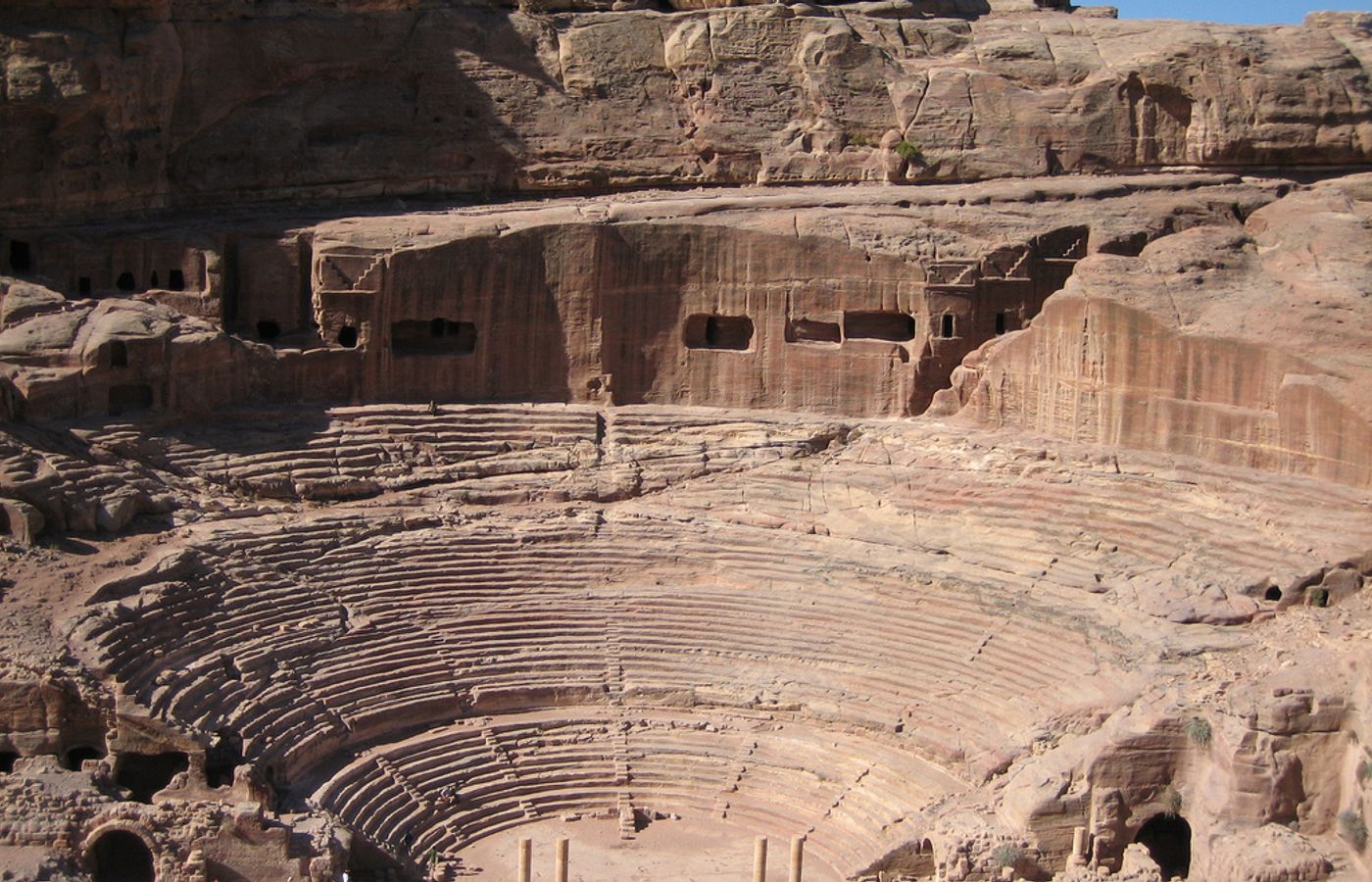
The Petra Theatre is a 1st-century AD Roman-style amphitheatre carved directly into the cliff face - 7000 seats arranged in 45 rows around a central performance area. The lower tiers were carved entirely from the bedrock; the upper rows were built from quarried stone. The Romans expanded the structure after the 106 AD annexation; the visible cuts at the back of the seating area show where the Nabateans had previously cut tomb facades that were partly demolished to make room for theatre seating.
The 363 AD earthquake destroyed much of the stage and orchestra; what remains is the carved-into-cliff seating section. The theatre sits immediately south of the Royal Tombs and is the focal point of the central Nabatean street. The view from the upper seats across to the Royal Tombs is among Petra's most photogenic angles. Free with Petra ticket. Allow 30 minutes.
Pro Tip: Sit in the top row of the theatre at sunset for the panoramic view across to the Royal Tombs - the eastern cliffs catch the last light and the colours are spectacular. The acoustics are still excellent; clap once from the centre to hear the slow echo.
Get hotel deals for Petra
Price drops, new stays and local tips for Petra, straight to your inbox.
No spam, unsubscribe anytime.

CEO and co-founder
Tomas is the co-founder and director of trip1, an European company specializing in reservation services. He launched the company in 2025 with a focus on building scalable, efficient operations.
10 Top Things to Do in Petra, Jordan - FAQ
Two to three days. One day covers the Siq, the Treasury, the Street of Facades, the Royal Tombs and the Theatre, but the Monastery climb of 800+ steps and the High Place of Sacrifice need a second day. A third day fits Little Petra or a Wadi Rum jeep trip. Stay in Wadi Musa, right outside the visitor centre, and start early to beat the heat.
March to May, or September to November. Spring days run about 20 to 30 degrees, with wildflowers along the trails, and October and November bring mild days and cool evenings. Summer often passes 36 degrees, which makes the Monastery's 800+ steps hard work, so start by 08:00 if you go then. Winter is quieter but can be cold.
JOD 50 (about $70) for one day, JOD 55 for two or JOD 60 for three, if you spend at least one night in Jordan; day visitors who do not stay overnight pay JOD 90. Children under 12 enter free. The Jordan Pass, JOD 70 to 80, covers Petra, more than 40 other sites and the tourist visa fee if you stay at least two nights.
There is no formal dress code, but covering shoulders and knees is respectful in Jordan and practical against sun and dust. Light long trousers or a long skirt, a breathable top with sleeves, a hat and shoes with good grip work best, because the Monastery and the High Place of Sacrifice involve hundreds of uneven rock-cut steps. Bring a layer for cool mornings.
Petra was voted one of the New 7 Wonders of the World in a global poll in 2007, and it has been a UNESCO World Heritage Site since 1985. The Nabateans carved a wealthy desert trading city straight into rose-coloured sandstone, from the 39-metre Treasury facade to the even larger Monastery, and cut water channels along the 1.2 km Siq.
Yes, for a different mood, though it is not essential. You walk the candlelit Siq to the Treasury for music and storytelling, from 20:30 to 22:30, Sunday to Thursday. Tickets cost JOD 30 (about $42), are sold only at the Petra Visitor Center on the day, and need a daytime Petra ticket or Jordan Pass, which does not cover the night visit.