Guides · Paros
10 Best Things to Do in Paros

CEO and co-founder
If you are looking for the most balanced list of things to do in Paros Greece for 2026, this is the island that quietly outperforms almost every other stop in the Cyclades. Paros sits in the middle of the Aegean between Naxos and Antiparos, and it manages to combine the whitewashed romance of Mykonos, the archaeology of Delos and the swimmable turquoise water of Milos - without ever tipping into cruise-ship chaos. Roughly 196 square kilometres of marble hillsides, painted fishing harbours and windsurf-perfect east-coast beaches give you enough variety to fill a full week and still leave you plotting a return.
The island's two hubs do very different jobs. Parikia, the ferry port and administrative capital, is where you will find the 4th-century Panagia Ekatontapyliani (Church of 100 Doors), the Frankish Castle built from recycled ancient marble, and the archaeological museum that houses the Parian Chronicle. Naoussa, 10 kilometres north, is the postcard - a Venetian fishing harbour ringed with tavernas, cocktail bars and boutiques that come alive between June and September. Between them sit hill villages like Lefkes, the Byzantine marble footpath that links the mountain settlements, and beaches ranging from the granite pools of Kolymbithres to the wind-lashed golden sand of Chrissi Akti.
Use this guide as your shortlist of the 10 experiences worth building a trip around. Every entry includes a 2026 opening window, transit directions from Parikia port and a Pro Tip that will save you either time, money or a very sunny walk. For the official island overview see the Greek National Tourism Organization page for Paros.
1Naoussa Old Fishing Harbour - The Cyclades at Golden Hour


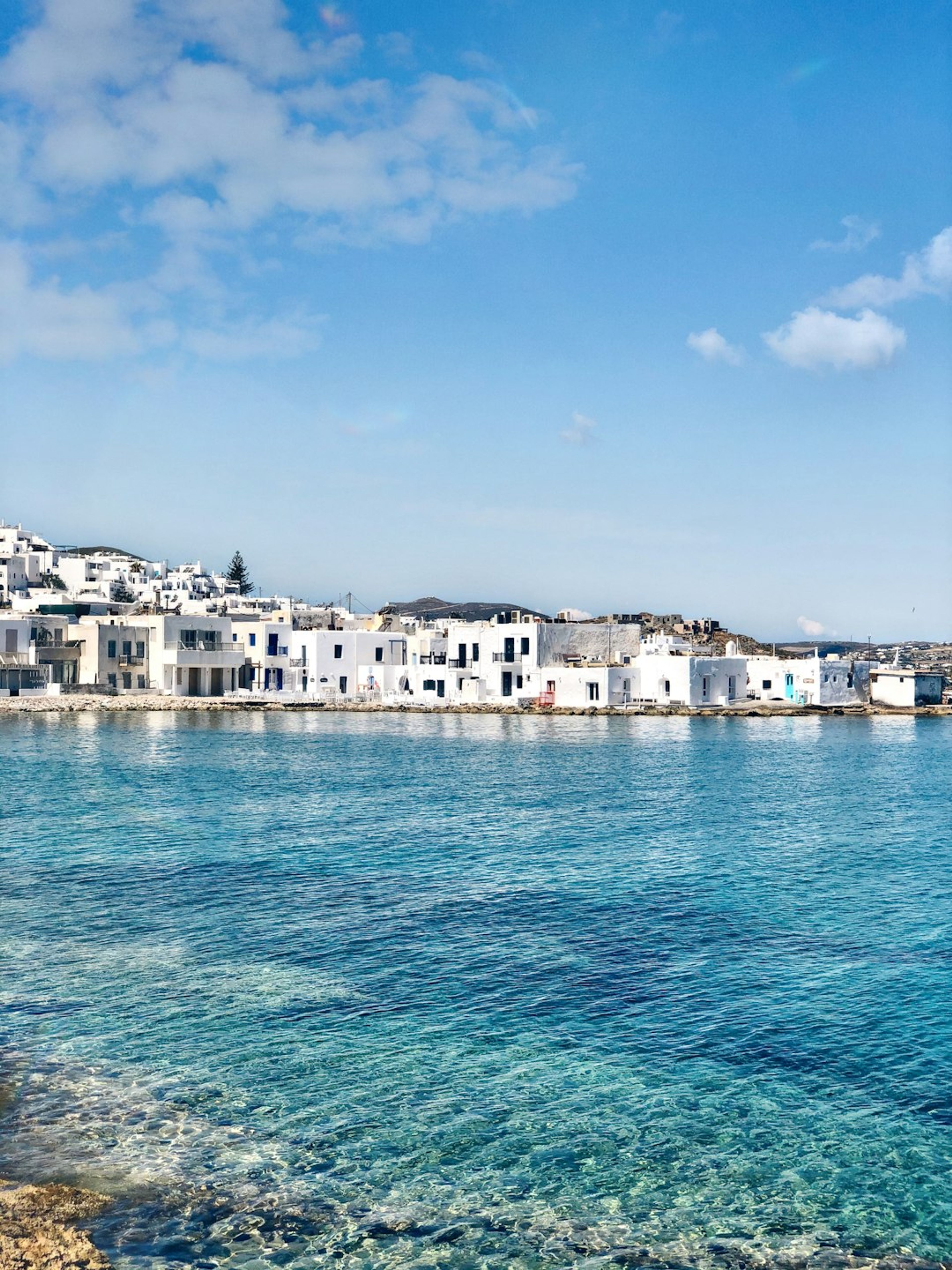
Naoussa is the single most photographed corner of Paros and, along with the ferry-hub of Parikia, one of only two settlements on the island that stays fully open in the shoulder season. The old fishing harbour still shelters a small fleet of painted caiques inside the ruined half-submerged Venetian mole, and the whitewashed lanes behind it are packed with cocktail bars, seafood tavernas and boutiques selling handmade sandals and Cycladic ceramics. In 2026 the tavernas along the quay open from around 09:00 for breakfast and stay busy until well after midnight in July and August, with cocktail bars typically pouring until 02:00 or later.
Come twice if you can: once in the morning for coffee and octopus drying on the racks, and again just before sunset when the light turns the harbour gold and the candles come out along the water. Walking the harbour is free, and most of the classic photos are taken from the small stone breakwater on the west side of the port.
Pro Tip: Park at the free public lot on the Parikia side of Naoussa (signposted from the main Parikia - Naoussa road) and walk in on foot. The old town is a low-speed pedestrian zone, and finding a legal space inside the village between 20:00 and midnight in July or August is close to impossible.
2Panagia Ekatontapyliani - The Church of 100 Doors in Parikia


Panagia Ekatontapyliani, better known as the Church of 100 Doors, is one of the oldest continuously functioning Christian churches in Greece. Tradition dates its foundation to 326 CE and links it to Saint Helena, mother of Constantine the Great, with the surviving Byzantine complex substantially rebuilt in the 6th century under Justinian. Inside you will find carved marble screens, a rare surviving cruciform baptistery from the 4th century and an icon of the Virgin said to have miraculous powers - the reason for the huge August 15th pilgrimage described in Paros' municipal calendar.
In 2026 the church is open daily from 07:00 to 21:00 in high season (April to October) with slightly shorter winter hours, and entry is free. The small Byzantine Museum in the same courtyard is open 09:00 to 14:00 Tuesday to Sunday, with an admission fee of around EUR 2. Dress modestly (covered shoulders and knees) and remember it is still an active parish - services take precedence over sightseeing.
Pro Tip: Arrive before 09:30 or after 18:00 to have the courtyard almost to yourself. Ferry-day tour groups pile in mid-morning, and the interior is significantly cooler and more atmospheric outside that window.

3Kolymbithres Beach - The Granite Rock Pools of Paros


Kolymbithres is the beach that ends up on every Paros highlight reel, and for good reason. Instead of a single long strip of sand, the shoreline is broken up by huge smooth granite boulders sculpted by wind and sea into a series of shallow natural swimming pools. The water sits somewhere between electric turquoise and pale mint, and the shallow depth (rarely more than chest-high near the sand) makes it an easy swim for kids and non-swimmers.
Access to the beach itself is free, and there is a public section on the west side where you can drop a towel among the rocks. Two organised beach clubs run sun-lounger and umbrella rentals in 2026 for roughly EUR 25 to EUR 40 per pair, depending on location and season, and both operate a small food-and-drink menu. Facilities include showers, changing rooms, snorkelling gear rentals and a couple of tavernas back on the road.
Pro Tip: The northwest-facing bay is exposed to the meltemi (the summer northerly wind), so on a strong wind day the water can get whipped up. Check the wind forecast the night before - if the meltemi is over 5 Beaufort, swap Kolymbithres for the sheltered east-coast beaches instead.
4Golden Beach (Chrissi Akti) - The Windsurfing Capital of the Aegean

Chrissi Akti - literally 'Golden Coast' - is the 1.2 kilometre sweep of fine gold sand that hosts the PWA Windsurfing World Cup almost every August. The steady afternoon meltemi that blows across the east coast makes this one of the top three windsurfing and freestyle wing-foil spots in Europe, and both established schools (Aegean Divers and Force 7) rent gear and offer beginner-to-advanced coaching in 2026 for around EUR 60 to EUR 90 per two-hour session.
The beach itself is free to access, with two organised sections offering sun-lounger and umbrella sets at around EUR 20 to EUR 30 per pair per day and a small cluster of tavernas and beach bars behind the dunes. Morning swimmers usually get calm, mirror-flat water before the wind picks up around 13:00; by mid-afternoon the bay is a moving forest of sails and kites.
Pro Tip: If you want to swim rather than surf, arrive before 11:00 and grab a spot at the north end of the beach where the natural rock outcrop offers some shelter. From lunchtime onwards the sand can literally sandblast your legs on a strong meltemi day.
5Lefkes Village and the Byzantine Marble Footpath

Lefkes is the highest and most atmospheric of Paros' inland villages, and it served as the island's administrative capital during Ottoman rule specifically because pirates could not see it from the sea. Whitewashed houses cascade down a marble-paved hillside, punctuated by the twin bell towers of the 19th-century Agia Triada church and views that reach all the way east to Naxos on a clear day.
From the eastern edge of the village, the ancient Byzantine Way (Byzantiniko Monopati) - a 3.5 kilometre marble footpath dating back at least to the 10th century - drops through olive groves and dry-stone walls to the neighbouring village of Prodromos. It is a gentle 90-minute walk downhill, well signposted with information boards, and free to hike year-round. In 2026 the last KTEL Paros bus back from Prodromos to Parikia typically leaves around 20:30 in summer, so time your descent accordingly.
Pro Tip: Start the walk from Lefkes rather than Prodromos so you are heading downhill on the marble slabs (they can be slippery in trainers). Carry at least 1.5 litres of water per person - there is no shade for most of the route and no shop between the two villages.
6Antiparos Day Trip - Ferry from Pounta to a Slower Island

Antiparos is the small, quieter island directly across the strait from Pounta on the southwest coast of Paros. The ferry runs from early morning until well after midnight in summer, and once you are across you can walk straight into Antiparos Chora - a compact whitewashed village with a small Venetian castle, a single main lane of boutiques and tavernas and beaches you can reach on foot or by rented ATV.
The headline sight is the Cave of Antiparos on the southern half of the island, a limestone cave system with a stalagmite reputed to be one of the oldest in Europe at around 45 million years. In 2026 the cave is open daily from mid-May to late October, roughly 10:45 to 16:00, with an entry fee of around EUR 6 for adults. Local buses meet each ferry and shuttle visitors to the cave, to Soros beach and back for around EUR 5 each way.
Pro Tip: Skip the passenger-only fast ferry from Parikia (30 minutes, more expensive, seasonal only) and drive or bus to Pounta instead. It is dramatically cheaper, runs on the half-hour year-round and drops you 30 metres from Antiparos' main square.
7Marathi Ancient Marble Quarries - Where the Venus de Milo Was Born

The Marathi quarries are the source of the almost-translucent Parian marble (lychnites) that the ancient world prized above every other stone. Sculptors used it for the Venus de Milo, the Hermes of Praxiteles and the temples of Delos and Delphi, and the underground galleries here still bear the tool marks of the labourers who cut the blocks by torchlight from the 7th century BCE onwards. Some tunnels descend more than 90 metres into the hillside.
The site is unfenced, free to visit and open at all hours in 2026, though there is no lighting and no on-site staff. A small stone relief above one of the entrances shows the god Pan with nymphs and dates to the Hellenistic period. The scale is genuinely humbling - three main galleries and dozens of shafts, mostly overgrown, all left more or less as they were when the last classical order was fulfilled.
Pro Tip: Bring a proper torch (phone lights are not enough) and closed-toe shoes. The floor of the galleries is uneven marble rubble, and once you are more than 20 metres in it is genuinely pitch dark. Do not go alone, and do not descend beyond the first chamber unless you have someone waiting at the entrance.
8Santa Maria Beach - Sand, Beach Clubs and Turquoise Water

Santa Maria is the sociable counterpoint to the more sculptural Kolymbithres. An 800-metre arc of fine white sand, warm shallow water and organised beach clubs, it is the best place on the island to combine a proper swim with a full-service day club without heading into Mykonos-style intensity. Cabana Beach Club, Punda Coast (technically on the neighbouring stretch) and the more chill Santa Maria Surf Club all operate on this coastline in 2026, with sun-lounger sets from EUR 30 to EUR 80 per pair depending on location.
Access to the public sand is free, and the northern end of the bay is far quieter than the club section. Facilities include showers, water-sports rentals (SUPs, sailing dinghies, windsurf gear) and a scattering of tavernas back from the beach. The water is calm on most days and shelves gently, which makes it a favourite with families.
Pro Tip: Book beach club sun-loungers online at least 48 hours ahead in July and August - the front rows at Cabana and Punda Coast routinely sell out by breakfast on peak-summer days, and walking in on spec after 11:00 usually means the back row or nothing.
9Frankish Castle in Parikia - Marble Recycled from an Ancient Temple

Perched on the small hill above the Parikia waterfront, the Frankish Castle (Kastro) is one of the strangest and most photographable pieces of masonry in the Cyclades. When the Venetian Duke Marco Sanudo built it in 1260 CE, his masons stripped an existing 6th-century BCE temple of Athena for material - and instead of dressing the stones, they simply cemented the fluted marble columns and inscribed blocks straight into the fortress walls. The result is an outer curtain that looks half castle, half ancient ruin.
Entry is free and the site is unstaffed, open around the clock in 2026. Inside the walls sit the whitewashed 17th-century church of Agios Konstantinos and a small square with sweeping sunset views over the ferry port and out towards Antiparos. The best photos are taken from the northeast corner where the columns are visibly stacked horizontally into the wall.
Pro Tip: Come 30 minutes before sunset. The west-facing walls of the Kastro catch the last of the light beautifully, and the terrace of Agios Konstantinos is one of the very few free-and-quiet sunset spots left in central Parikia.
10Aliki Fishing Village and Faragas Beach - The Quiet South

Aliki is the fishing village travellers who want quiet come to when Naoussa gets too polished. A small semicircular harbour ringed by half a dozen tavernas, a handful of pensions and one of the best sunset spots on the island - the low headland just west of the village looks straight out at Antiparos across the strait. It is also the closest village to Paros National Airport, which occasionally makes the sky above it interesting.
A short drive or 15-minute coastal walk east of Aliki brings you to Faragas Beach, a triple bay of white sand, low limestone cliffs and glass-clear water. The middle cove is the busiest with sun-lounger rentals and a well-known beachfront restaurant (Faragas Beach Restaurant, open daily 10:00 to 22:00 in 2026, mains around EUR 18 to EUR 35), while the two outer coves are essentially unorganised. Access to the sand is free.
Pro Tip: Order octopus at the Aliki harbour taverna 'To Steki tou Psara' and time dinner for 20:00. You will be finishing your Souma (the Parian fig distillate) just as the sunset fires over Antiparos, and you can walk it off along the harbour before catching the last bus back to Parikia at around 22:00.
Get hotel deals for Paros
Price drops, new stays and local tips for Paros, straight to your inbox.
No spam, unsubscribe anytime.

CEO and co-founder
Tomas is the co-founder and director of trip1, an European company specializing in reservation services. He launched the company in 2025 with a focus on building scalable, efficient operations.
10 Best Things to Do in Paros, Greece - FAQ
Sunset at Naoussa's old fishing harbour, the Church of 100 Doors in Parikia and a swim in the granite rock pools at Kolymbithres. Add the Byzantine marble footpath from Lefkes down to Prodromos, a day across the strait on Antiparos and the Frankish Castle in Parikia, whose walls are built from the columns of an ancient temple of Athena.
Its marble, its harbours and its wind. Parian marble from the Marathi quarries was used for the Venus de Milo and the Hermes of Praxiteles. Naoussa is the postcard Venetian fishing harbour, Parikia has the Church of 100 Doors, by tradition founded in 326 CE, and the summer meltemi makes Golden Beach a major windsurfing spot.
Three days covers the highlights: one for Parikia and the Frankish Castle, one for Naoussa and Kolymbithres, and one for Lefkes and the Byzantine path. Four to five days adds an Antiparos day trip, Golden Beach and a slow day at Aliki and Faragas. A full week leaves time for the Marathi quarries and smaller villages.
Late June and the first half of September. The sea is warm and Naoussa is lively without being overrun. May and October are quieter and cheaper, with cooler swimming. August is peak season: prices rise sharply and the meltemi blows hardest from mid-July to mid-August. In winter much of the island's tourist trade is closed.
Yes. The car ferry from Pounta takes only a few minutes and drops you near the main square of Antiparos Chora, a small whitewashed village with a Venetian castle. The Cave of Antiparos opens daily until the end of October 2026 from 10:00 to 16:00, for 6 euros. Local buses run from the port to the cave and Soros beach.
Yes, when the wind is low. Smooth granite boulders split the shore into shallow natural pools of turquoise water, rarely deeper than chest height near the sand, which suits children. The bay faces northwest, so on a strong meltemi day it gets choppy; head to the east-coast beaches instead. The public section is free, and loungers cost extra.