

Guides · Puglia
10 Top Places to Visit in Puglia

CEO and co-founder
The 10 top places to visit in Puglia in 2026 range from the trulli of Alberobello and the Baroque limestone of Lecce to the cliffside cove of Polignano a Mare, the Byzantine mosaics of Otranto, and Bari Vecchia's orecchiette makers. This Puglia, Italy travel guide covers each town in the order it makes sense to see them, with practical addresses, transit notes, opening hours in 2026, and a Pro Tip for every stop.
Puglia (Apulia in older English texts) stretches more than 400 kilometres from the Gargano peninsula in the north to the tip of Salento in the south, wrapping around roughly 870 kilometres of Adriatic and Ionian coastline - the longest of any mainland Italian region. This is the Italy of whitewashed hilltop towns, ancient olive groves and the conical stone dwellings that have made the Trulli of Alberobello UNESCO World Heritage site one of the country's most photographed places.
Puglia rewards travellers who slow down. Regional tourism board PugliaPromozione recorded roughly 6.7 million visitors and 22.7 million overnight stays in 2025, up nearly 13 percent year on year, and the Italian national tourist board ENIT has placed the region among its 2026 strategic priorities. The region produces about 40 percent of Italy's olive oil, invented burrata in Andria in 1956, and holds more than 250 Denominazione di Origine Protetta food products - all of which shape the 10 places below.
1Alberobello - Rione Monti and the Trulli UNESCO Village
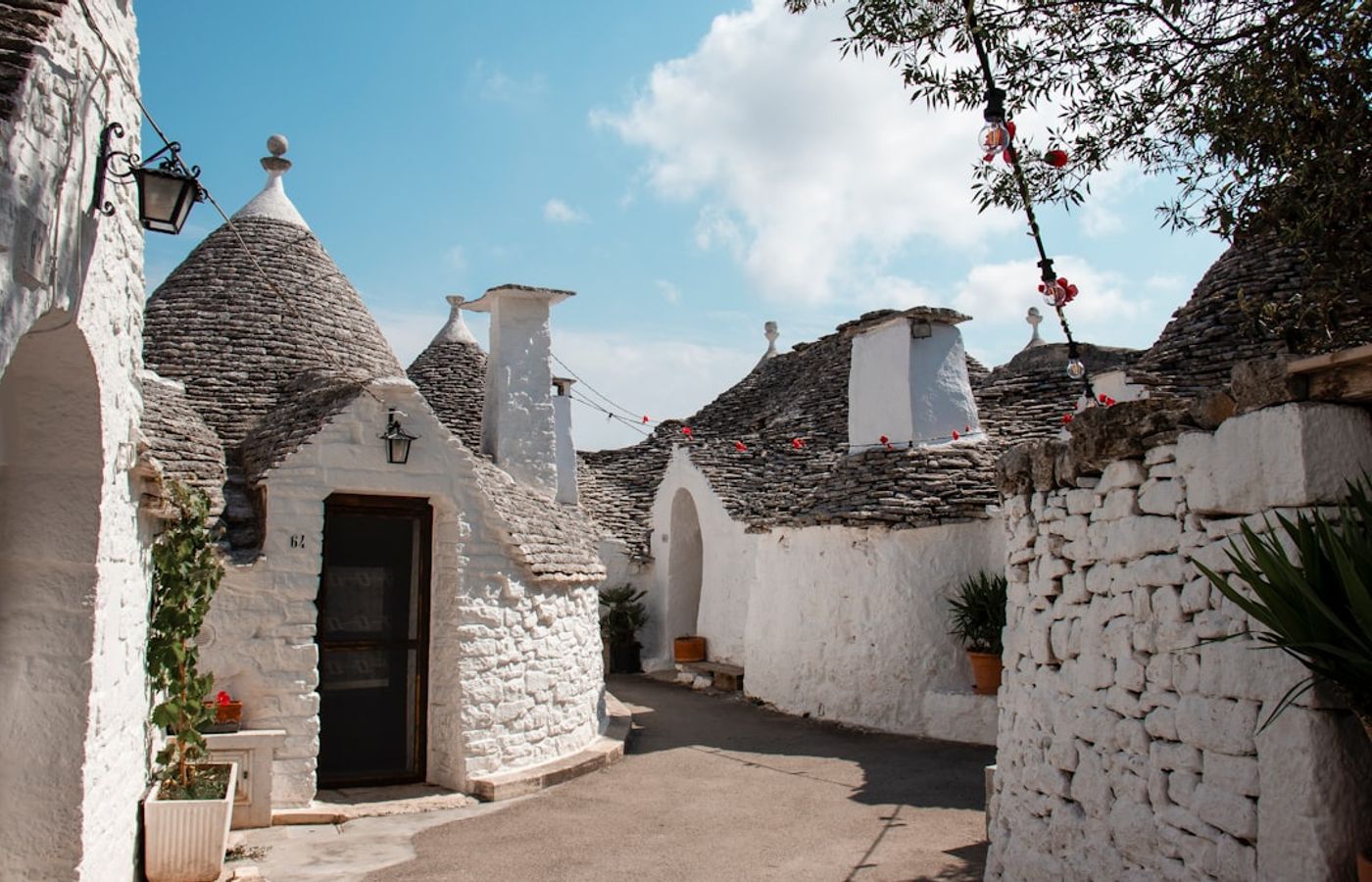

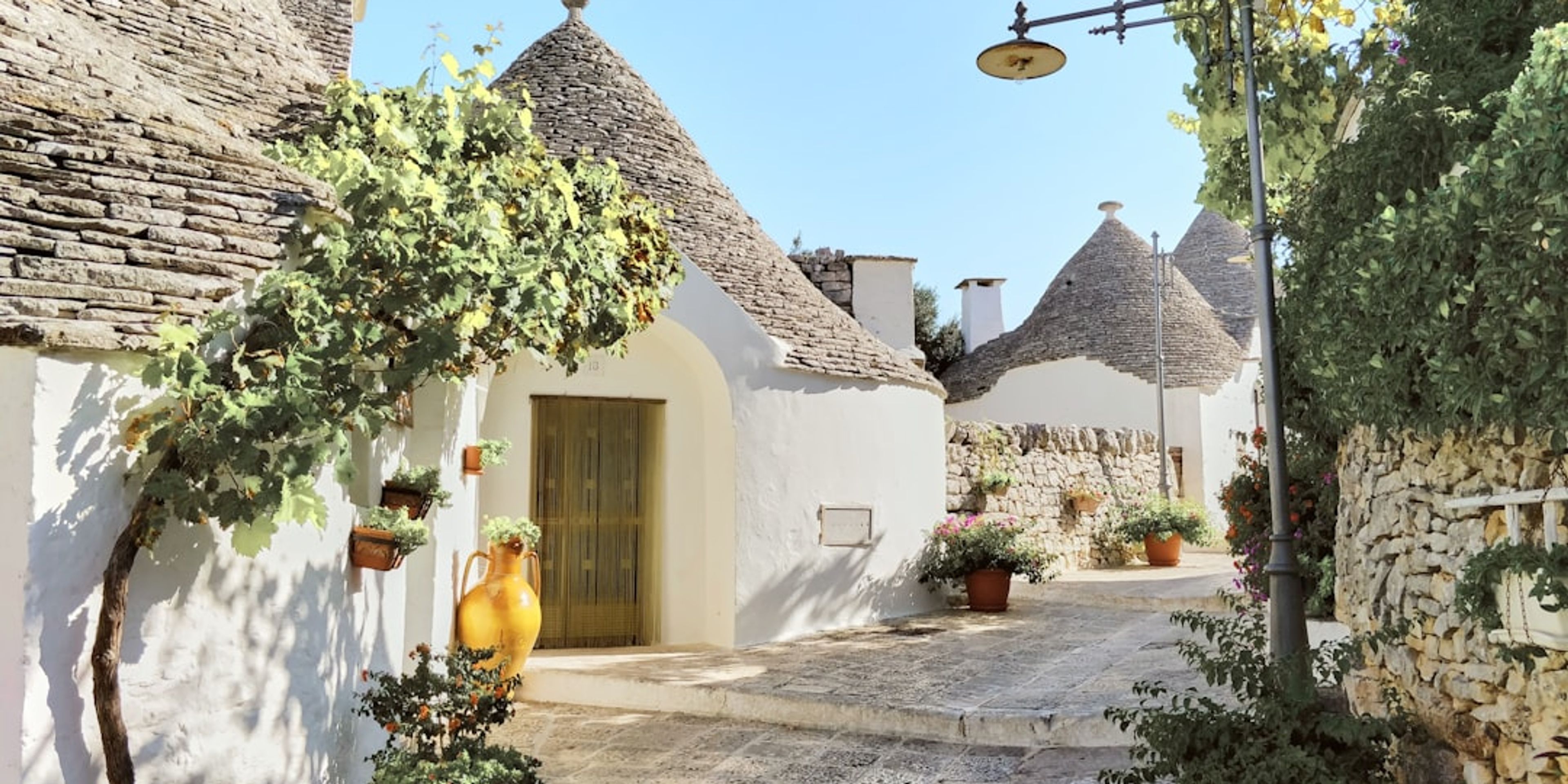
Alberobello is the postcard of Puglia and the reason most first-time visitors land in Bari. The town's two trulli districts - Rione Monti with roughly 1,030 conical-roofed cottages, and the quieter Rione Aia Piccola with around 400 - were inscribed on the UNESCO World Heritage List in 1996 as an outstanding example of corbelled drystone construction, a technique used across the Itria Valley for centuries. The oldest surviving trulli date to the mid-14th century, though most standing examples were built between the 17th and 19th centuries, when the D'Acquaviva counts encouraged the local peasantry to build dry-stone dwellings that could be dismantled overnight to evade Kingdom of Naples building taxes.
Rione Monti climbs uphill from Largo Martellotta and is free to wander at all hours. The Trullo Sovrano on Piazza Sacramento, the only two-storey trullo ever built and completed in the mid-18th century, is open daily 10:00-13:15 and 15:30-18:30 in 2026 with a 2 EUR entrance fee. The Chiesa a Trullo di Sant'Antonio at the top of the district is also free.
Pro Tip: Arrive before 09:30 or stay overnight - by 10:30 the coach groups from cruise ships in Bari fill Via Monte Nero and Via Monte Pertica, and the same alleys are almost empty at sunrise or after 19:00 when the trulli chimneys glow with warm lighting.
2Lecce - Florence of the South and the Baroque Old Town
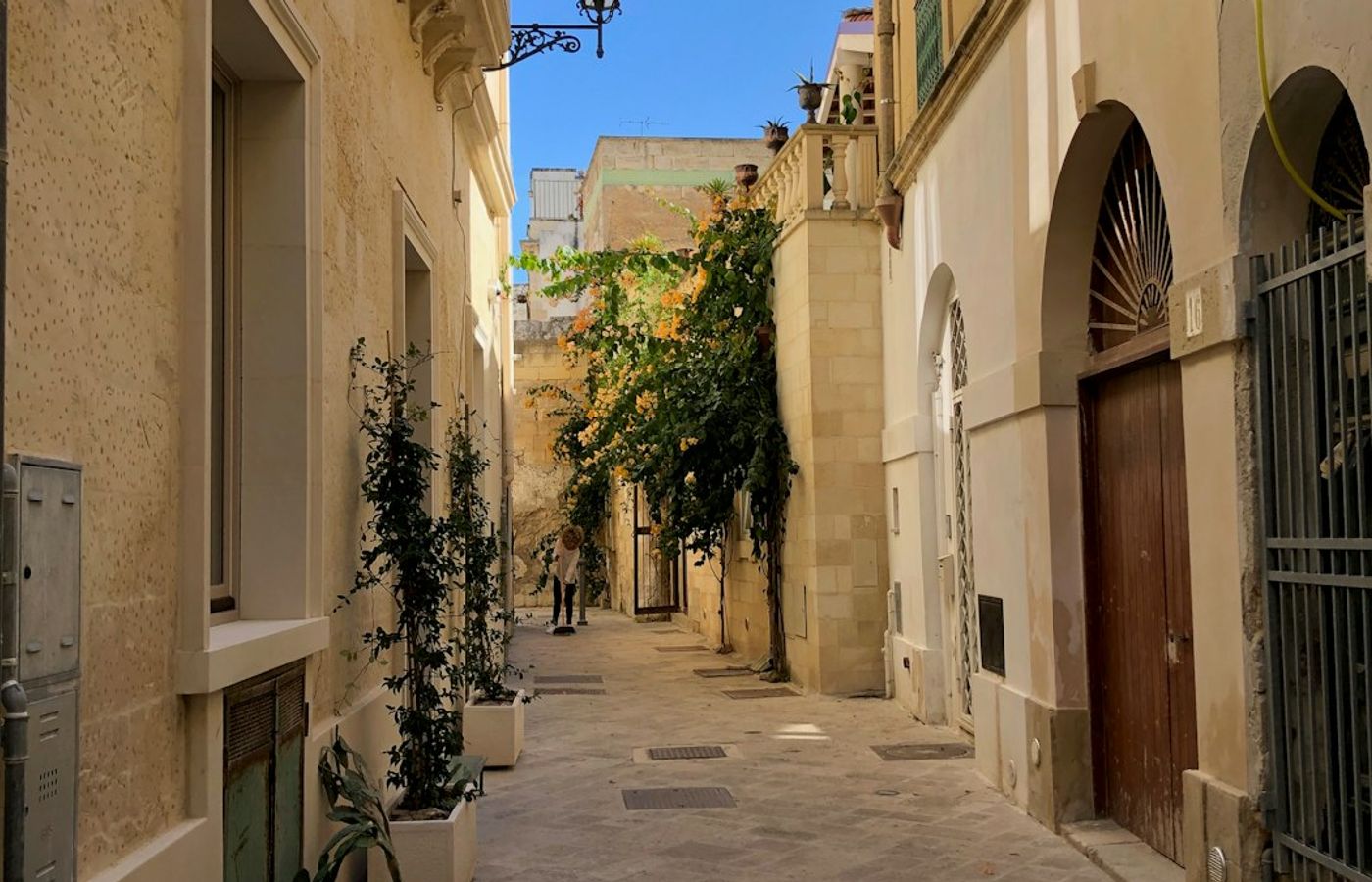

Lecce is the baroque jewel of the Salento peninsula and the natural base for the southern third of any Puglia trip. Locals nickname it the Florence of the South, a reference to the extraordinary concentration of 17th-century churches, palazzi and facades carved from the soft golden Lecce stone (pietra leccese) that hardens to a honey glow in the late afternoon light. The Basilica di Santa Croce, completed in 1695 after almost 150 years of construction, is the movement's masterpiece and remains free to enter daily 09:00-19:00 in 2026. Piazza del Duomo, an enclosed baroque square that historians rank as the finest in southern Italy, sits five minutes' walk away.
The Anfiteatro Romano di Lecce on Piazza Sant'Oronzo, unearthed only in 1901, once seated around 25,000 spectators and dates from the second century AD; you can view it free from street level or descend on guided tours (5 EUR, Tue-Sun 09:30-18:30). The nearby underground Roman Theatre keeps the same schedule and takes the same combined ticket.
Pro Tip: Start every Lecce morning at any local pasticceria with a pasticciotto leccese (short pastry with warm custard filling) and a caffe leccese (espresso poured over ice with almond syrup). The pair costs roughly 2.50 EUR and is the traditional Lecce breakfast.

3Ostuni - La Citta Bianca on the Hilltop
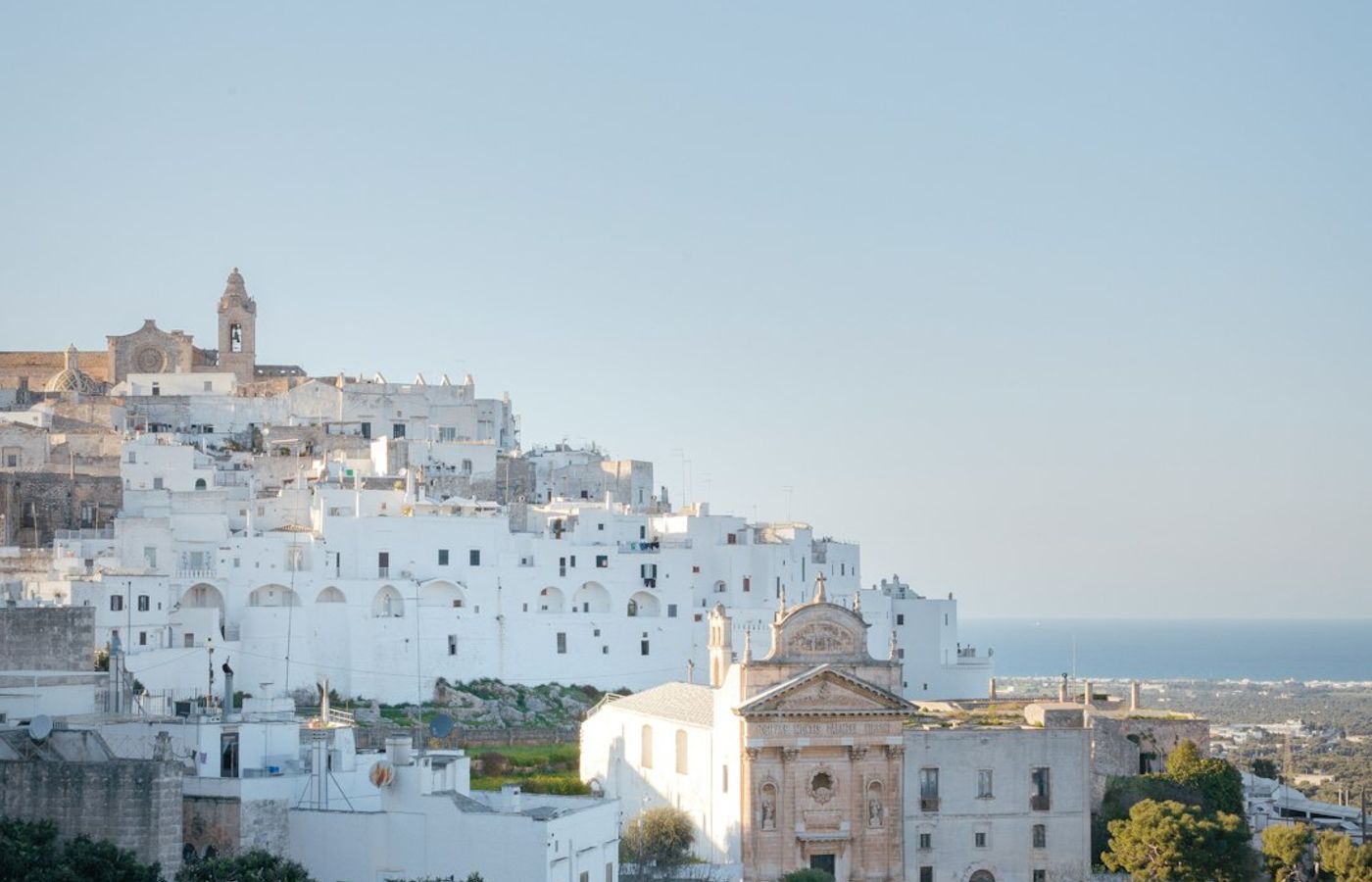

Ostuni is Puglia's White City, a labyrinth of lime-washed medieval lanes perched on three hills 218 metres above sea level with sweeping views over an olive plain that runs to the Adriatic. The centro storico climbs to the late-Gothic Cattedrale di Santa Maria dell'Assunzione, consecrated in 1495 and famous for its rose window with 24 rays. Entry to the cathedral is free and it is open daily 07:30-12:00 and 16:00-19:30 in 2026.
The whitewashing tradition dates back to the 17th century, when quicklime was used as an antibacterial measure during the plagues that swept the Kingdom of Naples; it was later made mandatory by local ordinance and remains a protected element of the town's heritage today. The Museum of Preclassical Civilizations of Southern Murgia on Via Cattedrale is open Tue-Sun 10:00-13:00 and 15:30-18:30 with a 5 EUR entry, and houses the 25,000-year-old skeleton of Delia, a young pregnant woman found in a nearby cave.
Pro Tip: The best photograph of Ostuni is taken from the SS16 approach road roughly 4 km east of town, about 30 minutes before sunset, when the entire hilltop turns rose gold against the darker plain of olive groves below.
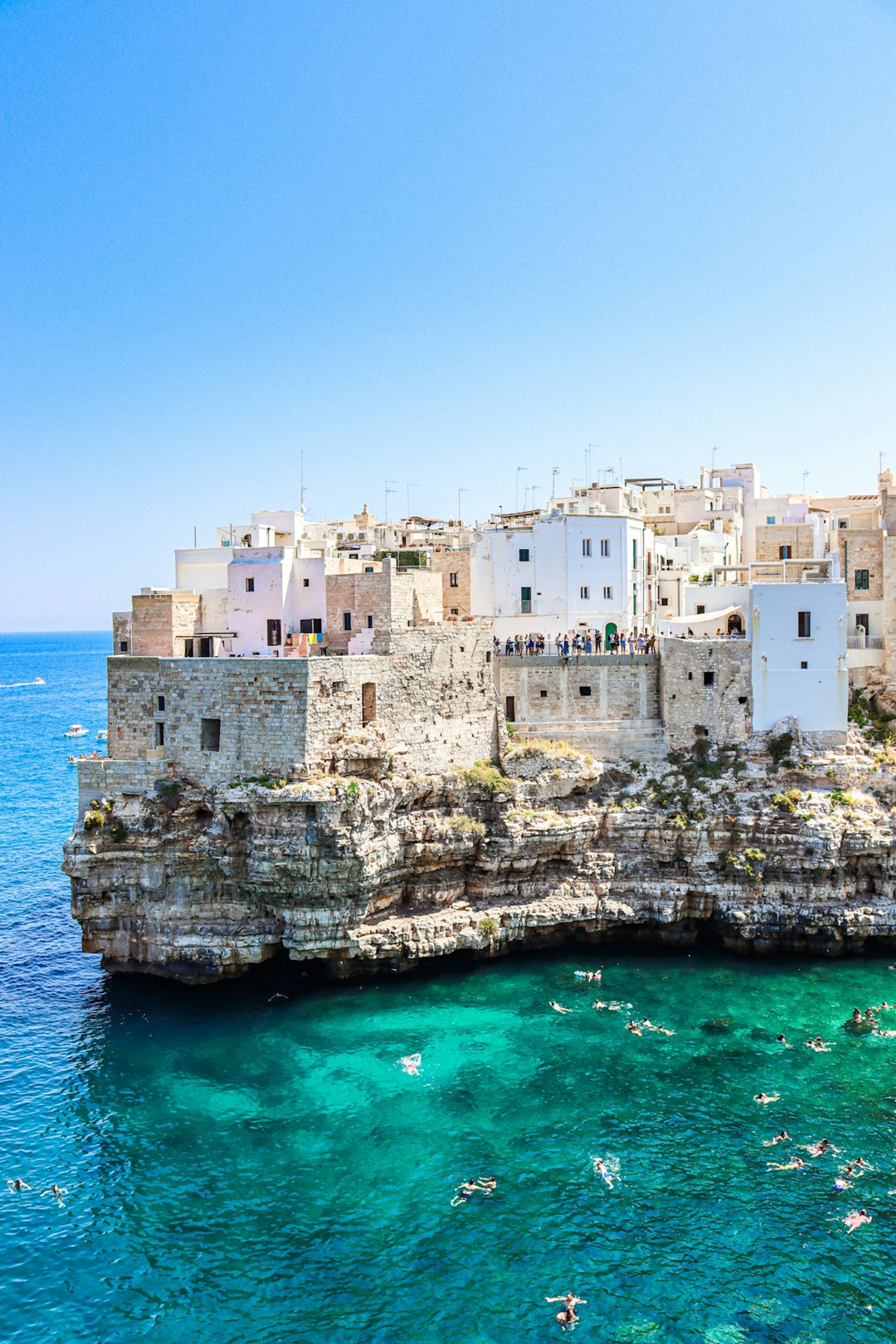
4Polignano a Mare - Cliff-Top Old Town and Lama Monachile Cove
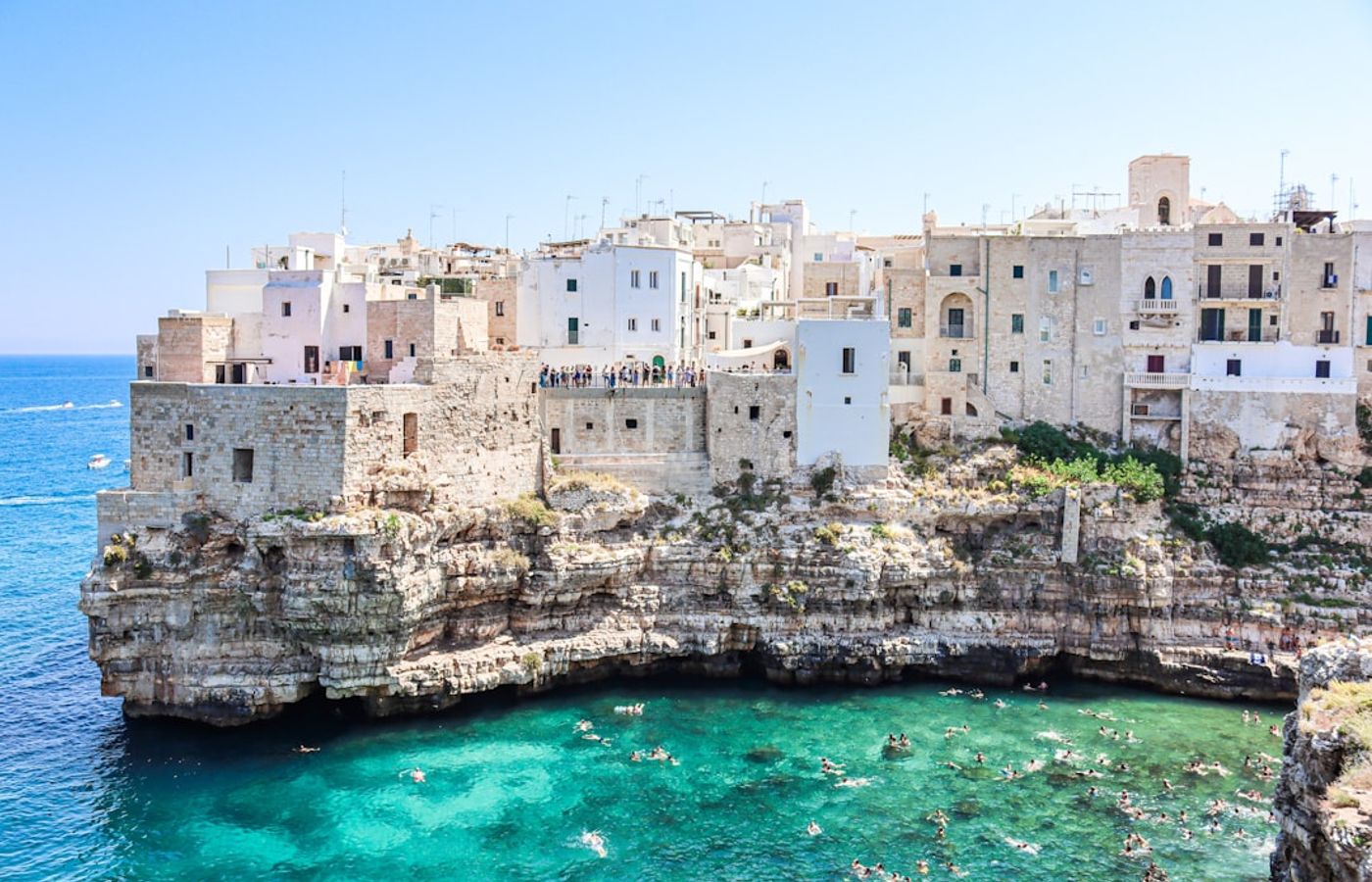
Polignano a Mare balances on limestone cliffs 20 metres above the Adriatic and has become the single most-photographed spot in Puglia thanks to Lama Monachile, the pebbled cove framed by the arch of the old Roman Via Traiana bridge. The Roman engineers who first bridged the ravine in the 2nd century AD would still recognise the topography; the current bridge dates to 1826. The cove is a free public beach and open 24 hours in summer 2026, though lifeguard service runs 09:30-19:00 from mid-June through mid-September.
The centro storico is entered through the Arco Marchesale, the 16th-century gateway that opens onto Piazza Vittorio Emanuele II. Wander to the Palazzo dell'Orologio, the Chiesa Matrice (free, open 07:30-12:00 and 16:00-19:30 daily) and the terraces of Piazzale Aldo Moro for the classic cliff view. Polignano is also the birthplace of the singer Domenico Modugno, composer of the 1958 song Nel blu dipinto di blu, better known worldwide as Volare, whose statue faces the sea beside the marina.
Pro Tip: Book a small-boat grotto tour from the marina for the cave chapel of Grotta Palazzese, around 25 EUR for 90 minutes. The water shifts through four shades of blue between 10:00 and 12:00 when direct sun drops into the caves through openings in the cliff face.
5Monopoli - Adriatic Fishing Port and Fortified Old Town
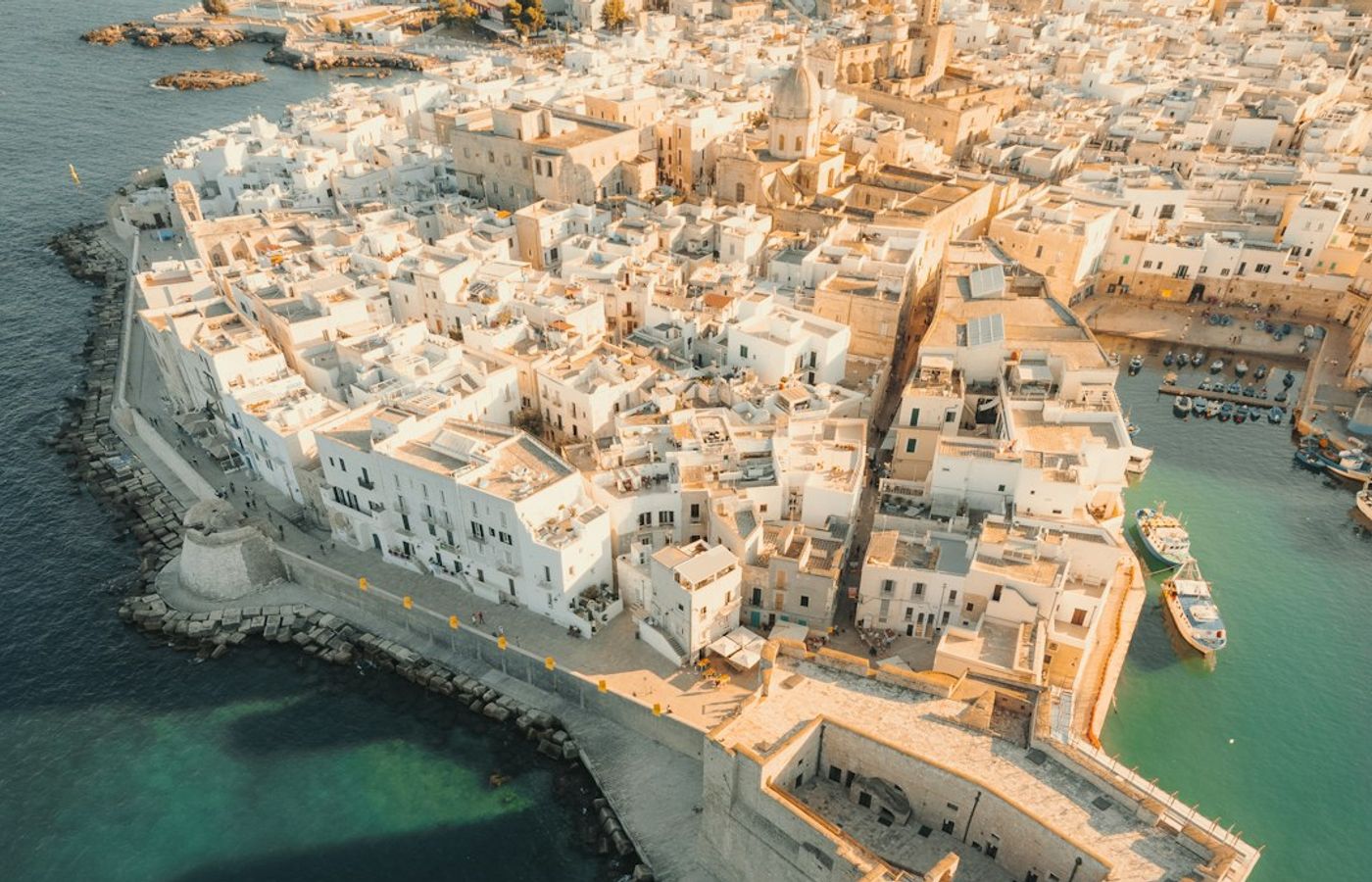
Monopoli is Polignano a Mare's quieter, more lived-in neighbour and an ideal alternative base for travellers who want the Adriatic without the day-tripper crowds. The fortified centro storico is enclosed by 16th-century Spanish walls, punctuated by the Castello Carlo V - built in 1552 by order of the Holy Roman Emperor Charles V - and open Tue-Sun 09:30-13:00 and 16:00-20:00 in 2026 with a 4 EUR entrance fee. Inside the walls, the small Porto Vecchio still lands the daily fish catch on colourfully painted gozzi boats each morning around 07:00.
The Basilica Cattedrale Maria Santissima della Madia dominates the skyline with its rococo facade completed in 1770. Entry is free, daily 07:30-12:30 and 16:30-20:00. Monopoli's municipal boundary contains 27 named beaches; Cala Porta Vecchia is the free town beach immediately below the walls, while Cala Cozze and Porto Bianco a few kilometres south are worth the short drive for clear water and easier parking.
Pro Tip: Time your visit for Wednesday morning when the weekly street market takes over Via Procaccia. The food stalls sell tarallini, dried Cerignola olives and Altamura DOP bread at roughly a third of what you would pay in Bari city centre.
6Locorotondo - The Round Hilltop Village of Itria Valley
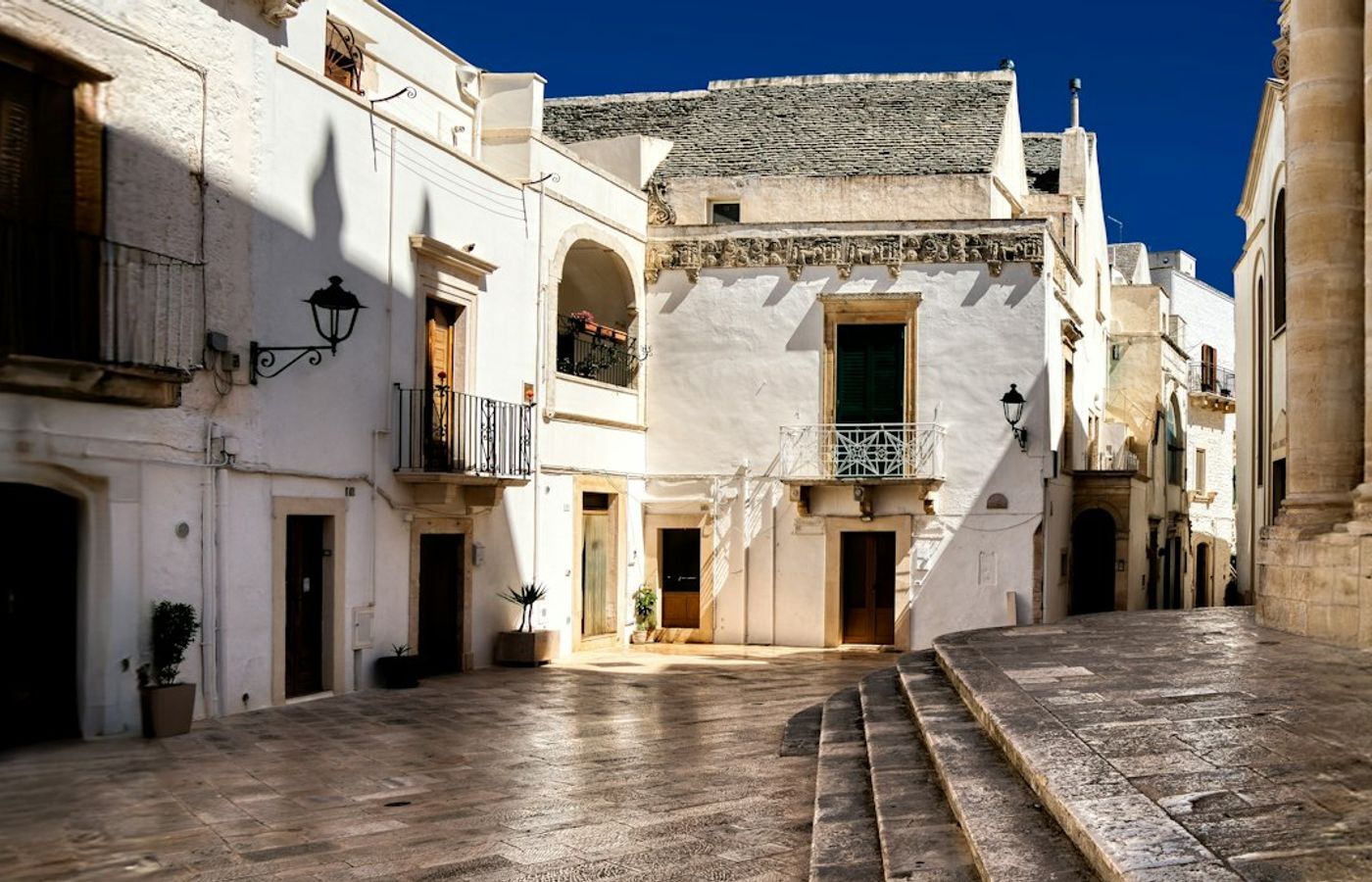
Locorotondo takes its name from the Latin locus rotundus (round place), a reference to the perfectly circular concentric street plan of its whitewashed old town, unique in Puglia. Sitting 410 metres above sea level on the western rim of the Itria Valley, it is officially listed among I Borghi piu Belli d'Italia (the Most Beautiful Villages of Italy) and offers what many travellers consider the finest single view over trulli country from the belvederes of Villa Comunale.
The Chiesa Madre di San Giorgio, rebuilt in neoclassical style between 1790 and 1825, dominates the highest point of the village and is free to enter daily 08:00-12:00 and 17:00-20:00 in 2026. The distinctive pitched roofs of the cummerse - the local stone-tiled gable houses that predate the trulli - are unique to Locorotondo and cannot be photographed anywhere else in Puglia. The town also gives its name to a DOC white wine made from Verdeca and Bianco d'Alessano grapes, in production under the appellation since 1969.
Pro Tip: Time an autumn or Christmas visit for the Luminarie di Locorotondo, running mid-November to 6 January, when the entire circular old town is covered with light projections and traditional cummerse rooftops are outlined in white bulbs - one of the most atmospheric holiday installations in southern Italy.
7Otranto - Byzantine Mosaic Cathedral and Aragonese Castle
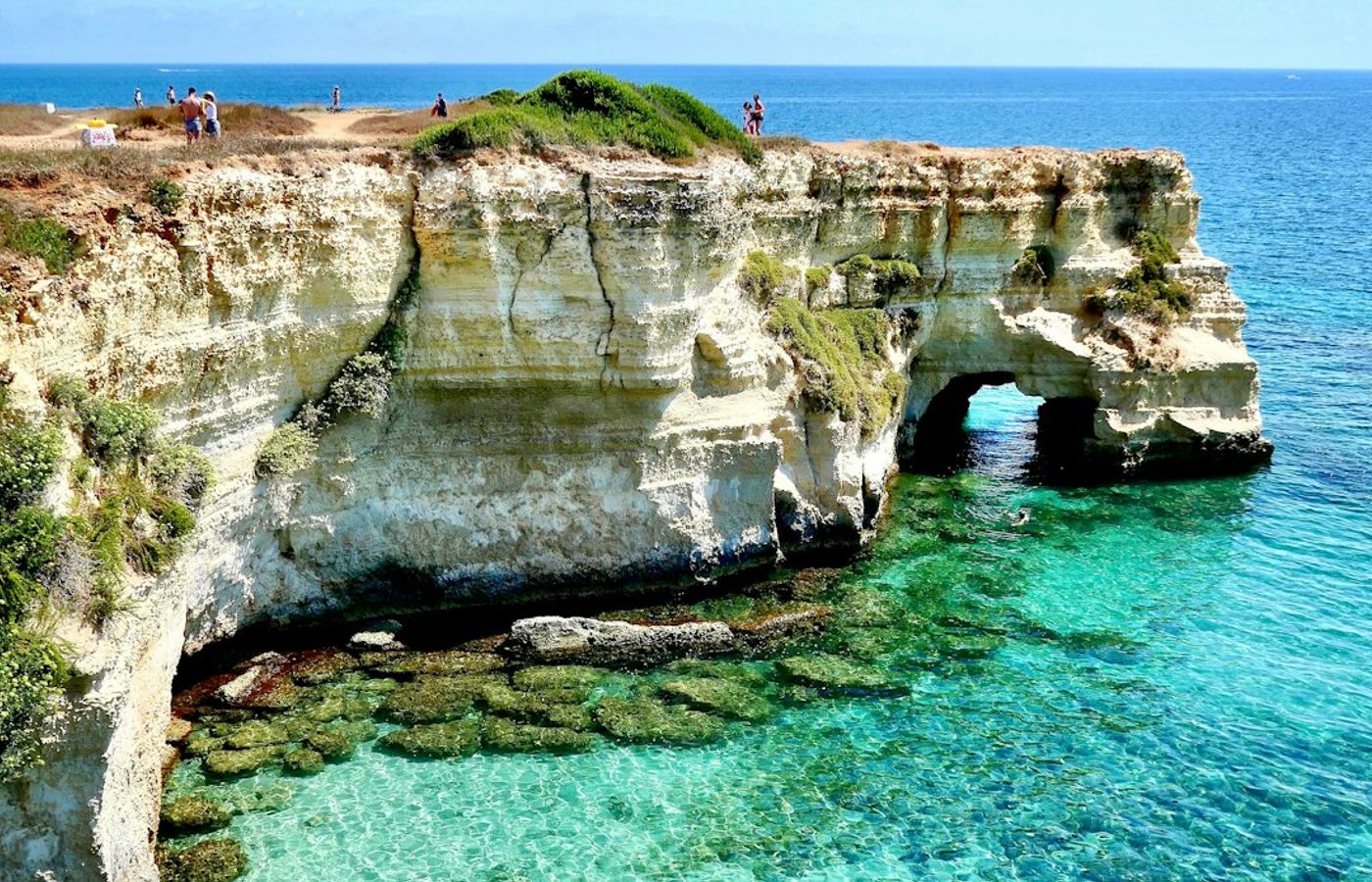
Otranto is the easternmost town in Italy and the historic crossroads between the Latin West and the Byzantine East. Its Cattedrale di Santa Maria Annunziata, consecrated in 1088, houses the most extraordinary medieval mosaic floor in Europe - a 54 by 25 metre 12th-century pavement laid by the monk Pantaleone between 1163 and 1165, depicting the Tree of Life with more than 500 figures including Alexander the Great, King Arthur and biblical scenes. The cathedral is free and open daily 07:00-12:00 and 15:00-19:00 in 2026.
The adjacent Cappella dei Martiri holds the relics of the 800 Otrantine citizens beheaded by Ottoman forces during the siege of 1480, canonised by Pope Francis in 2013. The Castello Aragonese, commissioned by King Ferdinand I of Aragon in 1485 in the aftermath of that siege and set into the walls of the old town, is open Tue-Sun 10:00-19:30 with a 12 EUR entrance fee that includes the fortress ramparts and rotating exhibitions.
Pro Tip: Drive 5 km north to Baia dei Turchi, the protected pine-backed reserve beach where local legend says the Ottoman fleet landed in 1480. The sand is white, the water is genuinely turquoise, and parking (around 5 EUR for the day) empties out sharply after 16:00 as the day-trippers head home.
8Gallipoli - Ionian Old Town on the Fortified Island
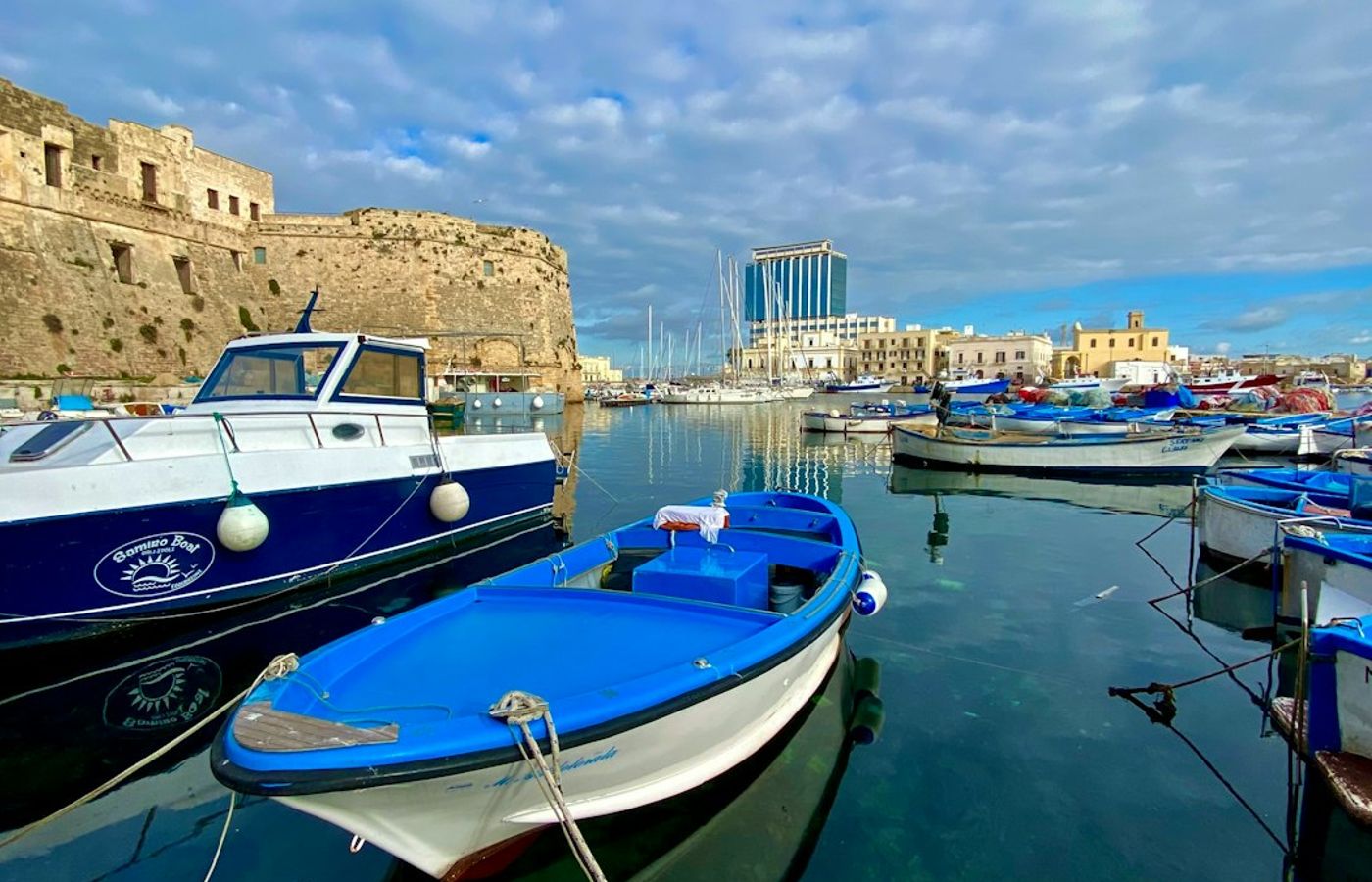
Gallipoli means Beautiful City in Greek (Kallipolis) and the old town lives up to it. The centro storico sits on a small limestone island connected to the modern town by a 17th-century arched bridge, entirely enclosed by ramparts that have survived every siege since the Byzantine era. The Castello Angioino, first built in the 13th century and expanded by the Angevins and the Aragonese, is open daily 10:00-13:00 and 15:00-19:30 in 2026 with a 6 EUR combined ticket that includes access to an underground olive oil mill beneath the walls.
The Cattedrale di Sant'Agata, completed in 1696, is Gallipoli's baroque masterpiece and is free to enter daily 08:30-12:30 and 16:30-19:30. Below the streets, the town preserves 35 sotterranei - subterranean olive oil mills carved from tufa rock that made Gallipoli the largest oil exporting port in the Kingdom of Naples during the 17th and 18th centuries. The Frantoio Ipogeo on Via Antonietta de Pace is the best-preserved and open 09:00-13:00 and 15:30-19:30 with a 4 EUR entrance.
Pro Tip: Cross the bridge at sunset and walk the western sea wall around the Rivellino bastion. Gallipoli is one of the very few Puglian towns where the sun sets over water rather than behind the land, and the light on the honey-coloured limestone facing the Ionian is unforgettable.
9Bari - Basilica di San Nicola and Bari Vecchia
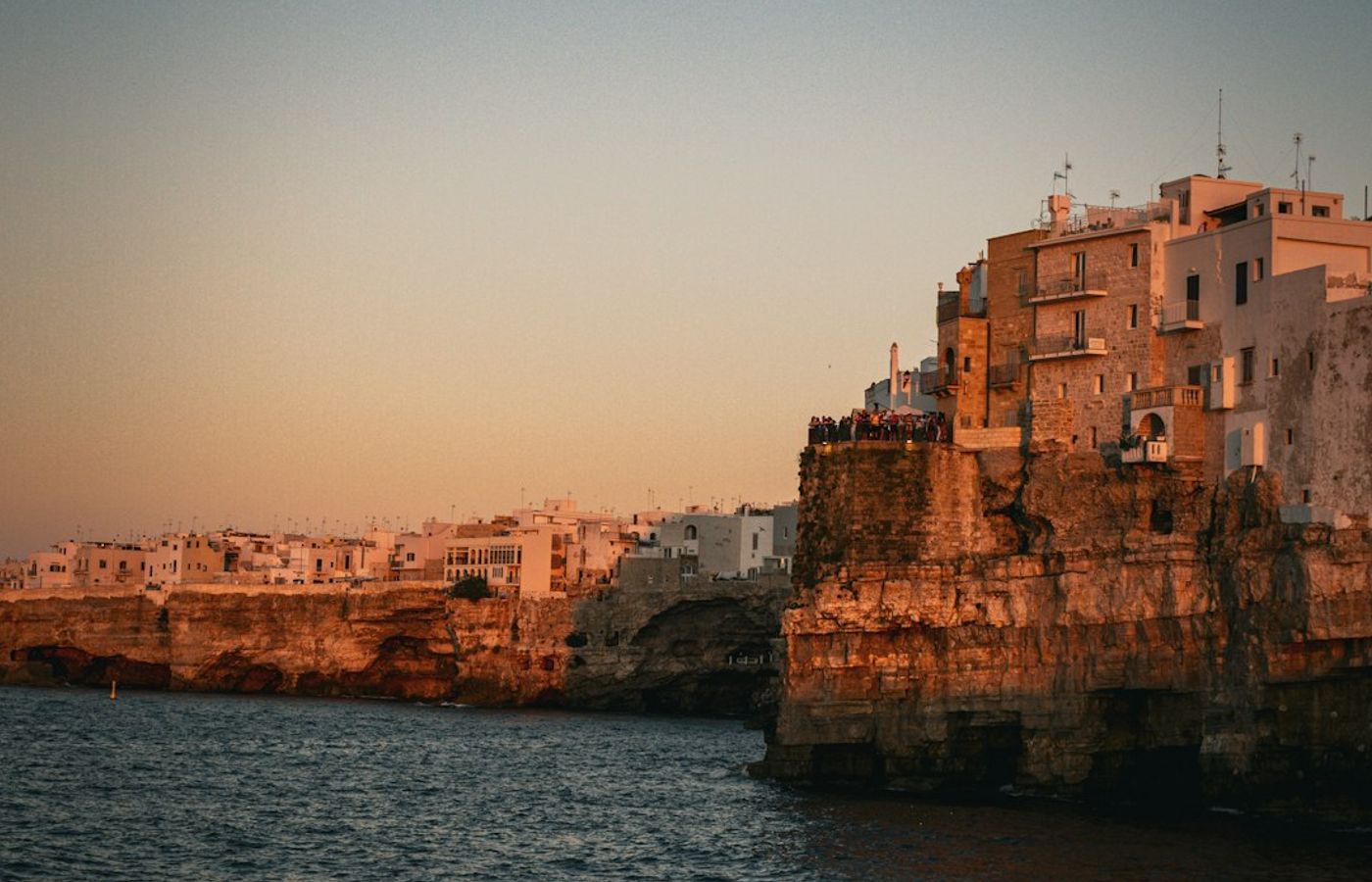
Bari is Puglia's regional capital and the point where most trips begin. Its walled old town, Bari Vecchia, is a warren of 12th-century alleys where local women still hand-roll orecchiette outside their front doors along Strada dell'Arco Basso every morning from around 08:30 - a genuinely living tradition and one of the most quietly moving experiences in southern Italy. It costs nothing to watch, and a bag of fresh pasta typically sells for 3 EUR direct from the doorway.
The Basilica di San Nicola, consecrated in 1197, is one of the great pilgrimage churches of Christendom and the resting place of the relics of Saint Nicholas of Myra - the historical figure who became Santa Claus - translated here by 47 sailors from Ottoman-occupied Anatolia in 1087. The crypt is shared between Roman Catholic and Orthodox rites, making Bari the only Latin city in the world where Orthodox Divine Liturgy is celebrated daily on a Catholic altar. Free to enter, open daily 07:00-20:30 in 2026.
Pro Tip: Walk the Muraglia sea wall from the basilica to the Castello Svevo (Frederick II's Norman-Swabian castle, 8 EUR, Tue-Sun 09:00-19:30) at the golden hour. The Adriatic light turns the honey stone of Bari Vecchia the exact colour of a Pugliese focaccia crust.
10Matera - The Sassi Cave Districts and Rupestrian Churches
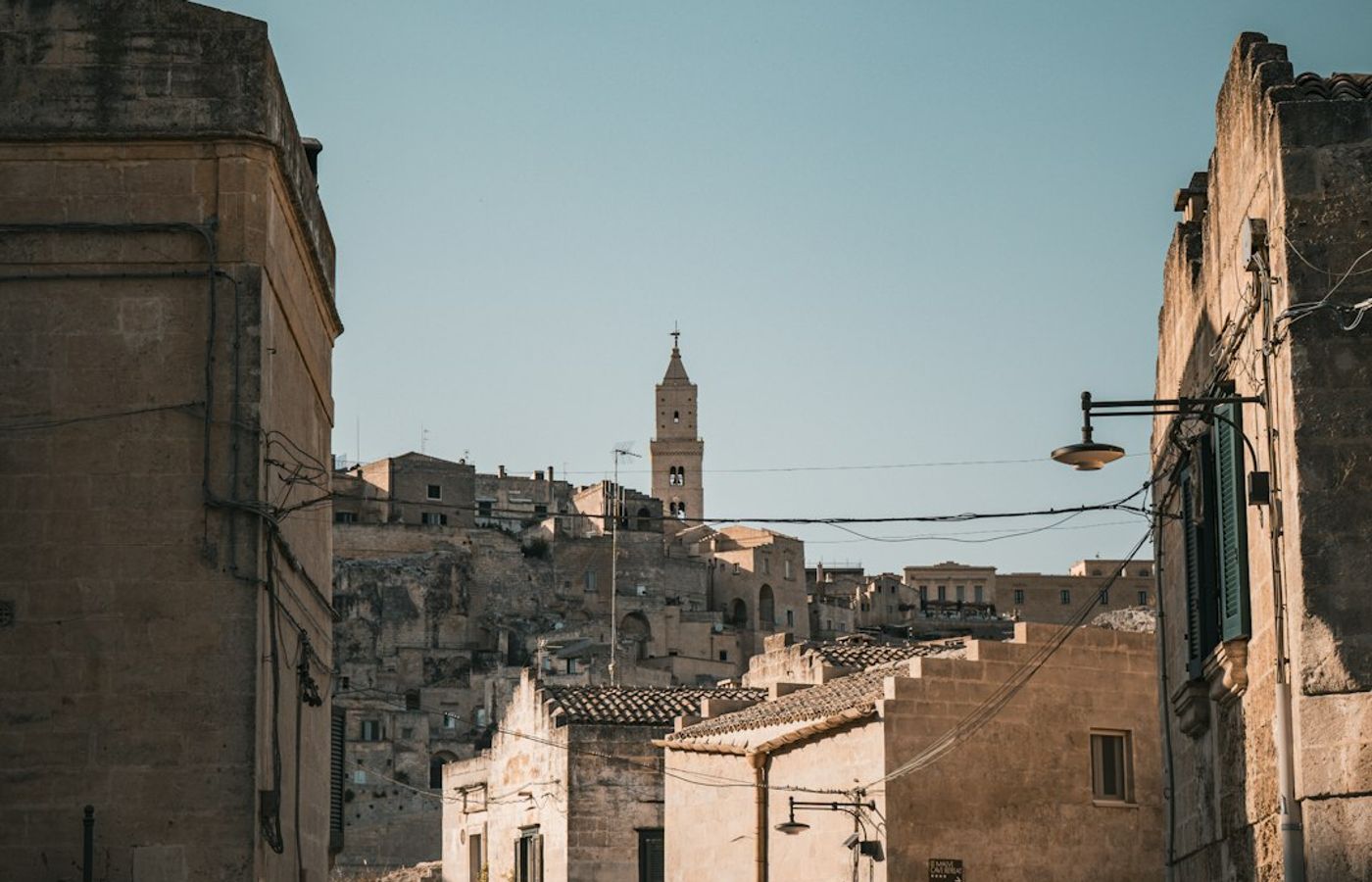
Matera sits just inside the Basilicata border but is so consistently paired with Puglia that no travel guide would omit it. Its two Sassi cave districts - Sasso Barisano and Sasso Caveoso - form one of the oldest continuously inhabited settlements in the world, with human occupation dating back at least 9,000 years. UNESCO inscribed the Sassi and the Park of the Rupestrian Churches on the World Heritage List in 1993, and Matera served as European Capital of Culture in 2019.
Roughly 150 chiese rupestri (rock-hewn churches) survive in and around the Sassi, many with Byzantine frescoes from the 8th to 13th centuries. Casa Grotta di Vico Solitario in Sasso Caveoso, a restored cave dwelling preserved as it was when families lived there until the 1952 government-mandated relocation, is open daily 09:30-20:30 with a 5 EUR entry in 2026. The Palombaro Lungo, a colossal underground cistern beneath Piazza Vittorio Veneto that was carved in 1846 and holds 5 million litres of water, offers guided tours every 30 minutes for 6 EUR.
Pro Tip: Book an overnight in a converted cave hotel (albergo diffuso) inside the Sassi. Matera empties of day-trippers after 19:00 and the evening light on the tufa walls, followed by dinner in a candlelit grotto restaurant, is one of the great sensory experiences of southern Italy.
Get hotel deals for Puglia
Price drops, new stays and local tips for Puglia, straight to your inbox.
No spam, unsubscribe anytime.

CEO and co-founder
Tomas is the co-founder and director of trip1, an European company specializing in reservation services. He launched the company in 2025 with a focus on building scalable, efficient operations.
10 Top Places to Visit in Puglia, Italy - FAQ
The trulli of Alberobello, Lecce's Baroque old town, the white hilltop town of Ostuni and the cliff-top cove of Lama Monachile in Polignano a Mare. Add the 12th-century mosaic floor in Otranto cathedral, the women rolling orecchiette in the alleys of Bari Vecchia, and a night in the Sassi of Matera, just over the border in Basilicata.
The Itria Valley, for most visitors: olive groves and trulli country between Alberobello, Locorotondo and Ostuni, best seen from the belvederes of Locorotondo's Villa Comunale. The Salento in the far south, with Lecce, Otranto and Gallipoli, is the pick for Baroque towns and sunsets over the Ionian, and the coast around Polignano a Mare and Monopoli for cliffs and coves.
Ostuni, Locorotondo and Polignano a Mare are the usual answers. Ostuni is the White City, lime-washed medieval lanes on three hills above an olive plain. Locorotondo has a circular whitewashed old town and is listed among the Most Beautiful Villages of Italy. Polignano a Mare sits on cliffs 20 metres above the Adriatic around the cove of Lama Monachile.
The Itria Valley, between Ostuni and Alberobello, puts you within 30 to 45 minutes of most of central Puglia, often in a masseria, a converted fortified farmhouse. Lecce is the best town base for the Salento, and Monopoli or Polignano a Mare work for the coast without a car. On a week's trip, split the nights between the Itria Valley and Lecce.
Seven days for a first visit: about four nights in the Itria Valley and three in Lecce. Ten to fourteen days lets you add the Gargano peninsula in the north or the Ionian coast around Gallipoli without rushing. With only four or five days, stick to one area, such as the Itria Valley and the coast around Bari.
Late May to early June, or mid-September to early October. May brings wildflowers and sea warm enough to swim without the summer crowds, and September has the warmest sea of the year. Avoid August unless you want peak beach season, when prices are highest and coastal towns busiest. Many beach clubs close from mid-October to Easter.