

Guides · Ljubljana
10 Top Things to Do in Ljubljana

CEO and co-founder
This guide ranks the 10 top things to do in Ljubljana - the sights that genuinely deserve a place on your itinerary whether you have a long weekend or a full week in Slovenia's capital. Each entry includes the exact address, nearest tram or funicular access, and a practical Pro Tip drawn from how locals and seasoned visitors actually navigate the city in 2026.
Ljubljana is one of Europe's smallest and most walkable capitals - the historic centre is a pedestrian zone of about 12 hectares, so most attractions on this list sit within a 20-minute walk of Prešeren Square. The Ljubljanica River curves through the centre and is lined with the work of Slovenia's national architect Jože Plécnik, who shaped the city in the 1920s-1950s. The list mixes Plécnik's signature bridges and markets, the hilltop castle, Tivoli Park's museums, and a day trip to Lake Bled.
The list is ordered for an efficient sightseeing route. 2 days are enough to cover everything comfortably; add a third day if you want to combine Lake Bled with Postojna Cave or Vintgar Gorge in the same trip.
1Ljubljana Castle - The Hilltop Stronghold Over the Old Town
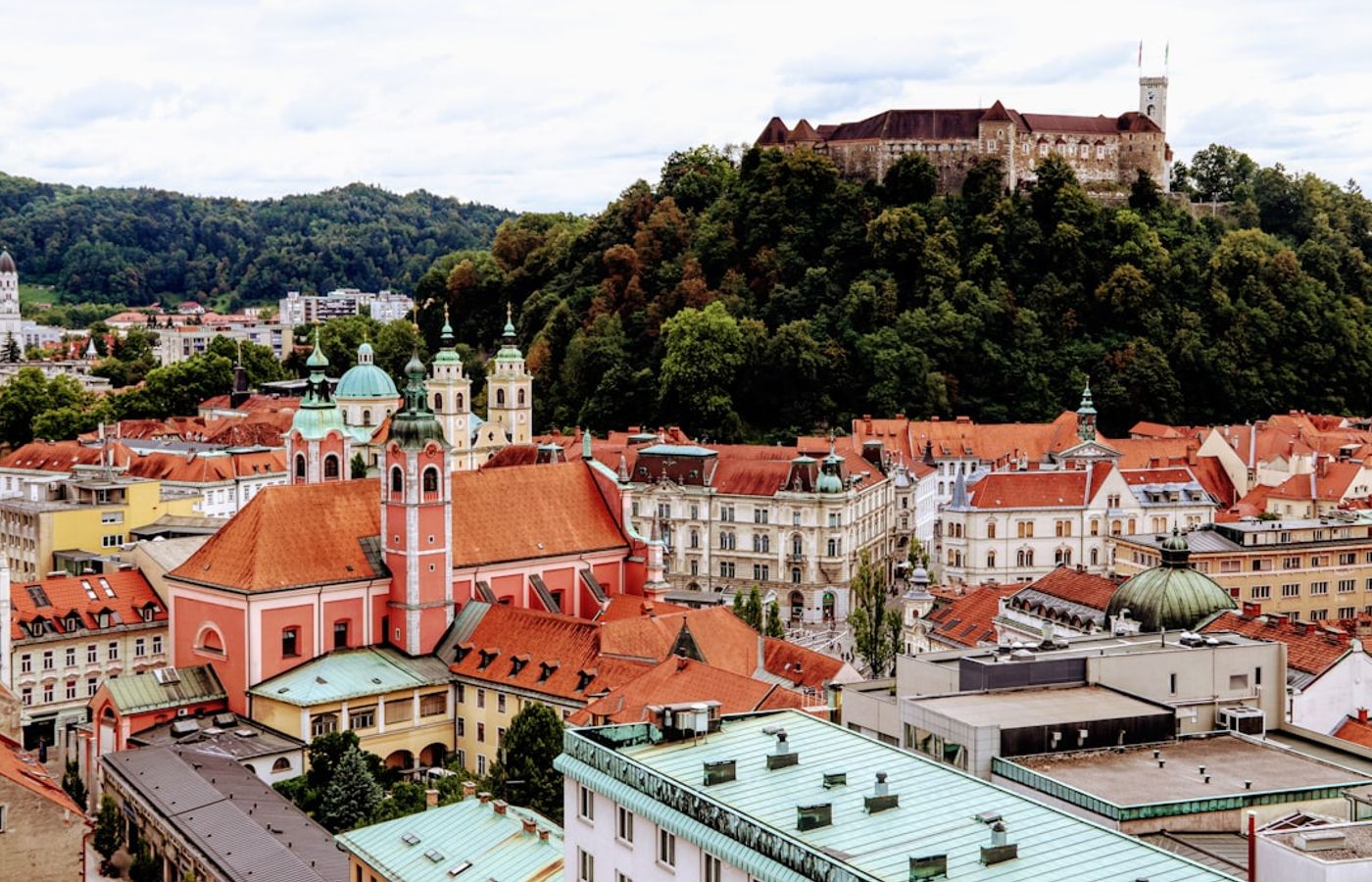

Perched on Castle Hill (Grajska planota) above the Old Town, Ljubljana Castle has occupied this strategic ridge since at least the 11th century. Today's medieval-Renaissance structure was rebuilt 1485-1495 under Habsburg Emperor Frederick III to defend against Ottoman raids. Inside the inner courtyard, the Outlook Tower offers the city's best panorama and the Slovenian History exhibition tells the country's story from prehistory to 1991 independence.
The castle hosts a Puppet Museum, time-machine virtual tour, and regular summer concerts in the inner courtyard. The Castle Funicular runs from Krekov trg every 10 minutes (4 EUR return, 70 seconds each way). Walking up via the path from Reber Street takes 15 minutes through the Stari trg neighbourhood. Castle ticket 16 EUR including funicular and all exhibitions; the courtyard is free.
Pro Tip: Walk up via the Reber Street path before opening at 09:00 - the courtyard is open 24 hours and the sunrise view over the Old Town's tiled roofs is the best free photo in Ljubljana.
2Triple Bridge (Tromostovje) - Jože Plécnik's Signature Crossing
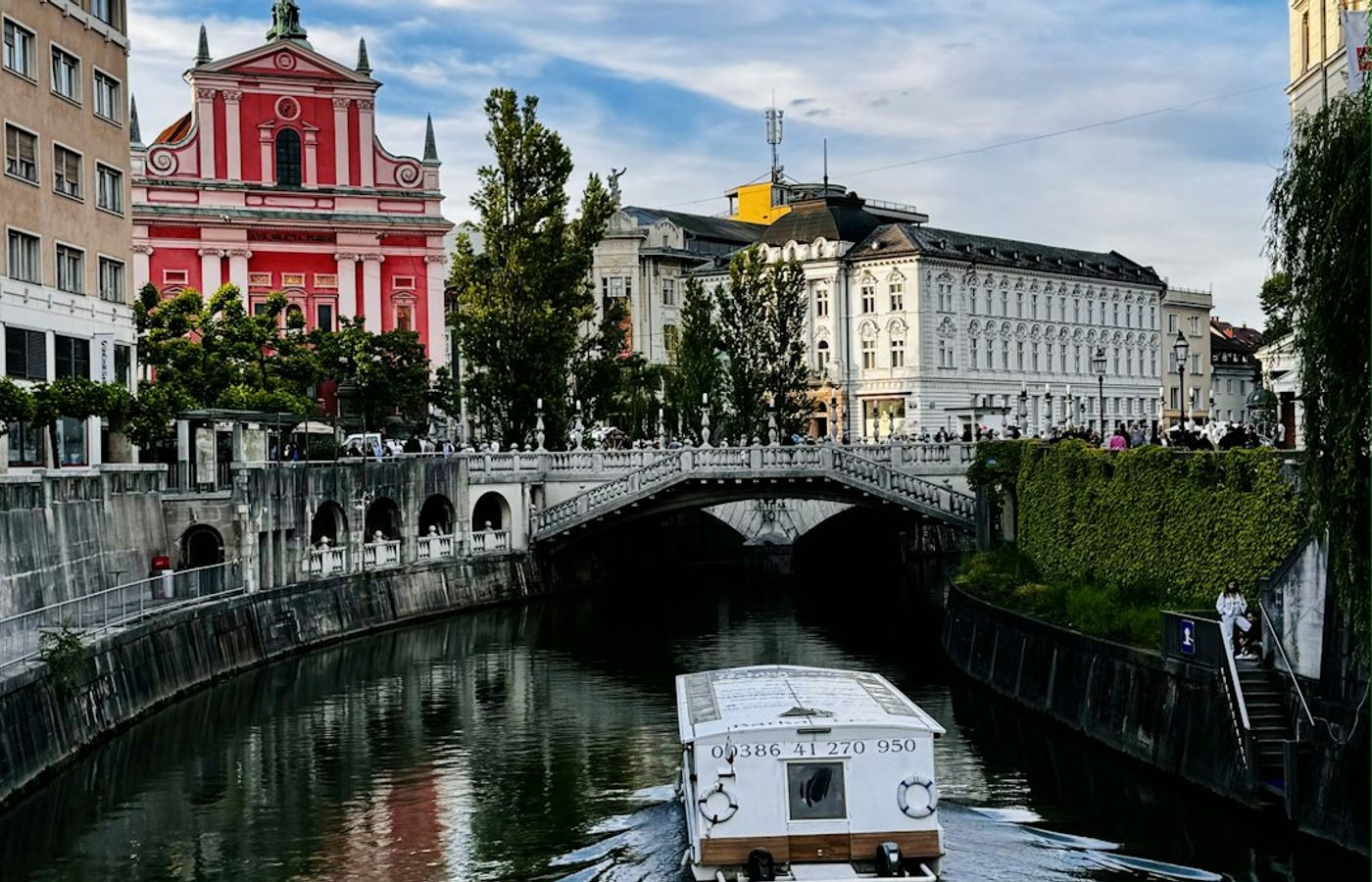

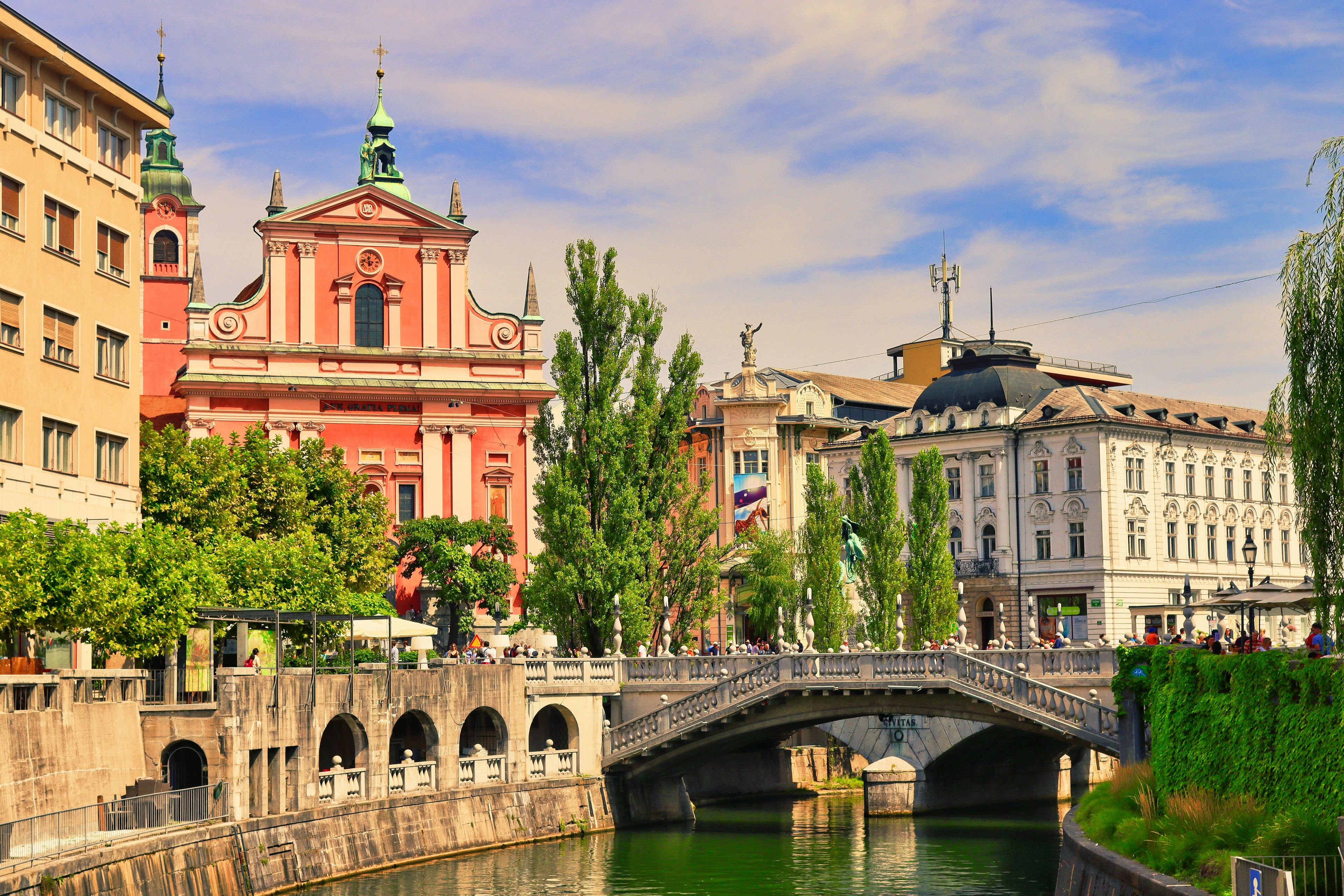
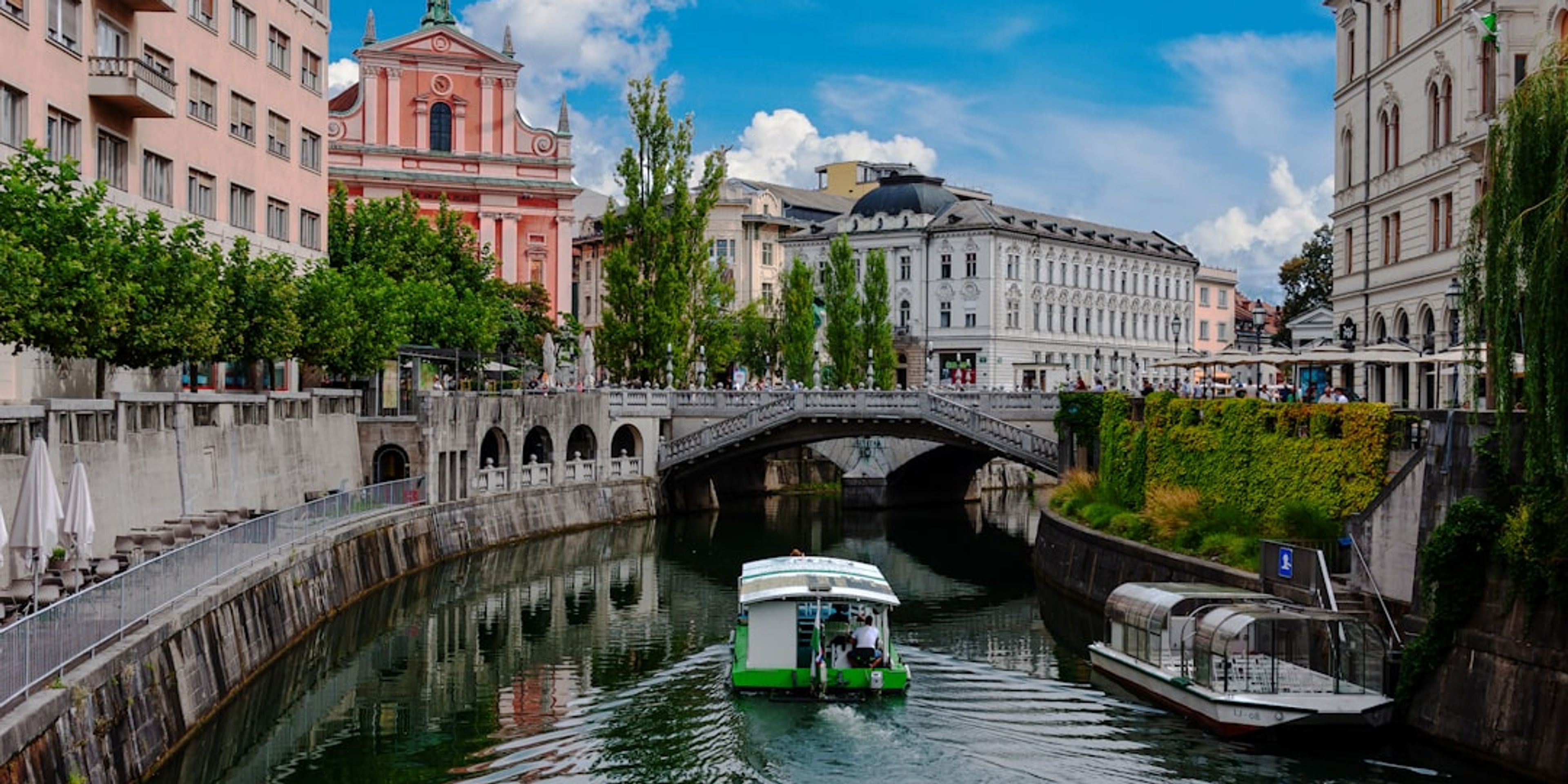
Designed by Slovenian architect Jože Plécnik in 1929, the Triple Bridge consists of the original 1842 stone bridge flanked by two pedestrian-only side bridges added by Plécnik to create one of Europe's most original urban crossings. The architect's signature white-stone balustrades and oversized lamps frame the bridge linking Prešeren Square to the Old Town. The central span carries vehicle traffic; pedestrians use the side bridges.
Prešeren Square at the northern end is the city's social heart, dominated by the pink Franciscan Church (1660), Prešeren's statue, and constant street musicians. The southern end opens onto Stritarjeva Street and the Old Town's Mestni trg. The bridge is fully pedestrianised since 2007 and best photographed from the river embankments. Free to cross at any time.
Pro Tip: Walk down the steps from the eastern side bridge to the Ljubljanica river embankment for the best photo angle - the Triple Bridge plus the Franciscan Church plus the castle all line up in one frame from there.

3Dragon Bridge (Zmajski most) - The Art Nouveau Icon
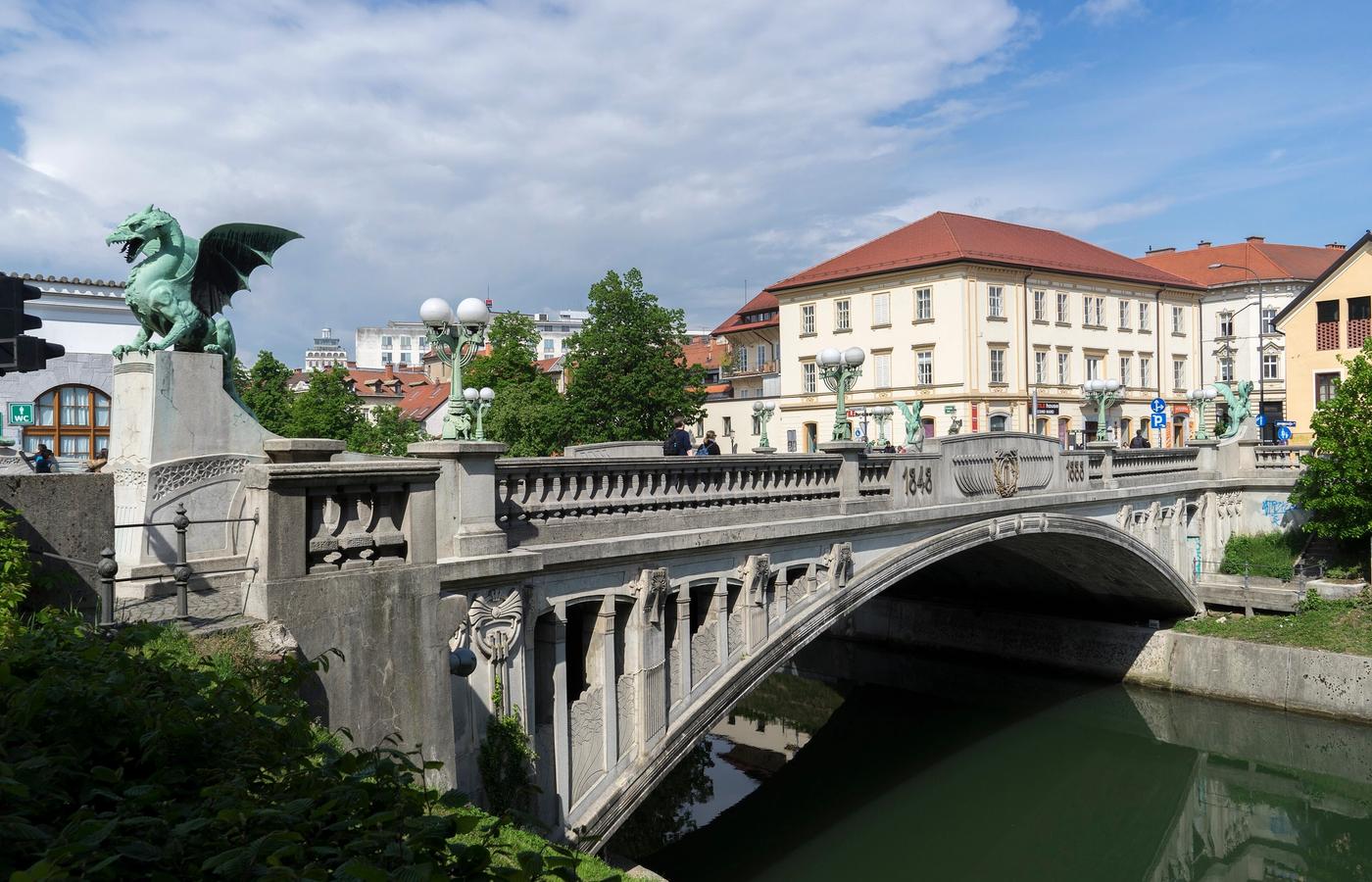
Built 1900-1901 by Dalmatian engineer Jurij Zaninović in Vienna Secession style, the Dragon Bridge is one of the most distinctive Art Nouveau bridges in Europe. Four bronze dragons (the symbol of Ljubljana) guard each corner; the dragons are based on the city's coat of arms. The bridge was Vienna's first major reinforced-concrete structure when built, and it spans the Ljubljanica river just east of the Central Market.
Legend holds that the dragons wag their tails when a virgin crosses the bridge - a joke locals share with most tourists. The original 1901 cast-iron lampposts still line the parapets and are lit at night. The dragons themselves are restored every 25 years; the latest restoration finished in 2018. Free to cross at any time. The best photos are from the Resljeva Cesta downstream embankment.
Pro Tip: Walk underneath the bridge along the river embankment - it gets few visitors and the underside reveals the original cast-iron rivets and concrete arch. Continue east 200 metres for views of Petkovškovo nábrežje wine bars.
4Tivoli Park - Ljubljana's Largest Green Space
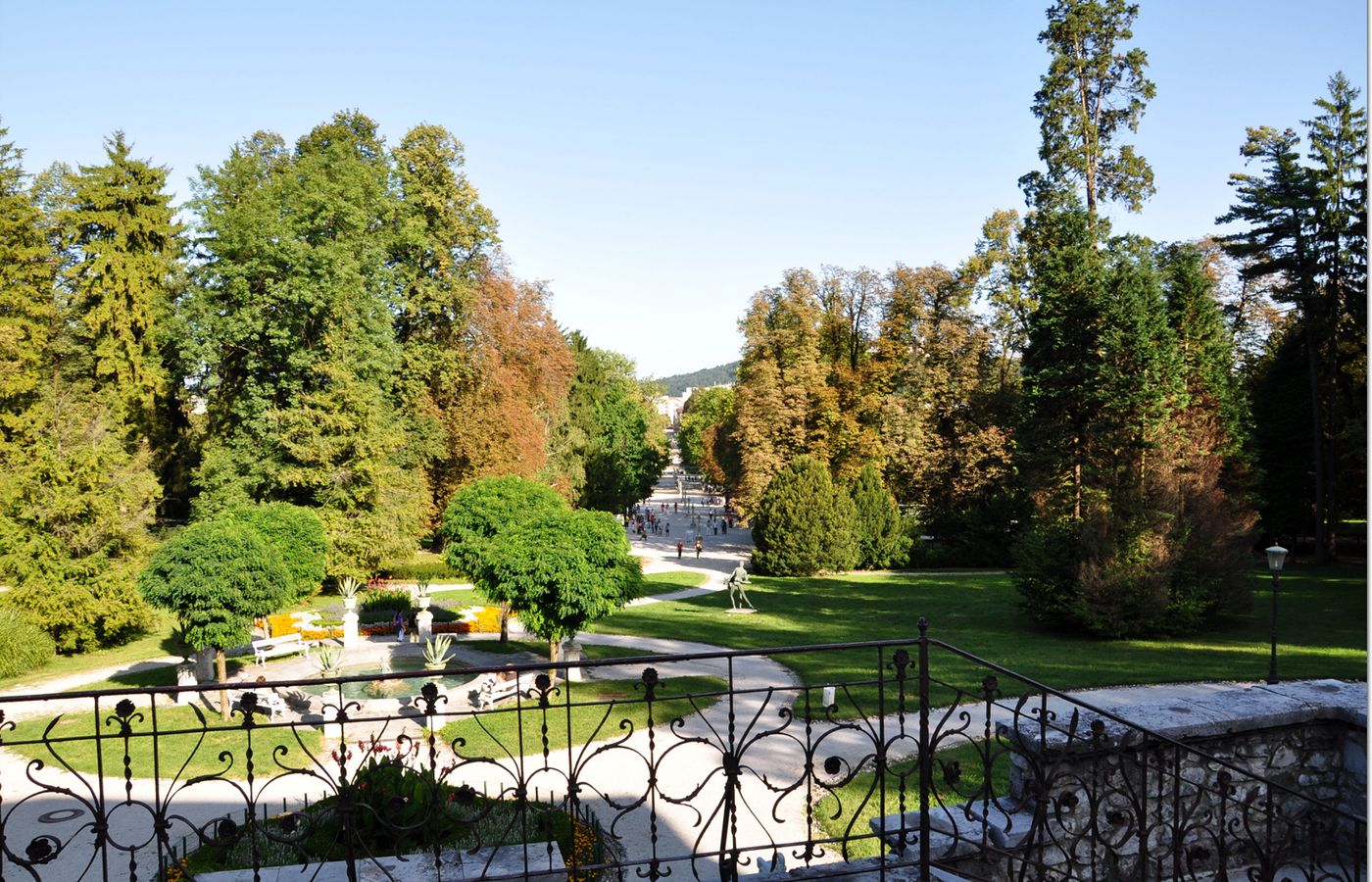
Tivoli Park covers 510 hectares immediately west of Slovenska Cesta - the largest park in Ljubljana and a 5-minute walk from Prešeren Square. Designed in 1813 and redesigned in the 1930s by Jože Plécnik, Tivoli combines formal gardens, woodland, sculpture, and 3 museums. The central Jakopič Promenade is lined with rotating outdoor photography exhibitions year-round.
The park houses the National Museum of Contemporary History, the Slovenian National Gallery (in the adjacent building), and a small zoo. Tivoli Castle in the centre is now an art gallery. Joggers, dog walkers, and locals on lunch breaks fill the park year-round. Free to enter and open 24 hours. The southern slope rises gently to Rožnik Hill (391 m) with a small chapel and views back to the city.
Pro Tip: Climb the wooden staircase up to Rožnik Hill (15 minutes from the park entrance) for a free view back over Ljubljana with the castle in the centre. The cafe at the top serves local Lasko beer and štrukli dumplings.
5Central Market - Plécnik's Riverside Colonnade
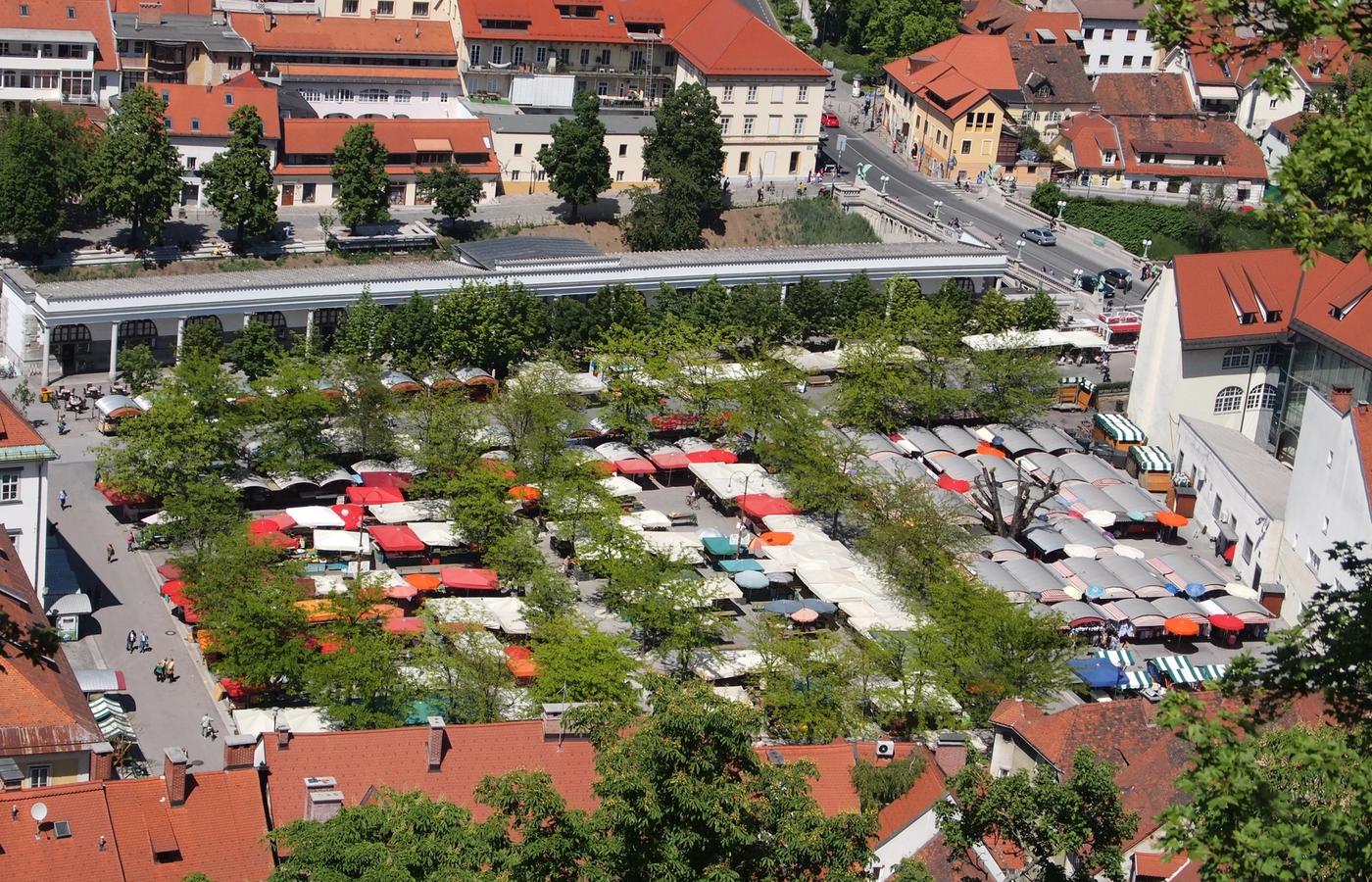
Designed by Jože Plécnik 1940-1944, Ljubljana's Central Market (Glavna tržnica) is a 200-metre covered colonnade along the Ljubljanica river between Triple Bridge and Dragon Bridge. The outdoor section sells fresh fruit, vegetables, cheeses, and flowers from Slovenian farms. The covered fish market below the colonnade has a small but excellent restaurant Ribca for stand-up seafood lunches at 6-12 EUR a plate.
Friday is the Open Kitchen day (Odprta kuhna) from March to October, when 50+ pop-up stalls run by Ljubljana restaurants set up between the colonnade and Pogacarjev trg - the best lunch in town for 8-12 EUR per dish. The covered market section is open Monday-Saturday 06:00-16:00, Sundays closed. Free to browse.
Pro Tip: Try the burek (filled pastry) and white sausage with mustard at Hot Horse on Pogacarjev trg - the cheapest proper Slovenian lunch in the city centre at around 6 EUR, open since 1989.
6Old Town (Stari trg and Mestni trg) - The Medieval Heart
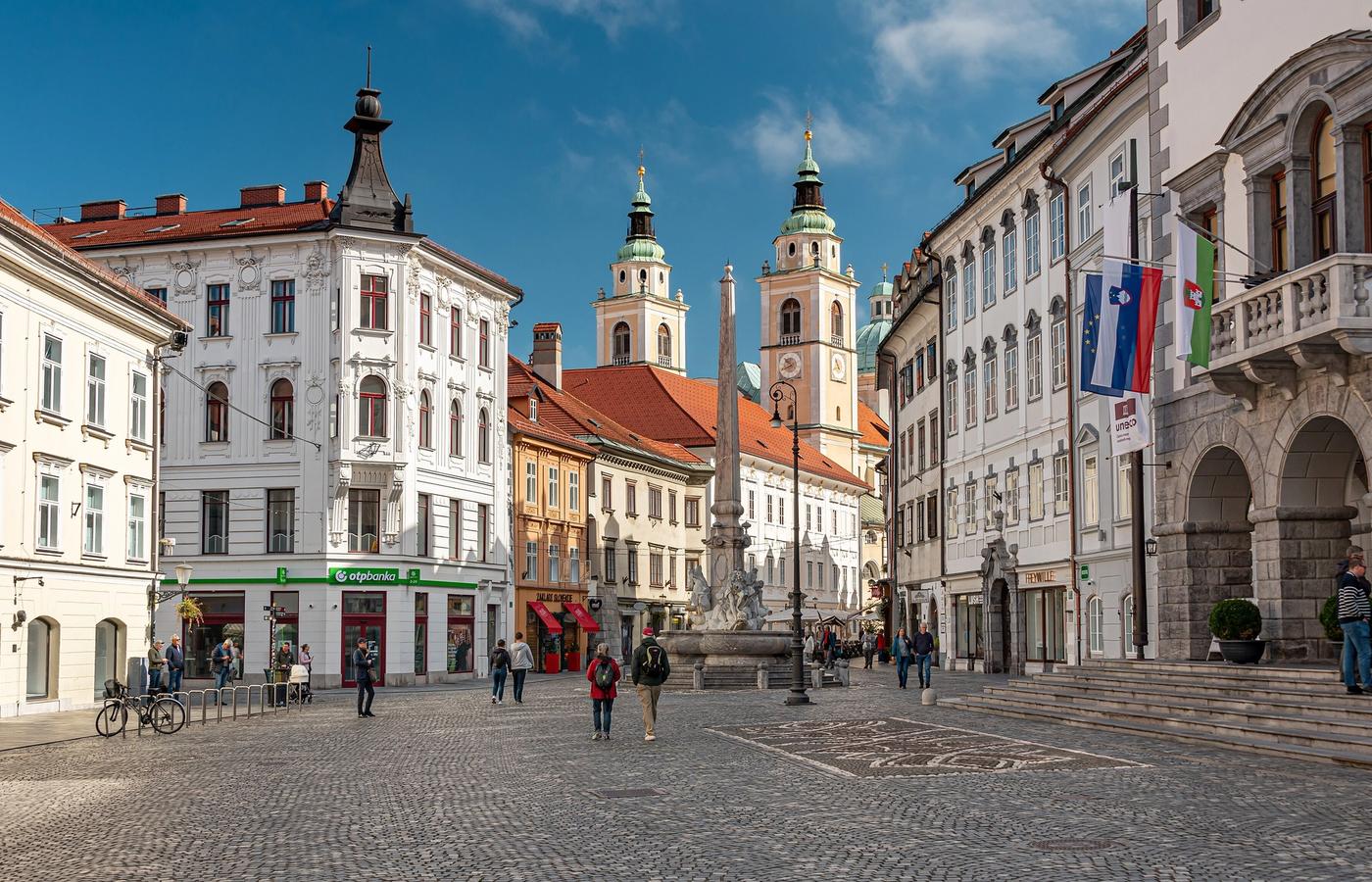
Ljubljana's Old Town runs along the eastern bank of the Ljubljanica river below the castle - a string of three connected squares (Mestni trg, Stari trg, Gornji trg) plus the parallel Cankarjevo nabrežje embankment. The cobbled streets, baroque facades, and 18th-century town houses survived Ljubljana's 1895 earthquake and were sensitively rebuilt afterwards under city architect Maks Fabiani.
Highlights along the route include the Town Hall (1718, on Mestni trg), the Robba Fountain (1751, modelled on Bernini's Roman fountains), and St James's Church on Levstikov trg. The narrow streets behind the river are lined with small bars, design shops, and cafes. The whole district is pedestrian-only. Allow 90 minutes for a slow walk.
Pro Tip: The hidden Ribji trg (Fish Square) is one block off the main route and contains some of the oldest buildings in Ljubljana - the 16th-century houses on the eastern side are reputedly the city's oldest standing residential buildings.
7St Nicholas's Cathedral - Ljubljana's Baroque Centrepiece
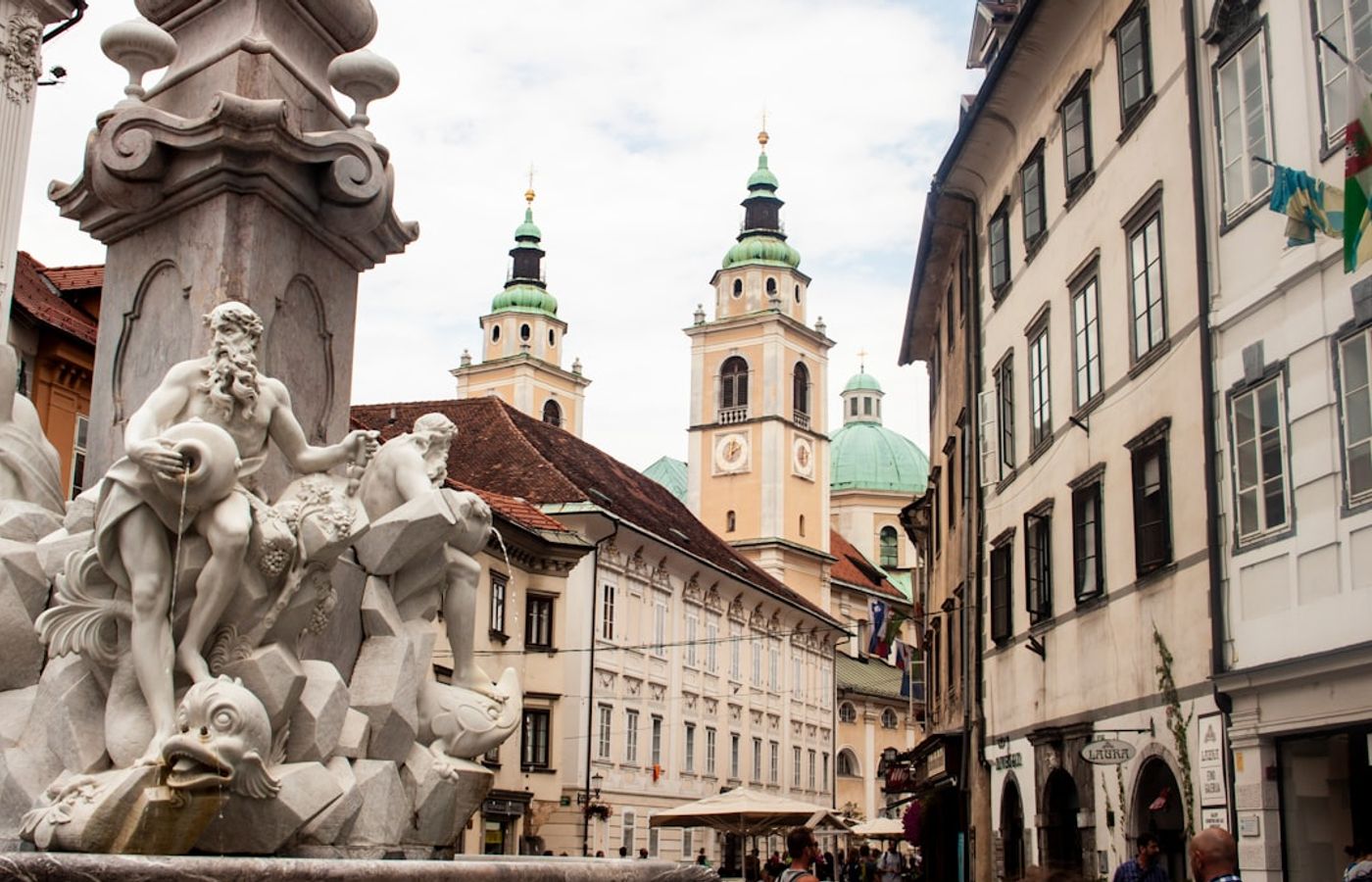
St Nicholas's Cathedral (Stolnica sv. Nikolaja) sits on Pogacarjev trg between the Central Market and the Town Hall. The current building was constructed 1701-1706 in the Italian Baroque style by Andrea Pozzo (the Jesuit architect of Vienna's Jesuit Church). The dome was added in 1841. The cathedral is dedicated to St Nicholas, patron of fishermen, reflecting Ljubljana's medieval river-trade past.
The interior contains frescoes by Giulio Quaglio (1703-1706) and a celebrated bronze door installed in 1996 to commemorate Pope John Paul II's visit. The Slovenian Door on the south side, by sculptor Tone Demsar, depicts 6 Slovenian bishops. The cathedral is free to enter; donations welcomed. Open daily 06:00-12:00 and 15:00-18:00; closed during weekday lunchtime services.
Pro Tip: Visit on a Sunday at 11:30 for the high mass with full choir - free to attend even as a tourist, and the acoustics of the Quaglio fresco rooms during the Latin liturgy are the best in Ljubljana.
8Prešeren Square - Ljubljana's Living Room
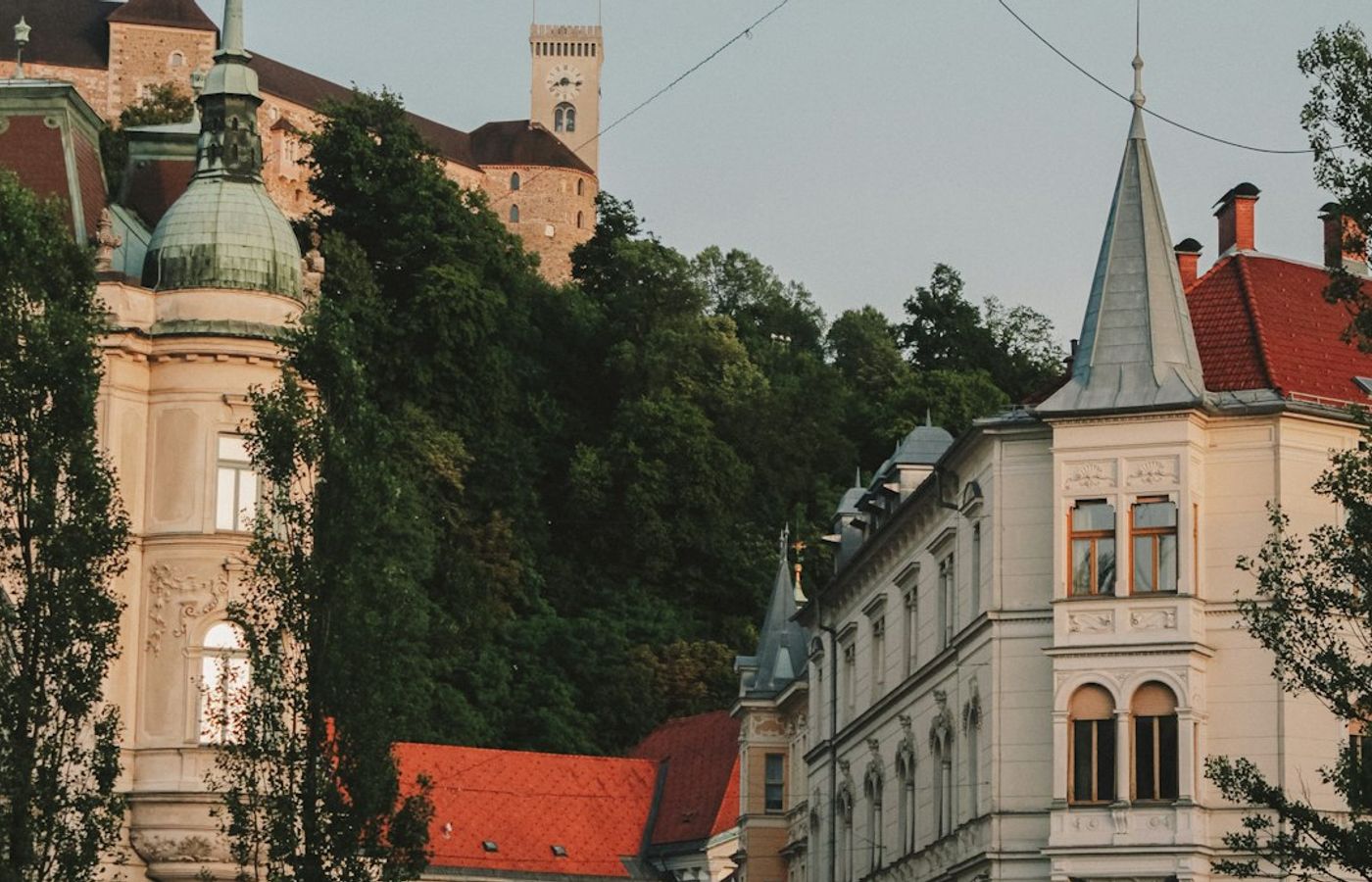
Prešeren Square is the geographic and social heart of Ljubljana, named for Slovenia's national poet France Prešeren whose 1905 bronze statue dominates the centre. The square is dominated by the pink Franciscan Church of the Annunciation (1660) at the north end - the most photographed building in the city after the castle. Three streets converge at the square and the Triple Bridge crosses the river immediately south.
The square hosts free concerts most summer evenings, the New Year's Eve celebration, and Ljubljana's Christmas market (late November to early January). On Prešeren's bronze statue, the muse Inspiration holds a laurel branch towards Wolfova ulica 4 - the home of Julija Primic, the poet's unrequited love; a small bronze plaque at the window memorialises her. Free to enjoy at any hour.
Pro Tip: Look up at the corner facade of Hauptmann House on the eastern side - it was redecorated in psychedelic Vienna Secession motifs in 1904 and is wildly out of step with the surrounding baroque facades. Easy to miss without looking up.
9National Gallery of Slovenia - 19th-Century Slovenian Art
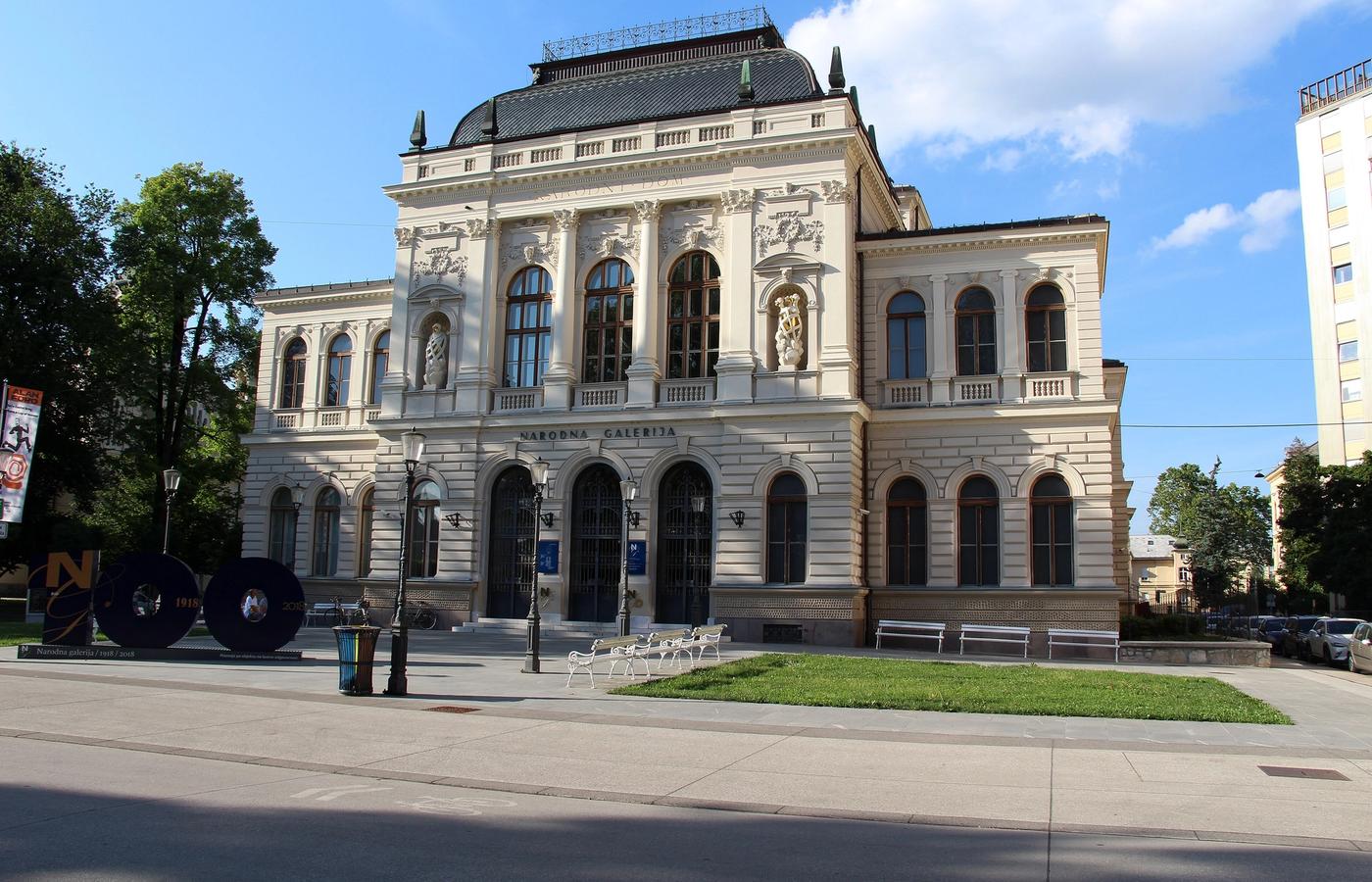
The National Gallery houses Slovenia's national collection of medieval-to-1900s art, with particular strength in 19th-century Slovenian Impressionists (Ivana Kobilca, Rihard Jakopič, Matej Sternen). The 1896 neo-Renaissance building was originally designed as the Slovenian National House and is itself a notable piece of late-Habsburg architecture. The collection covers approximately 12000 works across painting, sculpture, and graphics.
Highlights include Ivana Kobilca's Coffee Drinker (1888), Matej Sternen's Red Parasol (1904), and the room dedicated to Jakopič's 1900s landscapes - the founding generation of Slovenian Impressionism. The Robba Fountain (originally on Mestni trg) is preserved in the central glass hall. Admission 10 EUR adult; free first Sunday of each month. Allow 90 minutes.
Pro Tip: Combine with the Museum of Modern Art (MGLC) one block away on the same day - a single combined ticket at 14 EUR covers both, and together they tell the full story of Slovenian art from medieval to contemporary.
10Lake Bled - The Day Trip from Ljubljana
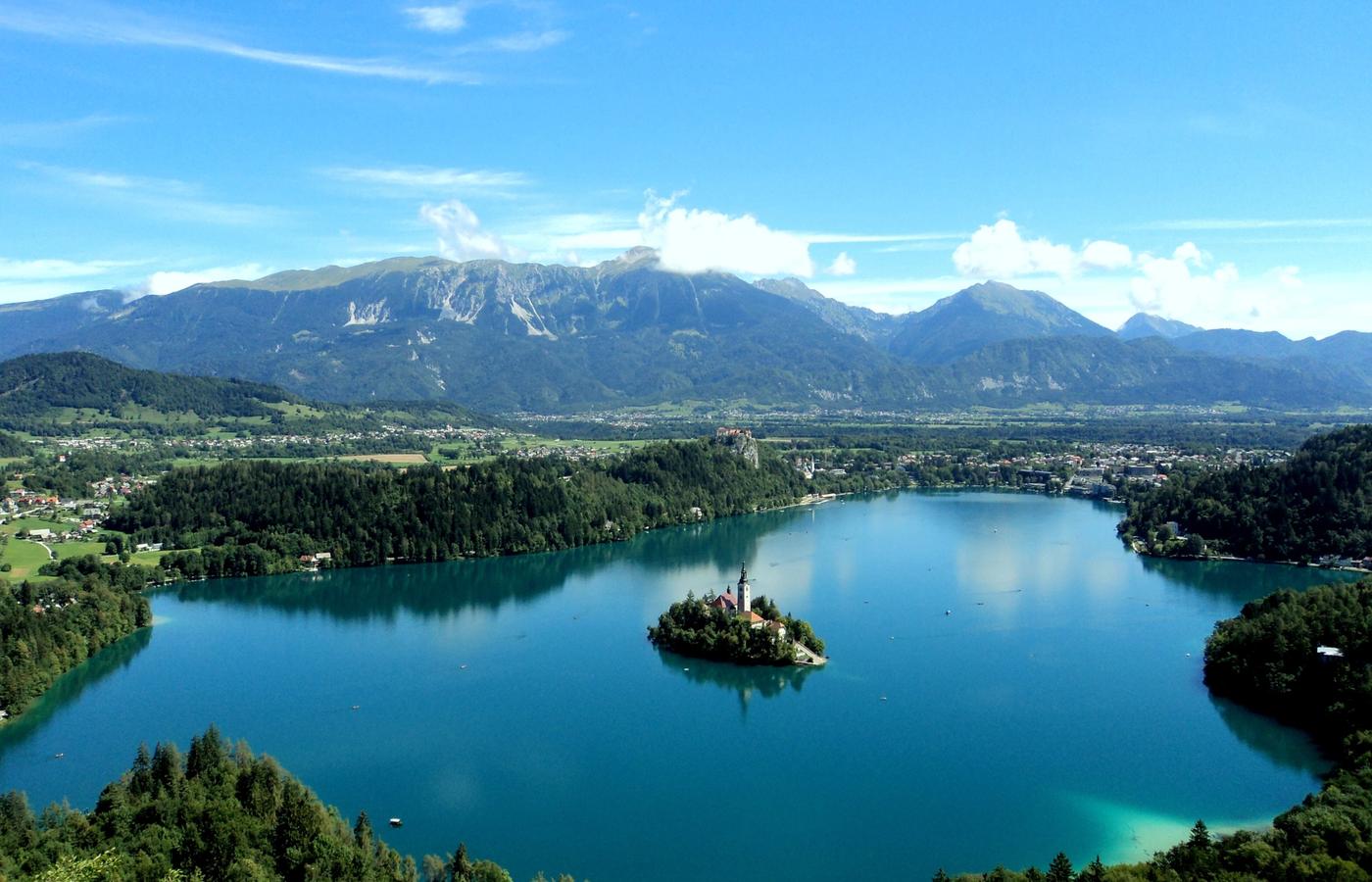
Lake Bled sits 50 km north of Ljubljana in the foothills of the Julian Alps - the most-photographed landscape in Slovenia and a near-mandatory day trip for any visit longer than 48 hours. The lake is small (2 km long) and circular, with a tiny island in the centre crowned by the 17th-century Assumption of Mary Church. Bled Castle perches on a 130-metre cliff above the northern shore.
Reach the island by traditional pletna boat (18 EUR return per person from Mlino) - the boatmen row the 20-passenger flat-bottomed vessels in the same family-business model since the 17th century. A 6 km lakeside walk takes 90 minutes. Bled Castle admission 17 EUR. Direct buses run from Ljubljana bus station every 30 minutes (13 EUR return, 75-minute ride). Combine with Vintgar Gorge (4 km north) for a full day.
Pro Tip: Take the 09:00 direct bus to arrive at 10:15, walk the western shore first, take a pletna boat to the island around 14:00 when light is best, and return on the 18:00 bus. Buy the famous Bled cream cake (kremna rezina) at Park Hotel cafe on the lake's eastern edge - the original 1953 recipe.
Get hotel deals for Ljubljana
Price drops, new stays and local tips for Ljubljana, straight to your inbox.
No spam, unsubscribe anytime.

CEO and co-founder
Tomas is the co-founder and director of trip1, an European company specializing in reservation services. He launched the company in 2025 with a focus on building scalable, efficient operations.
10 Top Things to Do in Ljubljana, Slovenia - FAQ
Ljubljana Castle for the view from the Outlook Tower, Plecnik's Triple Bridge and Preseren Square with the pink Franciscan Church, the Dragon Bridge, and the riverside Central Market, best on Fridays from March to October for Open Kitchen. Add a slow walk through the Old Town squares, Tivoli Park, and a day trip to Lake Bled if you have time.
Yes. The historic centre is a pedestrian zone of about 12 hectares, with most sights within 20 minutes on foot of Preseren Square. Spend one day on the castle, bridges, market and Old Town, and a second on Tivoli Park, the National Gallery and Lake Bled. Add a third day to pair Bled with Postojna Cave or Vintgar Gorge.
Yes. It is one of Europe's smallest and most walkable capitals, shaped by the architect Joze Plecnik, whose bridges and market colonnade line the Ljubljanica river. You can see the castle, Old Town and riverside in a day without transport, eat well at the Central Market, and reach Lake Bled, about 50 km away, by direct bus.
Not by Western European standards. Many sights are free: the bridges, Preseren Square, the Old Town, Tivoli Park and St Nicholas's Cathedral. Friday Open Kitchen dishes cost about 8 to 12 euros, and a burek and sausage at Hot Horse about 6 euros. The castle is the main expense, 19 euros with the funicular or 17.10 euros online.
Yes. Lake Bled sits about 50 km north in the foothills of the Julian Alps, with a church on its small island and Bled Castle on a cliff above the shore. Direct Arriva buses take a little over an hour. Walk the 6 km lakeside path, take a pletna boat to the island, and try the cream cake at the Park Hotel cafe.
By the funicular from Krekov trg, about 70 seconds each way and 6 euros return, or on foot in about 15 minutes by the path from Reber Street. A castle ticket with the funicular costs 19 euros at the desk or 17.10 euros online, and covers the Outlook Tower and exhibitions. The courtyard is free, so walking up costs nothing.