
Guides · Seville
12 Top Places to Visit in Seville, Spain

CEO and co-founder
Seville: Where Moorish Palaces Meet Andalusian Soul
Seville packs more monumental architecture per square kilometre than almost any city in southern Europe. The places to visit in Seville range from a 14th-century Mudejar palace that still serves as a royal residence to a wooden-mushroom structure completed in 2011 that has become the defining image of the city's modern identity. Three of Seville's landmarks share a single UNESCO World Heritage inscription - the Cathedral, the Real Alcazar, and the Archivo de Indias - and you can walk between all three in under five minutes. That concentration of heavyweight sights, combined with a walkable old town, a serious tapas culture, and neighbourhoods that each feel like their own small city, makes Seville one of the strongest city-break destinations in Spain.
This guide covers 12 places to visit in Seville that earn their spot through genuine quality rather than tourist-trail inertia. Each entry includes the exact street address, nearest tram or bus stop, and a practical Pro Tip based on real visit logistics. The list starts with the headline UNESCO sights, moves through the city's best public spaces and museums, and finishes with the neighbourhoods and riverside areas that give Seville its character beyond the postcard shots. Whether you have two days or five, this is the ground you want to cover.
Seville is compact and flat, so you can reach every attraction on this list on foot from a central base. The T1 tram, TUSSAM buses, and the Sevici bike-share system fill in the gaps for longer stretches. Spring and autumn deliver the best weather for sightseeing; summer requires an early-morning strategy and a willingness to retreat indoors during the afternoon heat.
1Real Alcazar - A Royal Palace of Mudejar Splendour
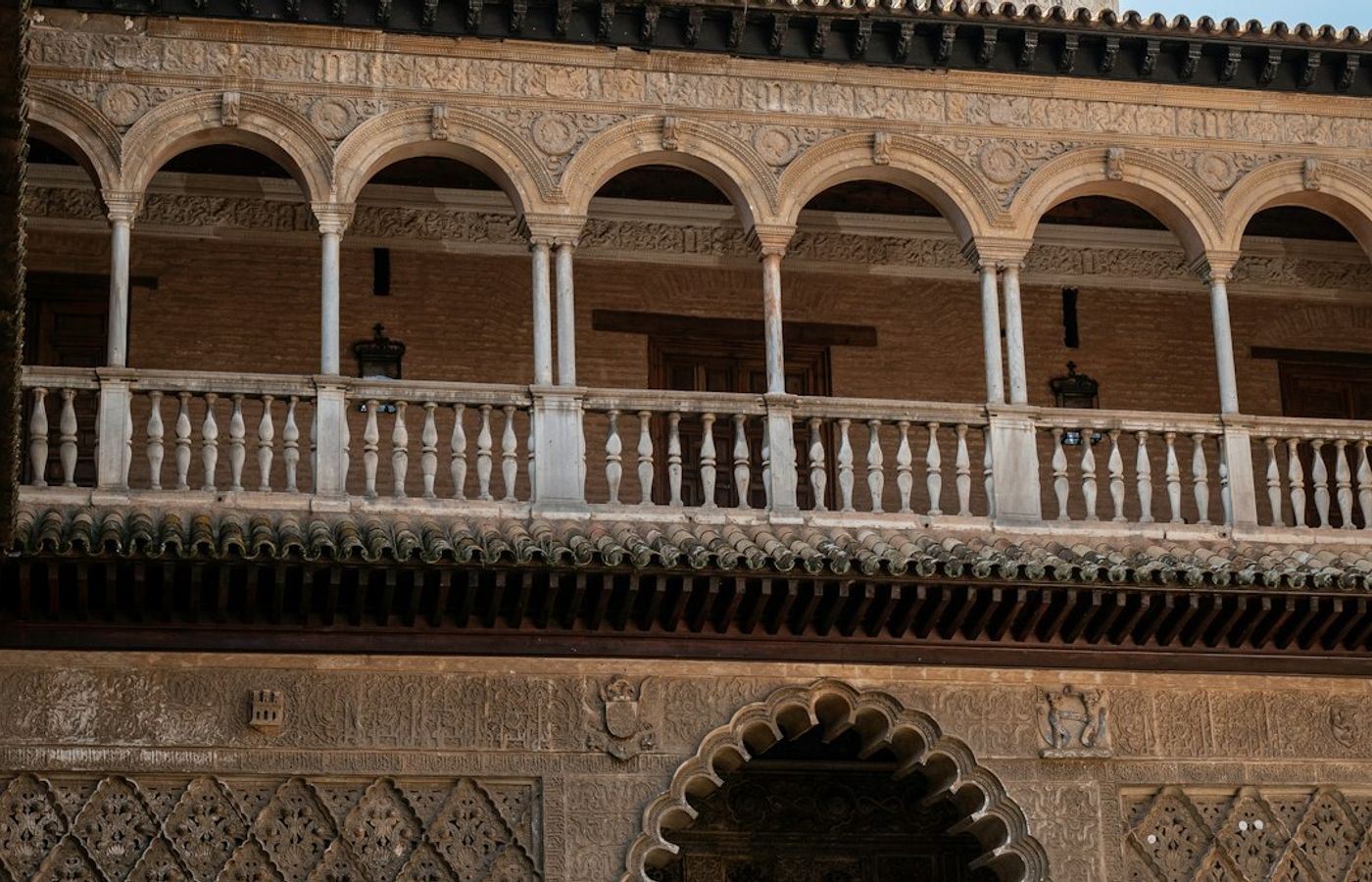

The Real Alcazar is the oldest royal palace still in active use in Europe. Its construction began in the 10th century under the Umayyad dynasty, but the building you see today is primarily the work of Pedro I of Castile, who in 1364 commissioned Mudejar craftsmen from Granada and Toledo to build a palace rivalling the Alhambra. The result is a layered complex where Islamic geometric tilework, Gothic vaulting, and Renaissance additions sit side by side across courtyards, gardens, and ceremonial halls. The Patio de las Doncellas, with its sunken garden and double-tiered arches, is the architectural centrepiece.
The gardens are as significant as the palace interiors. Spread across roughly seven hectares, they include the Mercury Pond, the Garden of the Poets, and the Grotesque Gallery - a 16th-century mannerist wall covered in artificial rock formations. Allow at least two hours, more if you plan to sit in the gardens. The palace gained additional fame as a filming location for Game of Thrones (Dorne scenes) and has appeared in several other productions. Entry costs approximately EUR 16 for adults, with free entry on Monday evenings (limited capacity, book online).
Pro Tip: Book your timed-entry ticket online at least a week ahead during March to May and September to October. Morning slots (09:30-10:30) tend to sell out first, but the palace is actually less crowded in the final entry slot of the day when tour groups have moved on.
2Seville Cathedral & Giralda - The World's Largest Gothic Cathedral
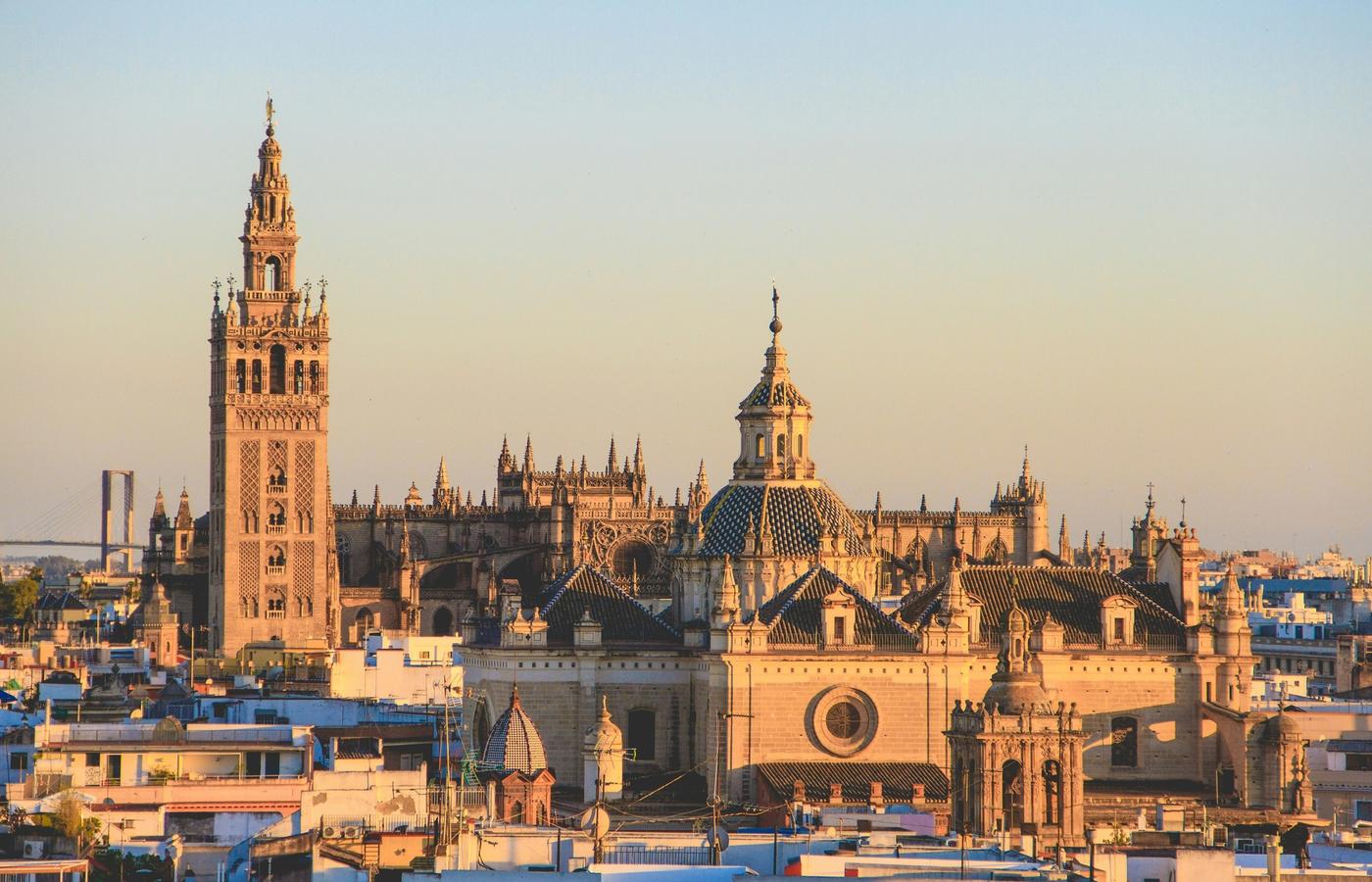

Seville Cathedral holds the title of the largest Gothic cathedral in the world by volume, and the third-largest church overall after St. Peter's in Rome and Our Lady of Aparecida in Brazil. Built between 1402 and 1506 on the footprint of the former Almohad mosque, the interior is staggeringly tall - the central nave reaches 42 metres. The main altarpiece (retablo mayor) took 80 years to complete and contains over 1,000 carved and gilded figures depicting scenes from the life of Christ. Christopher Columbus's tomb, supported by four figures representing the kingdoms of Castile, Leon, Aragon, and Navarre, sits in the south transept.
The Giralda bell tower is the Cathedral's most recognisable feature. Originally the minaret of the 12th-century mosque, it was preserved when the mosque was demolished and converted into a bell tower with a Renaissance belfry added on top. The climb to the top consists of 35 gently graded ramps (designed so the muezzin could ride a horse up) rather than stairs, making it more accessible than most tower climbs. From the top, you get a 360-degree view across the rooftops to the Alcazar gardens, the river, and on clear days, the mountains beyond. Combined entry to the Cathedral and Giralda costs about EUR 12.
Pro Tip: Visit the Giralda first thing in the morning or in the last hour before closing. Midday queues for the tower can add 30 minutes. If you are an EU citizen, check the free Monday afternoon slot (16:30-18:00) - availability is limited, so arrive early.

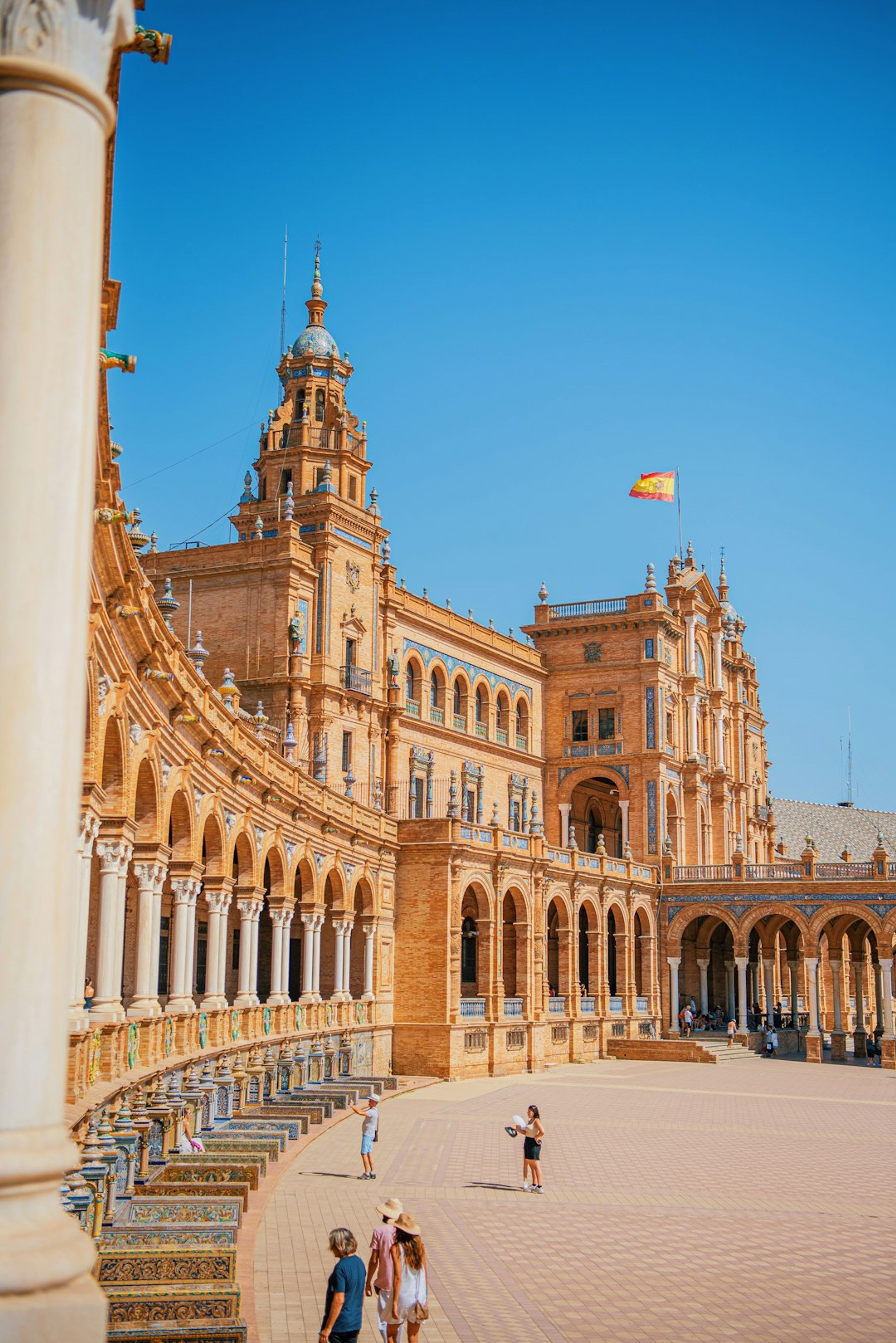
3Plaza de Espana - Seville's Most Photogenic Public Square
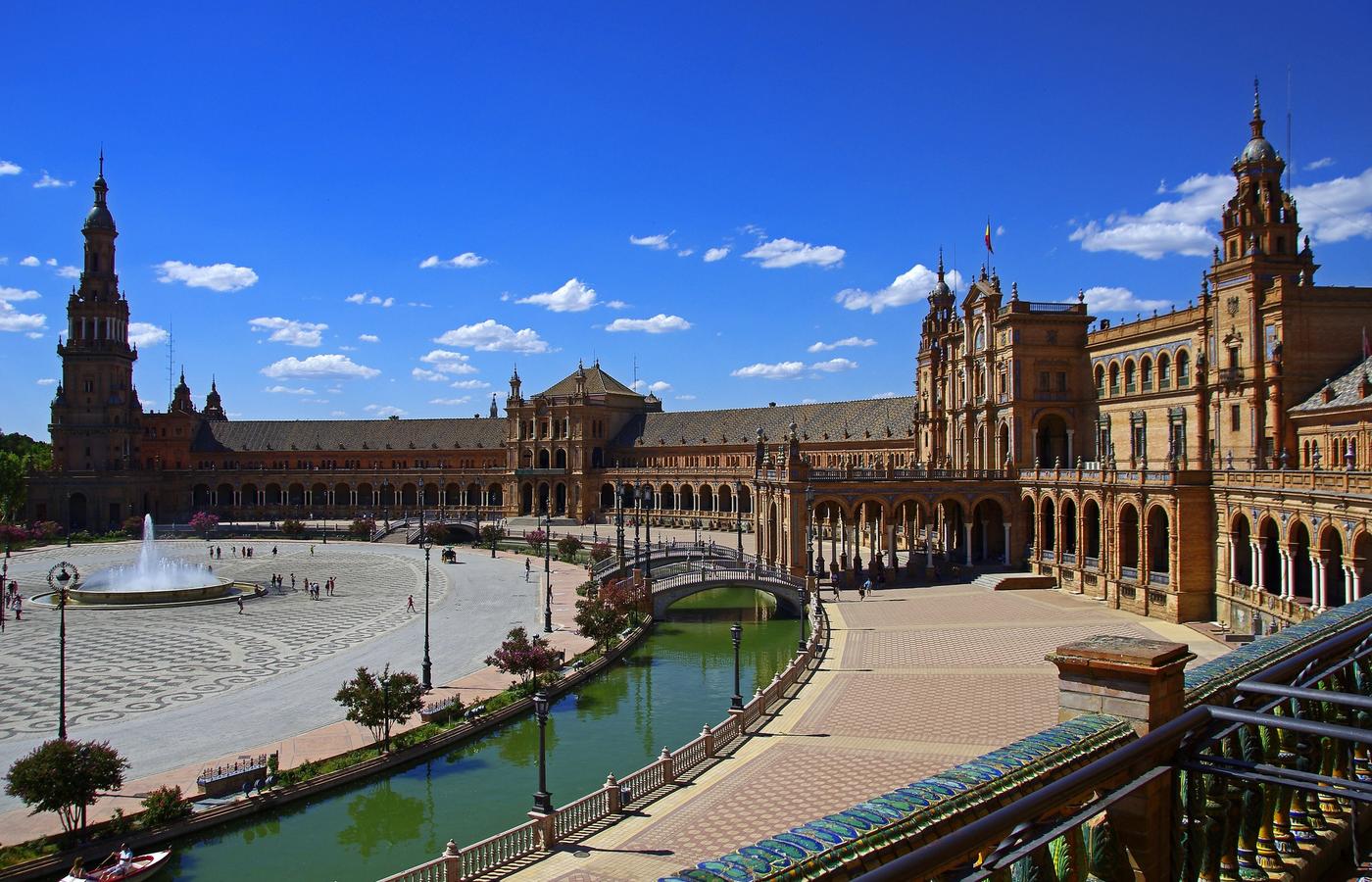

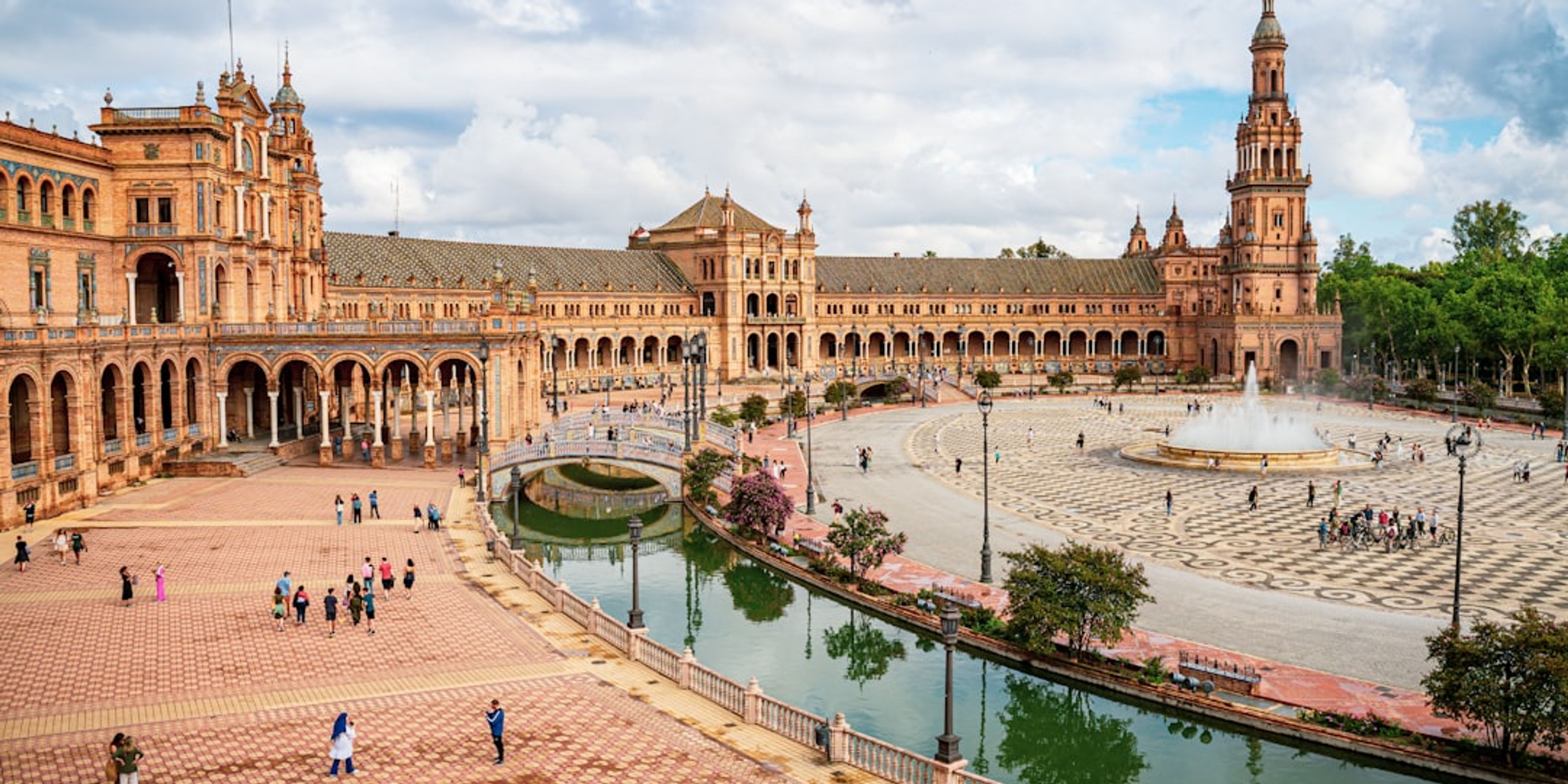
Plaza de Espana was built for the 1929 Ibero-American Exposition and remains one of the most impressive public squares in Europe. The semicircular brick-and-tile complex spans 50,000 square metres, with a central fountain, a canal you can cross by rowboat, and 48 tiled alcoves along the base of the building - each representing a Spanish province, arranged in alphabetical order. The craftsmanship is exceptional: hand-painted ceramic benches, ornate bridges over the canal, and a neo-Mudejar facade that curves around the entire plaza.
The plaza is free to enter at all times and functions as a genuine public space - locals jog here in the morning, families picnic on weekends, and flamenco guitarists often perform under the colonnades. It has served as a location for Star Wars: Episode II (standing in for Naboo's Theed city), Lawrence of Arabia, and The Dictator. Rowboat rentals on the canal cost a few euros and run year-round in good weather. The building itself houses government offices, so only the ground-level arcade and plaza are open to visitors.
Pro Tip: Come at sunset when the low light catches the tilework at its warmest. Morning visits (before 10:00) are best for photos without crowds. The alcove for your home province - or the one with the most elaborate tilework (Granada is a popular pick) - makes for a memorable photo spot.
4Metropol Parasol - A Modern Landmark Over Roman Ruins
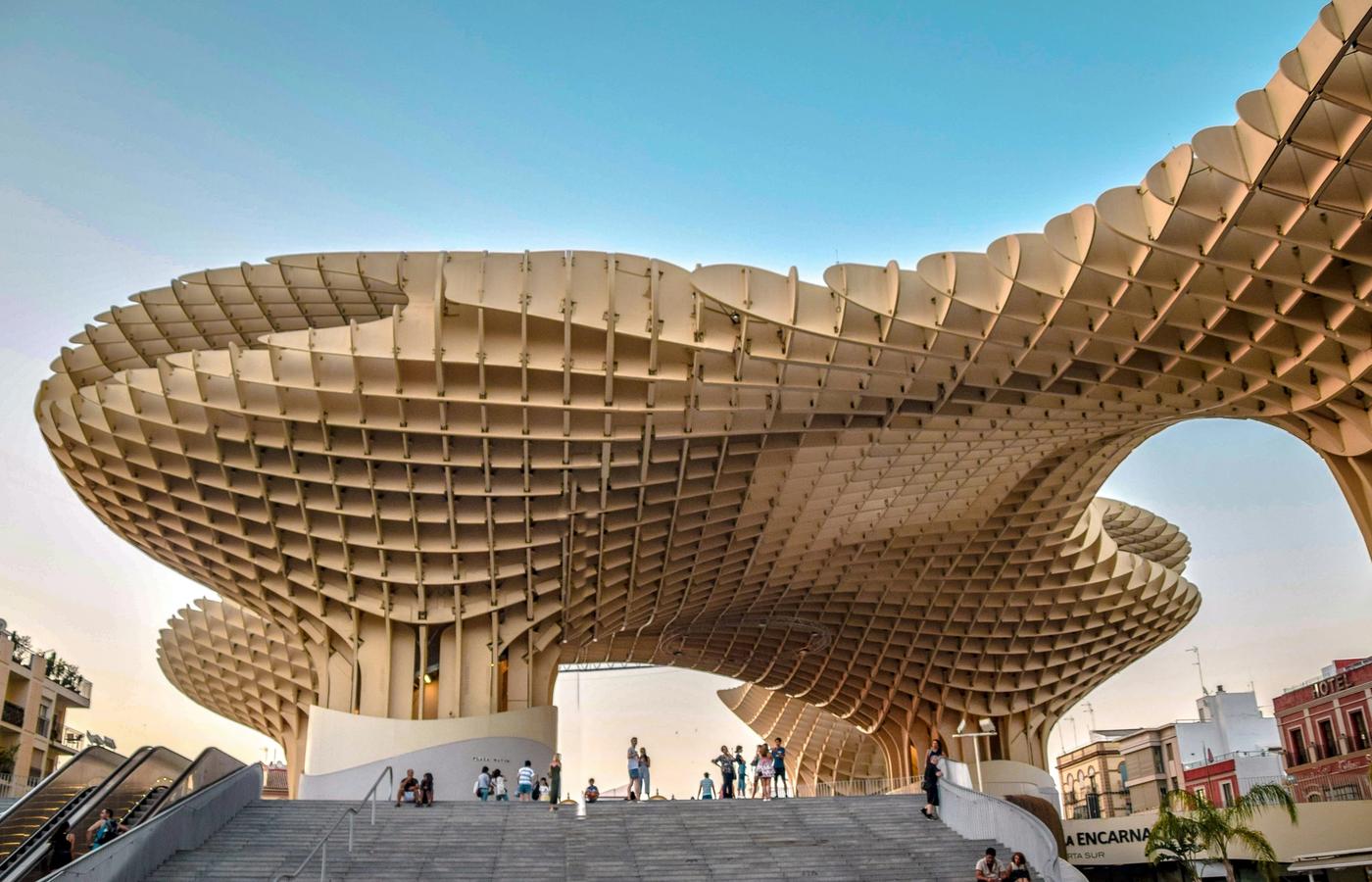
Metropol Parasol - known locally as Las Setas (The Mushrooms) - is the largest wooden structure in the world. Designed by German architect Jurgen Mayer and completed in 2011 after a controversial six-year construction process, it rises from the Plaza de la Encarnacion in six enormous waffle-patterned canopies supported by concrete pillars. The structure houses four distinct levels: an archaeological museum in the basement (displaying Roman and Moorish ruins found during excavation), a central market at ground level, an elevated plaza, and a rooftop walkway with panoramic views.
The rooftop walkway (El Mirador) is the main draw for visitors. A winding timber path leads across the undulating canopy tops, offering eye-level views of the Giralda, the Cathedral dome, and the rooftops of the old town. The walk takes about 20 minutes. Admission to the rooftop costs approximately EUR 5 and includes a drink at the on-site bar. Below, the Mercado de la Encarnacion sells fresh produce and has a handful of tapas counters worth a stop. The archaeological museum (Antiquarium) requires a separate ticket of about EUR 2.
Pro Tip: Visit the rooftop just before sunset for the best light and views - the Giralda glows gold against the sky. Use your included drink voucher at the top-floor bar rather than redeeming it at ground level. The Antiquarium below is often empty and worth the small extra fee if you are interested in Roman mosaics.
5Triana - Seville's Flamenco and Ceramics Quarter
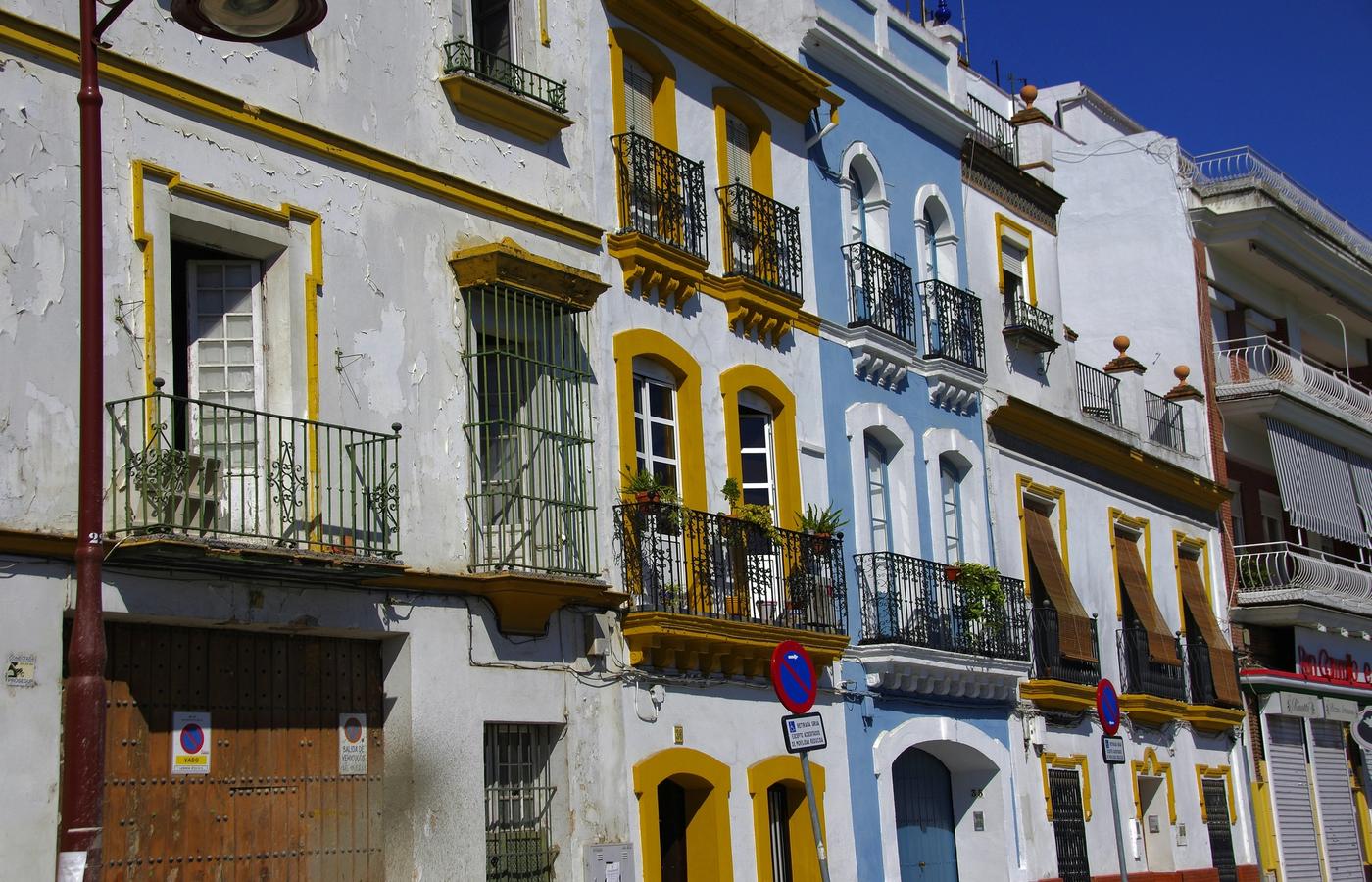
Triana sits on the west bank of the Guadalquivir, connected to the historic centre by the Puente de Isabel II (also called the Puente de Triana). For centuries, this was the working-class heart of Seville - home to bullfighters, sailors, Romani communities, and the families that shaped flamenco and Andalusian ceramics. The neighbourhood retains a distinct identity: its bars serve some of the best tapas in the city at lower prices than the Cathedral area, its ceramic workshops still produce the hand-painted azulejo tiles you see on buildings across Seville, and its backstreets have a lived-in feel that the touristified Santa Cruz has largely lost.
Key stops include the Mercado de Triana (a covered market built on the site of the former Inquisition castle, with excellent food stalls), the Centro Ceramica Triana (a museum of the area's tile-making heritage), Calle Betis along the riverbank (lined with bars and restaurants with terrace views of the old town), and Calle Pureza where the Capilla de los Marineros houses the Esperanza de Triana, one of the most revered religious images carried during Semana Santa. Allow a full morning or evening to explore at a pace that lets you duck into ceramic shops and stop for a cold beer.
Pro Tip: Cross the Puente de Isabel II into Triana around 20:00 on a warm evening. Start with tapas on Calle San Jacinto (the locals' strip, not the tourist-facing Calle Betis), then walk the riverbank for views of the illuminated Torre del Oro and Cathedral. The Mercado de Triana food stalls are best visited at lunchtime.
6Archivo de Indias - The Paper Trail of an Empire
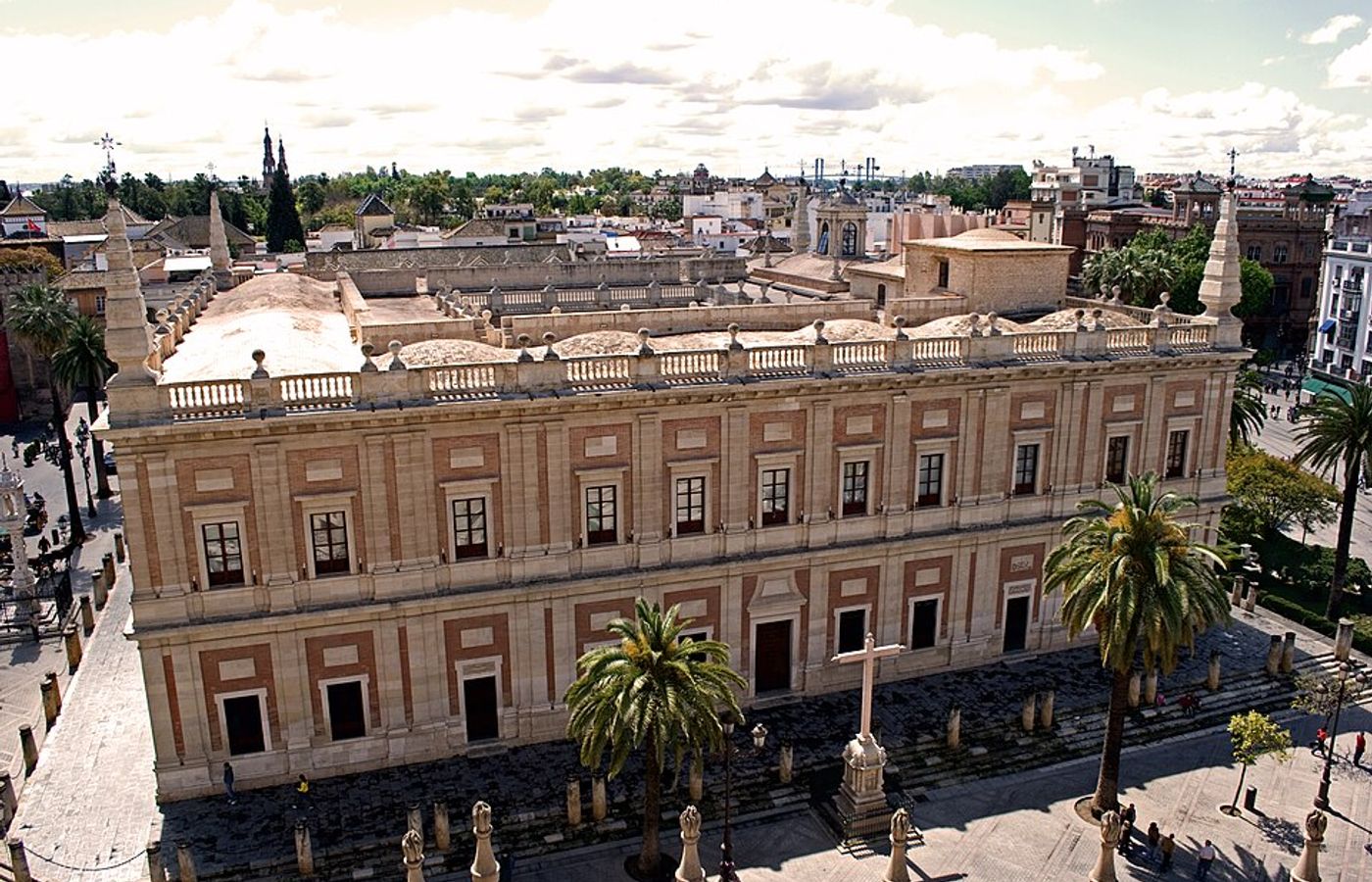
The Archivo de Indias holds over 43,000 documents and 80 million pages relating to the Spanish Empire's administration of the Americas and the Philippines - spanning three centuries from the discovery voyages to the 19th-century independence movements. The building itself, designed by Juan de Herrera in 1584, was originally a merchants' exchange (Lonja de Mercaderes) before Charles III converted it into the colonial archive in 1785. It shares UNESCO World Heritage status with the Cathedral and Alcazar.
The public exhibition occupies the upper floor and rotates displays of original documents - you might see maps drawn by Columbus's navigators, correspondence from Hernan Cortes, or trade records from Seville's monopoly on American commerce. The Herrera-designed staircase and marble halls are worth seeing for the architecture alone, even if the document displays are modest compared to the scale of the archive. Admission is free. Most visitors spend 30-45 minutes here, which fits naturally between visits to the adjacent Cathedral and Alcazar.
Pro Tip: Visit the Archivo between the Cathedral and the Alcazar to break up your ticketed sightseeing with a free, air-conditioned stop. The exhibition is small enough to see quickly but fascinating if you have any interest in exploration-era history. Check the current exhibition topic on the official website before your visit.
7Torre del Oro - A Moorish Watchtower on the Guadalquivir
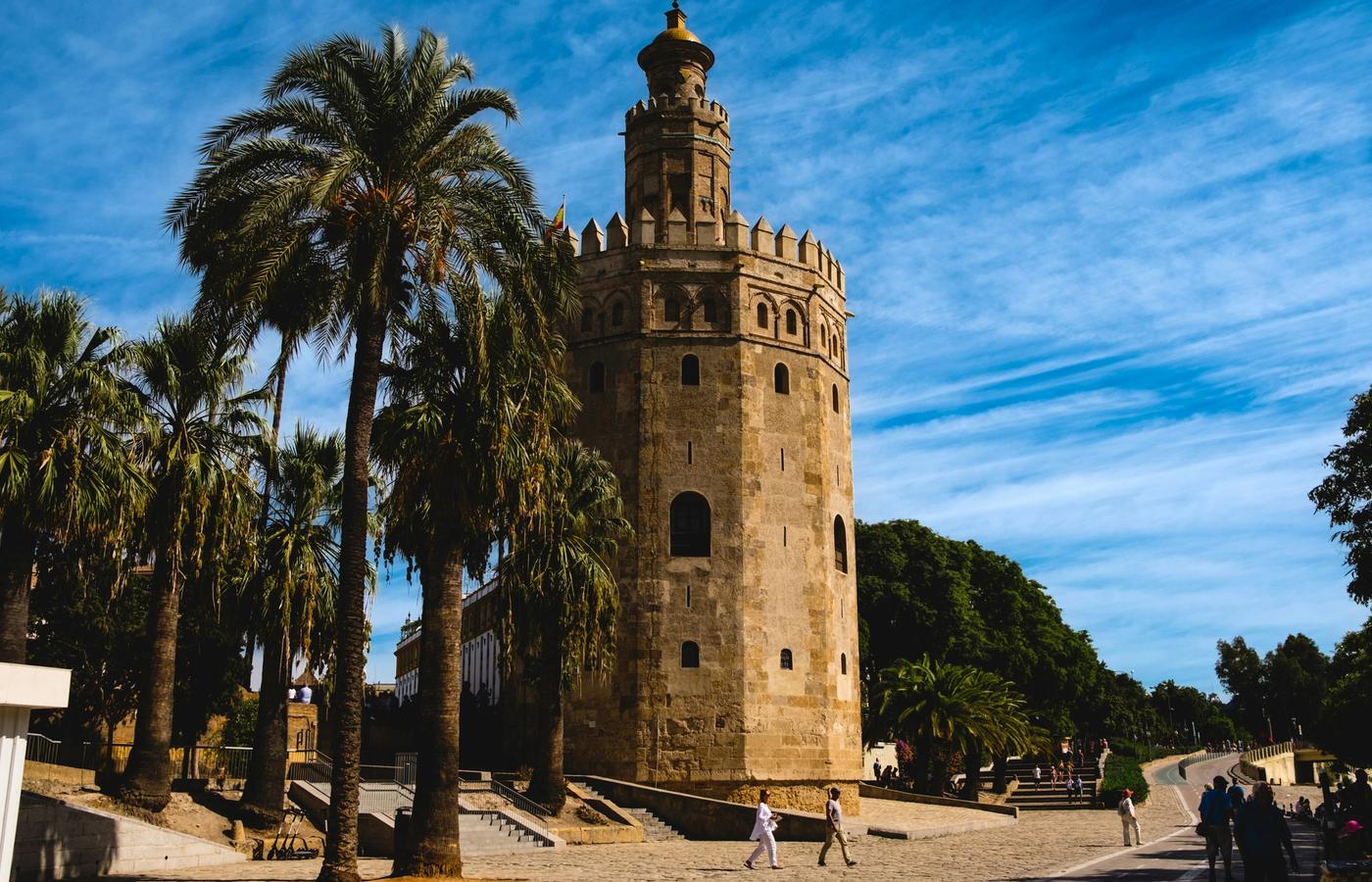
The Torre del Oro is a 13th-century Almohad watchtower that once anchored a chain stretched across the Guadalquivir to control river access to the city. Its name - Tower of Gold - likely comes from the golden reflection of its original lime-mortar coating on the water, though local legend attributes it to New World gold stored here during the colonial era. The dodecagonal tower rises 36 metres and has been restored multiple times, most recently in 2005.
Today the tower houses a small naval museum (Museo Naval) across three floors, displaying ship models, historical charts, and navigation instruments connected to Seville's role as the port of departure for expeditions to the Americas. The rooftop terrace offers a close-range view up and down the river and across to Triana. Admission is about EUR 3, with free entry on Mondays. The visit takes 20-30 minutes. The tower's position along the Paseo de Cristobal Colon makes it a natural stop on a riverside walk between the Puente de Isabel II and the Plaza de Toros de la Maestranza.
Pro Tip: The Torre del Oro is more photogenic from the outside than the museum is impressive inside. If time is tight, enjoy the exterior and the riverside walk instead. The best photo angle is from the Triana side of the river, looking back across the water with the tower and Cathedral in frame.
8Maria Luisa Park - Seville's Green Escape
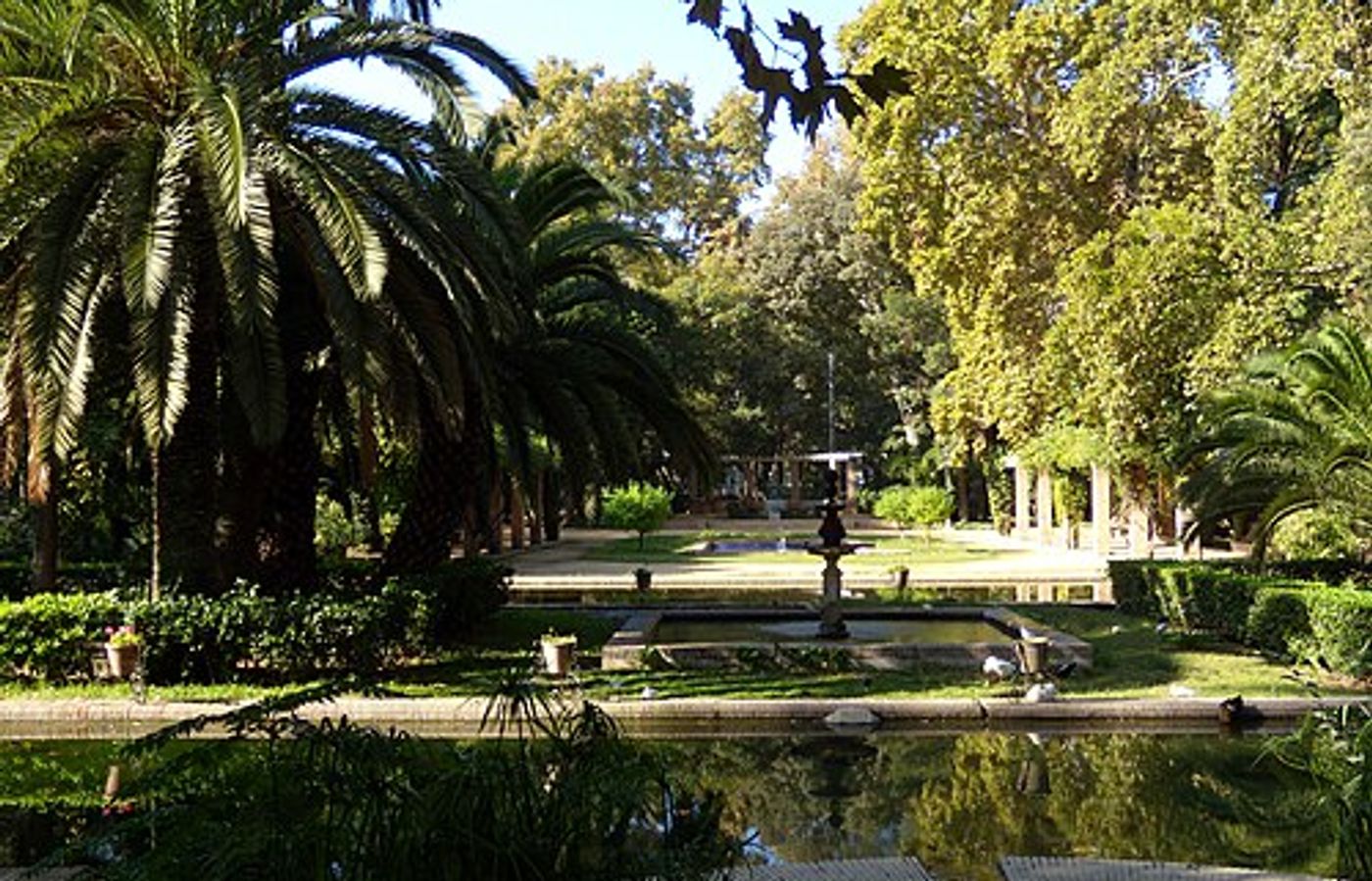
Maria Luisa Park is Seville's principal green space, stretching from the Plaza de Espana south along the Guadalquivir river for about a kilometre. The park was donated to the city by Princess Maria Luisa de Orleans in 1893 and redesigned by French landscape architect Jean-Claude Nicolas Forestier for the 1929 Exposition. Forestier combined formal French garden geometry with Moorish water features and native Andalusian planting - the result is a shaded, tile-decorated park that feels genuinely distinct from standard European city parks.
The park contains several notable spots: the Plaza de America (flanked by the Archaeological Museum and the Museum of Popular Arts and Customs), the Isleta de los Patos (a small island pond popular with ducks and turtles), and numerous tiled benches and pergolas tucked among the paths. Horse-drawn carriages circle the park and offer a traditional if touristy way to see it. Maria Luisa Park is free and open daily. It is the natural companion to Plaza de Espana - most visitors combine both in a single half-day excursion, especially in the cooler hours of morning or late afternoon.
Pro Tip: Rent a Sevici bike from the station near Prado de San Sebastian and ride the paths through the park - it is flat, shaded, and covers more ground than walking in the heat. The Archaeological Museum on Plaza de America is underrated and rarely crowded, with an excellent collection of Roman artefacts from nearby Italica.
9Barrio de Santa Cruz - The Former Jewish Quarter
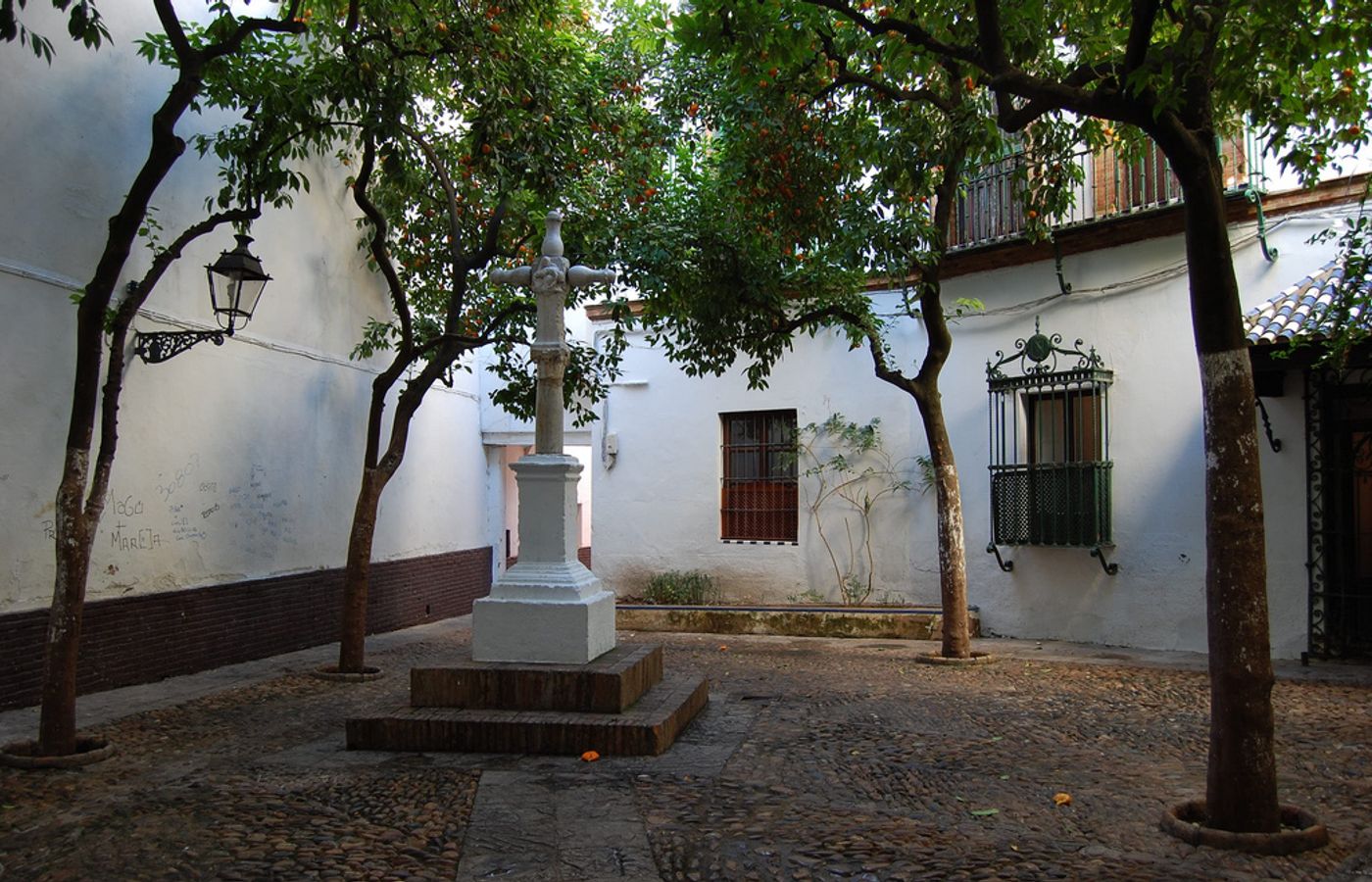
Santa Cruz is Seville's most atmospheric neighbourhood and the one most visitors will pass through repeatedly given its location between the Cathedral and the Alcazar. Once the Jewish quarter of the medieval city (the juderia), it was redesigned in the early 20th century into the whitewashed labyrinth of narrow alleys, flower-draped balconies, and tiny plazas that it is today. Getting deliberately lost here is part of the experience - the lanes are too narrow for cars, sound drops away from the main streets, and you turn corners into quiet courtyards where the only noise is a fountain.
Key plazas to find include Plaza de los Venerables (home to the Hospital de los Venerables and its Velazquez collection), Plaza de Dona Elvira (a tile-decorated square with orange trees), and Plaza de Santa Cruz (where a 17th-century iron cross marks the site of the demolished church). Callejon del Agua, a lane running along the Alcazar wall, is one of the most photographed streets in Seville. The neighbourhood is entirely free to walk and explore, and it transitions naturally into the Cathedral and Alcazar visits that bookend most itineraries.
Pro Tip: Explore Santa Cruz early in the morning (before 09:30) or after 19:00 when most tour groups have dispersed. The alleys are more enjoyable when you can hear your own footsteps. Avoid eating at the restaurants directly on the main plazas - walk one street back for better quality and lower prices.
10Alameda de Hercules - Seville's Oldest Public Garden and Nightlife Hub
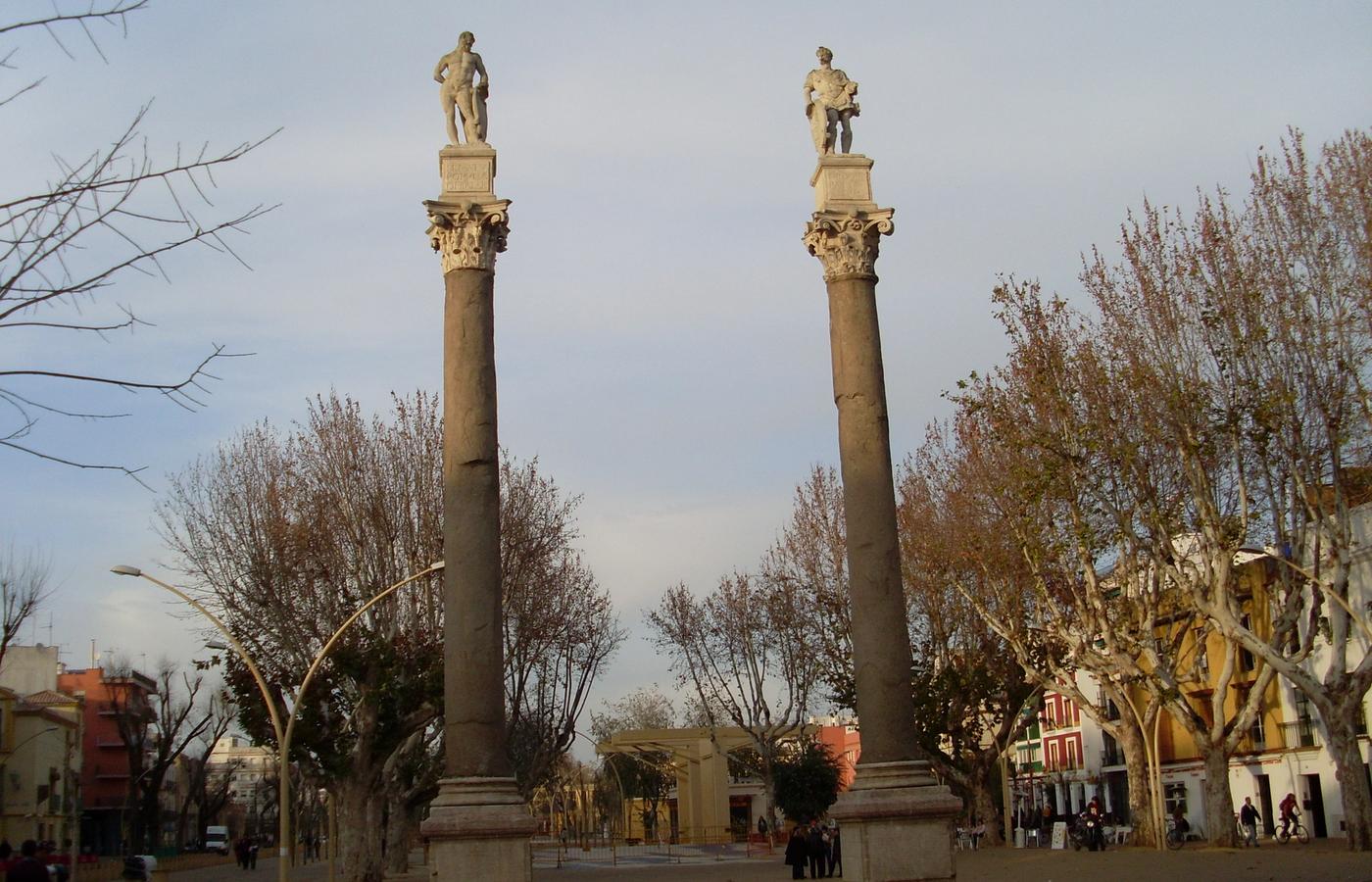
The Alameda de Hercules is the oldest public garden in Spain and possibly in Europe, established in 1574. The promenade is anchored by two Roman columns at the south end - originally from a temple on Calle Marmoles - topped with statues of Hercules and Julius Caesar. For much of the 20th century the area was run-down, but a thorough renovation in the 2000s turned it into the centre of Seville's alternative and nightlife scene without losing its local character.
Today the wide, tree-lined promenade is ringed with bars, cafes, and restaurants that fill outdoor terraces from mid-afternoon until well past midnight. On Sundays, a flea market and artisan market occupy the central strip. The Alameda is where locals go - particularly younger sevillanos and the LGBTQ+ community - and it offers a useful counterpoint to the more manicured tourist areas around the Cathedral. The surrounding streets hold independent shops, vintage clothing stores, and some of the city's most interesting small galleries.
Pro Tip: The Alameda is at its best from Thursday to Saturday evening, when the terraces fill up and street musicians play. Combine it with a visit to Metropol Parasol (a 10-minute walk south) for a route that shows you Seville's modern and local side. Sunday morning is the time for the flea market.
11Guadalquivir Riverbank - Seville's Scenic Promenade
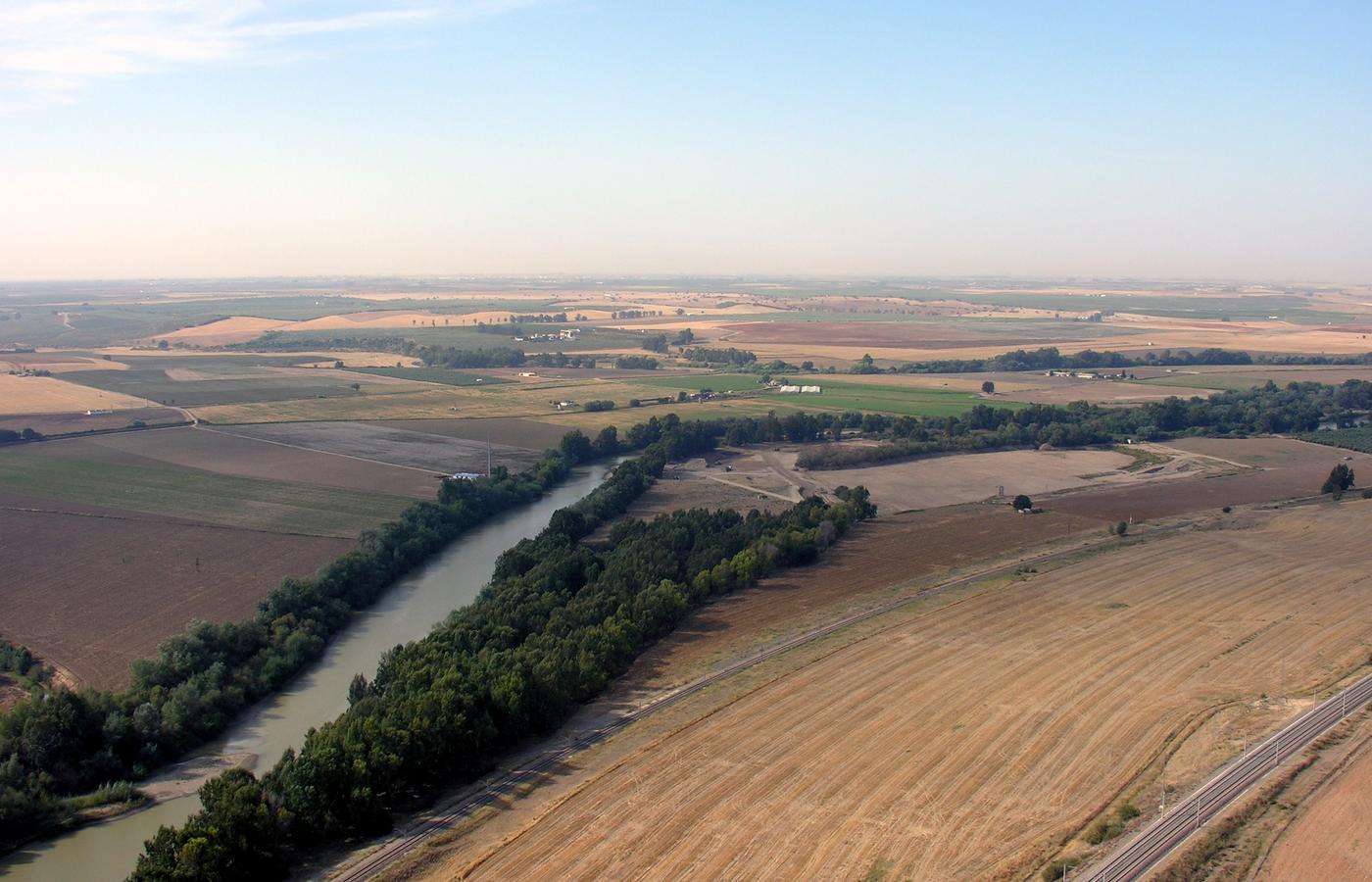
The Guadalquivir is the river that made Seville wealthy. In the 16th and 17th centuries, it was the sole authorised route for trade with the Americas, and the docks along its banks handled more gold and silver than any port in Europe. Today the riverbank between the Puente de San Telmo and the Puente de Isabel II is Seville's main promenade - a flat, wide path on both sides of the water that connects many of the city's major sights and offers some of its best views.
Walking the east bank (Paseo de Cristobal Colon) takes you past the Torre del Oro, the Plaza de Toros de la Maestranza, and the Teatro de la Maestranza. Crossing the Puente de Isabel II to the Triana side and returning along Calle Betis creates a loop of roughly 2.5 km with uninterrupted views of the old-town skyline. River cruises depart from the dock near the Torre del Oro and run for about one hour (approximately EUR 16-20). The riverbank is free, open 24 hours, and at its most atmospheric around sunset when the light turns the water and buildings deep orange.
Pro Tip: Walk the east bank from the Torre del Oro north to the Puente de Isabel II, cross into Triana, and return south along Calle Betis. This gives you the classic skyline view from Triana at sunset. Skip the river cruises unless you want a rest - the views from the banks are just as good on foot.
12Plaza de Toros de la Maestranza - Spain's Most Storied Bullring
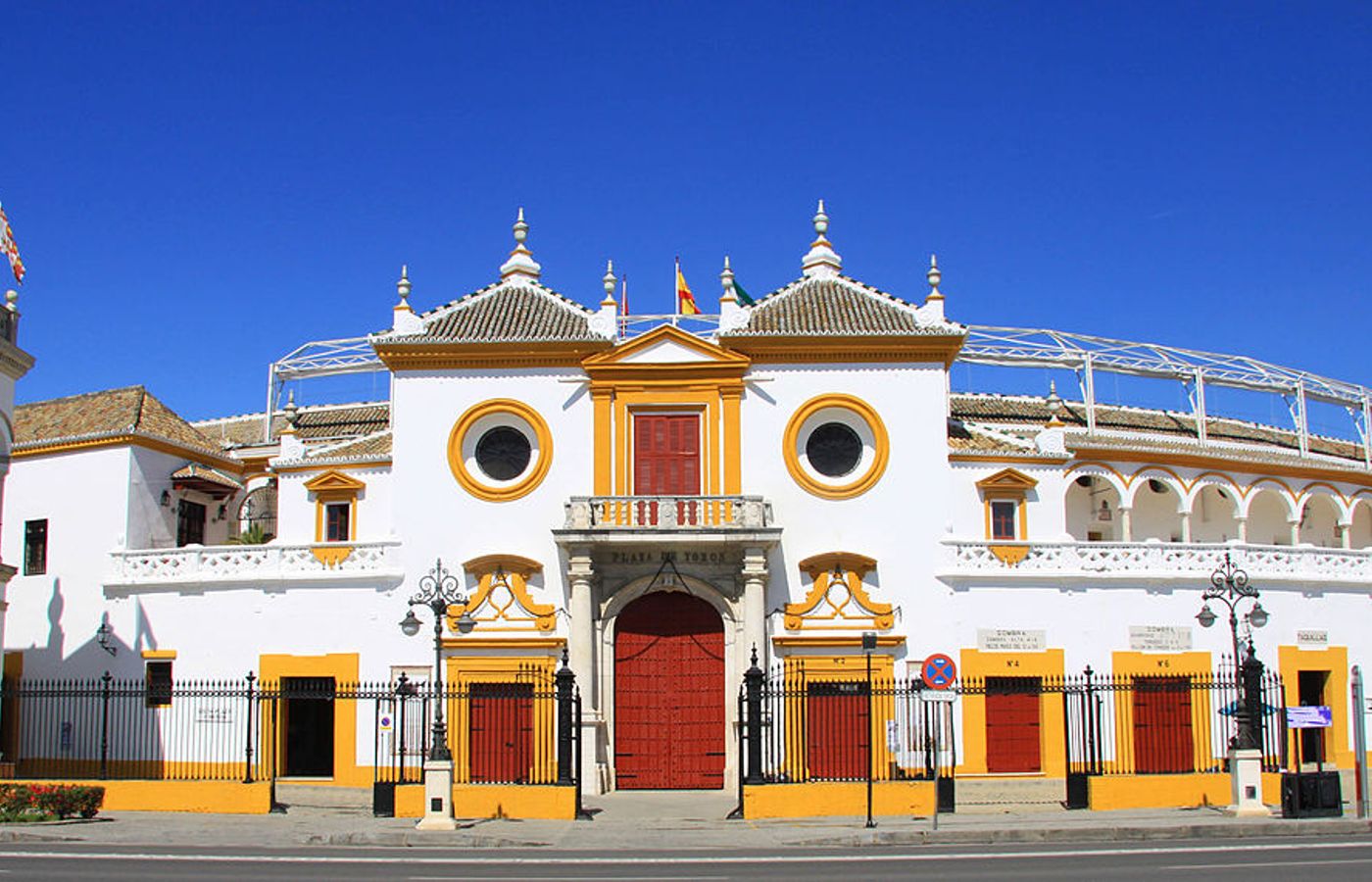
La Maestranza is one of the oldest and most important bullrings in Spain, with construction beginning in 1749 and continuing in stages until 1881. The ring seats 12,500 spectators in a distinctive white-and-ochre Baroque oval. Whether or not you have any interest in bullfighting itself, the building is an architectural landmark and a window into a cultural tradition that has shaped Andalusian identity for centuries. The on-site museum traces the history of tauromaquia through paintings, costumes, and memorabilia.
Guided tours run every 20 minutes throughout the day and include the ring itself, the infirmary, the chapel where matadors pray before a fight, and the museum galleries. Tours last about 40 minutes and cost approximately EUR 10. The bullfighting season runs from Easter Sunday to October, with the most prestigious fights during the Feria de Abril. The building's riverside position makes it easy to combine with the Torre del Oro and a walk along the Guadalquivir in a single outing.
Pro Tip: Even if you skip the paid tour, walk around the exterior to appreciate the scale and facade details. The gift shop sells surprisingly well-made Andalusian leather goods. If you visit during Feria week, the atmosphere around the Maestranza on fight days is unlike anything else in Seville - arrive early just to watch the crowd.

CEO and co-founder
Tomas is the co-founder and director of trip1, an European company specializing in reservation services. He launched the company in 2025 with a focus on building scalable, efficient operations.