Guides · London
15 Top Attractions & Things to Do in London, England
By Tomas Achmedovas · CEO and co-founder

CEO and co-founder
London: A City That Never Stops Surprising
London needs no introduction, yet it never stops surprising. From the thousand-year-old Tower of London to the cutting-edge galleries of the South Bank, the best things to do in London span nearly every century and every interest imaginable. This is a city where Roman walls sit alongside glass skyscrapers, where royal palaces share postcodes with punk-era market stalls, and where you can move from world-class art to world-class curry in a single Tube ride.
With nearly nine million residents and over 170 nationalities calling it home, London is one of the most diverse and dynamic capitals on the planet. The sheer scale of what is on offer can feel overwhelming for first-time visitors, which is exactly why this guide narrows the field. Whether you are here for two days or an entire week, these 15 attractions and things to do in London represent the essential experiences that define the city - the landmarks you should not miss, the neighbourhoods worth exploring on foot, and the hidden corners that make London endlessly rewarding.
This guide covers everything from practical transport tips and neighbourhood overviews to sample itineraries and a self-guided walking route, so you can plan a London trip that matches your pace and interests.
Check dates for London
See what is available on your dates.
1Tower of London - Nine Centuries of Royal History


The Tower of London stands as one of the most significant fortifications in English history, a UNESCO World Heritage Site that has served as a royal palace, prison, armoury, and treasury since William the Conqueror built its White Tower in 1066. Today it draws millions of visitors each year to see the dazzling Crown Jewels collection, including the Imperial State Crown set with over 2,800 diamonds. Allow at least two to three hours to do it justice - this is not a quick in-and-out attraction.
The Yeoman Warders - known as Beefeaters - lead entertaining and surprisingly gruesome guided tours throughout the day, bringing to life the tales of executions, conspiracies, and royal intrigue that defined this place. Do not miss the Medieval Palace rooms, the ravens on Tower Green (legend says if they ever leave, the kingdom will fall), and the White Tower's impressive collection of royal armour. Adult admission costs around £33.60/~€39, with online booking typically saving a few pounds.
2British Museum - Two Million Years of Human History, Free


Housing over eight million objects spanning two million years of civilisation, the British Museum is one of the most extraordinary museums on the planet - and it will not cost you a penny. The collection includes the Rosetta Stone, the Elgin Marbles from the Parthenon, the Sutton Hoo treasure, and an outstanding Egyptian gallery with real mummies and sarcophagi that rivals anything in Cairo. The Great Court, designed by Norman Foster, is a stunning glass-roofed atrium that serves as the museum's centrepiece.
Beyond the headline objects, seek out the Enlightenment Gallery on the ground floor - one of the most beautiful rooms in London - and the Japanese galleries on the upper levels. With over 60 galleries to explore, even a dedicated full-day visit will only scratch the surface. The museum shop is excellent, and the Great Court Restaurant offers surprisingly good food with a view of the Reading Room dome.
3Buckingham Palace - The Working Heart of the British Monarchy


Buckingham Palace has served as the official London residence of the British sovereign since 1837. The Changing of the Guard ceremony on the forecourt is one of London's most iconic free spectacles, lasting around 45 minutes at 11:00 on Mondays, Wednesdays, Fridays, and Sundays from October to May, and daily during summer months. The pageantry of the guards in their scarlet tunics and bearskin hats, accompanied by a military band, is quintessentially London.
During the Summer Opening (typically late July to September), you can tour the lavishly decorated State Rooms where the King hosts official events - tickets cost around £33/~€38. The adjoining Queen's Gallery (£18/~€21) displays rotating exhibitions from the Royal Collection, one of the largest art collections in the world. The Royal Mews (£17/~€20) showcases the ceremonial carriages including the Gold State Coach used at coronations.
Check dates for London
See what is available on your dates.
4Big Ben & Houses of Parliament - London's Most Recognised Skyline

The Elizabeth Tower - universally known as Big Ben after its great bell - rises 96 metres above the Palace of Westminster and has become the single most photographed landmark in London. The Gothic Revival architecture of the Houses of Parliament, designed by Charles Barry and Augustus Pugin after the devastating 1834 fire, stretches impressively along the north bank of the Thames. The building is a working parliament, and watching democracy in action from the public galleries is free when the Houses are sitting.
UK residents can arrange free tours of Parliament through their MP, while international visitors can book guided tours on Saturdays and during parliamentary recesses (around £30/~€35). The tour takes you through Westminster Hall (dating to 1097 and the oldest surviving part of the palace), the Lords Chamber with its gilded throne, and the Commons Chamber. For the best exterior photographs, head to Westminster Bridge or the South Bank opposite for the classic river-framed shot.
5Westminster Abbey - Coronation Church and Royal Burial Site

Nearly every English and British monarch since William the Conqueror in 1066 has been crowned at Westminster Abbey, and 17 monarchs are buried within its walls. This Gothic masterpiece took over 250 years to build and houses Poets' Corner - the final resting place of Chaucer, Dickens, and Darwin - along with the Tomb of the Unknown Warrior and the Coronation Chair used in every coronation since 1308.
The Lady Chapel, with its spectacular fan-vaulted ceiling, is among the finest examples of late medieval English architecture anywhere. The abbey was the venue for the coronation of King Charles III in 2023, continuing a tradition spanning nearly a millennium. Audio guides are included with admission (adult ticket around £29/~€34). The Chapter House, with its original medieval tile floor, and the peaceful College Garden - said to be the oldest cultivated garden in England - are easily missed highlights.
6Tower Bridge - Victorian Engineering Meets the Thames

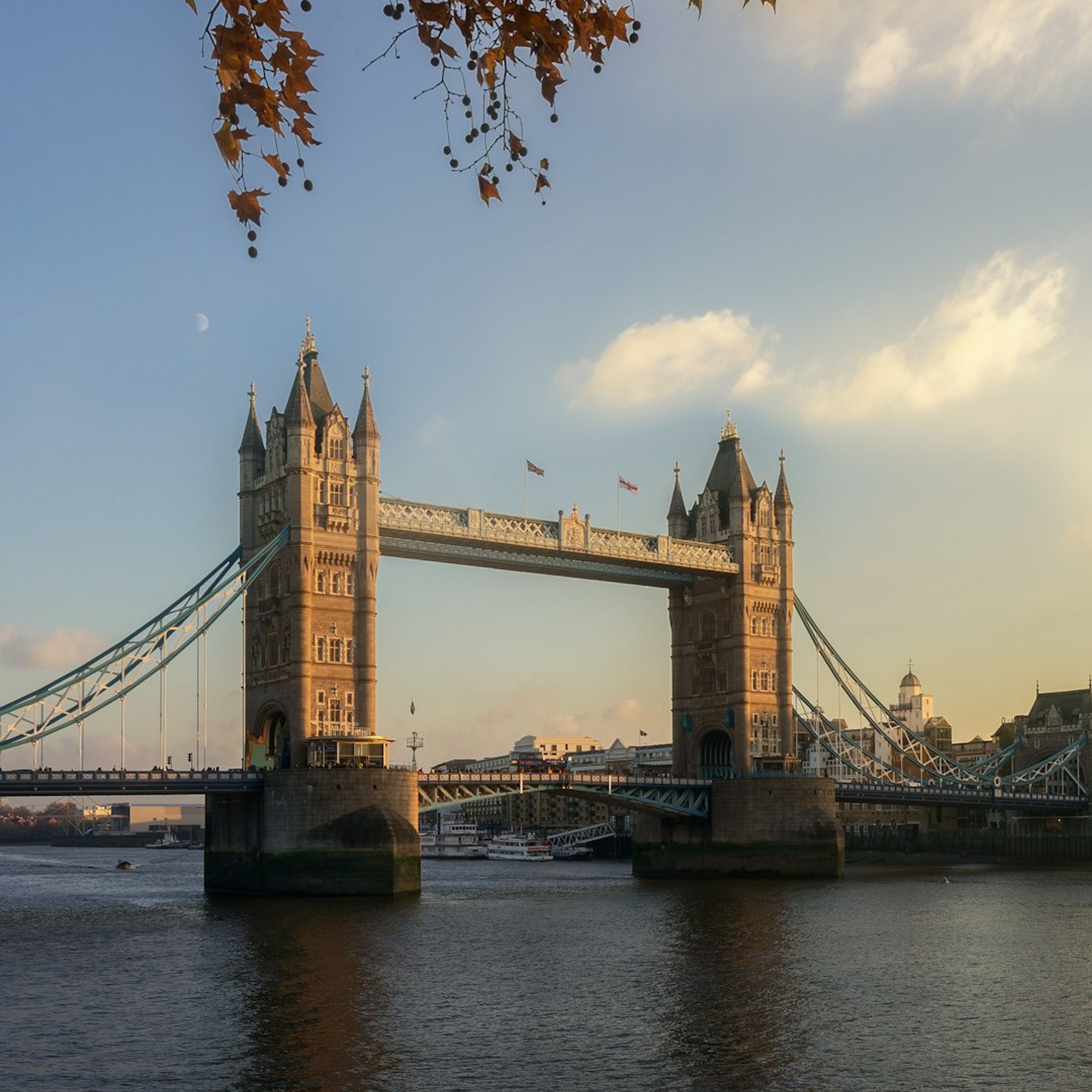
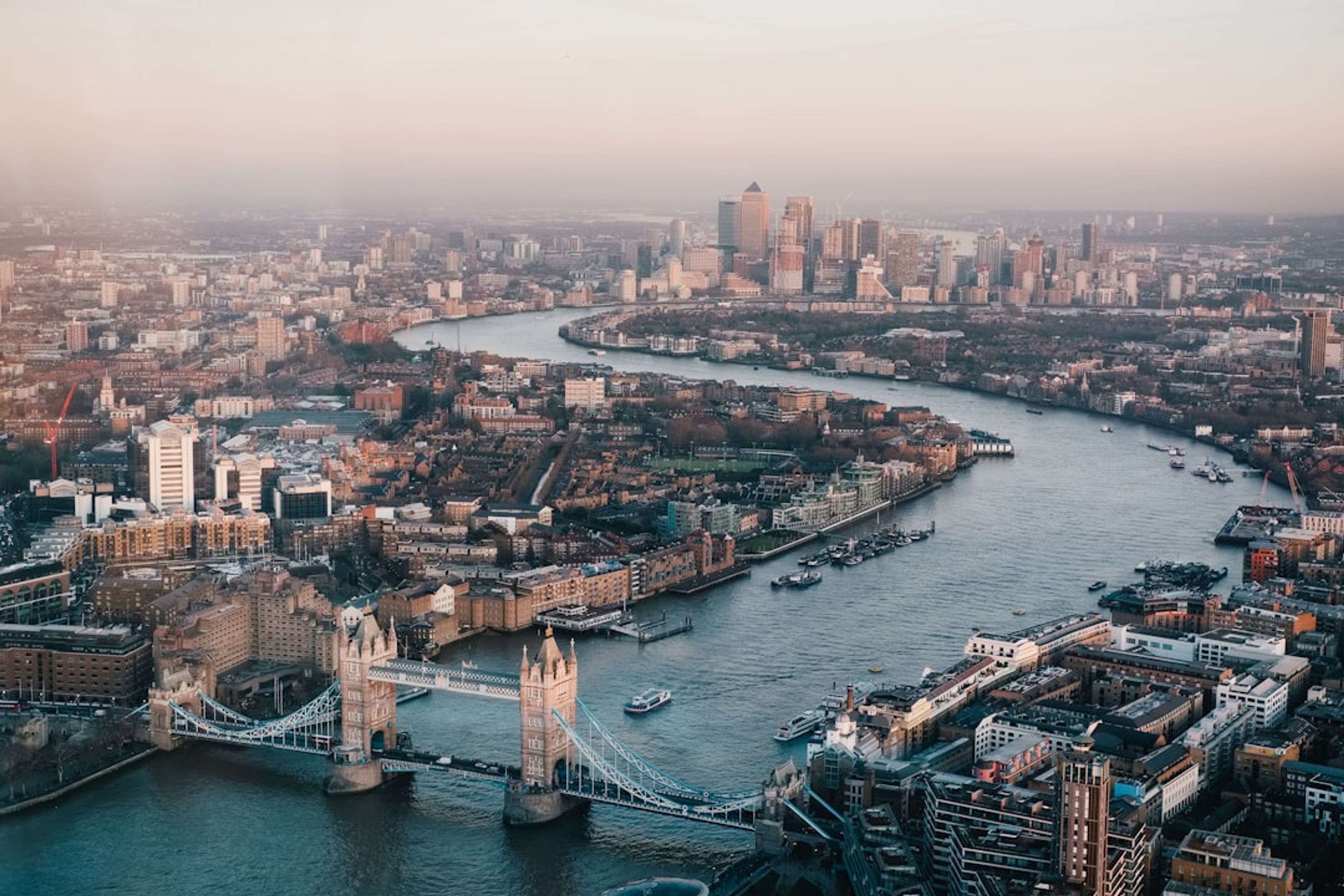
Tower Bridge is arguably London's most recognisable bridge and one of its finest examples of Victorian engineering. Built between 1886 and 1894, its twin Gothic towers and blue suspension cables frame the river Thames beautifully. The Tower Bridge Exhibition (around £12.50/~€15) lets you walk across the high-level glass walkways 42 metres above the river, with transparent floor panels that give a vertigo-inducing view of traffic and boats passing below.
The Engine Rooms in the south tower house the original Victorian steam engines that once raised the bridge's bascule sections. The bridge still opens around 800 times per year for tall ships and vessels - check the lift schedule on the official website to time your visit for this impressive spectacle. Walking across the bridge itself is free and offers excellent views of the Tower of London, the Shard, and HMS Belfast moored below.
7London Eye - Panoramic Views Over the Entire City

The London Eye was originally built as a temporary structure for the millennium celebrations, but it proved so popular that it became a permanent fixture on the South Bank. Standing 135 metres tall, each revolution takes approximately 30 minutes and offers unobstructed 360-degree views stretching up to 40 kilometres on a clear day - from Windsor Castle in the west to the Queen Elizabeth Olympic Park in the east.
Each of the 32 capsules holds up to 25 people and is spacious enough to walk around in comfortably, with information screens identifying landmarks below. Evening rides are particularly atmospheric as London's skyline lights up. Standard tickets cost around £36/~€42, though prices vary seasonally. The Eye is located right next to the Southbank Centre, making it easy to combine with a riverside walk and street food markets.
8Borough Market - London's Oldest and Finest Food Market

Trading in some form since the 13th century, Borough Market is London's most celebrated food market and a paradise for anyone who takes eating seriously. Located underneath the Victorian railway arches near London Bridge, the market hosts over 100 stalls selling everything from fresh truffles and raw-milk cheeses to Argentinian empanadas, Ethiopian injera, and the most indulgent grilled cheese sandwiches you will find anywhere in the city.
The full market operates Wednesday to Saturday, with the busiest days being Friday and Saturday. Arrive before 10:00 on a weekday for a more relaxed browsing experience. Standout stalls include Kappacasein for their legendary raclette, Bread Ahead for filled doughnuts, and Neal's Yard Dairy for Britain's finest artisan cheeses. Many of the traders are producers selling directly, and free samples are generously offered throughout.
9St Paul's Cathedral - Wren's Masterpiece on Ludgate Hill

Sir Christopher Wren's masterpiece has dominated the London skyline since its completion in 1710, and its enormous dome remains one of the most recognisable silhouettes in the city. The interior is breathtaking - climb 259 steps to the Whispering Gallery, where a whisper against one wall can be heard clearly on the opposite side 34 metres away, then continue up 119 more steps to the Stone Gallery for panoramic outdoor views.
The crypt houses the tombs of the Duke of Wellington and Admiral Lord Nelson, along with Wren himself beneath the modest epitaph 'Reader, if you seek his monument, look around you'. The cathedral played a central role in national events from the funeral of Winston Churchill to the wedding of Charles and Diana. Adult admission is around £23/~€27 and includes a multimedia guide.
10Trafalgar Square & National Gallery - Art and Icons in London's Centre

Trafalgar Square is the symbolic heart of London, dominated by Nelson's Column rising 52 metres and guarded by four bronze Landseer lions. The square has been a site of celebration, protest, and public gathering since the 1840s, and the Fourth Plinth programme showcases rotating contemporary artworks that always spark conversation. The square is the natural crossroads of the city, within easy walking distance of Westminster, Covent Garden, and the West End.
On the north side, the National Gallery houses over 2,300 paintings spanning the 13th to 20th centuries, including works by Van Gogh, Turner, Monet, da Vinci, and Rembrandt - all completely free to visit. The Sainsbury Wing's collection of early Renaissance paintings is world-class, and the gallery's central location makes it an ideal starting point or midday break during any central London itinerary. Special exhibitions require a separate ticket (typically £16-24/~€19-28).
11Hyde Park & Kensington Gardens - 350 Acres of Green in Central London

Spanning 350 acres across two connected royal parks, Hyde Park and Kensington Gardens form the green lung of central London. Hyde Park features the Serpentine lake with rowing boats for hire in summer (£14/hour), Speakers' Corner where anyone can address a crowd on Sunday mornings, and the Diana Memorial Fountain - a circular stone channel designed as a living memorial to Princess Diana.
Kensington Gardens, on the western side, is home to Kensington Palace (open to visitors for around £23/~€27), the Serpentine Gallery showing free contemporary art exhibitions, and the ornate Albert Memorial. The entire area is perfect for a long walk, a picnic, or simply sitting by the water watching Londoners at play. On sunny days, the parks fill with joggers, sunbathers, and impromptu cricket matches.
12Camden Market - Counterculture, Street Food and Vintage Finds

Camden Market is actually a sprawling collection of several interconnected markets stretching along Camden High Street and Chalk Farm Road, drawing over 100,000 visitors on a busy weekend. Stables Market (the largest section, built in former horse stables and tunnels) is the place for vintage clothing, handmade jewellery, and alternative fashion, while the food halls serve everything from Japanese okonomiyaki to Venezuelan arepas and craft beer.
Camden has been a hub of London's alternative and music scene since the punk era of the 1970s, and the neighbourhood retains that rebellious energy in its street art, live music venues, and eclectic characters. The canalside setting along Regent's Canal adds atmosphere - you can walk the towpath to Regent's Park or Little Venice. Markets are open daily, but weekends are the liveliest.
13Tate Modern - World-Class Contemporary Art in a Power Station

Housed inside the colossal former Bankside Power Station, Tate Modern is one of the most visited contemporary art galleries in the world - and it is entirely free. The permanent collection includes major works by Picasso, Warhol, Rothko, Dali, and Ai Weiwei, spread across the building's dramatic industrial spaces. The Turbine Hall, a vast ground-floor space, hosts large-scale commissioned installations that regularly become cultural events in their own right.
The Switch House extension offers a free viewing platform on the 10th floor with sweeping views across the Thames to St Paul's Cathedral and the City skyline. Tate Modern sits at the southern end of the Millennium Bridge, making it natural to combine with a visit to St Paul's directly across the river. The gallery's restaurant on the 9th floor is excellent for a meal with a view, though booking ahead is wise.
14Greenwich - Maritime History and the Prime Meridian

Greenwich is a UNESCO World Heritage Site that feels like stepping into a quieter, more elegant version of London. The Royal Observatory sits atop the hill in Greenwich Park, where you can stand on the Prime Meridian line and literally straddle the Eastern and Western hemispheres. The observatory's Astronomy Centre is free to visit, though the Meridian Line courtyard and Flamsteed House require a ticket (around £18/~€21).
The National Maritime Museum (free) tells the story of Britain's seafaring history with engaging interactive displays, while the Cutty Sark (£18/~€21) sits dramatically in dry dock by the river. Greenwich Market, open daily with the best selection on weekends, is excellent for street food, vintage finds, and artisan crafts. The DLR ride from Bank station takes around 20 minutes and passes through Canary Wharf's glass towers.
15Covent Garden - Street Performers, Shopping and Theatre

Covent Garden's covered market piazza has been a gathering place since the 17th century, and today it buzzes with licensed street performers, independent boutiques, and restaurants. The main Market Building houses a mix of shops and the lower-level Apple Market with handmade crafts and jewellery. The Royal Opera House, facing the piazza, offers backstage tours and a free lunchtime concert series most Mondays during the season.
The area is the heart of London's Theatreland - the half-price TKTS booth in Leicester Square sells same-day discounted tickets for West End shows. Neal's Yard, a tiny hidden courtyard just north of the piazza reached through a narrow alley, is one of London's most photogenic spots with its multicoloured facades and independent cafes. The London Transport Museum (£21/~€25) on the piazza's east side is surprisingly engaging and a great rainy-day option.
Take this guide with you
Get every place in this guide, with addresses and map links, in your inbox — easy to open on your phone during the trip.
One email to the address on your account. No newsletter.

CEO and co-founder
Tomas is the co-founder and director of trip1, an European company specializing in reservation services. He launched the company in 2025 with a focus on building scalable, efficient operations.
London Travel Guide FAQ
The Tower of London and its Crown Jewels, the British Museum, Westminster Abbey with Big Ben and the Houses of Parliament, and a walk across Tower Bridge. Add St Paul's Cathedral, the London Eye and Borough Market for lunch. Four of the best are free: the British Museum, the National Gallery, Tate Modern and the National Maritime Museum in Greenwich.
Many of the best sights. The British Museum, the National Gallery, Tate Modern with its 10th-floor viewing platform, and the National Maritime Museum are all free. So are Hyde Park and Kensington Gardens, walking across Tower Bridge, the Changing of the Guard at Buckingham Palace and the street performers of Covent Garden. The British Museum advises booking a free timed slot.
No. Three to four days is a comfortable pace for the main sights. The Tower of London alone needs two to three hours, and the British Museum could fill a day. Four days lets you add Greenwich, about 20 minutes from Bank on the DLR, and slower walks such as the Regent's Canal towpath from Camden Lock to Little Venice.
Walk the Regent's Canal towpath from Camden Lock to Little Venice, about 45 minutes. Find Neal's Yard, a small courtyard of brightly painted cafés north of Covent Garden, and the quiet Italian Gardens in Kensington Gardens. On Sunday mornings anyone can speak at Speakers' Corner in Hyde Park, and on Mondays Covent Garden's Jubilee Market becomes an antiques market.
For the big paid sights, yes. Booking the Tower of London, Westminster Abbey, St Paul's Cathedral and the London Eye online usually saves money or queuing, and a timed fast-track ticket at the London Eye skips waits that can pass an hour in summer. Free museums need no ticket, but the British Museum advises booking a free timed slot, and special exhibitions charge separately.
Yes. On trip1 you can book hotels in London, from Westminster and the South Bank to Kensington and Covent Garden, and pay with over 120 cryptocurrencies, including Bitcoin, Ethereum and USDC, or by Visa and Mastercard.