Guides · Melbourne
10 Top Places to Visit in Melbourne
By Tomas Achmedovas · CEO and co-founder

CEO and co-founder
This guide ranks the 10 top places to visit in Melbourne - the art-lined laneways, the iconic stadium, the world's best coffee, and the spectacular Great Ocean Road that genuinely deserve a place on your itinerary whether you have 3 days or a full week in Australia's cultural capital. Each entry includes the exact address, nearest tram or train, and a practical Pro Tip drawn from how locals and seasoned visitors actually navigate Melbourne in 2026.
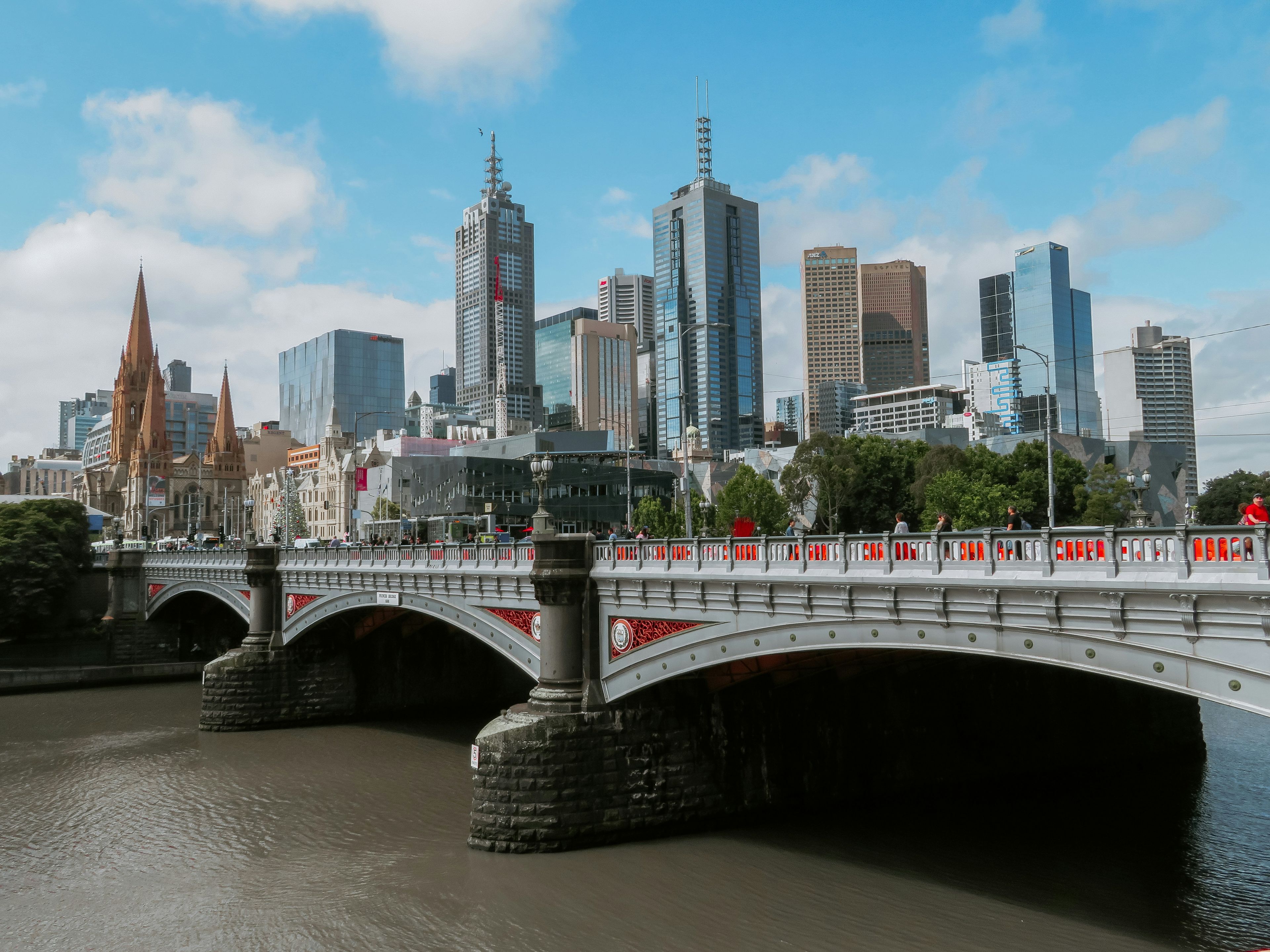
Melbourne is the cultural capital of Australia - 5 million people across a vast metropolitan area with a distinctive identity built around coffee, sport, art galleries, the densest tram network outside Europe, and a famous street-art scene in the CBD laneways. The list clusters efficiently: the CBD attractions (Federation Square, Queen Vic Market, Eureka), the southern parks (Royal Botanic Gardens, MCG), St Kilda Beach 6 km south, and the Great Ocean Road 100 km west.
Plan 4 days minimum. Melbourne weather is famously fickle (four seasons in one day is the local saying); pack layers year-round. The free City Circle Tram (route 35) loops the CBD; a Myki card covers the wider network. December-February is summer; June-August is winter (cold but rarely freezing). The autumn AFL Grand Final in late September is the country's biggest sporting event.
Check dates for Melbourne
See what is available on your dates.
1Federation Square - The Cultural Heart


Federation Square (locally Fed Square) is Melbourne's central public space - a 3.2-hectare cultural and entertainment precinct opened in 2002 on a former railway yard. The angular zinc-and-stone architecture by Lab Architecture Studio is divisive but defining; the square fronts Flinders Street Station (the city's most photographed building) directly across the road. Fed Square holds the Ian Potter Centre (the Australian art collection of the National Gallery of Victoria), the Australian Centre for the Moving Image (ACMI), and the Koorie Heritage Trust.
The square hosts 2000+ free public events annually - outdoor cinema, food festivals, live music, and the giant 7-metre screen showing major sporting events. The Ian Potter Centre is free entry and holds the country's most important Indigenous Australian and colonial-era art. ACMI is free and the world's best moving-image museum. Free to wander; museums free or 25-30 AUD for special exhibitions. Open 24/7.
2Royal Botanic Gardens Melbourne - The 38-Hectare Green Lung


The Royal Botanic Gardens Melbourne (founded 1846, formally Royal since 1958) cover 38 hectares immediately south of the Yarra River - one of the world's leading botanical research institutions and Melbourne's most beloved green space. The gardens host 8500+ plant species across 30+ themed plant collections including the Australian Native Garden, Herb Garden, Fern Gully, and the rare Cycad collection (60% of the world's remaining endangered cycads).
The Aboriginal Heritage Walk (45-minute guided tour led by Indigenous guides, 30 AUD, Wednesday-Sunday) explains traditional Yarra River plant uses by the Wurundjeri people. The Punt Boat Tour (winter only, 25 AUD) crosses the Ornamental Lake. The Tan running track around the perimeter (3.8 km) is the city's most popular jogging loop. Free admission; open daily 07:30-sunset. Allow 3-4 hours for a slow walk.
3Queen Victoria Market - The Heritage Market


Queen Victoria Market (Vic Market or Queen Vic) has operated continuously since 1878 - the largest open-air market in the Southern Hemisphere and a Melbourne institution covering 7 hectares at the northern edge of the CBD. Around 600 vendors sell fresh produce, meat, fish, deli items, and prepared foods in the open-air halls; another 300+ vendors sell clothing, jewellery, crafts, and souvenirs in the western section.
Standout vendors: American Doughnut Kitchen (the famous yellow van selling jam doughnuts since 1950, 5 AUD for 5), Andrew the Larder (small-batch Australian charcuterie), Wallaby Burger (kangaroo burger), and the basement Deli Hall (50+ European cheese vendors). The Night Market (Wednesday evenings November-March) is the standout summer event - 200+ food stalls plus live music. Free admission. Open Tuesday-Sunday daytime; closed Mondays and Wednesday afternoons.
Check dates for Melbourne
See what is available on your dates.
4Eureka Skydeck - Southern Hemisphere's Highest Viewing Platform

The Eureka Tower is a 297-metre residential skyscraper completed in 2006 - the tallest building in the Southern Hemisphere when built. The Skydeck observation level on the 88th floor at 285 metres offers panoramic views across Melbourne. The signature attraction is The Edge - a 3 metre by 3 metre glass cube that extends 3 metres out from the building's side, retracting frosted glass once visitors are inside to reveal a transparent floor 285 metres above ground.
Skydeck admission 28 AUD adult; The Edge add-on 16 AUD (separate, 5-minute experience). 30-second lift ride to the 88th floor. The deck is fully enclosed with floor-to-ceiling glass. Views span the entire CBD, the Yarra River, Port Phillip Bay, the Dandenong Ranges, and on clear days as far as the You Yang Ranges 100 km west. Open daily 12:00-22:00. Allow 90 minutes including the Edge experience.
5Melbourne Laneways - The Street Art and Cafe Network

Melbourne's CBD laneways are the city's most distinctive feature - a network of approximately 200 narrow pedestrian alleys cutting through the central grid, packed with cafes, bars, restaurants, and famous street art. The most-photographed are Hosier Lane (the city's most famous street art alley - constantly changing graffiti), Degraves Street (1900s cafe culture), AC/DC Lane (named for the band, with rock memorabilia), and Centre Place (covered cafe alley).
The laneway cafe culture is the foundation of Melbourne's coffee obsession - the city has more cafes per capita than any other city in the world. Standout cafes: Patricia Coffee Brewers (no seats, just standing room - the local minimalist coffee benchmark), Brother Baba Budan (the original Melbourne speciality coffee, since 2007), and Higher Ground (in a converted power station). Free street art walks daily from Federation Square at 11:00; private tours 50-80 AUD.
6St Kilda Beach - Melbourne's Iconic Bayside Suburb

St Kilda is Melbourne's most famous beachside suburb - 6 km south of the CBD on Port Phillip Bay, famous for the wide sandy beach, Acland Street cake shops, Luna Park amusement park (operating since 1912 with the original Scenic Railway roller coaster), and the small colony of fairy penguins that nest under the breakwater at the end of St Kilda Pier (the best free wildlife experience in Melbourne).
Standout attractions: walk the 700-metre St Kilda Pier to see the wild penguins emerge from the bay at sunset (free, year-round, 19:00-21:00 best), Acland Street cake shop strip (Monarch Cakes the original, since 1934), Luna Park admission free with rides 14 AUD each, and the St Kilda Sea Baths historic 1860s pool complex. Beach is public and free. Catch tram 96 from Spencer Street (25-min ride).
7Great Ocean Road - The Iconic Coastal Day Trip

The Great Ocean Road is a 243 km coastal road between Torquay and Allansford in southern Victoria - built 1919-1932 by returned WWI servicemen as a memorial to fallen comrades, making it the world's largest war memorial. The road snakes between cliffs and the wild Southern Ocean with stops at Bells Beach (the international surfing competition site since 1962), the famous Twelve Apostles limestone sea stacks, Loch Ard Gorge, and Otway Ranges rainforest.
Day tours from Melbourne 160-220 AUD include 11-hour round-trip, transport, and stops at all major sites. Self-drive the route in 2 days is the better experience - overnight in Apollo Bay or Port Campbell. The Twelve Apostles viewing platform is free; helicopter rides from there 145 AUD per person for a 15-minute flight. November-April for the best weather; the Southern Ocean is rough year-round.
8Melbourne Cricket Ground (MCG) - The 100000-Seat Sports Cathedral

The Melbourne Cricket Ground (MCG, locally The G) is Australia's largest sports stadium - 100024 seats, the 10th-largest stadium in the world. Founded in 1853, the MCG is the spiritual home of cricket (the first international cricket Test was played here in 1877) and Australian rules football (AFL Grand Final every September). The ground has hosted the 1956 Olympic Games and 2 Commonwealth Games.
MCG tours 32 AUD adult include the field, the players' rooms, the media centre, and the on-site National Sports Museum (Australia's main sporting heritage museum). Tours run hourly 10:00-15:00 on non-match days. Attending an AFL game (typically 25-50 AUD ticket) is the must-do Melbourne sporting experience - the atmosphere with 70000+ Australians chanting is unlike anything else. Located 1.5 km east of Federation Square.
9Brighton Bathing Boxes - The Iconic Painted Beach Huts

The Brighton Bathing Boxes are 82 colourful wooden beach huts lined along Dendy Street Beach in Brighton, 12 km south-east of the CBD - among Melbourne's most photographed sights. The boxes date from the 1860s when Victorian-era beach modesty laws required swimmers to change in private structures. Today each box is privately owned (worth 250000-450000 AUD each despite having no electricity, plumbing, or year-round residency rights) and decorated by its owner in distinct colour schemes.
The standard photo angle is from the southern end of Dendy Street Beach looking north - the boxes line up against the Melbourne CBD skyline in the distance. Free to view from the beach. Best in early morning before the sun is too high; the rainbow colours pop in golden hour at sunrise and sunset. Easily combined with St Kilda on the southward train line. Brighton itself is an affluent residential suburb with little else to see.
10Phillip Island Penguin Parade - The Day Trip

Phillip Island is a 100-square-km island 140 km south-east of Melbourne - famous for the nightly Penguin Parade at Summerland Beach where the world's smallest penguin species (little penguins or fairy penguins, 33 cm tall, the only blue-coloured penguin species) waddle from the ocean to their burrows at sunset. The colony numbers 32000 birds; nightly arrival groups typically range 300-1500 penguins depending on season. The parade has run as a public attraction since the 1920s.
General Viewing 32 AUD; Plus Viewing (closer position, fewer crowds) 60 AUD; Penguins Plus (boardwalk underneath the colony) 80 AUD. The Penguin Parade Visitor Centre opened in 2019 with elevated boardwalks reducing impact on the colony. The parade starts at sunset (around 17:30 in winter, 20:30 in summer). Day tours from Melbourne 160-220 AUD include transport. Self-drive 90 minutes; arrive 90 minutes before sunset. Open year-round.
Take this guide with you
Get every place in this guide, with addresses and map links, in your inbox — easy to open on your phone during the trip.
One email to the address on your account. No newsletter.

CEO and co-founder
Tomas is the co-founder and director of trip1, an European company specializing in reservation services. He launched the company in 2025 with a focus on building scalable, efficient operations.
10 Top Places to Visit in Melbourne, Australia - FAQ
Start with the CBD laneways, Federation Square and Queen Victoria Market, then cross the Yarra to the Royal Botanic Gardens. Add the Melbourne Cricket Ground, ideally for an AFL game, and St Kilda, 6 km south, where little penguins come ashore under the pier at dusk. Beyond the city, the Great Ocean Road and the Phillip Island Penguin Parade are the big day trips.
Four days is a good minimum. Give one day to the CBD: Federation Square, Queen Victoria Market, the laneways and the Skydeck at sunset. Spend a second on the Royal Botanic Gardens and an MCG tour, a third on St Kilda and the Brighton Bathing Boxes, and a fourth on the Great Ocean Road, which really deserves two days.
Street art and coffee. Around 200 narrow lanes cut through the city grid. Hosier Lane is the famous street art alley, where the walls change constantly, while Degraves Street and Centre Place are packed with cafes. AC/DC Lane is named after the band. Go to Hosier Lane before 10:00 to see the art before the tour groups arrive.
Yes, ideally over two days. The 243 km road from Torquay to Allansford was built between 1919 and 1932 by returned First World War servicemen as a memorial. It passes Bells Beach, the Otway rainforest, Loch Ard Gorge and the Twelve Apostles. Day tours take about 11 hours, so self-drivers overnight in Apollo Bay or Port Campbell and reach the Apostles at sunset.
Yes, especially just before sunset. The deck, now called Melbourne Skydeck, sits on the 88th floor of Eureka Tower, 285 metres up, with views over the CBD, the Yarra and Port Phillip Bay. The Edge, a glass cube that slides 3 metres out from the building, costs extra. Prices change by date, and booking online saves up to 15%.
December to February for summer, when the Australian Open fills Melbourne Park from 11 to 31 January 2027 and the Queen Victoria Market runs its Wednesday night market. June to August is cold but rarely freezing. The weather is famously changeable, often four seasons in one day, so pack layers whenever you go, and book early for Open dates.