Guides · Salzburg
5 Best Hikes Near Salzburg

CEO and co-founder
The best hikes near Salzburg are all reachable on a bus, a trolleybus or your own two feet. No rental car, no parking charges, no mountain toll road. This guide covers five day hikes ordered by how far you have to travel to reach the trailhead, opening with a climb that starts at a gate inside the old town and finishing 81 bus-minutes away at Konigssee, across the German border.
Every entry gives the line number, the stop it departs from, the journey time, the frequency and what it costs, because on a car-free trip the timetable shapes the day more than the trail does. Two of the five sit in Germany, in the Berchtesgadener Land, which changes how you buy tickets. That is flagged up front here rather than left for you to work out at the machine.
Distances run from a 1 km summit loop to a 5.9 km circuit, and none of the five needs technical skill, a guide or anything beyond decent shoes. A workable routing: pair Kapuzinerberg with a Gaisberg afternoon on a weekend when bus 151 runs every 45 minutes, give the Untersberg its own morning, and keep the two German hikes for one long day on bus 840.
Do the Salzburg Card maths before you buy. A 2026 summer card is EUR 38 for 24 hours, EUR 45 for 48 and EUR 49 for 72, and it covers bus 151 to the Gaisberg plus the Untersbergbahn cable car both ways, which alone is a EUR 34 adult return. Kapuzinerberg is free either way. If your plan is entries 1 to 3, the card pays for itself on the Untersberg ride. It does not cover bus 840 into Germany, the Almbachklamm entry fee or the Konigssee boats, so if you are doing entries 4 and 5, skip the card and pay as you go. Buy from the tourist board at salzburg.info rather than a reseller, since resellers quote noticeably higher figures for the same card. The Gaisberg and the Untersberg both sit high enough to be in cloud while the Altstadt is clear, so check Salzburg weather before you spend the card on a cable car ride you will not see anything from. Walkers doing a wider Alpine trip often pair this with Innsbruck, two hours west by rail and a different set of mountains entirely. The hotels in Salzburg near the Hauptbahnhof matter here, because bus 151, the Untersbergbahn service and the 840 into Germany all leave from within a few minutes of it.
1Kapuzinerberg - The Summit You Walk To From the Old Town
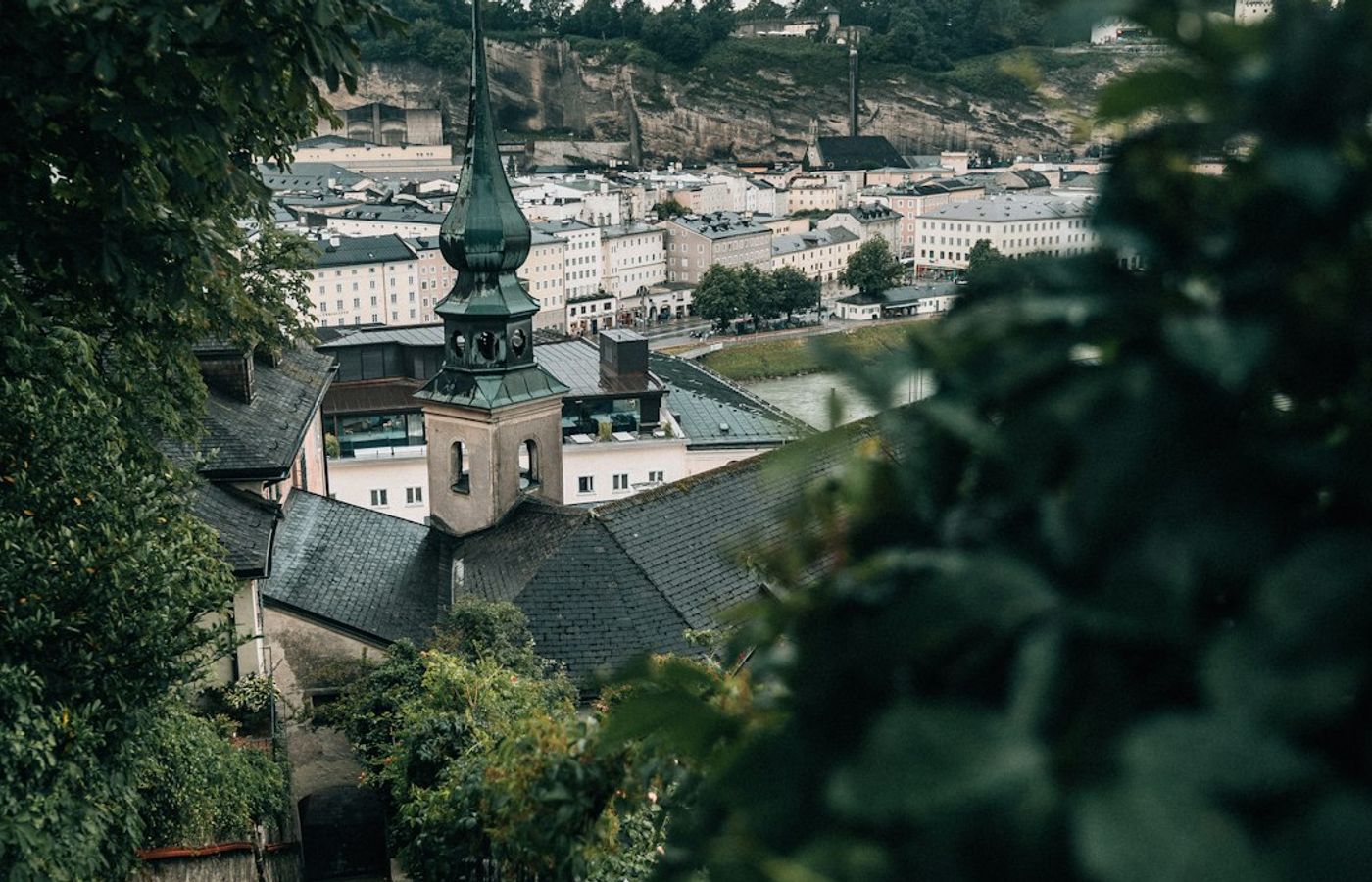

Kapuzinerberg rises 210 m above the right bank of the Salzach to a wooded summit at 640 m, and the walk starts at a gate in the old town rather than at a bus stop. Go through the Franziskuspforte, a nagelfluh archway dated 1617 on Linzer Gasse, climb the marble staircase behind it, and you are on the Stefan-Zweig-Weg. The full circuit, taken as far as the Franziskischlossl at the top, runs about 5 km with 403 m of cumulative ascent and takes roughly 2 hours 18 minutes at a walking pace.
Two other ways up exist if the Linzer Gasse gate is busy: the Imbergstiege from Steingasse and the Doblerweg from Furbergstrasse. The Franziskischlossl, the fortified building at the far end of the ridge, marks the turning point of the full loop; stopping at the first viewpoint cuts the walk well short of the 5 km. Nothing here costs anything - no entry ticket, no cable car, no bus fare - and because the whole route sits inside the city there is no timetable to work around. That makes it the obvious choice on a weekday, when bus 151 to the Gaisberg only runs every 90 minutes.
Pro Tip: Start from the Franziskuspforte before 09:00. The Stefan-Zweig-Weg is quiet at that hour, and the Linzer Gasse approach thickens up once the first coach groups reach the old town.
2Gaisberg - The Rundwanderweg 13a on Salzburg's Home Mountain
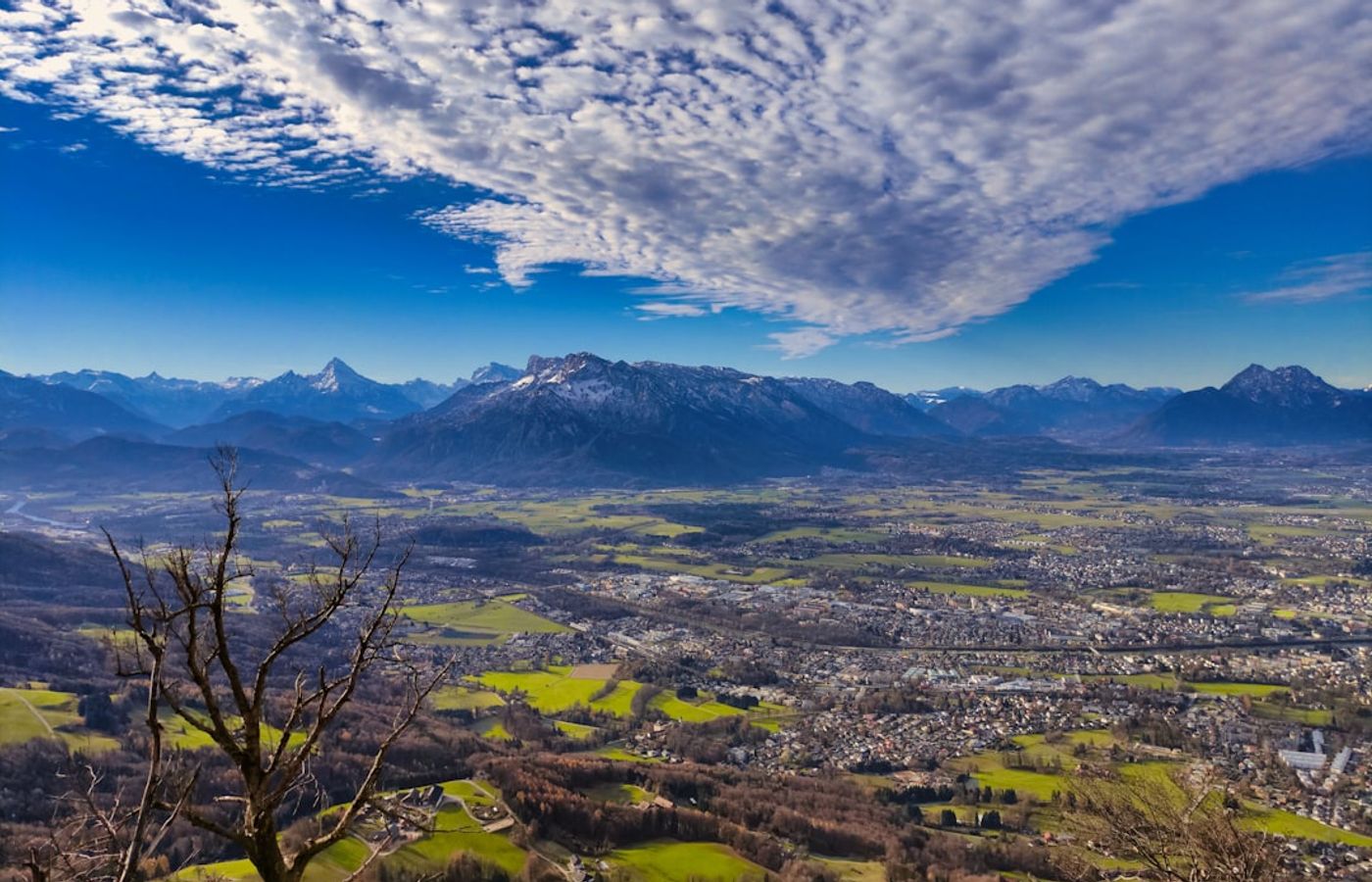

Bus 151 leaves from Mirabellplatz, Steig F, and not from the Hauptbahnhof. That single fact catches out more visitors than any other detail in this guide. Coming off a train, take trolleybus 1, 3, 5 or 6 two stops to Mirabellplatz first. The 151 has been battery-electric since 2025 and climbs via Obergnigl, Gersbergalm, Judenbergalm, Mitteregg and Zistelalm to Gaisbergspitze, about 27 minutes end to end and roughly 17 minutes if you join at Obergnigl.
Frequency is where the day plan lives or dies: every 45 minutes at weekends and on public holidays, but only every 90 minutes on weekdays, first departure 09:35 and last around 18:35. It runs year-round on a reduced winter timetable from roughly the end of October to the end of April. The Gaisberg-Rundwanderweg 13a starts from those same stops - 5.6 to 5.9 km, 213 m of ascent and 217 m of descent, high point 1,103 m and low point 978 m. Most walkers finish in about 1 hour 30 minutes, though the official Salzburg AG folder allows about 2 hours, and the surface is easy enough for a stroller.
Shorter options leave from the same stops: the Zistelrunde 13b covers 2.6 km in 30 minutes to an hour, and the Gaisberg-Gipfelrundweg 13c is about 1 km and 15 minutes straight from the summit stop. Bus 151 is free with the Salzburg Card. Without one, watch the zones - the EUR 5.20 Kernzone 24-hour ticket does not reach the summit, so budget for a two-zone SVV single at EUR 3.60 or a regional day ticket instead.
Pro Tip: Photograph the return departure board at Gaisbergspitze before you start walking. On a weekday the 90-minute gap turns a missed bus into an hour and a half on an exposed summit, or a long walk down to Obergnigl.

3Untersberg - The Cable Car From St. Leonhard
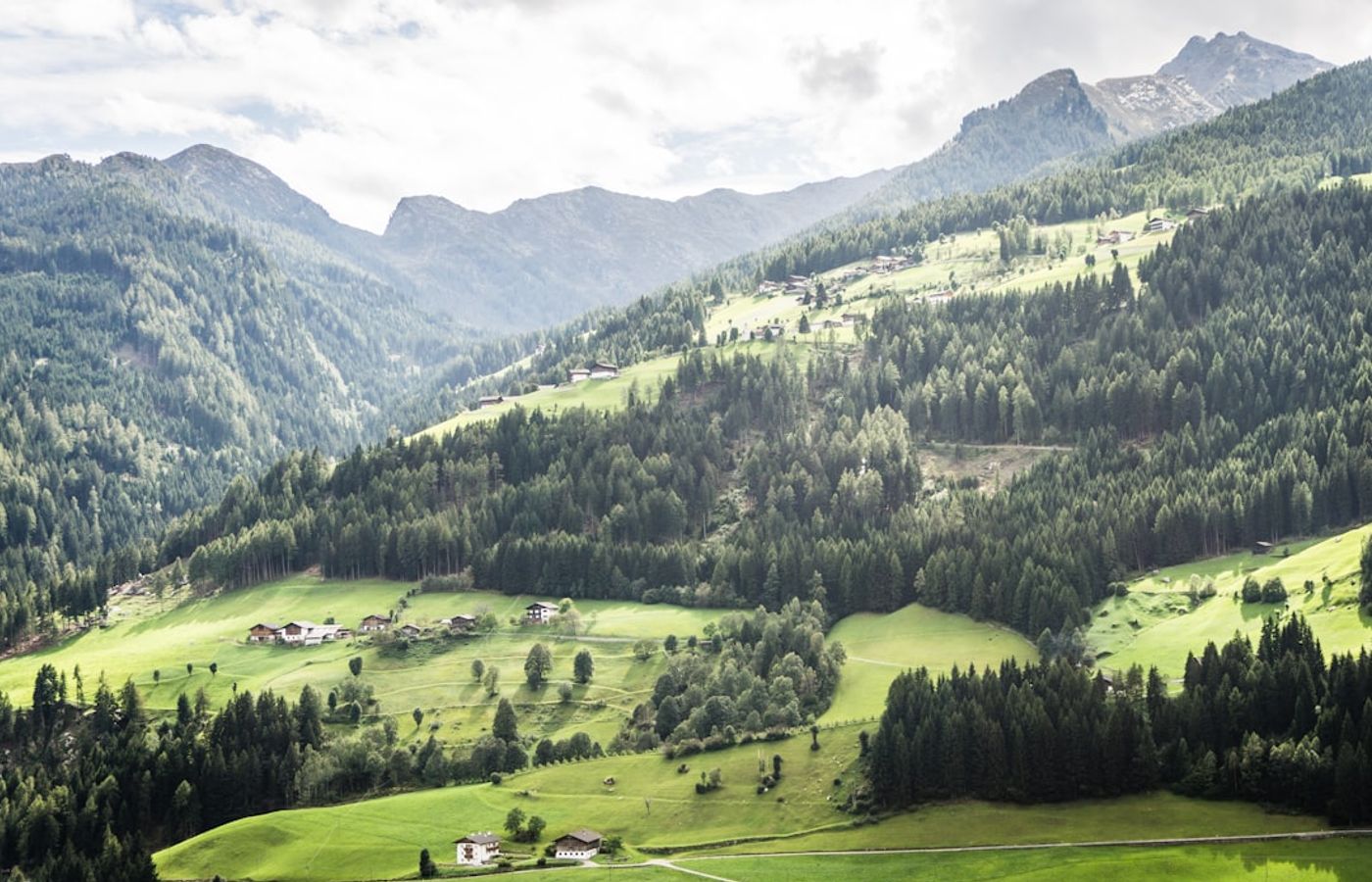
The Untersbergbahn cable car lifts you from St. Leonhard to just below the summit ridge of the Untersberg in a single span, which is why this entry belongs in a car-free guide despite being the biggest mountain in it. Bus 25 handles the approach: it leaves Salzburg Hauptbahnhof and runs via Mirabellplatz, Mozartsteg, Hellbrunn and Anif to Grodig Untersbergbahn in about 38 minutes. That timing comes from a 2019 timetable and the route itself is unchanged, so treat the minutes as indicative rather than exact. Departures are every 15 minutes Monday to Friday and every 20 minutes at weekends and on holidays.
A 2026 adult return costs EUR 34.00 and a one-way EUR 22.00, with EUR 24 for 14 to 18-year-olds, EUR 17 for children 6 to 14 and EUR 29 for over-65s. Cabins run every 30 minutes. Summer hours from 1 May to 30 September 2026 are 08:30 to 17:30, shortening to 08:30-17:00 from 1 October to 2 November. This is the mountain that justifies the Salzburg Card: the card covers both the ascent and the descent, the full EUR 34 in one visit, so long as it is still valid when you come back down. The cable car also closes for maintenance around November - the spring revision ran 2 to 29 March 2026, but the operator has not yet published the autumn dates, so check before you travel.
Pro Tip: Take the 08:30 cabin in summer and your EUR 38 Salzburg Card has already recovered EUR 34 before mid-morning. Plan your time on the plateau around the 30-minute cabin interval, because the last descent follows the posted closing time exactly.
4Almbachklamm - The Gorge Walk Across the German Border
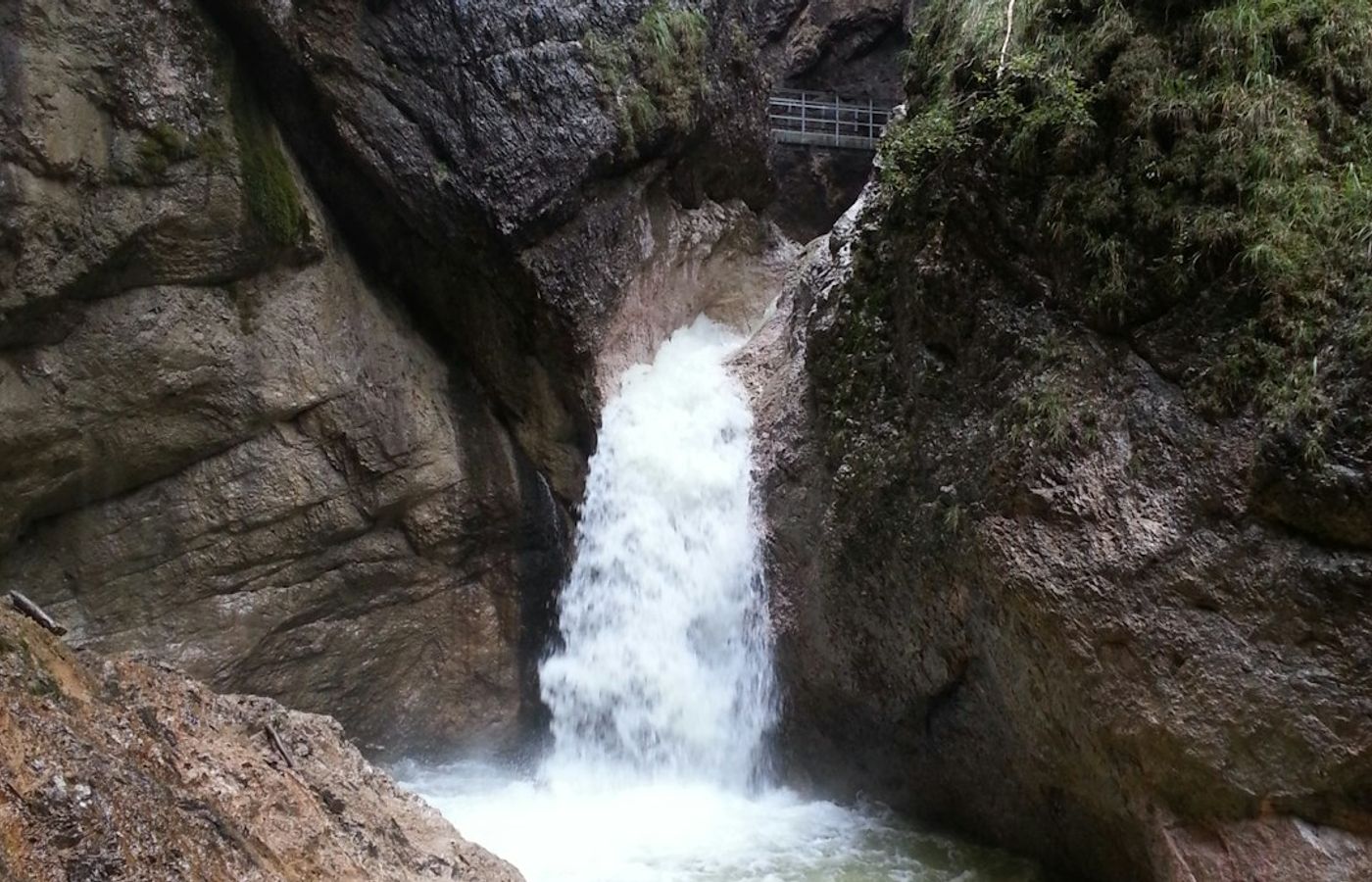
This one is in Germany, and it charges at the door. Bus 840, the Watzmann-Express operated by RVO and DB Regio Bus Bayern, leaves Salzburg Hauptbahnhof, calls at Mirabellplatz two minutes later and Justizgebaude at six, and reaches Marktschellenberg Kugelmuhle in about 49 minutes. Get off at Kugelmuhle or at Almbachklamm; the gorge entrance is a few minutes' walk from either. Line 836 covers similar ground, and both run year-round.
Departures are roughly hourly in summer - weekdays from 06:31 to 18:51, weekends and holidays from 09:51 to 17:51 - and the DB timetable shows intervals as tight as 30 minutes on some weekday stretches. The gorge itself opens daily 09:00 to 18:00, and the 2026 season runs until 9 November, closing on 10 November once snow and ice arrive. Entry is EUR 9.00 for adults, EUR 8.00 with a guest card, in groups of ten or more, or for under-18s, free for under-6s and EUR 22.00 for a family.
Two things to square away before you go. The ticket hut at the Kugelmuhle takes cash only, with no card facility on site. And the Salzburg Card does not cover bus 840 at all, because the route crosses into Germany; a German Deutschlandticket is valid only as far as Zollhauser, the last German stop, so you still need a separate Austrian ticket for the Salzburg leg. No official through fare for the cross-border 840 was published at the time of writing, so allow more than you expect.
Pro Tip: Put EUR 9 in notes and coins in your pocket before you leave Salzburg. The Kugelmuhle hut is cash only, and the nearest alternative is back down in Marktschellenberg village.
5Konigssee Malerwinkel Rundweg - The Lake Loop That Needs No Boat
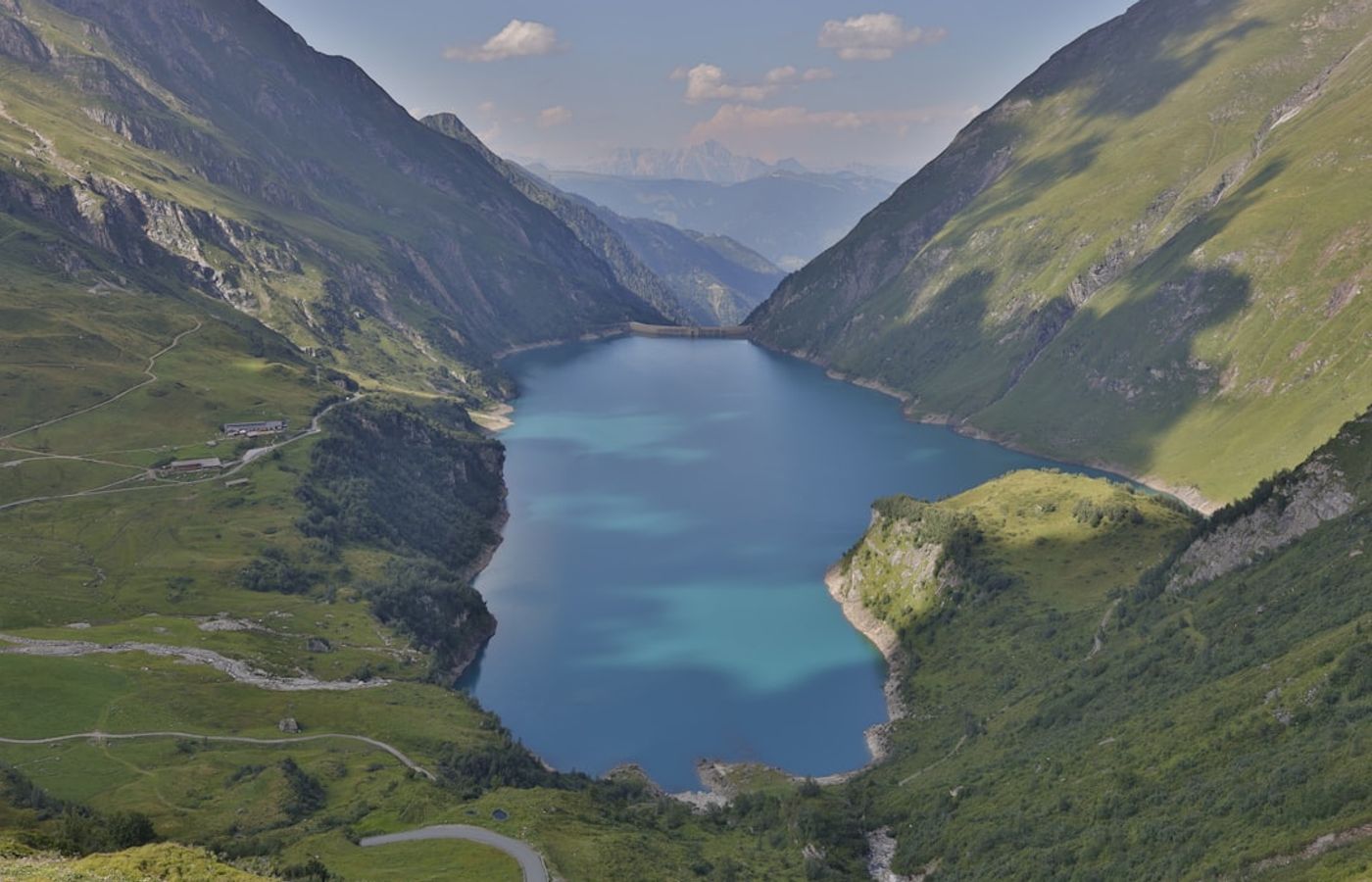
Almost everyone who reaches Konigssee joins the queue for an electric boat. The Malerwinkel Rundweg does not need one, which is precisely why it earns a place in a car-free, budget-minded guide. The loop covers 3.8 km with 170 m of ascent and takes about 1 hour 30 minutes from the Parkplatz Konigssee, tracing the northern shore to the viewpoint painters used for the classic look down the lake towards the Watzmann. Official sources do not grade the difficulty, but in practice it suits families walking at an unhurried pace.
Getting here is simpler than most itineraries suggest, because bus 840 runs all the way through from Salzburg Hauptbahnhof with no change: Mirabellplatz at 2 minutes, Justizgebaude at 6, Marktschellenberg Kugelmuhle at 49, the ZOB at Berchtesgaden Hauptbahnhof at 69, and Konigssee at 81. You do not need bus 841 or bus 842. Line 841 and the 843A and 843B ring routes are local Berchtesgaden alternatives, and the 842 runs to Obersalzberg and the Kehlstein instead. The summer 2026 Berchtesgaden bus timetable is valid from 24 May to 24 October.
If you do want a boat afterwards, a 2026 adult return to St. Bartholoma is EUR 23.40 and to Salet EUR 29.80, one way EUR 11.70 and EUR 14.90, with under-5s free, ages 6 to 17 at half price and families paying EUR 1 per additional child. The boat summer timetable runs 25 April to 11 October 2026. None of that is covered by the Salzburg Card, and neither is bus 840, whose cross-border fare is not published as one official figure.
Pro Tip: Walk the Malerwinkel loop first and decide about the boat at the end. Outside the 25 April to 11 October 2026 boat season the walk is the whole visit anyway, and it costs nothing.

CEO and co-founder
Tomas is the co-founder and director of trip1, an European company specializing in reservation services. He launched the company in 2025 with a focus on building scalable, efficient operations.
5 Best Hikes Near Salzburg - Day Hikes You Can Do Without a Car - FAQ
Yes, comfortably across three days. Kapuzinerberg and the Gaisberg-Rundwanderweg 13a pair into one day, the Untersberg fills a second morning, and Almbachklamm plus the Konigssee Malerwinkel Rundweg share a third on bus 840. Two days is possible but leaves no slack for the 90-minute weekday gap on bus 151.
Work outward from the city. Start with Kapuzinerberg because it needs no ticket at all, then take the Gaisberg on a weekend when bus 151 runs every 45 minutes rather than every 90. Slot the Untersberg in next, and save Almbachklamm and Konigssee for one long day in Germany on bus 840.
Only if you are doing the first three. The 2026 summer card costs EUR 38 for 24 hours and covers bus 151 to the Gaisberg plus the Untersbergbahn up and down, a EUR 34 fare on its own. It does not cover bus 840 into Germany, the Almbachklamm entry fee or the Konigssee boats, so a reader doing entries 4 and 5 should skip it.
Expect about EUR 43 in fixed costs per adult, plus bus fares. Kapuzinerberg costs nothing, the Untersbergbahn return is EUR 34.00 and Almbachklamm entry is EUR 9.00. On top of that come SVV tickets, where a two-zone single is EUR 3.60, and the cross-border bus 840 fare, which is not published as a single official figure, so carry extra.
Almbachklamm and the Konigssee Malerwinkel Rundweg, both in the Berchtesgadener Land. Bus 840 crosses the border with no formality, but the ticketing changes: the Salzburg Card stops being valid, and a German Deutschlandticket only covers the leg as far as Zollhauser, the last German stop, so you still need an Austrian ticket for the Salzburg section.
None of them. The Untersbergbahn sells tickets on the day at the St. Leonhard valley station, Almbachklamm sells at the Kugelmuhle hut, and Kapuzinerberg, the Gaisberg trails and the Malerwinkel loop are all free to walk. The one thing to sort in advance is cash, because the Almbachklamm hut takes nothing else.
Kapuzinerberg, on the numbers. Its full circuit carries 403 m of cumulative ascent over about 5 km, well above the Gaisberg-Rundwanderweg 13a at 213 m or the Malerwinkel Rundweg at 170 m. The Untersberg is the gentlest on the legs because the cable car does all the climbing for you.