Guides · Mykonos
12 Top Things to Do in Mykonos, Greece

CEO and co-founder
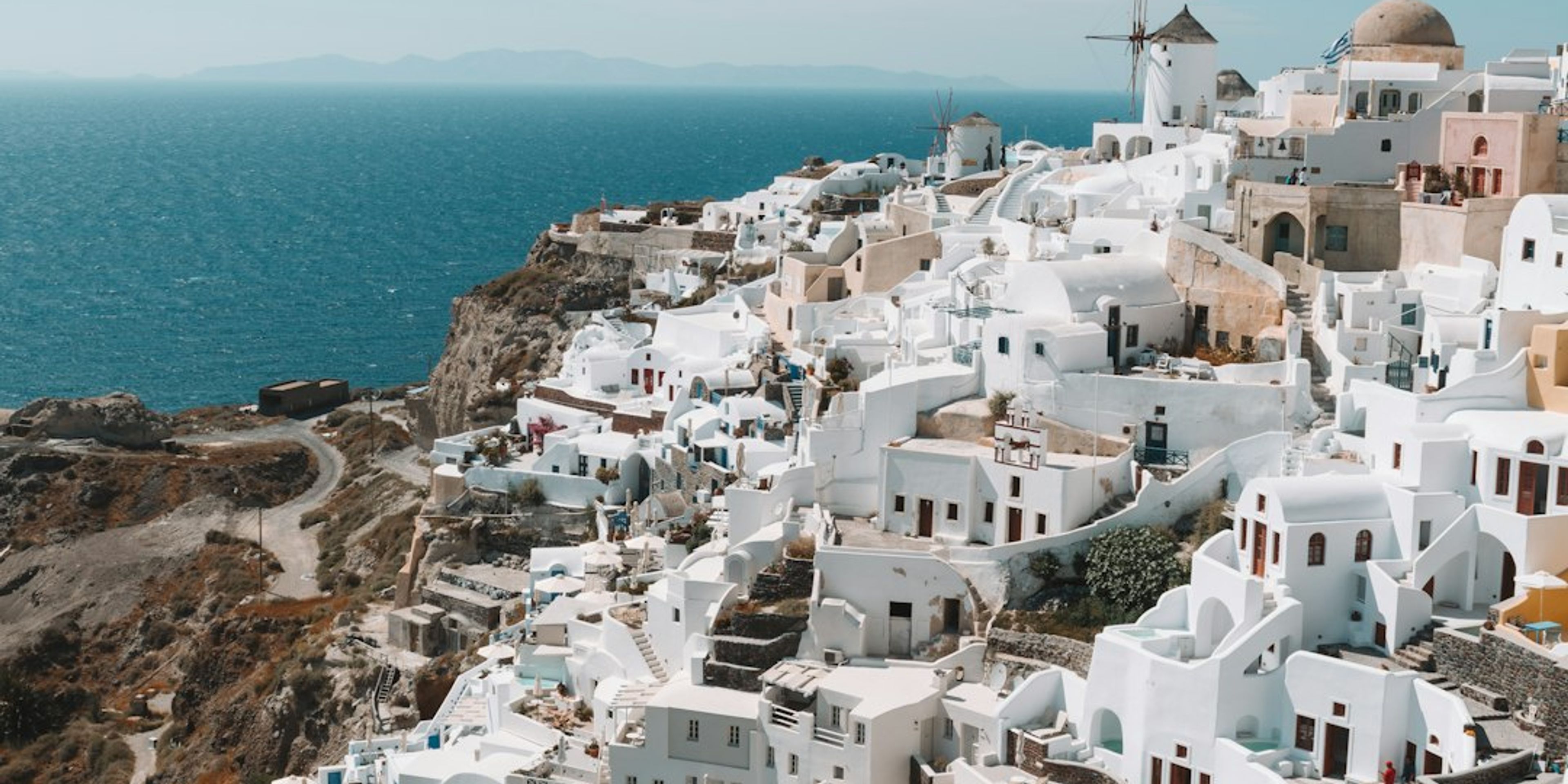
Mykonos has built its reputation on whitewashed alleys, blue-shuttered chapels and one of the most famous nightlife scenes in the Aegean, but the best things to do in Mykonos in 2026 stretch well beyond the Chora bars. The 105 sq km Cycladic island sits two hours by ferry from Athens, has its own international airport (JMK) and packs a UNESCO archaeological site, two dozen sandy beaches, a windmill row from the 16th century and a centuries-old monastery into a tight loop you can drive in 90 minutes.
Mykonos became a tourist hotspot in the 1960s after Jackie Onassis, Brigitte Bardot and Grace Kelly started turning up, and the island never lost the spotlight. In 2026 hotels run from family pensions in Ornos at 90 EUR per night to legendary suites at Cavo Tagoo and Belvedere reaching 1,500 EUR. Most travellers come for a 4-5 day mix of beach mornings, town evenings and one half-day on the sacred island of Delos.
Below are the 12 top things to do in Mykonos this year, ordered to follow a logical itinerary starting with the photogenic Chora and ending at the lighthouse beyond Houlakia Bay. Each entry has the full address, opening hours, 2026 price, distance from Mykonos Town and exact KTEL bus or boat directions, plus a Pro Tip from a recent visit.
1Mykonos Town (Chora) Wandering
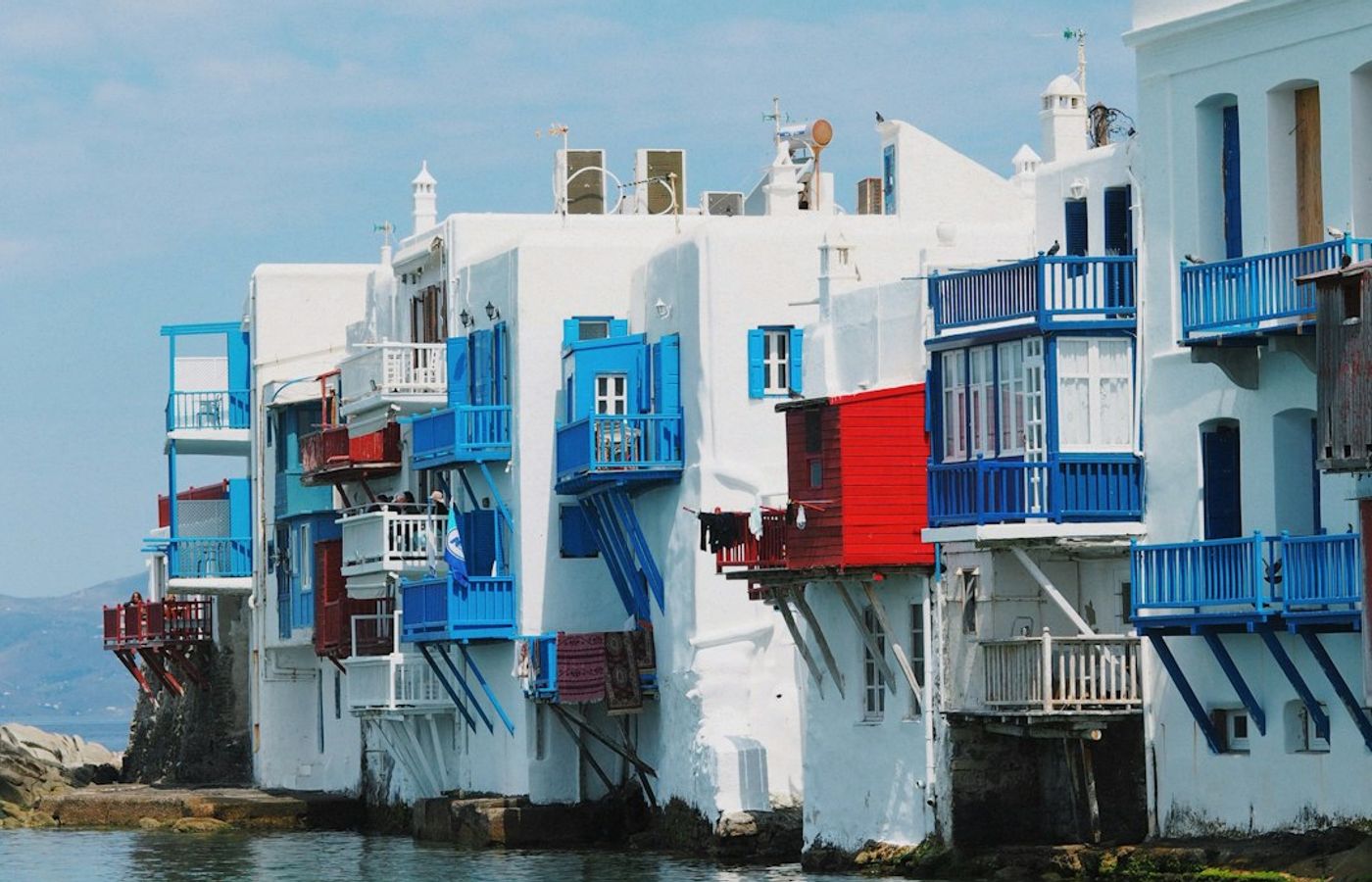

Mykonos Town, locally Chora, is the white-cube capital and the place every visitor returns to between beaches. The deliberately maze-like grid of Matogianni, Enoplon and Mitropoleos streets was designed in the 16th century to confuse pirates and now confuses tourists in the same way. Inside this 1 sq km labyrinth you find the Mykonos Folklore Museum (free, on Kastro hill), the elegant Metropolitan Cathedral, hundreds of small chapels (the island has 365 in total) and an evening crowd that grows from 19:00 onwards. Aim to walk the loop from Manto Mavrogenous square to Three Wells and back to the harbour. Many shops stay open until 23:00 in summer.
Pro Tip: Drop a pin at Manto Mavrogenous square before you start - the lanes are deliberately disorientating and Google Maps does not always work behind the thick whitewashed walls.
2Little Venice Waterfront
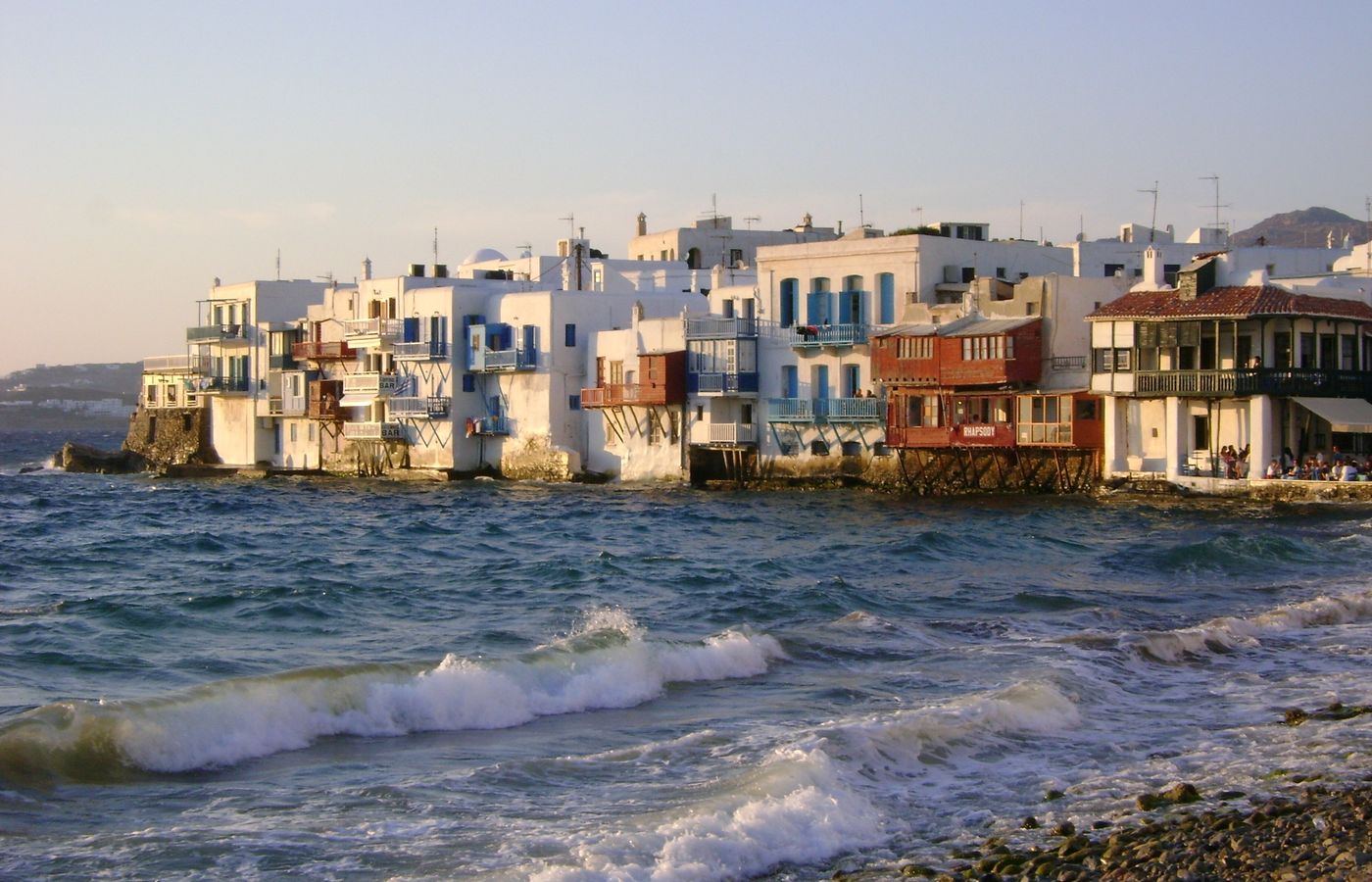

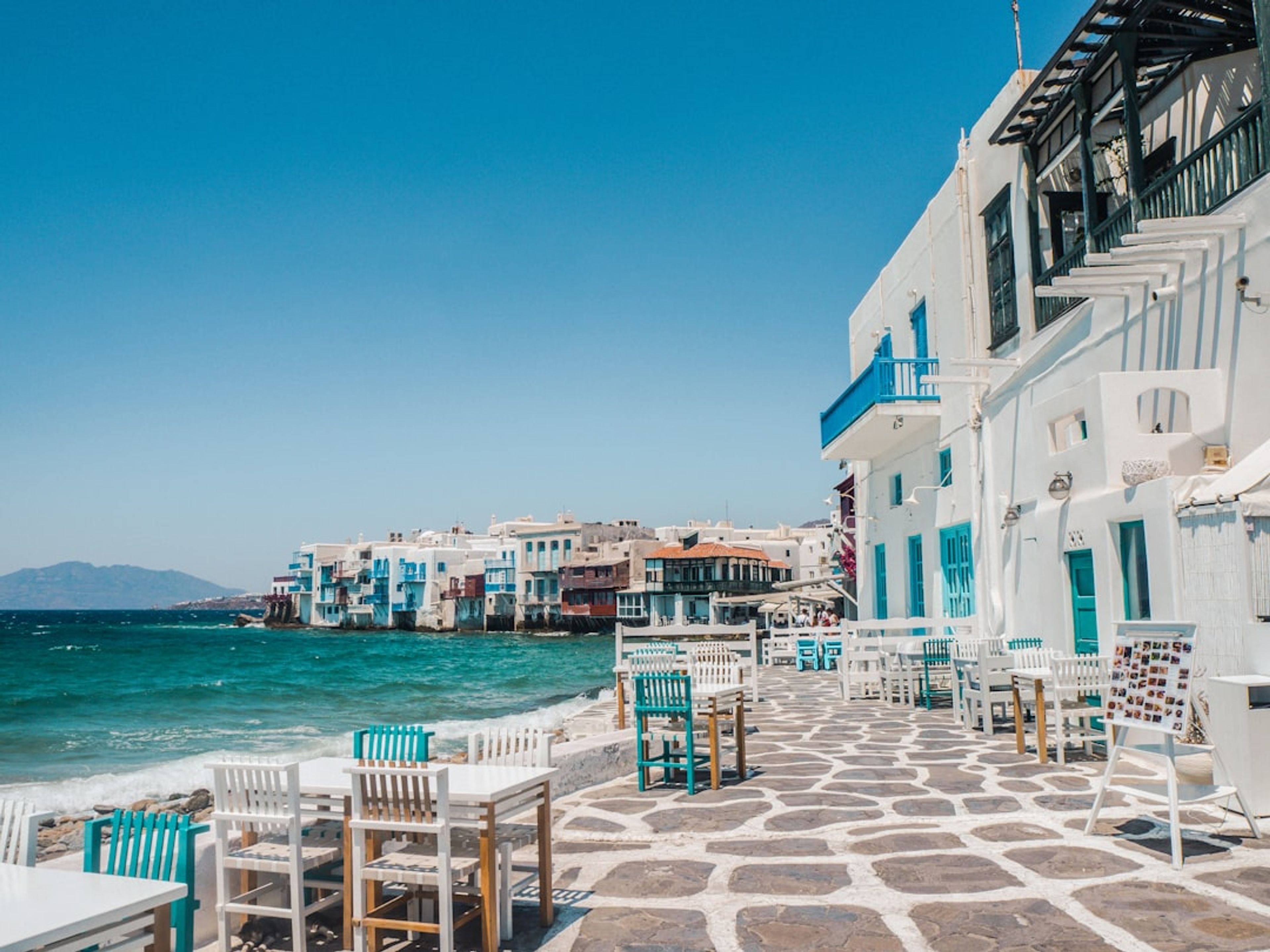
Little Venice (Alefkandra) is a 200 m line of 17th and 18th century merchants' houses built right at the water's edge in the south-west corner of Chora. The colourful balconies once let smugglers haul contraband straight up from boats - today the same balconies hold cocktail tables. The waterfront has the best sunset view on the island, looking towards Delos and Rinia. Caprice Bar, Galleraki and Scarpa are the famous spots; expect 18-25 EUR for a cocktail in 2026 and arrive by 19:30 to grab a table on the waterline. Below the bars, an unofficial path along the rocks lets you sit free with your feet in the sea.
Pro Tip: Book a table at 180 Sunset Bar above Little Venice for the same view at half the noise - reservations open 30 days ahead.

3Mykonos Windmills (Kato Mili)
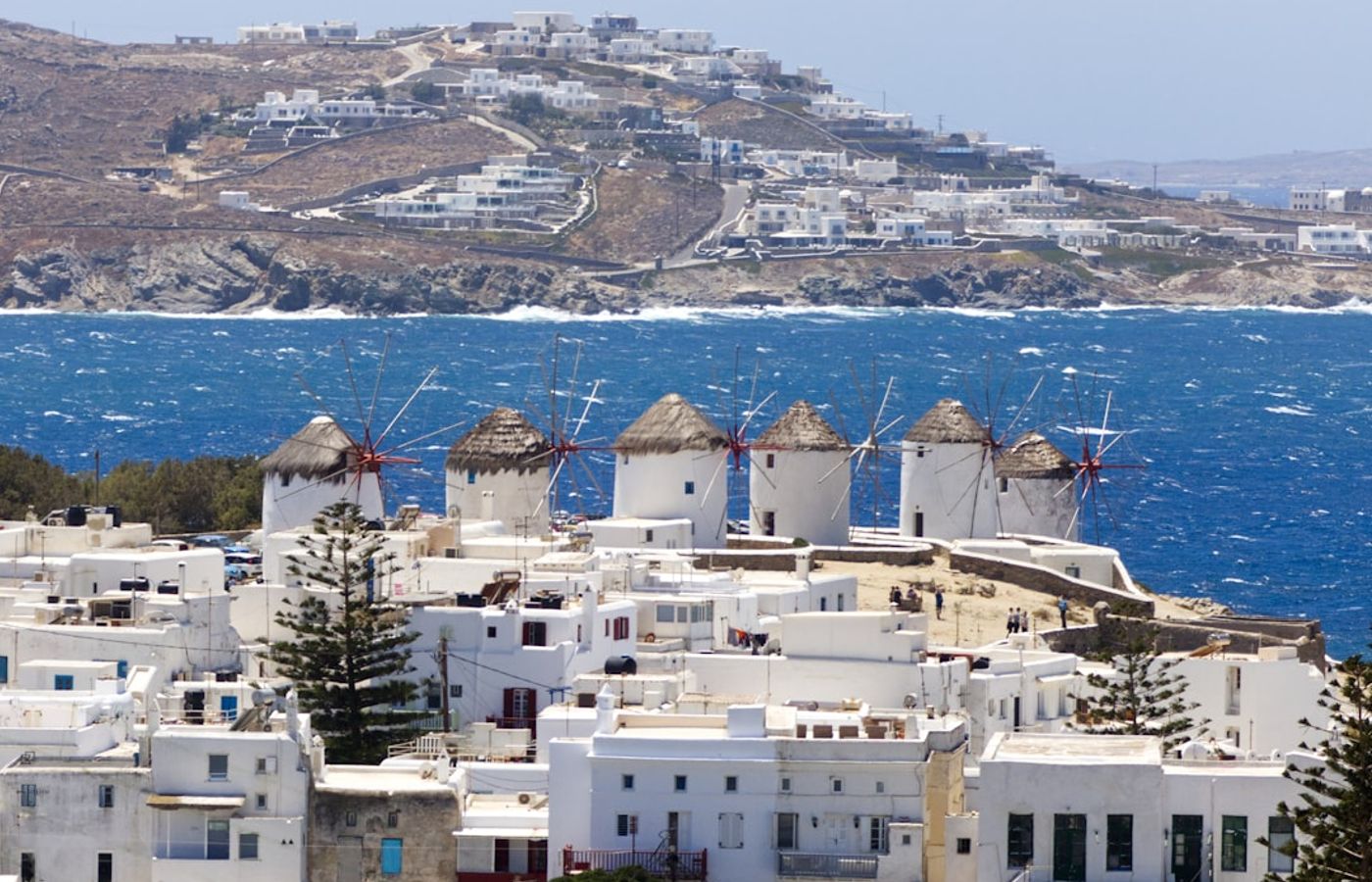
Kato Mili is the row of seven white round windmills sitting on the small hill above Little Venice, the most photographed line of buildings in the Cyclades. Built by the Venetians in the 16th century to mill wheat for the busy port that used to feed Constantinople, the windmills stayed in use until the early 20th century. Five remain whole, two are restored interiors. The hilltop is free to visit, with a 360-degree view that takes in the whole of Chora, the south coast and the Rinia and Delos islands offshore. Sunset is the obvious time, but mornings around 09:00 are nearly empty and the light hits the white walls beautifully.
Pro Tip: The lesser-known Boni Windmill 800 m east at the Agricultural Museum (3 EUR) actually still grinds flour in summer demonstrations - a quieter alternative.
4Paraportiani Church
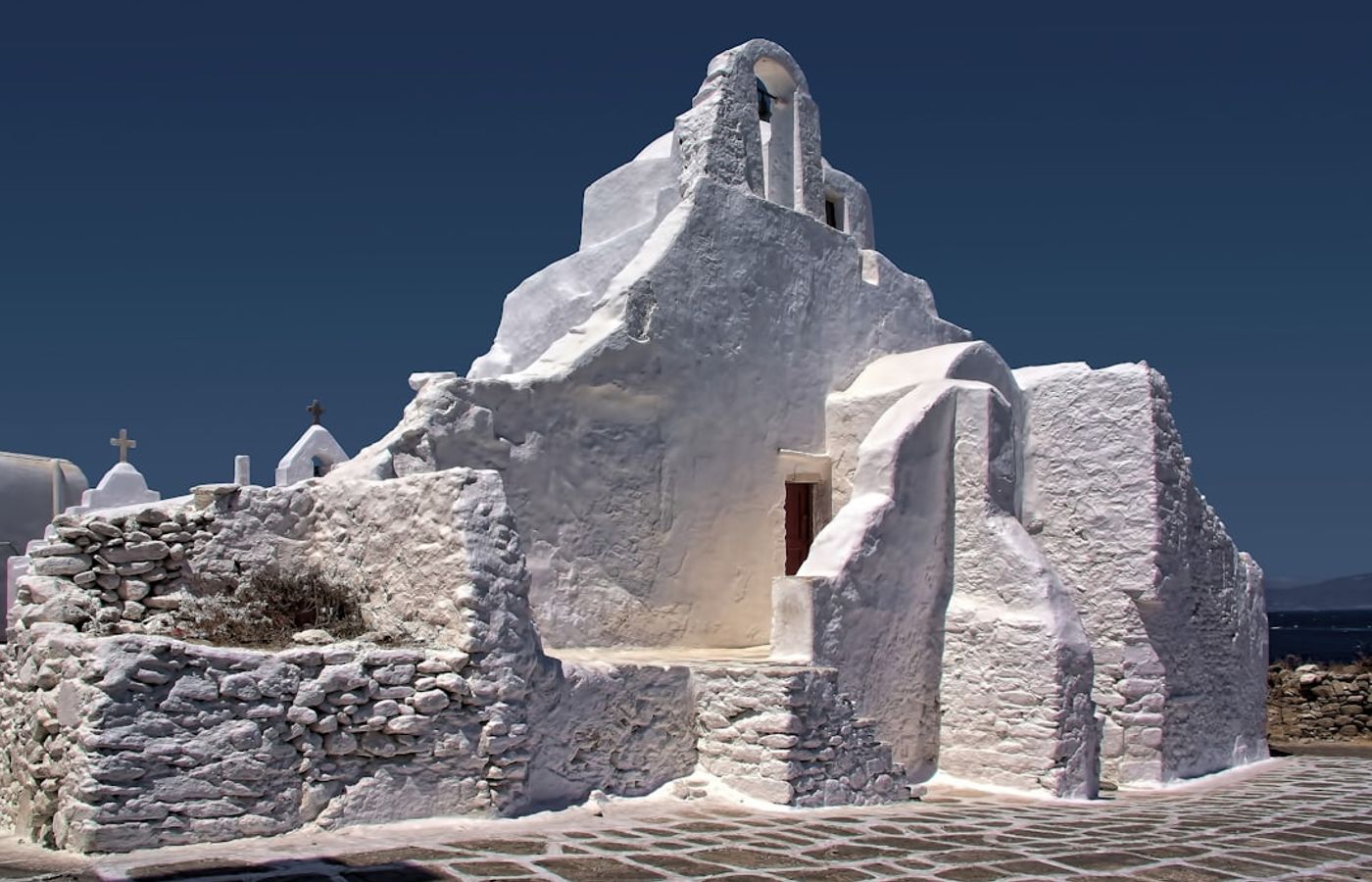
Paraportiani is the famous five-in-one whitewashed church in the Kastro neighbourhood at the entrance to Chora. Construction began in 1425 and continued for nearly 250 years, joining four chapels at ground level (Agios Anargyros, Agia Anastasia, Agios Sozon and Agios Efstathios) topped by a fifth domed chapel of Panagia. The result is an asymmetric, almost Cubist sculpture in lime - it inspired Le Corbusier and now appears on Greek postage stamps. The interior is open intermittently for weddings and short services; outside is free and most photographed at golden hour when the western wall takes on a creamy gold tone.
Pro Tip: The classic shot is from 30 m down the lane on the seafront side - get there before 19:00 to beat the queue of photographers in summer.
5Delos Archaeological Site (UNESCO)
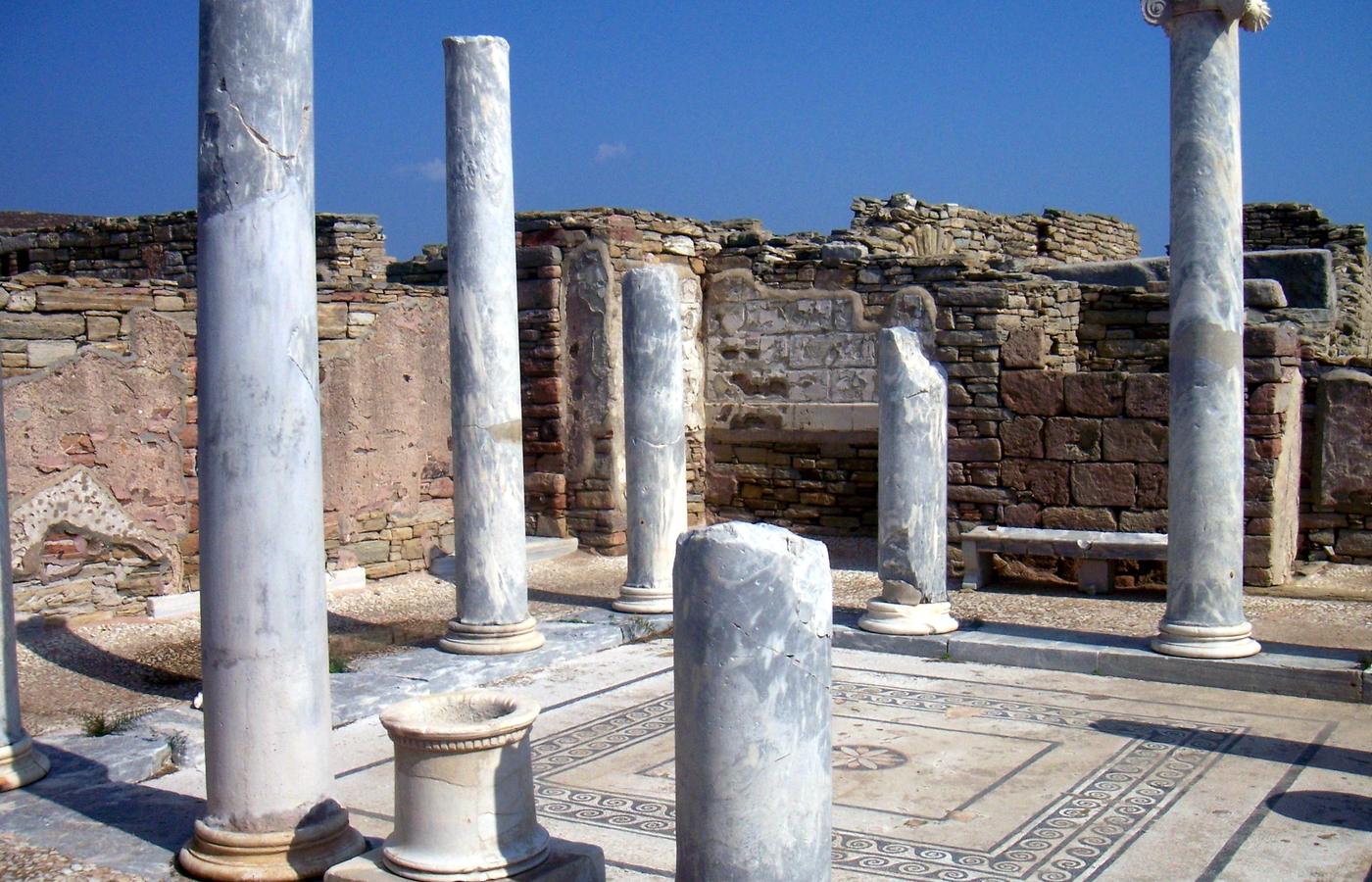
Delos is the small uninhabited island 4 km west of Mykonos that was the most sacred site in the ancient Greek world, mythological birthplace of Apollo and Artemis. Inscribed as a UNESCO World Heritage site in 1990, the entire island is an open-air museum with the Terrace of the Lions, the House of Cleopatra, the Theatre, the Sanctuary of Apollo and the small but excellent Archaeological Museum. Allow 4-5 hours including the boat. Read the official UNESCO listing at the Delos World Heritage page. Combined site and museum entry costs 12 EUR, plus 25 EUR return boat from Mykonos Old Port. The Cyclades sun is brutal here - bring 1.5 L of water.
Pro Tip: Take the 09:00 boat and the 13:30 return - the 30-degree heat after midday makes Mount Kynthos brutal even in May.
6Paradise Beach
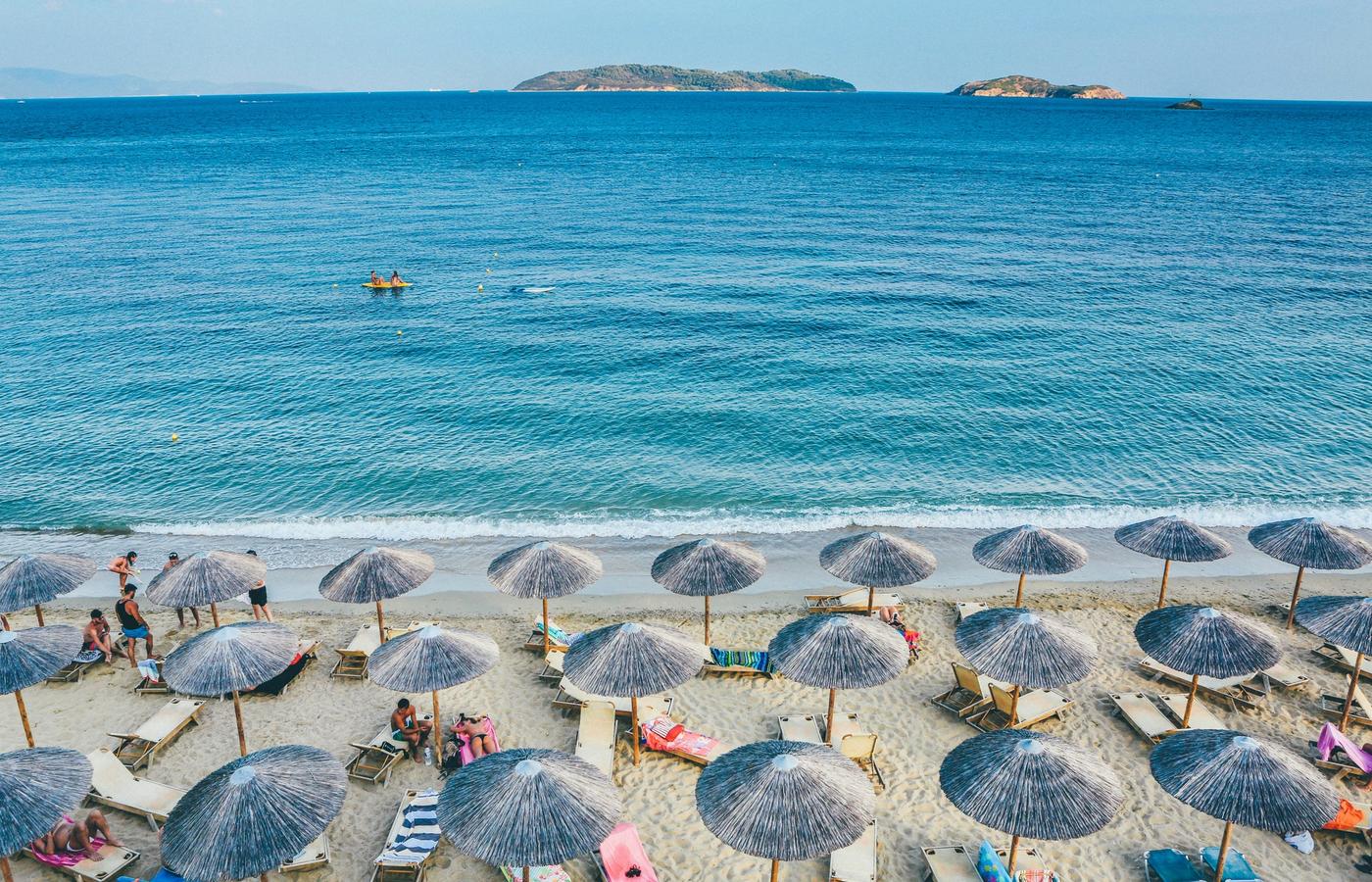
Paradise Beach is the original Mykonian party beach, a 250 m crescent of fine sand on the south coast that has hosted DJ sessions since the 1980s. Today it splits into two halves: the western end has Tropicana, where afternoon dance sets keep going until sunset, and the eastern end has the more relaxed Paradise Beach Resort with sunbeds for 60-90 EUR per pair in 2026. The water gets deep quickly so it suits stronger swimmers. Showers, lockers (5 EUR) and ATMs are at the resort. Avoid driving in - the small car park fills by 11:00 in summer; take the bus from Fabrika Square instead.
Pro Tip: Arrive on the 11:00 bus, leave by 17:00 - parties pivot to Cavo Paradiso (3 km uphill) at 17:30 and the access road jams.
7Super Paradise Beach
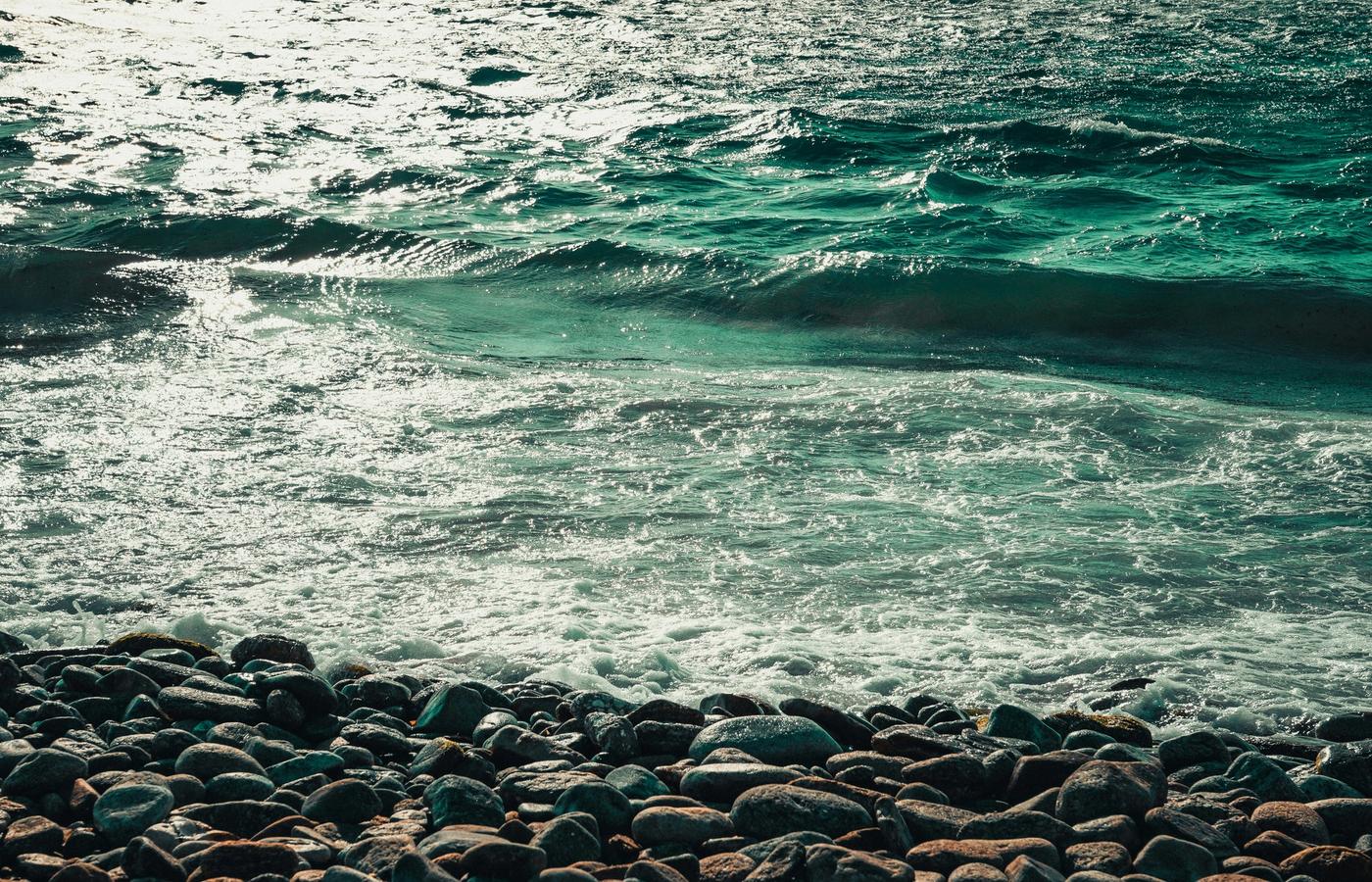
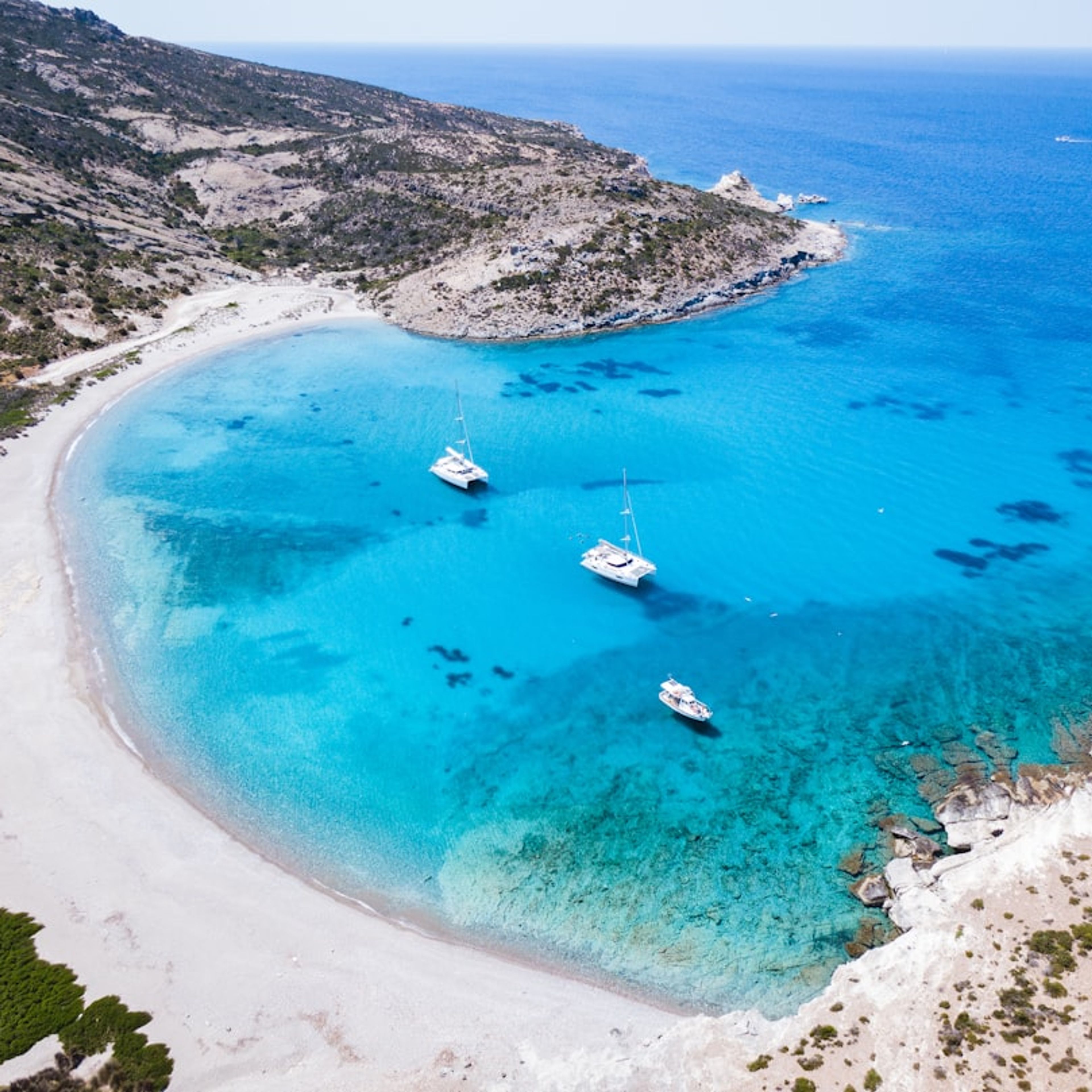
Super Paradise sits one cove east of Paradise, with a smaller 200 m sandy beach hemmed in by dramatic granite cliffs. The atmosphere is more upmarket than its neighbour, anchored by the iconic Super Paradise Beach Club where afternoon dance sessions, blue-curtained sunbeds (80-200 EUR per pair, front row 200) and a champagne menu draw a celebrity-spotting crowd. The east end has a quiet free section under a small headland where you can lay a towel. The water deepens fast so children should stay close. Access is by KTEL bus from Fabrika or by water taxi from Platis Gialos at 8 EUR per person.
Pro Tip: The cliff-side stairs at the eastern end lead to a free wild beach with no facilities but turquoise water - go in the morning before the wind picks up.
8Platis Gialos Beach
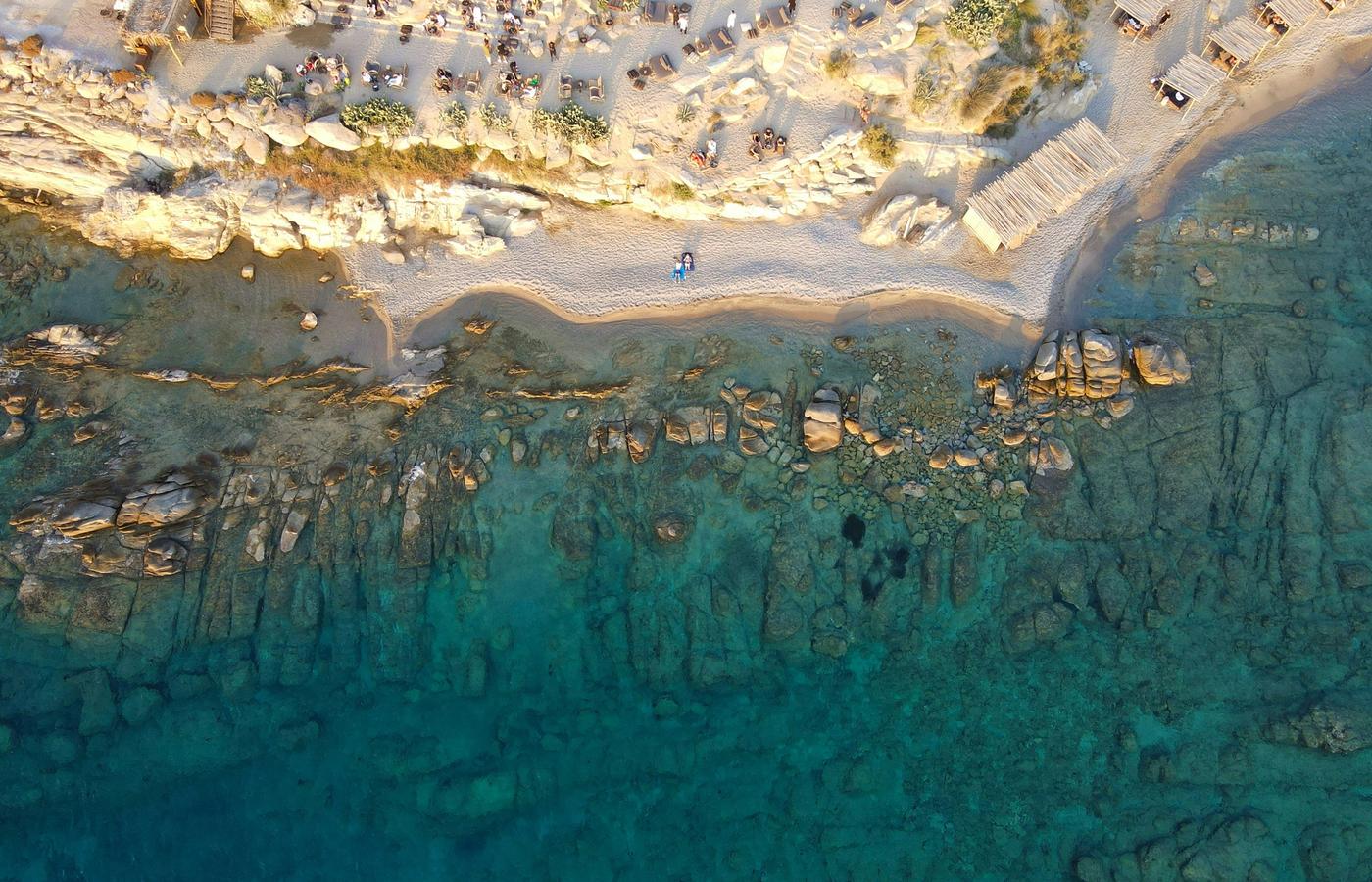
Platis Gialos is a 350 m wide family beach on the south coast with shallow water that drops slowly, which makes it the safest of the south coast bays for kids. The beach is fully organised: sunbed pairs run 30-50 EUR in 2026, several mid-range tavernas and beach hotels (Petinos, Mykonos Palace) line the road, and there is a pharmacy 100 m inland. Most importantly, Platis Gialos is the water-taxi hub for the whole south coast - covered boats run every 30 minutes in season to Paranga, Paradise, Super Paradise, Agrari and Elia for 5-8 EUR per leg, often a faster way to beach-hop than the bus.
Pro Tip: Buy a one-way water taxi to Elia at 11:00 and walk back along the coastal trail (40 min) for empty coves and dramatic cliff views.
9Ano Mera Village
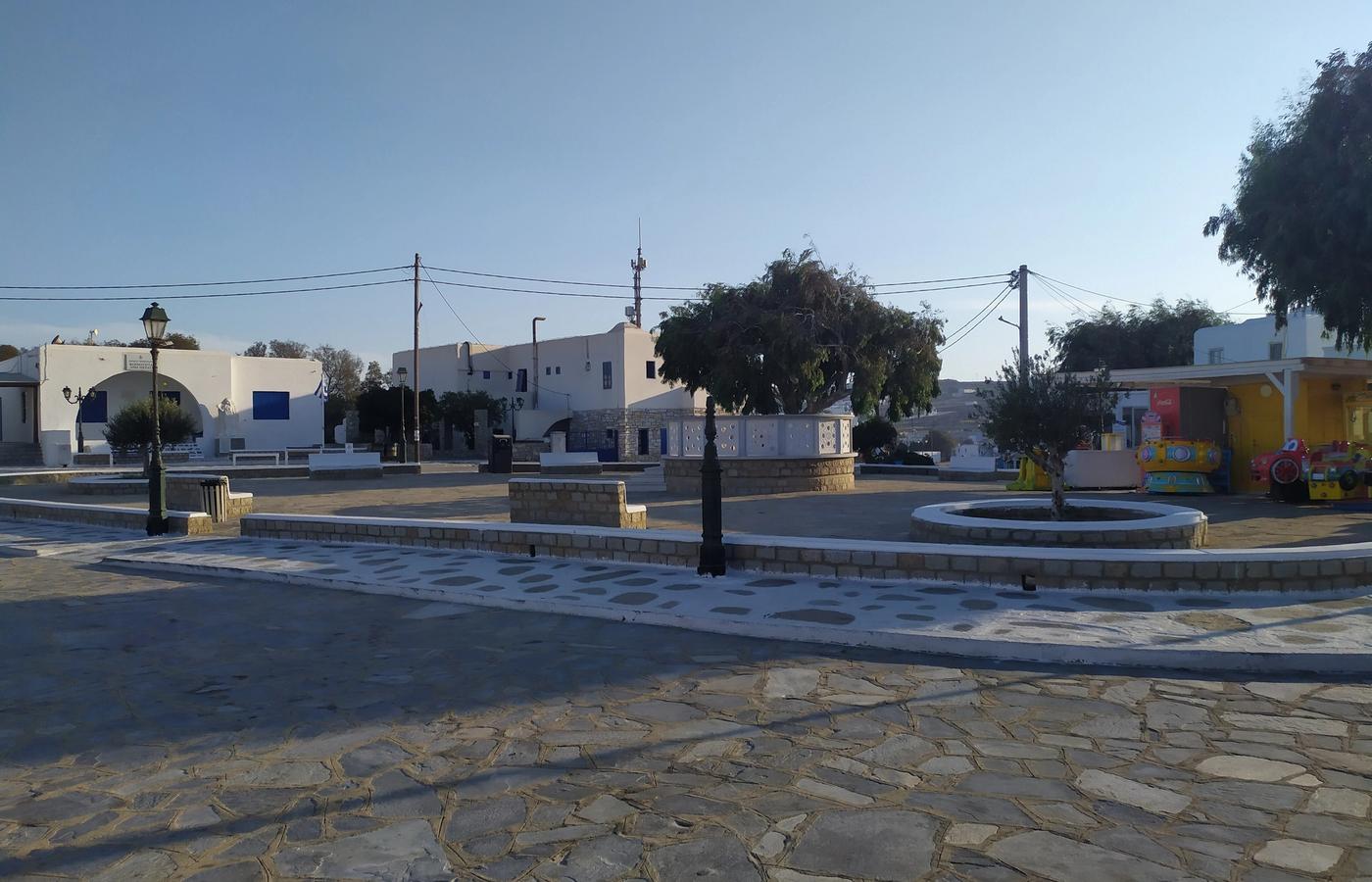
Ano Mera is the only proper inland village on Mykonos, sitting 7 km east of Chora at the centre of the island. The pace is gentler than Chora: a single plateia square shaded by plane trees, a working bakery, two grocery shops and a small open-air cinema in summer. The village comes alive twice a year - on 15 August for the Feast of the Virgin Mary at the monastery (see entry 10) and on 26 July for the Feast of Agia Paraskevi. Ano Mera is the best lunch stop on a quad-bike tour of the island, with traditional tavernas like Apostolis and Skarpa serving spit-roast goat and Mykonian onion pie at half the prices of Chora.
Pro Tip: Pre-order goat or rooster a day ahead at Apostolis (it cooks for 4 hours) and you will get a better meal than any 80 EUR plate in town.
10Panagia Tourliani Monastery
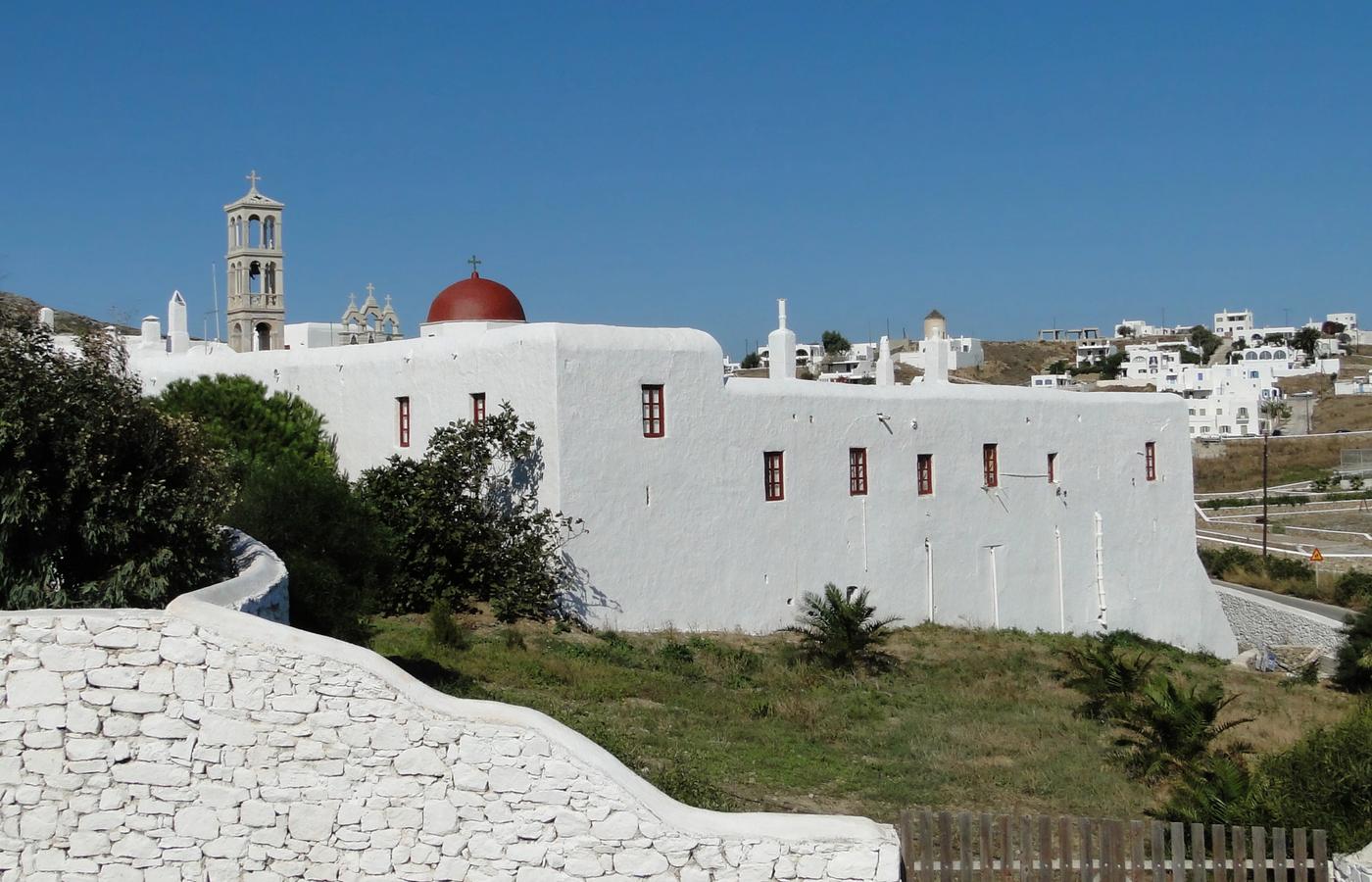
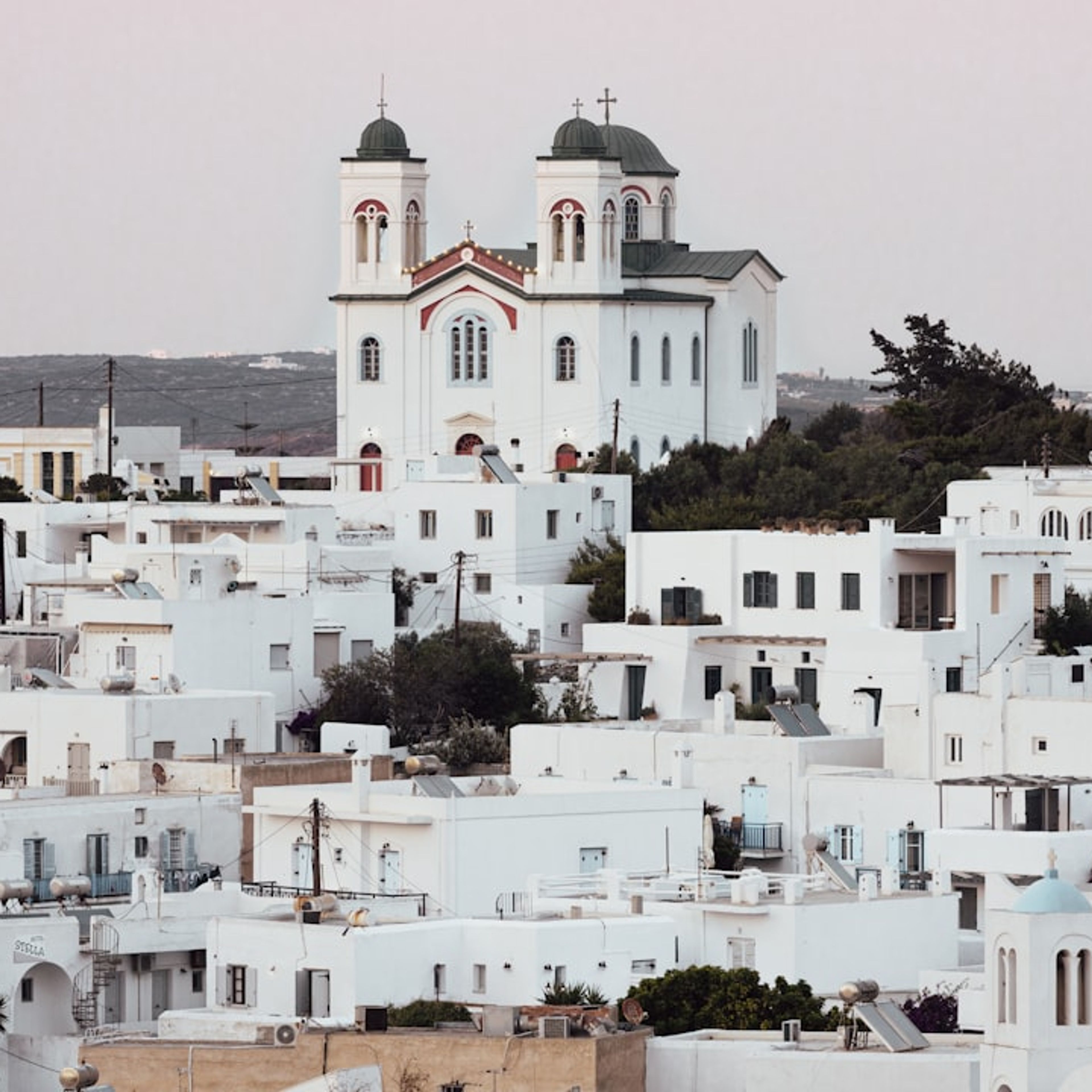
Panagia Tourliani is the spiritual heart of Mykonos, a working monastery founded in 1542 and rebuilt in its current form in 1767 around a wood-carved iconostasis from Florence widely considered the finest in the Cyclades. The icon of the Virgin, called Tourliani after the village where it appeared, is paraded through the streets on 15 August. The compact church and its tall white belltower with red trim sit in the middle of Ano Mera village. Entry is free; the small museum holds Byzantine vestments, silver chalices and 18th century icons (donation suggested). Dress modestly - shoulders covered, knees covered, no shorts.
Pro Tip: Visit at 08:30 to catch a chanted morning service - the acoustics inside the small dome are remarkable and the courtyard is empty of tour groups.
11Armenistis Lighthouse
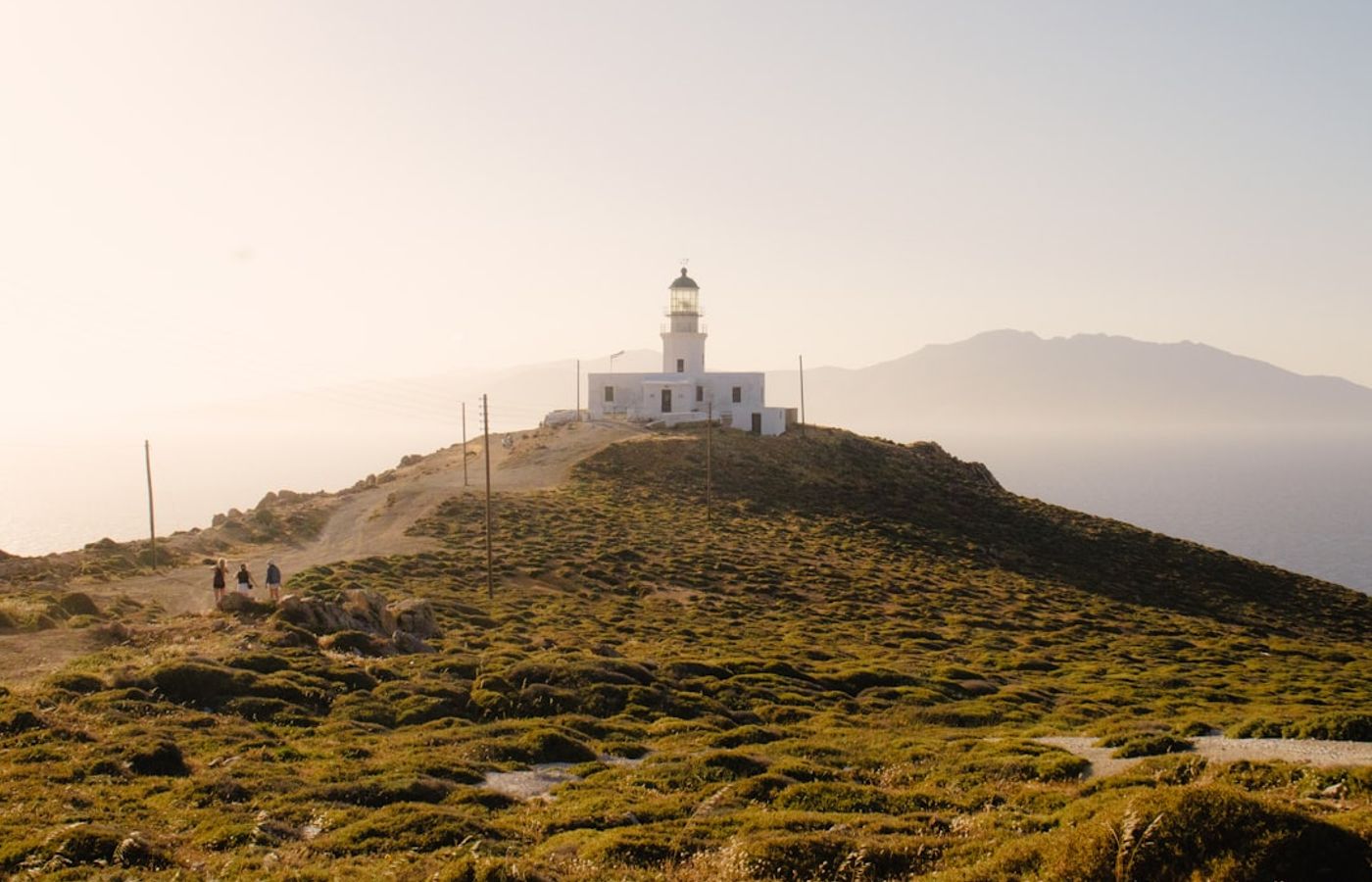
The Armenistis Lighthouse stands on a craggy headland at the north-western tip of Mykonos, built in 1891 to mark the channel where the steamship Volga sank in 1887. The 19 m white stone tower is still in service and not open for entry, but the surrounding cliffs are a top sunset spot, with views across to Tinos and the Cyclades chain. There is no public bus, so plan to drive a quad bike (35 EUR per day) or take a 16 EUR taxi from Chora. Park at the small dirt area and walk 200 m down the path. There is no canteen, so bring water and snacks.
Pro Tip: Combine the lighthouse with dinner at Kiki's Tavern in nearby Agios Sostis (no electricity, only a wood grill, no reservations) - go at 18:00 to put your name on the list.
12Aegean Maritime Museum
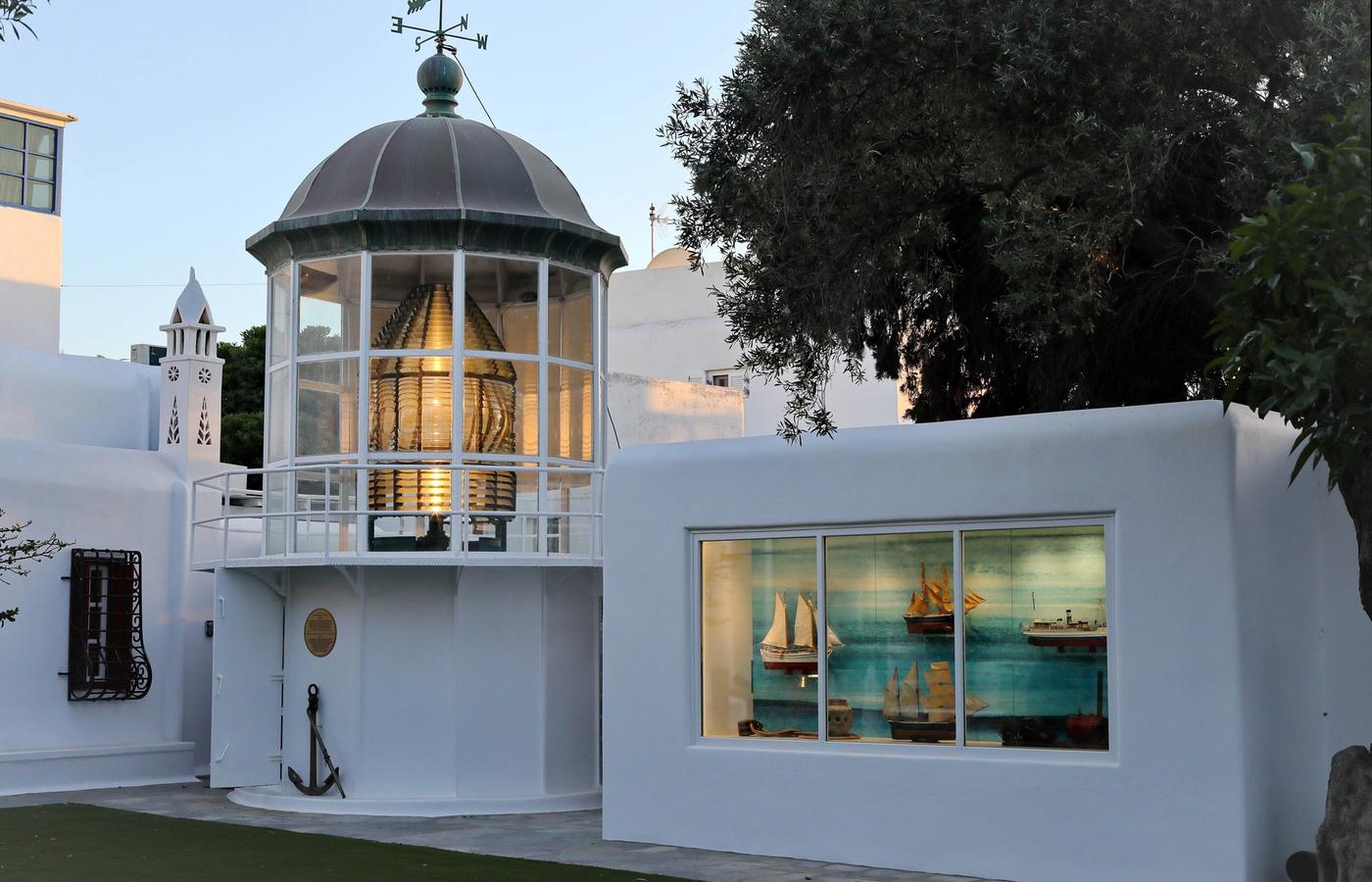
The Aegean Maritime Museum is the only museum of its kind in Greece, set inside a traditional 19th century Mykonian mansion on Enoplon Dynameon Street in Chora. Founded in 1983 by shipowner George Drakopoulos, it traces 5,000 years of Aegean seafaring through ship models, ancient amphorae rescued from shipwrecks, navigation instruments and rare 18th century maritime maps. The garden holds the still-functioning lantern from the 1890 Armenistis lighthouse and a fully restored Aegean caique. Allow 60-90 minutes. Entry is 4 EUR in 2026; opening hours run 10:30-13:00 and 18:30-21:00 from April through October.
Pro Tip: The Lena's House folklore museum is two doors away on the same street and uses the same 4 EUR ticket - tour both in one afternoon.

CEO and co-founder
Tomas is the co-founder and director of trip1, an European company specializing in reservation services. He launched the company in 2025 with a focus on building scalable, efficient operations.
12 Top Things to Do in Mykonos, Greece - FAQ
No. While Mykonos is small (around 105 sq km), the Delos boat alone takes a half day and the south coast beaches are spread along 8 km of coastline. Plan 4-5 days to cover the 12 things on this list comfortably. A two-day trip can hit the headline sights (Mykonos Town, Little Venice, the windmills, Paraportiani, Paradise and Delos) but you will skip Ano Mera and the Armenistis lighthouse. Quad-bike or car rental at 35-50 EUR per day makes the rest of the island easy to reach.
Start with Mykonos Town (Chora) on day one for orientation: walk Matogianni and Enoplon, see the Paraportiani Church, finish at sunset in Little Venice and the Kato Mili windmills. Day two, take the early boat from the Old Port to Delos and back, then use the afternoon for the Aegean Maritime Museum. Day three, spend on the south beaches: Platis Gialos, Paradise and Super Paradise. Day four, drive to Ano Mera for the Panagia Tourliani Monastery and continue north to Armenistis Lighthouse for golden hour.
In 2026, Delos archaeological site is the only attraction with timed-entry tickets that frequently sell out (combined site and museum 12 EUR, plus 25 EUR return boat from the Old Port). Book at least 3 days ahead in July and August. The Aegean Maritime Museum (4 EUR) and Panagia Tourliani Monastery (free, donation welcome) walk in. For Paradise and Super Paradise beach clubs, sunbed and umbrella sets cost 40-200 EUR depending on row, and front-row sets at SantAnna or Scorpios should be reserved by phone or email a week ahead. Entry to Mykonos Town, the windmills, Little Venice and Paraportiani is free.
Direct entry costs are modest: Delos 12 EUR plus 25 EUR boat, Maritime Museum 4 EUR. Total around 45 EUR per adult. Mykonos itself is expensive: an average 4-day trip in 2026 with a mid-range hotel (200-300 EUR per night), three taverna meals at 25-35 EUR per person, two beach club days (60-100 EUR for sunbeds and a couple of drinks) and a quad rental works out at 1,400-2,000 EUR per person excluding flights. Travel in May, early June or late September to cut hotel rates roughly in half.
Worth adding to a longer stay: Agios Sostis beach (no umbrellas, just a quiet north-coast sandy bay), Fokos beach with the namesake taverna, the Rural Folklore Museum in Ano Mera, a half-day cooking class for Mykonian kopanisti cheese and louza pork, and the Lia and Kalafatis beaches on the east coast for windsurfing. The chapel of Agios Ioannis at Diakoftis (where Shirley Valentine was filmed) is also a quick photo stop on the way to Ornos.
Mostly yes. KTEL Mykonos blue buses run every 15-30 minutes from Fabrika Square in Mykonos Town to Ano Mera (1.80 EUR), Platis Gialos (2 EUR), Paradise (2 EUR) and Ornos. From Platis Gialos, water taxis (5-8 EUR) link to Paranga, Paradise, Super Paradise and Agrari. Delos is reached only by ferry from the Old Port (25 EUR return, 30 min, 09:00 and 10:00 daily April to October). Armenistis Lighthouse is the trickiest - no bus, so a quad rental (around 35 EUR per day) or a 16 EUR taxi each way is needed.