

Guides · Lecce
10 Top Places to Visit in Lecce

CEO and co-founder
This guide rounds up the 10 top places to visit in Lecce, the honey-stone Baroque capital of Italy's Salento peninsula, often called the Florence of the South. Each entry gives the exact address, walking directions, and a practical Pro Tip, so you can navigate a compact old town where nearly everything is within a short stroll.
The list follows a natural loop. Porta Napoli marks the northern gateway; the Basilica di Santa Croce, Piazza Sant'Oronzo with its Roman amphitheatre, and the enclosed Piazza del Duomo form the ceremonial heart; and the churches, the layered Museo Faggiano, the Roman theatre, and the Castello di Carlo V fill in the surrounding lanes.
Lecce's signature is its soft local limestone, carved into exuberant Baroque facades that glow gold in the sun. Add ancient Roman ruins, artisan workshops, and some of the best-value food in Italy, and you have a city that rewards slow, aimless wandering.
1Basilica di Santa Croce - The Masterpiece of Lecce Baroque
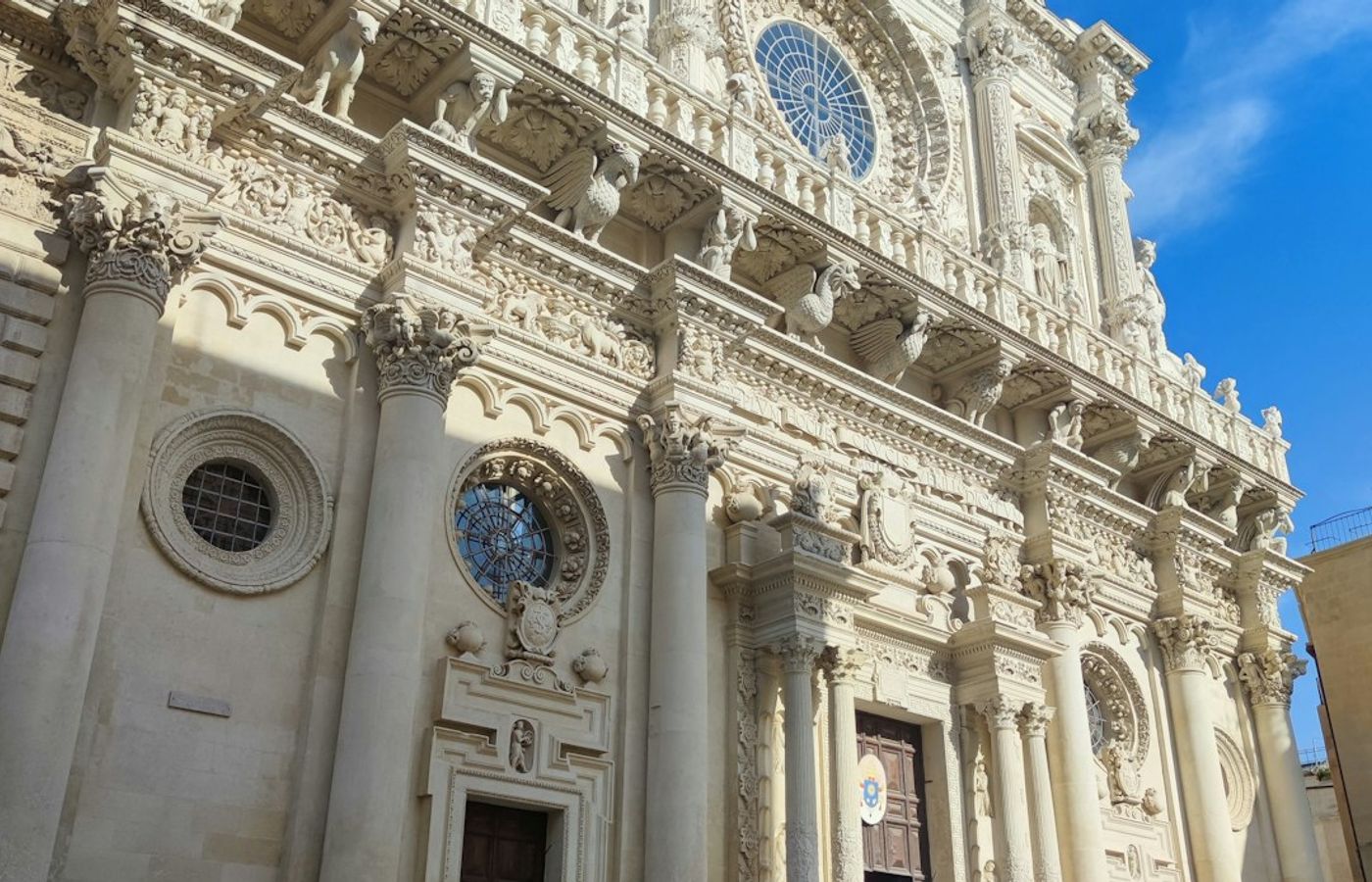

The Basilica di Santa Croce is the masterpiece of Lecce Baroque and the single sight that best explains the city's nickname. Built over roughly 150 years and finished in 1695, its facade is a riot of carved cherubs, beasts, flowers, and grotesques swarming around a great central rose window.
A row of 13 columns supports a balustrade of allegorical figures and mythical creatures, all carved from the soft, workable Lecce stone. The interior is calmer, a Latin cross of gilded altars, but it is the facade that visitors return to again and again to pick out new details.
Pro Tip: See it in late-afternoon light when the low sun rakes across the carvings and the stone turns deep amber. A small entry fee applies for the interior; the facade is free to admire from the street.
2Piazza del Duomo - The Enclosed Baroque Square
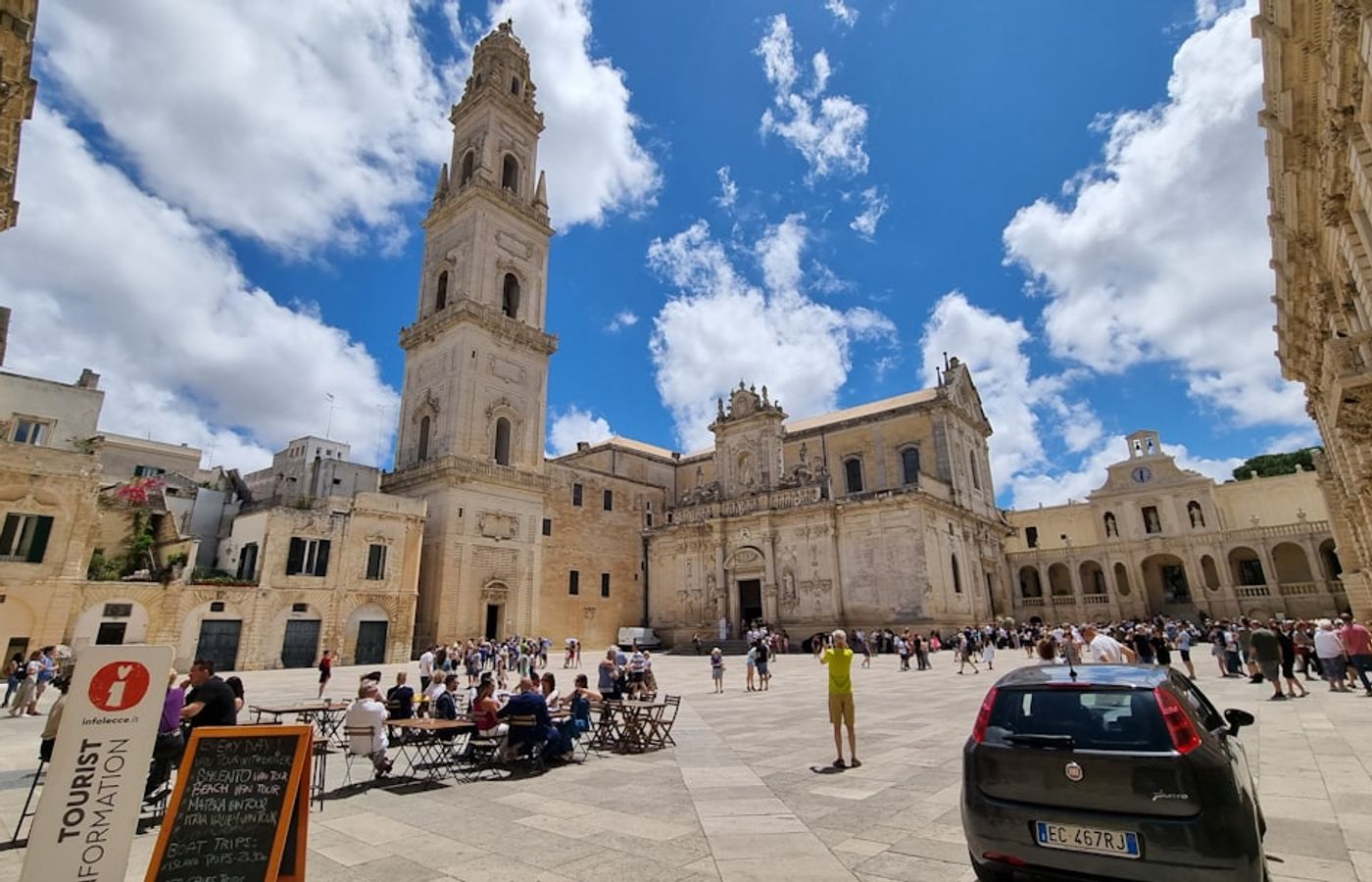

Piazza del Duomo is one of the most theatrical squares in Italy, an almost enclosed courtyard that opens through a single narrow entrance - originally designed so it could be sealed off for defence. Stepping in feels like entering an open-air room lined with Baroque stone.
The square gathers the Cathedral with its soaring 70-metre bell tower, the Bishop's Palace, and the former seminary with its ornate carved well. The Duomo is unusual in having two facades, one grand ceremonial front facing the entrance so arrivals are met by its full splendour.
Pro Tip: A combined ticket lets you climb the bell tower for a rooftop view over the old town. Come after dark, when the square is dramatically floodlit and far quieter than by day.

3Roman Amphitheatre - Ancient Lupiae Beneath the Square
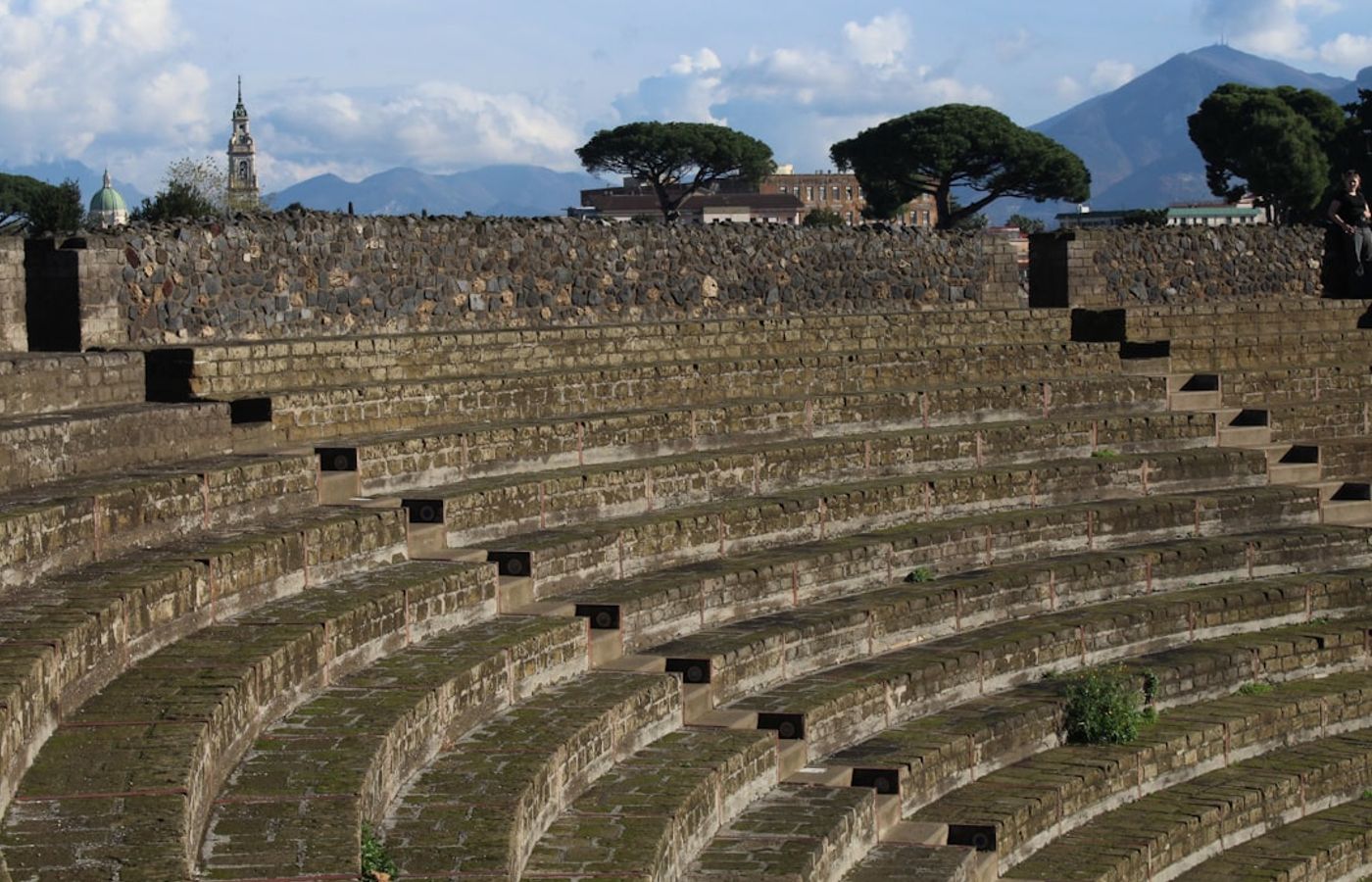

Sunk into the middle of Piazza Sant'Oronzo lies the Roman Amphitheatre, a 2nd-century AD arena only partly excavated - the rest still hidden beneath the surrounding buildings. What you see is the lower tier of seating and the elliptical arena where gladiators once fought before crowds of up to 25,000.
Rediscovered in the early 20th century, the amphitheatre is a vivid reminder that beneath the Baroque city lies the Roman town of Lupiae. You view it from street level above, and its exposed curve of ancient stone contrasts sharply with the ornate facades around the square.
Pro Tip: You can see it well from the railings for free. In summer the arena sometimes hosts evening performances - check locally, as watching a show in a Roman amphitheatre is a memorable experience.
4Piazza Sant'Oronzo - The Main Square and Roman Column
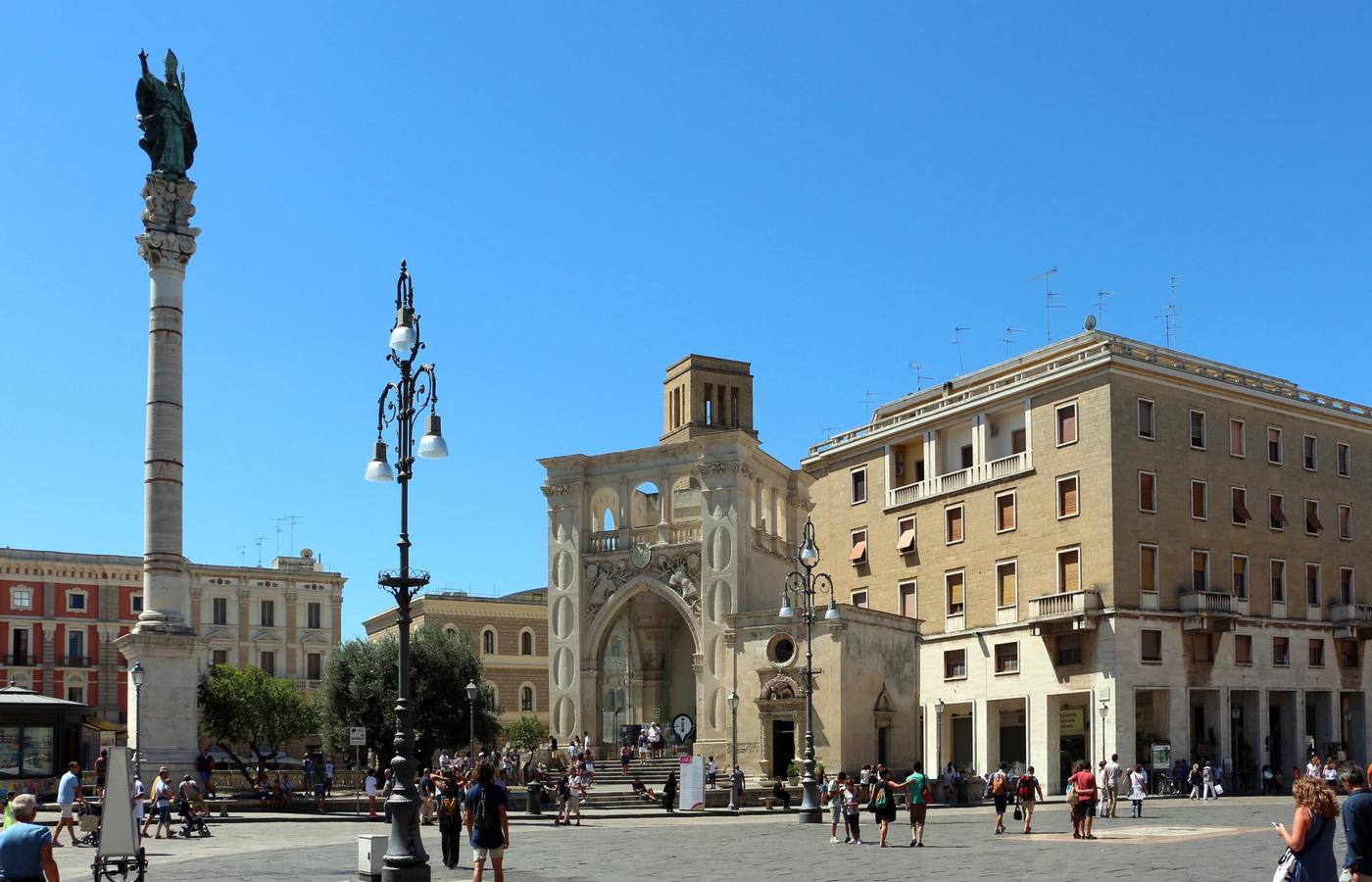
Piazza Sant'Oronzo is the beating heart of Lecce, the main square where locals gather and the old town's lanes converge. It is named for the city's patron saint, whose statue stands atop a tall Roman column at its edge.
That column is one of the two that once marked the end of the Appian Way in Brindisi, gifted to Lecce and re-erected here in the 17th century. The square also holds the 16th-century Sedile loggia and, underfoot, a large paving mosaic of the city's coat of arms, making it the natural place to begin any visit.
Pro Tip: Grab a coffee at a cafe on the square and watch the evening passeggiata. It is free and always lively, and a good orientation point since most sights radiate out from here.
5Castello di Carlo V - Puglia's Largest Castle
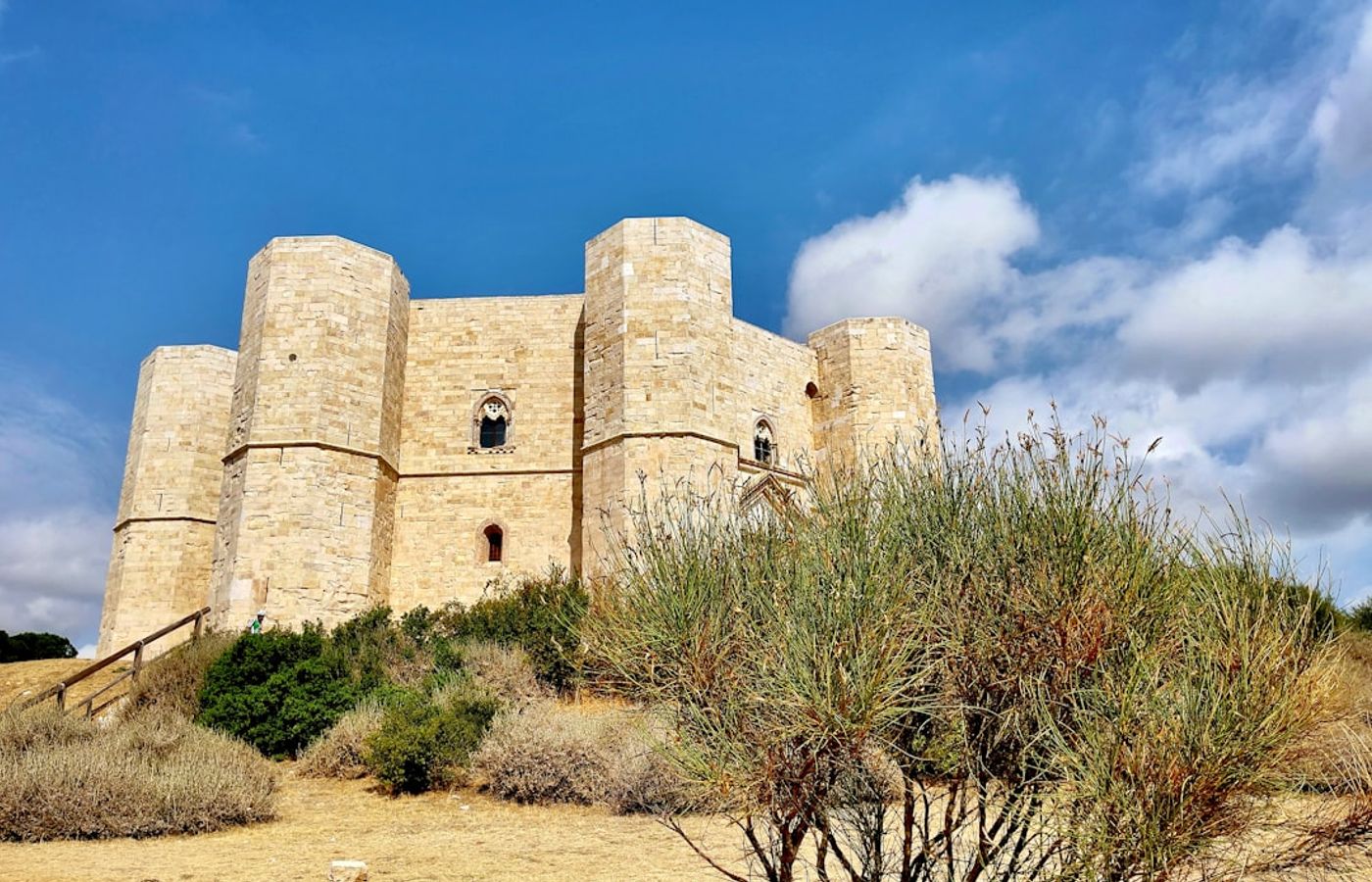
The Castello di Carlo V is the largest castle in Puglia, a massive fortress rebuilt in the 1540s for the Holy Roman Emperor Charles V to defend Lecce against Ottoman raids. Its trapezoidal plan wraps an older medieval tower inside thick angular bastions designed to withstand cannon fire.
Now restored, it hosts exhibitions and a small museum of papier-mache, the traditional Lecce craft of cartapesta once used to make religious figures. The vaulted halls and ramparts are worth exploring, and the castle marks the eastern edge of the historic centre.
Pro Tip: Entry is around 5 EUR and often includes temporary exhibitions. Check whether the papier-mache museum is open, as the cartapesta tradition is a distinctive part of Lecce's heritage.
6Porta Napoli - The Triumphal City Gate
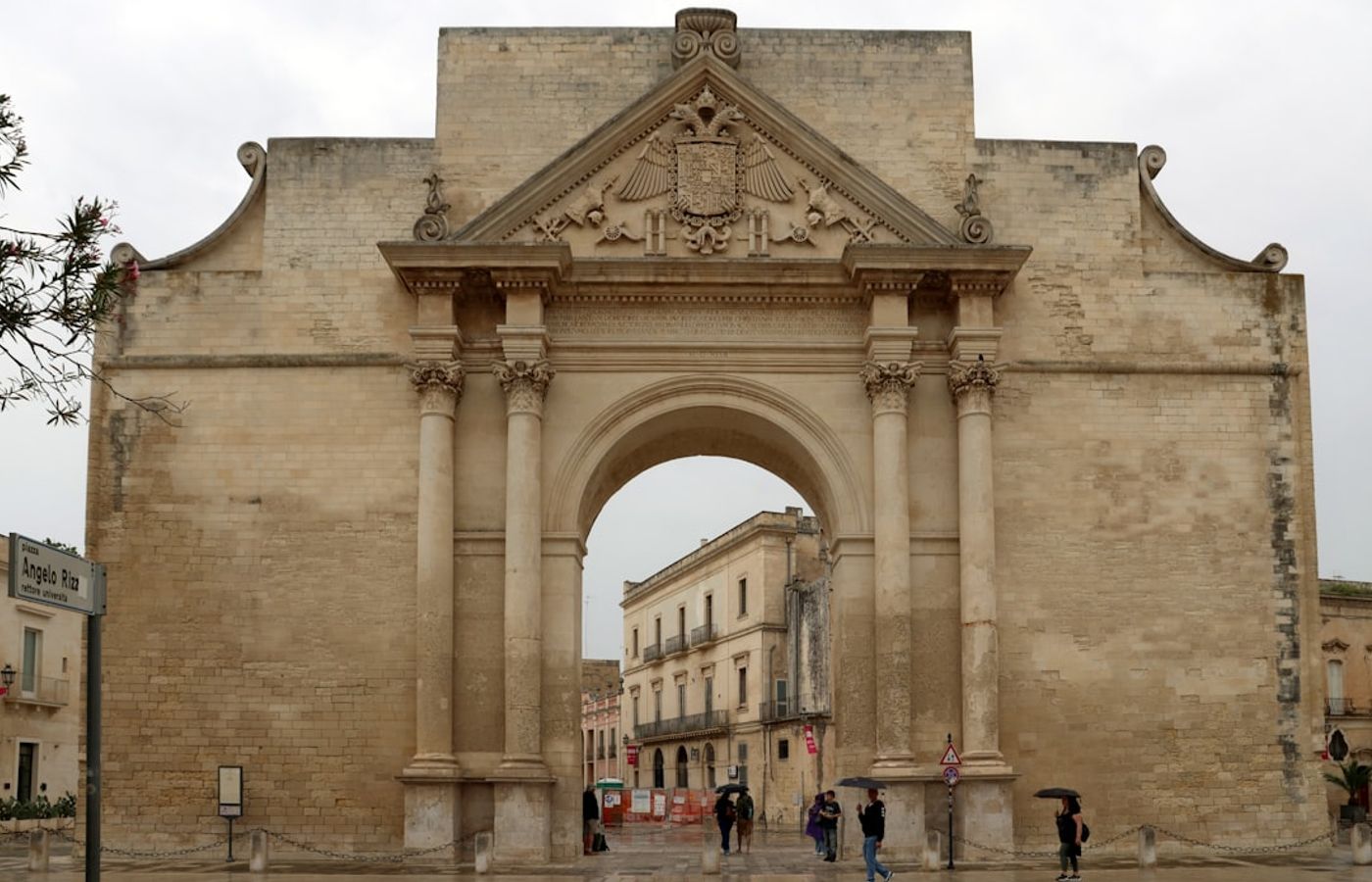
Porta Napoli is the grandest of Lecce's three surviving city gates, a triumphal arch raised in 1548 in honour of Charles V. Modelled on a Roman triumphal arch, it is topped by the emperor's coat of arms and trophies of arms carved in the local stone.
It marks the historic road to Naples and the northern entrance to the old town, making it a natural place to begin a walk into the centre. Nearby stands a tall obelisk from 1822 and the church of Santa Maria della Provvidenza, giving the little square a monumental feel.
Pro Tip: Start your day here and walk south into the old town, so you approach the Baroque sights the way travellers historically arrived. It is free and always accessible.
7Church of San Matteo - The Curved Baroque Facade
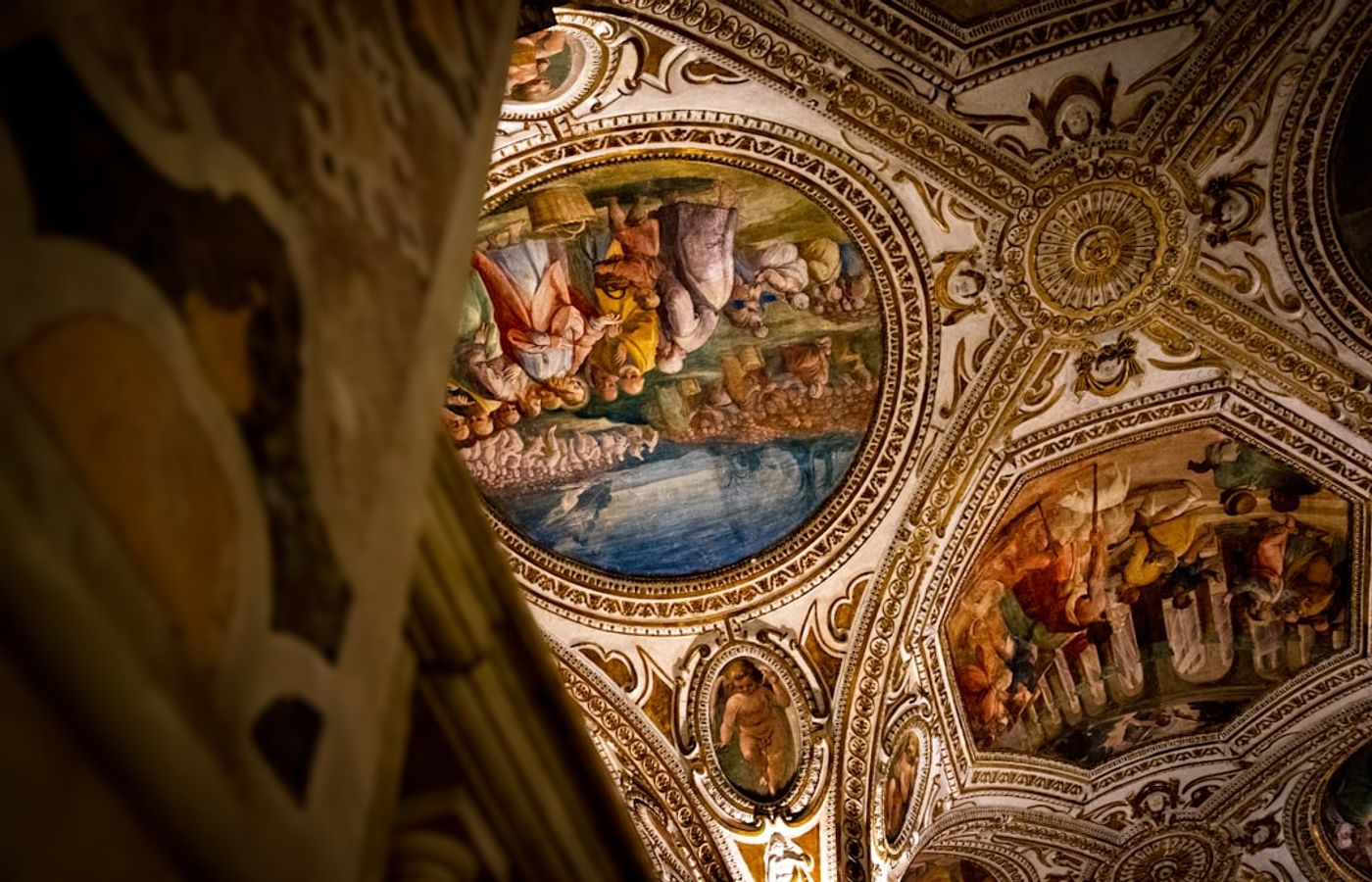
The Church of San Matteo stands out among Lecce's Baroque churches for its unusual curved facade, convex on the lower level and concave above, inspired by Borromini's work in Rome. Built in the 1660s, it brings a touch of Roman high Baroque to the Salento.
The lower facade is studded with rows of stone bosses that were left partly unfinished, giving it a distinctive rough-and-smooth texture. Inside, an oval plan is ringed by statues of the apostles set in niches between richly decorated side altars, a satisfying stop away from the busiest lanes.
Pro Tip: It sits in a quieter part of the old town south of the main square, so pair it with the nearby Museo Faggiano. Opening hours revolve around Mass, so late morning is your safest bet.
8Museo Faggiano - 2,000 Years Beneath a House
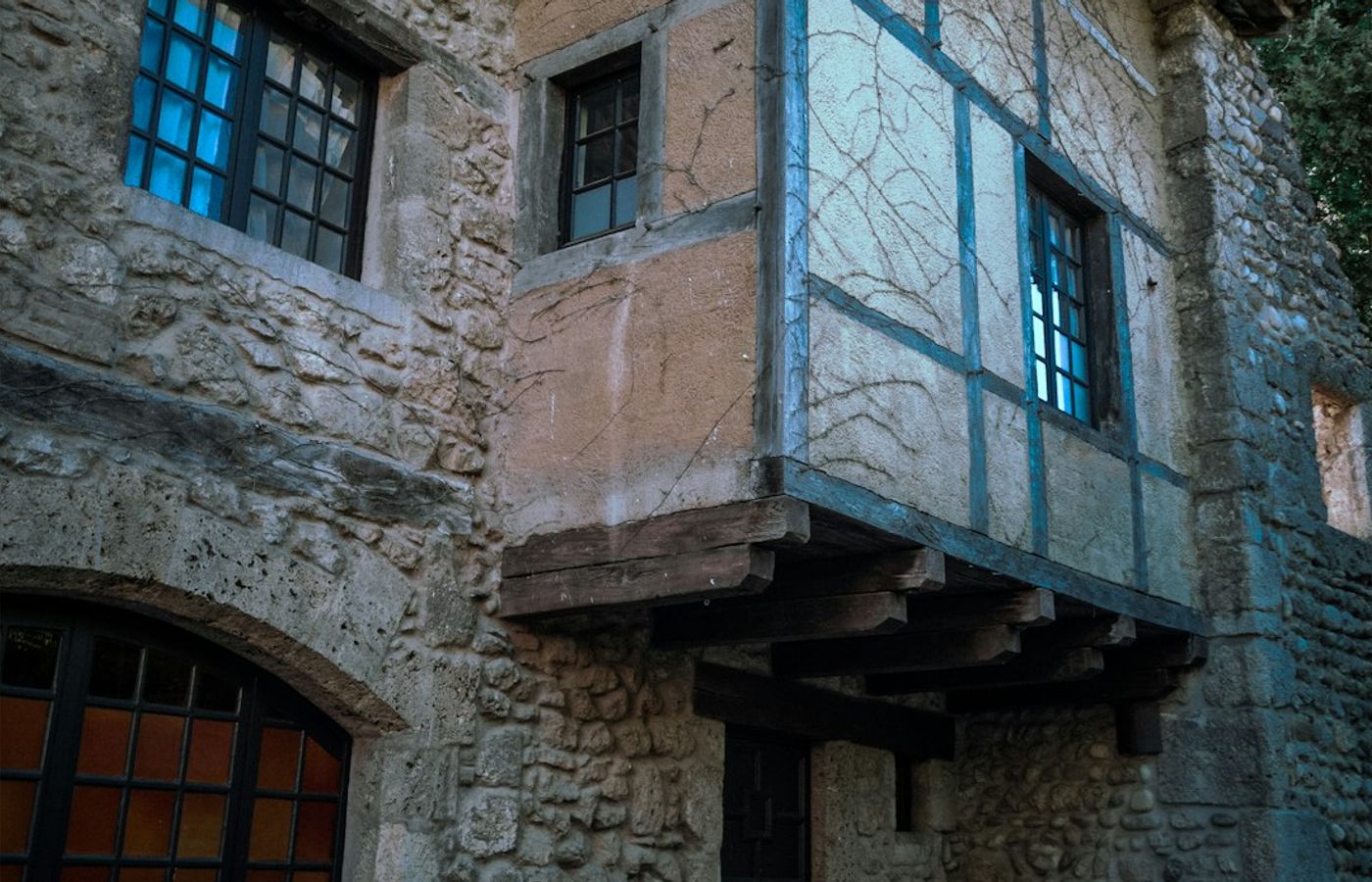
The Museo Faggiano is one of Lecce's most surprising sights, a private house where an owner digging to fix a drainage problem in 2000 uncovered 2,000 years of history layered beneath his floors. What began as plumbing turned into a seven-year archaeological excavation.
Today you climb through the building on walkways and ladders past Messapian tombs, Roman granaries, a medieval well, and Templar symbols carved into the stone, all exposed in situ. It is a vivid, hands-on lesson in how many civilisations are stacked beneath the modern city.
Pro Tip: Entry is about 5 EUR. The climb involves steep ladders and tight spaces, so wear practical shoes, and head up to the rooftop terrace for a fine view over the old town.
9Basilica di San Giovanni Battista - Zimbalo's Last Work
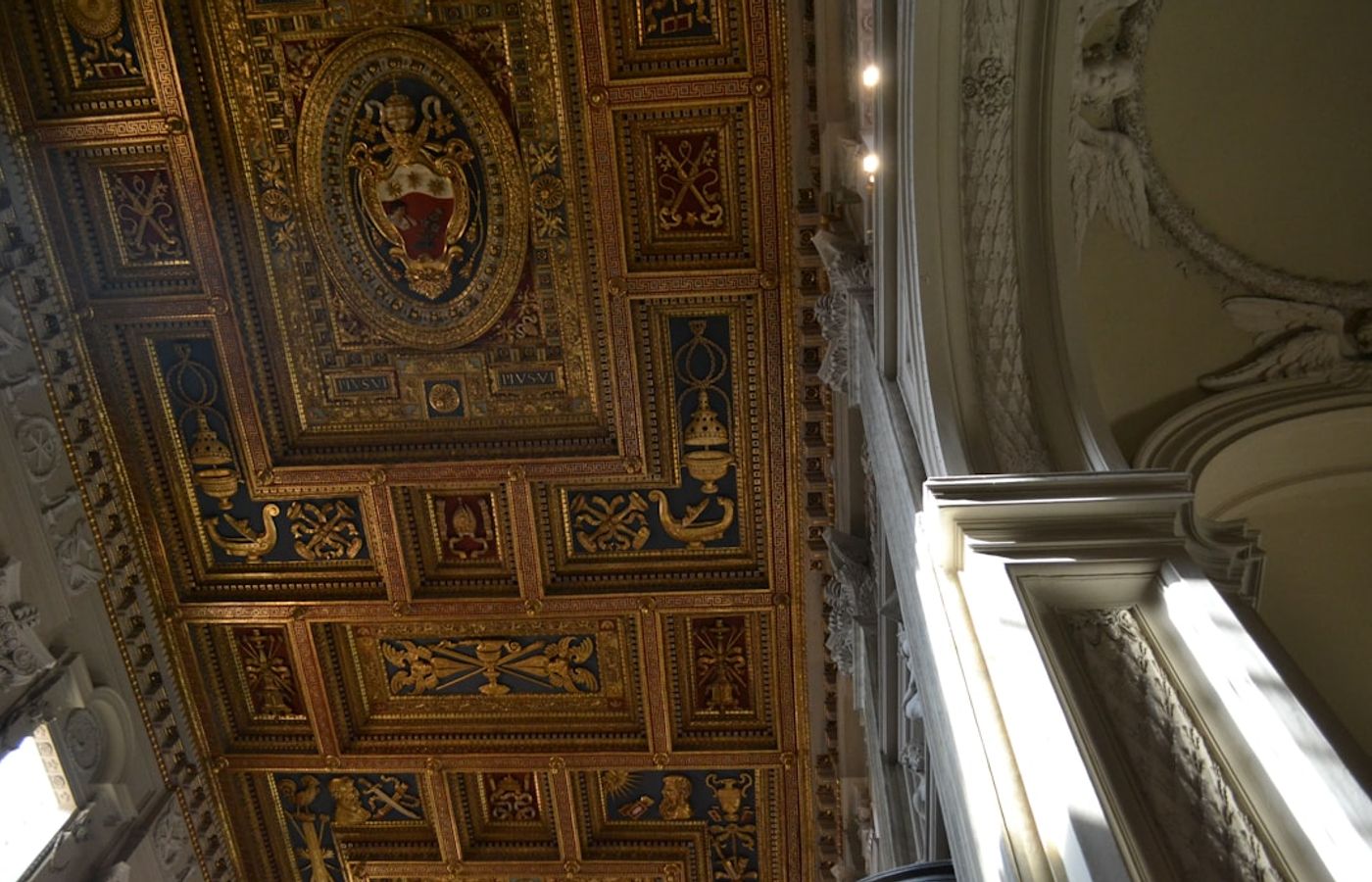
The Basilica di San Giovanni Battista, also called the Chiesa del Rosario, was the final work of Giuseppe Zimbalo, the architect behind much of Lecce's finest Baroque. He died before it was completed in 1728, and it stands as the culmination of the exuberant local style.
The facade drips with the most elaborate carving in the city - twisting columns, swirling foliage, and dense sculptural detail that pushes Lecce stone to its limit. Inside, dramatic altars continue the theme, and because it sits near Porta Rudiae it sees fewer visitors than Santa Croce.
Pro Tip: Combine it with a walk to the nearby Porta Rudiae gate at the western edge of the old town. Entry is usually free, with hours tied to services.
10Teatro Romano - Puglia's Only Roman Theatre
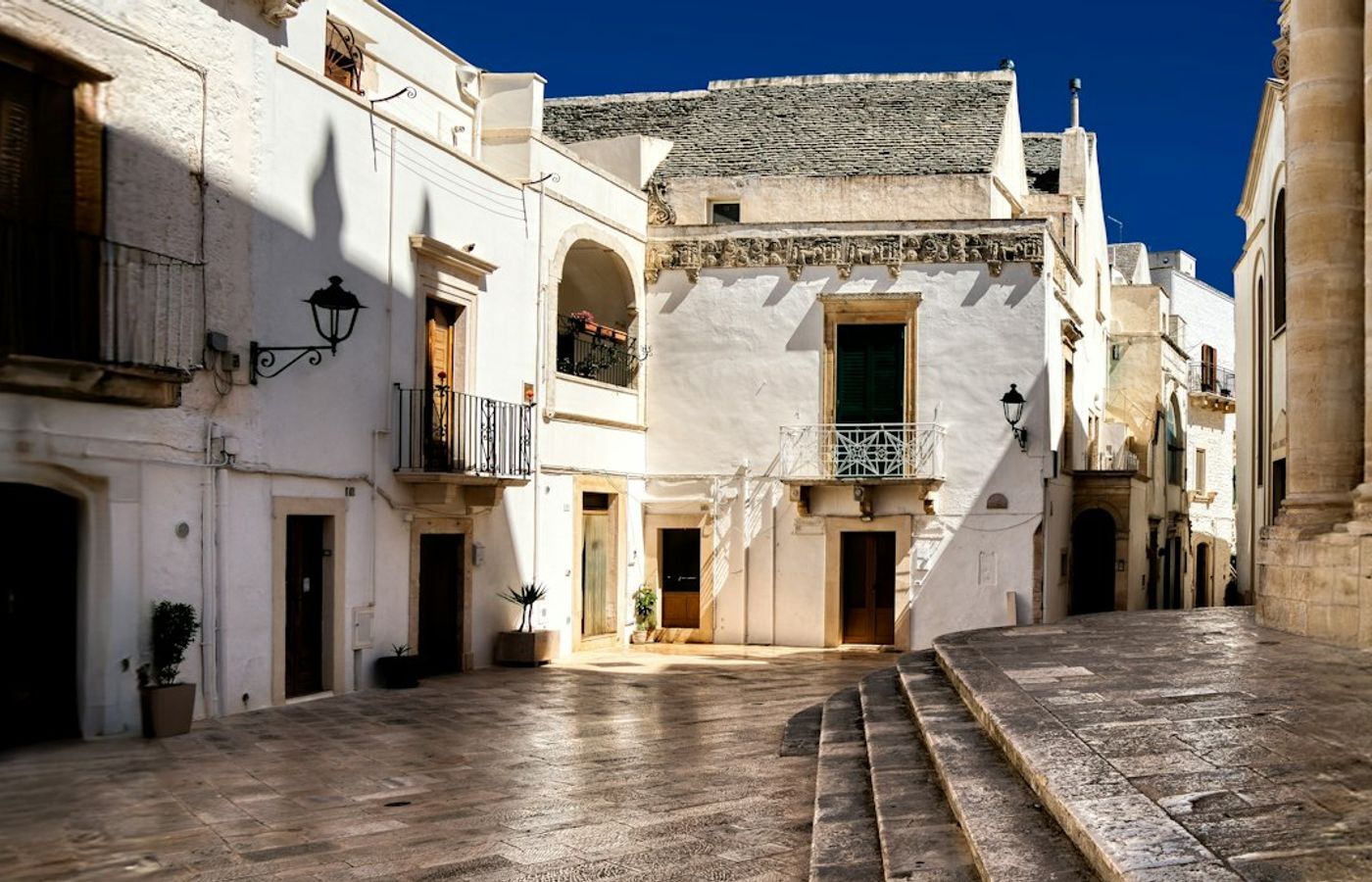
The Teatro Romano is Lecce's second great Roman survival, the only Roman theatre discovered in all of Puglia. Unearthed by chance in 1929, it dates from the 1st century AD and would have seated around 5,000 spectators for plays and performances.
Its curved rows of stone seating and part of the stage area survive, tucked between later buildings in the heart of the old town. A small adjoining museum displays finds from the site, including fragments of the decorative panels that once adorned the stage.
Pro Tip: It can be glimpsed from the street, but the small entry fee lets you get closer and visit the museum. It sits between San Matteo and the cathedral, so it slots neatly into a walking loop.
Get hotel deals for Lecce
Price drops, new stays and local tips for Lecce, straight to your inbox.
No spam, unsubscribe anytime.

CEO and co-founder
Tomas is the co-founder and director of trip1, an European company specializing in reservation services. He launched the company in 2025 with a focus on building scalable, efficient operations.
10 Top Places to Visit in Lecce, Italy - FAQ
The Basilica di Santa Croce, the masterpiece of Lecce Baroque, finished in 1695. Then the enclosed Piazza del Duomo, the Roman amphitheatre sunk into Piazza Sant'Oronzo, and the Museo Faggiano, a house where a plumbing repair uncovered 2,000 years of history. Add the Castello di Carlo V and the triumphal Porta Napoli, all within a short walk of each other.
Only in July and August, when it gets hot and busy with visitors coming in from the Salento beaches. The rest of the year is calmer, and winter is mild and quiet. Piazza Sant'Oronzo is where locals gather for the evening passeggiata, and churches such as San Matteo and San Giovanni Battista near Porta Rudiae see far fewer visitors than Santa Croce.
It is the city's own Baroque style, carved from soft local limestone that is easy to work and glows gold in the sun. Facades swarm with cherubs, beasts, flowers and grotesques, as on Santa Croce. The architect Giuseppe Zimbalo shaped much of it, and his last church, San Giovanni Battista, completed after his death in 1728, takes the style furthest.
Yes, from the railings around Piazza Sant'Oronzo, for free. The 2nd-century AD arena is only partly excavated, with the rest still hidden under later buildings, and it once held crowds of up to 25,000. In summer it sometimes hosts evening performances, so check locally. The Teatro Romano, a few minutes away, charges a small fee and has a museum of finds.
Late May to early June, or mid-September to early October. Days are warm enough to wander the old town without the fierce summer heat, and the sea is still good for a beach day on the Salento coast. July and August are hot and busy, and winter is mild and quiet, though many beach clubs close from mid-October to Easter.
Otranto, with the 12th-century mosaic floor in its cathedral, and Gallipoli, for sunsets over the Ionian Sea. Both the Adriatic and Ionian coasts are under an hour away by car, and regional trains and buses also reach the coast. For beaches, try Torre dell'Orso or Punta Prosciutto, and for more Baroque, the town of Nardò.