

Guides · Krakow
10 Top Places to Visit in Krakow

CEO and co-founder
This guide ranks the 10 top places to visit in Krakow, Poland - the sights that genuinely deserve a spot on your itinerary whether you have a long weekend or a full week in the city. Each entry includes the exact address, nearest tram or bus stop, walking distance from the Main Market Square, and a practical Pro Tip.
We have ordered the list around three clear clusters to help with routing. The Old Town core - Main Market Square, St Mary's Basilica, Cloth Hall, the Rynek Underground Museum, and the Barbican gate complex - is walkable in a single day. Wawel Hill sits a five-minute walk south of the Main Square. South of the river, Kazimierz and Schindler's Factory in Podgórze make a natural second-day pairing. The Wieliczka Salt Mine and the Auschwitz-Birkenau Memorial both sit outside the city and need a half- or full-day trip; combining either with the city sights in the same day is not realistic.
Prices and opening hours quoted are for 2026. Most major sites accept card payment, though smaller museum kiosks may still prefer Polish złoty in cash.
1Main Market Square - The 13th-Century Heart of Krakow's Old Town

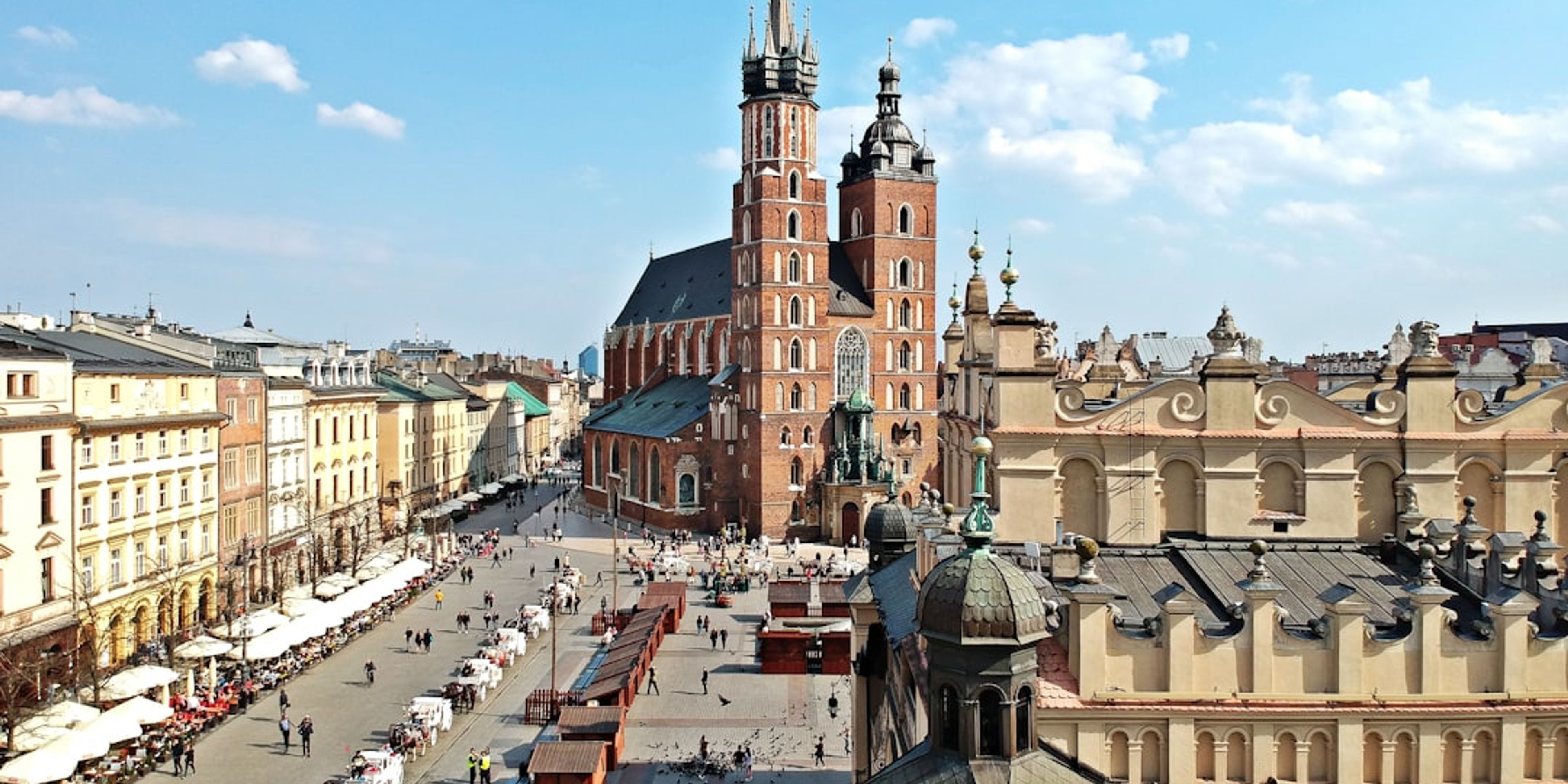
Krakow's Main Market Square (Rynek Główny) is the largest medieval town square in Europe at almost exactly 200 by 200 metres, and it has anchored daily life in the city since 1257. The Magdeburg-law layout has barely changed in 770 years - the Cloth Hall splits the square down the middle, St Mary's Basilica rises from the northeast corner, and the lonely 70-metre Town Hall Tower marks where the old town hall stood before it was demolished in 1820.
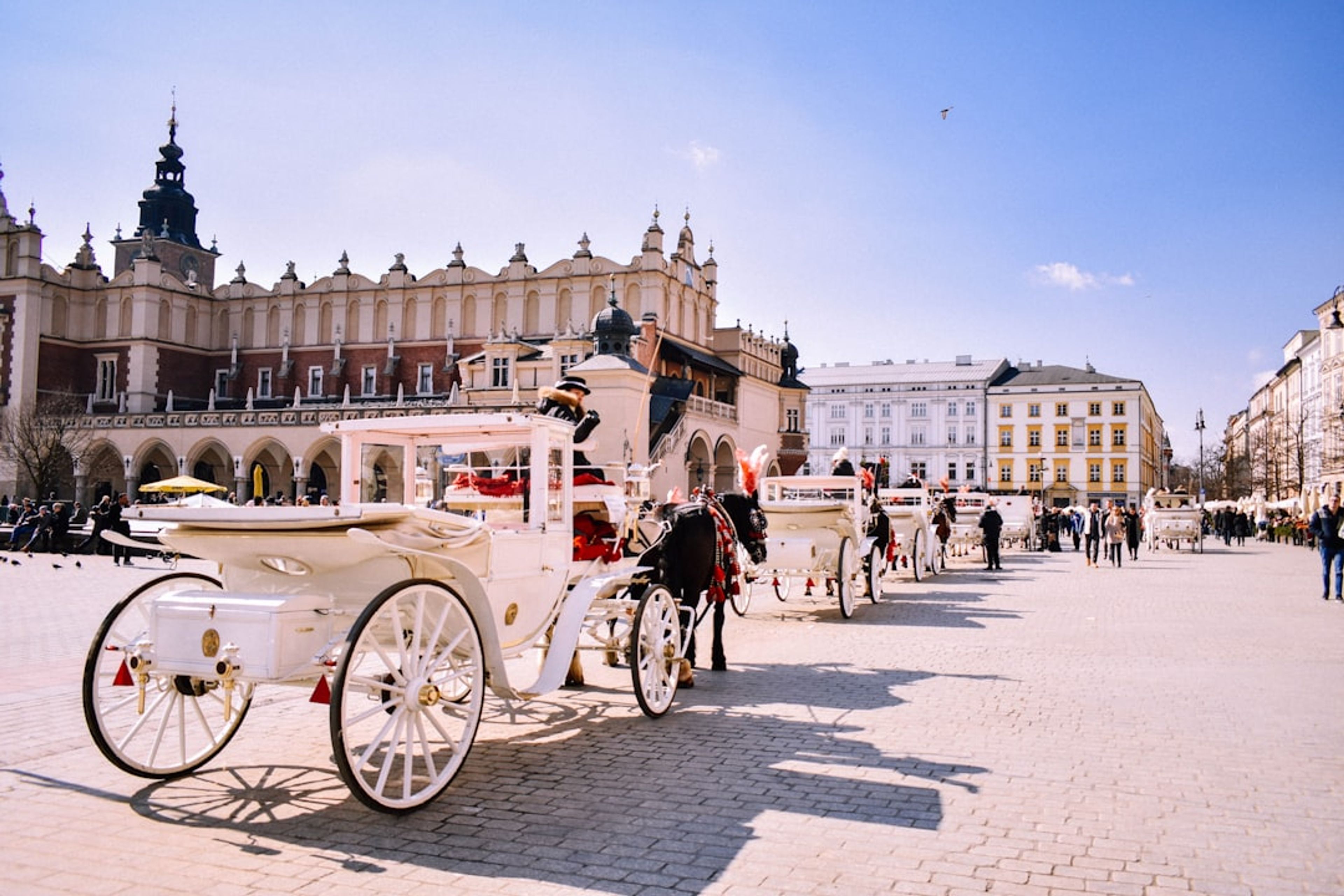
Beyond the headline buildings, the square works as Krakow's open-air living room. Horse-drawn dorożka carriages line up beside the Adam Mickiewicz Monument, buskers and pigeons crowd the central pavement, and outdoor cafe tables wrap nearly the entire perimeter from spring through autumn. In December the square hosts one of Central Europe's best Christmas markets; in summer it hosts the szopki competition, where elaborate model nativities go on display.
The Rynek is also the natural compass point for the rest of the city. Most major Old Town sights are within five minutes' walk, and the trumpet hejnał plays from the basilica's north tower every hour on the hour, so you always know roughly where you are.
Pro Tip: Time your first visit for 7am or after 9pm to see the square at its most atmospheric and almost empty. The morning light hits the eastern facades, and the night-lit Cloth Hall is the best photo of the trip.
2Wawel Royal Castle and Cathedral - Poland's Most Important Royal Complex
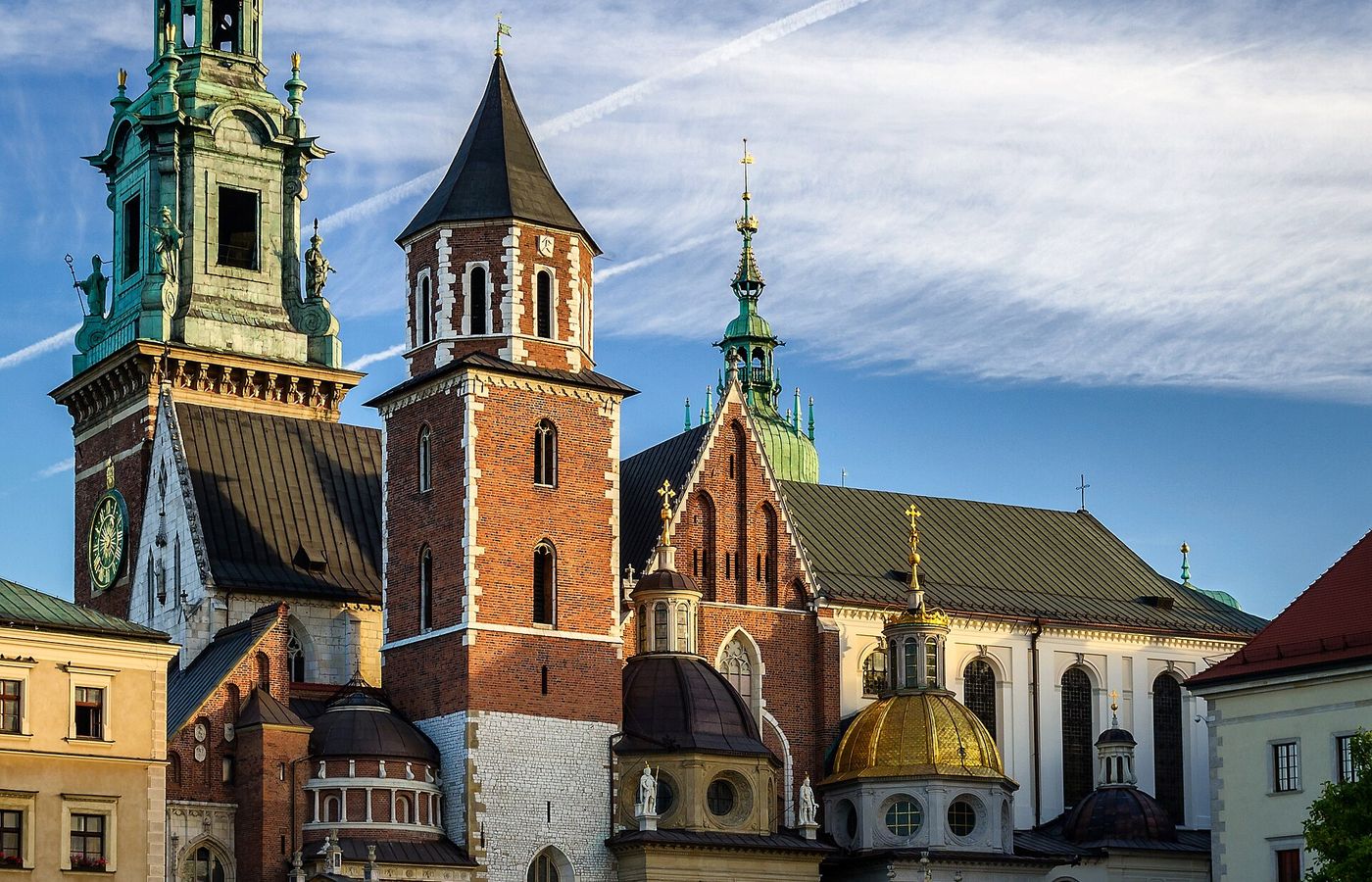

Wawel Hill has been the symbolic centre of Poland since the 11th century, when Polish kings moved their seat here from Gniezno. The complex layered onto the limestone outcrop combines the Renaissance Royal Castle, the Gothic Wawel Cathedral, the Romanesque Rotunda of Saints Felix and Adauctus, and the Dragon's Den cave at the foot of the cliff. Almost every Polish monarch was crowned and buried in the cathedral, and the cathedral crypts hold national heroes from Tadeusz Kościuszko to Marshal Józef Piłsudski.
The hill itself is free to enter, but the main interior attractions are individually ticketed. The State Rooms and Royal Private Apartments are the most popular and tickets sell out by mid-morning in summer; the Crown Treasury and Armoury, the Lost Wawel archaeological exhibition, and the Sigismund Bell tower climb each need their own ticket. Plan on at least three hours if you want to see more than the courtyard and cathedral.
Don't miss the Sigismund Chapel - the gold-domed Renaissance jewel on the south side of the cathedral - or the climb up the bell tower for the closest look at Poland's largest historical bell, described by UNESCO as part of the Old Town's outstanding universal value.
Pro Tip: Book State Rooms tickets at wawel.krakow.pl up to a week ahead in summer, then arrive on the hill at 9am, do the cathedral first, the State Rooms second, and finish with coffee at the courtyard cafe before the midday tour-group crush.

3St Mary's Basilica - Krakow's Most Iconic Gothic Church
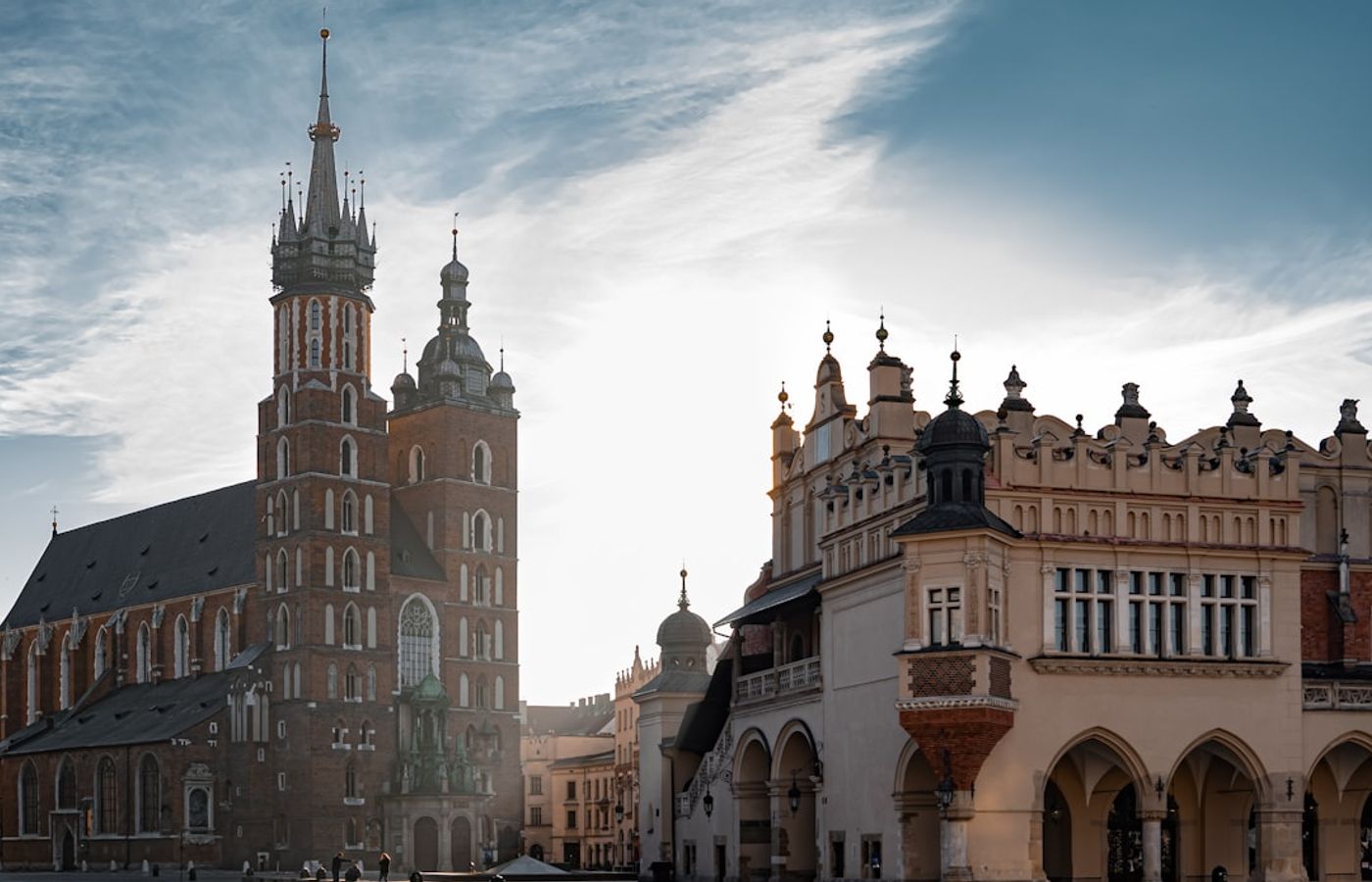

Krakow's St Mary's Basilica (Bazylika Mariacka) is the brick Gothic landmark on the northeast corner of the Main Market Square, and its mismatched twin towers are the visual signature of the city. Construction began in 1290; the taller north tower (81 metres) doubled as the city's main watchtower, while the shorter south tower (69 metres) carries five bells including the 8-tonne Półzygmunt.
Inside, the basilica is best known for the Veit Stoss altarpiece - a 13-metre-high carved limewood polyptych completed in 1489 and the largest Gothic altarpiece in the world. The central scene depicts the Dormition of the Virgin, surrounded by panels of the Joys of Mary; the figures are so detailed that art historians have used them to study 15th-century Polish faces and costumes. The starry blue vaulted ceiling, painted by Jan Matejko in 1890, is also unmissable.
Above all this, the basilica is famous for the hejnał - a short trumpet call played live from the top of the north tower every hour, on the hour, in four directions. The melody breaks off abruptly in memory of a 13th-century watchman shot in the throat by a Mongol arrow.
Pro Tip: The main tourist entrance is on plac Mariacki and charges admission; the side door on Floriańska Street is reserved for worshippers and is free, but you must stay behind the rail and cannot photograph. Time your visit for noon and listen for the hejnał from outside before going in.
4Cloth Hall (Sukiennice) - The Renaissance Market in the Middle of Rynek
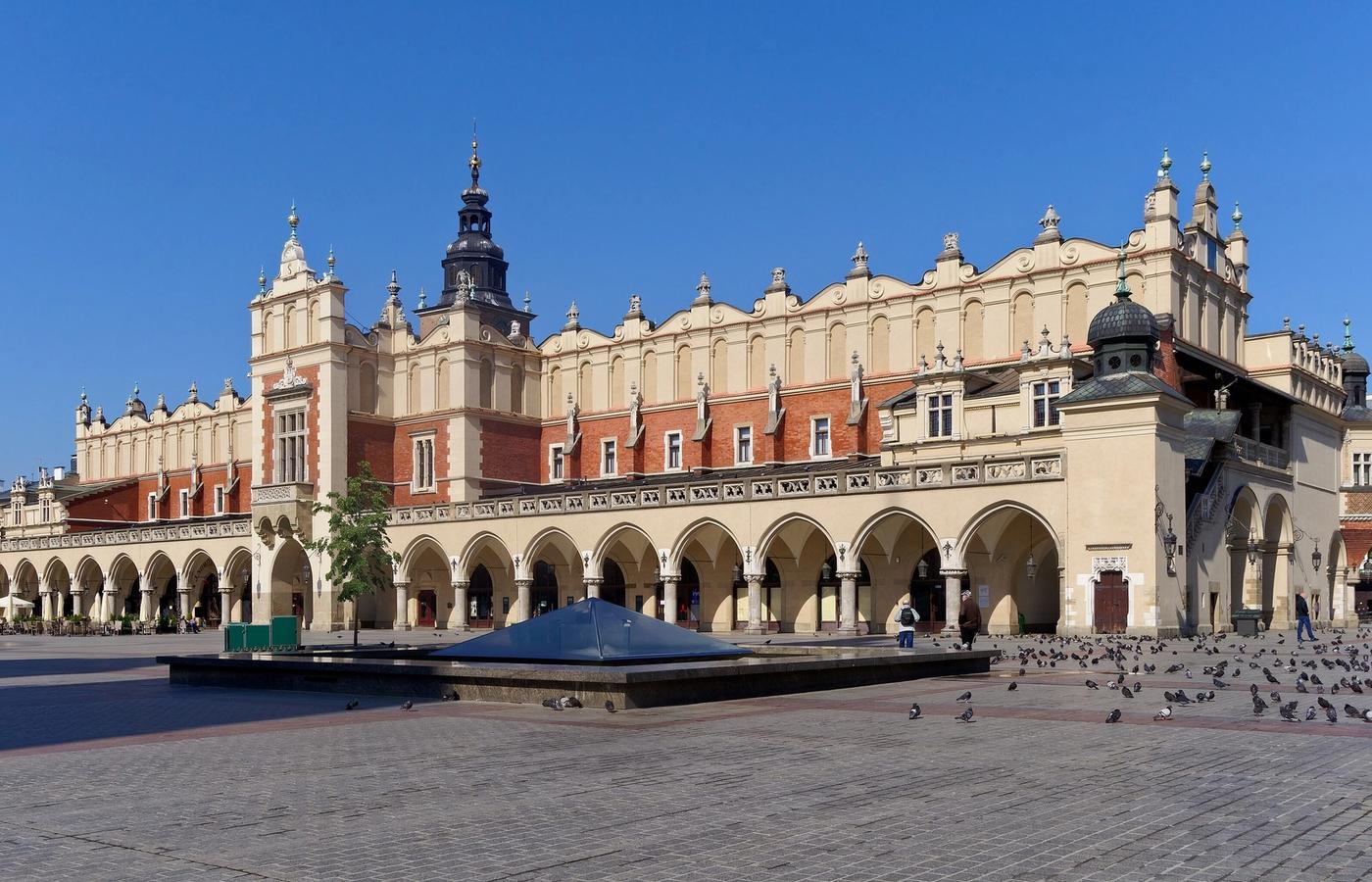
The Cloth Hall (Sukiennice) is the long arcaded building that runs down the middle of Main Market Square, splitting it visually into two halves. The site has been a covered trading hall since the 13th century - originally for textiles from Flanders, the Levant, and beyond - and the current Renaissance form, complete with grotesque-mask attic, is the work of Italian architect Giovanni il Mosca after the original Gothic hall burned in 1555.
The ground floor still works as a market, but the goods have changed. Today the central arcade is lined with stalls selling Polish amber jewellery, hand-carved chess sets, leather goods, lace, and embroidered linen. Prices are higher than at a neighbourhood market but the quality is reliably good, and the building itself is the real attraction.
Upstairs, the Sukiennice houses the Gallery of 19th-Century Polish Art - a National Museum branch with Matejko's monumental history paintings, Chełmoński's landscapes, and Wyspiański's portraits. The collection is small enough to see properly in an hour and fills in essential context for understanding Poland's pre-independence cultural life.
Pro Tip: Combine the Sukiennice stalls and gallery with the Rynek Underground Museum below them - all three share the Cloth Hall footprint, so a single afternoon covers all three layers of the square's history. Amber is genuine if it floats in salt water; flag-checking with the stall holder is normal practice.
5Kazimierz - Krakow's Historic Jewish Quarter
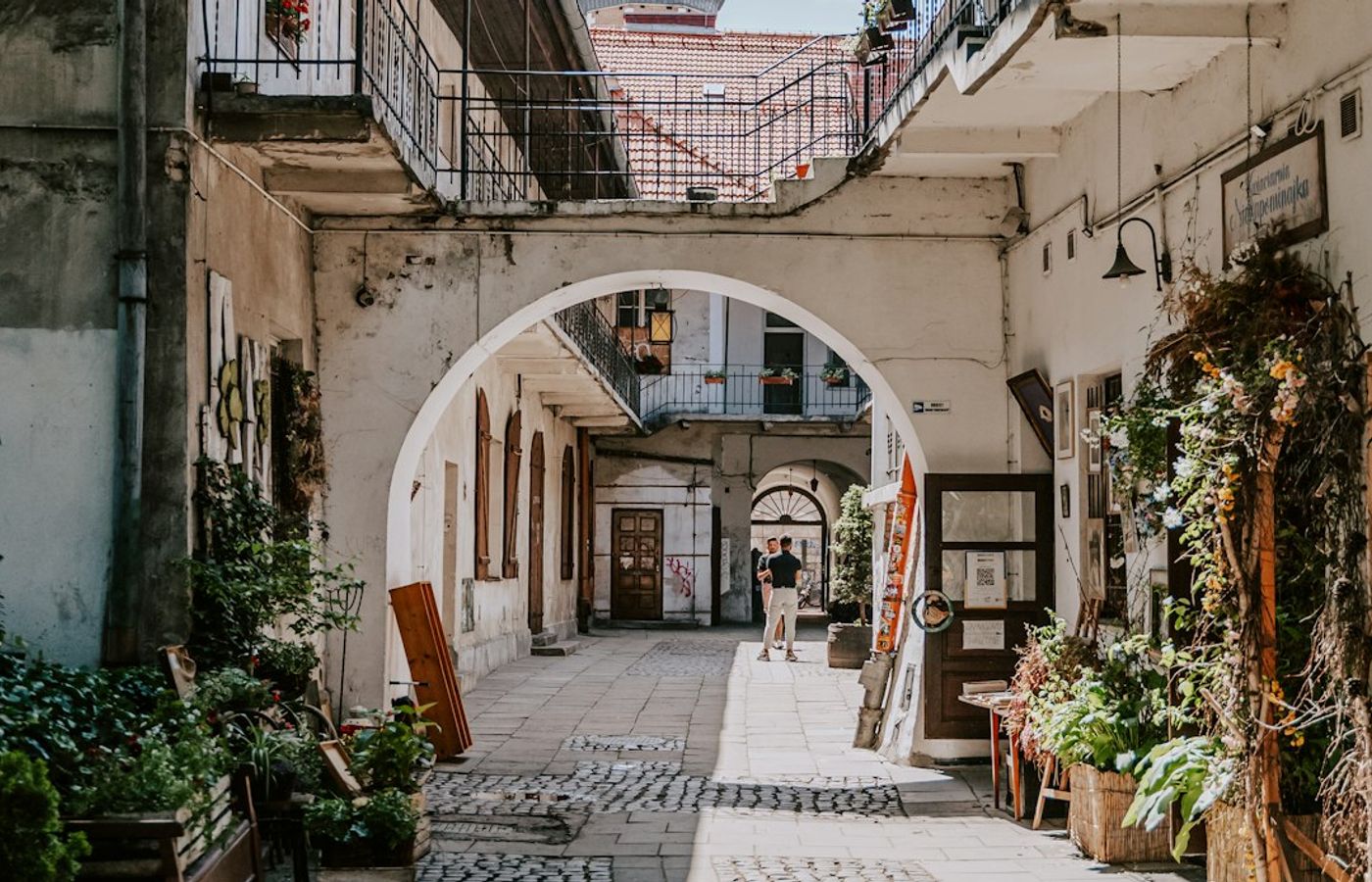
Kazimierz was a separate town from 1335 until 1800 and became Krakow's main Jewish quarter from the 16th century onward. After WWII the district stood largely empty for fifty years; since the late 1990s it has come back as the city's most atmospheric neighbourhood, where surviving synagogues, Jewish cemeteries, and prewar tenements share the cobbled streets with art galleries, vintage shops, and some of the best bars in Poland.
The Jewish heritage core is along Szeroka Street. The Old Synagogue (Stara Synagoga), now a museum of Krakow Jewish history, is the oldest surviving synagogue in Poland and dates to the 15th century. The Remuh Synagogue and its Renaissance cemetery, the High Synagogue, and the Tempel Synagogue are all within a few minutes' walk. Plac Nowy, the small octagonal market square with its central rotunda, is the heart of the modern scene - eat a zapiekanka (open-faced baguette with mushrooms and cheese) from one of the rotunda windows for the most local possible lunch.
After dark Kazimierz turns into Krakow's bar district. Courtyards behind unmarked doors hide some of the city's best craft-beer pubs, vodka rooms, and live-jazz cellars; the atmosphere is rougher than the Old Town and considerably more interesting.
Pro Tip: Buy a single combined ticket for the Old Synagogue and Galicia Jewish Museum if you want to do the main Jewish-history sites - they sit within a 10-minute walk of each other and pair well with a Schindler's Factory visit across the river in the afternoon.
6Oskar Schindler's Enamel Factory - WWII History Museum in Podgórze
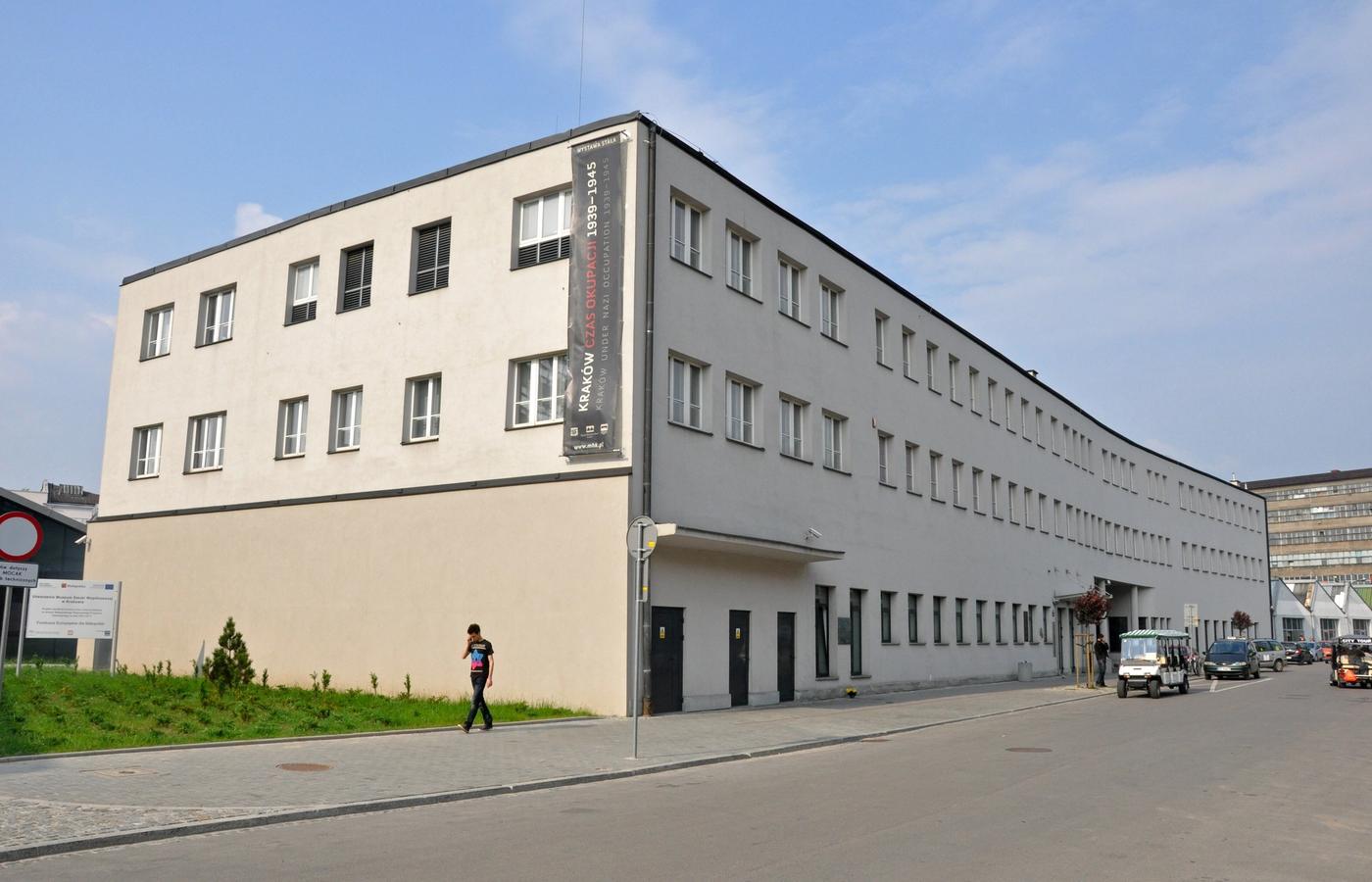
The former enamel factory at ulica Lipowa 4 is where Oskar Schindler ran his Deutsche Emaillewaren-Fabrik from 1939 to 1945 and saved approximately 1,200 Jewish workers from deportation - the story documented in Thomas Keneally's novel and Steven Spielberg's 1993 film. Since 2010 the building has been a branch of the Historical Museum of Krakow with a permanent exhibition titled 'Krakow under Nazi Occupation 1939-1945'.
The museum is much broader than the Schindler story. Across two floors and 45 rooms, the exhibition walks chronologically through the occupation - the German invasion of September 1939, the establishment of the Krakow Ghetto on the Podgórze side of the river, daily life under occupation, the liquidation of the ghetto in March 1943, the Płaszów concentration camp, and the underground resistance. Schindler's original office, with the famous wall of enamelware and the desk where he typed the list, is preserved at the centre of the visit.
The exhibition is dense and emotionally heavy; expect to spend two to three hours and allow time to decompress afterwards. The neighbourhood around the factory - the former Podgórze ghetto - is itself part of the visit, with surviving fragments of the ghetto wall on Lwowska Street and the empty chairs memorial in plac Bohaterów Getta.
Pro Tip: Pre-book online at muzeumkrakowa.pl - the museum caps numbers and walk-in tickets routinely sell out by 11am in summer. Wednesday is free-entry day but the queues stretch around the block, so a paid ticket on any other morning is the better trade.
7Wieliczka Salt Mine - UNESCO Underground Cathedral of Salt
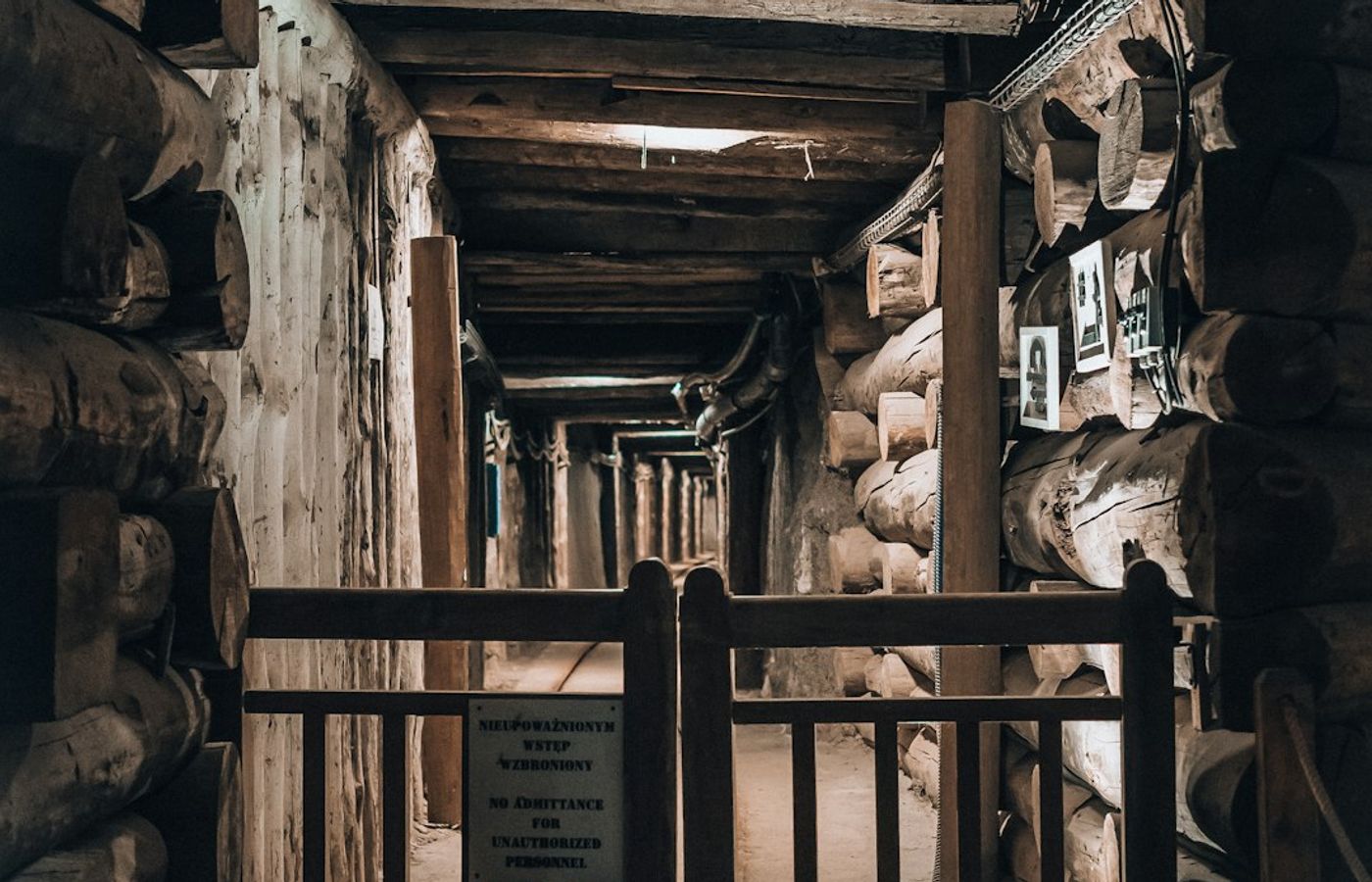
The Wieliczka Salt Mine produced rock salt continuously from the 13th century until 1996, and the upper levels are now one of the oldest tourist attractions in Europe - Copernicus, Goethe, and Pope John Paul II all visited. The site joined the original UNESCO World Heritage list in 1978, and the standard Tourist Route descends 135 metres below ground through 800 metres of corridors and 20 chambers carved entirely out of salt.
The unmissable highlight is the Chapel of St Kinga, 101 metres underground - a full-sized subterranean church with salt-crystal chandeliers, salt-rock floors polished to look like marble, and altarpieces, reliefs, and even a copy of Leonardo's Last Supper carved by miners over more than 70 years. The chapel is still consecrated and hosts weddings.
Practical notes: the tour is guided only, lasts about two hours, and ends with a lift back to the surface (no climbing required). The temperature underground is a constant 14-16°C year-round - bring a light jacket even in August. The mine is wheelchair accessible only on a separate route booked in advance.
Pro Tip: Book direct at wieliczka-saltmine.com rather than through Old Town tour agencies - you pay roughly half the price for the same English-language tour, and the SKA1 train from Krakow Główny drops you 200 metres from the entrance. First English tour usually departs at 8:30am.
8Auschwitz-Birkenau Memorial - The Most Important Holocaust Memorial in Europe
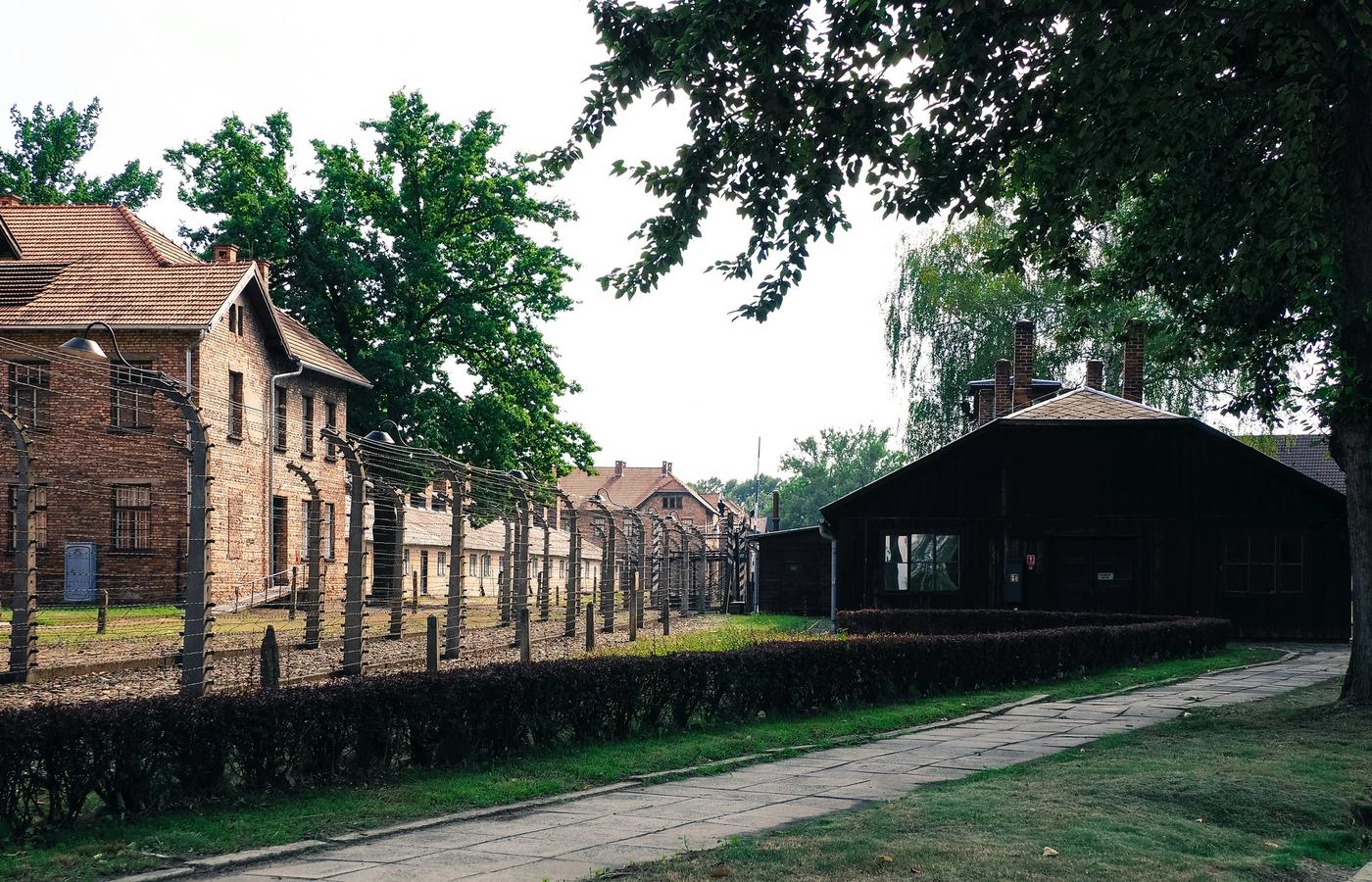
The Auschwitz-Birkenau State Museum preserves the two surviving camps of the largest Nazi concentration and extermination complex, where at least 1.1 million people - the overwhelming majority of them Jews - were murdered between 1940 and 1945. It is a UNESCO World Heritage Site, a Polish state museum, and one of the most heavily-visited memorial sites in the world, with over two million visitors a year.
A standard visit covers both Auschwitz I and Auschwitz II-Birkenau, connected by a free shuttle. Auschwitz I is the former Polish army barracks turned camp, with brick blocks containing the permanent exhibitions on Jewish, Roma, and Polish victims, suitcases and shoes confiscated from arrivals, the gas chamber and crematorium, and the cell where Maximilian Kolbe died. Auschwitz II-Birkenau, three kilometres away, is the much larger purpose-built extermination camp - the rail spur, the ruined gas chambers, and the wooden and brick barracks stretch across more than 170 hectares.
Entry to the memorial is free, but a timed ticket booked online at visit.auschwitz.org is mandatory between April and October, and an educator-guided tour (3.5 hours, paid) is required for entries before 4pm in peak months. Allow a full day in total including travel.
Pro Tip: Book the earliest possible English-language educator tour at 8:00 or 8:30am the moment your travel dates are confirmed - peak-season slots disappear two to three weeks ahead. Dress respectfully, do not photograph inside Block 4 or the hair display, and budget for an emotionally difficult day.
9Rynek Underground Museum - Medieval Krakow Four Metres Beneath the Main Square
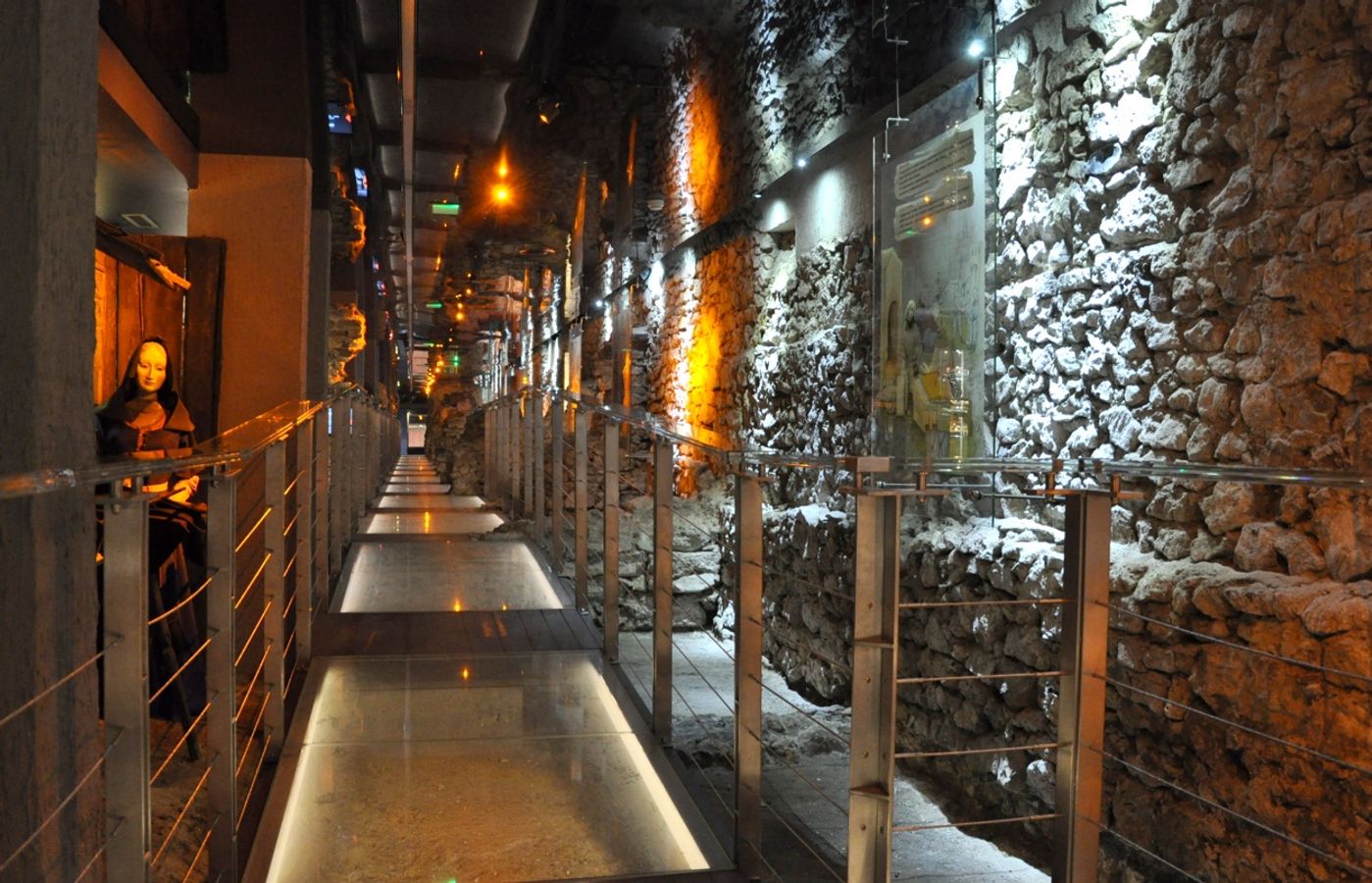
During the major Rynek Główny excavations of 2005-2010, archaeologists uncovered four metres of stratified medieval Krakow lying directly under the modern paving stones - cobbled streets, merchants' stalls, a cemetery, and the foundations of buildings burned during the Tatar raids of 1241. The site was preserved in situ, climate-controlled, and opened in 2010 as the Rynek Underground branch of the Historical Museum of Krakow.
The exhibition is a multimedia time-tunnel, not a glass-case museum. Touchscreens, holograms, and projections layered onto the original archaeology recreate Krakow as a 13th-century trade junction on the Amber and Salt Roads. Highlights include the burial of a suspected vampire (a body buried face-down with a stone in the mouth), reconstructed merchant goods, full-scale models of medieval Krakow houses, a fog projection of the city's 14th-century skyline, and a 600kg lead ingot recovered from the foundations of the Cloth Hall.
The site is genuinely cold and humid - dress warmly even in summer - and visit duration is capped at three hours per ticket. Free entry on Tuesdays sells out fastest.
Pro Tip: Buy timed-entry tickets at podziemiarynku.com 24-48 hours ahead in summer - the museum caps visitor numbers per hour and walk-ins routinely fail to get in. Pair with the Cloth Hall gallery upstairs for a complete vertical tour of 700 years of Krakow history.
10Krakow Barbican and St Florian's Gate - The Last Surviving Medieval Defences
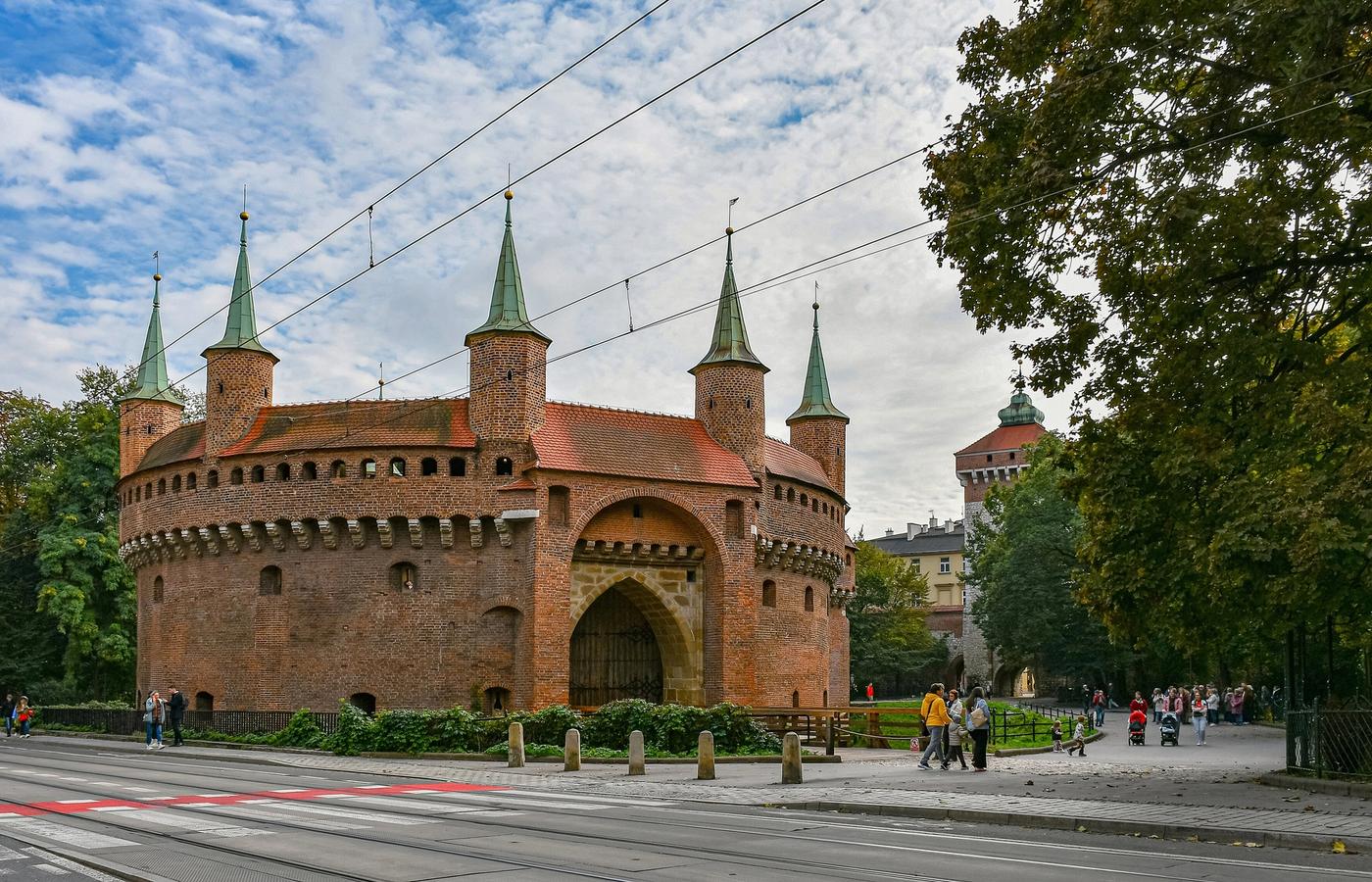
At the northern edge of the Old Town, the Krakow Barbican (Barbakan) and St Florian's Gate (Brama Floriańska) are the only substantial survivors of the medieval city walls that once ringed the Rynek with eight kilometres of fortifications, 47 watchtowers, and seven gates. The walls were demolished in the early 19th century to create the Planty - the green-belt park that now circles the Old Town - but these two structures were spared as the city's main ceremonial entrance.
The Barbican itself is one of only three surviving Gothic barbicans in Europe and the best preserved. Built in 1498-99 as a forward defence against Ottoman incursions, the brick rotunda has three-metre-thick walls, seven turrets, and 130 firing loopholes; the interior now houses a small museum on Krakow's military history. Walk through the connecting neck onto Floriańska Street, the most famous shopping street in the Old Town, and look up at St Florian's Gate (1307) - the surviving 33-metre tower above the gate carries a Baroque eagle and a copy of the city's miraculous image of the Virgin.
This stretch is part of the historic Royal Road, the coronation route Polish kings walked from St Florian's Gate down to Wawel Cathedral.
Pro Tip: Combine the Barbican-Gate visit with the 90-minute walk down the Royal Road (Floriańska to Grodzka, ending at Wawel) for the best single self-guided introduction to the Old Town. The Barbican is open seasonally, usually April to October; check muzeumkrakowa.pl before going.

CEO and co-founder
Tomas is the co-founder and director of trip1, an European company specializing in reservation services. He launched the company in 2025 with a focus on building scalable, efficient operations.
Climate averages · 1991–2020
When is the best time to visit Krakow?
The best time to visit Krakow is between April and September, the most comfortable stretch of the year on these averages.
Best time · April–SeptemberRainfall
- Jan-2°
- Feb0°
- Mar4°
- Apr9°
- May14°
- Jun18°
- Jul20°
- Aug19°
- Sep14°
- Oct9°
- Nov4°
- Dec0°
More of Poland
10 Top Places to Visit in Krakow, Poland - FAQ
No, visiting all 10 places in one day is not realistic. Plan on three to four full days minimum. The five Old Town entries (Main Market Square, St Mary's Basilica, Cloth Hall, Rynek Underground, Barbican and St Florian's Gate) fit comfortably into one day on foot, and Wawel Castle can be added if you start early. Kazimierz and Schindler's Factory together fill a second day. The Wieliczka Salt Mine and the Auschwitz-Birkenau Memorial each consume the better part of a separate day - combining either with a city sight on the same day leaves you rushed and short-changes both.
Visit the 10 attractions in three geographic clusters across three to four days. Day one covers the Old Town core - start at the Krakow Barbican and St Florian's Gate, walk Floriańska Street to the Main Market Square, climb St Mary's Basilica for the noon hejnał, then loop through the Cloth Hall stalls, gallery, and Rynek Underground Museum. Day two follows the Royal Road south to Wawel Royal Castle and Cathedral, then crosses to Kazimierz for the synagogues, plac Nowy lunch, and evening bars. Day three pairs Schindler's Factory in Podgórze with a half-day at Wieliczka Salt Mine. Add a fourth day for Auschwitz-Birkenau.
Five of the 10 attractions require advance booking in peak season (May to September). Auschwitz-Birkenau is the strictest: timed entry is mandatory and educator-guided tours must be reserved at visit.auschwitz.org, often two to three weeks ahead. The Wieliczka Salt Mine tour, Schindler's Factory Museum, the Rynek Underground Museum, and Wawel Royal Castle State Rooms all cap visitor numbers per hour and routinely sell out by mid-morning - book 24-48 hours ahead through each site's official portal. The Main Market Square, St Mary's Basilica nave, Cloth Hall stalls, Kazimierz, and the Barbican are walk-up only and do not require reservations.
Budget roughly 450-600 PLN (about 105-140 EUR) per person for all ticketed entries plus day-trip transport. Indicative 2026 prices: Wawel State Rooms 35 PLN, Schindler's Factory 32 PLN, Rynek Underground 32 PLN, St Mary's Basilica nave 15 PLN, Cloth Hall gallery 22 PLN, the Barbican 12 PLN. Wieliczka Salt Mine direct tickets are about 130 PLN including the English-language tour; Auschwitz-Birkenau entry is free but the mandatory educator tour costs around 100 PLN, plus 50-80 PLN for direct bus return from Krakow. The Main Market Square, Kazimierz street walks, and St Florian's Gate exterior are free.
Technically yes but it is strongly not recommended. Both sites involve significant travel from Krakow (Wieliczka 30-40 minutes each way, Auschwitz 90 minutes each way) and both rely on timed, guided entries that run two to three and a half hours. Combo bus tours marketed in the Old Town promise both in one day, but the resulting schedule means a 12-hour day with rushed visits at each site, and the emotional weight of Auschwitz benefits from being visited on its own. Treat them as two separate full days.
Yes, all 10 attractions are reachable by Krakow's MPK trams and buses plus regional rail. The seven Old Town and Kazimierz sites cluster within a 25-minute walk of the Main Market Square, with frequent trams along Basztowa, Westerplatte, and Starowiślna for longer hops. The Wieliczka Salt Mine is served by the SKA1 regional train from Krakow Główny station every 30 minutes, and Auschwitz-Birkenau has direct hourly buses from the MDA bus station next to the main rail terminal. No taxis or hire car are needed at any stage of this itinerary.
Four worthwhile additions sit just outside the top 10. The Princes Czartoryski Museum on Pijarska Street holds Leonardo da Vinci's Lady with an Ermine - one of only four surviving Leonardo paintings of women - and merits an hour for art lovers. Nowa Huta, the socialist-realist planned town built east of the centre in 1949, offers a striking contrast to the medieval Old Town and is reachable by tram 4. The Krakus and Wanda burial mounds give the best free panoramic views over Krakow. For nature, the Benedictine Tyniec Abbey perched on a Vistula cliff makes an easy half-day bike ride or bus 112 trip from the city centre.

Related travel guides
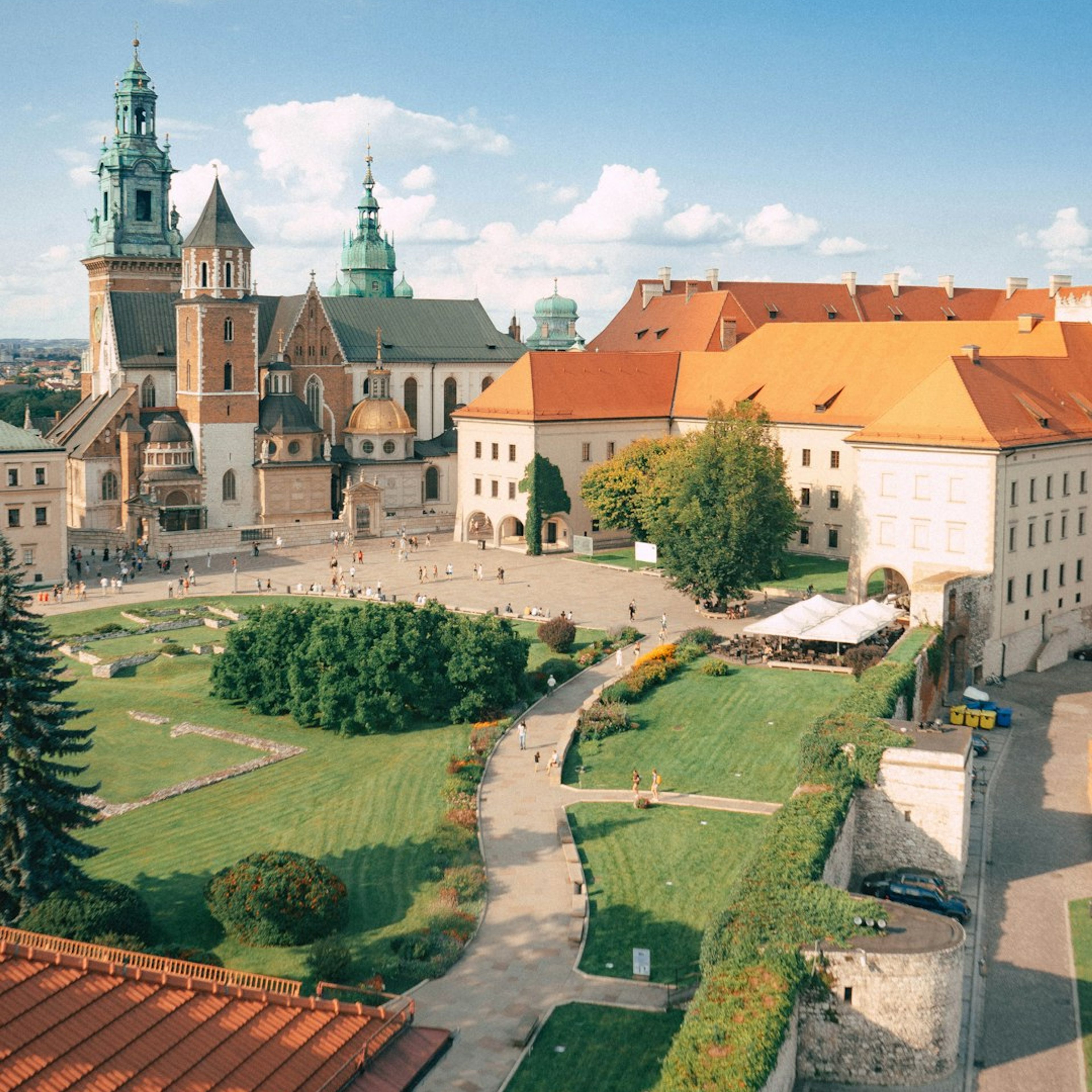
5 Best National Parks Near Krakow
The 5 best national parks near Krakow for 2026, with driving times, bus and train links, entry fees in PLN and EUR, addresses and signature trails.
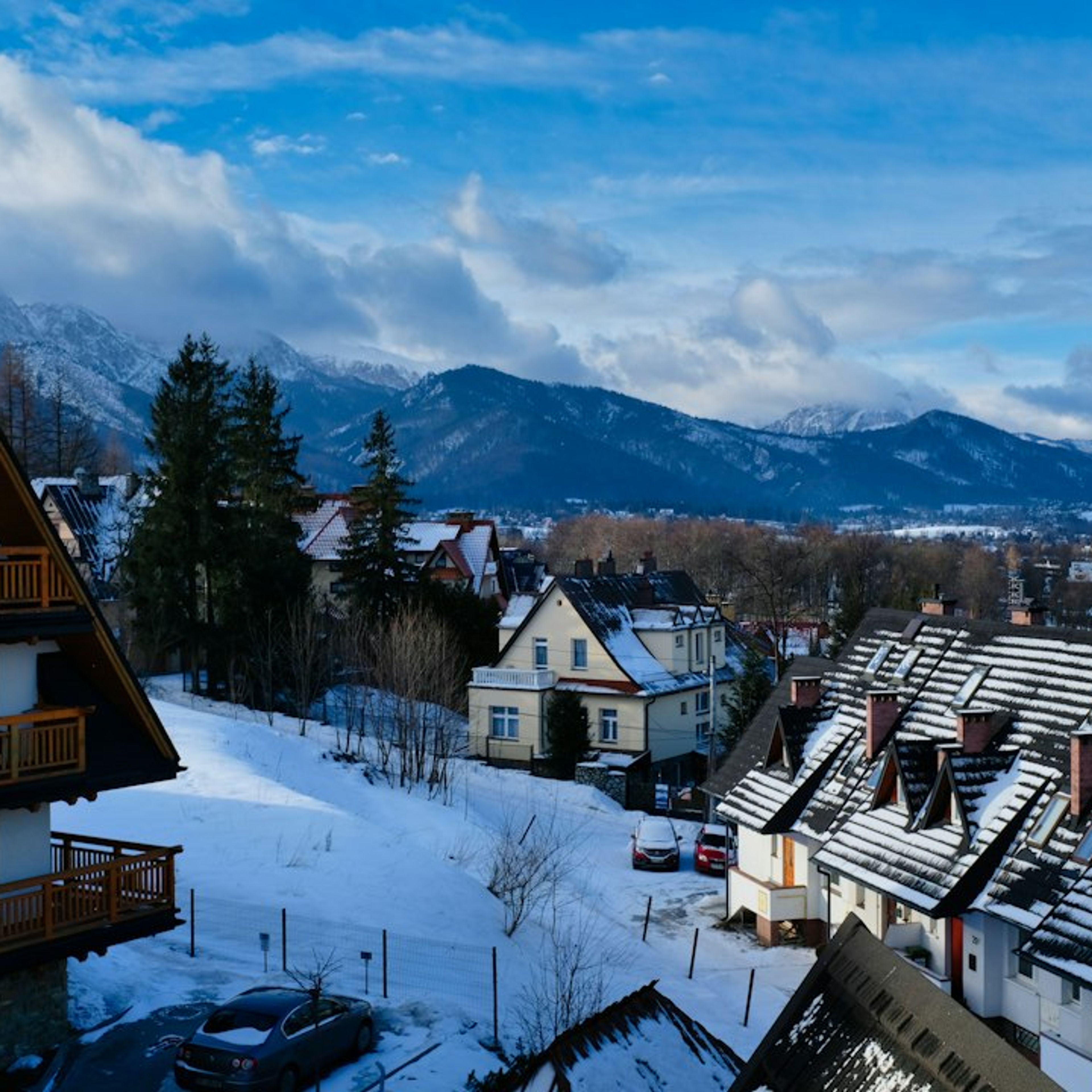
5 Best Ski Slopes in Zakopane
The best ski slopes in Zakopane for 2026: Kasprowy Wierch, Harenda, Szymoszkowa, Kotelnica Białczańska and Suche, with prices, lifts and transit.