

Guides · Gdansk
10 Top Places to Visit in Gdansk

CEO and co-founder
This guide ranks the 10 top places to visit in Gdansk, Poland - the sights that genuinely deserve a spot on your itinerary whether you have two days or a full week on the Baltic coast. Each entry includes the exact street address, nearest tram or SKM train stop, walking time, and a practical Pro Tip written from a traveller's perspective. The list is ordered so you can plan efficient sightseeing routes - Main Town landmarks like Long Market and Mariacka Street cluster into one walking loop, the Museum of the Second World War and European Solidarity Centre sit within 15 minutes of each other, and the Westerplatte, Oliwa, and Malbork options work as separate half-day or full-day trips.
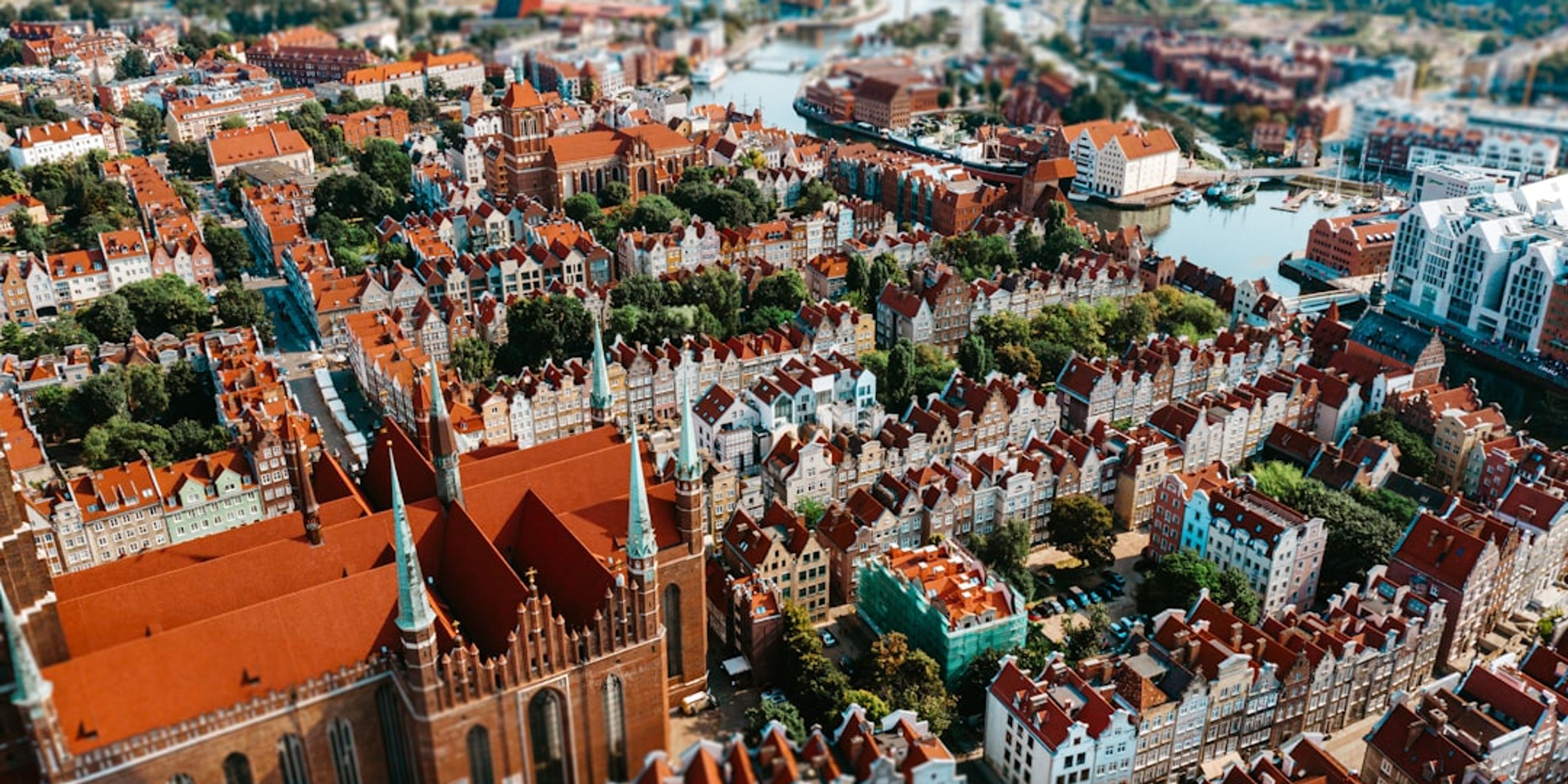
Gdansk sits at the mouth of the Motlawa river where it meets the Bay of Gdansk, and the city has spent a thousand years as a Hanseatic port, a Napoleonic free city, and the birthplace of the Solidarity movement that ended communism in Poland. That layered past shows up in every attraction below, from a 15th-century harbour crane still standing on the waterfront to a WWII museum with a 5,000 square metre main exhibition. Use this list as a working itinerary rather than a bucket list - two well-planned days will cover the essentials, and a third day frees you up for Malbork Castle or the seaside spa town of Sopot.
Practical notes: the Main Town is fully walkable, tickets for the two large history museums should be booked online in advance for June through August, and the SKM commuter train is the easiest way to reach Oliwa, Sopot, and (with a change) Malbork. All prices listed below are current for 2026.
1Long Market and Neptune's Fountain - The Postcard Heart of Gdansk
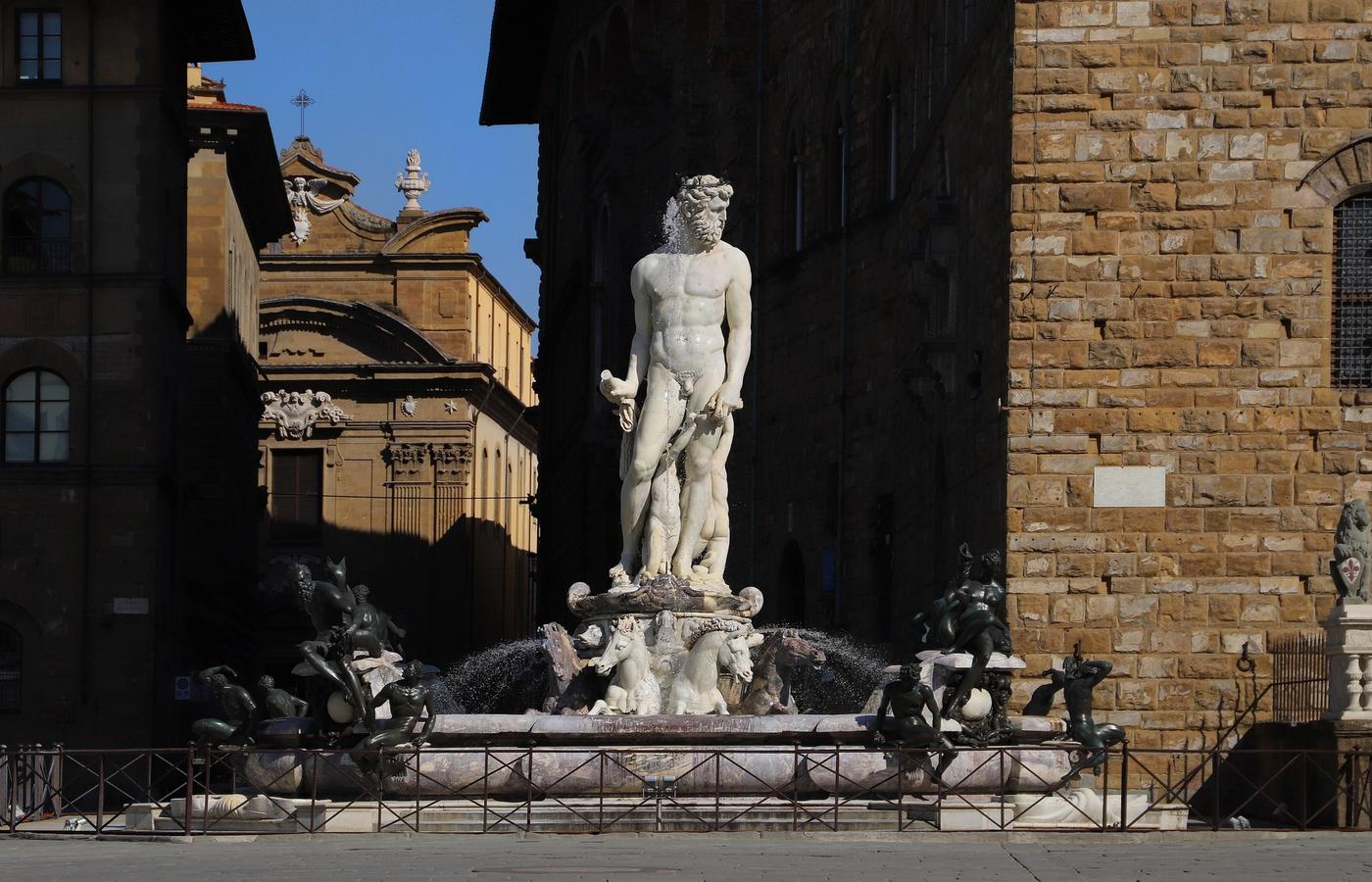

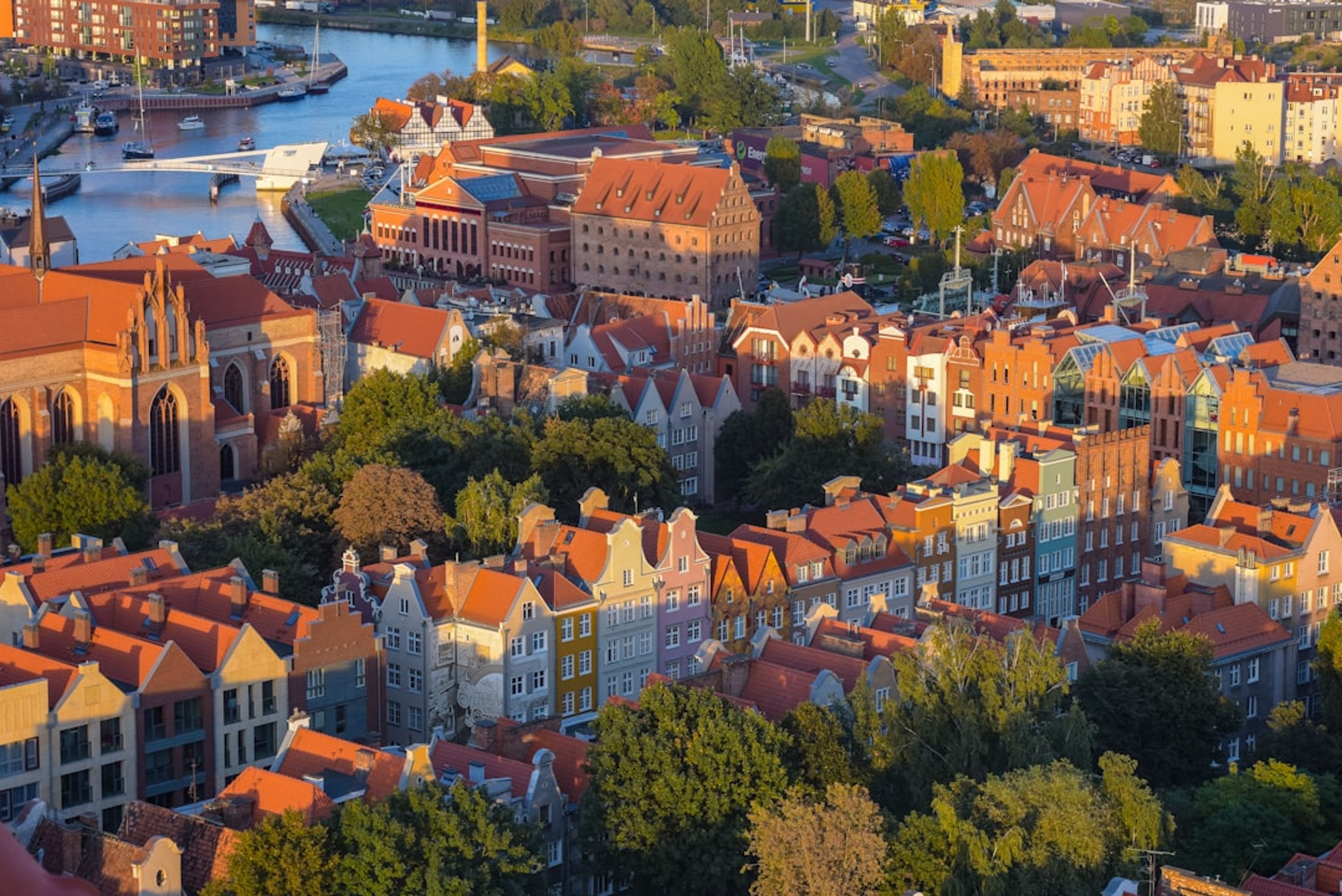
The Long Market (Dlugi Targ) is the widened, pedestrianised eastern half of Long Street and the natural place to begin any Gdansk itinerary. The row of tall, narrow burgher houses in ochre, mint, and dusky pink was almost entirely rebuilt after 1945, drawing on 17th and 18th century Dutch and Flemish influences that made Gdansk one of the wealthiest ports in northern Europe. Landmark buildings include the Main Town Hall with its 82-metre tower and the Renaissance Artus Court, once a meeting hall for merchant guilds and now part of the Gdansk History Museum.
Right in the middle stands Neptune's Fountain, cast in bronze in 1633 by Peter Husen and Johann Rogge from a design by Abraham van den Blocke. Neptune's raised trident and slight bow are said to reference the Polish king, and the fountain has become the visual shorthand for the whole city. Cafes with heated terraces line both sides of the square in shoulder season, and buskers and amber sellers keep the place lively into the evening.
Pro Tip: Come back for sunset around 21:00 in June - the west-facing facades along Dluga catch the golden light, and the tour groups have thinned to nothing. Sit on the fountain's stone edge with an ice cream from Paolo Gelateria at Dluga 68.
2St Mary's Church - The Largest Brick Church in the World
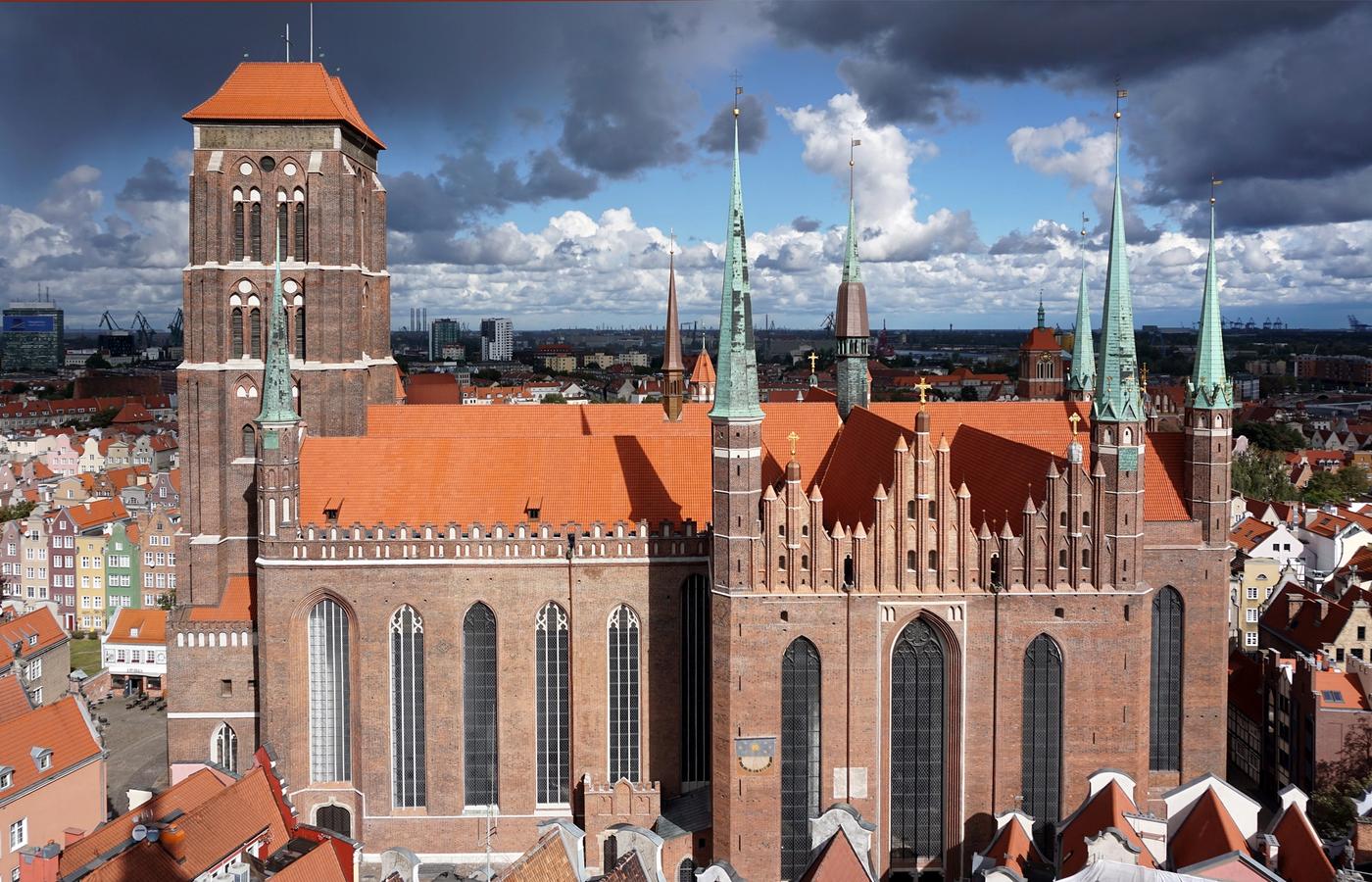

The Basilica of St Mary is a Gothic hall church begun in 1379 and completed in 1502, and it is widely cited as the largest brick church in the world by volume. It fits an estimated 25,000 people, and the nave rises to 30 metres with slender octagonal pillars fanning out into star vaults. Inside look for the 14-metre astronomical clock built by Hans Duringer in 1470, the stone Piata sculpted around 1410, and the copy of Hans Memling's Last Judgment triptych (the original hangs in the National Museum a few streets away).
Climbing the tower is the single best thing you can do in Gdansk for orientation. The 405-step spiral leads to an open viewing gallery 78 metres up with a full 360-degree view over the terracotta roofs of Main Town, the shipyard cranes to the north, and the Motlawa curving south towards the Green Gate. There is no lift and the stairs get tight - allow 15 minutes each way.
Pro Tip: Aim for the tower right at opening (10:00 in summer, 11:00 in winter). Tickets are 20 PLN cash only at the small stand inside the south entrance, and the queue triples after 12:00 when the cruise groups arrive from Gdynia.

3Mariacka Street - The Amber Capital of Europe
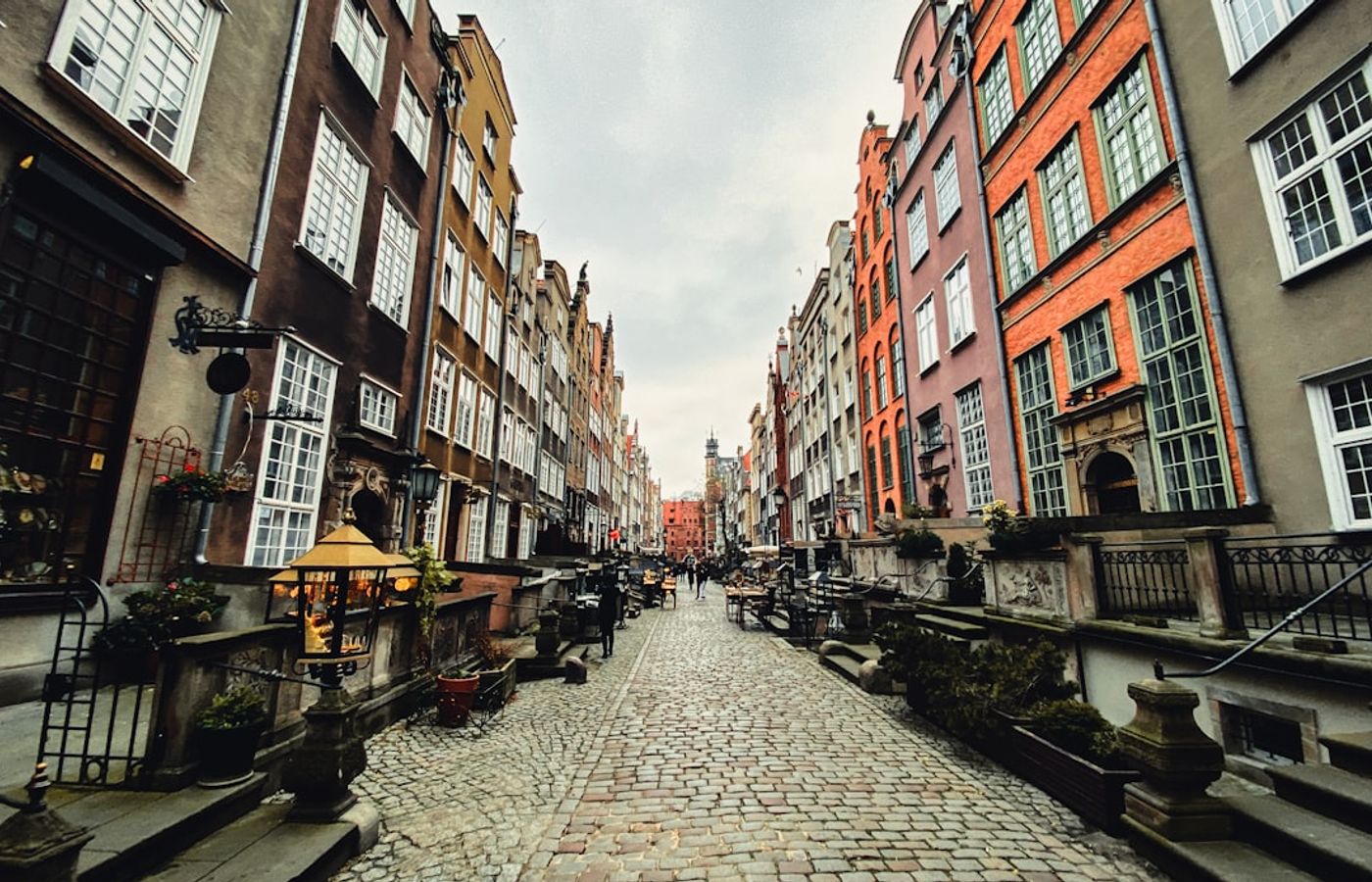

Mariacka Street is Gdansk's most photographed lane and its unofficial amber quarter. The 200-metre cobbled street runs from Mariacka Gate on the Motlawa waterfront up to the western facade of St Mary's Church, flanked on both sides by terraced burgher houses with the distinctive stone porches called przedproza - raised platforms with gargoyle drainspouts and wrought-iron railings. Reconstructed painstakingly after the war based on pre-1939 photographs, the street feels like a stage set precisely because it was built to be one, on original medieval foundations.
Every ground-floor window along Mariacka is an amber workshop, and prices are set by weight and quality rather than nationality, so haggling gets you nowhere. Look for pieces with visible inclusions (insects or plant fragments), which are the most collectable. The Baltic amber sold here is 40 to 50 million years old, formed from the resin of an extinct pine species, and Gdansk has been a trading hub for it since Roman times. Even if you buy nothing, wander in and watch the artisans shape and polish raw nuggets at the back of the shops.
Pro Tip: Certified amber from a Gdansk workshop should always come with a small hologram sticker or a written guarantee. Ask for a UV test on the spot - real Baltic amber fluoresces pale blue under a UV torch, plastic and copal do not.
4Museum of the Second World War - Europe's Largest WWII Exhibition
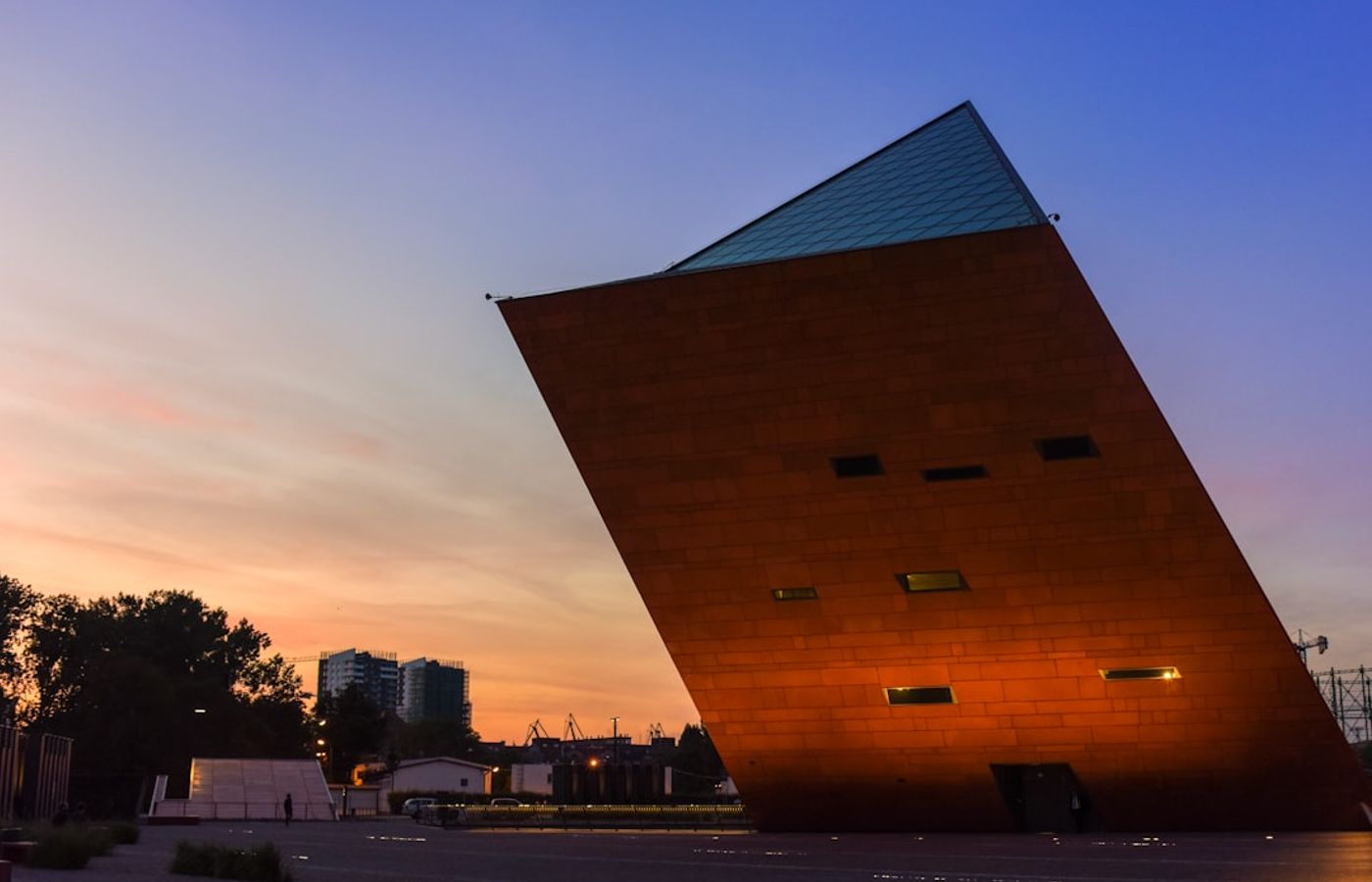
The Museum of the Second World War opened in 2017 and occupies a striking 40-metre tilted red tower designed by the Studio Architektoniczne Kwadrat. The main exhibition sits three levels below ground and stretches over 5,000 square metres, making it one of the largest permanent WWII displays anywhere in the world. Rather than framing the war as a purely military story, the curators use everyday objects - a Warsaw ration book, a wooden suitcase from a deported Silesian family, an SS uniform, a Berlin street sign - to trace how ordinary people lived, resisted, and died between 1939 and 1945.
The exhibition begins with the origins of totalitarianism in the 1920s, walks you through the German invasion of Poland (which began 5 km east of the museum at Westerplatte on 1 September 1939), and ends with the long shadow of the war in post-war Europe. A separate section covers the Holocaust in a purpose-built room lit only by projected names of victims. Allow a minimum of three hours - most visitors need four to five. The last entry is 90 minutes before closing.
Pro Tip: Buy your timed entry ticket at muzeum1939.pl at least two days ahead in summer. Rent the free English audio guide at the desk (leave your passport as deposit) - the wall texts are only in Polish and English, and most of the emotional weight comes from the recorded personal testimonies.
5European Solidarity Centre - Where the Cold War Ended
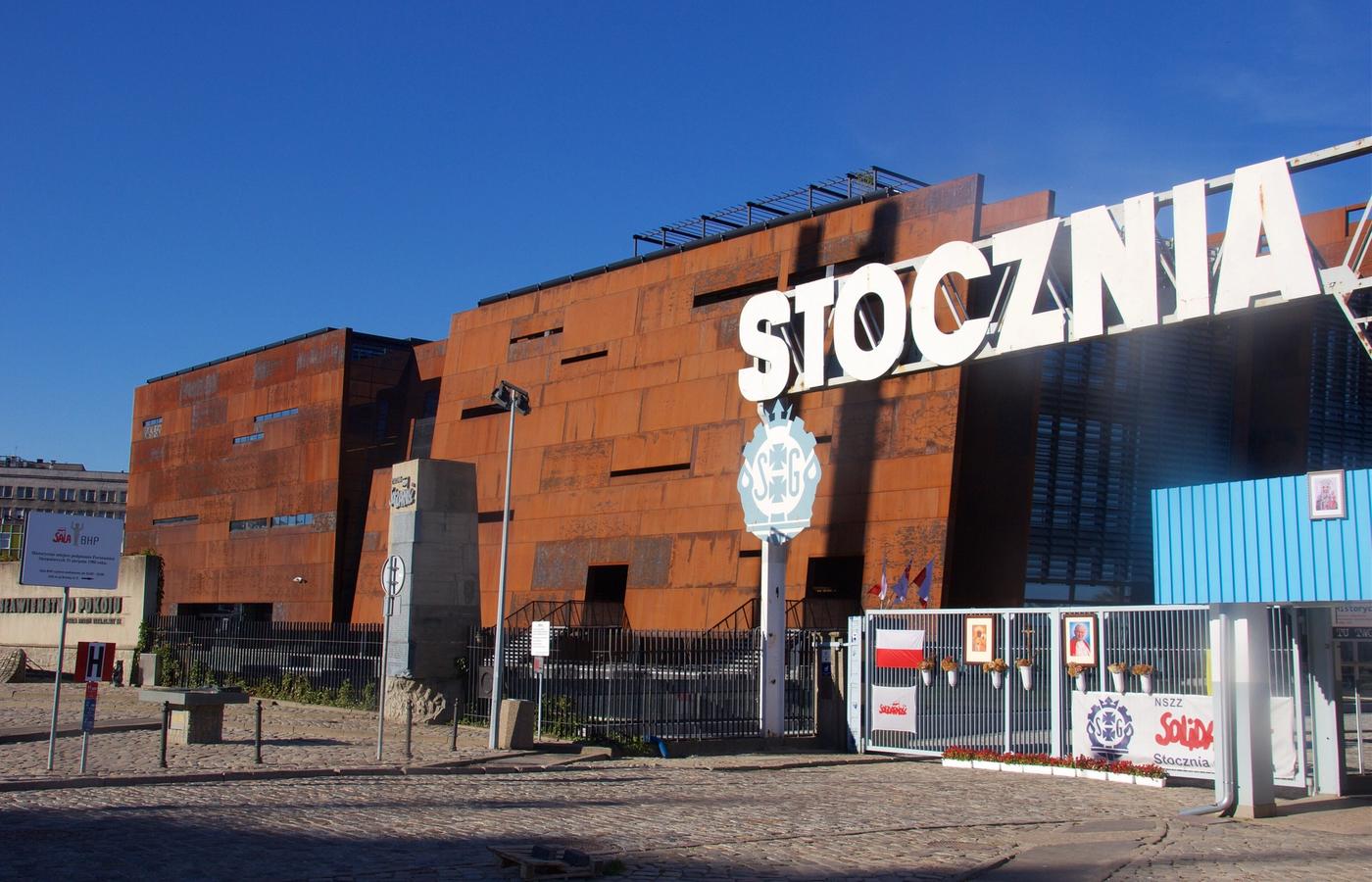
The European Solidarity Centre stands directly next to Gate No. 2 of the former Gdansk Shipyard, the exact spot where electrician Lech Walesa climbed the fence in August 1980 to join the strike that would eventually topple communism across Central Europe. The building itself is deliberately industrial - a leaning rust-red structure meant to echo the hull of a ship under construction - and holds a 3,000 square metre permanent exhibition across seven halls.
The exhibition traces the workers' movement from the 1970 shipyard massacre through the strike waves of the 1980s and martial law to the round table talks of 1989 and the first partially free elections. Original artefacts include the shipyard gate itself, the wooden plaques with the strikers' 21 demands (now on the UNESCO Memory of the World register), and Walesa's oversized pen used to sign the August Accords. The rooftop garden gives a clear view over the surviving shipyard cranes and the modern glass tower of the Imperial Shipyard redevelopment.
Pro Tip: On Wednesdays entry is free, but it gets packed - go on a Tuesday or Thursday morning instead. After the museum, walk 300 m north to the Monument to the Fallen Shipyard Workers - three 42-metre steel crosses with anchors, unveiled in December 1980.
6Westerplatte - Where the Second World War Began
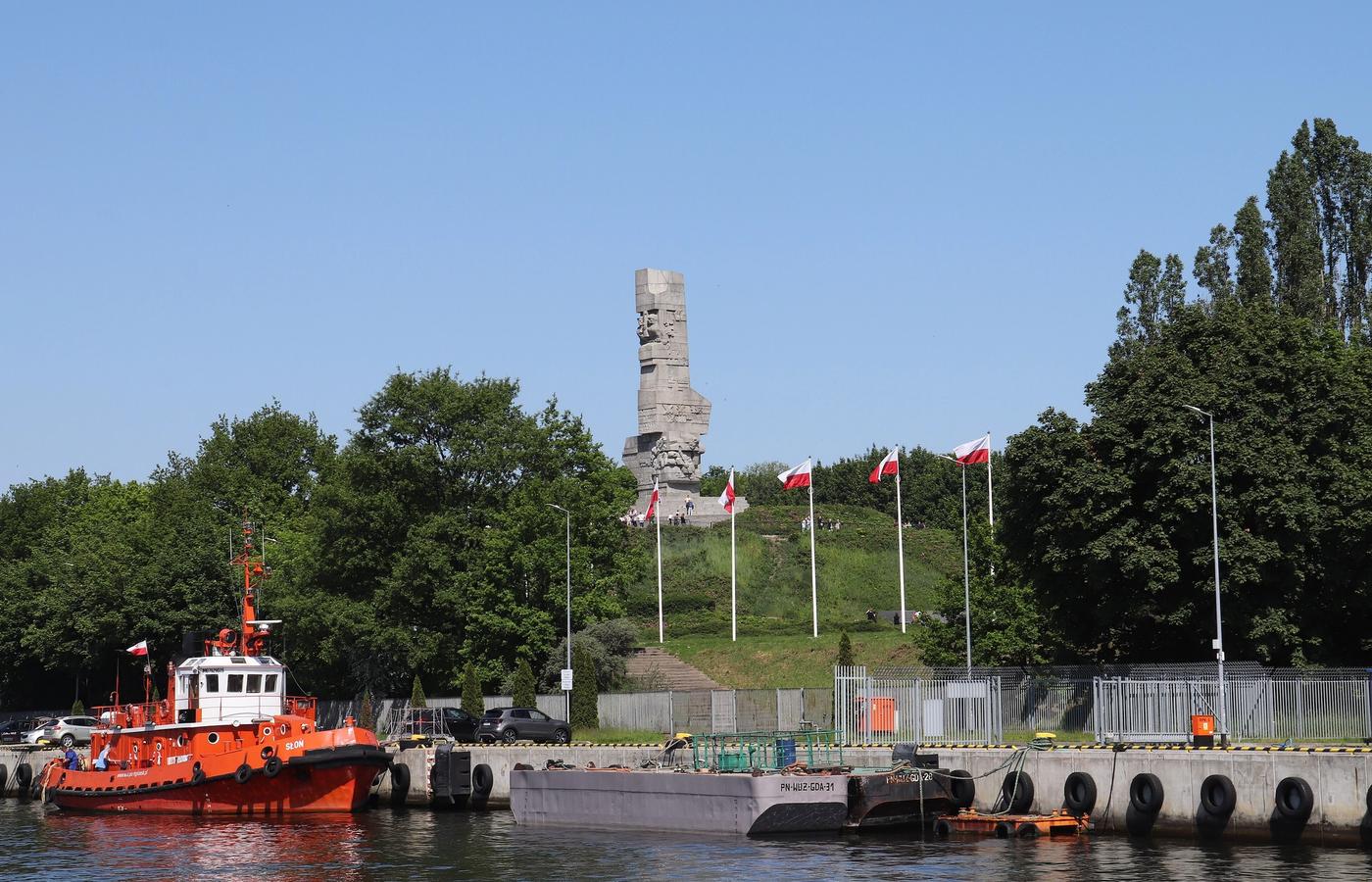
Westerplatte is the narrow, wooded peninsula where the Second World War began at 04:45 on 1 September 1939, when the German battleship Schleswig-Holstein opened fire on the small Polish military transit depot stationed here. A garrison of 182 Polish soldiers under Major Henryk Sucharski held out for seven days against repeated bombardment and infantry assaults before finally surrendering. The stand became a founding myth of the Polish resistance and gave the country its rallying cry of "Westerplatte still fights".
The site today is a mix of memorial and ruin. The 25-metre Monument to the Coast Defenders on top of an artificial hill from 1966 dominates the peninsula. Walk the marked trail past the ruins of Guardhouse No. 1 (with bullet holes still visible in the concrete), the New Barracks foundations, and the small museum in a reconstructed guardhouse that opens seasonally from May to September. The whole loop takes about 90 minutes at a slow pace, and the Baltic sea breeze makes it a welcome break from the Old Town in high summer.
Pro Tip: Take the pirate-ship style Galeon Lew ferry from the Zielona Brama pier instead of the bus - the 45-minute ride down the Motlawa gives you a view of the shipyard and Nowy Port, and the return ticket runs about 90 PLN in summer. Ferries run roughly hourly between 09:30 and 17:30 from May to September.
7Golden Gate and Uphagen House - The Best of Bourgeois Gdansk
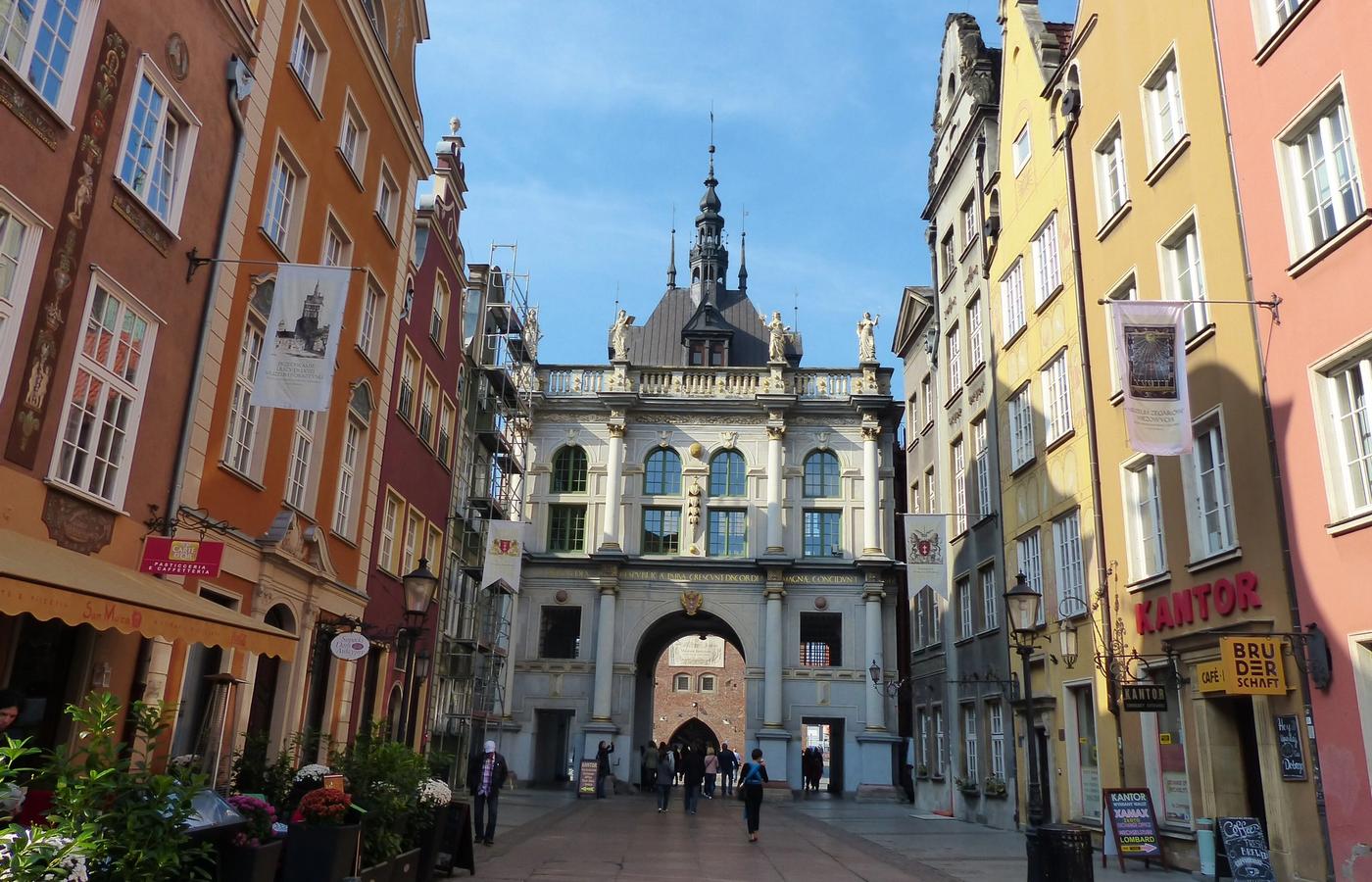
The Golden Gate (Zlota Brama) from 1614 is the ceremonial western entrance to the Long Street. Designed by Abraham van den Blocke in a Mannerist style, its four allegorical statues of Peace, Freedom, Wealth, and Fame quote the civic virtues that the merchant city wanted to project. Pass beneath it and you are on Dluga Street, the same processional route Polish kings used when they visited the city.
A short walk east at Dluga 12 is the Uphagen House, an 18th-century merchant's townhouse and one of the very few historic Gdansk interiors to have been reconstructed room by room with its original furniture. Johann Uphagen was a wealthy councillor who left detailed inventories, which allowed conservators to recreate a full sequence of rooms: the entrance hall with its checkerboard marble floor, the Chinese Salon with hand-painted silk wallpaper, the music room, and a working 18th-century kitchen with its original spit and copper cookware. Ticket entry is 20 PLN and includes a good English pamphlet.
Pro Tip: Combine Uphagen House with the Main Town Hall Museum tower next door on a single ticket via the Gdansk History Museum website - it saves you about 15 PLN and lets you walk the same route the burghers walked to the town hall for council meetings.
8The Gdansk Crane - The Largest Medieval Port Crane in Europe
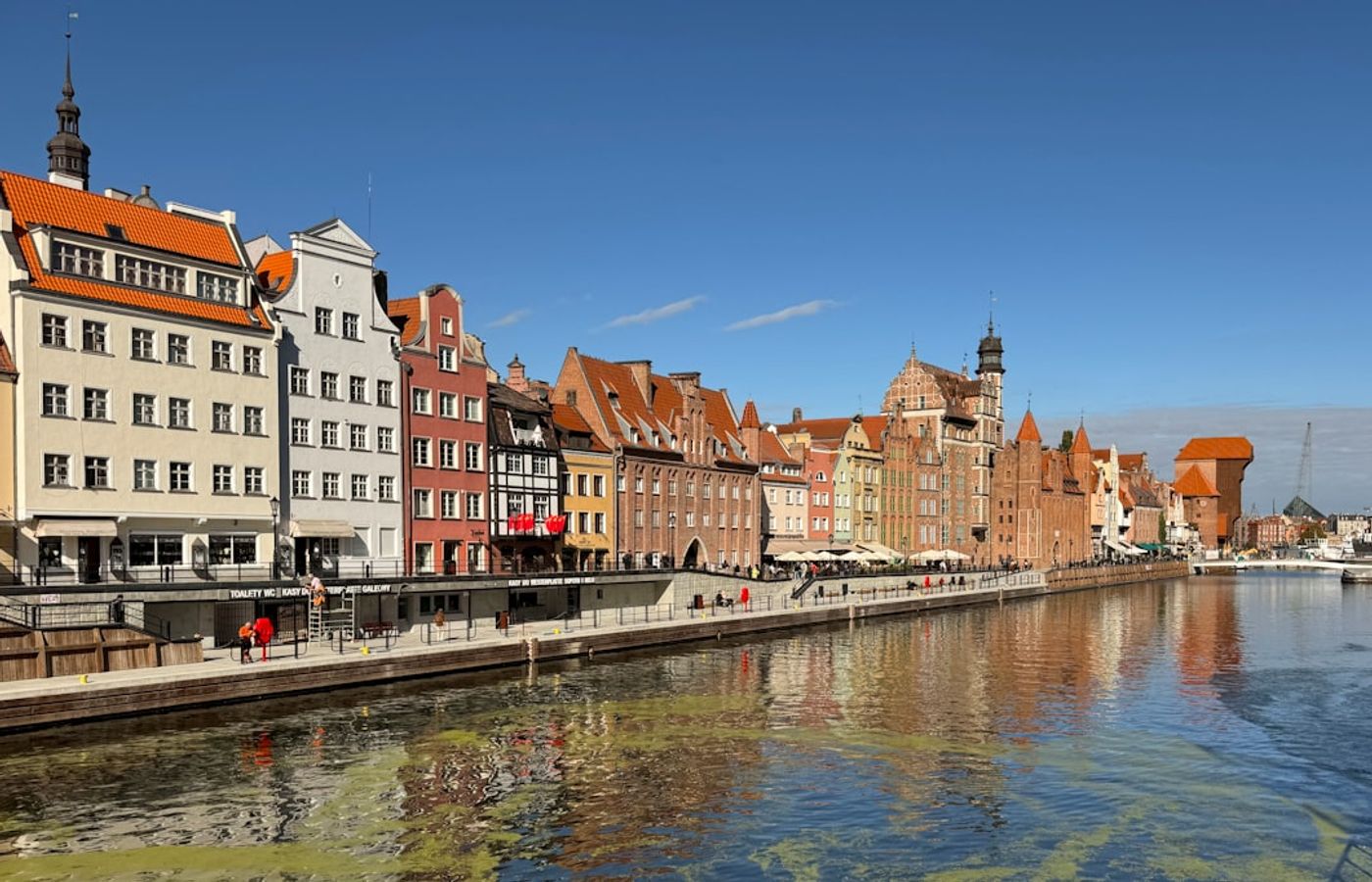
The Gdansk Crane (Zuraw) is the icon of the Long Waterfront and the largest surviving medieval port crane in Europe. Built between 1442 and 1444 and rebuilt after 1945 based on the original drawings, the two brick towers straddle the water gate and enclose a wooden hoist mechanism powered by two large treadwheels 6 metres in diameter. Two men walking inside each wheel could lift up to 2 tonnes to a height of 27 metres - enough to step masts into the ships that docked below.
The Crane is part of the National Maritime Museum. Inside you can climb up to see the treadwheels themselves, plus a compact exhibition on Gdansk's port life between the 15th and 17th centuries when the city handled up to 80 percent of Poland's grain exports to the Netherlands, England, and France. The Long Waterfront outside has been re-cobbled and lined with cafes and small restaurants, and evening lights bounce off the Motlawa's dark surface for a classic photo.
Pro Tip: Cross the Motlawa on the pedestrian St Mary's footbridge to Olowianka Island for the best straight-on shot of the Crane and the waterfront. There is a small viewing terrace behind the Philharmonic building that is almost always empty.
9Oliwa Cathedral and Park - Baroque Organ Concerts Under Ancient Trees
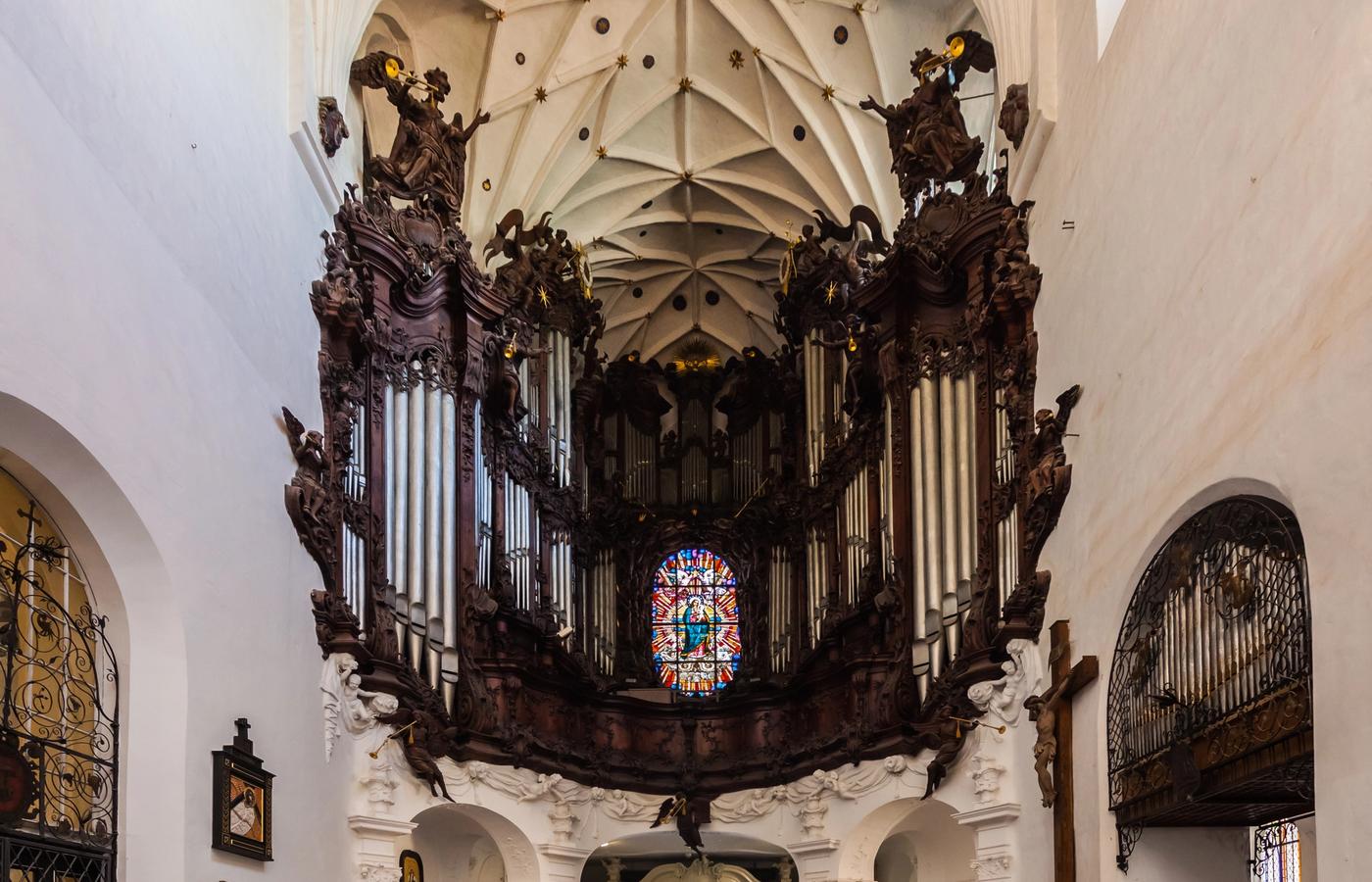
Oliwa Cathedral is a 13th-century Cistercian abbey church whose long, narrow Gothic nave was extended and remodelled in the 17th and 18th centuries to reach a total length of 107 metres. The main draw is the grand Rococo organ built between 1763 and 1788 by Johann Wilhelm Wulff - one of the largest instruments in Europe at the time, with 7,876 pipes, gilded angels holding trumpets, and a set of moving stars and bells that turn during recitals. Short 20-minute demonstrations run several times a day in summer and the full pipe-and-mechanism display is genuinely surprising.
The surrounding Oliwa Park was landscaped in the 18th century by Abbot Jacek Rybinski, and its long linear pond, French-style parterre garden, and English-style wilder woodland stretch for around 11 hectares. A palm house, botanical garden with a giant ginkgo tree, and the small Ethnographic and Modern Art museums in the former abbot's palace fill out a comfortable half-day itinerary.
Pro Tip: Check the organ concert schedule at archikatedraoliwa.pl before your trip - the full 45-minute evening recital on Thursdays and Saturdays in July and August is worth planning the whole day around. The SKM commuter train from Gdansk Glowny takes 15 minutes and costs about 6 PLN.
10Day Trip to Sopot and Malbork Castle - Beach Resort and Teutonic Fortress
Two very different day trips are equally easy from Gdansk Glowny station. Sopot is the classic Baltic spa town, 25 minutes away by SKM commuter train. The 511-metre wooden Molo pier - the longest of its kind in Europe - is the main draw, along with 4 kilometres of sandy beach, the crooked house on Bohaterow Monte Cassino street, and Grand Hotel Sopot where Charles de Gaulle and Marlene Dietrich once stayed. Sopot is at its best on a sunny weekday morning; on summer weekends it heaves with Warsaw daytrippers.
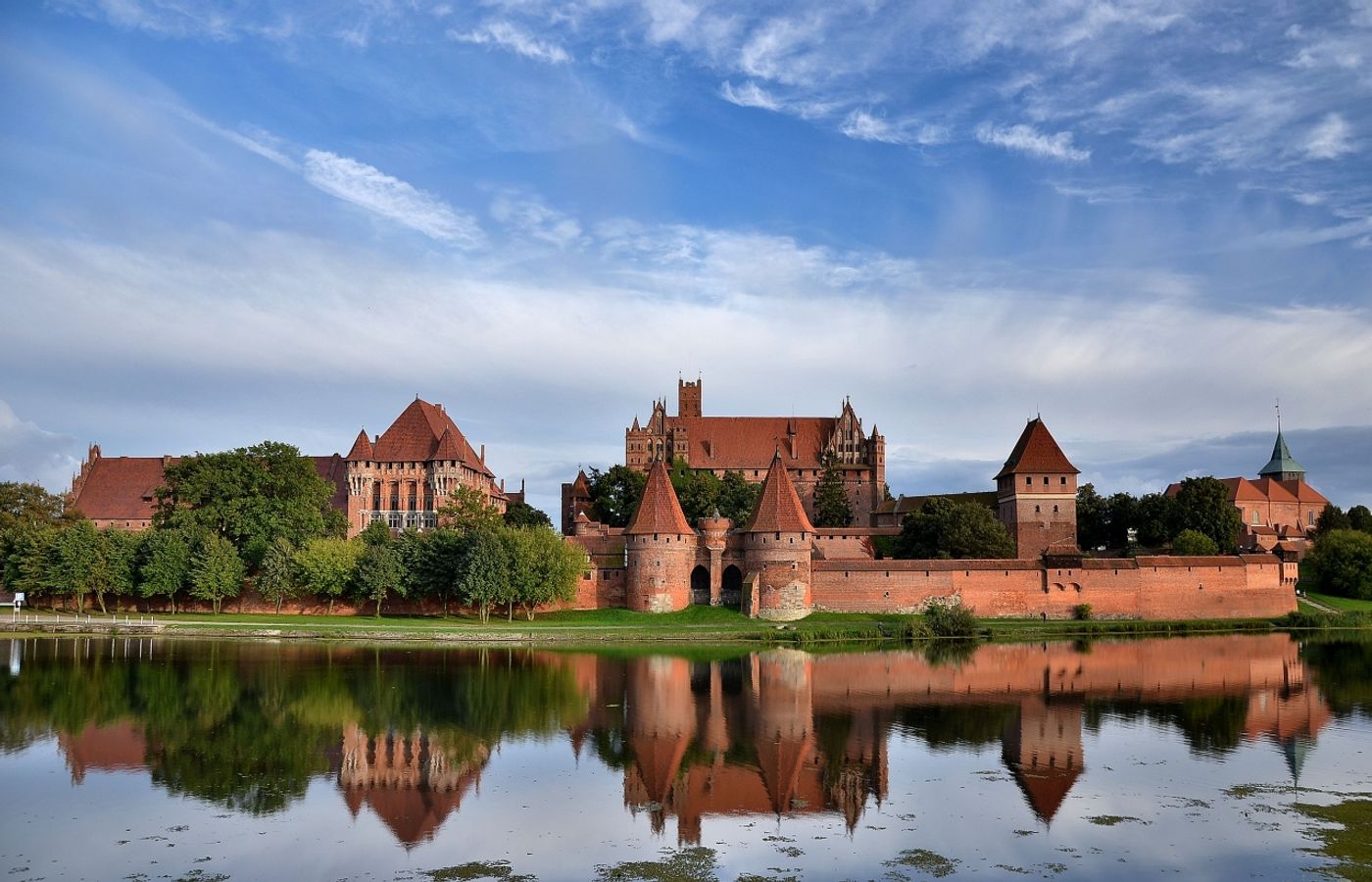
The heavier historical trip is Malbork Castle, the largest brick castle in the world by land area at 21 hectares, built by the Teutonic Order between 1274 and the late 14th century as their new headquarters. A UNESCO World Heritage Site since 1997, the castle is divided into three sections - Low, Middle, and High Castle - with the Grand Master's Palace, an octagonal chapter house, and the reconstructed St Mary's Church all worth the full timed visit. Allow at least four hours on site plus travel.
Pro Tip: Book the standard Malbork ticket with English audio guide online at bilety.zamek.malbork.pl the night before - the queue at the ticket office can exceed 45 minutes in July. Take the 08:30 or 09:00 train from Gdansk Glowny to be first through the main gate when it opens at 09:00.

CEO and co-founder
Tomas is the co-founder and director of trip1, an European company specializing in reservation services. He launched the company in 2025 with a focus on building scalable, efficient operations.
Climate averages · 1991–2020
When is the best time to visit Gdansk?
Monthly temperatures, rainfall and sunshine — not a live forecast.
See Gdansk weatherMore of Poland
10 Top Places to Visit in Gdansk, Poland - FAQ
No, 10 places in one day is not realistic. A comfortable pace covers 4-5 attractions per day, so plan two full days for the central Main Town sights (Long Market, St Mary's Church, Mariacka Street, Golden Gate, the Crane) and a third day for museums and the Westerplatte or Oliwa trips.
Start at the Golden Gate and walk east along Long Street to Long Market and Neptune's Fountain, then detour to Mariacka Street and St Mary's Church, and finish at the Crane on the Motlawa waterfront. Reserve mornings for the Museum of the Second World War and the European Solidarity Centre, and use a separate day for Westerplatte, Oliwa, Sopot, or Malbork.
Book the Museum of the Second World War and the European Solidarity Centre online for a set entry slot, especially between June and August. Malbork Castle also needs an advance timed ticket in summer. Long Market, Mariacka Street, Neptune's Fountain, and Westerplatte are open outdoor sites and do not need tickets at all.
Budget roughly 150-200 PLN (about 35-45 EUR) per adult for entry to the Museum of the Second World War, European Solidarity Centre, St Mary's Church tower, Uphagen House, and Malbork Castle. Six of the ten items on this list are free to walk through, so most of your spend is museums, the Malbork day trip, and public transport.
Yes. Every Main Town attraction is a short walk from Gdansk Glowny train station or the tram lines running along Waly Jagiellonskie. SKM commuter trains reach Oliwa, Sopot, and Malbork in 15-50 minutes, and city bus 106 connects the centre with Westerplatte in about 30 minutes.
If you have a fourth or fifth day, add the Amber Museum in the Great Mill, the Gdansk Shipyard historic gate area beyond the Solidarity Centre, and a ferry to Hel Peninsula for Baltic beaches. Foodies should also try milk bars in the Main Town for cheap traditional Polish lunches.
Yes. The Museum of the Second World War in Gdansk remains one of the largest and most ambitious WWII museums in Europe, with a 5,000 square metre main exhibition covering causes, course, and aftermath of the war. Allow at least three hours, and pre-book weekend entry slots in 2026.

Related travel guides
5 Best Ski Slopes in Zakopane
The best ski slopes in Zakopane for 2026: Kasprowy Wierch, Harenda, Szymoszkowa, Kotelnica Białczańska and Suche, with prices, lifts and transit.
5 Best National Parks Near Krakow
The 5 best national parks near Krakow for 2026, with driving times, bus and train links, entry fees in PLN and EUR, addresses and signature trails.