

Guides · Algarve
10 Top Places to Visit in Algarve, Portugal

CEO and co-founder
This guide ranks the 10 top places to visit in Algarve, Portugal - the sights that genuinely deserve a spot on your itinerary whether you're here for a long weekend or a full week. Each entry includes the exact address, nearest transit option, distance from the regional centre at Faro, and a practical Pro Tip drawn from on-the-ground experience. We have ordered the list to help you plan efficient sightseeing - western Algarve attractions around Lagos and Sagres grouped together, central coast cliffs and caves near Lagoa and Albufeira in one loop, and quieter eastern Algarve towns like Tavira and Faro sharing a day.
The Algarve splits into three distinct zones that shape any itinerary. The Barlavento (central and western coast) is where you'll find the dramatic sandstone cliffs, the sea caves including Benagil, and the best-known Algarve beaches like Praia da Marinha. The Sotavento (eastern coast) holds the sandbar beaches of the Ria Formosa Natural Park and the historic towns of Tavira and Faro. Inland, hilltop towns like Silves and the Serra de Monchique mountains break up an obvious coast-only itinerary.
A rental car makes covering all 10 places to visit in Algarve practical - the Linha do Algarve train and Vamus regional buses help between towns but won't reach the cliff-edge beach car parks. Budget 5-7 days minimum; 10 days lets you slow down and add the inland mountains, boat trips into the caves, and a half-day across the Spanish border to Seville.
1Benagil Cave (Algar de Benagil) - The Most Iconic Sea Cave on the Algarve Coast

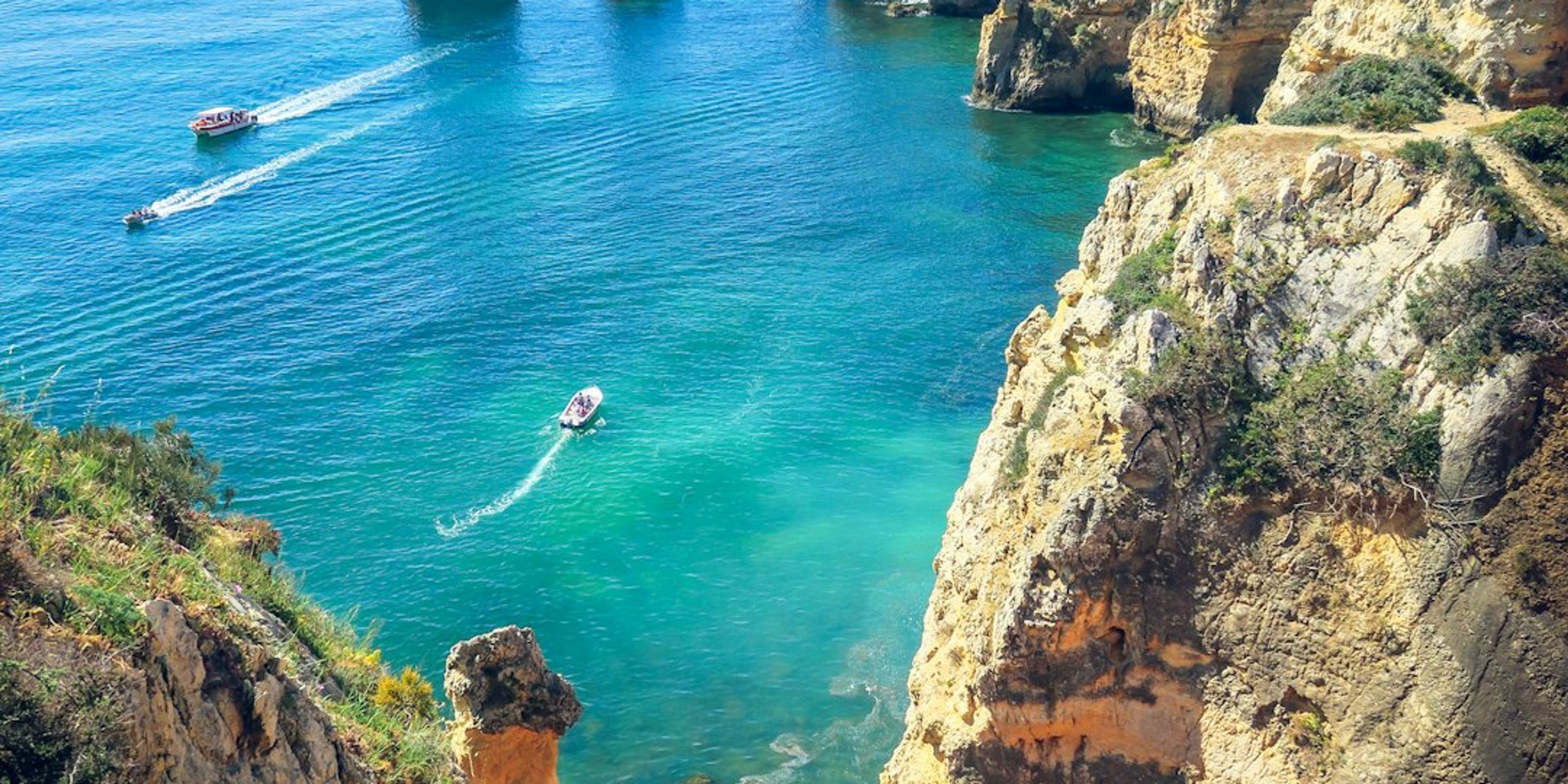
Of all the places to visit in Algarve, Algar de Benagil is the one image you've already seen - a vaulted limestone chamber with a circular skylight cut into the cave roof and a small private beach inside. The cave sits on a stretch of cliff between Benagil village and Praia da Marinha, accessible only by water. There are three ways in: a guided boat tour from Portimao, Albufeira, or Lagos (around 25-40 EUR per person); a kayak or SUP rental from Praia de Benagil itself (roughly 25-35 EUR for 2 hours); or a swim if you're confident in open water and the sea is calm.
Boat tours pause inside but rarely allow disembarking on the cave beach since landings were restricted in 2024 to protect the fragile cliff edge. The 1-hour combined Benagil and Marinha cave tours are the best value - you also see Algar dos Capitaes and Cathedral Cave en route. The famous photograph through the ceiling oculus requires either a drone (now prohibited within 8 km of the coast in summer) or pre-booked guided tour landings.
Pro Tip: Book the first tour of the day (around 8:30 am from Benagil pier) - sea conditions are calmer, the morning light through the oculus is far better than midday glare, and you'll dodge the 11 am cruise-day crowds that double prices and triple wait times.
2Ponta da Piedade - The Algarve's Best Clifftop Walk and Grotto Boat Tour
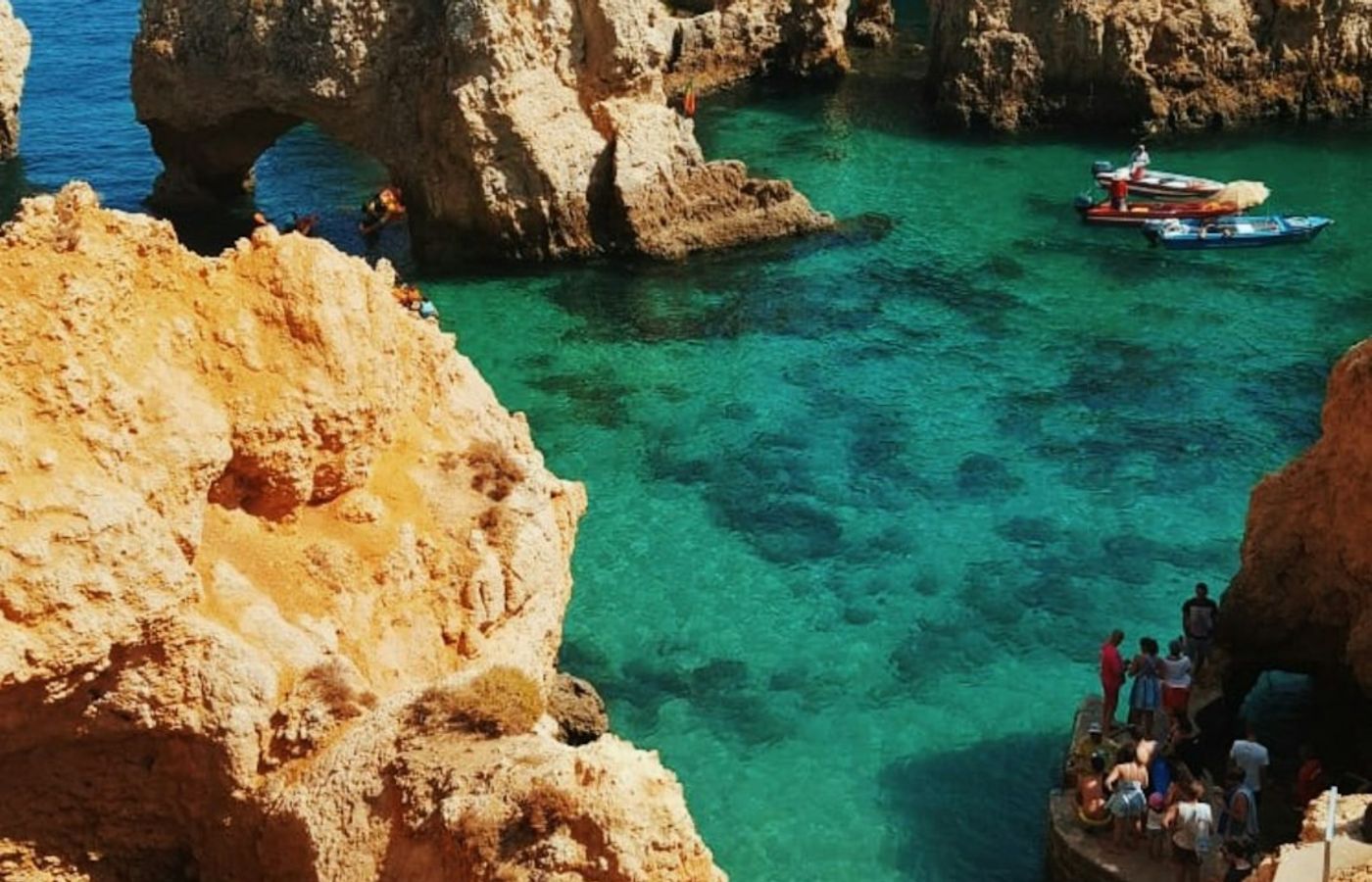

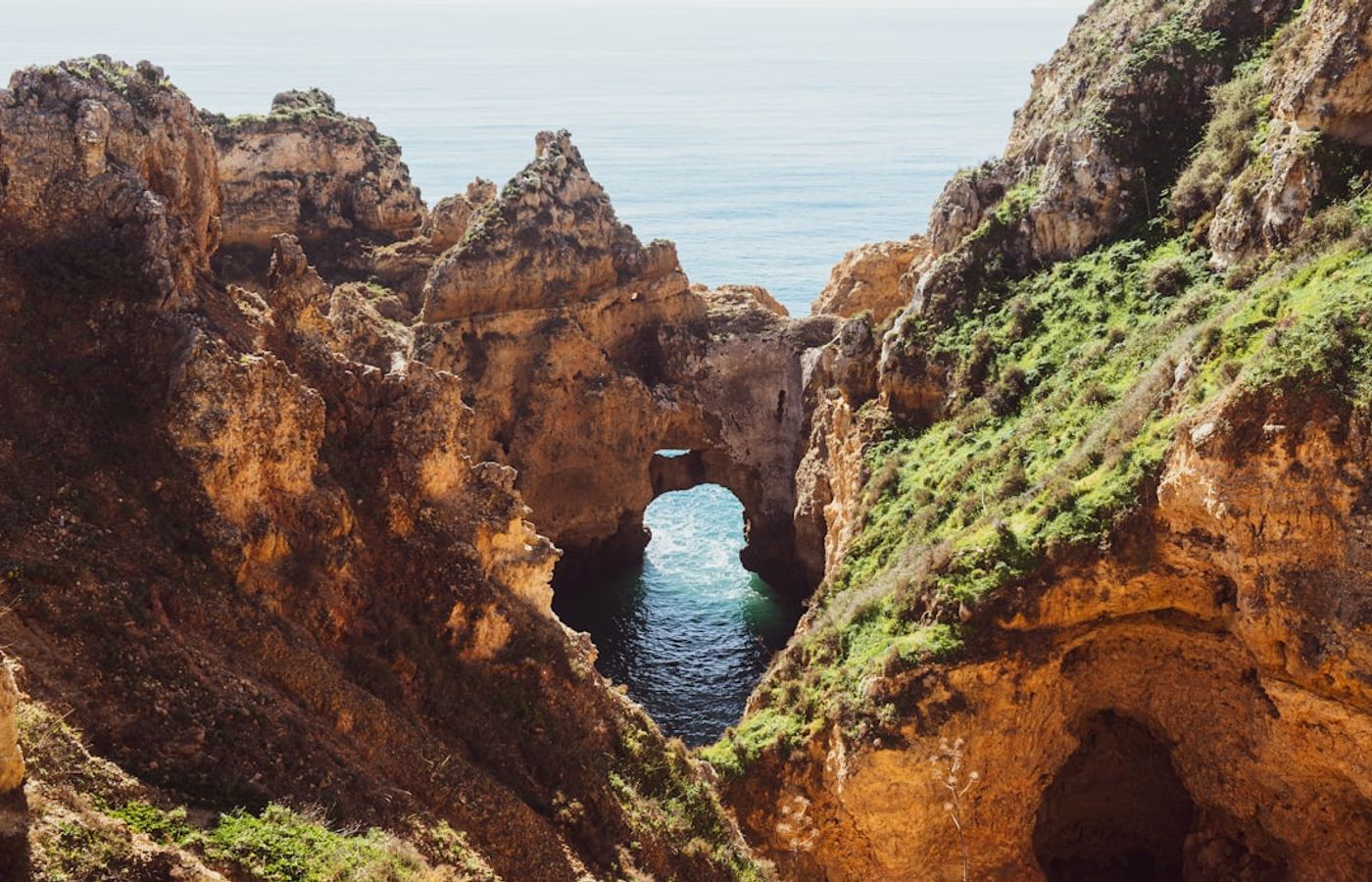
Ponta da Piedade is the most concentrated stretch of dramatic coastline in the Algarve - golden sandstone stacks, natural arches, and grottoes rising up to 20 metres straight out of the Atlantic on the headland 2 km south of Lagos. A clifftop walking path runs the whole length, with several viewpoints accessible from the road and a steep 180-step staircase down to a small jetty where boat tours start. The full clifftop walk takes about 90 minutes one way and connects Praia do Camilo and Praia Dona Ana, two of the best beaches in the western Algarve, into a single morning route.
Small grotto boat tours from the Lagos marina or directly from the Ponta da Piedade jetty cost 20-35 EUR per person for 45-90 minutes and weave through the sea caves and stacks. The lighthouse at the headland is a working navigational beacon and not visitable inside, but the surrounding bluffs are the most popular sunset spot in the western Algarve.
Pro Tip: Park at the lighthouse car park (free), walk down the staircase, take the morning boat tour while shadows are still cool, then walk the clifftop path back via Praia do Camilo for a swim before lunch in Lagos.

3Praia da Marinha - Portugal's Most Photographed Beach
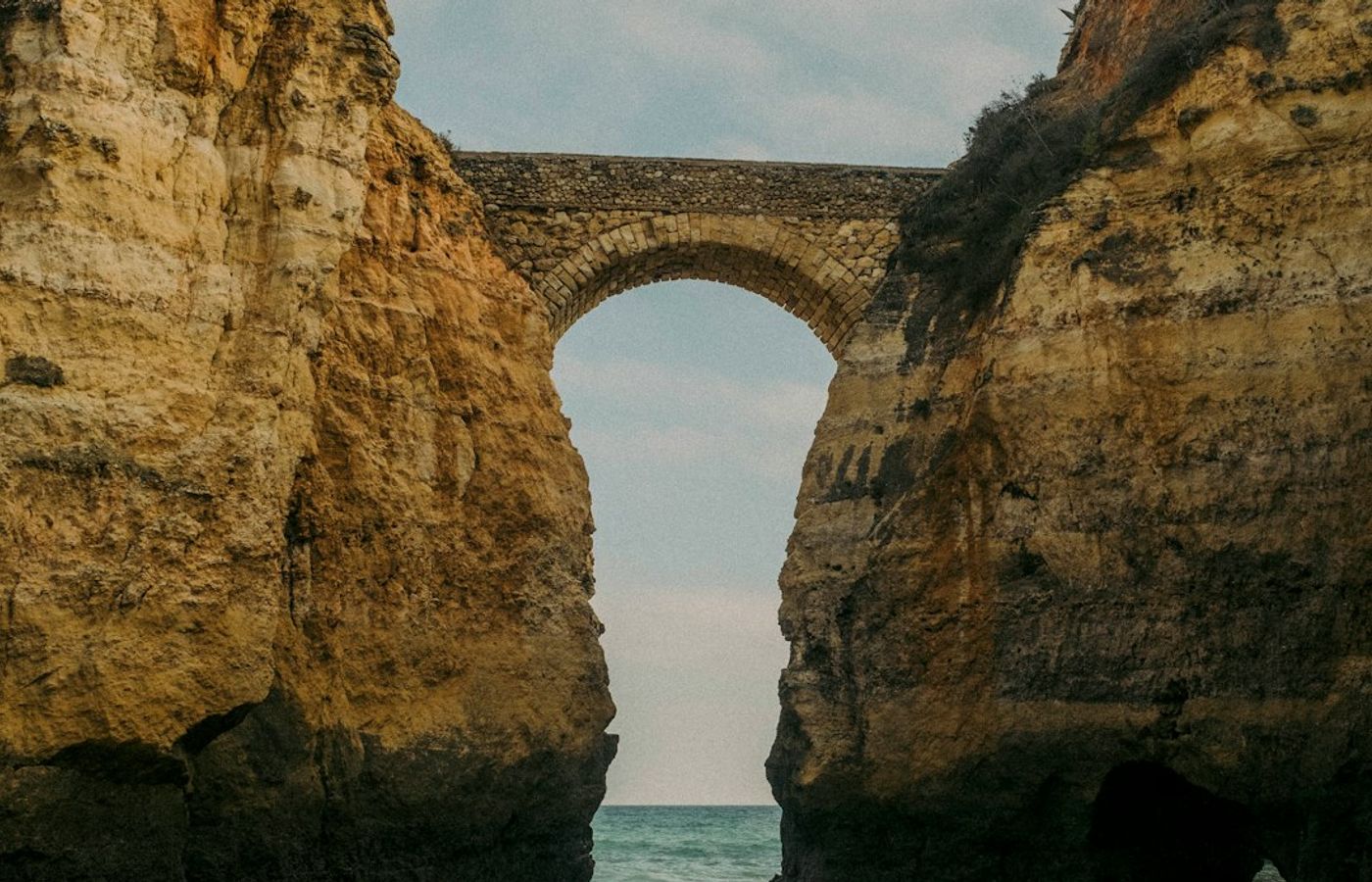

Praia da Marinha consistently ranks among Europe's best beaches and is one of the most rewarding places to visit in Algarve for sheer scenery alone. The setting is a half-moon of pale sand between two ochre limestone headlands, framed by twin sea arches at the eastern end - the formation that appears in every Algarve postcard. The beach faces south, holds the sun all day, and the cliffs make swimming feel like a secluded plunge pool even in August.
Access is via a 200-step wooden staircase from the clifftop car park (free, fills by 10 am in summer). The 6-km Seven Hanging Valleys Trail (Trilho dos Sete Vales Suspensos) starts here and runs west to Praia do Vale Centeanes via Algar Seco - one of the best clifftop walks in the Algarve highlights circuit. A seasonal beach bar operates June-September; bring water and shade otherwise. There are no lifeguards outside peak summer, and the unfenced cliff edges have collapsed in places, so stay well back from the marked viewpoints.
Pro Tip: Arrive before 9:30 am to walk the eastern headland for the classic two-arch photograph before the sun climbs high. Swim the bay's grottoes at low tide when more rock formations are exposed - check times on the Portuguese tides app Mares Portugal.
4Lagos Old Town - The Algarve's Most Charming Historic Centre
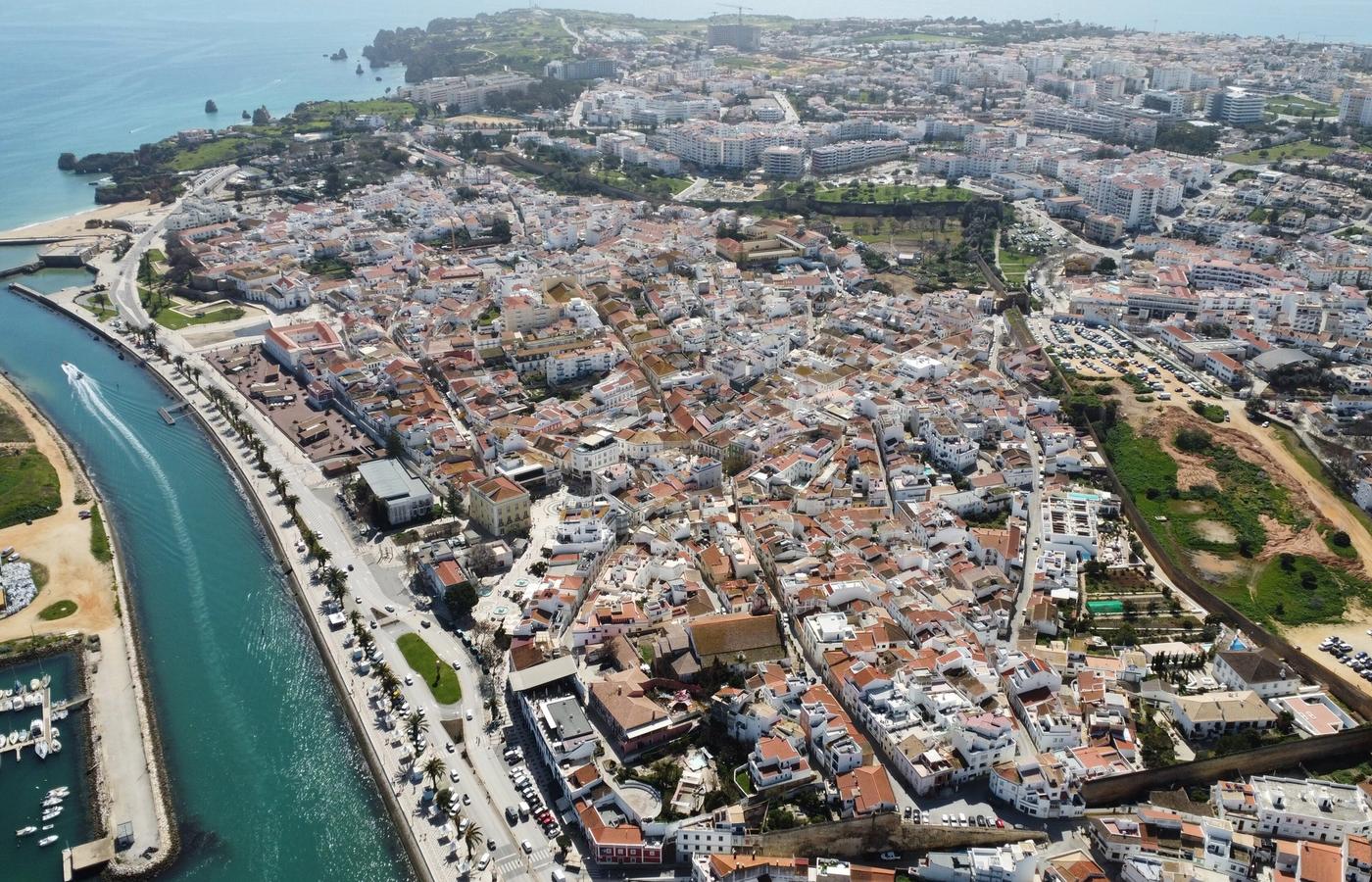
Lagos was the launchpad of Portuguese maritime exploration in the 15th century, and the walled old town still wears its history visibly. The original Moorish-era walls enclose a knot of cobblestone streets between Praca Gil Eanes (the main square with its statue of King Sebastiao) and the marina. The Igreja de Santo Antonio - a small church with a 1715 gilded interior considered one of the finest Baroque rococo carvings in Portugal - is the must-see indoor sight; entry is via the adjacent Lagos Museum at 5 EUR.
Other anchors include the Mercado Municipal (open until 2 pm Mon-Sat, the best place to buy fresh sardines and Algarve almonds), the small Slave Market memorial in Praca do Infante (Portugal's first colonial slave market site, now a sobering exhibition), and the city walls themselves which can be climbed in sections near Forte da Ponta da Bandeira. Evenings, the streets around Rua 25 de Abril fill with seafood restaurants and the bars stay open well past midnight in summer.
Pro Tip: Eat dinner inland, not on the marina - the restaurants on Rua 25 de Abril and the back streets around Largo do Convento da Senhora da Gloria serve the same grilled fish for 30-40% less than the waterfront tourist spots.
5Cabo de Sao Vicente and Sagres - Mainland Europe's South-Western Tip
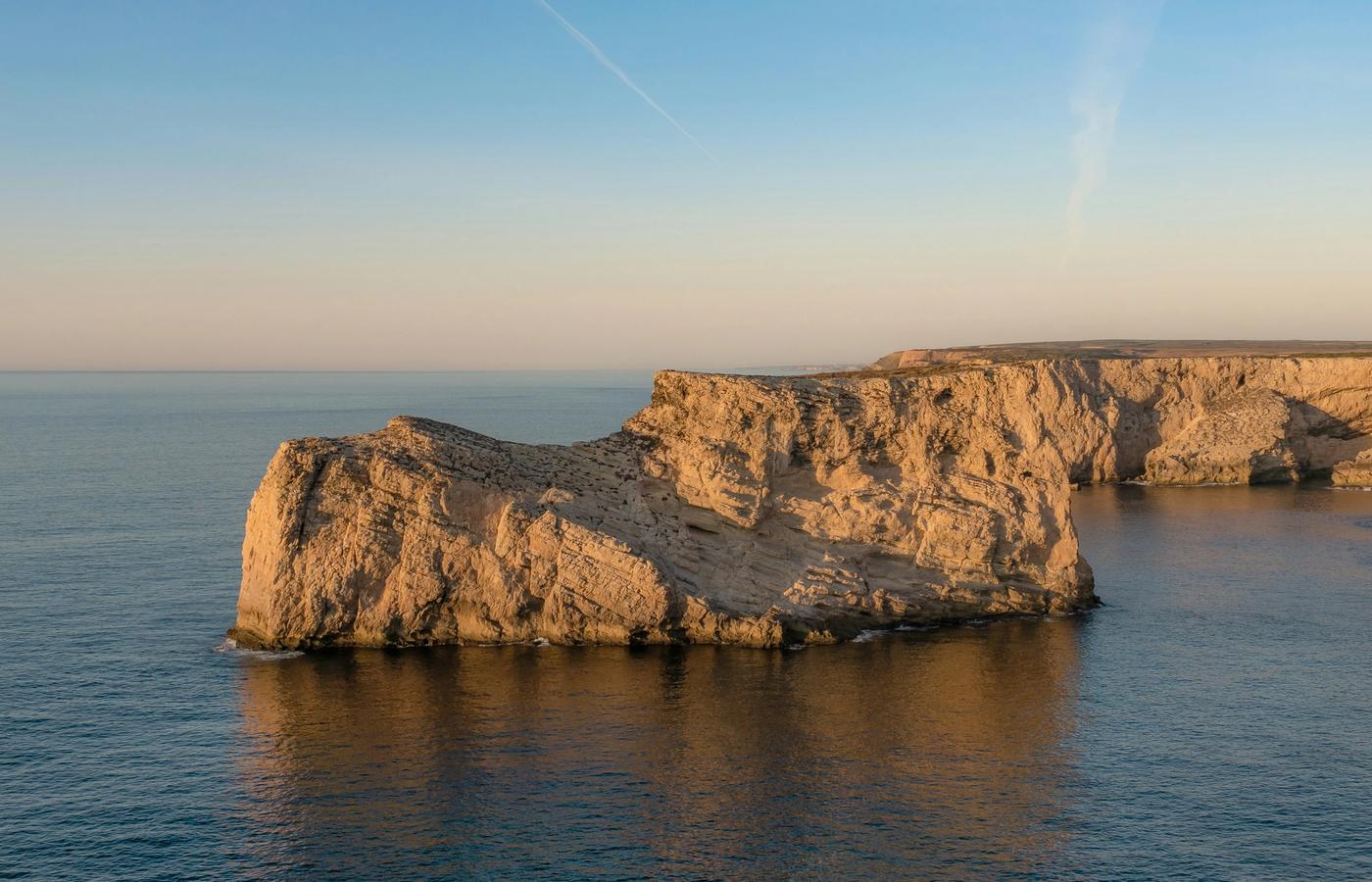
Cabo de Sao Vicente is the south-westernmost point of mainland Europe and the rawest coastline in the Algarve travel guide circuit - 75-metre cliffs hit by Atlantic swells from three directions, an 1846 lighthouse with the second-strongest beam in Europe (60 km visible range), and an exposed plateau where the wind regularly tops 60 km/h. The cape, around 8 km west of Sagres town, is free to enter; the lighthouse interior is closed but the small museum at the base is open 10 am-6 pm daily for 1.50 EUR.
Sagres itself is a low-rise fishing village with the 15th-century Fortaleza de Sagres - the cliff-edge fortress where Prince Henry the Navigator is traditionally said to have founded his school of navigation. Entry is 3 EUR and the wind-rose stone circle inside is worth the visit alone. The surrounding Costa Vicentina coast is now a protected natural park and has the Algarve's best surf beaches - Praia do Tonel, Praia do Beliche, and Praia do Amado a short drive north.
Pro Tip: Drive out to the cape for sunset (the only spot in mainland Europe where the sun sets straight into the Atlantic), but bring a windproof jacket even in August - the temperature drops 5-8 degrees C at the cape edge regardless of the season.
6Tavira - The Eastern Algarve's Best-Preserved Historic Town
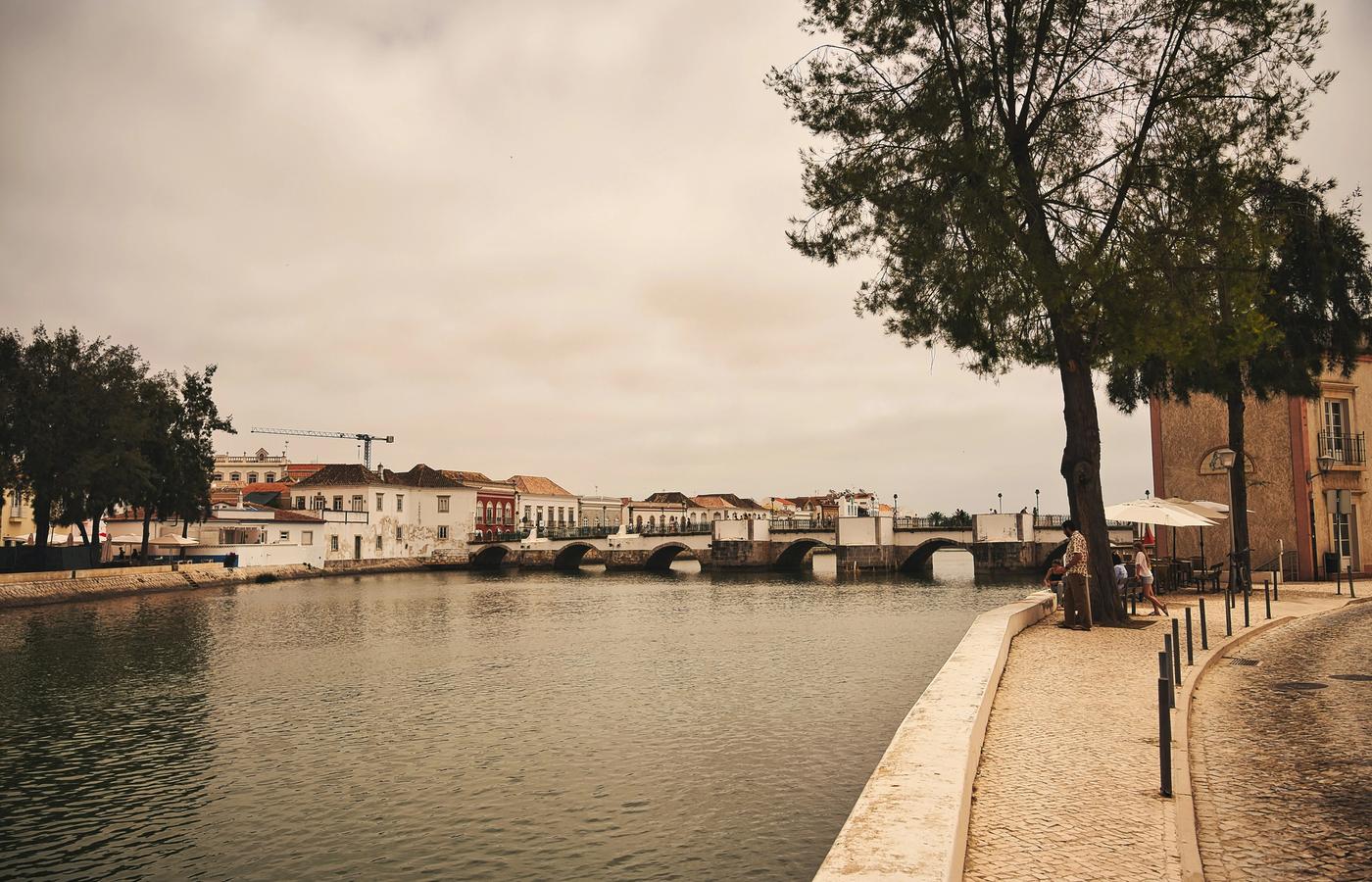
Tavira is what people mean when they say they want the Algarve before mass tourism arrived. The town straddles the Gilao River with the elegant seven-arched Roman bridge (Ponte Romana, despite the name actually medieval) at its centre, and the layout is dense Moorish-era - narrow lanes, low whitewashed houses, distinctive pyramid-shaped tile roofs found nowhere else in Portugal. The hilltop Castelo de Tavira ruins are free to enter and the small garden inside has the best town view; the Igreja de Santa Maria do Castelo beside it holds the tomb of Dom Paio Peres Correia, the knight who took Tavira from the Moors in 1242.
Across the river estuary, Ilha de Tavira is one of the Ria Formosa barrier islands - 11 km of uncrowded Atlantic beach reachable by a 2-minute ferry from Quatro Aguas (1.90 EUR each way, every 30 min in summer). Tavira's salt pans east of town produce flor de sal and attract greater flamingos from November to March, and the town's restaurants are known for tuna - the eastern Algarve's traditional almadrava trap fishery.
Pro Tip: Take the ferry to Ilha de Tavira in the late afternoon (around 4 pm), walk left along the empty beach for 20 minutes past the bars, swim, and catch the last ferry back at 7 pm - it's the most peaceful beach experience among the Algarve highlights in summer.
7Albufeira Old Town - The Algarve's Liveliest Resort Town
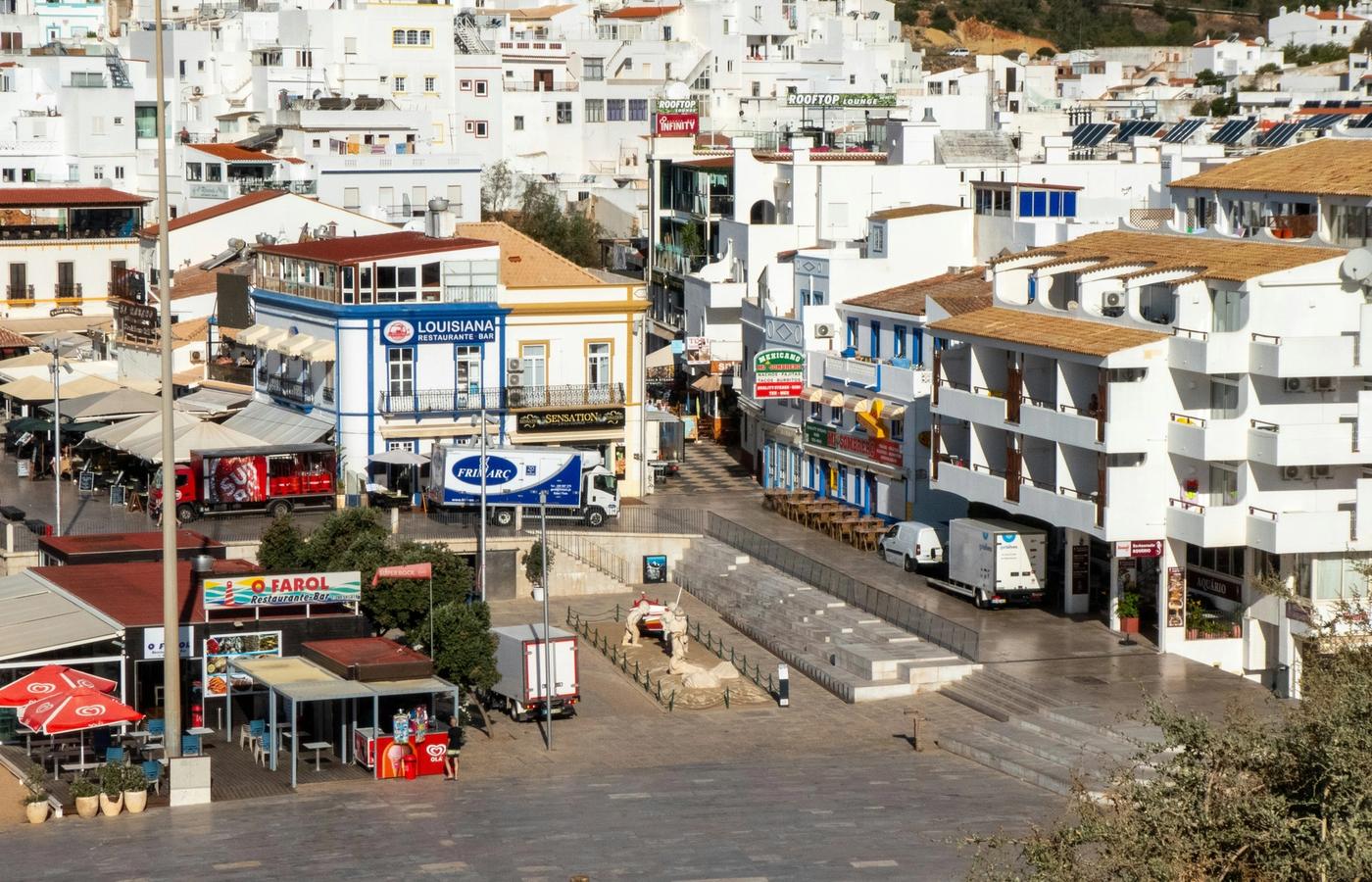
Albufeira gets dismissed as a package-tour cliche, but the older part above the cliffs - Albufeira Velha - is a tightly packed grid of whitewashed houses, Moorish-era arches, and tiled steps tumbling down to Praia dos Pescadores (Fishermen's Beach). Largo Eng. Duarte Pacheco, the main square, is the heart of the old town nightlife and a useful free Wi-Fi spot. Praia dos Pescadores is the easiest in-town beach and the Tunel da Praia, a 90-metre lit pedestrian tunnel cut through the cliff, is the most photographed entrance.
For something quieter, walk 15 minutes west along the clifftop boardwalk to Praia do Peneco and Praia do Tunel - same sand, half the crowds. The Strip (Rua Candido dos Reis to Avenida Sa Carneiro) is the nightlife epicentre and gets rowdy from June to September; Old Town stays calmer but still has good rooftop bars like Sky Bar. Daily fish market mornings at Mercado de Albufeira (Rua da Igreja Nova) end by 1 pm.
Pro Tip: Stay in Albufeira Velha rather than on The Strip - you'll get the historic atmosphere, cheaper accommodation, and a quick walk to both the old town beach and the nightlife when you want it. A taxi between the two zones costs 5-7 EUR.
8Faro Old Town and Ria Formosa Natural Park - The Algarve's Lagoon Capital
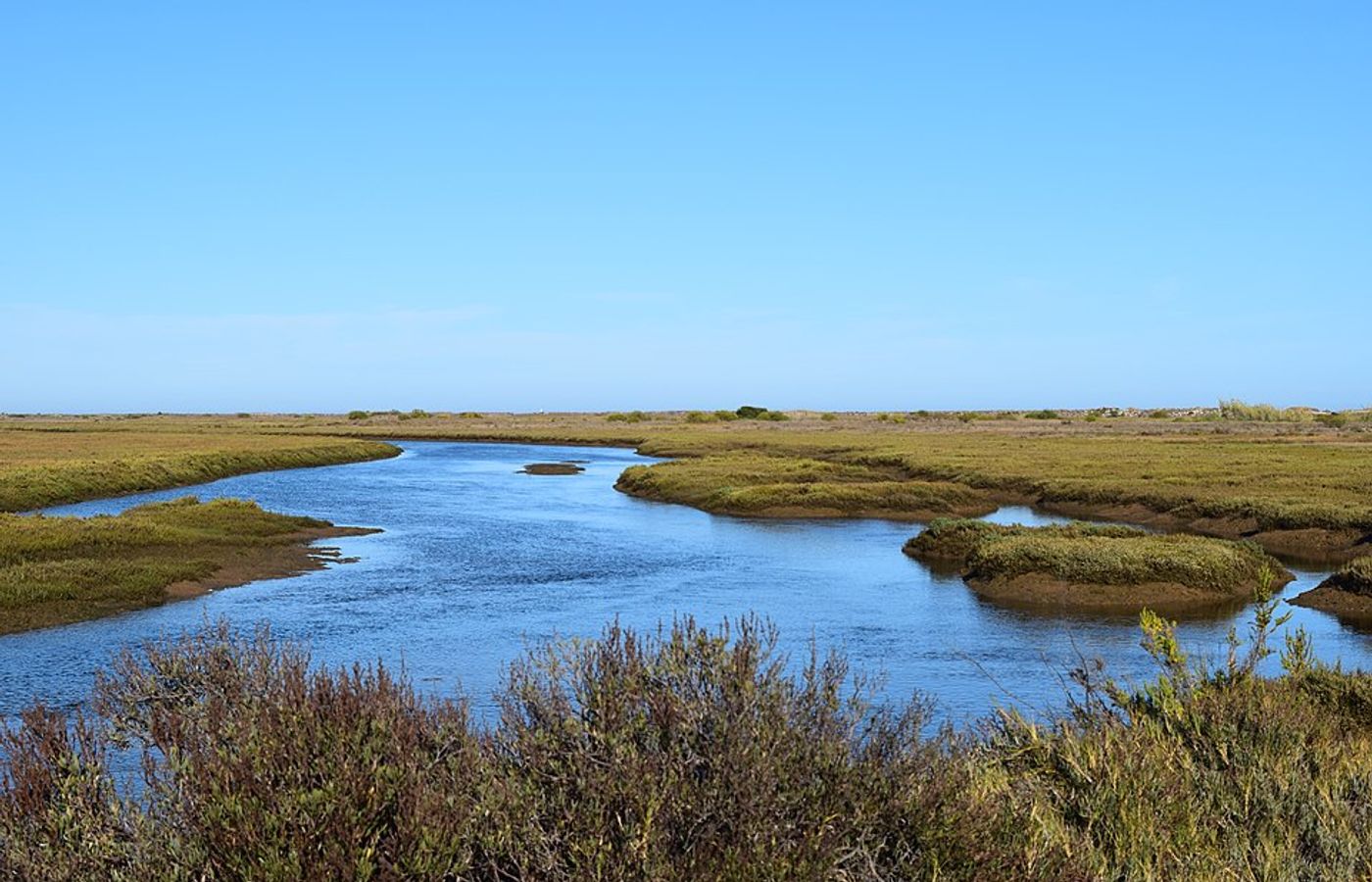
Faro is the Algarve's regional capital and the entry point for most visitors via Faro Airport (FAO), but it's also a genuine destination in its own right. The Cidade Velha (walled old town) is entered through the 18th-century Arco da Vila and contains the Se de Faro cathedral - climb the tower for 3.50 EUR for the best view across the Ria Formosa lagoon. The Capela dos Ossos (Bone Chapel) at the Igreja do Carmo, decorated with the bones of 1,245 monks, is a stark counterpoint and one of the most striking interiors in southern Portugal; entry is 2 EUR.
The real draw is the Ria Formosa Natural Park - 170 square km of lagoon, salt marsh, and barrier islands stretching from Faro east to Cacela Velha. Boat trips and four-wheel ferries leave from the Faro marina to the islands: Ilha Deserta (Ilha da Barreta) is uninhabited with a single excellent restaurant Estamine and 11 km of empty Atlantic sand; Ilha do Farol has the historic lighthouse; Culatra is a working fishing village. Boat tickets to Deserta cost 15 EUR return.
Pro Tip: Skip Faro on the day you fly in or out - you'll be tired and the old town is small. Build it as a relaxed half-day trip from Tavira or Albufeira, ferry across to Ilha Deserta for lunch at Estamine, and you'll see the best of Faro in a single morning.
9Silves - The Medieval Moorish Capital of the Algarve
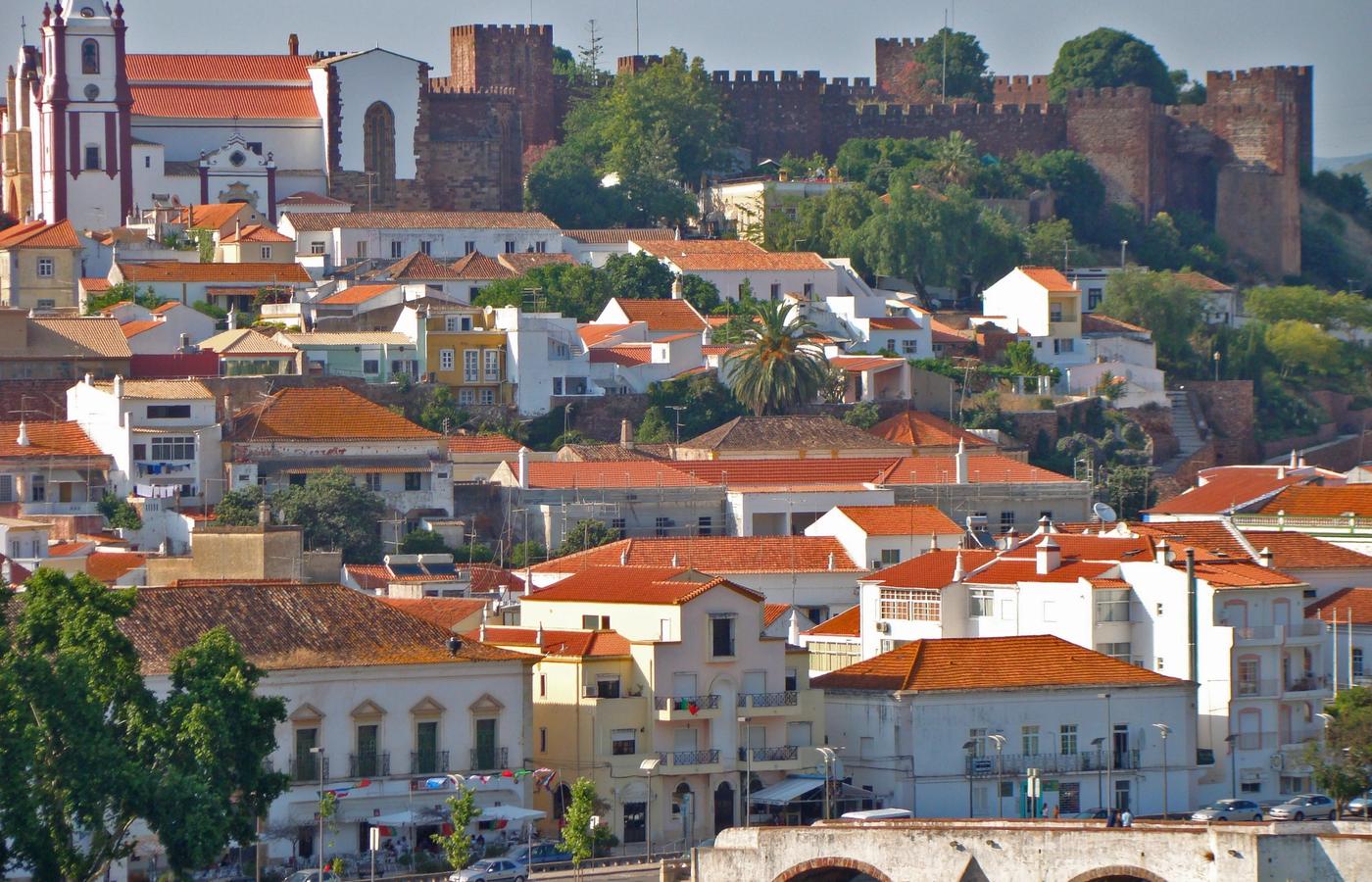
Silves was the capital of the Moorish Algarve from the 8th to 13th centuries (the Moors called it Xelb) and was once a city of 30,000 people, larger than Lisbon at the time. The hilltop Castelo de Silves - the largest and best-preserved Moorish castle in Portugal - is built from distinctive red sandstone and rises directly above the old town. Entry is 2.80 EUR (combined ticket with the archaeology museum is 3.90 EUR), and you can walk the full circuit of the walls and battlements with sweeping views over the orange groves toward Monchique.
Below the castle, the small Se de Silves cathedral was built on the site of the Moorish great mosque after the Christian reconquest in 1242. The old town is compact and easily walked in 90 minutes; the surrounding countryside is the Algarve's main citrus-growing region and dotted with cork oak forests and traditional whitewashed villages. Silves holds its medieval fair (Feira Medieval de Silves) in August, when the town fills with costumed performers, markets, and demonstrations of medieval crafts and combat.
Pro Tip: Combine Silves with Monchique in the Serra de Monchique mountains 20 minutes north - both are inland half-day trips that pair perfectly with a long lunch and break up a beach-focused Algarve trip with cooler hill country, hiking, and traditional inland cuisine.
10Praia da Falesia - The Long Red-Cliff Beach Between Albufeira and Vilamoura
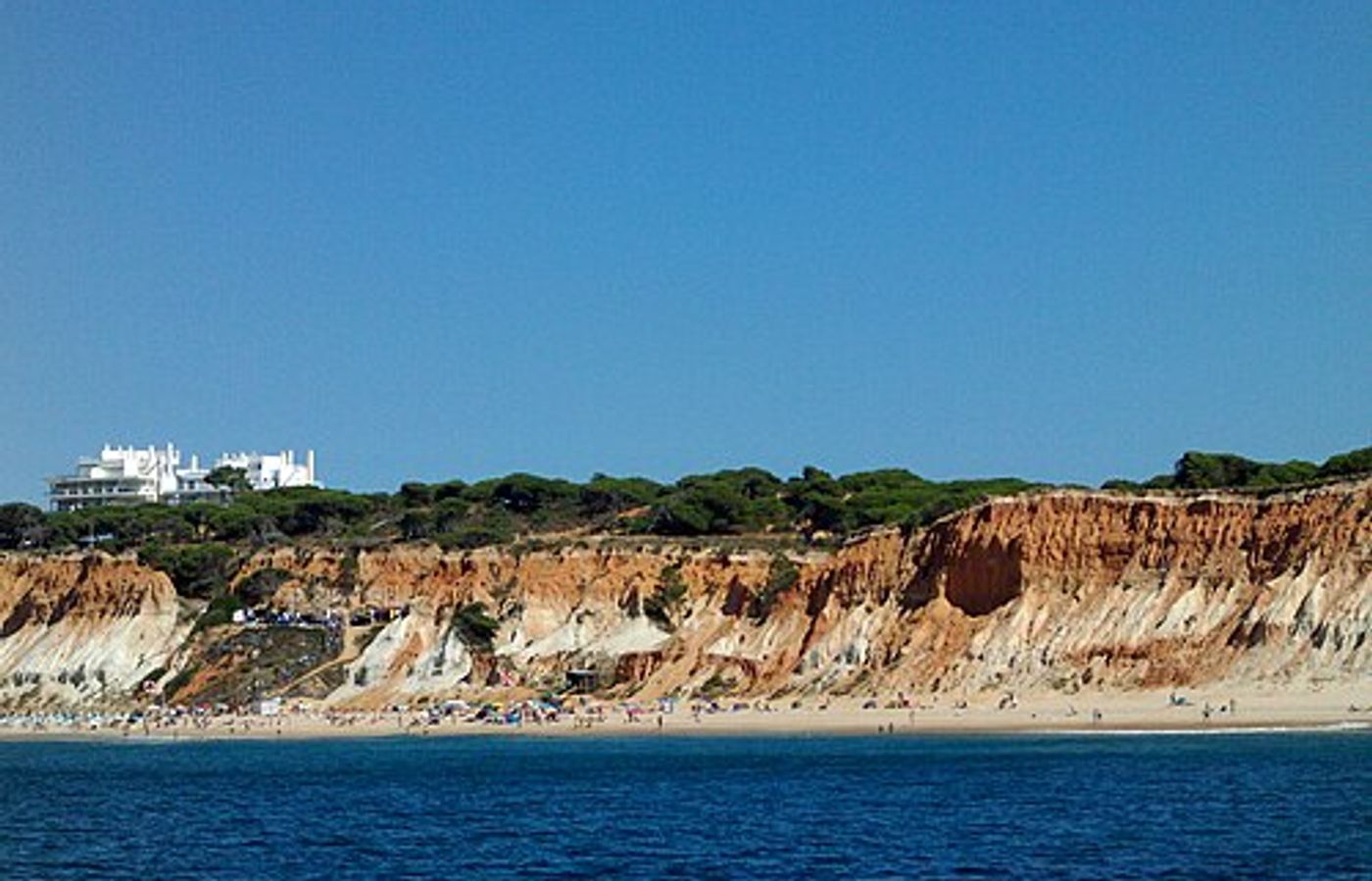
Praia da Falesia is the longest continuous beach in the central Algarve - a 6 km strip of golden sand backed by ochre and red sandstone cliffs that rise 30 metres above the shore, topped by umbrella pines. The beach runs from Olhos de Agua east to Vilamoura and is divided into named sections - Praia do Barranco das Belharucas, Praia da Falesia, Praia do Forte Novo - each with its own clifftop car park and staircase access. Because the beach is so long, even in August you can walk for 10 minutes and find a 50-metre stretch of empty sand.
The contrast of the red cliffs against the blue Atlantic makes this one of the most photogenic Algarve beaches at sunrise and sunset, and the gentle gradient of the sand makes it safe for families with young children - though Atlantic surf can pick up by afternoon. Several beach bars along the strand serve grilled sardines and fresh fish through lunchtime; the eastern Vilamoura end is closest to luxury hotels and tends to be the busiest.
Pro Tip: Use the Olhos de Agua Aldeia car park entry rather than the central Falesia access - the staircase is shorter, the western end of the beach is markedly quieter, and Olhos de Agua village itself has the best traditional restaurants for a post-beach lunch.

CEO and co-founder
Tomas is the co-founder and director of trip1, an European company specializing in reservation services. He launched the company in 2025 with a focus on building scalable, efficient operations.
Climate averages · 1991–2020
When is the best time to visit Algarve?
Monthly temperatures, rainfall and sunshine — not a live forecast.
See Algarve weatherMore of Portugal
10 Top Places to Visit in Algarve, Portugal - FAQ
No - the Algarve is too geographically spread out for a single-day blitz. Cabo de Sao Vicente at the western tip is 110 km from Tavira in the east, plus the time needed for boat tours of Benagil Cave and lagoon ferries to Faro's islands. A realistic minimum is 5 days: 2 in the western Algarve (Lagos, Ponta da Piedade, Sagres), 2 in the central coast (Benagil, Marinha, Albufeira, Falesia, Silves), and 1 in the east (Faro, Tavira, Ria Formosa). Seven days lets you slow the pace and add an inland mountain day.
Group by geography to minimise driving across the region. A common five-day plan looks like: Day 1 in Lagos Old Town with Ponta da Piedade at sunset; Day 2 drive west to Cabo de Sao Vicente and Sagres, return via Praia da Marinha; Day 3 take a morning Benagil Cave boat tour from Portimao, then Albufeira Old Town and Praia da Falesia for sunset; Day 4 inland to Silves castle, then Faro Old Town and a ferry to Ilha Deserta; Day 5 Tavira and Ilha de Tavira beach for a quieter eastern Algarve finish.
Benagil Cave boat tours typically fill 1-3 days ahead in July and August - book through operators like Taruga Tours or Algar Tours directly. The Castelo de Silves, Fortaleza de Sagres, and Cabo de Sao Vicente museum all accept walk-ups year-round with rare queues. Faro's Bone Chapel (Capela dos Ossos) and the Igreja de Santo Antonio in Lagos accept walk-ins. Ferries from Faro to Ilha Deserta in the Ria Formosa Natural Park sell out on summer weekends, so book the morning departure online ahead if you can.
Budget around 60-90 EUR per person for the paid entries and one essential boat tour. The breakdown: Benagil Cave boat tour 25-40 EUR, Lagos Museum and Igreja de Santo Antonio 5 EUR, Fortaleza de Sagres 3 EUR, Cabo de Sao Vicente museum 1.50 EUR, Se de Faro cathedral tower 3.50 EUR, Capela dos Ossos 2 EUR, Castelo de Silves combined ticket 3.90 EUR, Tavira castle ruins free, Ria Formosa ferry to Ilha Deserta 15 EUR return. Add 35-50 EUR per day for a rental car split across travellers, which typically pays for itself in saved transfer fares.
A few worthwhile additions if you have extra time. Carvoeiro and the Algar Seco boardwalk - a 700-metre clifftop walk through tunnels and rock arches - sit between Praia da Marinha and Albufeira and add an hour. The Serra de Monchique mountains have hiking on Foia at 902 m (the highest point in the Algarve) and the small spa town of Caldas de Monchique. Olhao, just west of Tavira, has the Algarve's best fresh fish market. For surfers, Praia do Amado near Sagres on the Costa Vicentina is the region's main wave-riding beach.
Partially. The Linha do Algarve regional train connects Lagos, Albufeira (Ferreiras station, 4 km inland), Faro, Silves, and Tavira directly - useful for moving between the towns themselves but not for cliff beaches or Cabo de Sao Vicente. Vamus regional buses reach Sagres and Silves, but service is limited to 4-6 daily runs and rarely matches a beach itinerary. Benagil Cave, Praia da Marinha, Ponta da Piedade, and Praia da Falesia effectively require a rental car, a taxi or Bolt ride, or an organised tour to reach in any reasonable time.
Yes - the two sites are 1.5 km apart along the same stretch of cliff coast and pair naturally in one day. The most efficient plan is to take a morning Benagil Cave boat tour from Benagil pier (most tours pause at the Marinha sea arches en route), then drive 5 minutes to the Praia da Marinha clifftop car park, swim and sunbathe through the afternoon, and walk part of the 6-km Seven Hanging Valleys Trail (Trilho dos Sete Vales Suspensos) east toward Algar Seco at sunset before heading back to Benagil.

Related travel guides
5 Best Autumn Hikes in Madeira
The 5 best autumn hikes in Madeira for 2026, with the new tiered trail fees, mandatory booking rules, current closures and honest weather advice.
5 Best Things to Do in Lisbon During Web Summit
Five things to do in Lisbon during Web Summit 2026, with exact addresses, metro lines, ticket prices and the hour to turn up at each one.