


Algarve travel guides
Browse and explore the best travel guides in Algarve.
Algarve travel facts
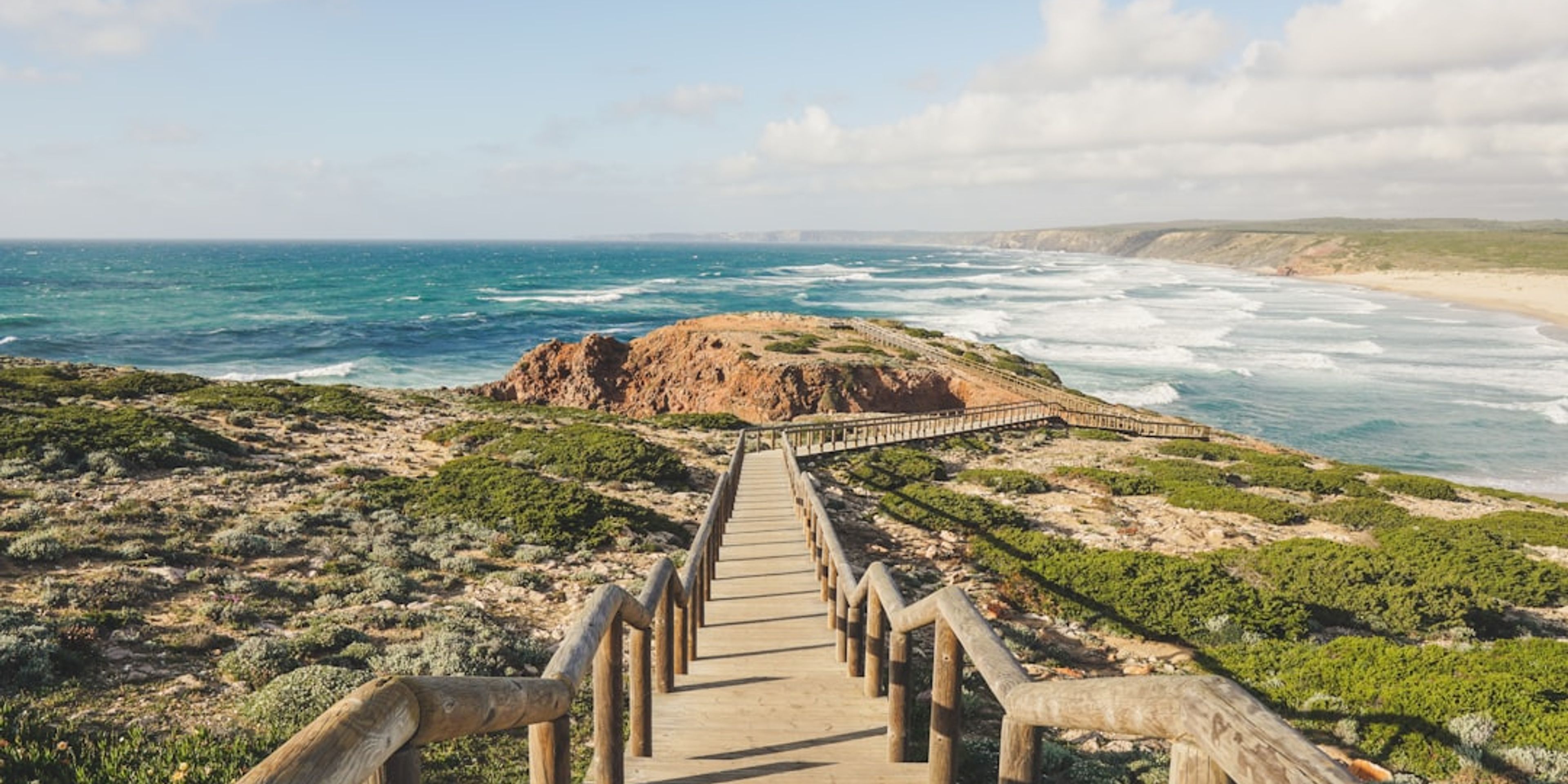
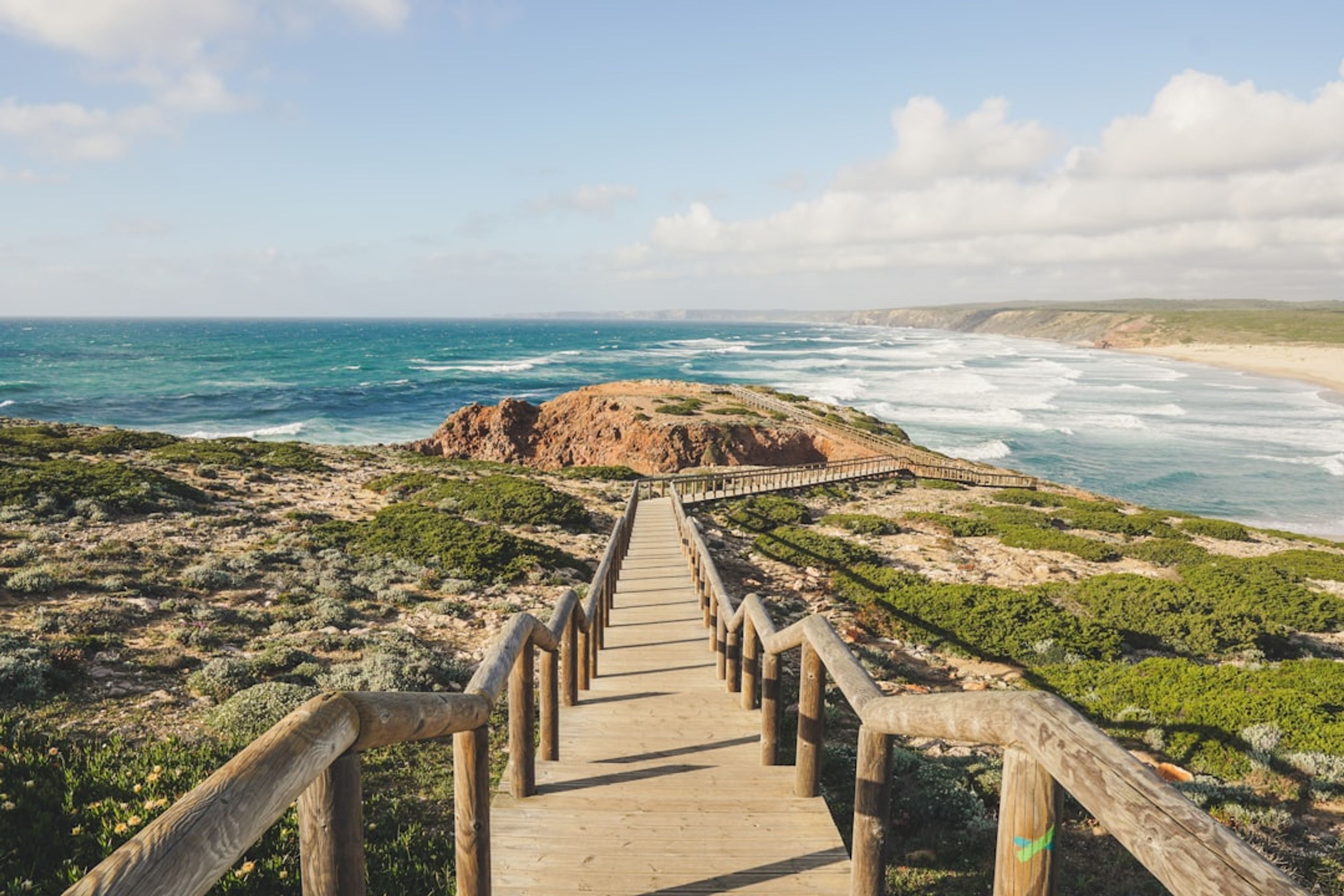
The Algarve is Portugal's southernmost region, a roughly 155 km strip of Atlantic coastline running from the Spanish border at Vila Real de Santo Antonio in the east to Sagres at the country's south-western tip. Geographically it splits into three zones - the gentler Sotavento (eastern Algarve) around Tavira and Faro, the busier Barlavento (central Algarve) around Albufeira and Lagos, and the rugged Costa Vicentina protected coastline running north from Sagres.
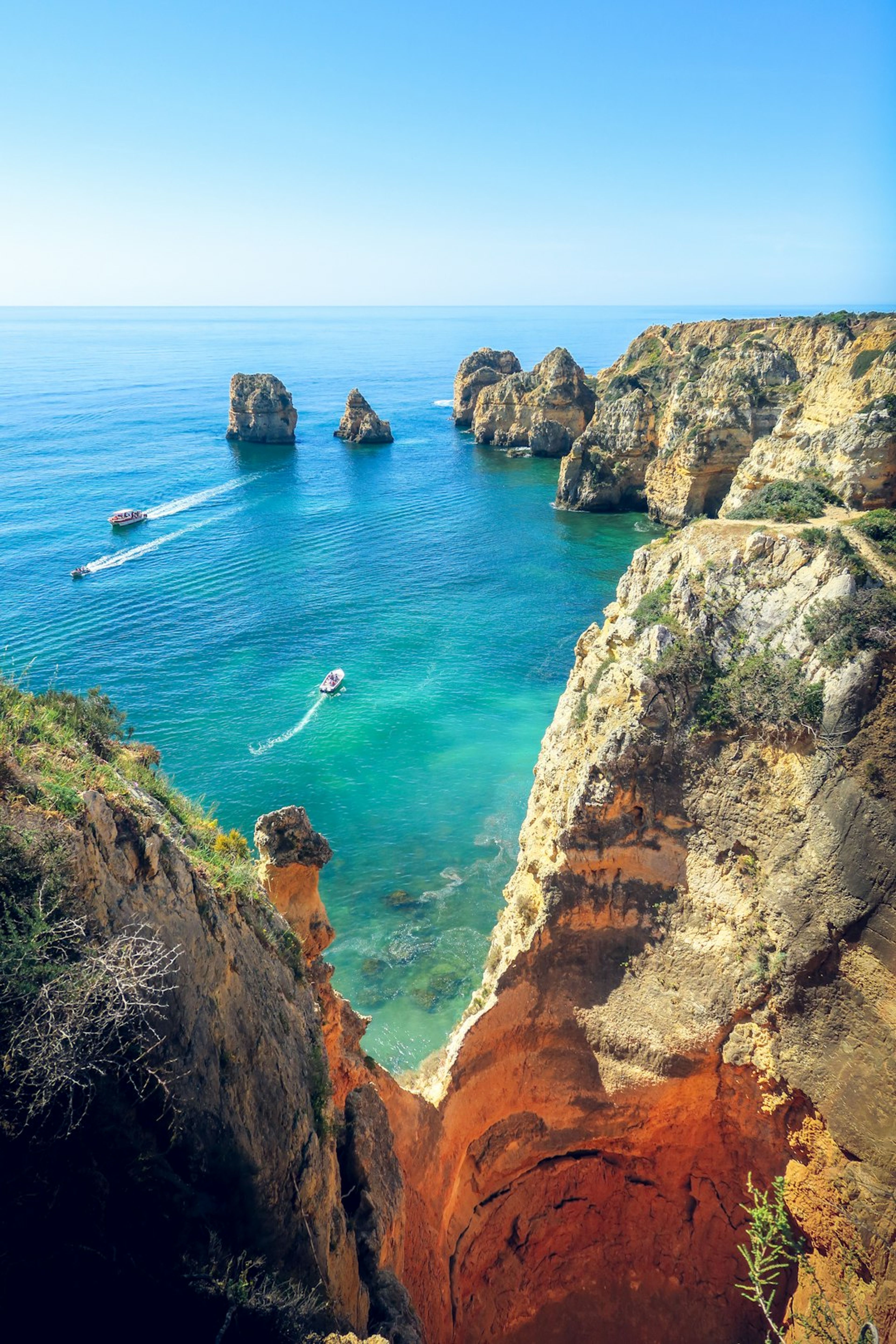
The region is best known for ochre sandstone cliffs, sea caves like Benagil, and a string of beaches that consistently rank among Europe's best. Beyond the coast, hilltop villages like Silves and Monchique sit in the Serra de Monchique mountains, while traditional fishing towns like Olhao and Tavira show the older, quieter face of the region. The Algarve also has the highest concentration of golf courses in continental Europe and is one of Portugal's main wine and almond-producing regions.
With around 300 days of sunshine a year and warm Atlantic water from June through October, the Algarve works as both a summer beach destination and a year-round mild-climate escape. Faro Airport (FAO) handles direct flights from most European hubs, and a single rail line plus the A22 motorway tie the region together end to end.
Country
Portugal
Region
Southern Portugal (Faro District)
Population
~467,000
Elevation
0-902 m (Foia peak in Serra de Monchique)
Time Zone
WET (UTC+0), WEST (UTC+1) summer
Currency
Euro (EUR)
Language
Portuguese
Nearest Airport
Faro Airport (FAO)
Airport to City Centre
Faro 5 km / 10 min; Albufeira 40 km / 30 min; Lagos 85 km / 1 hr
Typical Cost Level
Mid-range (cheaper than Lisbon)
Transport Pass
No regional pass - rental car recommended; Linha do Algarve regional train links coastal towns
Spring (Mar-May)
14-22°C
Summer (Jun-Aug)
22-30°C
Autumn (Sep-Nov)
17-25°C
Winter (Dec-Feb)
9-16°C
Algarve travel guides
Stay in the loop
Get the latest deals, new destinations, and travel tips delivered straight to your inbox.
No spam, unsubscribe anytime.
Do you need a visa for Portugal?
Entry rules, stay length and passport validity by nationality.
Climate averages · 1991–2020
When is the best time to visit Algarve?
Monthly temperatures, rainfall and sunshine — not a live forecast.
See Algarve weatherLatest travel guides
Algarve Destination FAQ
Late May to early October offers the best mix of warm weather and swimmable Atlantic water. July and August are the hottest and most crowded with peak prices, while June and September deliver the same beach conditions at calmer prices. April, May, and October are excellent for hiking, golf, and exploring without the summer crowds. Winters are mild (10-16°C) and sunny, but the sea is too cold to swim and many beachfront restaurants close for the season.
Faro Airport (FAO) sits 5 km west of Faro city and serves the entire Algarve region. The cheapest option is the Aerobus (Line 14 or 16) which connects to Faro bus station in 20 minutes for around 2.50 EUR. For Albufeira (45 minutes), Lagos (1 hour), or Tavira (45 minutes), use the Vamus regional buses or take a regional train from Faro station. Taxis charge a fixed rate (around 50-75 EUR to Albufeira, 90-110 EUR to Lagos), and pre-booked airport transfers usually undercut metered taxis.
A rental car is the easiest way to explore the Algarve, especially if you want to visit hidden beaches, hilltop villages like Silves and Monchique, or the Costa Vicentina coast. The Linha do Algarve regional train runs east-west between Vila Real de Santo Antonio and Lagos, stopping at most coastal towns, and Vamus buses fill the gaps. If you're staying in one resort town like Albufeira or Lagos and only plan to visit nearby beaches, you can manage without a car using local buses and the occasional taxi or Bolt.
Five to seven days lets you cover the highlights without rushing. A short three- or four-day trip works if you base yourself in one town (Lagos or Albufeira are the most central) and stick to nearby beaches. A full week lets you split your stay between the western Algarve (Lagos, Sagres, Ponta da Piedade) and the central coast (Albufeira, Praia da Marinha, Benagil Cave), plus a day in Tavira or Faro for the older eastern Algarve. Two weeks gives you time to slow down and add inland day trips to Silves and the Monchique mountains.
The Algarve is one of the safest regions in Europe for travellers. Portugal consistently ranks in the top 10 on the Global Peace Index, violent crime is rare, and the main risks are petty pickpocketing in busy resort areas like Albufeira's Old Town strip during summer nights. The real hazards are environmental - strong Atlantic currents at unguarded beaches, unstable cliff edges (stay well back from the unfenced sandstone cliffs around Lagos and Carvoeiro), and intense midsummer sun. Always swim at lifeguarded beaches displaying a green or yellow flag.
Yes - on trip1 you can book hotels across the Algarve and pay with over 50 cryptocurrencies including Bitcoin and Ethereum. trip1 covers 3 million+ hotels in 190+ countries, so finding accommodation in Lagos, Albufeira, Tavira, Faro, or anywhere along the Algarve coast and paying with crypto is straightforward.
The Algarve splits into three distinct zones. The Sotavento (eastern Algarve) runs from Vila Real de Santo Antonio to Faro and includes Tavira, Olhao, and the Ria Formosa lagoon - quieter, flatter, with long sandbar beaches. The Barlavento (central and western Algarve) covers Albufeira, Carvoeiro, Lagoa, Portimao, Lagos, and Sagres - this is the dramatic cliff coastline with Benagil Cave and Ponta da Piedade. The Costa Vicentina is the protected Atlantic coast running north of Sagres into the Alentejo - wild, surf-focused, and undeveloped.
Seville in Spain is a popular cross-border day trip, around 2 hours from Faro by car or coach. Inland, Silves with its red-sandstone Moorish castle and Monchique in the cooler Serra de Monchique mountains make easy half-day escapes. The Ria Formosa Natural Park islands (Ilha da Culatra, Ilha do Farol, Ilha Deserta) are reachable by ferry from Olhao or Faro and offer empty beaches without the resort crowds. From the western Algarve, Cabo de Sao Vicente at Sagres - mainland Europe's south-westernmost point - is a 30-minute drive from Lagos.