

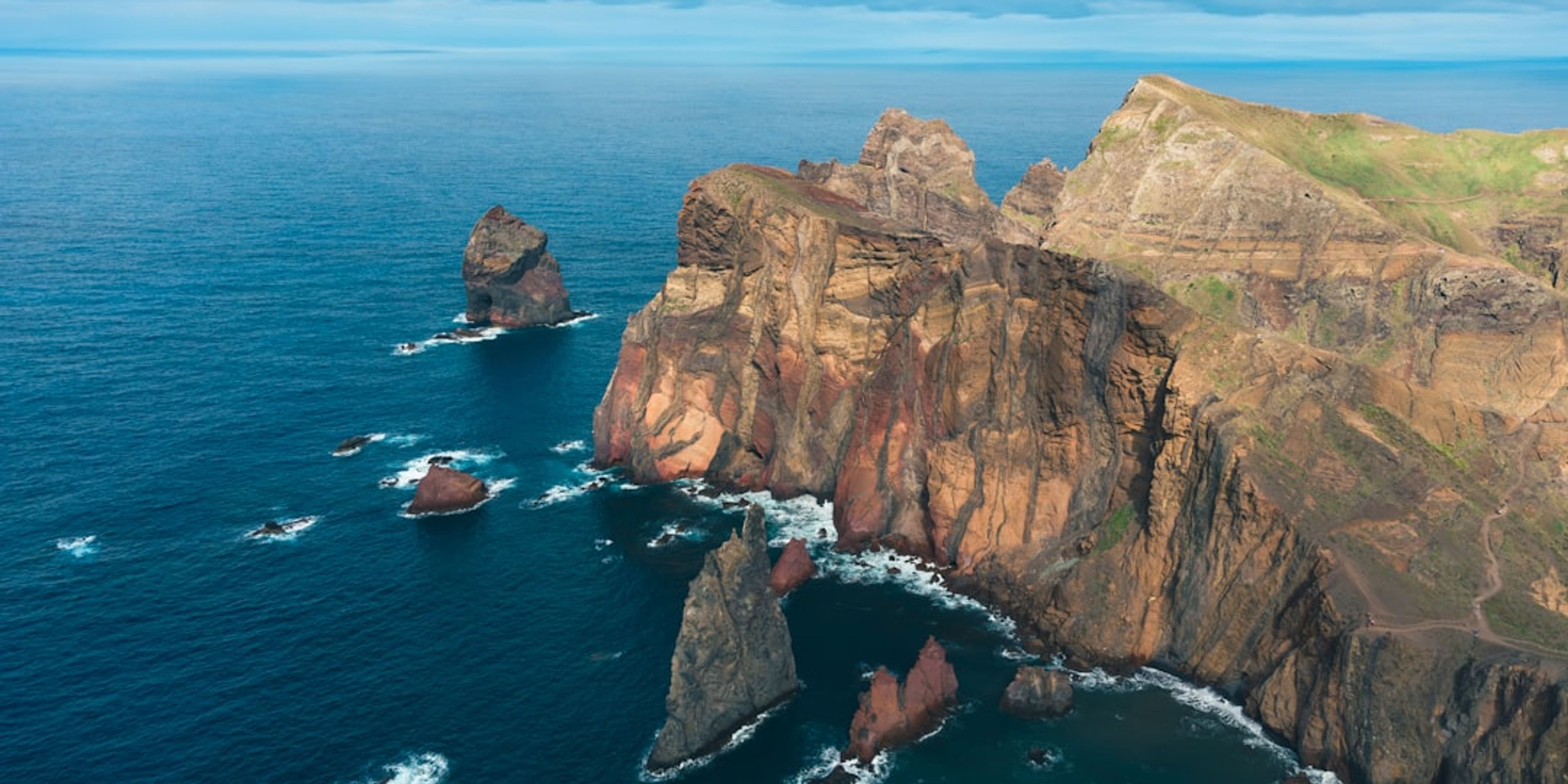

Madeira travel guides
Browse and explore the best travel guides in Madeira.
Madeira travel facts
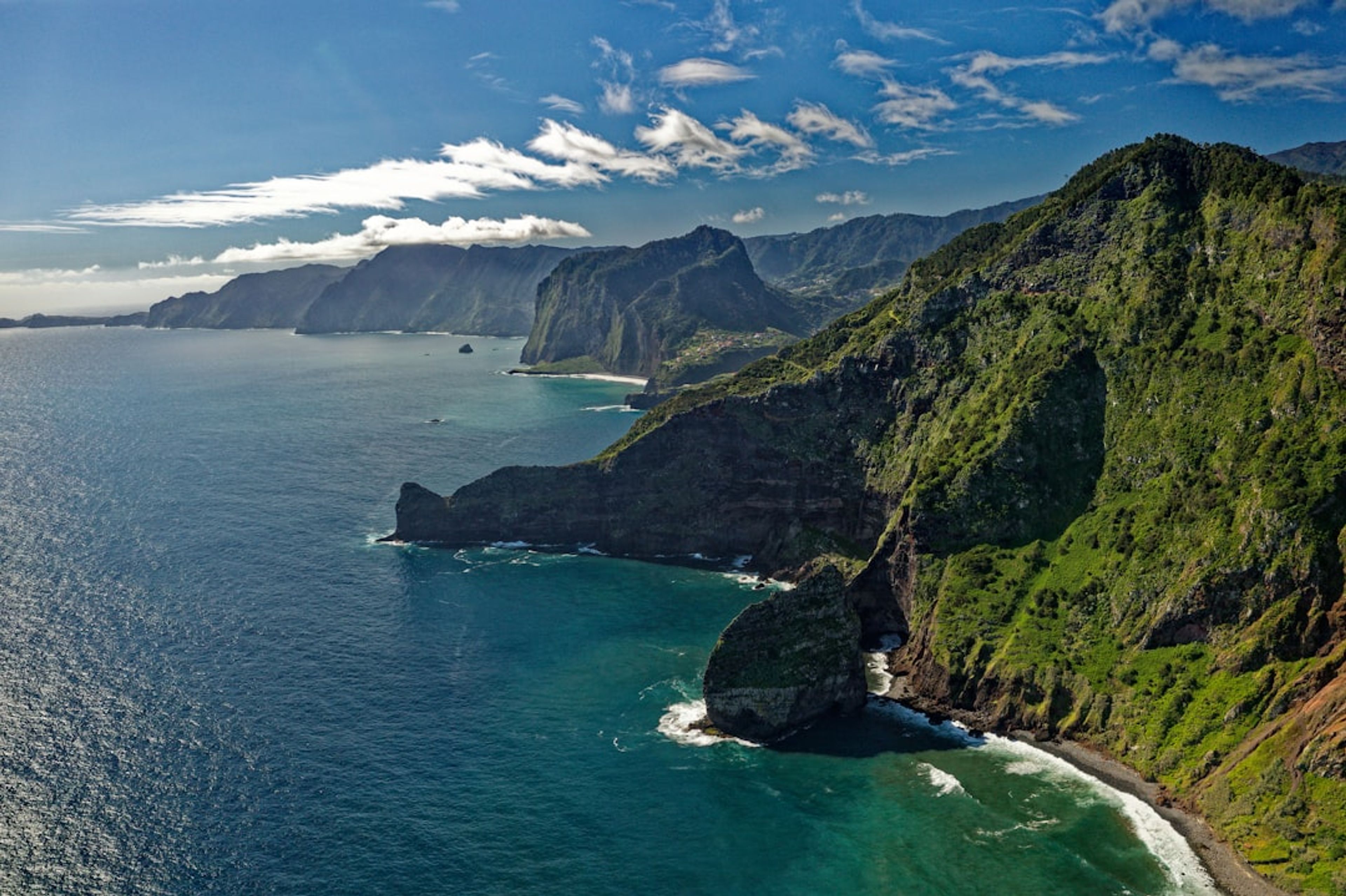
Madeira is a Portuguese autonomous region in the Atlantic Ocean, roughly 1,000 km southwest of Lisbon and 500 km off the Moroccan coast. The main island shares its name with the archipelago and packs volcanic peaks, laurel forest, dramatic sea cliffs, and a Mediterranean-like climate into 741 square kilometres. The capital, Funchal, sits on the south coast and is home to most of the island's 250,000 residents.
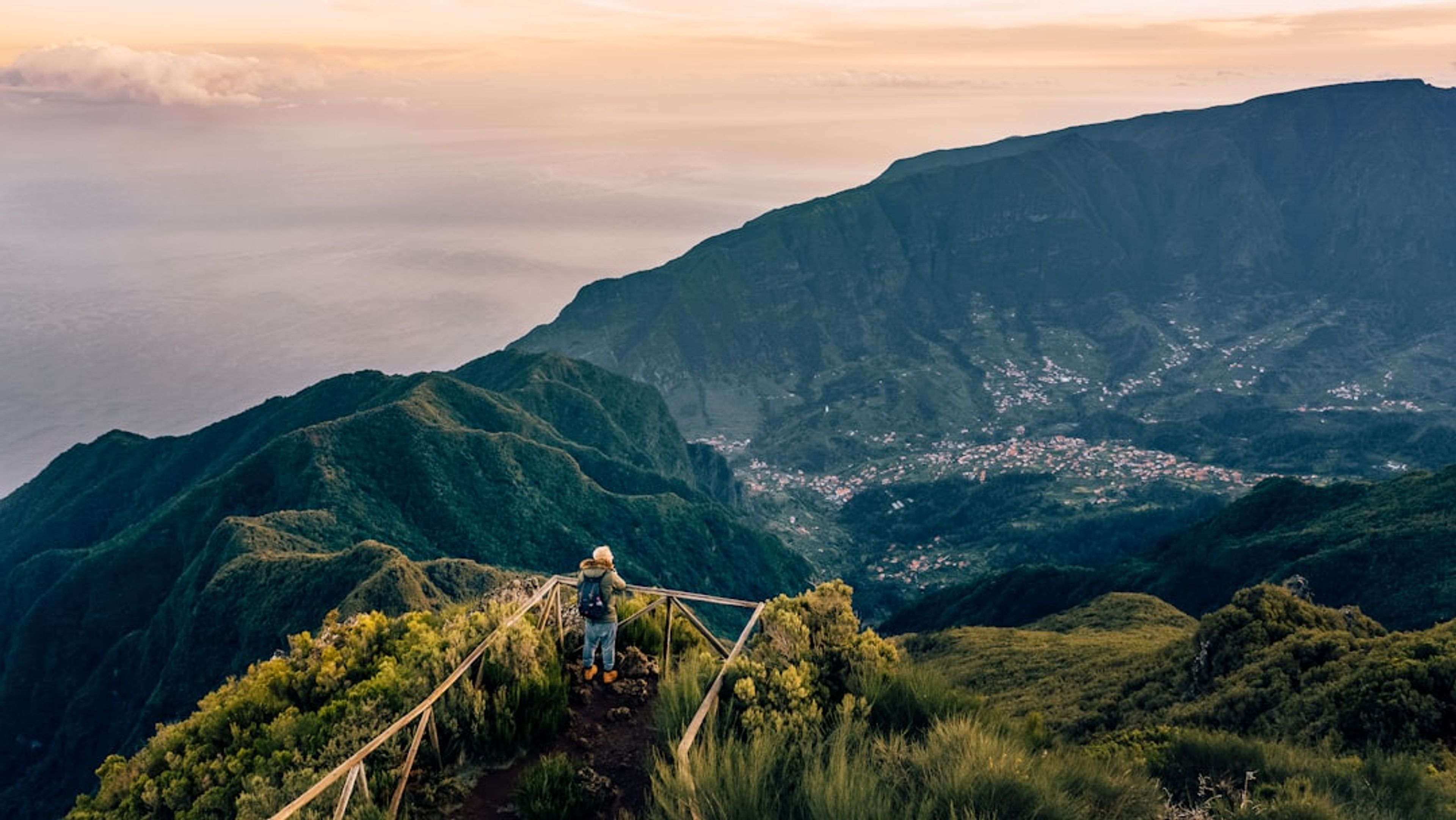
Travellers come to Madeira for the levada walks - irrigation channels turned into hiking trails that cross the island - alongside the Pico do Arieiro to Pico Ruivo ridge route, the lava pools at Porto Moniz, the cable car and toboggan run at Monte, and the cliffside Cabo Girao skywalk. Funchal pairs cobbled old quarter streets with a busy waterfront, Madeira wine lodges, and Mercado dos Lavradores, while quieter spots like Camara de Lobos and Sao Vicente reward day trips.
Year-round temperatures rarely drop below 14 C or climb above 25 C, making Madeira a viable destination in every season. Flights land at Cristiano Ronaldo International Airport (FNC) in Santa Cruz, 18 km east of Funchal, with the city reached in around 25 minutes by airport bus, taxi, or transfer.
Country
Portugal
Region
Autonomous Region of Madeira (Atlantic archipelago)
Population
~250,000 (whole region); ~105,000 in Funchal
Elevation
Sea level to 1,862 m (Pico Ruivo, highest peak)
Time Zone
WET (UTC+0), WEST (UTC+1) in summer
Currency
Euro (EUR)
Language
Portuguese
Nearest Airport
Cristiano Ronaldo International Airport (FNC), Santa Cruz
Airport to City Centre
18 km to Funchal, ~25 min by car or Aerobus line 113
Typical Cost Level
Mid-range
Transport Pass
Horarios do Funchal GIRO card (Funchal city buses)
Spring (Mar-May)
16-21 C, mild and green; good for hiking
Summer (Jun-Aug)
19-25 C, dry and sunny; peak season
Autumn (Sep-Nov)
18-24 C, warm sea, fewer crowds
Winter (Dec-Feb)
14-18 C, mild; Funchal hosts famous New Year fireworks
Madeira travel guides
Stay in the loop
Get the latest deals, new destinations, and travel tips delivered straight to your inbox.
No spam, unsubscribe anytime.
Do you need a visa for Portugal?
Entry rules, stay length and passport validity by nationality.
Climate averages · 1991–2020
When is the best time to visit Madeira?
The best time to visit Madeira is between April and September, the most comfortable stretch of the year on these averages.
Best time · April–SeptemberRainfall
- Jan17°
- Feb17°
- Mar18°
- Apr18°
- May19°
- Jun21°
- Jul23°
- Aug24°
- Sep24°
- Oct22°
- Nov20°
- Dec18°
Latest travel guides
Madeira Destination FAQ
April to October is the most popular window, with warm, dry weather and sea temperatures of 19-23 C. Spring and early autumn are best for hiking - cooler air, green slopes, and fewer crowds on the levadas. Summer (June-August) is the peak tourist season and books up fast for the Pico do Arieiro sunrise and boat tours. Winter is mild at 14-18 C and a popular time for New Year's Eve in Funchal, when the city's harbour fireworks were once listed in the Guinness Book of Records as the largest in the world.
The Aerobus line 113 runs directly between Cristiano Ronaldo International Airport (FNC) and Funchal city centre, taking about 30-40 minutes. Taxis cost around 25-30 EUR and reach Funchal in 20-25 minutes. Pre-booked private transfers run a similar price and can drop you at most hotels. If you are renting a car, the airport has the major rental desks in arrivals - the drive into Funchal is on the VR1 expressway and takes about 20 minutes.
A rental car is the easiest way to see the island in full. Distances are short but the terrain is steep and twisty, with many of the best viewpoints, levada trailheads, and west coast villages poorly served by buses. If you plan to stay in Funchal and only take guided day tours, you can manage without one - SAM, Rodoeste, and Horarios do Funchal buses cover most towns, and tour operators bundle Pico do Arieiro, Porto Moniz, and Sao Vicente into single-day trips. For two or more days outside Funchal, rent a car.
Five to seven days covers the island well. A 5-day plan typically includes two days in Funchal (old town, Monte cable car, Mercado dos Lavradores), one day for Pico do Arieiro and the central mountains, one day for the north coast (Porto Moniz, Sao Vicente), and one day for the west (Cabo Girao, Ponta do Sol). A full week leaves room for a Porto Santo island day trip or a slower levada walk like Caldeirao Verde. Three days is doable but tight if you want hiking and a Funchal city break in the same trip.
Madeira is one of the safest destinations in Europe. Violent crime is rare, petty theft is uncommon, and Funchal is comfortable to walk alone after dark in most central areas. The bigger risks are nature-related: sudden weather changes on high peaks, slippery levada paths after rain, strong Atlantic currents at unguarded beaches, and steep mountain roads. Check the IPMA forecast before hiking, stick to marked trails, and only swim where lifeguards are on duty during peak season.
Levadas are narrow irrigation channels built since the 16th century to carry water from Madeira's rainy north to the drier south. The maintenance paths beside them now form over 2,000 km of well-graded hiking trails, mostly flat and shaded by laurel forest. Good first walks are Levada do Caldeirao Verde (13 km return, waterfalls, easy gradient) and Levada das 25 Fontes (about 10 km, finishing at a turquoise pool fed by 25 springs). Bring a head torch for the dark tunnels on Caldeirao Verde.
On trip1, you can book hotels across Madeira and pay with over 50 cryptocurrencies including Bitcoin, Ethereum, and USDC. trip1 covers 3 million+ hotels in 190+ countries, making it easy to find and book accommodation with crypto.
Most travellers base in Funchal and do four classic day trips. The central mountains - Pico do Arieiro, Pico Ruivo, and the ridge trail between them - are best at sunrise. The north coast loop links Sao Vicente, Seixal black-sand beach, and the volcanic Porto Moniz lava pools. The west tour covers Cabo Girao skywalk, Camara de Lobos fishing harbour, and Ponta do Sol. The fourth is Porto Santo island - a 2h 15m ferry north to a 9 km golden-sand beach, also reachable by short flight.