Guides · Lyon
10 Top Places to Visit in Lyon

CEO and co-founder
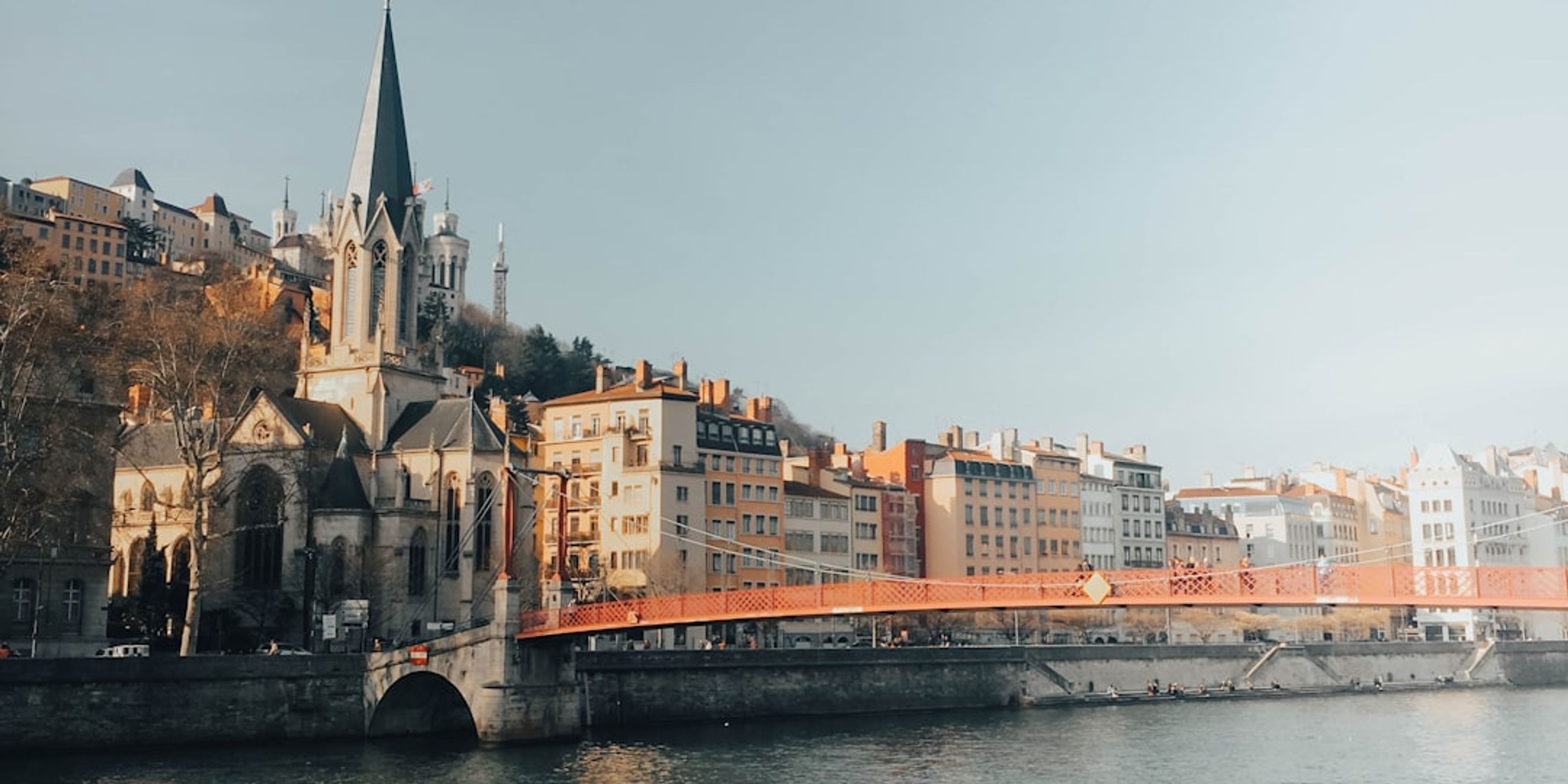
Lyon sits at the confluence of the Rhône and Saône rivers in east-central France, a city where two thousand years of Roman ruins, Renaissance courtyards, silk-weaver workshops and cutting-edge architecture stack on top of one another across two hills and a narrow peninsula. The best places to visit in Lyon sprawl across four distinct districts, each with its own personality: the cobbled lanes of Vieux Lyon on the west bank, the pilgrim hill of Fourvière above it, the elegant Presqu'île peninsula in the middle, and the bohemian Croix-Rousse slope to the north. France's third-largest city was founded by the Romans as Lugdunum in 43 BCE and its historic core has been a UNESCO World Heritage Site since 1998. This 2026 guide walks you through the ten sights that best capture the city's layered identity, from the Basilica of Notre-Dame de Fourvière crowning the skyline to the futuristic Confluence district downstream. Expect specific TCL metro directions, current entry prices in EUR, and honest notes on what to prioritise if your time is short. Visitors arriving from Paris tend to be struck by how much quieter the streets are for a city of this size, and by how much of it is walkable in a single day. The Fourvière climb and the Croix-Rousse slopes are the parts that turn on the forecast, so check Lyon weather before deciding which district to take first. For a base, the hotels in Lyon on the Presqu'île sit within walking distance of three of the four districts above.
1Vieux Lyon (Old Town)
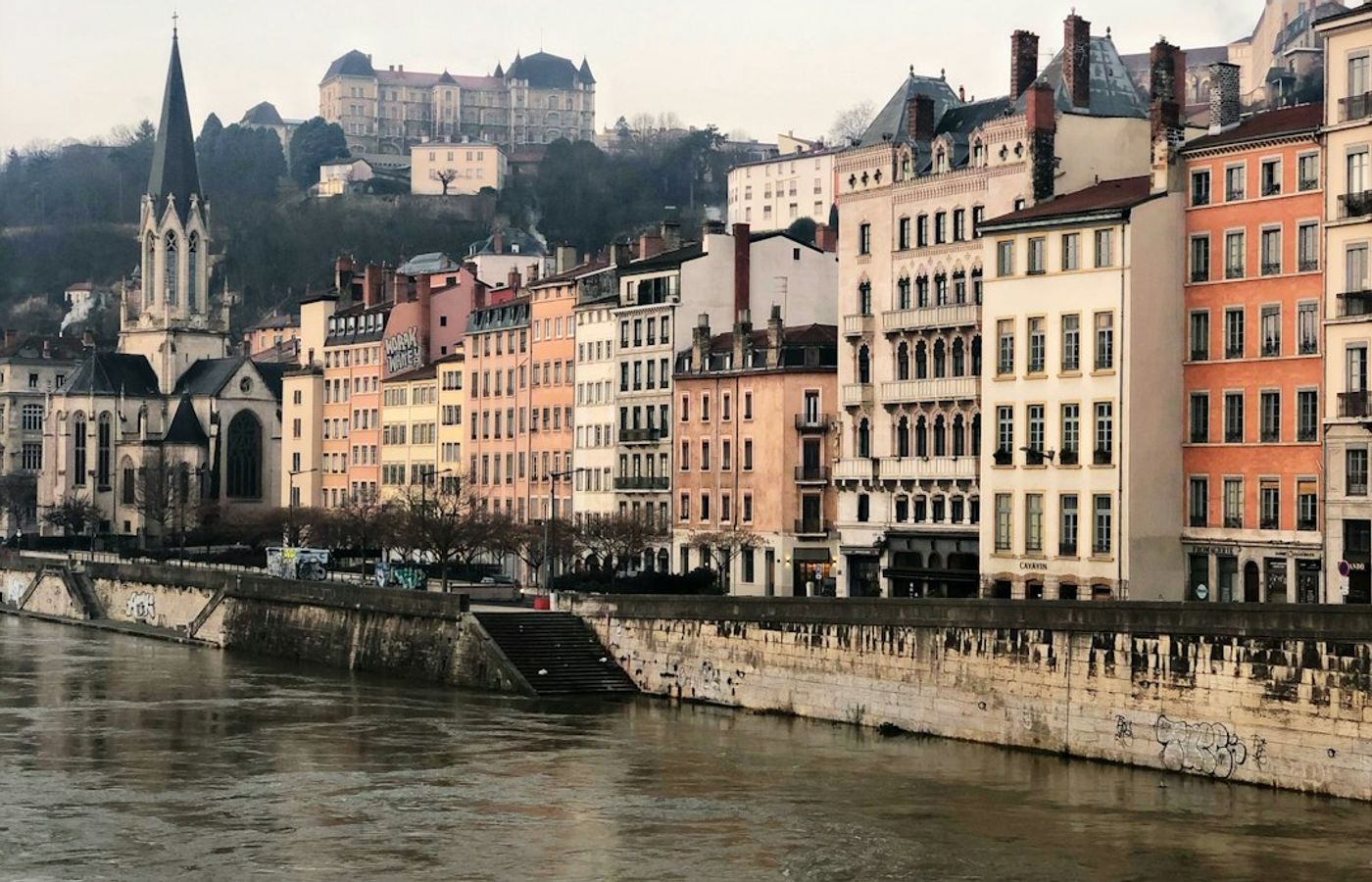

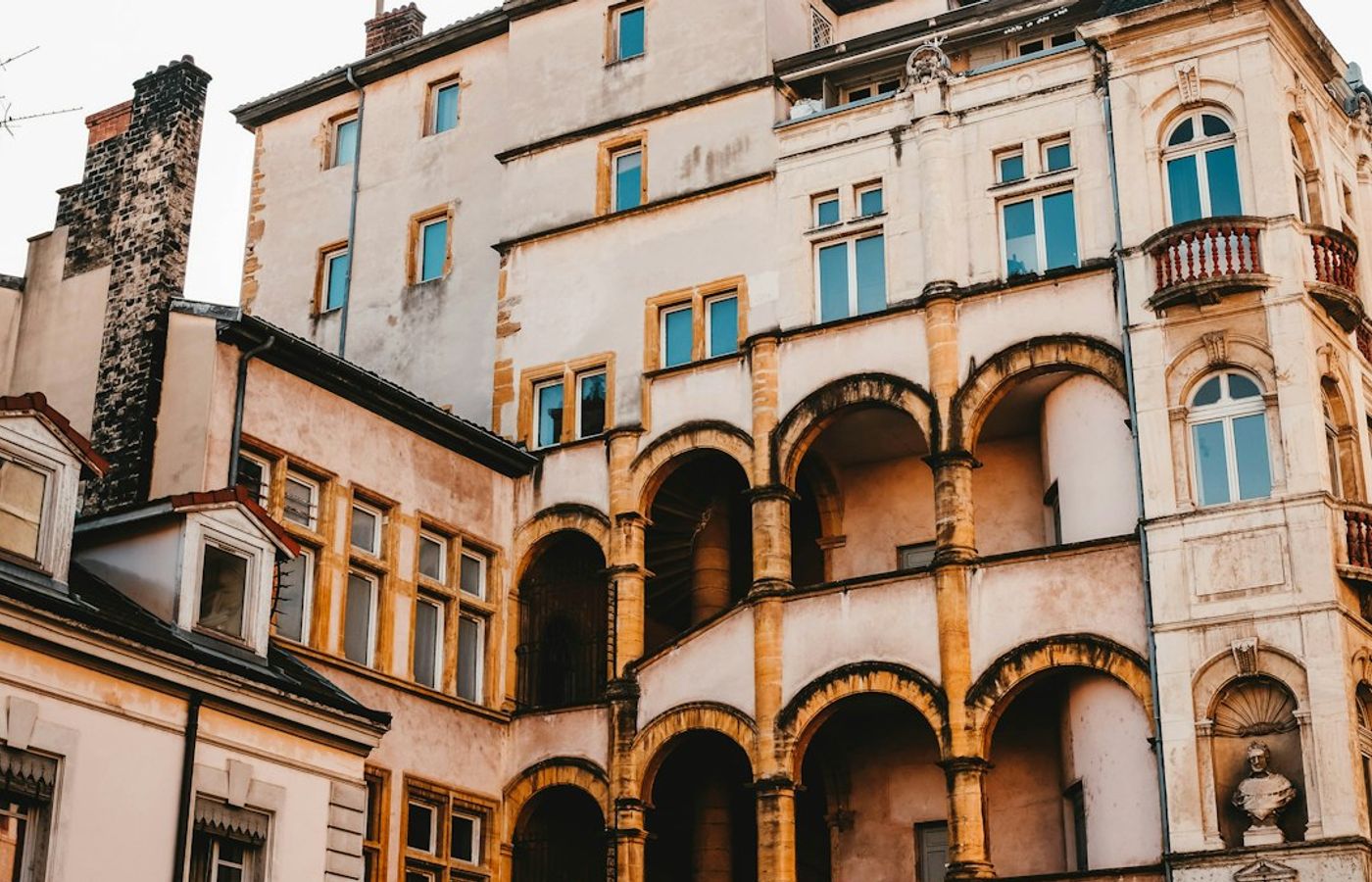
Vieux Lyon is the largest Renaissance quarter in Europe outside Italy, a dense grid of ochre-and-cream townhouses squeezed between the Saône river and the Fourvière hill. Built up between the 15th and 17th centuries when Lyon was Europe's silk-trading capital, the district is divided into three parishes: Saint-Jean at the centre with its Gothic cathedral, Saint-Paul to the north, and Saint-Georges to the south. The signature feature is the traboule, a covered passageway cutting through courtyards and buildings to link parallel streets; roughly 40 of the estimated 300+ traboules are open to visitors, marked by small bronze plaques. Rue Saint-Jean and Rue du Boeuf hold the highest concentration of accessible ones, including the four-storey Tour Rose courtyard at 16 Rue du Boeuf. The whole quarter falls inside the UNESCO buffer zone. Take Metro Line D to Vieux Lyon station, which drops you directly at the cathedral square.
Pro Tip: Traboules are private property that residents allow the public to cross during daytime, so keep voices down and close the heavy wooden doors behind you. Pick up a free traboule map from the Lyon Tourist Office at Place Bellecour before you go in - the entrances are unmarked and easy to miss.
2Basilica of Notre-Dame de Fourvière
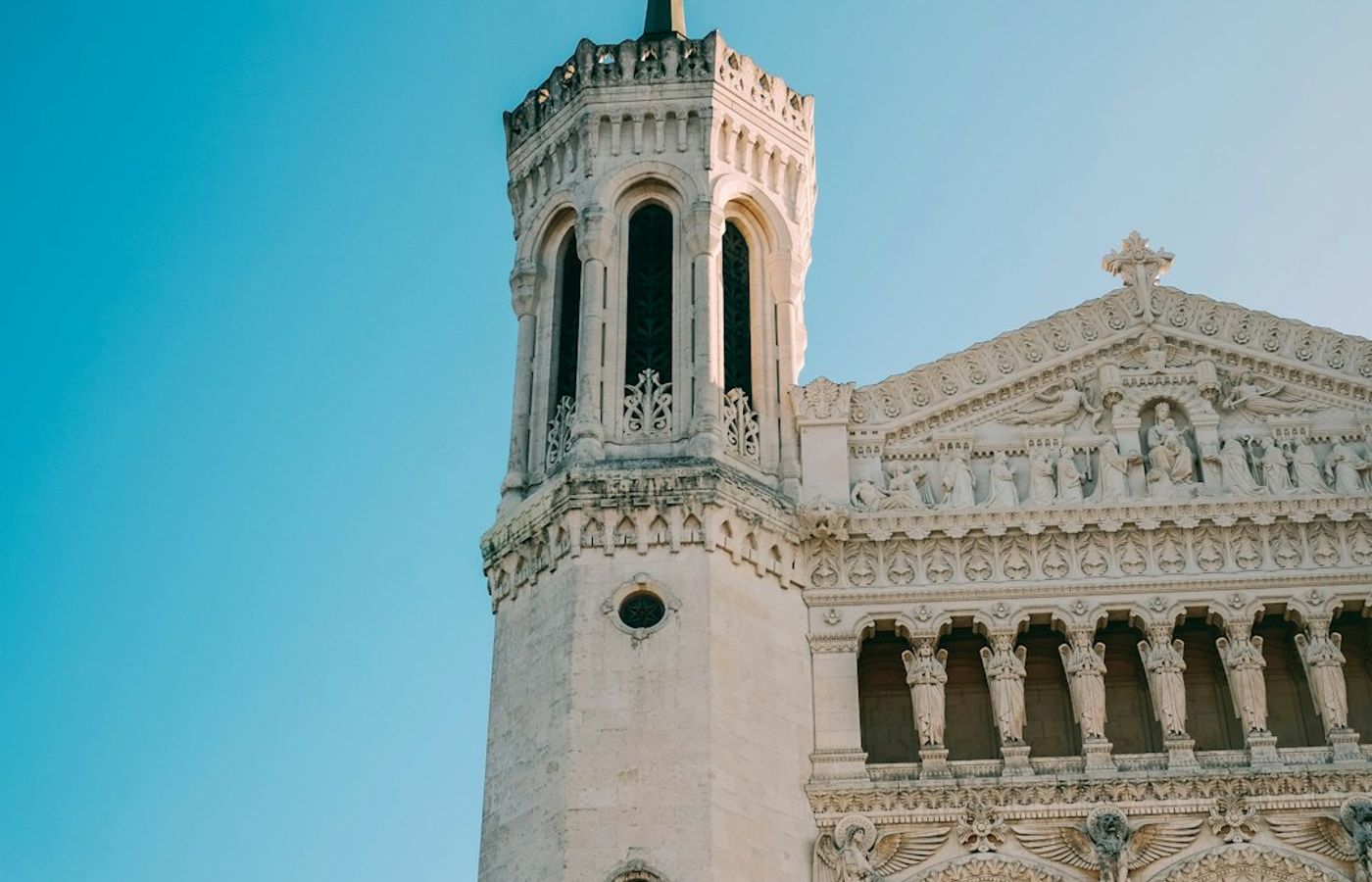
The Basilica of Notre-Dame de Fourvière crowns the hill of the same name at 130 metres above the river, its four octagonal towers and gleaming white limestone visible from almost anywhere in central Lyon. Construction began in 1872 and finished in 1884 as a thank-offering after the city was spared during the Franco-Prussian War, with the interior mosaics and stained glass completed over the following decades. The style is a deliberate hybrid of Byzantine and Romanesque, and the inside is spectacular: gilded ceilings, marble columns quarried from six different countries, and mosaic panels depicting the life of the Virgin. A smaller 12th-century chapel sits alongside the main church, and the crypt below holds the tomb of Saint Joseph. Entry to the basilica and crypt is free; guided rooftop tours run April to November for EUR 10 and climb to a walkway with panoramic views stretching to Mont Blanc on clear days. Reach the summit by riding the funicular from Vieux Lyon station (part of the TCL network, valid with any metro ticket).
Pro Tip: The Fourvière funicular has two lines that both leave from the same station - take the one signed "Fourvière" not "Saint-Just", which stops halfway. First morning departures are around 06:00 and the last down is close to 22:00; going up at sunset gives you the basilica interior in daylight and the city lights on the descent.

3Fourvière Roman Theatres (Théâtres Romains)
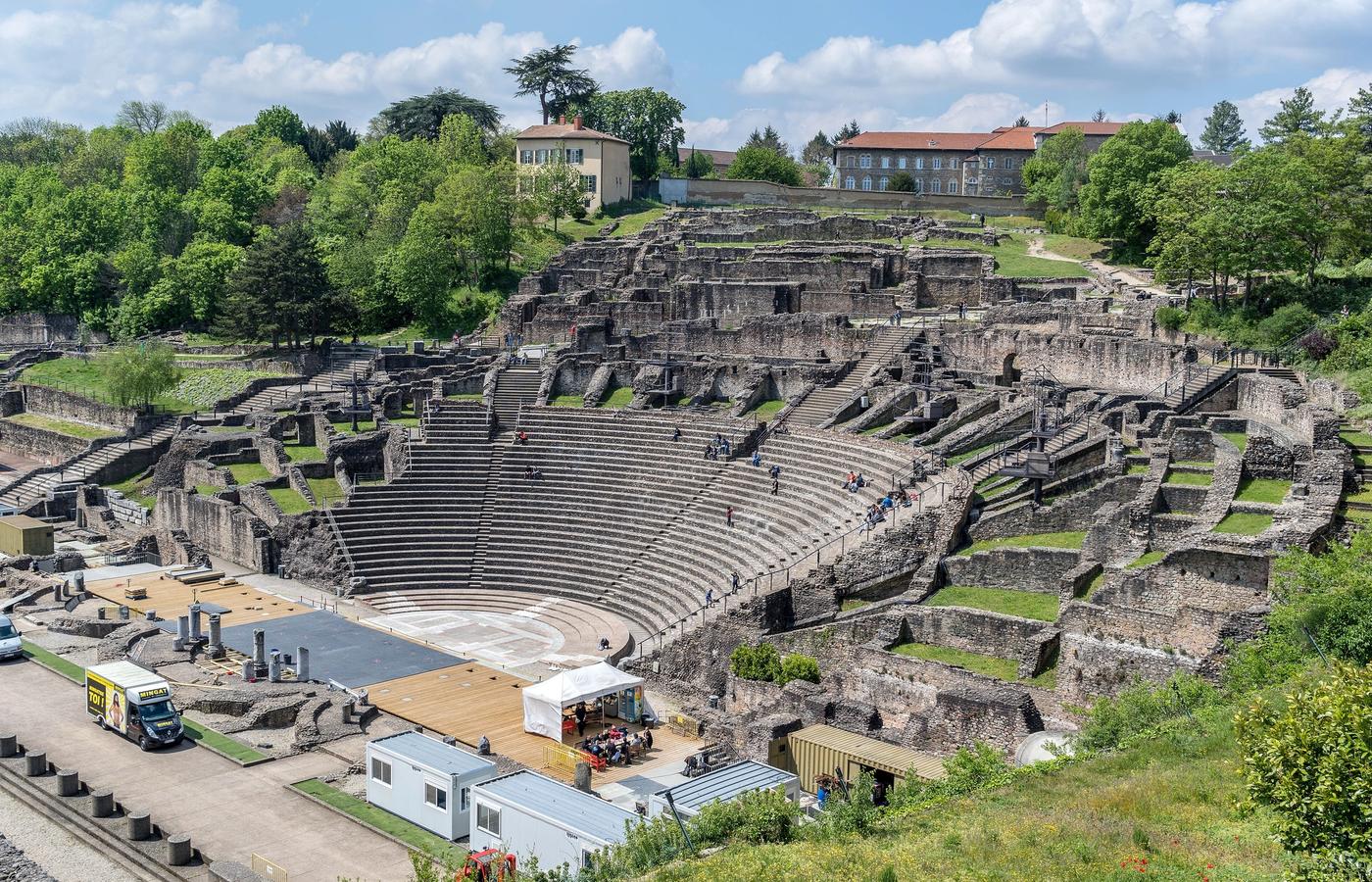
A few hundred metres downhill from the basilica sits the oldest Roman theatre in France, built into the Fourvière hillside around 15 BCE under Emperor Augustus and later expanded to seat 10,000 spectators. A smaller Odeon theatre from the 2nd century CE lies beside it, along with the foundations of a temple to the imperial cult and stretches of Roman road still bearing chariot ruts. The site is open-air and free to enter every day. Adjacent to the ruins, the Lugdunum Museum (formerly Musée Gallo-Romain) is buried into the hillside so you barely notice it from outside; inside, a spiral concrete ramp leads past mosaics, bronze tablets recording the speech of Emperor Claudius to the Roman Senate, and gladiator artefacts. Museum admission is EUR 4 for adults, free on the first Sunday of the month. Every summer in June and July the theatre hosts the Nuits de Fourvière festival, with concerts and dance performances staged in the ancient auditorium.
Pro Tip: Walk down from the basilica rather than taking the funicular back - the Chemin du Rosaire is a stepped garden path passing the theatres on the way to Vieux Lyon, cutting out a ticket and adding some of the best free viewpoints in the city. Wear grippy shoes as the stones can be slick after rain.
4Presqu'île and Place Bellecour
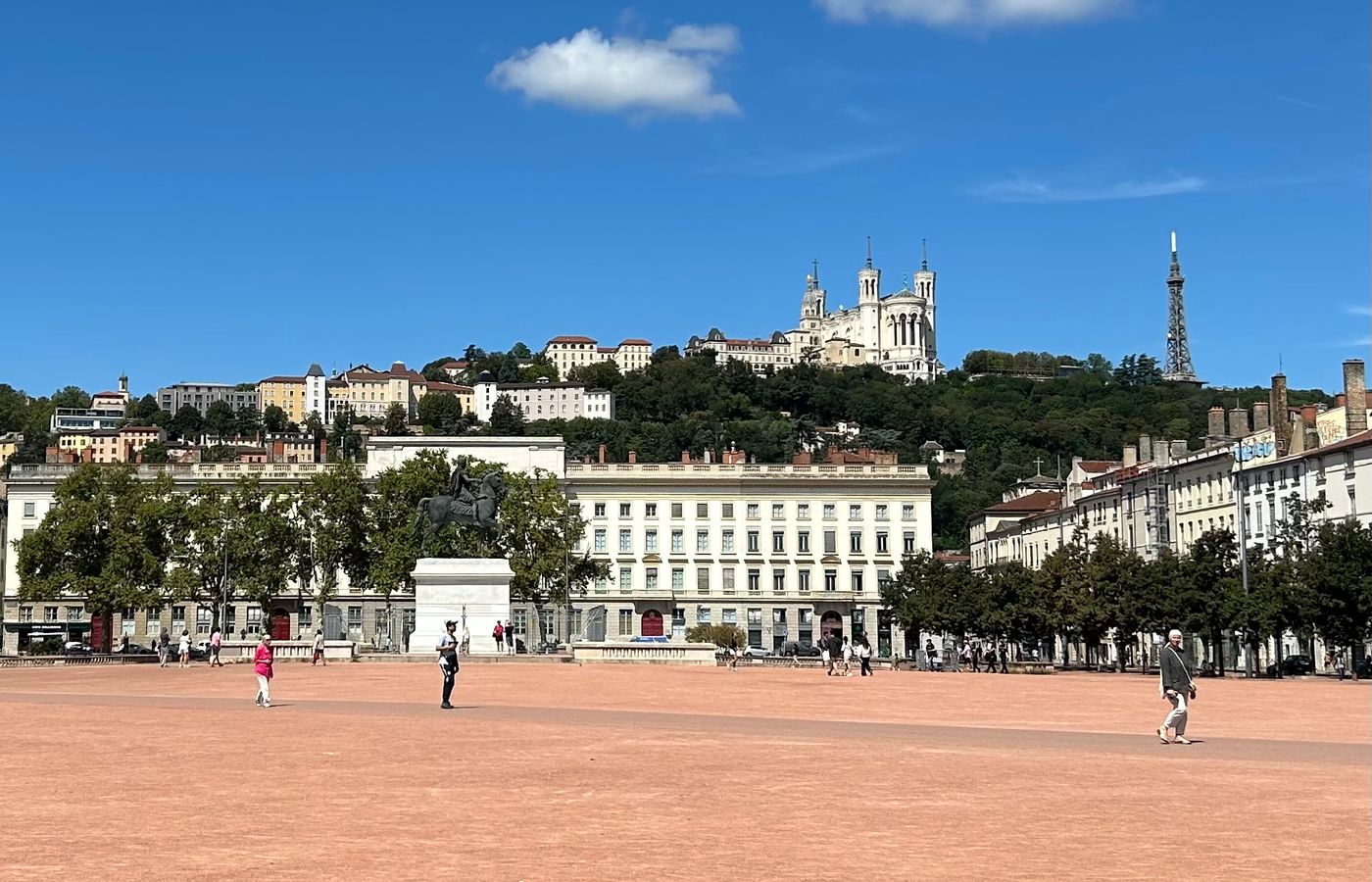
The Presqu'île is Lyon's central peninsula, a narrow 500-metre-wide strip of land between the Rhône and Saône that holds the city's main shopping streets, opera house and grandest squares. At its heart is Place Bellecour, one of the largest pedestrian squares in Europe at 62,000 square metres, laid out in the 17th century and dominated by a bronze equestrian statue of Louis XIV cast in 1825. Rue de la République runs north from Bellecour up to Place des Terreaux, a broad terracotta plaza framed by the 17th-century Hôtel de Ville (City Hall) and the Musée des Beaux-Arts, with a monumental fountain by Frédéric-Auguste Bartholdi (sculptor of the Statue of Liberty) at its centre. The whole peninsula sits inside the UNESCO Historic Site of Lyon. Take Metro Line A or D to Bellecour, the main interchange, or Line A to Hôtel de Ville - Louis Pradel for Terreaux.
Pro Tip: The 8 December Fête des Lumières transforms Bellecour and Terreaux into open-air light installations for four nights; if you visit during those dates, book accommodation months ahead as hotel prices roughly double. Any other time, walking the length of Rue de la République from Bellecour to Terreaux takes about 15 minutes and covers most of Presqu'île's landmarks in one stretch.
5Musée des Beaux-Arts de Lyon
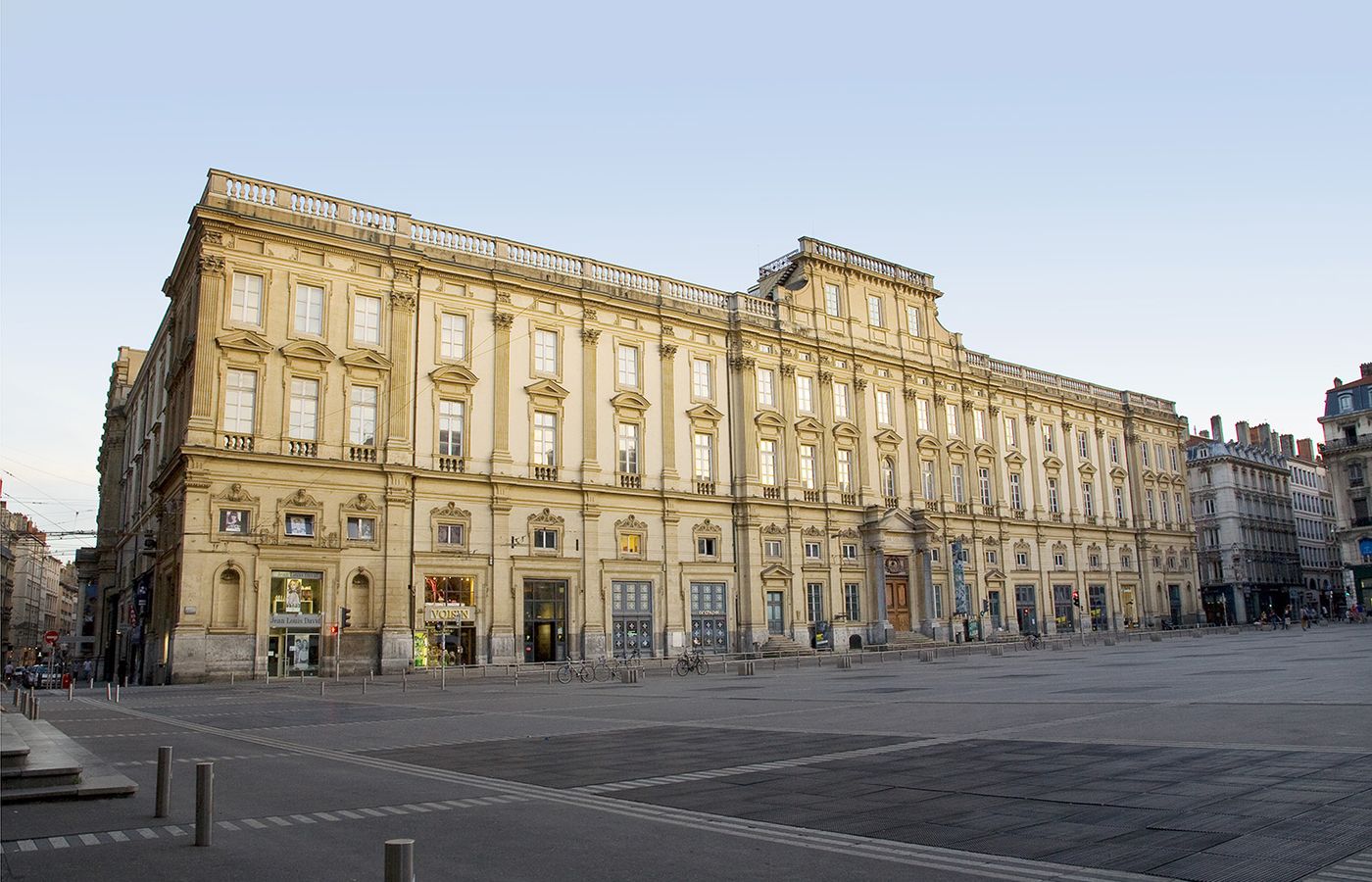
Occupying a former 17th-century Benedictine convent on Place des Terreaux, the Musée des Beaux-Arts is one of the largest fine-art museums in France, second in scale only to the Louvre. Its 70 galleries hold works spanning 5,000 years, from Egyptian antiquities and Greek pottery through medieval sculpture to a strong Impressionist and 20th-century collection including Monet, Degas, Manet, Gauguin and Picasso. The Old Master rooms upstairs contain Rubens, Rembrandt, Zurbarán and Poussin, and the sculpture court in the former cloister is free to enter. General admission is EUR 8 for adults, with free entry on the first Sunday of each month; temporary exhibitions cost extra (typically EUR 12). Opening hours are 10:00 to 18:00 Wednesday through Monday, closed Tuesdays. Metro Line A stops at Hôtel de Ville - Louis Pradel directly outside.
Pro Tip: The museum is genuinely enormous - budget three hours minimum to see the highlights, or pick two floors and skip the rest. The Impressionist rooms on the first floor and the Egyptian antiquities in the basement are the two most visitor-worthy sections if you're short on time. The convent gardens are a peaceful lunch spot and free to sit in even without a museum ticket.
6Parc de la Tête d'Or
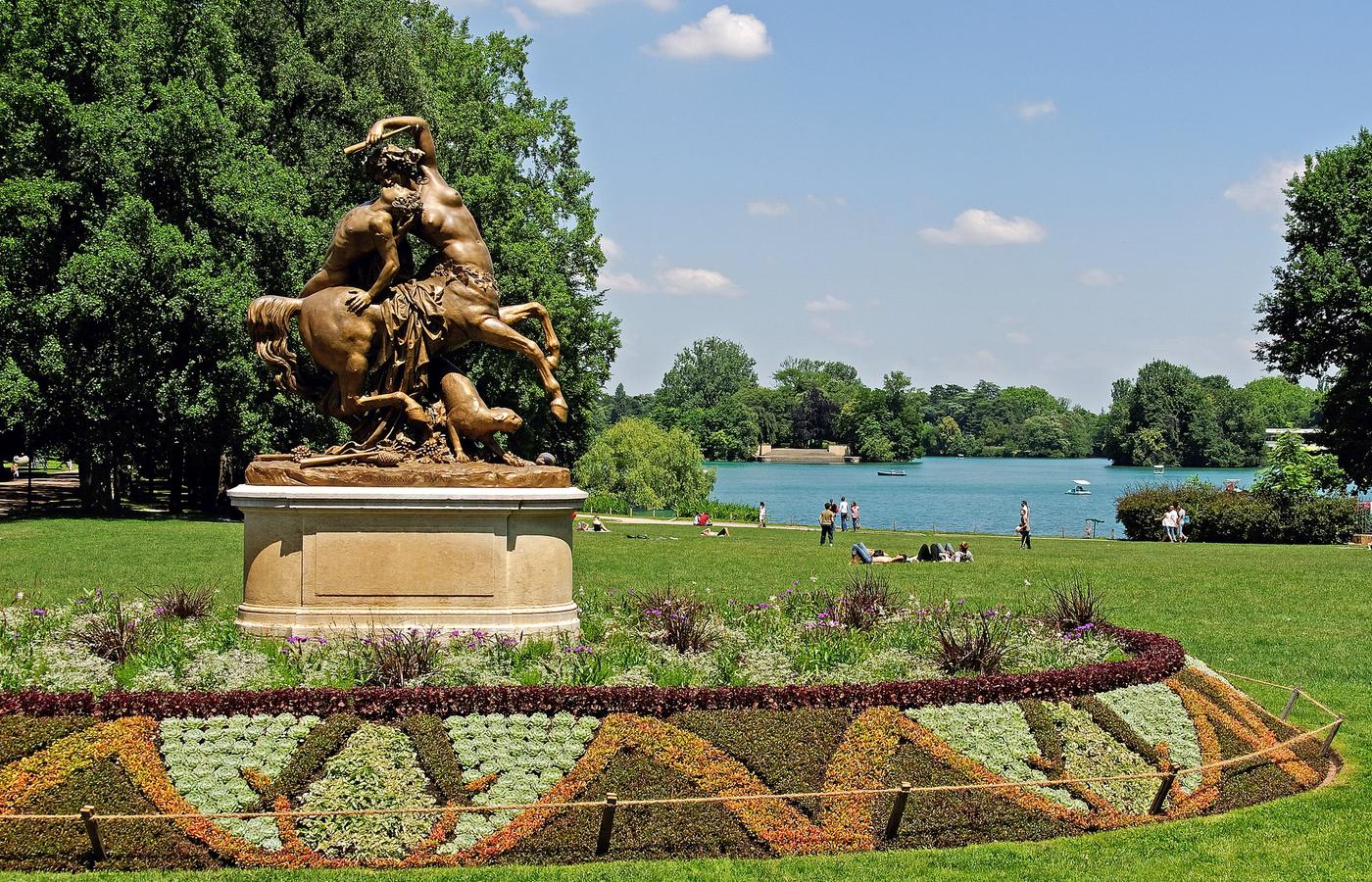
Opened in 1857 on the east bank of the Rhône, Parc de la Tête d'Or covers 117 hectares and is the largest urban park in France. It contains a 16-hectare boating lake with rental rowboats (EUR 8 for 30 minutes), a free zoo with African plains hosting giraffes, zebras and antelope, and a botanical garden with the largest greenhouse collection in the country - the main glasshouse holds tropical plants under a 21-metre-high iron-and-glass dome dating to 1880. There are also rose gardens with more than 30,000 rose bushes across 570 varieties, a velodrome, and pony rides for children. The park is free to enter and open from around 06:30 to 22:30 in summer, shorter hours in winter. Take Metro Line A to Charpennes-Charles Hernu and walk 10 minutes east, or tram T1 to Condorcet for the main gate.
Pro Tip: The park has seven entrance gates and covering the full grounds on foot takes about two hours. Rent a bicycle from the Vélo'v station at Porte des Enfants du Rhône (the main west entrance) for EUR 1.80 per day; it's the fastest way to reach the zoo and greenhouses without doubling back.
7Les Halles de Lyon Paul Bocuse
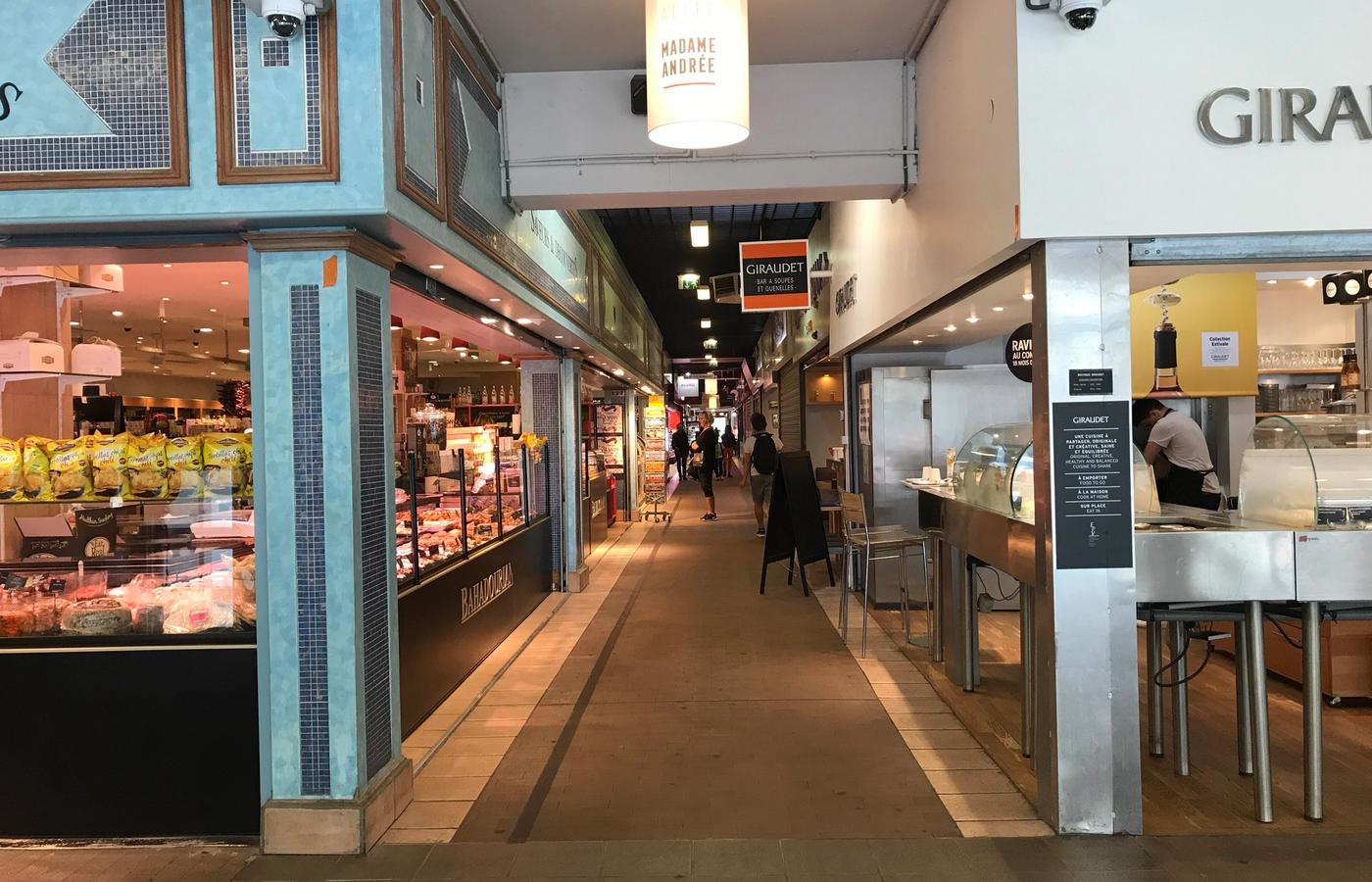
Named after the late Lyonnais chef who held three Michelin stars for 55 straight years, Les Halles de Lyon Paul Bocuse is the covered food market at 102 Cours Lafayette in the 3rd arrondissement. Beyond a plain 1970s concrete exterior, 48 stalls sell the specialities that made Lyon France's unofficial gastronomic capital: rosette sausage from butcher Sibilia, quenelles from Giraudet, Saint-Marcellin cheese aged at Mère Richard's counter, praline tarts from pastry chef Sébastien Bouillet. Several stalls also serve sit-down lunches - oysters and white wine at Merle, cheese platters at Maréchal - typically for EUR 20 to 35 per person. The market opens Tuesday to Saturday from 07:00 to 22:30 and Sunday 07:00 to 13:00, closed Mondays. Metro Line B stops at Place Guichard - Bourse du Travail, a five-minute walk south.
Pro Tip: Cheese and charcuterie stalls close between 12:30 and 15:00 for lunch even though the market itself stays open; go before noon or after 15:30 if you want to shop rather than eat. Sébastien Bouillet's praline tart is the classic sweet buy - roughly EUR 4 a slice and easy to transport, and the pralines are the intensely pink sugared almonds that define Lyon patisserie.
8Confluence District and Musée des Confluences
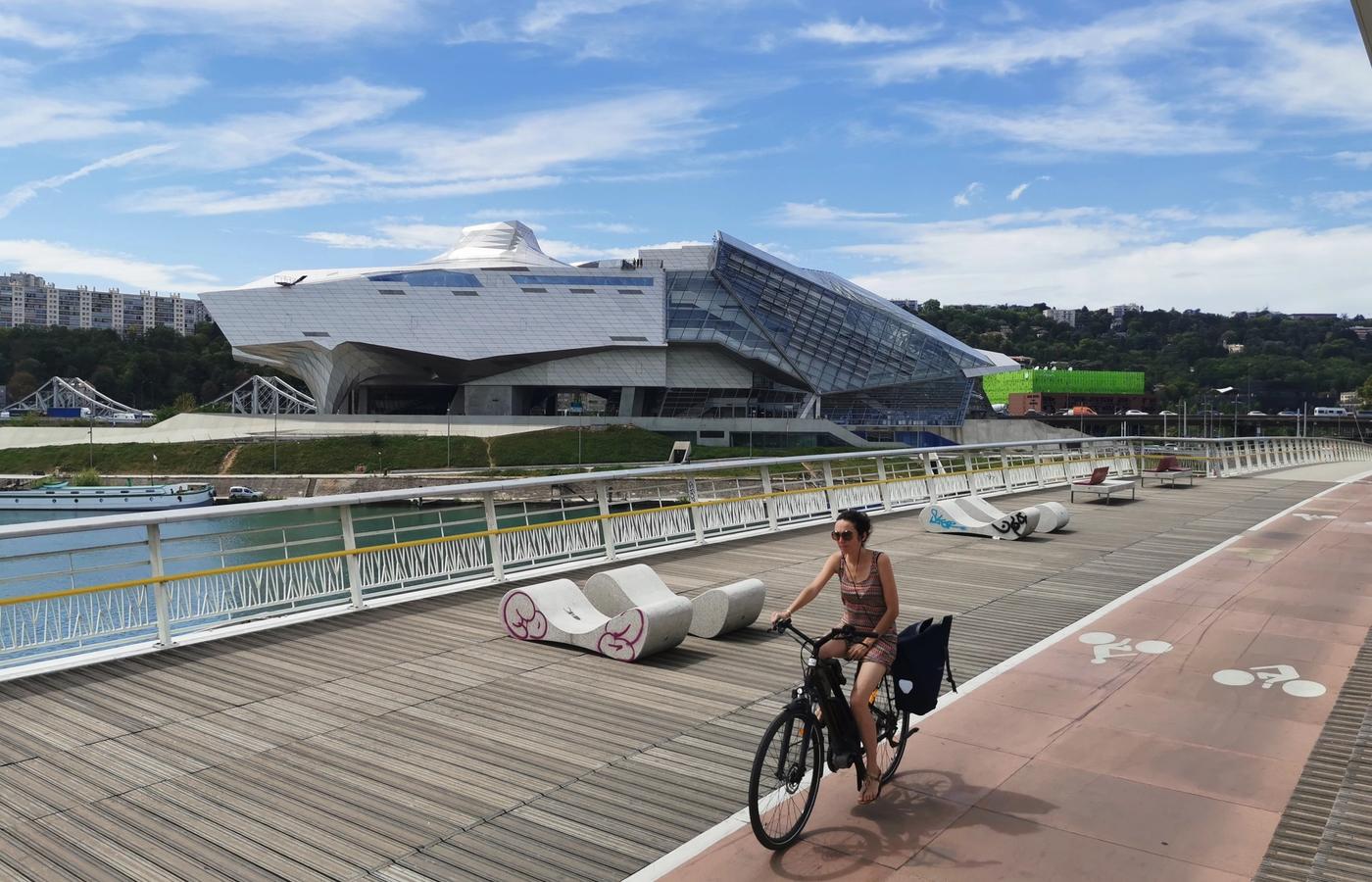
At the southern tip of the Presqu'île where the Saône meets the Rhône, the Confluence district is a redeveloped former industrial docklands turned architectural showcase. Since 2010 the area has been rebuilt around a marina, waterfront promenades, and a collection of aggressively modern buildings including the orange "Cube" by MVRDV, the green "Euronews Cube" by Jakob + MacFarlane, and the district's landmark: the Musée des Confluences, a deconstructed steel-and-glass cloud designed by Coop Himmelb(l)au and opened in 2014. The museum takes a cross-disciplinary approach to natural history, anthropology, and science, with a permanent collection of dinosaur skeletons, ethnographic objects and meteorites; adult entry is EUR 9, free for under-18s and on the first Sunday of the month. Tram T1 runs the length of the peninsula to the Musée des Confluences terminus in about 15 minutes from Bellecour.
Pro Tip: The museum's roof terrace is free to access even without a ticket and gives 360-degree views over the two rivers converging below - one of the best free viewpoints in Lyon. Confluence is also the city's main shopping mall zone, so weekday mornings are quieter than weekends when locals flood in.
9Croix-Rousse District
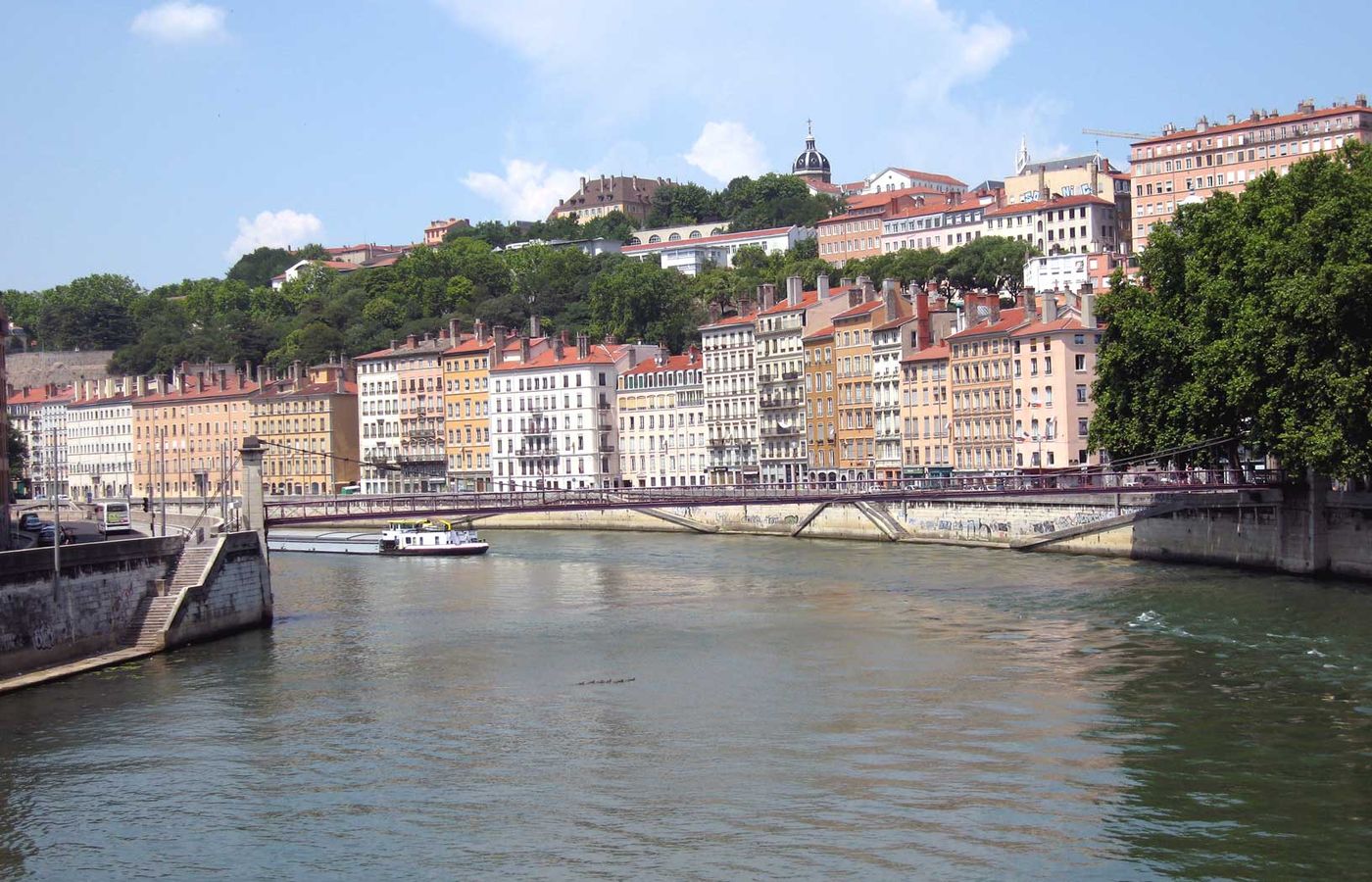
The Croix-Rousse hill rises steeply north of Place des Terreaux and was Lyon's silk-weaving heartland during the 19th century, when 30,000 canut looms operated in the tall-ceilinged apartments still standing today. The wide windows and 4-metre-high floors were built specifically to house Jacquard looms; you can visit a working restoration at the Maison des Canuts on Rue d'Ivry, EUR 7 for a guided demonstration. Halfway up the slope, the Amphithéâtre des Trois Gaules is a 19-BCE Roman amphitheatre built as the meeting place for delegates from the three Gallic provinces, now a small free park where you can wander among the surviving arena walls. The district's daily open-air market runs along Boulevard de la Croix-Rousse every morning except Monday and is one of the liveliest in the city. Metro Line C connects Hôtel de Ville up through Croix-Rousse and Hénon stations.
Pro Tip: Croix-Rousse has its own network of traboules used historically by silk workers to carry finished bolts of fabric down to Presqu'île merchants without damaging them in the rain. The Cour des Voraces at 9 Place Colbert has the most photogenic staircase in the district, six storeys of exposed stone steps in an open courtyard, and unlike some traboules it's free to enter and open all day.
10Le Mur des Canuts and Fresque des Lyonnais
Lyon has more than 150 painted murals across the city, a public art tradition dating from the 1980s. Two are worth seeking out. Le Mur des Canuts, at the corner of Boulevard des Canuts and Rue Denfert-Rochereau in Croix-Rousse, is Europe's largest trompe-l'oeil fresco at 1,200 square metres, painted in 1987 and updated every ten years to age the depicted residents and add contemporary details; the current version shows a bustling Croix-Rousse street scene complete with steps, shops and passers-by, all painted onto a flat wall. Down on Presqu'île at 2 Rue de la Martinière, the Fresque des Lyonnais covers a six-storey building with life-sized portraits of 30 famous Lyon-born figures including the Lumière brothers (inventors of cinema), chef Paul Bocuse, writer Antoine de Saint-Exupéry and Emperor Claudius. Both are free to view outdoors at any hour. Metro Line C to Croix-Rousse station reaches Le Mur des Canuts in a five-minute walk; the Fresque des Lyonnais is near Hôtel de Ville station.
Pro Tip: Both frescoes photograph best from directly across the street with a wide lens - the trompe-l'oeil effect flattens if you shoot at an angle. Late afternoon light hits Le Mur des Canuts from the west and brings out the illusion of depth in the painted staircase; morning is better for the Fresque des Lyonnais, which faces south.

CEO and co-founder
Tomas is the co-founder and director of trip1, an European company specializing in reservation services. He launched the company in 2025 with a focus on building scalable, efficient operations.
Climate averages · 1991–2020
When is the best time to visit Lyon?
Monthly temperatures, rainfall and sunshine — not a live forecast.
See Lyon weatherMore of France
10 Top Places to Visit in Lyon, France - FAQ
Technically yes, realistically no. Vieux Lyon, Fourvière (basilica and Roman theatres), Presqu'île (Bellecour, Terreaux, Beaux-Arts), and the two frescoes can be walked in a single very full day of about 20,000 steps, since they cluster in a two-kilometre stretch. Adding Parc de la Tête d'Or, Les Halles Paul Bocuse, Confluence and Croix-Rousse means splitting the sights across two or ideally three days. A workable two-day plan is: Day 1 Fourvière and Vieux Lyon in the morning, Presqu'île and the Beaux-Arts in the afternoon, Croix-Rousse for dinner. Day 2 Parc de la Tête d'Or in the morning, Les Halles for lunch, Confluence in the afternoon.
Start high and work down. Take the Fourvière funicular first thing in the morning for the basilica and Roman theatres while the light is still soft and the crowds thin, then walk down the Chemin du Rosaire into Vieux Lyon for lunch. From there cross the Saône onto Presqu'île for Place Bellecour, the shopping street of Rue de la République, Place des Terreaux and the Musée des Beaux-Arts. On a second day, ride the metro to Croix-Rousse first (its market wraps up by early afternoon), see Le Mur des Canuts, then tram down through Confluence and finish at Parc de la Tête d'Or or Les Halles Paul Bocuse depending on your appetite.
Very few. The basilica, Roman theatres, all the frescoes, Presqu'île's squares, Parc de la Tête d'Or (including its zoo and greenhouses), Vieux Lyon's traboules, and Les Halles market are all free walk-ins. Musée des Beaux-Arts and Musée des Confluences sell tickets at the door with rarely more than a 10-minute queue outside major exhibition periods; buying online saves the queue but not money. The two things worth pre-booking are: Fourvière rooftop tours (limited to 15 people per slot, sold on the basilica's official website) and dining at Michelin-starred restaurants around Les Halles, which need reservations two to four weeks ahead for weekends.
Six of the ten are free: Vieux Lyon and its traboules, the basilica interior, the Roman theatres (outdoor ruins), Presqu'île squares, Croix-Rousse district and the frescoes, and Parc de la Tête d'Or including its zoo and greenhouses. Paid admissions total roughly EUR 30 for one adult: Musée des Beaux-Arts EUR 8, Musée des Confluences EUR 9, Lugdunum Museum EUR 4, Maison des Canuts guided tour EUR 7, plus the funicular ride if you don't buy a day metro pass. Add EUR 6.20 for a 24-hour TCL transport pass. Food and drink at Les Halles Paul Bocuse can range from EUR 5 for a praline tart to EUR 50+ for a full sit-down lunch.
Several worthwhile spots that didn't make the top ten. The Institut Lumière at 25 Rue du Premier-Film in the 8th arrondissement is the birthplace of cinema, where the Lumière brothers shot the first-ever film in 1895; the museum charges EUR 8. Cathédrale Saint-Jean-Baptiste in Vieux Lyon houses a 14th-century astronomical clock that chimes several times daily. Musée Miniature et Cinéma in Vieux Lyon shows miniature dioramas and film props (EUR 12.50). For a food-focused half day, book a bouchon lunch at Daniel et Denise or Le Bouchon des Filles, both authentic Lyonnais bistros with the official Les Bouchons Lyonnais certification.
For most visitors covering four or more paid attractions in a short trip, yes. The 2026 Lyon City Card costs EUR 29.90 for 24 hours, EUR 39.90 for 48 hours and EUR 49.90 for 72 hours, and bundles unlimited TCL transport (metro, tram, bus, funicular) with entry to 23 museums including Beaux-Arts, Confluences, Lugdunum, and the Maison des Canuts, plus one Saône river cruise and one guided city walking tour. Buying transport and admissions separately from this guide's ten sights alone costs about EUR 35 over 48 hours without the tour or cruise, so the 48-hour card pays off even before factoring in the extras. It doesn't cover the Fourvière rooftop tour or restaurants.
Lyon claims the title of France's gastronomic capital, and the specialities cluster around hearty, offal-friendly bistro cooking developed in the 19th century by the mères lyonnaises (mother cooks). Order quenelles de brochet (poached pike dumplings in Nantua sauce), tablier de sapeur (breaded tripe), saucisson brioché (sausage baked into brioche), and salade lyonnaise (frisée, lardons, poached egg, mustard vinaigrette). For dessert, tarte aux pralines rouges with its bright pink caramelised almonds is the signature. Wash it down with a pot lyonnais, a 46 cl glass bottle of Beaujolais or Côtes du Rhône. Traditional certified bouchons display the Les Bouchons Lyonnais oval sticker on their window, guaranteeing authentic recipes and locally sourced ingredients.
Related travel guides
10 Best Restaurants in Paris
The 10 best restaurants in Paris for 2026, every one verified open: cuisine, signature dish, price per head in EUR, booking windows and nearest Métro.
5 Best Wine Tours in Bordeaux
The 5 best wine tours in Bordeaux for 2026, with 2026 tour prices, which chateaux actually admit visitors, booking lead times and honest transport advice.