Guides · Salzburg
10 Best Things to Do in Salzburg

CEO and co-founder
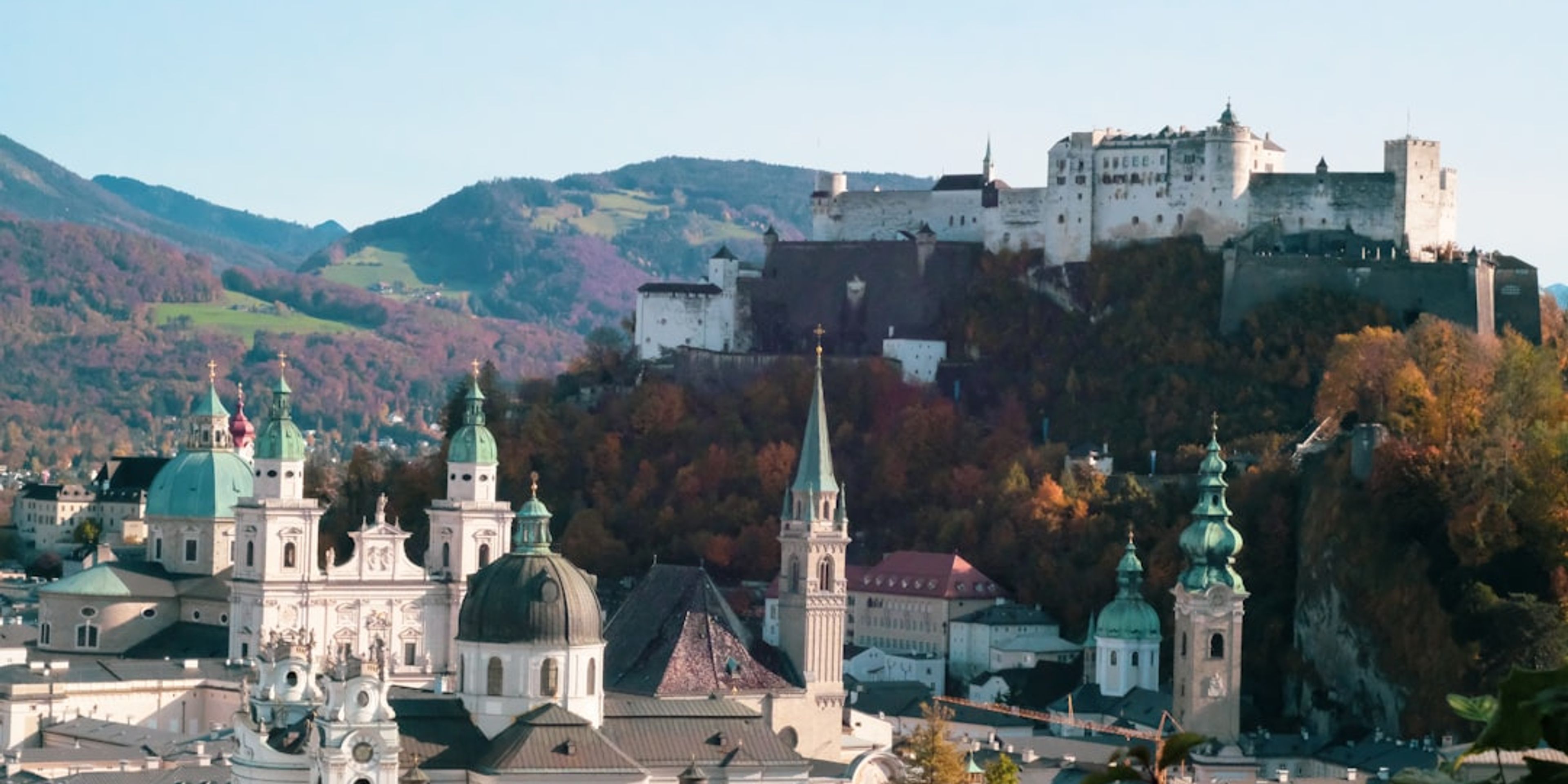
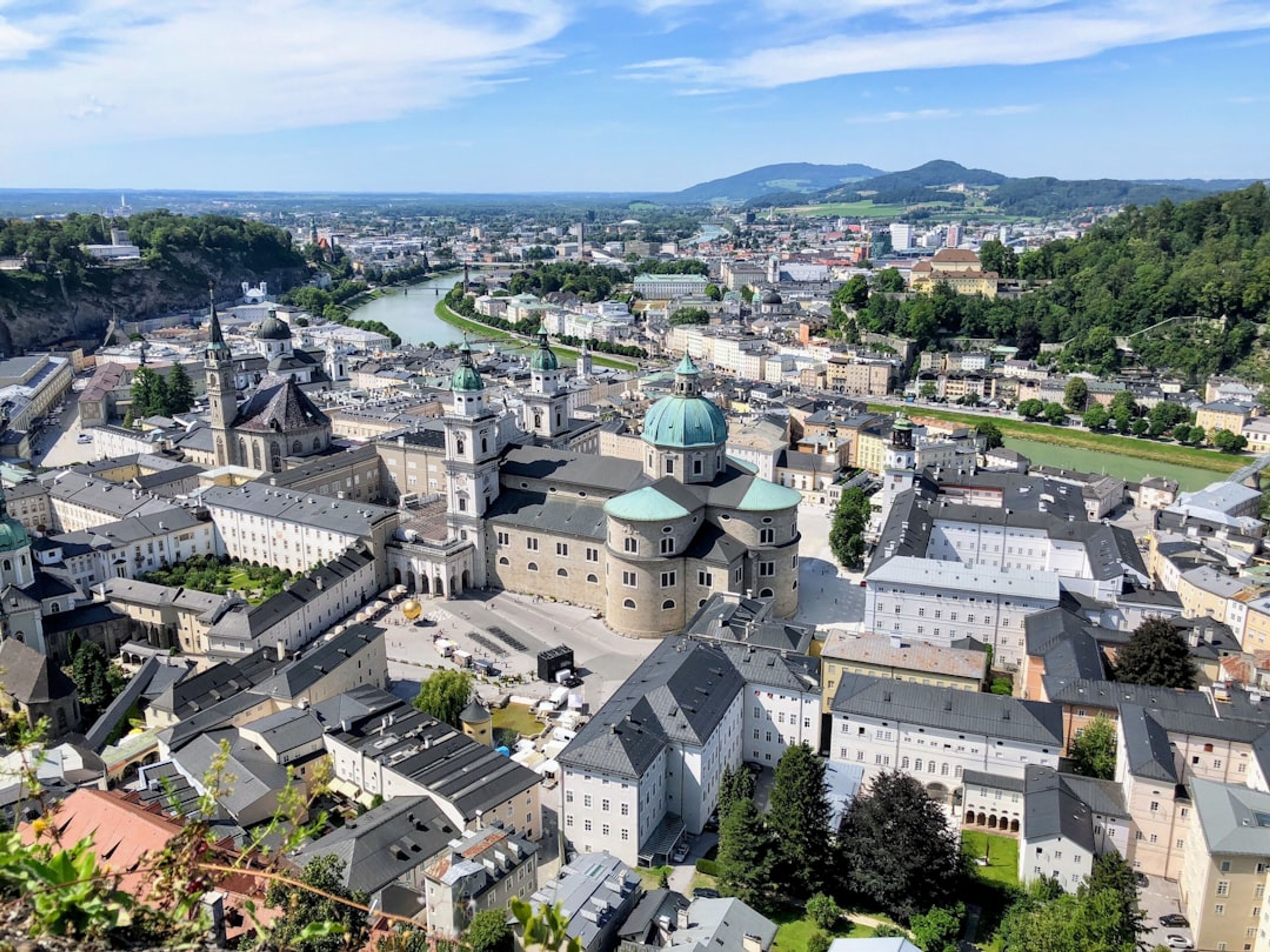
Salzburg sits on the banks of the Salzach River, wedged between two forested hills and framed by the northern edge of the Alps. The best things to do in Salzburg cluster inside a compact UNESCO-listed Old Town, so most highlights are reachable on foot from the main train station in about fifteen minutes. This is the city where Wolfgang Amadeus Mozart was born in 1756, where the Prince-Archbishops ruled from a hilltop fortress for almost a thousand years, and where Robert Wise filmed most of The Sound of Music in 1964. Expect Baroque domes, marble courtyards, and mountain views from almost every bridge. Winters bring the famous Christkindlmarkt around the Cathedral, while summer belongs to the Salzburg Festival, which turns the whole city into an open-air opera house from late July through August. This 2026 guide walks through ten attractions in a logical route, with current opening details, honest time estimates, and practical notes on tickets and transport. Distances are short, but the cobblestones are unforgiving, so bring proper shoes.
1Hohensalzburg Fortress (Festung Hohensalzburg)
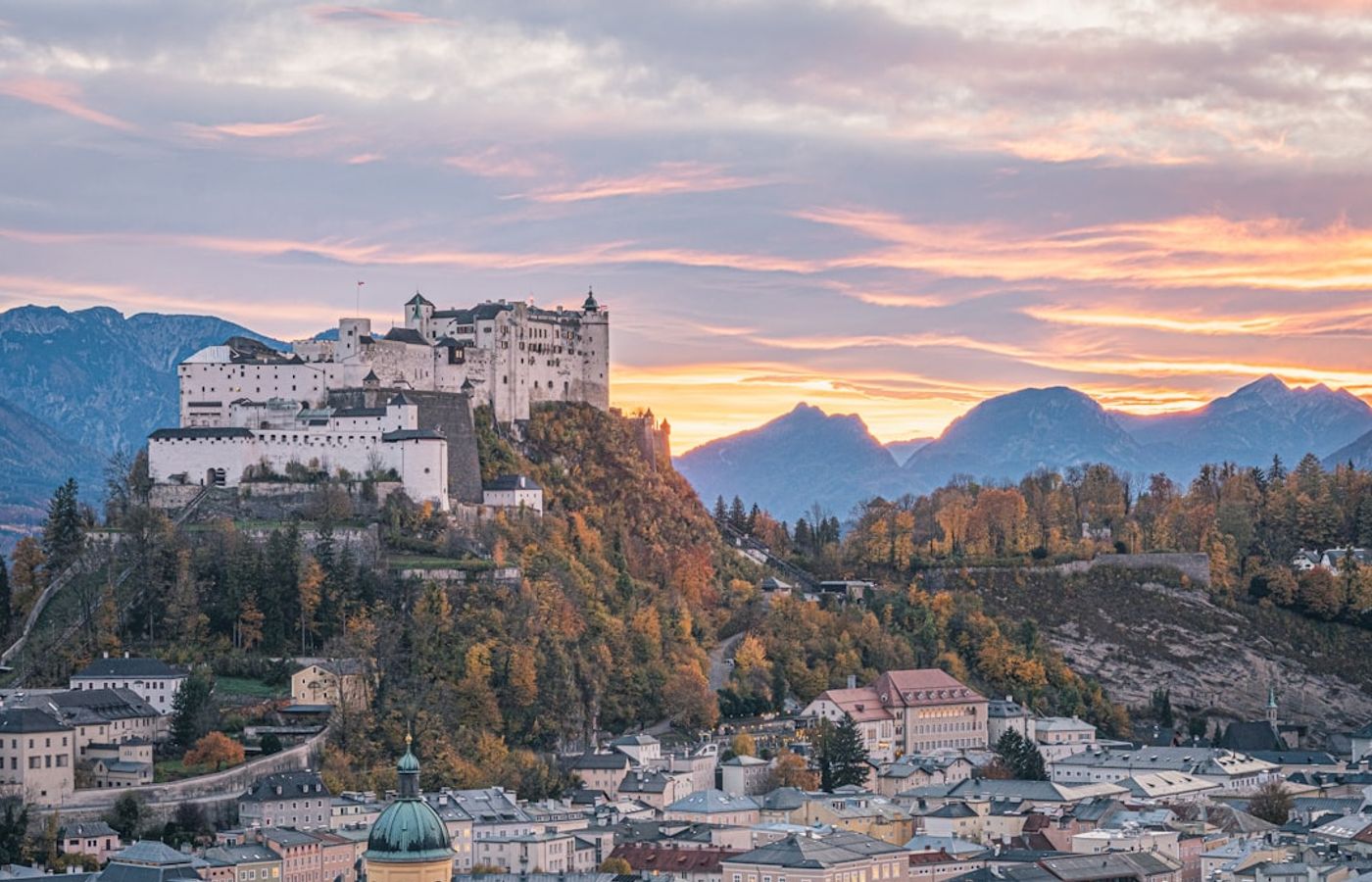

Perched 506 metres above the Old Town on the Festungsberg, Hohensalzburg Fortress (Festung Hohensalzburg) is one of the largest fully preserved medieval castles in Europe. Construction began under Archbishop Gebhard in 1077, and successive Prince-Archbishops kept adding towers, state rooms, and defensive walls for the next six centuries. The castle was never captured, which is why the frescoes, the gilded Golden Hall (Goldene Stube), and the late-Gothic Prince's Chamber survive so well. Inside the walls you will find three small museums covering the fortress history, the marionette collection, and the Rainer Regiment. The panoramic terrace looks straight down onto the Baroque domes of the Old Town and out toward the Untersberg massif. Most visitors arrive on the FestungsBahn funicular from Festungsgasse, which has run since 1892. Allow two to three hours if you plan to see the museums and walk the ramparts. Pro Tip: Buy the combined ticket that includes the funicular return and all interior exhibits at the lower station, and go at opening time (09:00 in winter, 08:30 in summer) to beat the tour groups arriving from Munich.
2Mozart's Birthplace (Mozarts Geburtshaus)
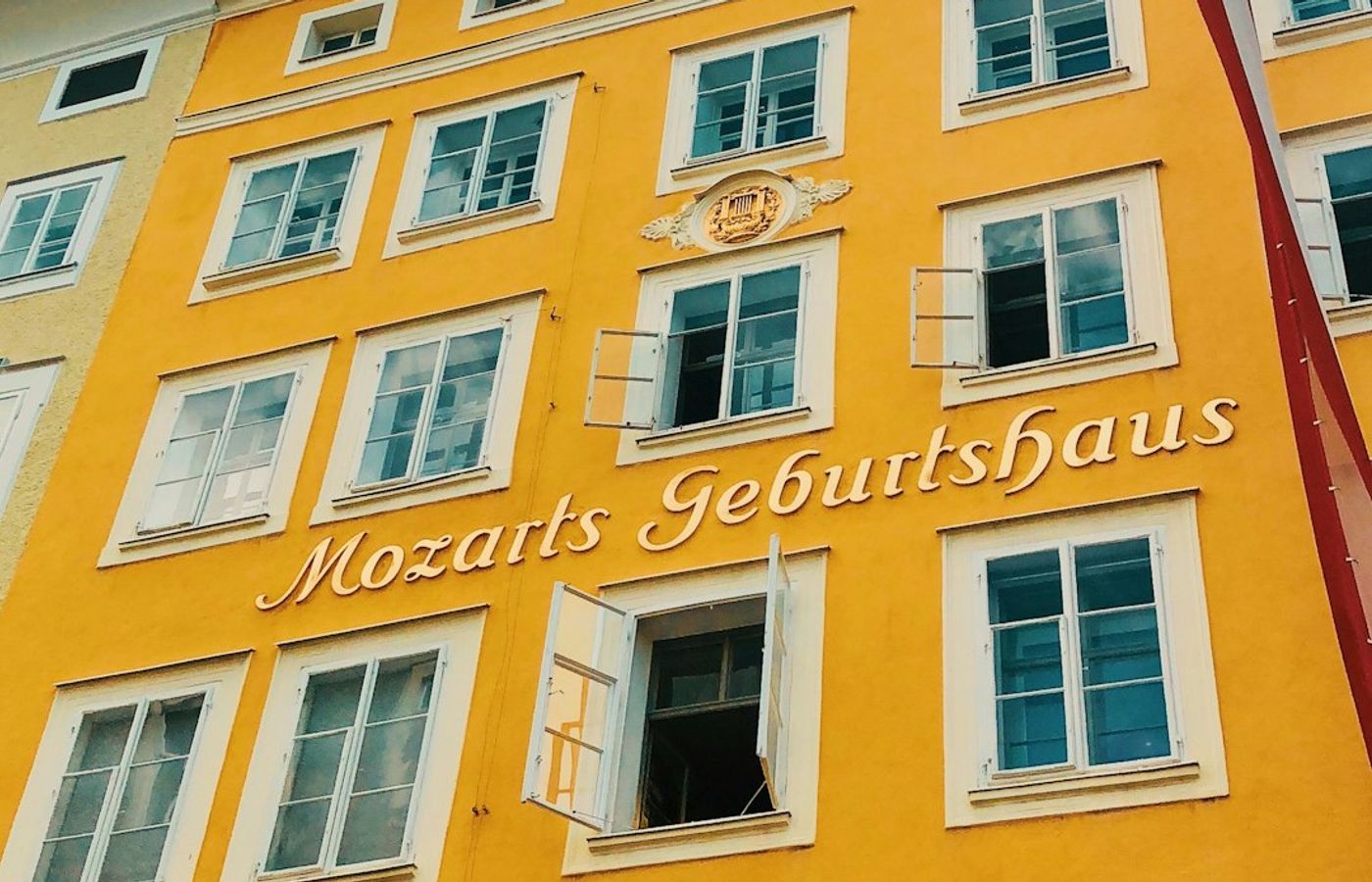

The bright yellow townhouse at Getreidegasse 9 is where Wolfgang Amadeus Mozart was born on 27 January 1756, in a third-floor apartment his family rented from the Hagenauer merchants for 26 years. The building is now a museum run by the Stiftung Mozarteum, spread across three floors of period rooms and modern exhibition space. You can stand in the actual room where Mozart was born, see his childhood violin (the so-called Kindergeige), his concert violin, his clavichord, and locks of his hair kept by the family. The upper floors reconstruct 18th-century bourgeois living quarters and display original letters, portraits, and a lifelike wax profile taken in 1789. This is the most visited museum in Austria outside Vienna, so lines on Getreidegasse can wrap around the building in July and August. The audio guide (included) is genuinely excellent and takes roughly an hour to complete. Pro Tip: Book a timed-entry ticket online through mozarteum.at at least a day ahead in summer, and combine it with the Mozart Residence on the other side of the river using the discounted double-ticket, which saves 4 EUR.

3Mirabell Palace and Gardens (Schloss Mirabell)
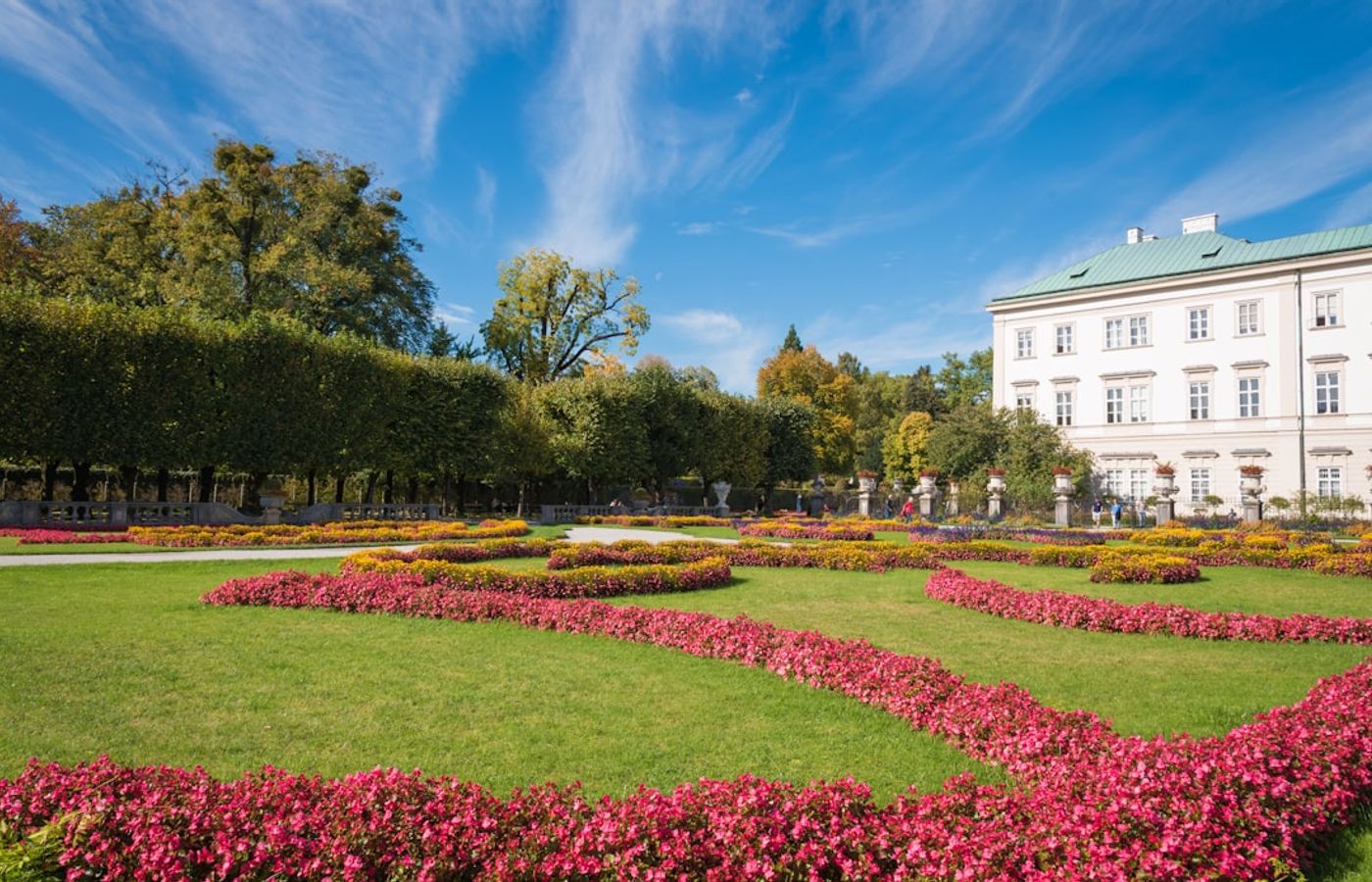
Mirabell Palace (Schloss Mirabell) was built in 1606 by Prince-Archbishop Wolf Dietrich von Raitenau for his mistress Salome Alt and their fifteen children, which was quite the scandal at the time. Johann Lukas von Hildebrandt redesigned it in a restrained Baroque style in 1721, and after a devastating fire in 1818 the interiors were rebuilt more soberly. Today the palace houses the Salzburg mayor's offices, but visitors can walk freely up the Marble Staircase (Engelstiege), decorated with cherubs by Georg Raphael Donner, and into the Marble Hall (Marmorsaal), where Leopold Mozart and his children Wolfgang and Nannerl once performed for the Prince-Archbishop. The hall is still one of the most romantic wedding venues in Europe. Outside, the geometric Mirabell Gardens (Mirabellgarten) were laid out by Fischer von Erlach in 1690, featuring the Pegasus Fountain, the Dwarf Garden (Zwerglgarten) with its 17 marble figures, and framed views of Hohensalzburg Fortress at the far end of the central axis. Pro Tip: Come at sunrise in summer to have the gardens and their photo-perfect fortress view entirely to yourself, before the coach groups arrive from Munich around 09:30.
4Salzburg Cathedral (Salzburger Dom) and DomQuartier
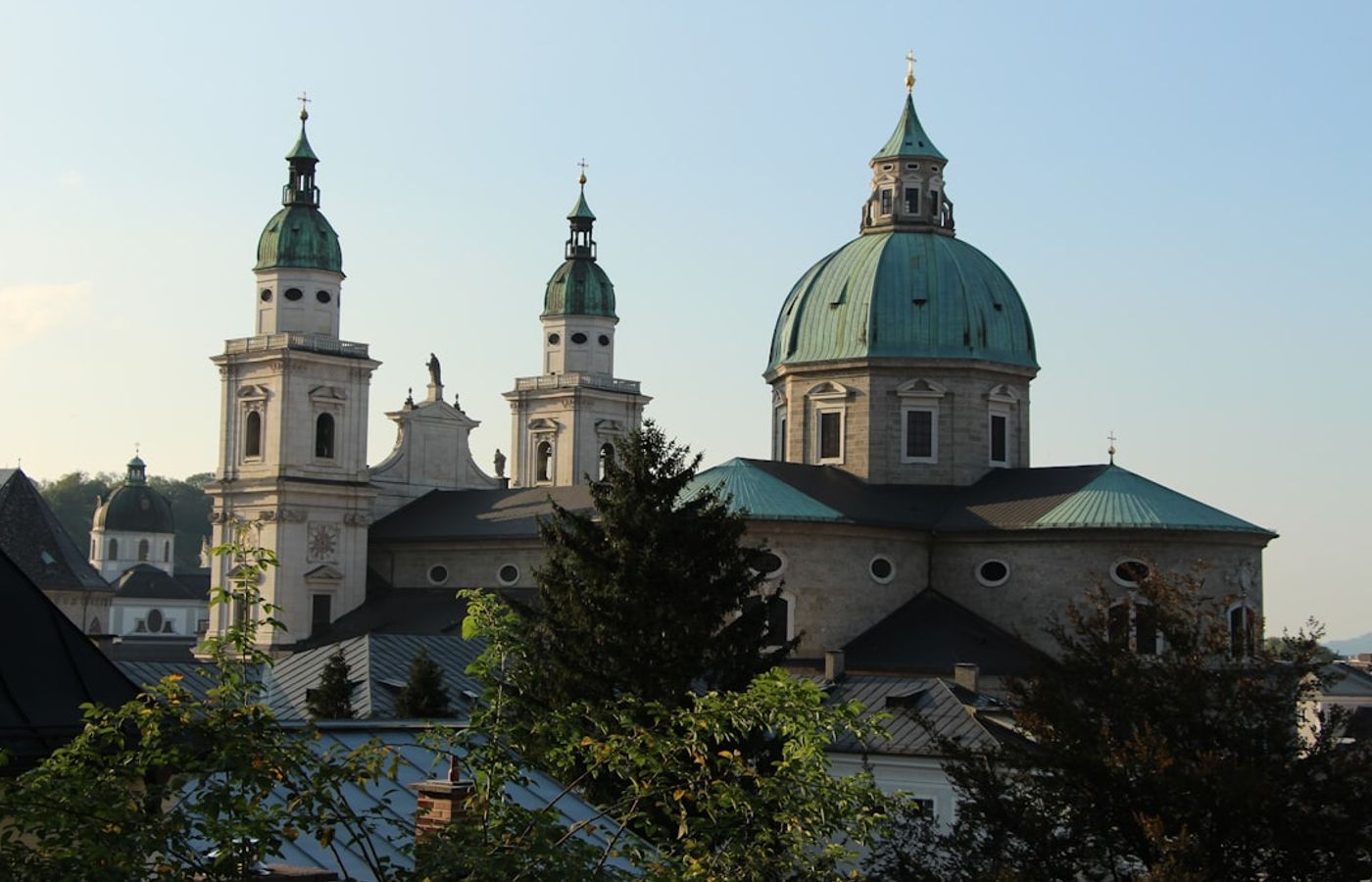
Salzburg Cathedral (Salzburger Dom) dominates Domplatz with its twin copper-green towers and 71-metre central dome. The current early-Baroque building was consecrated in 1628 under Archbishop Paris Lodron and rebuilt after a bomb crashed through the dome in October 1944. Wolfgang Amadeus Mozart was baptised at the bronze Romanesque font here in 1756, and later served as court organist. Inside, look up at the frescoes by Donato Mascagni and Ignazio Solari, and down into the crypt to see the graves of the Prince-Archbishops and the modern chapel built over 4th-century Roman remains. The Cathedral connects directly into the DomQuartier, a 2014 project that reopened the historic Residenz apartments, the Cathedral museum, the Long Gallery of St. Peter's, and the Franciscan Church corridor as a single 15-room loop of Baroque state rooms and painting collections. Pro Tip: Skip the Cathedral-only visit and go straight for the DomQuartier combined ticket, which lets you walk the entire Prince-Archbishops' route above street level and includes a free audio guide with a good hour of narration.
5Getreidegasse Shopping Street
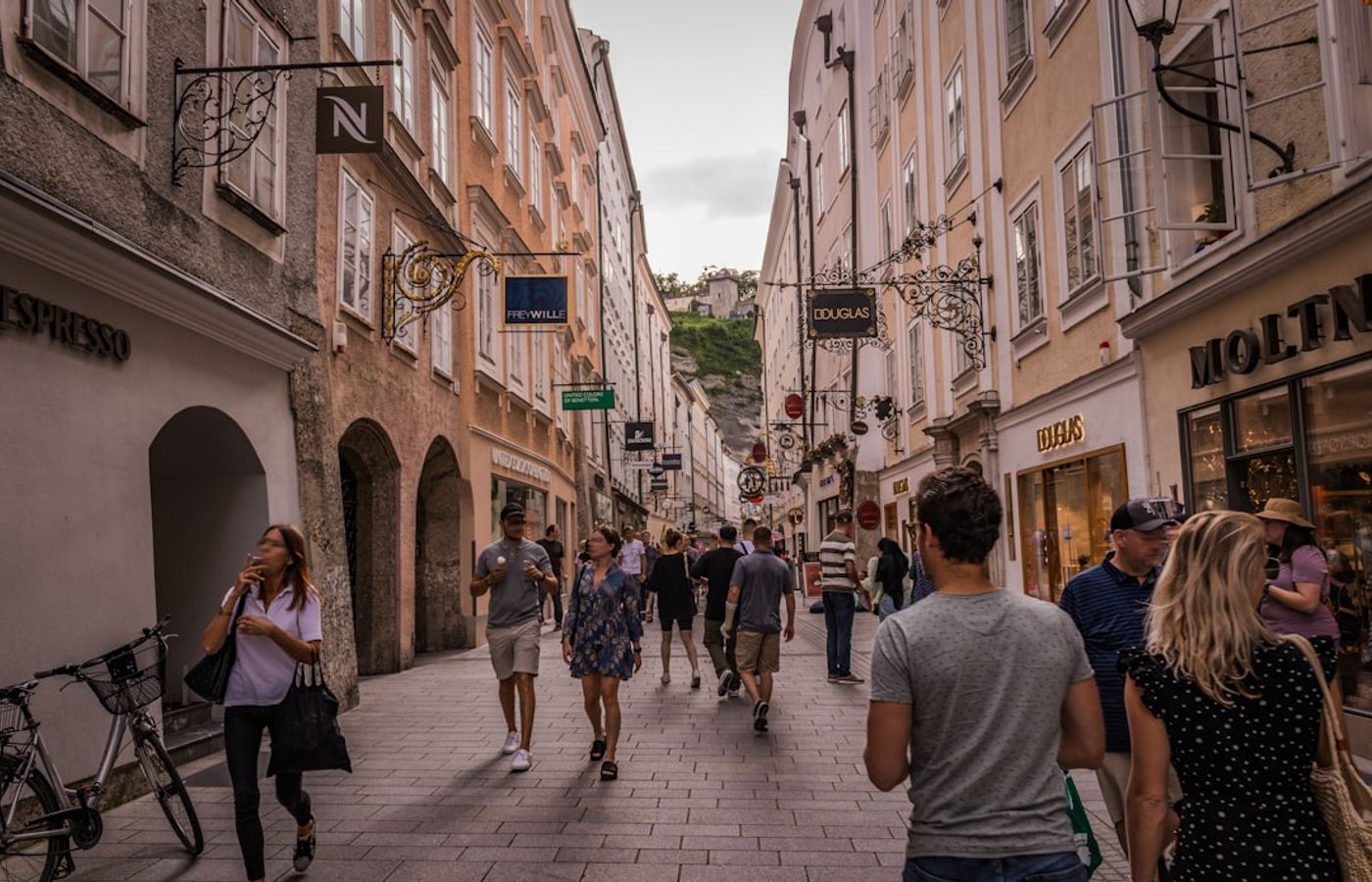
Getreidegasse is the narrow, canyon-like main shopping street of the Old Town, and one of the most photographed lanes in Austria. The name comes from Trabegasse, meaning trotting lane, and it has been a merchants' street since the medieval salt trade era. What makes it visually unforgettable are the wrought-iron guild signs (Zunftzeichen) hanging above every doorway. Because most of the population was illiterate until the 19th century, each business advertised itself with an elaborate hand-forged emblem: a golden pretzel for the baker, a key for the locksmith, a boot for the cobbler. Even modern arrivals like McDonald's and Nordsee have been forced by preservation rules to commission traditional wrought-iron signs in the same style. The Passagen, narrow covered passageways that duck between numbered houses through inner courtyards, connect Getreidegasse to parallel Griesgasse and reveal hidden cafes and specialist shops. Mozart's Birthplace at number 9 is the anchor, but the whole street is the attraction. Pro Tip: Walk Getreidegasse in the early evening after the day-trip crowds thin out, when the signs are lit and shopfronts glow, and detour through Schatz-Konditorei in the passage at number 3 for a Salzburger Nockerl.
6Hellbrunn Palace and Trick Fountains (Wasserspiele)
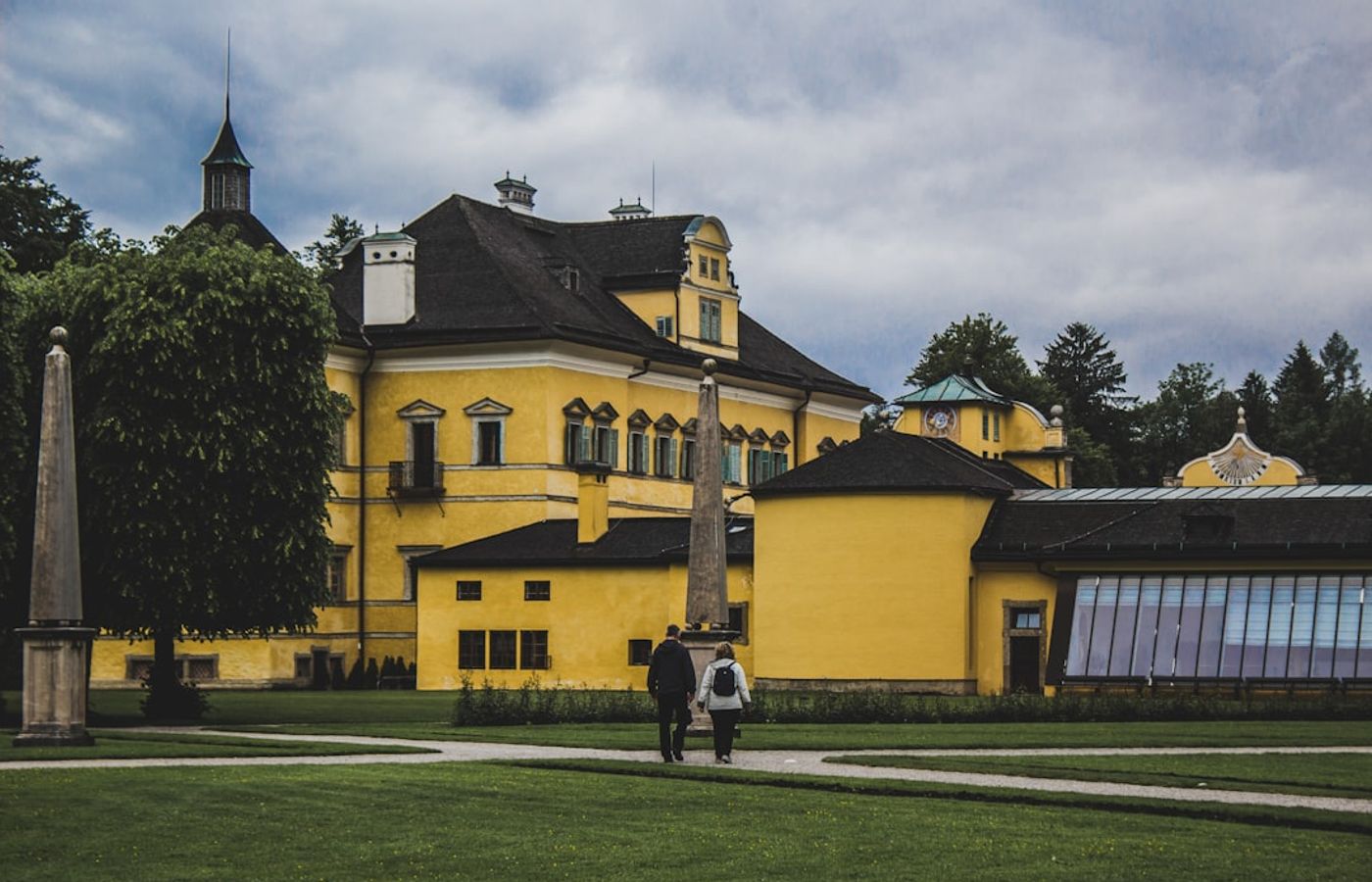
Hellbrunn Palace (Schloss Hellbrunn) sits five kilometres south of the Old Town and was built between 1613 and 1619 by Prince-Archbishop Markus Sittikus as a summer pleasure villa. He had a wicked sense of humour, and the real reason to come here is the Trick Fountains (Wasserspiele) in the surrounding gardens, unchanged since the 17th century. Guided tours (leaving on the hour and half-hour) walk you past stone tables that suddenly spray guests from beneath, mechanical grottoes powered entirely by original 400-year-old hydraulics, and an animated theatre of 256 hand-carved wooden figures depicting a whole Baroque town. Expect to get slightly wet, especially if you sit at the archbishop's trick table. The palace interior has recently been reopened with an exhibition on Markus Sittikus and the culture of Baroque courts. In the wider park you will also find the small wooden gazebo used for the sixteen-going-on-seventeen scene from The Sound of Music, moved here from Leopoldskron in 1991 for practical reasons. Pro Tip: Take city bus line 25 from Rathaus in about 20 minutes, and go on a warm afternoon so the inevitable soaking is a relief rather than a shock.
7St. Peter's Abbey (Stift St. Peter)
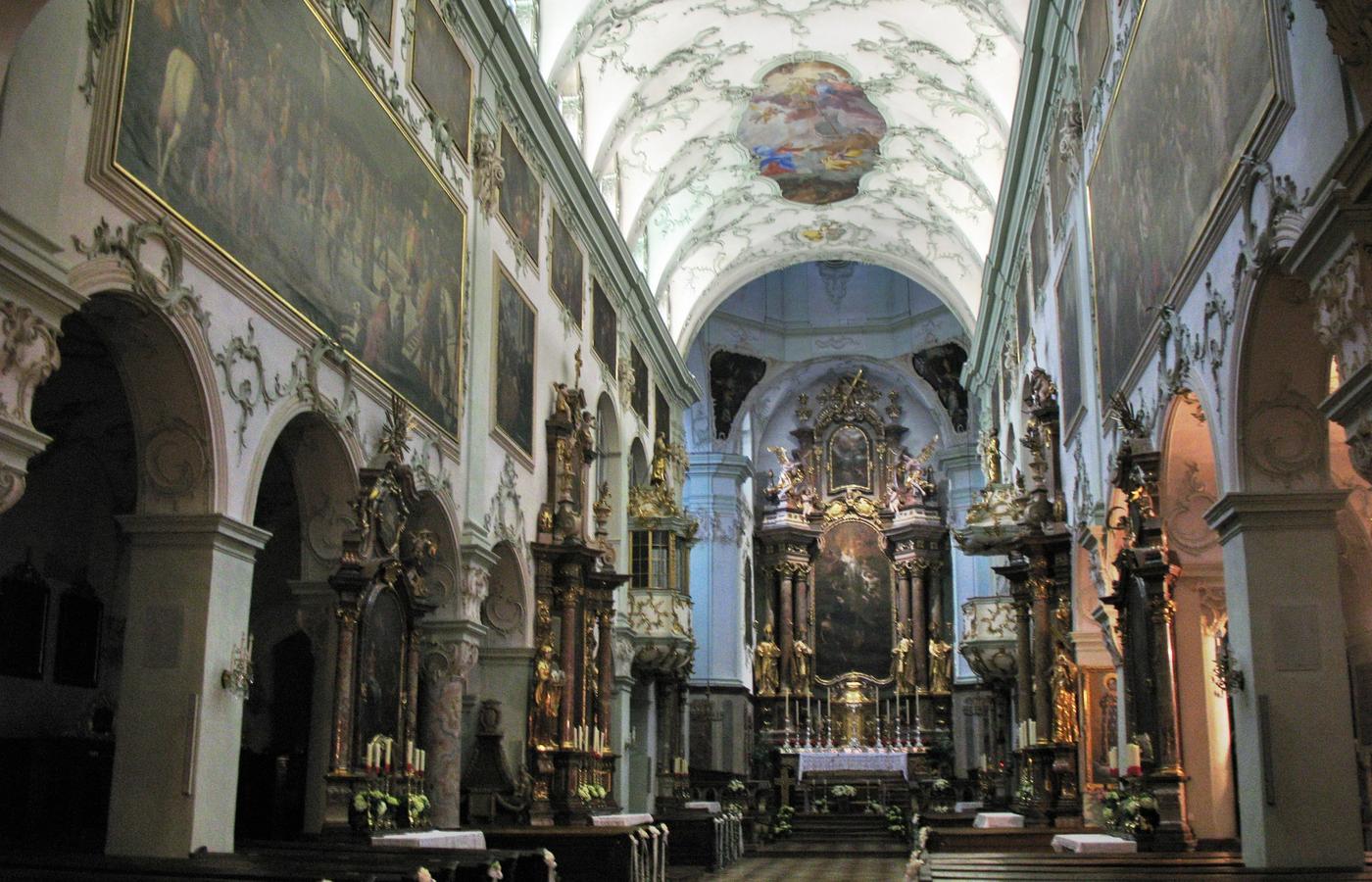
St. Peter's Abbey (Stift St. Peter) was founded by Saint Rupert in 696 and is the oldest continuously operating monastery in the German-speaking world. The Benedictine community still lives here, and the complex includes the Romanesque-Baroque abbey church, a cloistered cemetery pressed against the sheer rock wall of the Monchsberg, a working library with roughly 100,000 volumes (including manuscripts from the 9th century), and the eerie catacombs cut directly into the cliff face above the cemetery. Climb 48 steps up to the two small chapels carved into the rock, dedicated in 1178 and 1180, which offer a strange, cave-like view down over the graveyard's ornate wrought-iron crosses. This graveyard is where Robert Wise filmed the escape scene from The Sound of Music, though the actual set was rebuilt on a Hollywood soundstage. Next to the church, St. Peter Stiftskulinarium claims a written mention from 803, making it the oldest inn in Central Europe. Pro Tip: The catacomb entry sits at the far right of the cemetery and is easy to miss; enter through the small door signed Petersfriedhof and go early so you have the chapels to yourself, since only a handful of visitors fit at a time.
8Mozart Residence (Mozart-Wohnhaus)
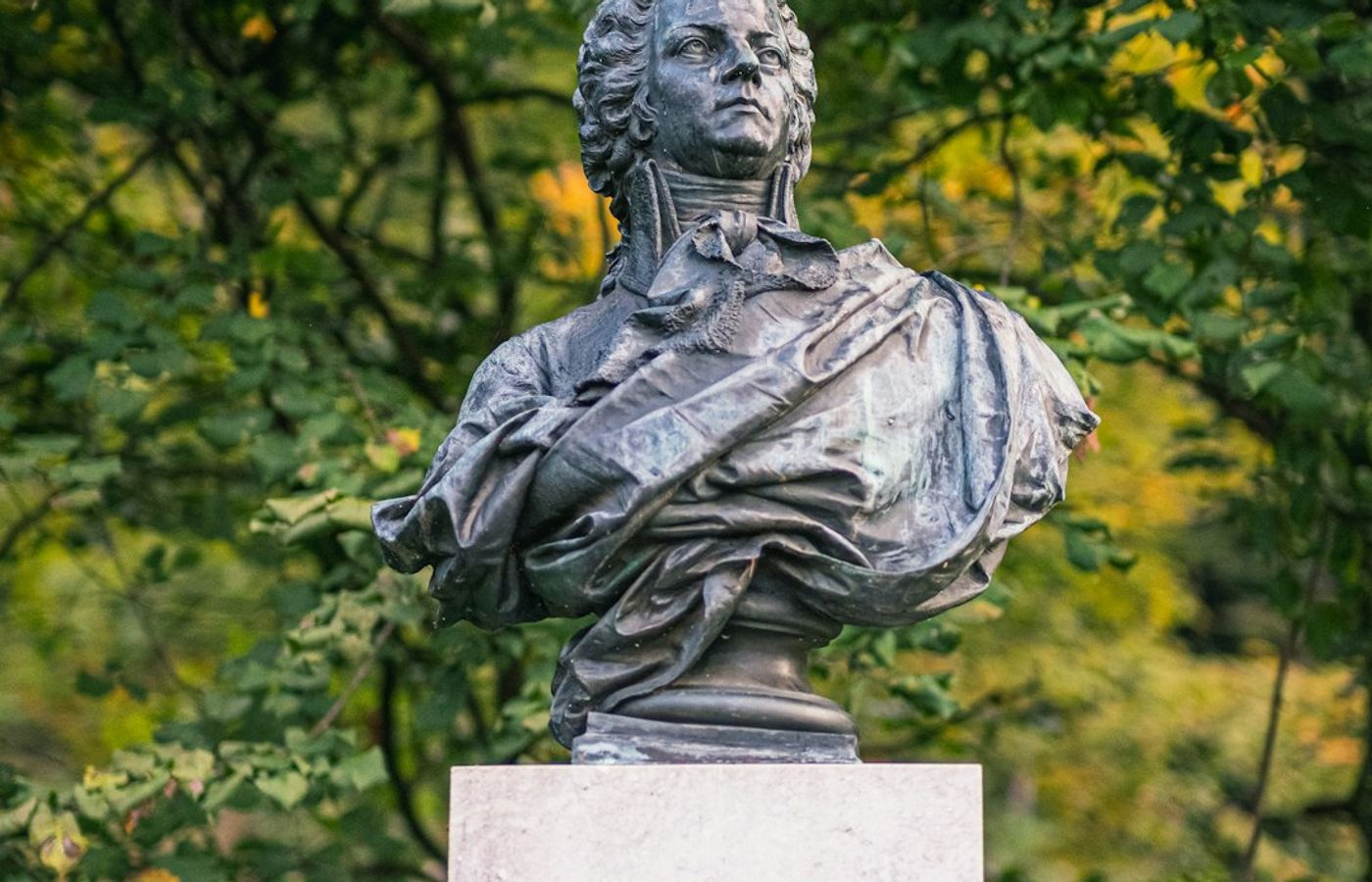
The Mozart Residence (Mozart-Wohnhaus) at Makartplatz 8 is the second Mozart address in Salzburg, and the one where the family actually lived once they had the money to move out of the cramped Getreidegasse apartment. Leopold Mozart rented these eight rooms on the Hannibalplatz (as Makartplatz was then called) in 1773, and Wolfgang lived here until he left for Vienna in 1780. The original building was destroyed by an Allied bomb in October 1944, but the Stiftung Mozarteum rebuilt the facade and much of the interior in the 1990s using surviving 18th-century plans and salvaged fittings. The rooms are less crowded than the Birthplace and give a much better sense of Mozart family life, with the actual fortepiano Wolfgang owned in Vienna (returned to Salzburg in 1975), original letters, portraits by Johann Nepomuk della Croce, and an excellent multimedia exhibition on the Mozart family's tours across Europe. Pro Tip: This museum is a five-minute walk across the Makartsteg pedestrian bridge from the Old Town and is almost always quiet in the morning; buy the combined ticket at the Birthplace for 21 EUR and see this one second, when your feet need a rest.
9Sound of Music Sights Trail
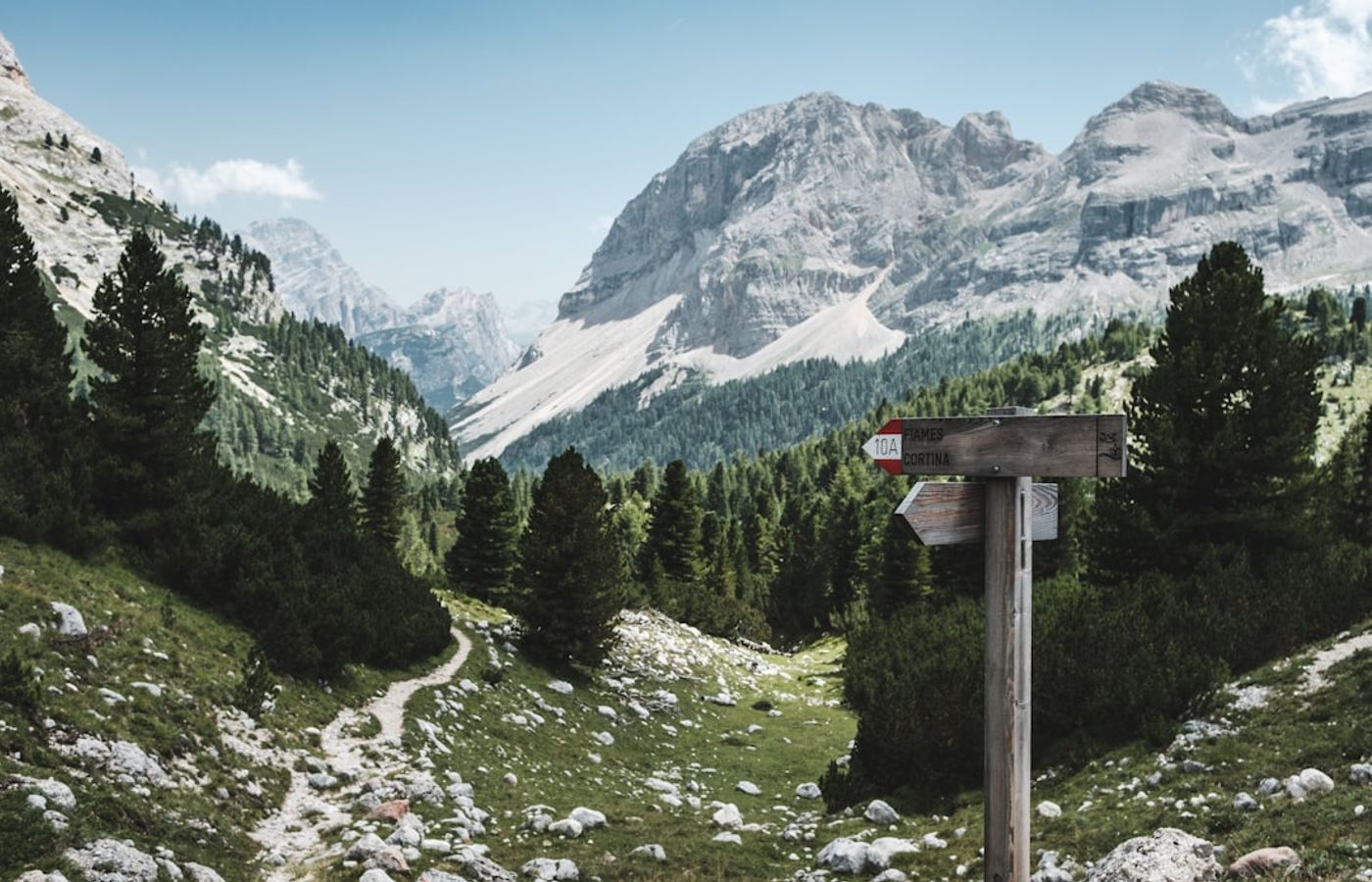
Robert Wise filmed The Sound of Music across Salzburg in the spring and summer of 1964, and half of what he shot is still walkable in a single afternoon. Mirabell Gardens is where Julie Andrews and the children skip through Do-Re-Mi, ending at the Pegasus Fountain and up the terraced Zwerglgarten steps. Cross the Salzach on the Makartsteg bridge and climb the Nonnbergstiege to Nonnberg Abbey (Stift Nonnberg), founded around 714 AD, where the real Maria von Trapp was a novice and where the film's opening wedding was shot at the wrought-iron gates. Then head south by taxi or bus 25 to Schloss Leopoldskron on the small lake outside town, whose lakeside terrace stood in for the Von Trapp villa's back garden (the front was Schloss Frohnburg). Finish at Hellbrunn Park, where the famous gazebo now sits behind a wire fence because too many tourists were trying to sing on it. Committed fans can also stop at the Felsenreitschule concert hall inside the Festival District, where the final festival scene was filmed. Pro Tip: If you would rather not organise this yourself, the four-hour Panorama Tours bus (departing 09:15 and 14:00 daily from Mirabellplatz) costs 55 EUR, hits all the sites plus the Mondsee wedding church, and remains genuinely fun even for skeptics.
10Salzach River and Kapuzinerberg Viewpoint
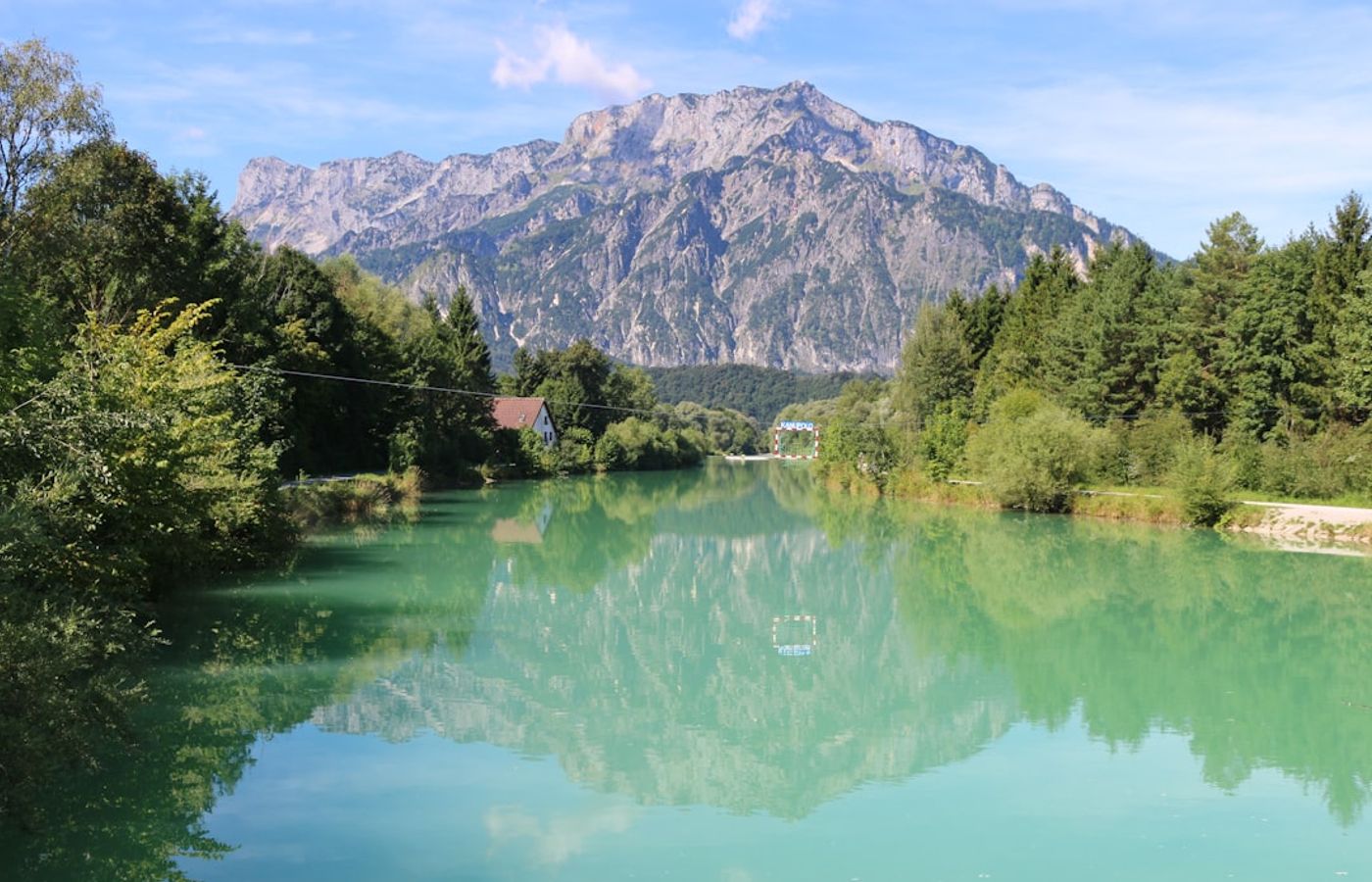
The Salzach River gave Salzburg both its name (salt fortress) and its wealth, since the Prince-Archbishops taxed every barge of Hallein salt that passed under the city. Today the wide, glacial-green river splits the Old Town from the newer Right Bank, crossed by pedestrian bridges including the padlock-covered Makartsteg. Walk north along the Elisabethkai promenade for the postcard view of the Old Town skyline stacked beneath Hohensalzburg Fortress. For the best free panorama in the city, cross the Staatsbrucke and climb the Kapuzinerberg, a 640-metre wooded hill on the Right Bank. The 15-minute climb up from Linzer Gasse via the old Way of the Cross brings you to the Capuchin Monastery (Kapuzinerkloster) built in 1599, and further paths lead to the Franziskischlossl viewpoint tavern and, at the eastern edge, the villa where Stefan Zweig lived from 1919 to 1934 before fleeing the Nazis. From various clearings you can see the Old Town, the fortress, and the plain toward Bavaria all at once, without a ticket. Pro Tip: Go up in late afternoon for warm light on the fortress, and reward yourself with a beer at the Franziskischlossl tavern (open May to October) before the easy descent back to Steingasse.

CEO and co-founder
Tomas is the co-founder and director of trip1, an European company specializing in reservation services. He launched the company in 2025 with a focus on building scalable, efficient operations.
Climate averages · 1991–2020
When is the best time to visit Salzburg?
The best time to visit Salzburg is between May and October, the most comfortable stretch of the year on these averages.
Best time · May–OctoberRainfall
- Jan0°
- Feb2°
- Mar6°
- Apr10°
- May14°
- Jun18°
- Jul20°
- Aug20°
- Sep15°
- Oct11°
- Nov5°
- Dec1°
More of Austria
10 Best Things to Do in Salzburg, Austria - FAQ
Yes, the historic core is small enough to cover on foot in a single long day if you focus on the essentials. A realistic one-day route is Mirabell Gardens at opening, cross the Makartsteg to Getreidegasse and Mozart's Birthplace, lunch on Kapitelplatz, visit Salzburg Cathedral and the DomQuartier, ride the funicular up to Hohensalzburg Fortress mid-afternoon, and descend via St. Peter's Abbey and its catacombs. That covers seven of the ten sights in this guide. Skip Hellbrunn, the Mozart Residence, and the Sound of Music trail if you only have one day; those need at least a second day.
Start on the Right Bank at Mirabell Palace and Gardens early morning while the light is soft and the coach groups are still on the autobahn. Cross the Salzach on the Makartsteg, walk Getreidegasse to Mozart's Birthplace, then work south through Universitatsplatz and the Cathedral, visit St. Peter's Abbey with its catacombs, and end with a late-afternoon ride up to Hohensalzburg Fortress for sunset views. Hellbrunn works best as a half-day trip on day two using bus 25. The Sound of Music trail can be self-guided in an afternoon or booked as a four-hour bus tour.
For most of the year you can buy tickets at the door, but three attractions have real bottlenecks in July and August. Book Mozart's Birthplace and the Mozart Residence online through the Stiftung Mozarteum website at least one day ahead in summer, and reserve a specific funicular slot for Hohensalzburg Fortress through salzburg-burgen.at to avoid a 30-minute queue at the lower station. The DomQuartier, St. Peter's catacombs, and Hellbrunn generally do not need pre-booking. Salzburg Festival opera tickets, if that is why you are here, need to be arranged months in advance.
Budget roughly 55 to 75 EUR per adult for a full day of paid attractions covering Hohensalzburg Fortress with the funicular, Mozart's Birthplace, DomQuartier, and St. Peter's catacombs, plus a mid-range lunch at around 20 EUR. Add roughly 15 EUR for Hellbrunn if you visit on day two, and 55 EUR for the organised Sound of Music tour. Public transport day tickets cost 4.80 EUR. Free sights like Mirabell Gardens, Getreidegasse, the Salzach promenade, and the Kapuzinerberg trails offset the paid ones nicely, so you can trim the total significantly on a shorter itinerary.
For most visitors staying more than one day, yes. The Salzburg Card (48 EUR for 24 hours, 56 EUR for 48 hours in 2026) covers admission to Hohensalzburg Fortress with the funicular, Mozart's Birthplace, Mozart Residence, DomQuartier, Hellbrunn, St. Peter's catacombs, all city buses and trolleys, and a single boat trip on the Salzach. Add those individually and you will already spend more than 65 EUR, so it pays off if you visit even three or four of the covered attractions. It is less useful if you only have half a day, in which case single tickets are cheaper. You can buy it at the Tourist Information Office on Mozartplatz.
If you love the film, yes, unreservedly. The standard four-hour bus tour from Panorama Tours or Bob's Special Tours costs around 55 EUR and covers Mirabell Gardens, Nonnberg Abbey, Schloss Leopoldskron, Hellbrunn's gazebo, and the wedding church at Mondsee out in the Salzkammergut lake district, which is nearly impossible to reach in half a day by public transport. Even skeptics tend to enjoy it because the guides are entertainingly self-aware and the Mondsee scenery is genuinely beautiful. If you would rather not do a group bus, the in-town locations (Mirabell, Nonnberg, Leopoldskron gate view, and Hellbrunn) are all reachable on foot or by city bus 25 in an afternoon.
Several worthwhile stops did not make the top ten. The Museum der Moderne on the Monchsberg has one of Austria's best contemporary collections and a rooftop terrace reachable by lift from Anton-Neumayr-Platz. The Salzburg Residenz state rooms are covered inside the DomQuartier ticket but merit their own visit for the Rembrandt in the picture gallery. Stiegl-Brauwelt on the outskirts offers a proper brewery tour and 30-minute walk from the Old Town. Hangar-7 next to the airport houses a private collection of historic aircraft with free entry. And in December the Christkindlmarkt on Domplatz and Residenzplatz, running since around 1491, is one of the most atmospheric Christmas markets in Central Europe.
Related travel guides
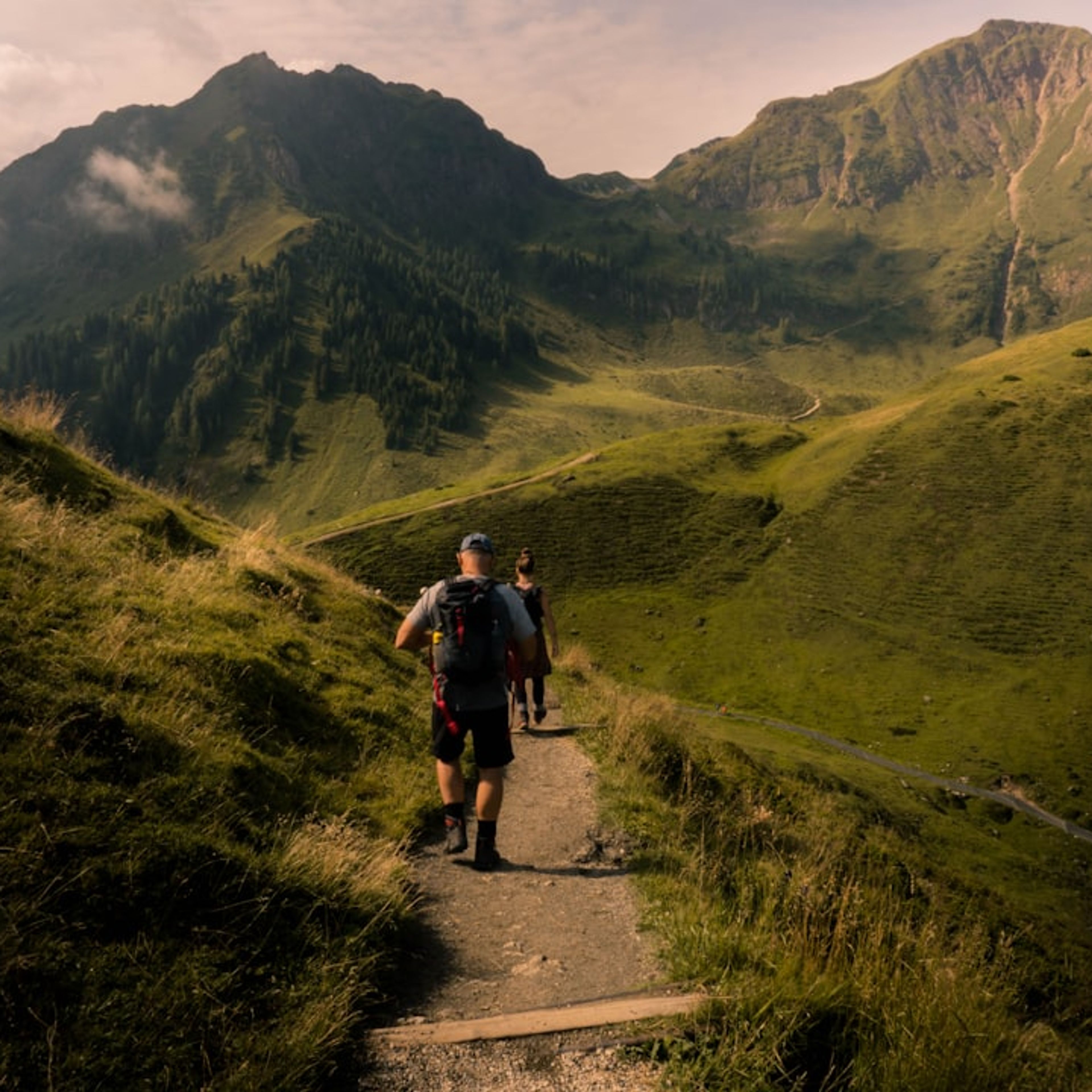
5 Best Hikes Near Salzburg
The best hikes near Salzburg you can reach without a car: 5 day hikes with exact bus lines, journey times, frequencies and 2026 prices.
5 Best Ski Resorts Near Salzburg
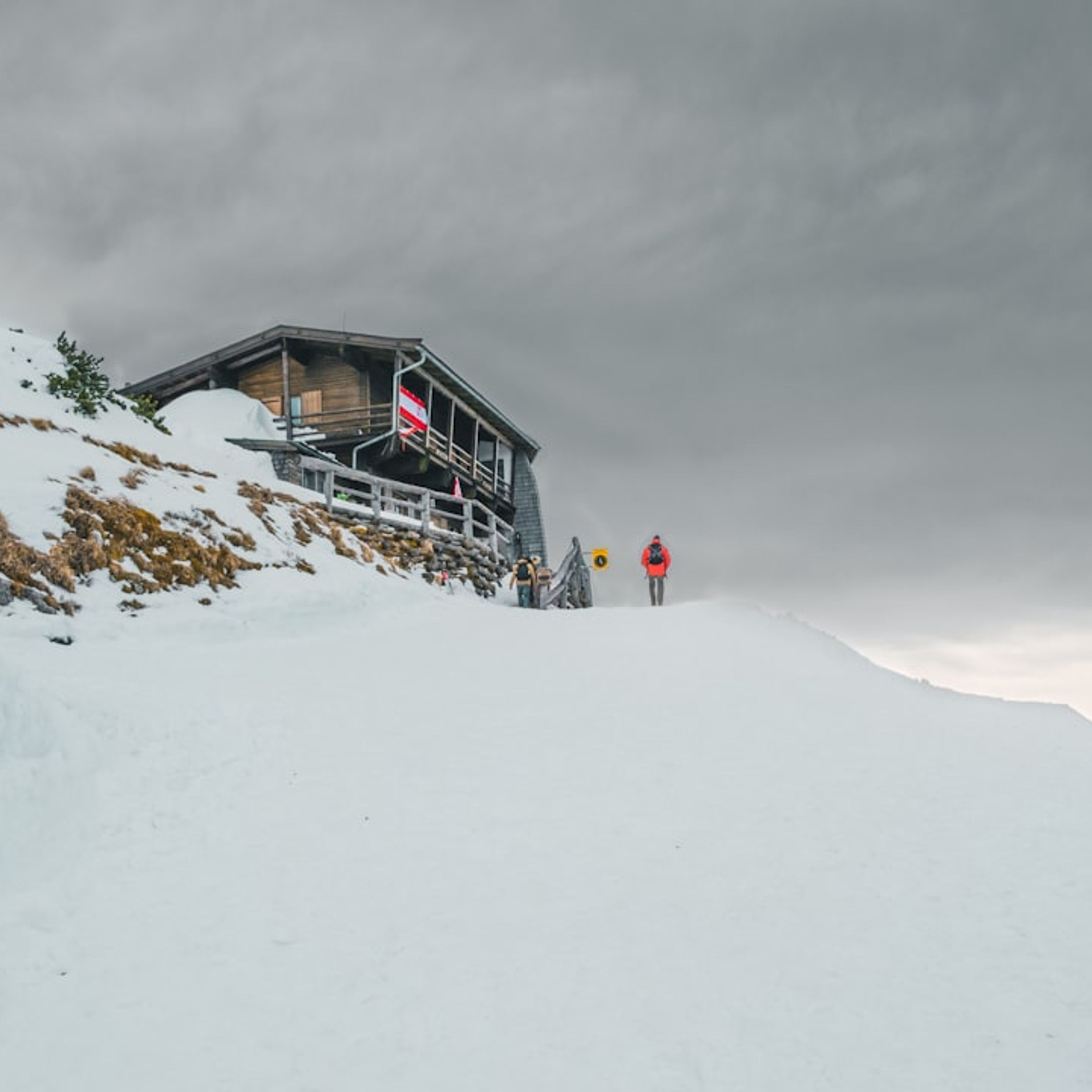
The best ski resorts near Salzburg compared: piste km, lift counts, pass families and confirmed 2026/27 season dates, plus car-free train access.