

Guides · Cinque Terre
10 Best Things to Do in Cinque Terre

CEO and co-founder
The five villages of Cinque Terre sit on a rugged 12-kilometre stretch of the Ligurian coast in northwest Italy, connected by footpaths, a single-track railway, and boats that hop between the harbours. If you are planning your 2026 trip and hunting for the best things to do in Cinque Terre, this guide covers the ten experiences that actually justify the journey: the villages themselves, the coastal hiking, the wine, and the viewpoints that appear on every postcard.
The area became a UNESCO World Heritage Site in 1997 and a national park in 1999, which means the terraced vineyards, dry-stone walls, and pastel-fronted houses are protected by law. The whole region can be crossed by the Cinque Terre Express train in roughly 20 minutes end to end, with departures every 15 to 30 minutes in summer. Expect crowds between May and September, quieter shoulder seasons in April and October, and a genuine slowdown from November to March when several restaurants and boats close. Bring shoes with grip, cash for small purchases, and a swimsuit even in April. Sea state governs more of this list than the season does, since the boats stop running and the swimming coves turn unusable well before the trains are affected, so check Cinque Terre weather before you commit a day to the water. Visitors treating this as one stop on a wider Italian route usually pair it with Florence, roughly two hours away by regional train and the obvious wet-weather alternative. The hotels in Cinque Terre in Monterosso and Levanto keep a car and a road connection in play, which the other three villages cannot offer.
1Vernazza
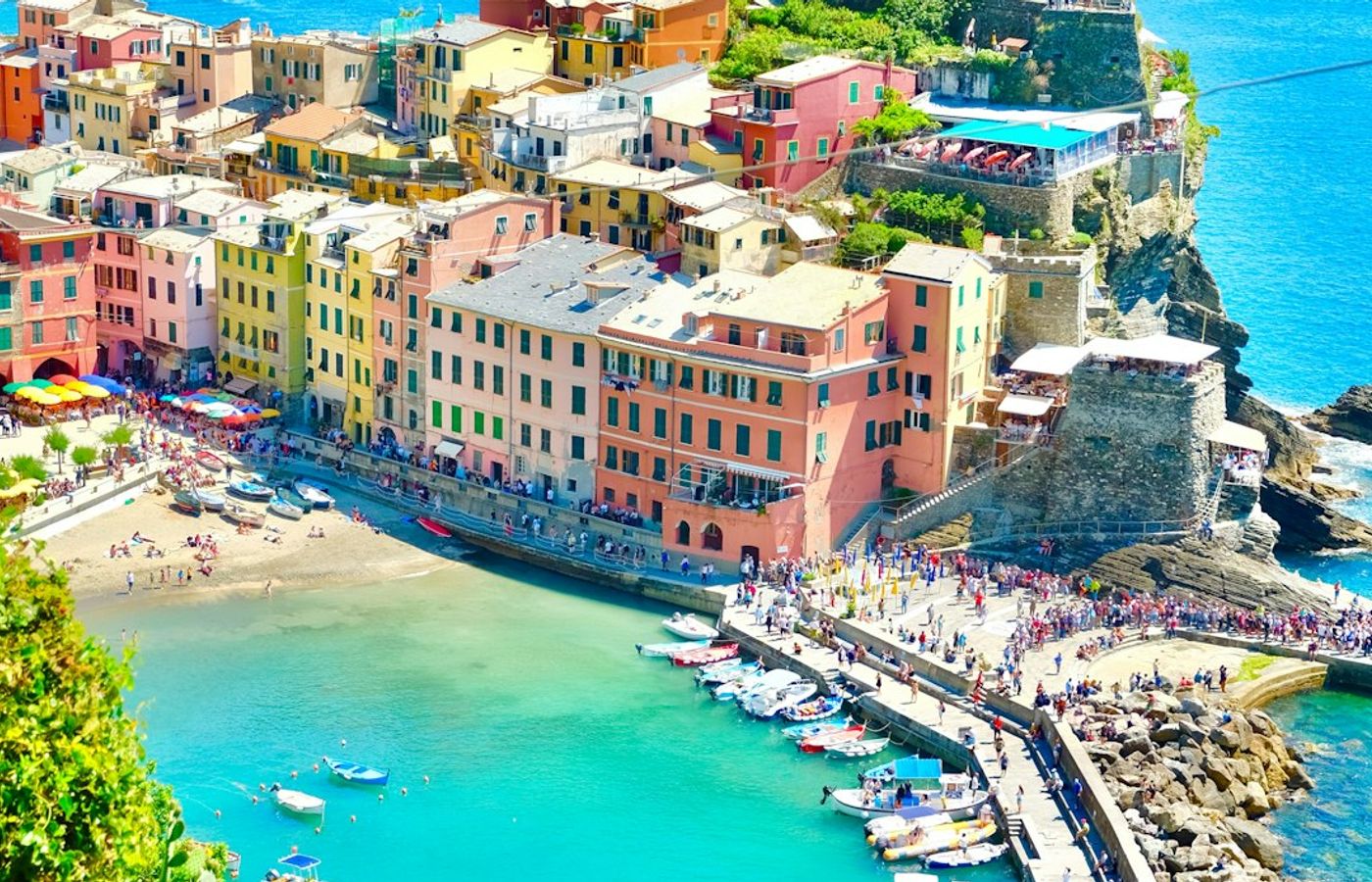

Vernazza is widely considered the most photogenic of the five villages, and once you step out of the train tunnel onto Via Roma you understand why. The single main street runs 300 metres downhill to a small natural harbour, framed by the 11th-century Doria Castle on one side and the black-and-white striped Church of Santa Margherita d'Antiochia on the other. Climb the castle tower for a 1.50 EUR fee and you get a straight line of sight down the coast to Monterosso al Mare. The harbour piazza fills up by 11 a.m., so most travellers come at sunrise for photos, then eat anchovies fried in olive oil at one of the cafes lining the water. The village is part of the UNESCO World Heritage listing covering the whole Cinque Terre coastline.
Pro Tip: Walk 10 minutes up the trail toward Corniglia (start behind the church) for the iconic elevated shot of the harbour. You do not need the full hiking ticket to reach the first viewpoint.
2Manarola
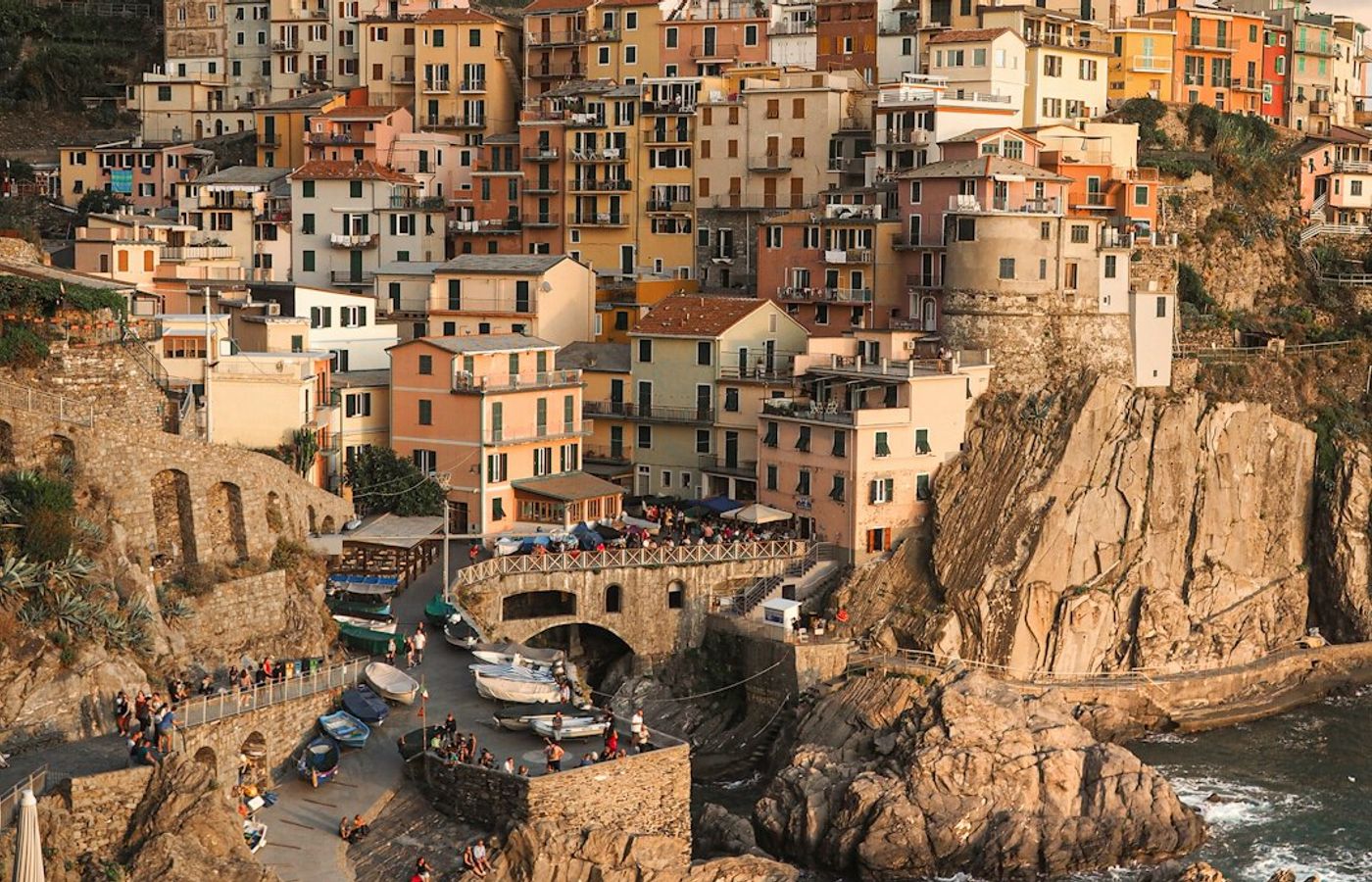

Manarola is the second smallest of the five villages and arguably the best for evening light, when the cliffside houses turn deep orange. The village has no proper beach, but locals and travellers alike swim from the flat rocks next to the harbour, where a ladder drops straight into 4 metres of water. Above the swimming spot, a short paved path called Via Birolli leads to viewpoints over the vineyards. Manarola is also the historical home of Sciacchetrà, the sweet passito wine made from dried grapes grown on the terraces above the village. Stop at the small Cooperativa Agricoltura di Cinque Terre for a tasting, or eat cone-served fried seafood from Il Pescato Cucinato on Via Renato Birolli.
Pro Tip: For the postcard view of Manarola, walk 8 minutes uphill on the trail toward Corniglia and turn back around at the cemetery. This is the exact spot every photographer uses.

3Monterosso al Mare
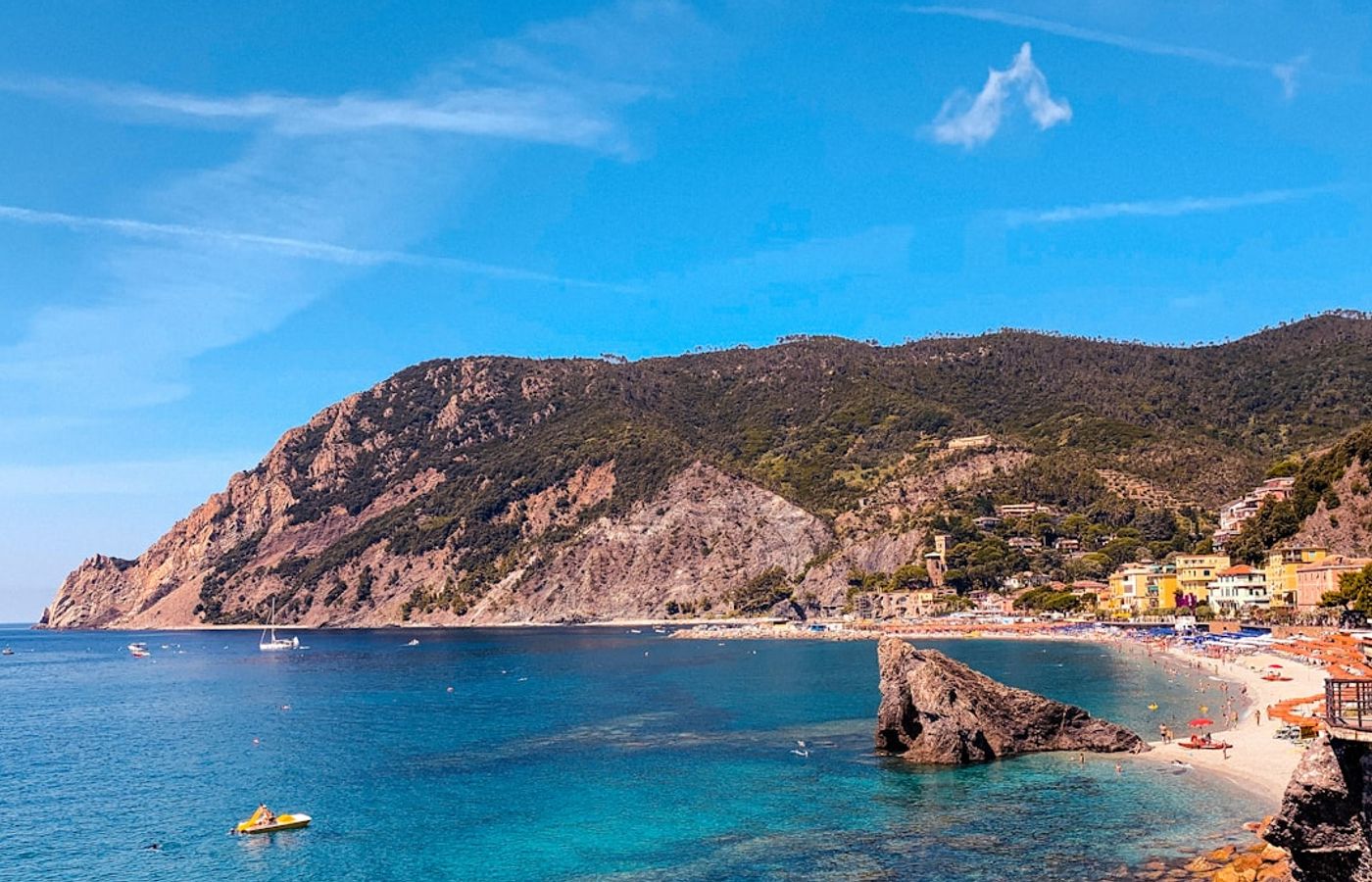

Monterosso al Mare is the largest of the five villages and the only one with a proper sandy beach - a 1.5-kilometre strip split into a free public section and paid sun-lounger zones (roughly 20 to 30 EUR per day for two loungers and an umbrella in 2026). The village is split into two parts connected by a short tunnel: Fegina, the newer beach side with the train station, and the older centro storico behind the headland, which holds the 14th-century Church of San Giovanni Battista with its striking black-and-white striped facade. Monterosso is also the anchovy capital of the region, and the local Acciughe di Monterosso are protected as a Slow Food product. Try them salted, marinated, or fried in local trattorias.
Pro Tip: If you want to swim and hike in the same day, base yourself in Monterosso. It is the flattest of the five villages and the easiest to leave a bag at.
4Riomaggiore
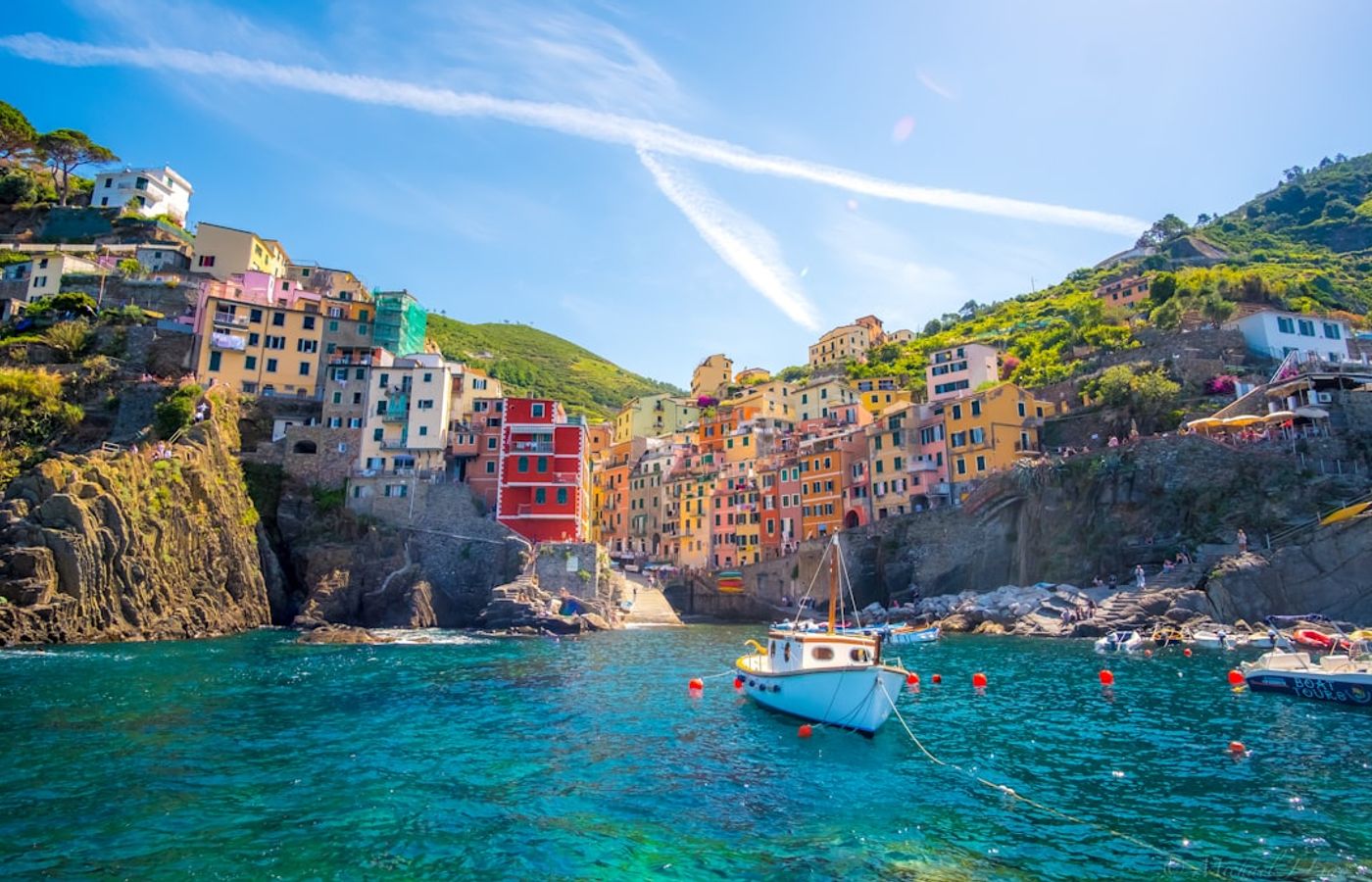
Riomaggiore is the easternmost village and the first stop out of La Spezia, which makes it the most common starting point for a Cinque Terre visit. The main street, Via Colombo, runs uphill from the tiny harbour past bakeries, wine bars, and the 14th-century Church of San Giovanni Battista. The village is built into a steep ravine that once carried a stream (now covered over), and the pastel houses stack up the sides like theatre seating. From the harbour, a set of stone steps leads to a small rocky beach where locals swim in summer. Riomaggiore is also the starting point of the Via dell'Amore, a paved cliffside path to Manarola that reopened in July 2024 after a 12-year closure caused by rockfalls.
Pro Tip: The Via dell'Amore requires a separate 5 EUR ticket in 2026 unless you already hold a Cinque Terre Card Trekking. Book online in high season, slots sell out.
5Corniglia
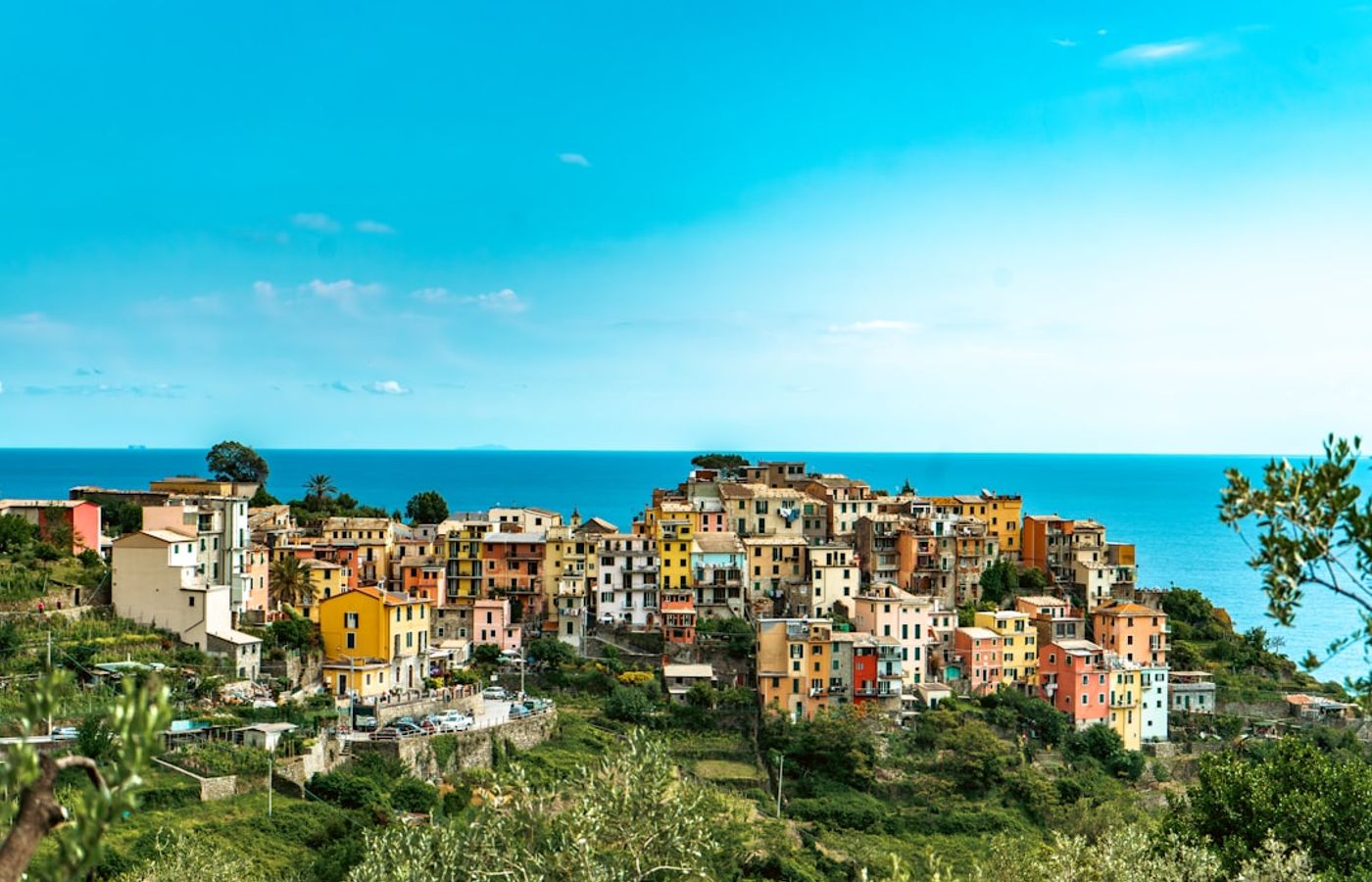
Corniglia is the only village of the five that does not touch the sea. It sits on a promontory 100 metres above the water, and reaching it from the train station means either climbing the Lardarina, a brick stairway of 382 steps arranged in 33 flights, or taking the green shuttle bus for 2.50 EUR one way (free with a Cinque Terre Card). Because access is harder, Corniglia is noticeably quieter than its neighbours - the main square, Largo Taragio, is small enough that you will hear the church bells and the espresso machines competing for attention. Try the local gelato at Alberto Gelateria on Via Fieschi, especially the basil flavour, which draws queues down the street. From the terrace at Belvedere di Santa Maria, you get an unobstructed 180-degree view of the coast.
Pro Tip: Skip the stairs on arrival, take the bus up, then walk down the Lardarina after your visit. It is much kinder on the knees.
6Sentiero Azzurro (Blue Trail)
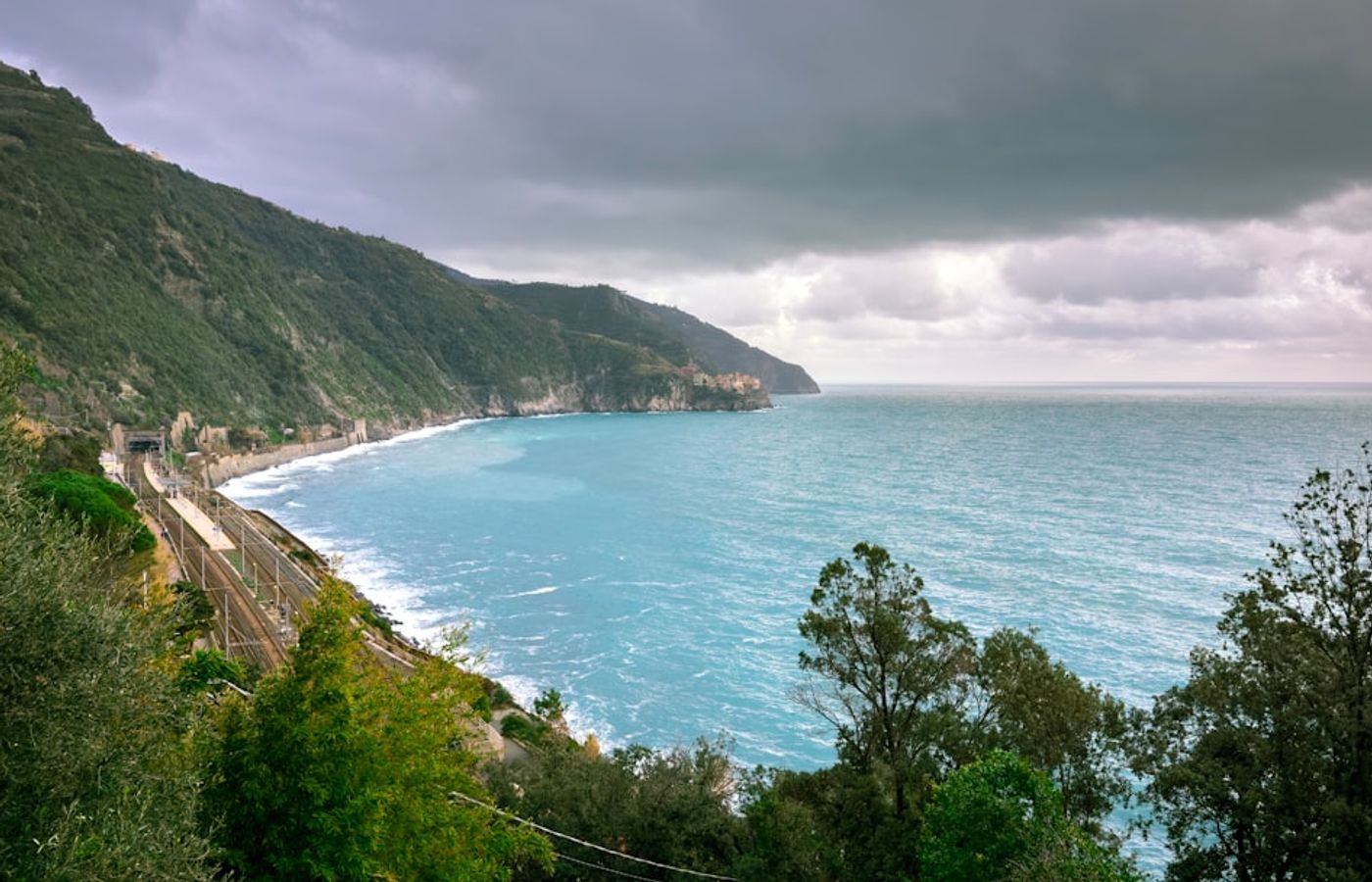
The Sentiero Azzurro (Blue Trail), officially trail number 592, is the main coastal footpath connecting the five villages. It runs roughly 12 kilometres from Monterosso al Mare to Riomaggiore and is the reason many travellers come to the region in the first place. The full walk takes 5 to 6 hours at a steady pace, with the Monterosso-to-Vernazza and Vernazza-to-Corniglia sections being the most demanding (steep switchbacks, uneven stone steps, roughly 500 metres of cumulative elevation gain). Access requires the Cinque Terre Card Trekking, which costs 7.50 EUR per day or 14.50 EUR for two days in 2026, or is included with the Cinque Terre Card Train at 19.50 EUR per day. Trails close after heavy rain and rockfalls, so always check the current status at cinqueterre.eu before setting out.
Pro Tip: Start at Monterosso and walk east - you finish the two hardest sections first, then coast into Corniglia for lunch.
7Sanctuary of Nostra Signora di Montenero
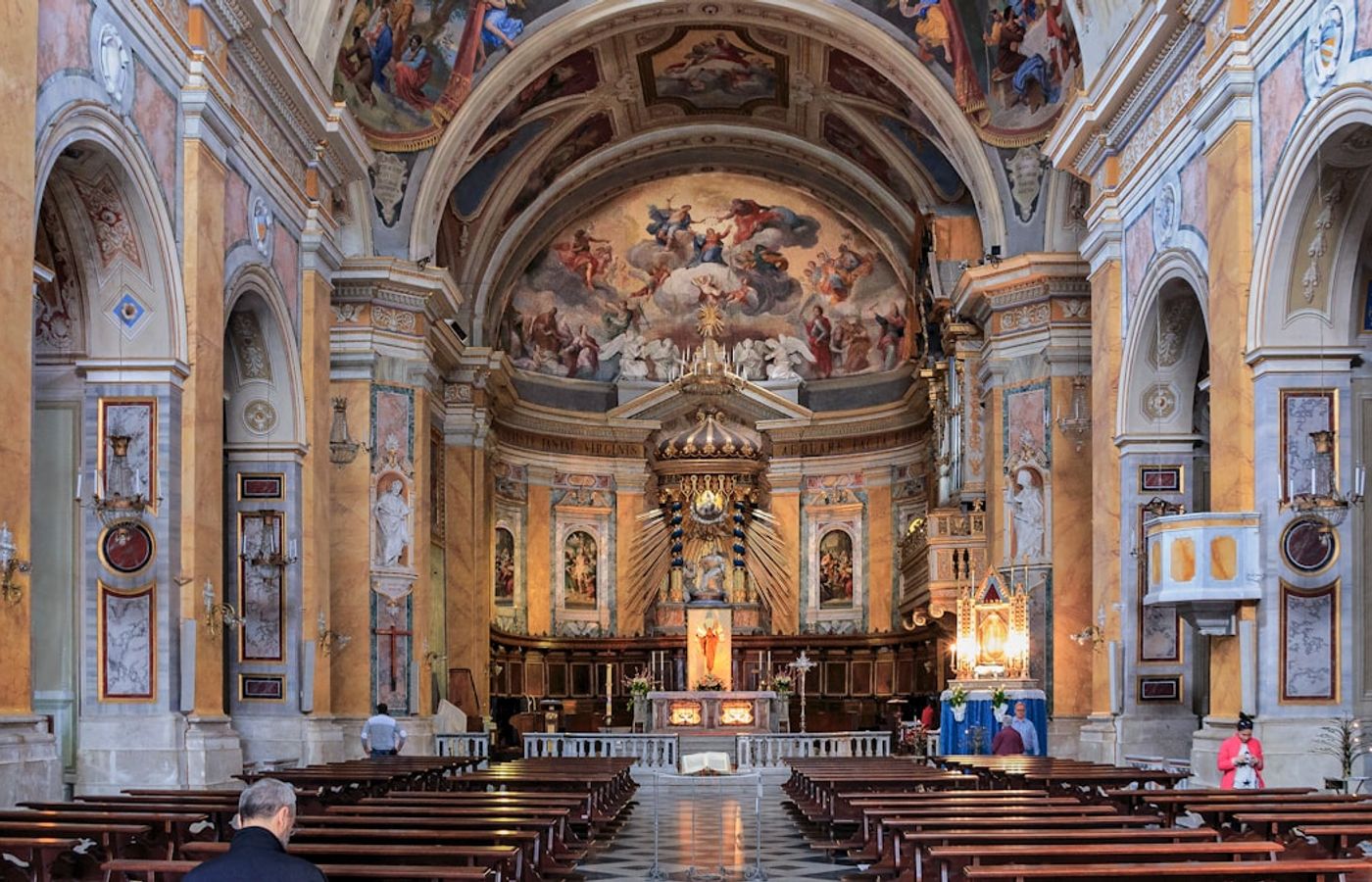
The Sanctuary of Nostra Signora di Montenero is a small hilltop church above Riomaggiore, sitting 341 metres above sea level. Records mention a chapel on this spot as early as 1335, and the current pale-yellow building dates from the 14th and 18th centuries. Most people come not for the church but for what surrounds it: a panoramic terrace that looks straight down the entire Cinque Terre coast, with all five villages visible in clear weather. You can reach the sanctuary two ways. The scenic option is trail 593 from Riomaggiore, a 45 to 60-minute climb through terraced vineyards. The easy option is the ATC shuttle bus from Riomaggiore's Piazza Vignaiolo, which costs 2.50 EUR one way and takes about 15 minutes. There is no entry fee for the church.
Pro Tip: Go for sunset. The light hits the western villages first and you can watch the wave of colour move down the coast.
8Cinque Terre Wine and Pesto Tasting (Sciacchetrà)
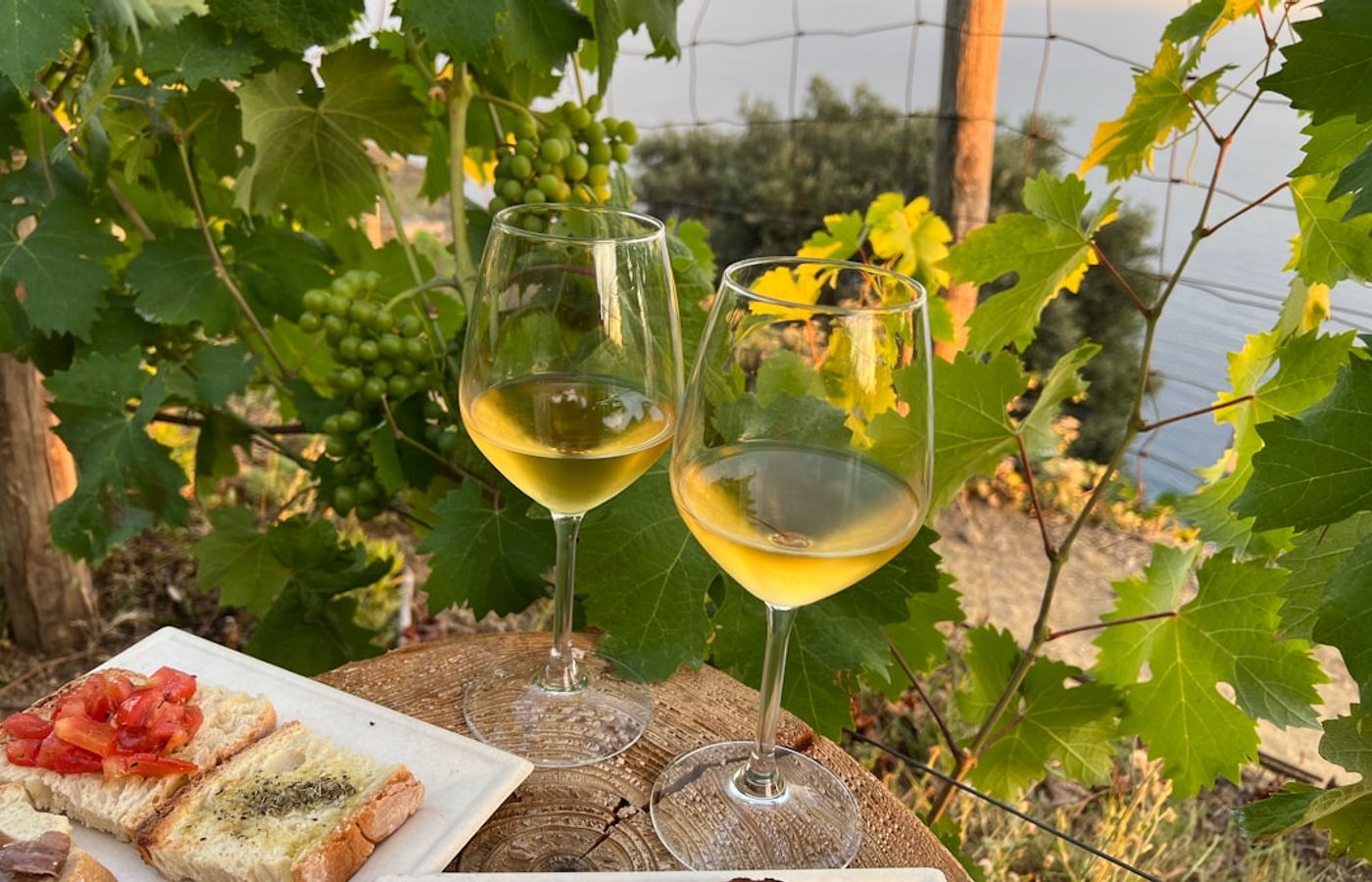
Two products carry the region's DOC and PDO protections: Cinque Terre white wine (a blend of Bosco, Albarola, and Vermentino grapes) and Sciacchetrà, an amber-coloured sweet passito wine made from the same grapes dried on wooden racks for at least a month before pressing. Sciacchetrà takes roughly 10 kilos of grapes to make one litre, which is why a 375 ml bottle retails for 30 to 50 EUR in 2026. Pair either with the region's other cultural export: pesto alla genovese, made with local basil, Parmigiano Reggiano, pine nuts, garlic, salt, and Ligurian olive oil. Book a tasting at the Cooperativa Agricoltura di Cinque Terre in Groppo (a hamlet above Manarola), where 25 to 35 EUR per person gets you four wines, a pesto sampling, and local focaccia. Reserve at least 48 hours ahead in high season.
Pro Tip: Buy a small bottle of Sciacchetrà to take home rather than a full-size bottle - it is expensive because it is genuinely difficult to produce.
9Boat Trip Between the Villages
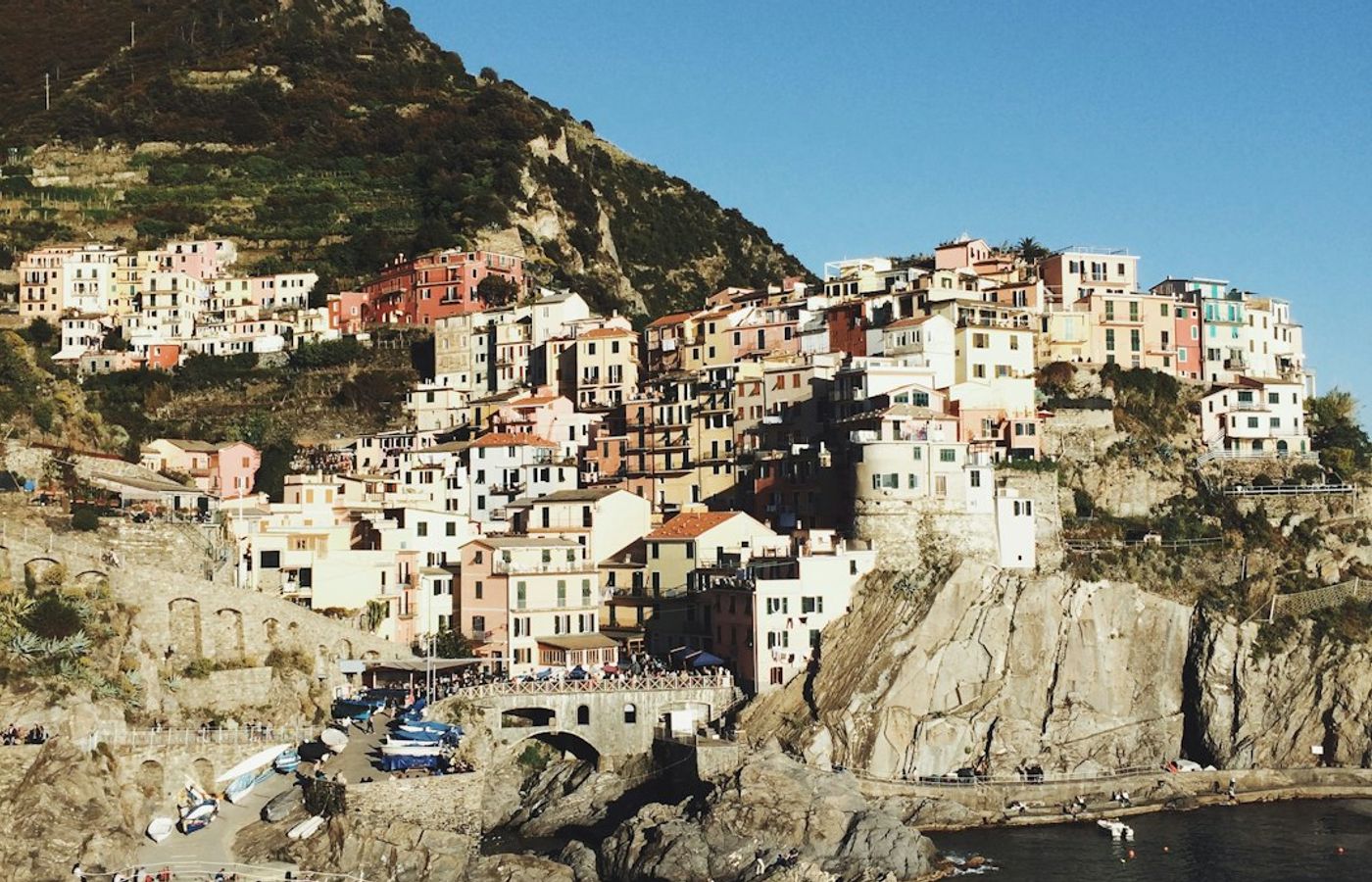
Seeing Cinque Terre from the water is genuinely a different trip. The pastel villages that look interesting from the train look extraordinary from 200 metres offshore, because you finally see how vertically they are built into the cliffs. The main operator is Consorzio Marittimo Turistico 5 Terre - Golfo dei Poeti, which runs a scheduled ferry from April to October between Monterosso, Vernazza, Manarola, Riomaggiore, and Portovenere. A single hop between villages costs around 6 to 10 EUR in 2026, and a full-day unlimited ticket runs about 27 EUR (35 EUR including Portovenere). Corniglia has no port because of its cliff position, so boats skip it entirely. Boats stop running in bad sea conditions, and the service is sharply reduced in winter.
Pro Tip: Take the train one way and the boat back. The train is fast and cheap for the outbound leg, and the boat gives you the view at a slower pace on the return.
10Punta Bonfiglio Viewpoint
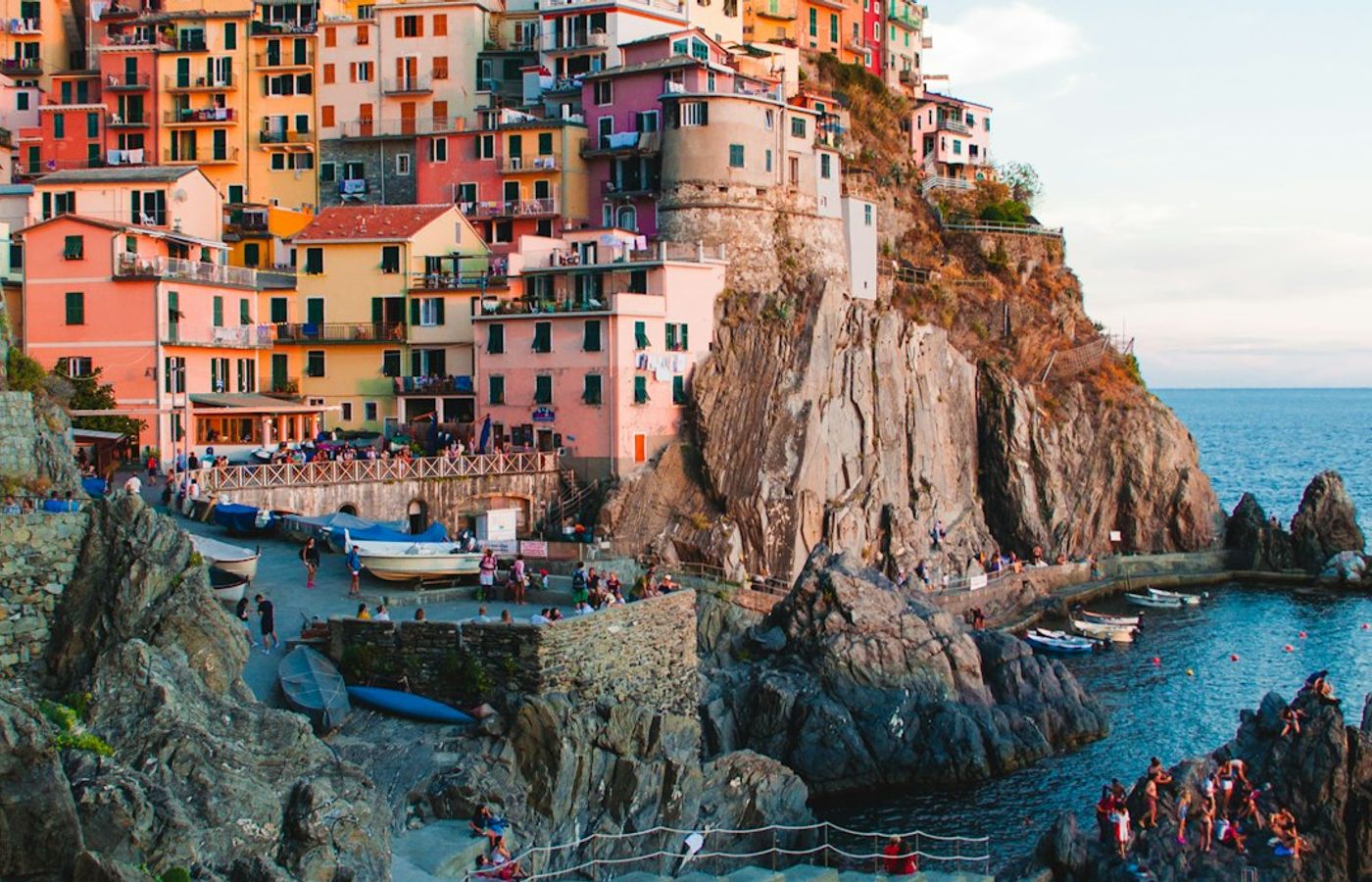
Punta Bonfiglio is the small promontory just west of Manarola, and it holds what most photographers consider the definitive shot of the village. To reach it, walk from Manarola's harbour up Via Renato Birolli, past the church, and continue along the paved cliffside path toward the cemetery. Just beyond the cemetery, the path opens onto a landscaped terrace with benches, a small playground, and an unobstructed view back across the bay to Manarola's stacked houses. There is no entry fee and no ticket required, since this section of path sits outside the paid Sentiero Azzurro (Blue Trail). Arrive around 8 p.m. in summer or 5 p.m. in winter to catch the last light hitting the village facades. Bring a jacket, the wind on the point can be noticeably cooler than in the village itself.
Pro Tip: Continue 15 minutes further west on the path for the Nessun Dorma bar terrace, but expect a queue in high season - the view is the same 200 metres before it.

CEO and co-founder
Tomas is the co-founder and director of trip1, an European company specializing in reservation services. He launched the company in 2025 with a focus on building scalable, efficient operations.
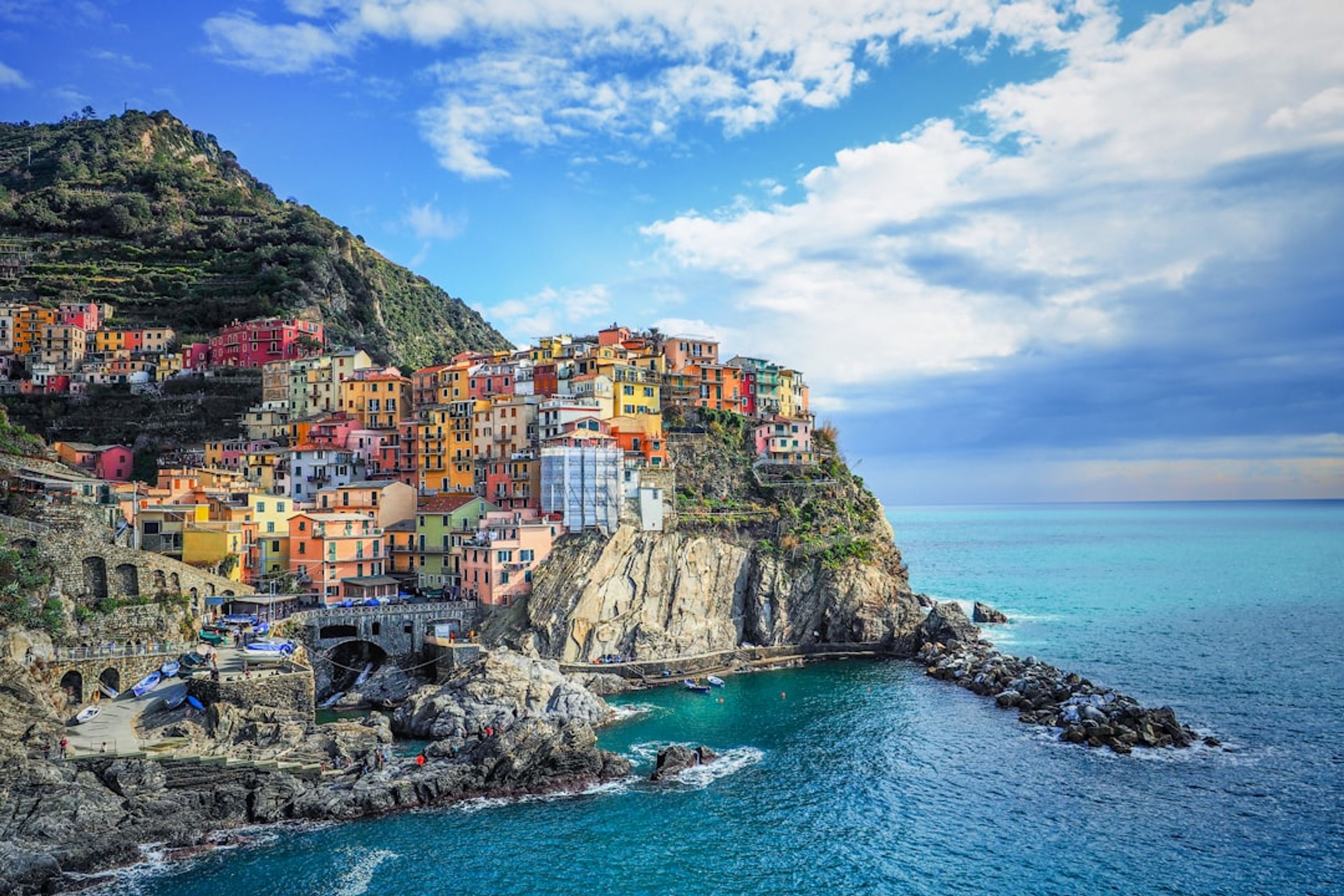
Climate averages · 1991–2020
When is the best time to visit Cinque Terre?
The best time to visit Cinque Terre is between May and October, the most comfortable stretch of the year on these averages.
Best time · May–OctoberRainfall
- Jan7°
- Feb8°
- Mar10°
- Apr13°
- May17°
- Jun21°
- Jul24°
- Aug24°
- Sep21°
- Oct17°
- Nov12°
- Dec8°
More of Italy
10 Best Things to Do in Cinque Terre, Italy - FAQ
Realistically, no. You can see all five villages in a single day using the Cinque Terre Express train, which covers the whole coast in roughly 20 minutes end to end with departures every 15 to 30 minutes. But squeezing in the Sentiero Azzurro (Blue Trail), the Sanctuary of Nostra Signora di Montenero, a wine tasting, a boat trip, and the Punta Bonfiglio viewpoint on top of that requires two to three days minimum. If you only have one day, prioritise the villages plus one hike section and one boat ride. Plan two days if you want to add the sanctuary and a proper tasting.
Start in the east and work west. Take the first morning train from La Spezia to Riomaggiore, walk up to the Sanctuary of Nostra Signora di Montenero (or take the shuttle), then descend and take the train to Manarola for the Punta Bonfiglio viewpoint and a Sciacchetrà tasting at Groppo. In the afternoon, hike the Sentiero Azzurro (Blue Trail) section from Manarola area to Corniglia, then train to Vernazza for the castle. Finish in Monterosso al Mare for the beach and dinner. Take the evening boat back if it is running - the sunset view of the coast from the water is the best souvenir.
Four things need tickets, and two of those benefit from booking ahead. The Sentiero Azzurro (Blue Trail) requires the Cinque Terre Card Trekking (7.50 EUR per day in 2026) or the combined Cinque Terre Card Train (19.50 EUR per day). The Via dell'Amore section between Riomaggiore and Manarola requires a separate 5 EUR ticket and does sell out in July and August, so book online. Boat trips can be bought at the pier but selling out is common in peak season. Wine tastings at the Cooperativa Agricoltura di Cinque Terre in Groppo should be reserved at least 48 hours in advance.
Budget roughly 90 to 140 EUR per person for a solid two-day trip in 2026, not counting food, accommodation, or your arrival train from outside the region. Rough breakdown: Cinque Terre Card Train for two days at 35 EUR (covers unlimited regional trains and all hiking trails), Via dell'Amore ticket at 5 EUR, one-way boat pass at around 27 EUR, Vernazza castle at 1.50 EUR, sanctuary shuttle round-trip at 5 EUR, and a wine and pesto tasting at 25 to 35 EUR. Meals typically run 15 to 30 EUR for lunch and 30 to 50 EUR for dinner.
Three additions worth planning if you have extra time. First, Portovenere and the Palmaria island just east of Riomaggiore, technically outside the Cinque Terre National Park but connected by the same ferry line and often called the sixth village. Second, the Sentiero Rosso (Red Trail) high ridge path above the coast, which is free to walk, has no crowds, and offers panoramic views but takes 8 to 10 hours. Third, Levanto, the beach town just west of Monterosso al Mare, which has a proper 1-kilometre beach, cheaper accommodation, and its own train station on the Cinque Terre Express line.
For most travellers, yes. The Cinque Terre Card Train at 19.50 EUR per day in 2026 covers unlimited rides on the Cinque Terre Express between La Spezia and Levanto, access to all Sentiero Azzurro (Blue Trail) sections, use of the ATC shuttle buses (including the one up to the sanctuary above Riomaggiore), and free public toilets at the stations. A single train hop already costs around 5 EUR, so three hops plus one trail section already pays for the card. The trekking-only version at 7.50 EUR makes sense if you plan to walk everywhere and take zero trains, which is unusual.
Nine of the ten are reachable using only the Cinque Terre Express. The five villages each have their own station on the line, the Sentiero Azzurro (Blue Trail) trailheads connect village stations to each other, Punta Bonfiglio is a 10-minute walk from Manarola station, and the wine tasting at Groppo is reached by a short shuttle from Manarola. The one exception is the Sanctuary of Nostra Signora di Montenero, which requires either a 45 to 60-minute uphill walk from Riomaggiore on trail 593 or the ATC shuttle bus from Piazza Vignaiolo. No car is needed anywhere in Cinque Terre.

Related travel guides
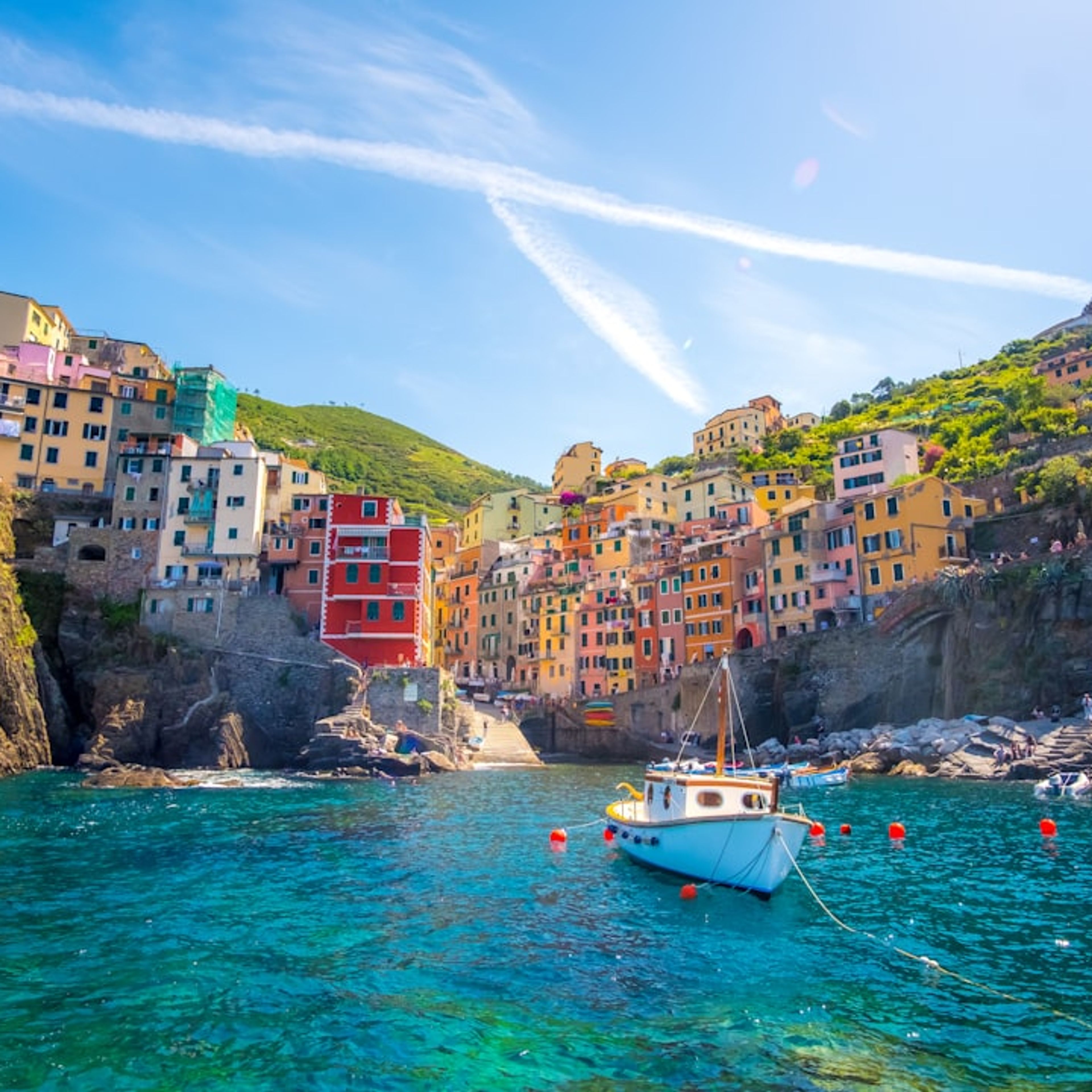
5 Best Hikes in Cinque Terre
The 5 best hikes in Cinque Terre for 2026: official trail times, Cinque Terre Card prices, Via dell'Amore booking and which trails are still closed.
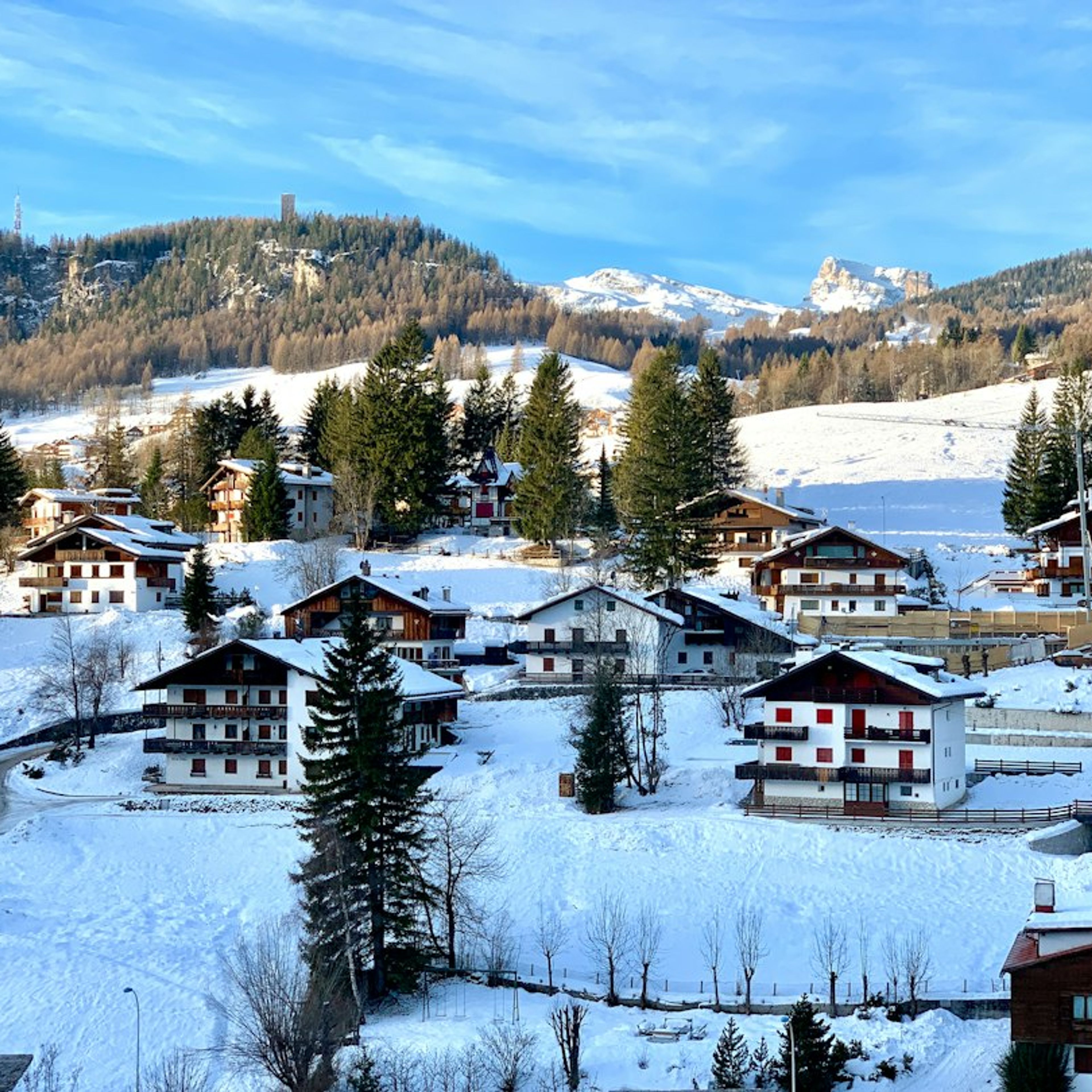
5 Best Hikes in the Dolomites Near Cortina d'Ampezzo
The 5 best hikes in the Dolomites near Cortina d'Ampezzo for 2026, with distance, ascent, difficulty, trailhead parking, bus lines and toll road rules.