
Get up to €50 off your staySubscribe and get up to €50 off your next stay

Browse and explore the best travel guides in Aruba.
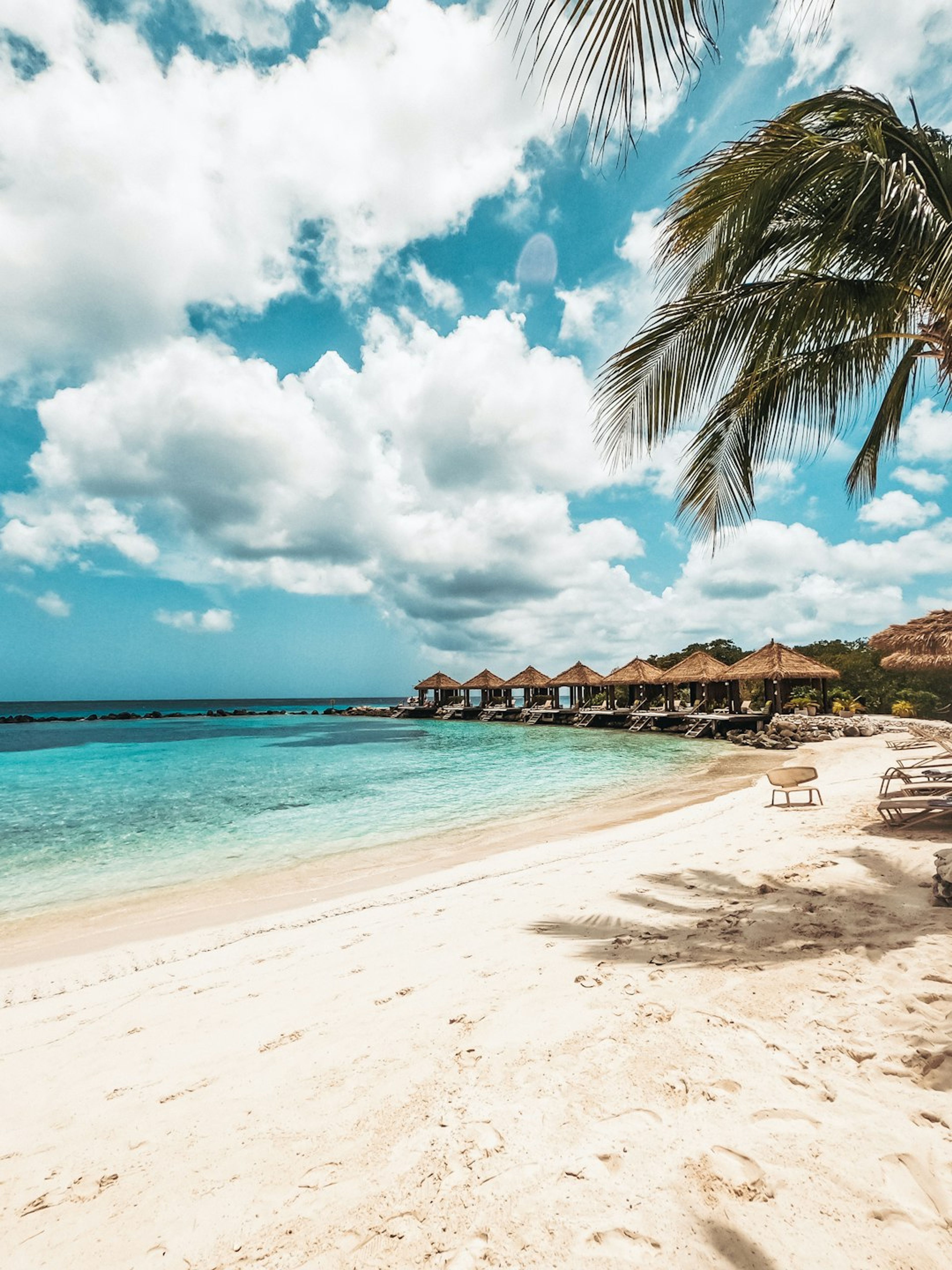
Aruba sits far enough south in the Caribbean to fall outside the hurricane belt, which is why its weather is among the most dependable in the region and why the divi-divi trees all lean the same way in the constant trade winds. The west coast holds the calm, wide sands of Eagle Beach and Palm Beach and most of the resorts, while the windward side is raw and arid: cactus, boulder formations and the wild Arikok National Park covering nearly a fifth of the island. A Dutch Caribbean identity gives Willemstad-style colour to Oranjestad and an unusually good food scene.
Capital
Oranjestad
Population
~108,000
Area
180 km²
Time Zone
AST (UTC-4), no daylight saving
Currency
Aruban Florin (AWG), pegged to the US dollar; USD accepted almost everywhere
Languages
Dutch and Papiamento official; English and Spanish very widely spoken
Main Airports
AUA (Queen Beatrix International)
Visa
Visa-free for EU, UK, US and Canadian passport holders; an online Embarkation-Disembarkation card is required before arrival
Best For
Reliable sunshine, Eagle Beach, windsurfing, desert landscapes, dining
Typical Cost Level
Expensive
Get the latest deals, new destinations, and travel tips delivered straight to your inbox.
No spam, unsubscribe anytime.
Entry rules, stay length and passport validity by nationality.
EU, UK, US and Canadian passport holders do not need a visa and typically receive 30 days on arrival, extendable up to 180 days. Aruba is a constituent country of the Kingdom of the Netherlands but sits outside the Schengen Area, so Schengen rules do not apply. All visitors must complete the online Embarkation-Disembarkation card within 72 hours of arrival, which includes a small sustainability fee.
Aruba works year-round because it sits south of the hurricane belt and receives very little rain at any time, averaging under 50 cm annually. Temperatures hold around 28 to 31°C every month, cooled by constant trade winds. December to April is high season with the highest rates and busiest beaches, while May to November offers the same weather at noticeably lower prices. Carnival in January and February is the biggest event of the year.
The Aruban Florin (AWG) is the official currency, pegged to the US dollar at about 1.79 to 1, but US dollars are accepted virtually everywhere including shops, restaurants and taxis. Most prices in tourist areas are quoted in dollars. Cards are accepted almost universally, so there is little need to change money at all. You will often receive change in florins, which are hard to use elsewhere, so spend them before leaving.
Arikok National Park covers nearly 20 percent of the island and is nothing like the resort coast: cactus, wind-carved boulders, Arawak cave paintings and the natural pool at Conchi, reachable only by 4x4, on foot or on horseback. The Antilla shipwreck off the northwest coast is one of the Caribbean's largest and a superb snorkelling site. Palm Beach delivers windsurfing and kitesurfing, and Oranjestad has colourful Dutch colonial architecture and a good restaurant scene.
On trip1, you can book hotels across Aruba and pay with over 120 cryptocurrencies including Bitcoin, Ethereum, and USDC. trip1 covers 3 million+ hotels in 190+ countries, making it easy to find and book accommodation with crypto.