
Get up to €50 off your staySubscribe and get up to €50 off your next stay

Browse and explore the best travel guides in Azerbaijan.
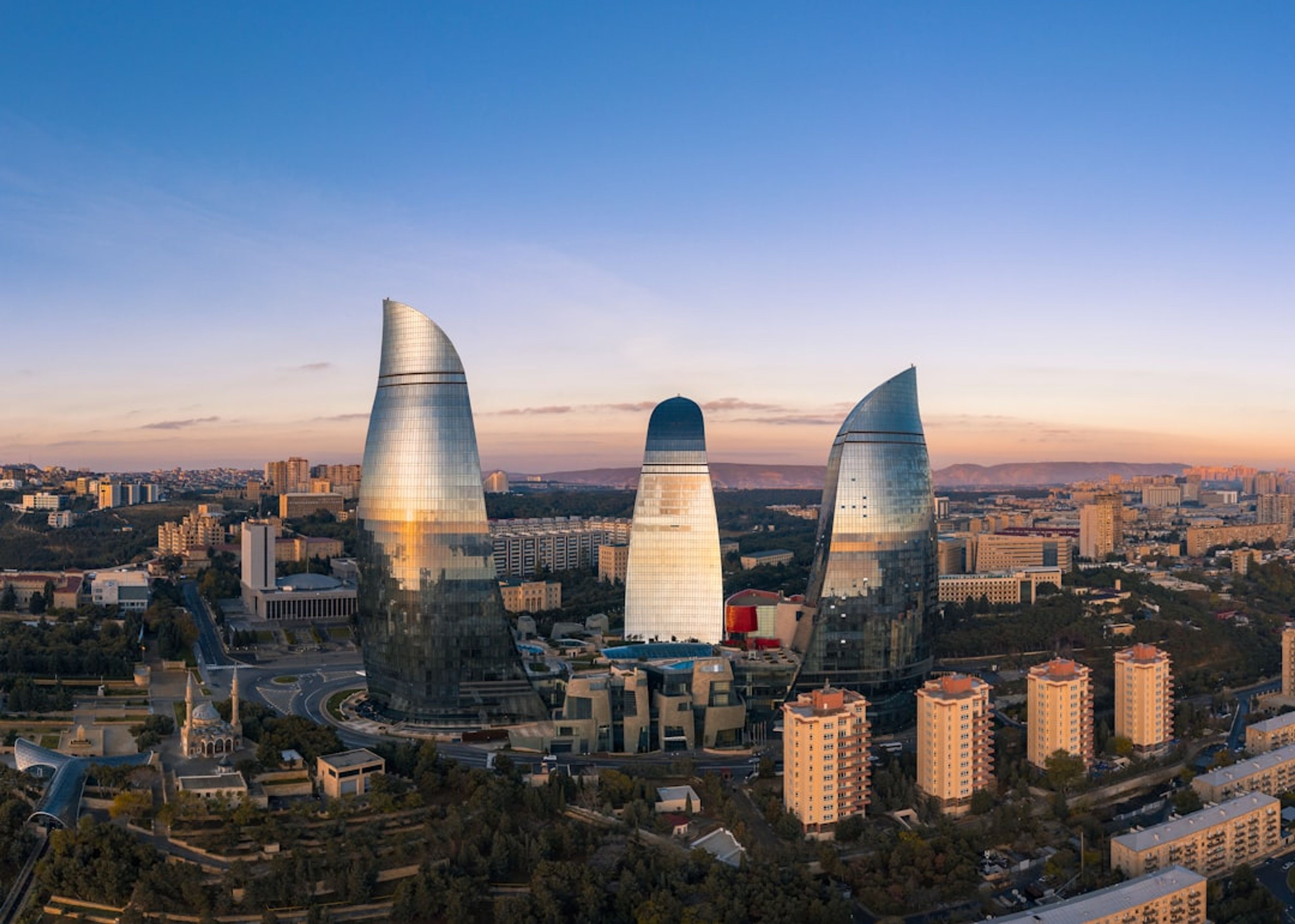
Azerbaijan runs from the Caspian shoreline to the high Caucasus, and Baku holds the contrast in one view: a walled medieval old city with a Shirvanshahs' palace and the Maiden Tower, ringed by oil-boom mansions and the three Flame Towers above them. Beyond the capital are the mud volcanoes and prehistoric petroglyphs of Gobustan, the fire temple at Ateshgah, and mountain villages such as Xināliq and Lahıc reached on switchback roads. It is a country of remarkable variety for its size, and one of the cheapest in the wider region.
Capital
Baku
Population
~10.2 million
Area
86,600 km²
Time Zone
AZT (UTC+4), no daylight saving
Currency
Azerbaijani Manat (AZN)
Languages
Azerbaijani; Russian widely spoken, English in Baku tourism
Main Airports
GYD (Heydar Aliyev, Baku)
Visa
ASAN e-visa online for most nationalities, 30 days single entry, issued in about 3 working days
Best For
Baku architecture, mud volcanoes, mountain villages, Caspian coast
Typical Cost Level
Budget to Mid-range
Get the latest deals, new destinations, and travel tips delivered straight to your inbox.
No spam, unsubscribe anytime.
Entry rules, stay length and passport validity by nationality.
Most nationalities need an e-visa, applied for online through the ASAN Visa portal. It costs around USD 25 for standard processing in three working days, or more for urgent same-day service, and grants 30 days single entry. Print the approval and carry it with you. Note that travellers with evidence of visiting Nagorno-Karabakh may be refused entry, and Armenian nationals are generally not admitted.
April to June and September to October are ideal, with mild temperatures in Baku and accessible mountain roads. Baku summers are hot and extremely windy, which is how the city earned its name as the place of winds, though the Caspian beaches are at their best. Winter is cold and grey on the coast and heavily snowbound in the Caucasus, closing access to villages such as Xināliq. Novruz in late March is a colourful time to visit but many businesses close.
Azerbaijan is generally safe for visitors, with low street crime and a visible police presence in Baku. The clear exception is the border area with Armenia and the Nagorno-Karabakh region, which remain sensitive and should be avoided; check your government's travel advice before planning any route near them. Photography of military installations and some government buildings is prohibited. Otherwise the usual urban precautions and care on mountain roads are sufficient.
The Azerbaijani Manat (AZN) is the currency, roughly 1.7 to the US dollar. Cards are widely accepted in Baku hotels, restaurants and shops, but cash is needed for regional travel, markets, taxis and village guesthouses. ATMs are common in Baku and larger towns but scarce in mountain areas, so withdraw before heading out. Exchange offices give better rates than hotels, and US dollars are the easiest currency to exchange.
Five to seven days gives a proper sense of the country. Two to three days covers Baku's walled Old City, the Heydar Aliyev Center and the Flame Towers, plus a half-day trip to Gobustan's petroglyphs and mud volcanoes. Add two days for the northern mountains around Quba and Xināliq, and another two for Sheki with its stained-glass Khan's Palace and the silk-road caravanserais. A three-day Baku city break also works well as a stopover.
On trip1, you can book hotels across Azerbaijan and pay with over 120 cryptocurrencies including Bitcoin, Ethereum, and USDC. trip1 covers 3 million+ hotels in 190+ countries, making it easy to find and book accommodation with crypto.