
Get up to €50 off your staySubscribe and get up to €50 off your next stay

Browse and explore the best travel guides in Chile.
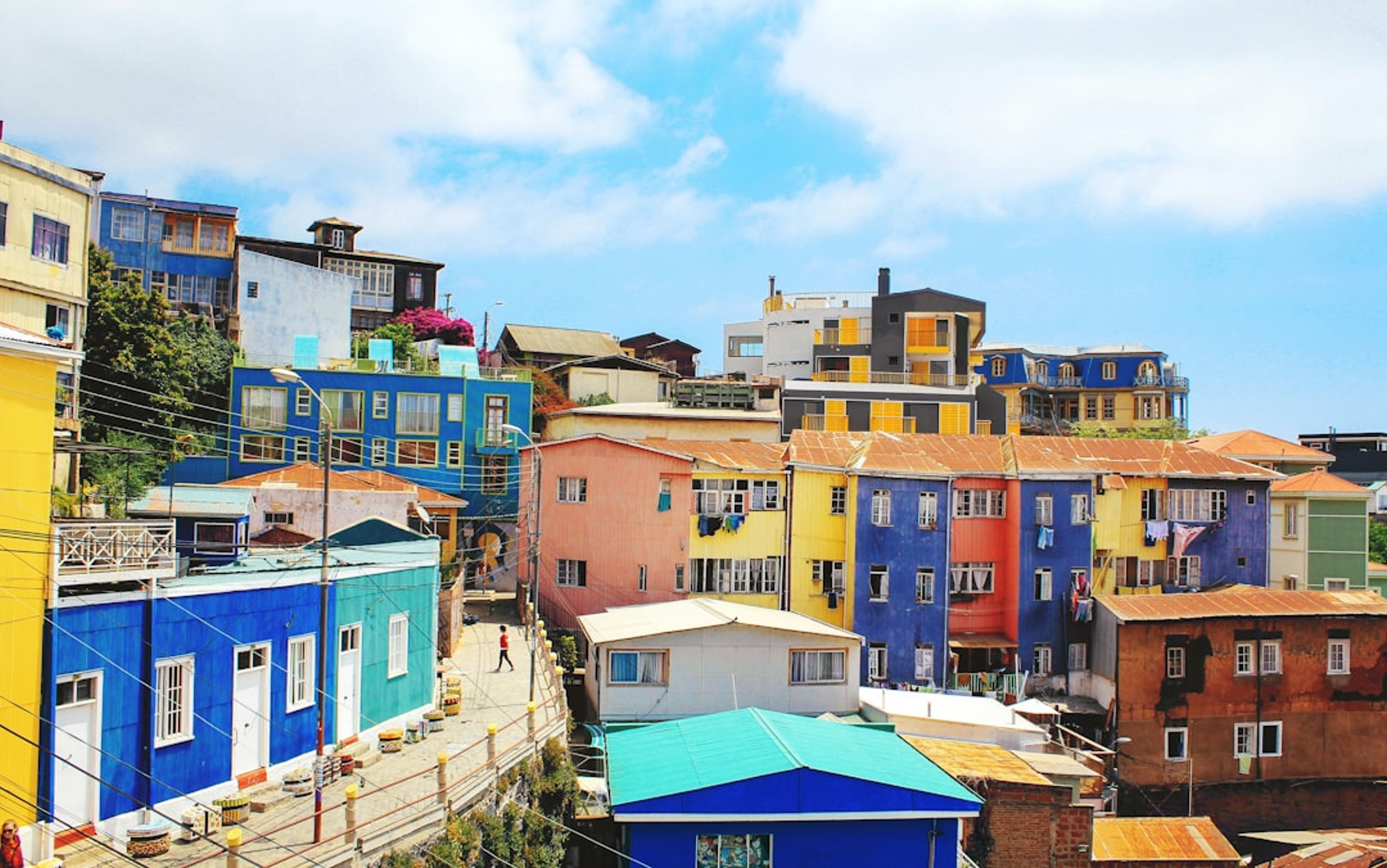
Chile runs 4,300 kilometres down the western edge of South America and is never more than about 350 kilometres wide, which packs an absurd range of landscapes into one country. The Atacama in the north is the driest desert on earth and among the best places anywhere for stargazing. The centre holds Santiago, the Pacific port of Valparaíso and the wine valleys of Colchagua and Casablanca. The south becomes Patagonia, with the granite towers of Torres del Paine and the fjords, and 3,500 kilometres offshore lies Easter Island.
Get the latest deals, new destinations, and travel tips delivered straight to your inbox.
No spam, unsubscribe anytime.
Entry rules, stay length and passport validity by nationality.
EU, UK, US, Canadian and Australian passport holders can enter visa-free for up to 90 days. You will be issued a tourist card on arrival, which you must keep and present when leaving, and which also exempts foreign visitors from VAT at many hotels when paying in foreign currency. Chile has strict agricultural controls, so declare all food, seeds and animal products or face significant on-the-spot fines.
It depends entirely on which part, since the country spans 4,300 km. Patagonia and Torres del Paine are only comfortably accessible from November to March, the southern summer, and many services close outside it. The Atacama works year-round, though nights are cold. Santiago and the wine valleys are best from September to April, with harvest in March and April. Ski season in the central Andes runs June to September, the opposite of the northern hemisphere.
Domestic flights are essential for covering the length of the country: Santiago to Punta Arenas takes three hours by air versus more than 40 by road. Long-distance buses are excellent, comfortable and cheap, with fully reclining cama seats on overnight routes, and they are the standard way to move within regions. Renting a car makes sense for the Atacama, the Lake District and the wine valleys. Torres del Paine is usually reached by bus from Puerto Natales.
Chile is among the safest countries in South America and violent crime against visitors is rare, but pickpocketing and bag snatching have risen noticeably in central Santiago and Valparaíso. Keep phones out of sight on the street, watch bags in restaurants and avoid deserted areas at night. Chile is also seismically very active, so note the tsunami evacuation routes marked in coastal towns. Hiking in Patagonia requires respect for fast-changing weather and registering at park entrances.
Two weeks is a realistic minimum for more than one region. A common split gives three days in Santiago and Valparaíso, four in the Atacama around San Pedro, and five or six in Patagonia for Torres del Paine, with flights between them. Ten days means choosing two regions. Easter Island needs a further five nights given the six-hour flight from Santiago, and the Lake District or Chiloé easily absorb another week.
On trip1, you can book hotels across Chile and pay with over 120 cryptocurrencies including Bitcoin, Ethereum, and USDC. trip1 covers 3 million+ hotels in 190+ countries, making it easy to find and book accommodation with crypto.