
Get up to €50 off your staySubscribe and get up to €50 off your next stay

Browse and explore the best travel guides in Kazakhstan.
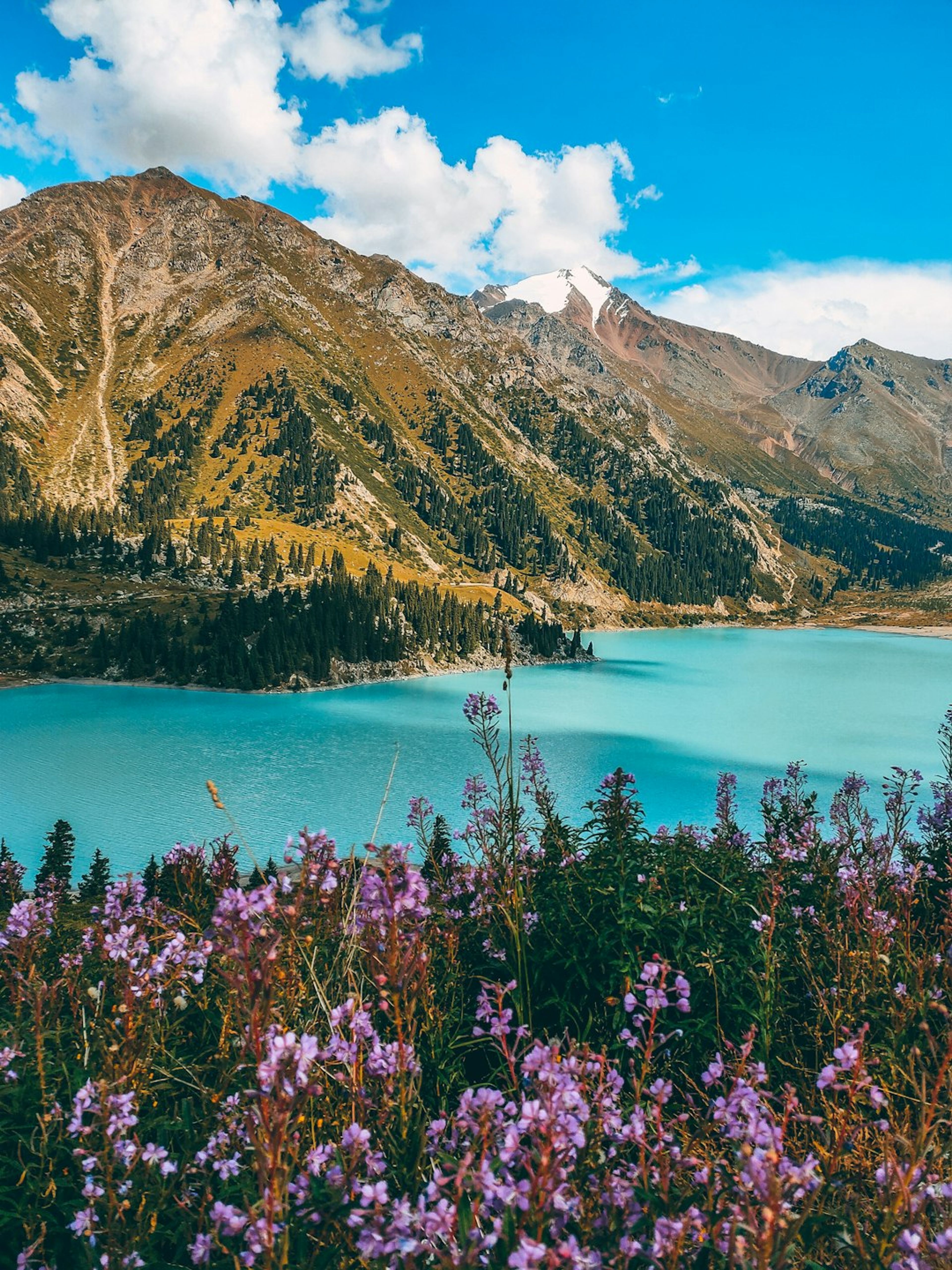
Kazakhstan is the ninth-largest country on earth and the largest landlocked one, a vastness of steppe, desert and mountain that takes days to cross by train. Almaty sits beneath the snow-capped Tian Shan with a leafy Soviet grid, ski slopes 30 minutes from downtown and a serious cafe culture, while Astana in the north is a showcase of experimental architecture rising straight out of flat grassland. Between them lie the striped rock walls of Charyn Canyon, the Singing Dunes of Altyn-Emel, and the Baikonur Cosmodrome still launching crews into orbit.
Capital
Astana
Population
~20 million
Area
2,724,900 km², the ninth-largest country in the world
Time Zone
UTC+5 nationwide, unified into a single zone in 2024
Currency
Kazakhstani Tenge (KZT)
Languages
Kazakh and Russian; English limited outside Almaty and Astana
Main Airports
ALA (Almaty), NQZ (Astana)
Visa
Visa-free up to 30 days for around 80 nationalities including EU, UK, US, Canada and Australia
Best For
Mountains and skiing, Charyn Canyon, steppe road trips, Silk Road sites
Typical Cost Level
Budget to Mid-range
Get the latest deals, new destinations, and travel tips delivered straight to your inbox.
No spam, unsubscribe anytime.
Entry rules, stay length and passport validity by nationality.
Citizens of around 80 countries can enter Kazakhstan visa-free for up to 30 days, including EU member states, the UK, US, Canada, Australia, Japan and South Korea. There is no registration requirement for short visa-free stays arriving by air, as the migration card is handled electronically. Other nationalities can apply for an e-visa online. Your passport should be valid for at least six months beyond arrival.
May to September is the main season, with the steppe green in spring, mountain trails open in summer, and Charyn Canyon and Kolsai Lakes at their best from June to September. Kazakhstan has a severe continental climate: Astana is one of the coldest capitals in the world, dropping below -30°C in winter, while summer on the steppe can exceed 35°C. Almaty is milder year-round and its ski season at Shymbulak runs December to March.
Kazakhstan is a safe country for visitors, with low violent crime and Almaty and Astana comfortable to walk in the evening. Petty theft occurs in crowded markets and on public transport, so take usual precautions. The genuine risks are environmental rather than criminal: extreme cold in winter, long distances between settlements on remote roads, and altitude in the Tian Shan. Carry supplies and tell someone your route if driving into the steppe.
The Kazakhstani Tenge (KZT) is the currency. Card payment is surprisingly widespread, with contactless accepted in Almaty and Astana shops, cafes and even many taxis, and Kaspi is the dominant local payment app. Carry cash for rural areas, bazaars and small guesthouses. Exchange offices in cities offer good rates for US dollars and Euros. Kazakhstan is inexpensive for food and transport, though hotels in the two main cities are pricier.
Domestic flights are the practical option for long hops given the sheer size of the country: Almaty to Astana takes 90 minutes by air against roughly 20 hours by train. Trains are comfortable, cheap and a genuine experience, with the Talgo services between the main cities being the fastest. For Charyn Canyon, Kolsai and the Altyn-Emel dunes, hire a driver or join a tour, as public transport does not serve them well and the roads can be rough.
On trip1, you can book hotels across Kazakhstan and pay with over 120 cryptocurrencies including Bitcoin, Ethereum, and USDC. trip1 covers 3 million+ hotels in 190+ countries, making it easy to find and book accommodation with crypto.