
Get up to €50 off your staySubscribe and get up to €50 off your next stay

Browse and explore the best travel guides in Madagascar.
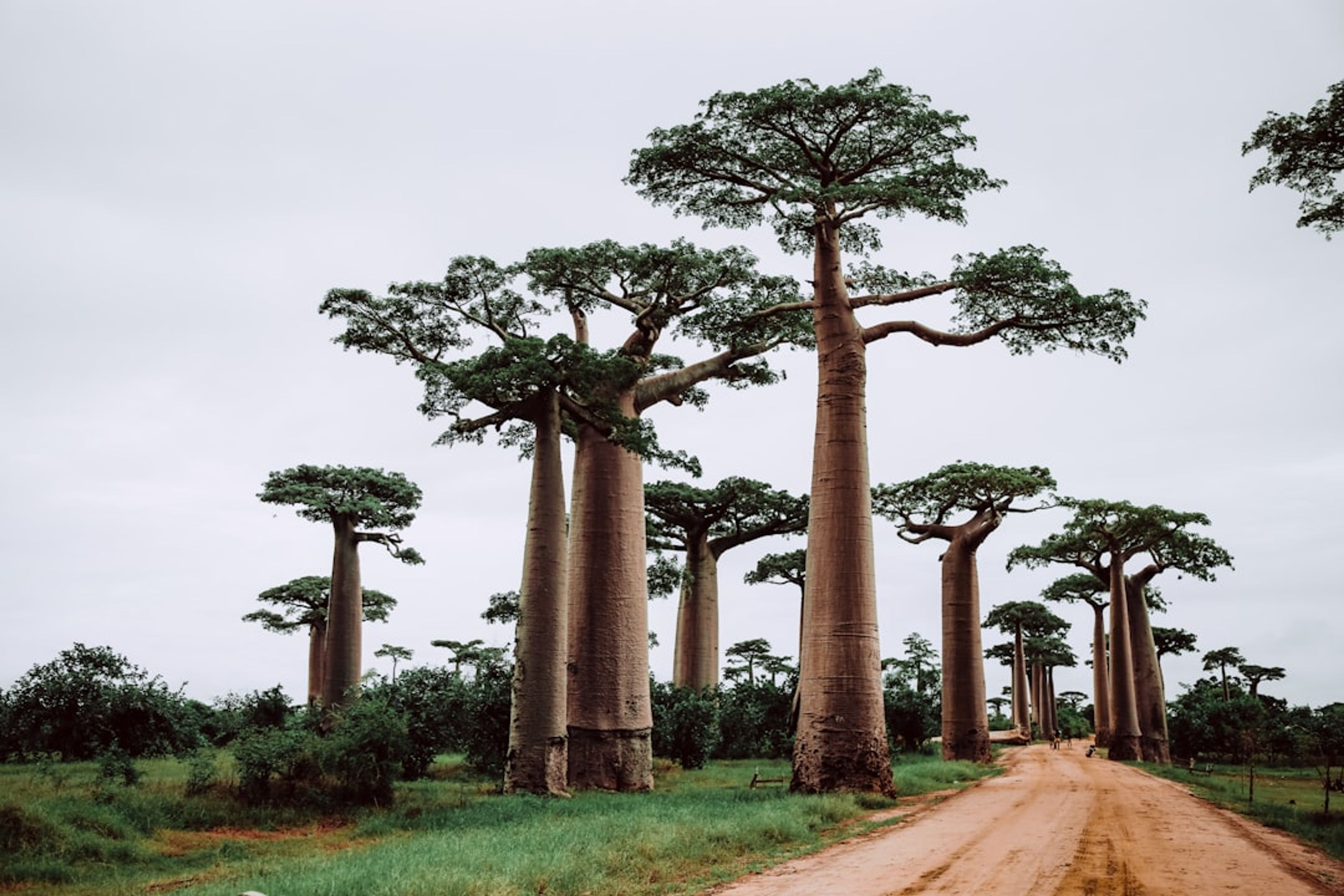
Madagascar split from the African mainland around 88 million years ago and evolved almost entirely in isolation, so roughly 90 percent of its wildlife exists nowhere else on earth. That means lemurs above all, from the dancing sifakas of Berenty to the indri of Andasibe, but also chameleons, fossa and eight species of baobab. The landscapes match: the limestone knife-blades of the Tsingy de Bemaraha, the Avenue of the Baobabs at sunset, rainforest in the east and spiny desert in the south. Infrastructure is poor and travel is slow, which is the price of admission.
Capital
Antananarivo
Population
~31 million
Area
587,041 km², the world's fourth-largest island
Time Zone
EAT (UTC+3), no daylight saving
Currency
Malagasy Ariary (MGA)
Languages
Malagasy and French; English limited outside tourism
Main Airports
TNR (Ivato, Antananarivo), NOS (Nosy Be)
Visa
Visa on arrival or e-visa for most nationalities, 30, 60 or 90 days
Best For
Lemurs and endemic wildlife, baobabs, Tsingy, diving off Nosy Be
Typical Cost Level
Budget to Mid-range
Get the latest deals, new destinations, and travel tips delivered straight to your inbox.
No spam, unsubscribe anytime.
Entry rules, stay length and passport validity by nationality.
Most nationalities can get a visa on arrival at Antananarivo and other international airports, or apply for an e-visa online beforehand. Options are 30, 60 or 90 days, with the 30-day tourist visa costing around 35 euros. You will need a passport valid for six months, a return ticket and proof of accommodation. Applying online in advance shortens what can be a slow arrival queue.
April to November is the dry season and the practical travel window. September to November is the sweet spot, when lemurs have young, orchids flower and the weather is warm but not extreme. July to September brings humpback whales to Île Sainte-Marie. Avoid January to March: this is peak cyclone season, when heavy rain washes out roads, the Tsingy and other parks close, and travel becomes genuinely difficult.
Hiring a 4x4 with a driver is the standard approach and worth the cost, because roads are poor and distances take far longer than the map suggests. The RN7 south from Antananarivo to Tulear is the classic overland route, taking around a week with stops at national parks. Domestic flights save enormous amounts of time to Nosy Be or the far north but are expensive and prone to schedule changes. Taxi-brousse minibuses are cheap, crowded and very slow.
Andasibe-Mantadia is the most accessible, roughly three hours from Antananarivo, and home to the indri, the largest living lemur, whose call carries for kilometres. Ranomafana in the southeast has the greatest species diversity, Isalo combines ring-tailed lemurs with canyon scenery, and Berenty in the far south is famous for dancing sifakas. Nosy Be's Lokobe reserve suits those combining wildlife with beaches. Night walks are essential for the smaller nocturnal species like the mouse lemur.
Madagascar is one of the world's poorest countries and opportunistic crime is a real concern, particularly in Antananarivo where muggings occur after dark. Avoid walking at night in the capital, do not display valuables, and use hotel transfers rather than street taxis late in the evening. Check current advisories before travelling to remote southern areas, where banditry has been reported. National parks and organised tours are generally trouble-free, and rural Madagascar is very welcoming.
On trip1, you can book hotels across Madagascar and pay with over 120 cryptocurrencies including Bitcoin, Ethereum, and USDC. trip1 covers 3 million+ hotels in 190+ countries, making it easy to find and book accommodation with crypto.