
Get up to €50 off your staySubscribe and get up to €50 off your next stay
Browse and explore the best travel guides in Maldives.
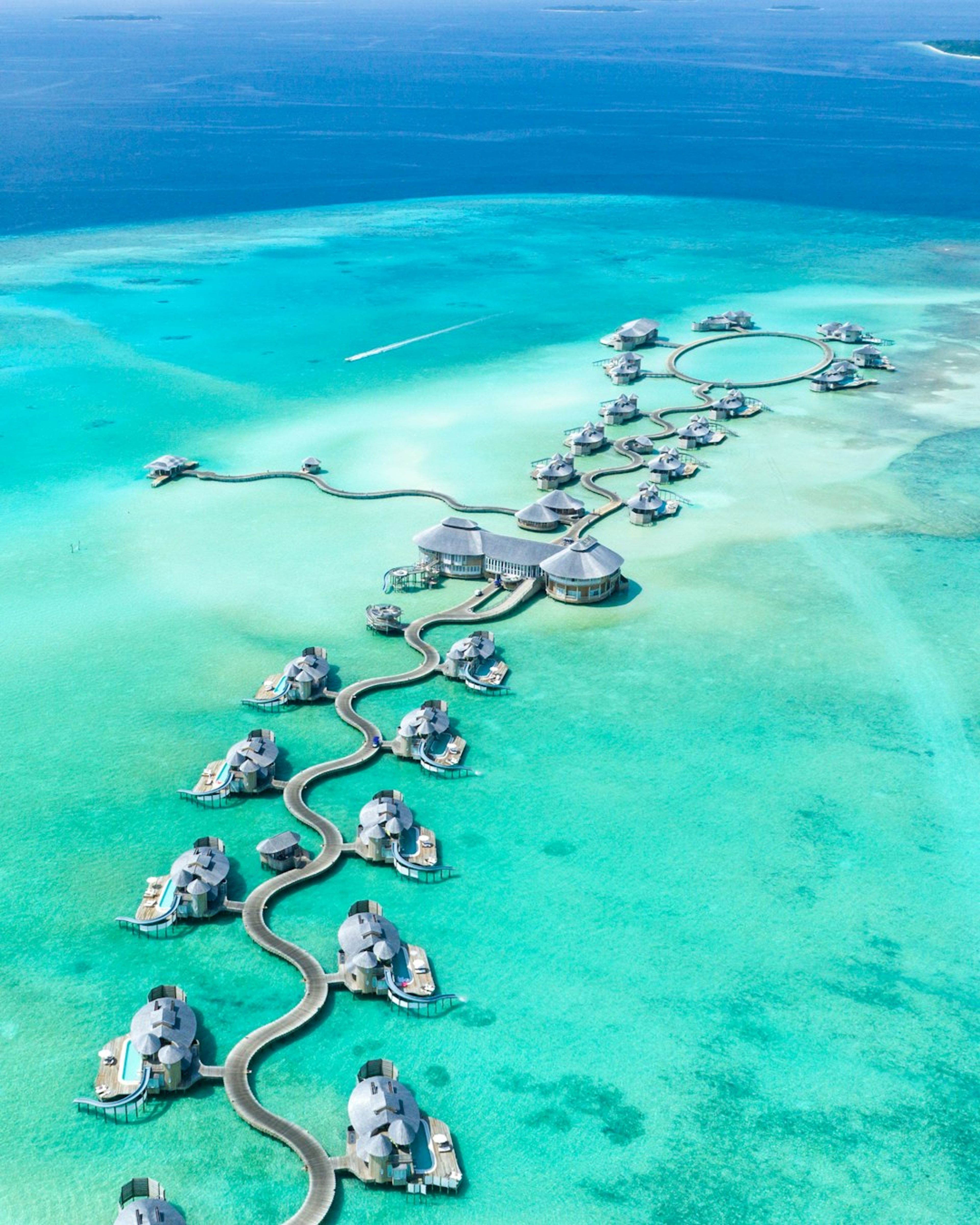
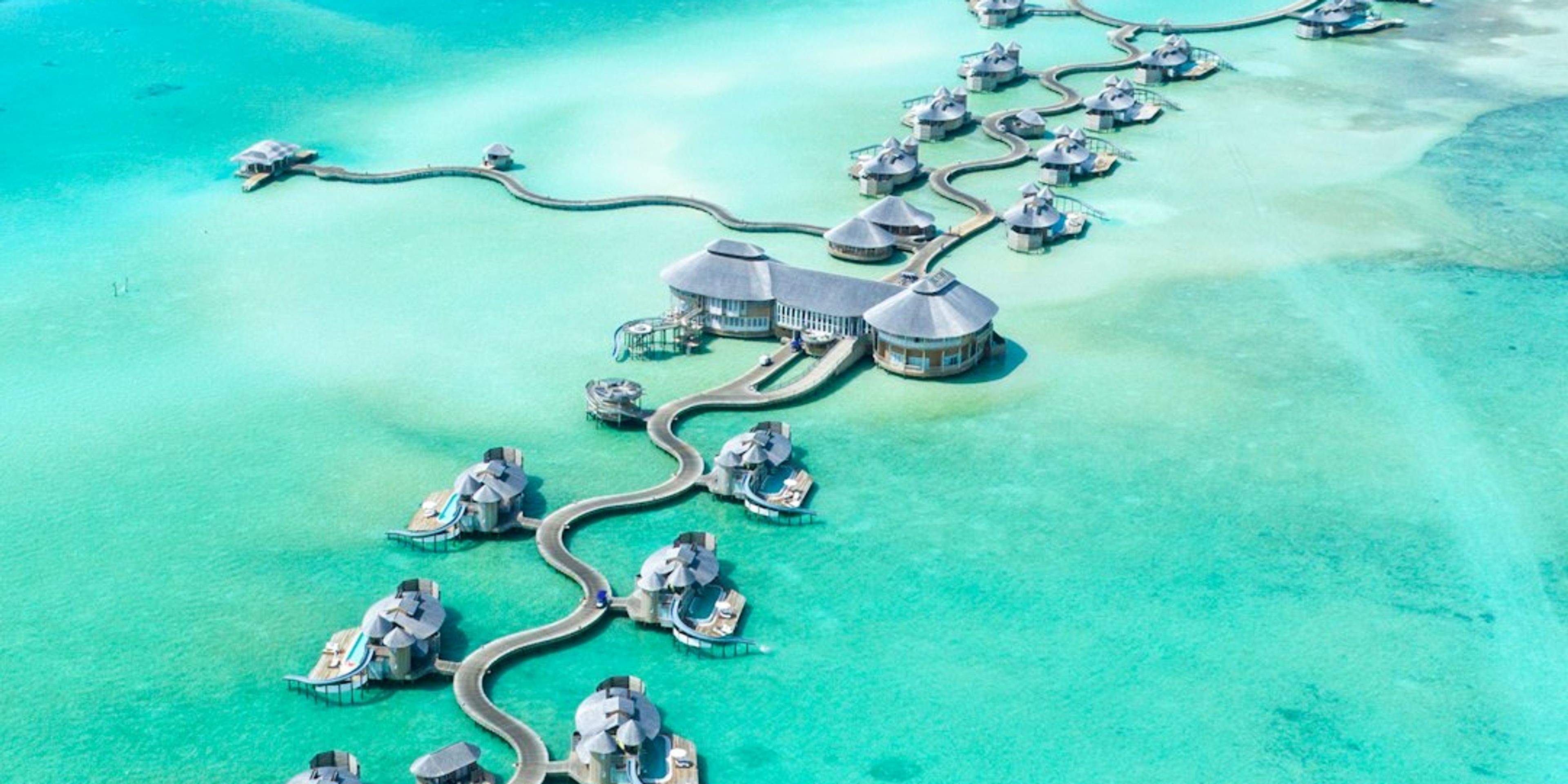
The Maldives is a chain of roughly 1,200 coral islands scattered across 26 atolls in the Indian Ocean, of which fewer than 200 are inhabited and around 170 are private resort islands. It is the flattest country on earth - the highest natural point is under three metres - and almost all of the appeal is what surrounds the land rather than the land itself: house reefs a few strokes from the beach, manta and whale shark aggregations, and water clear enough to see the shadow of your own overwater villa on the seabed.
The country has two very different price ceilings. One-island-one-resort properties reached by seaplane remain among the most expensive accommodation anywhere, but guesthouse tourism on inhabited local islands, legal since 2009, has opened up the Maldives to travellers on far more modest budgets who take public ferries and speedboats instead.
Capital
Malé
Population
~530,000
Area
298 km² of land spread across ~90,000 km² of ocean
Time Zone
MVT (UTC+5); many resorts run their own island time one hour ahead
Currency
Maldivian Rufiyaa (MVR); US dollars used for almost all resort billing
Languages
Dhivehi; English widely spoken in tourism
Main Airports
MLE (Velana International, Malé)
Visa
Free 30-day visa on arrival for all nationalities; IMUGA Traveller Declaration required within 96 hours of arrival and departure
Best For
Overwater villas, diving and snorkelling, honeymoons, surfing
Typical Cost Level
Expensive at resorts; Budget to Mid-range on local islands
Get the latest deals, new destinations, and travel tips delivered straight to your inbox.
No spam, unsubscribe anytime.
Entry rules, stay length and passport validity by nationality.
No advance visa is needed. The Maldives grants a free 30-day visa on arrival to every nationality, with no application or fee required beforehand. You do need a passport valid for at least one month beyond arrival, a confirmed onward ticket, proof of accommodation, and completion of the IMUGA Traveller Declaration online within 96 hours before both arrival and departure. The declaration is free and takes a few minutes, but it is checked at the airport.
November to April is the dry northeast monsoon and the peak season, with the clearest skies, calmest seas and best underwater visibility, plus the highest prices. May to October is the wetter southwest monsoon, bringing shorter squalls rather than constant rain, noticeably lower rates and better surf. Divers often prefer the shoulder months: manta and whale shark activity shifts between the eastern and western atolls with the monsoon, so the wet season can actually be the better time for big-animal encounters in Hanifaru Bay and Ari Atoll.
Your resort arranges the transfer and it is booked in advance, not on arrival. Nearby islands in North and South Malé Atoll use speedboats taking 15 to 60 minutes and running at all hours. More distant resorts use seaplanes, which take 20 to 50 minutes but only operate in daylight, so a late-evening arrival can mean an unplanned overnight in Malé or Hulhumálé. Some far southern atolls require a domestic flight plus a boat. Transfers are a significant cost, often USD 200 to 700 per person return for seaplanes, so factor them in when comparing resorts.
Yes, by staying in guesthouses on inhabited local islands rather than private resort islands. Guesthouse tourism was legalised in 2009 and islands such as Maafushi, Dhigurah, Thoddoo, Fulidhoo and Ukulhas now offer rooms at a fraction of resort rates, reached by cheap public ferries or shared speedboats. The trade-off is that local islands follow Maldivian law: alcohol is not served, and modest dress is expected outside designated bikini beaches. Many guesthouses run day trips to sandbanks and snorkelling sites, and some arrange excursions to nearby resorts.
Alcohol is served on private resort islands and on liveaboard boats, but not on inhabited local islands. The Maldives is a Muslim country and alcohol is prohibited under national law, with resorts operating under a specific licensing exemption. You cannot bring alcohol into the country: it will be confiscated at customs in Malé and returned when you depart. Resort prices for drinks are correspondingly high, which is one reason all-inclusive packages are popular.
On trip1, you can book hotels across the Maldives and pay with over 120 cryptocurrencies including Bitcoin, Ethereum, and USDC. trip1 covers 3 million+ hotels in 190+ countries, making it easy to find and book accommodation with crypto.