
Get up to €50 off your staySubscribe and get up to €50 off your next stay

Browse and explore the best travel guides in Martinique.
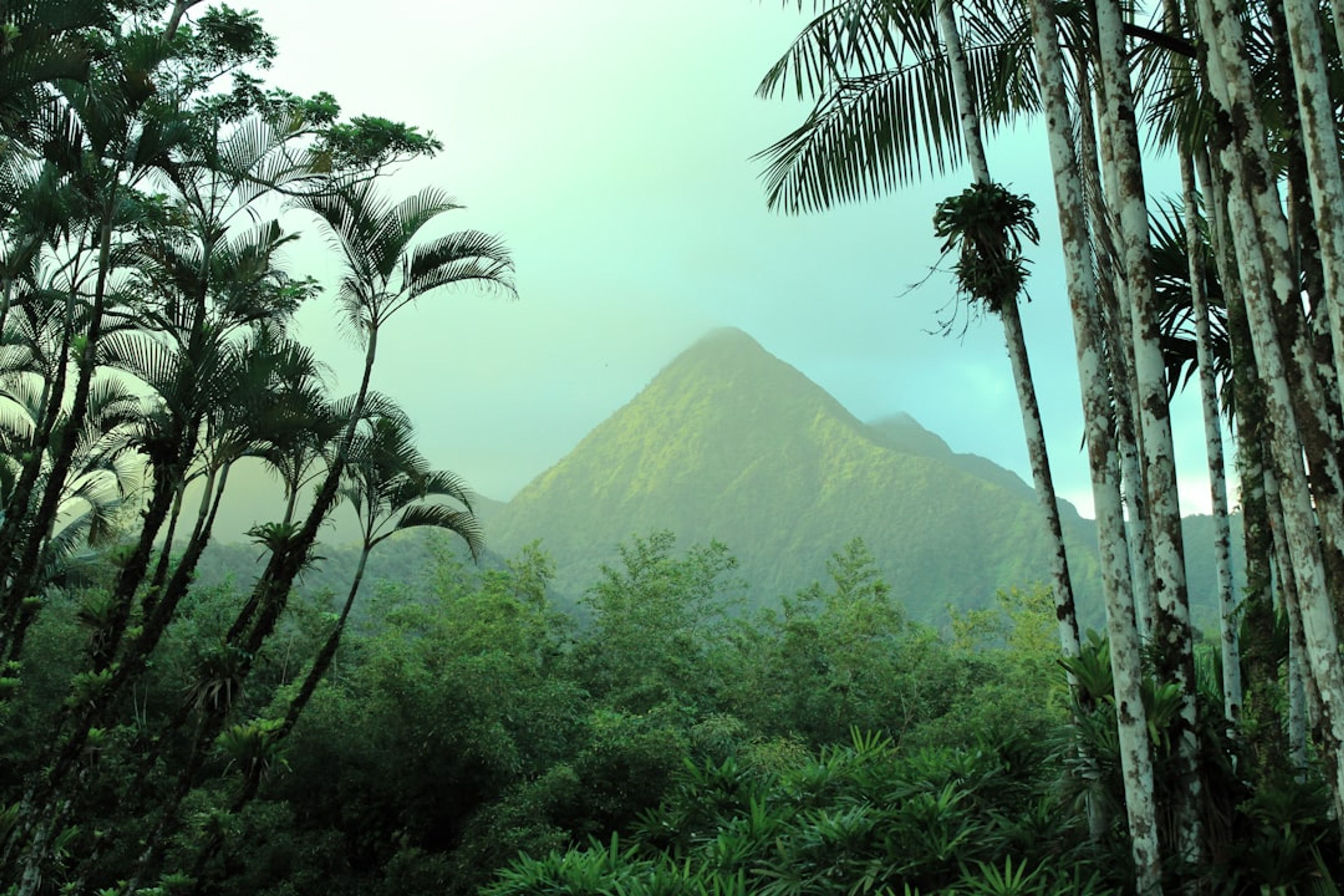
Martinique is legally part of France, which means euros, French road signs and a boulangerie in every village, laid over an unmistakably Caribbean island of rainforest and black volcanic sand. Mount Pelée dominates the north, its 1902 eruption having destroyed Saint-Pierre and killed 30,000 people in minutes; the ruins are still there. The south holds the pale beaches around Les Salines and Sainte-Anne. Martinique also produces rhum agricole distilled from fresh cane juice under a protected French appellation, and the food is one of the best arguments for visiting.
Capital
Fort-de-France
Population
~350,000
Area
1,128 km²
Time Zone
AST (UTC-4), no daylight saving
Currency
Euro (EUR), as an overseas department of France
Languages
French; Martinican Creole widely spoken, limited English
Main Airports
FDF (Martinique Aimé Césaire International)
Visa
An EU outermost region but outside Schengen, so a Schengen visa is not automatically valid; EU citizens enter freely and UK, US and Canadian visitors are visa-exempt
Best For
Rhum agricole, Mount Pelée hiking, beaches, French-Caribbean food
Typical Cost Level
Mid-range to Expensive
Get the latest deals, new destinations, and travel tips delivered straight to your inbox.
No spam, unsubscribe anytime.
Entry rules, stay length and passport validity by nationality.
EU citizens can enter freely with a national ID card, and UK, US, Canadian and Australian passport holders are visa-exempt for up to 90 days. The important catch is that Martinique is an EU outermost region but is not part of the Schengen Area, so a Schengen visa is not automatically valid here. Nationalities that require a visa need one specifically endorsed for the French overseas departments.
December to April is the dry season, known locally as carême, with warm sunshine, lower humidity and the calmest seas. Carnival in February is a major event with days of parades across the island. June to November is the wetter hivernage and overlaps hurricane season, with September and October the highest risk. Sargassum seaweed can affect the Atlantic-facing east coast, mainly from spring through summer, while the Caribbean-facing south stays cleaner.
It genuinely helps, more than on most Caribbean islands. Martinique receives mostly French visitors, so English is far less widely spoken than in Barbados or Saint Lucia, and outside larger hotels and cruise terminals you should expect French only. Signage, menus and ferry timetables are in French. A translation app and basic phrases will get you through comfortably, and Martinican Creole is used among locals alongside French.
Renting a car is essentially necessary to see the island properly, as public transport is limited and the best beaches, distilleries and the Mount Pelée trails are scattered. Roads are good French-standard tarmac and driving is on the right. Traffic around Fort-de-France is heavy at rush hour. A useful alternative for the south is the passenger ferry from Fort-de-France to Trois-Îlets and Anse Mitan, which avoids the drive around the bay.
On trip1, you can book hotels across Martinique and pay with over 120 cryptocurrencies including Bitcoin, Ethereum, and USDC. trip1 covers 3 million+ hotels in 190+ countries, making it easy to find and book accommodation with crypto.