Get up to €50 off your staySubscribe and get up to €50 off your next stay
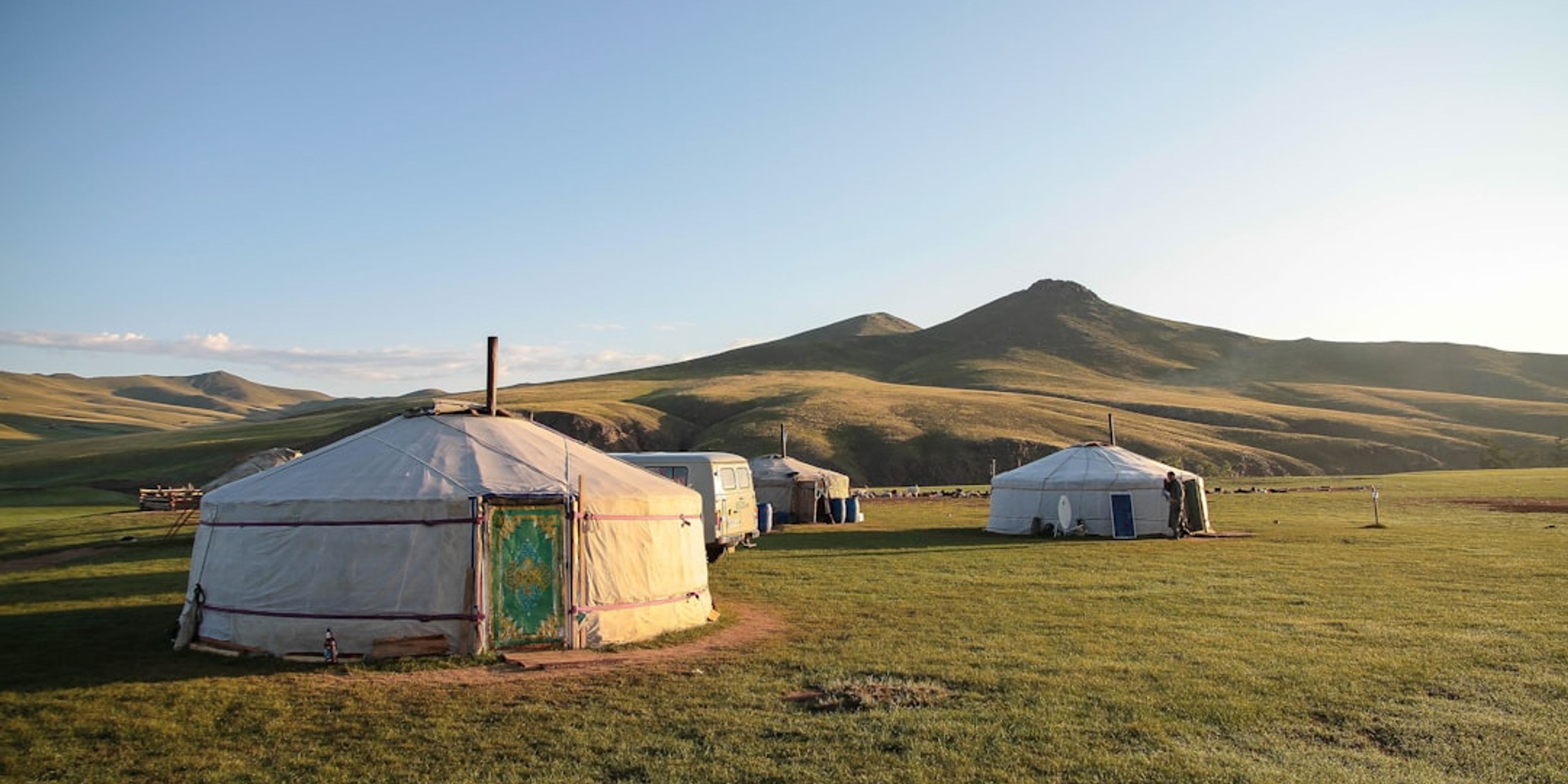
Browse and explore the best travel guides in Mongolia.
Mongolia is the least densely populated sovereign country on earth, with roughly two people per square kilometre and around a quarter of the population still living nomadically. The appeal is space on a scale that is hard to grasp until you are in it: the Gobi's sand dunes and flaming cliffs, the grasslands and lakes of the central steppe, the reindeer herders of the northern taiga, and eagle hunters in the Altai. Ulaanbaatar is the only real city, and most travel means long drives in Russian vans, nights in gers and horses instead of roads.
Capital
Ulaanbaatar
Population
~3.5 million
Area
1,564,110 km², the least densely populated country in the world
Time Zone
ULAT (UTC+8) in most of the country
Currency
Mongolian Tögrög (MNT)
Languages
Mongolian; Russian and English in Ulaanbaatar
Main Airports
UBN (Chinggis Khaan International, Ulaanbaatar)
Visa
Visa-free up to 30 days for 34 countries under a scheme currently extended to 2027; e-visa for others
Best For
Gobi desert, ger stays, horse riding, Naadam festival, eagle hunters
Typical Cost Level
Budget to Mid-range
Get the latest deals, new destinations, and travel tips delivered straight to your inbox.
No spam, unsubscribe anytime.
Citizens of 34 countries can currently enter Mongolia visa-free for up to 30 days under a scheme extended through 2027, covering most of the EU, the UK, Australia and New Zealand. US and Canadian passport holders have long-standing separate visa-free arrangements. Everyone else can apply for an e-visa online. Because this exemption list runs on fixed terms and has been extended year to year, confirm it still applies before you book.
June to September is the only practical season for most trips, with warm days, green steppe and passable dirt tracks. The Naadam festival in mid-July is the highlight of the calendar, featuring wrestling, archery and horse racing, and needs booking months ahead. September brings golden landscapes and fewer people. Winter is genuinely extreme, with temperatures below -30°C and Ulaanbaatar ranked the coldest capital on earth, though the Golden Eagle Festival in October and winter ger stays appeal to hardier travellers.
Almost all travel outside Ulaanbaatar is by organised tour with a driver and a Russian UAZ van or 4x4, because paved roads barely exist beyond the main routes and there is no address system on the steppe. Independent travel is possible but slow and requires real navigation skills. Domestic flights connect to the Gobi and western provinces, saving days of driving. Budget realistically: a Gobi loop involves 8 to 10 hours of rough driving on several days.
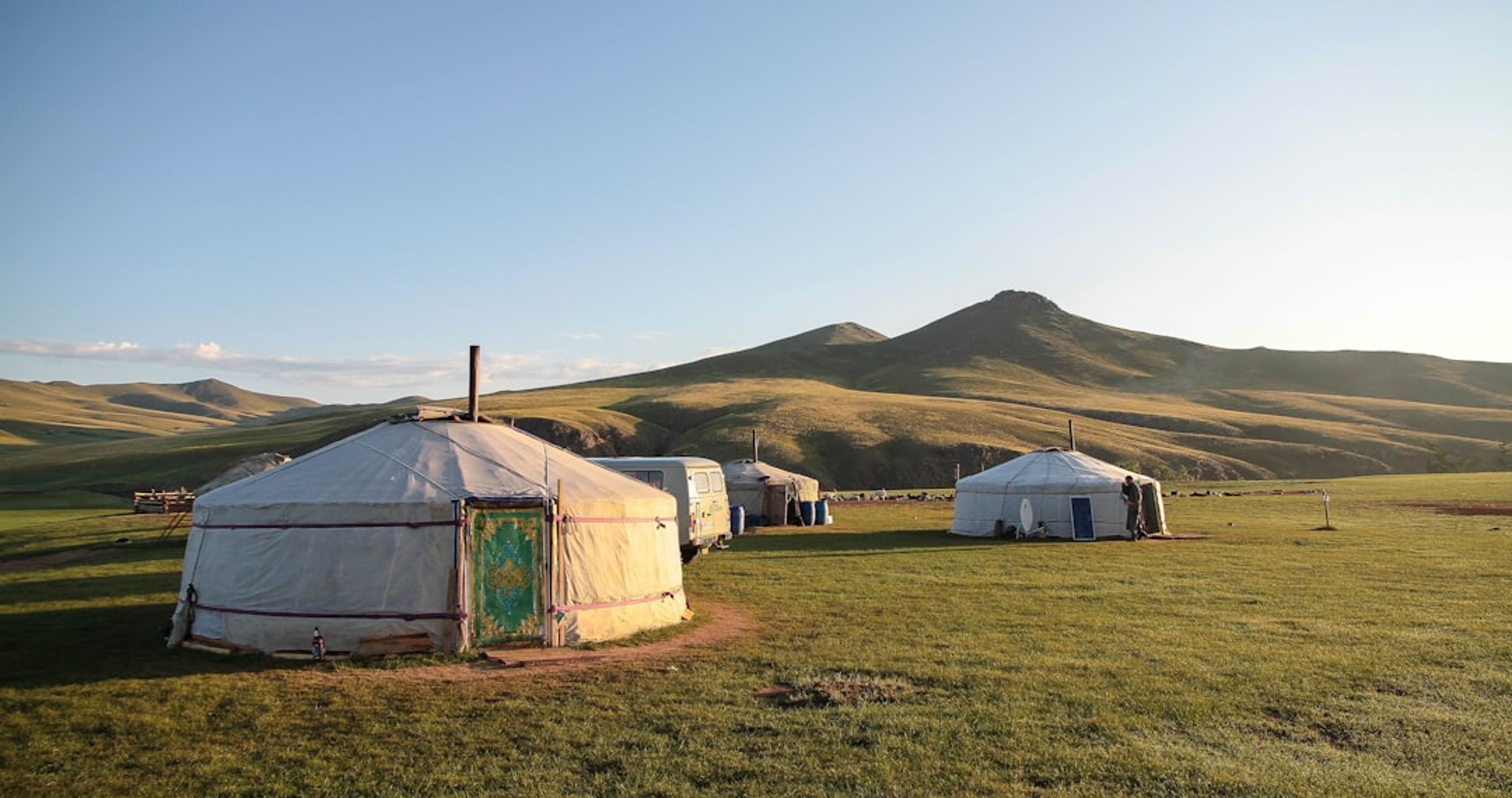
A ger is a felt-and-canvas round tent heated by a central wood or dung stove, and staying in one is the defining Mongolian experience. Tourist ger camps offer beds, shared shower blocks and cooked meals, while staying with a nomadic family is more basic, often without running water or electricity beyond a solar panel. Bring a head torch, wet wipes and warm layers, as nights are cold even in summer. There is a customary etiquette to observe, such as entering to the left and never stepping on the threshold.
Ten days to two weeks is realistic, because distances are enormous and driving days are long. A week only just covers Ulaanbaatar plus a short central loop to Terelj and Kharkhorin. Ten days allows a proper Gobi circuit taking in the Khongoryn Els dunes, the Flaming Cliffs and Yolyn Am gorge. Two weeks or more opens up Lake Khovsgol in the north or the Altai in the far west, both of which need serious travel time on their own.
On trip1, you can book hotels across Mongolia and pay with over 120 cryptocurrencies including Bitcoin, Ethereum, and USDC. trip1 covers 3 million+ hotels in 190+ countries, making it easy to find and book accommodation with crypto.
Entry rules, stay length and passport validity by nationality.