
Get up to €50 off your staySubscribe and get up to €50 off your next stay

Browse and explore the best travel guides in Namibia.
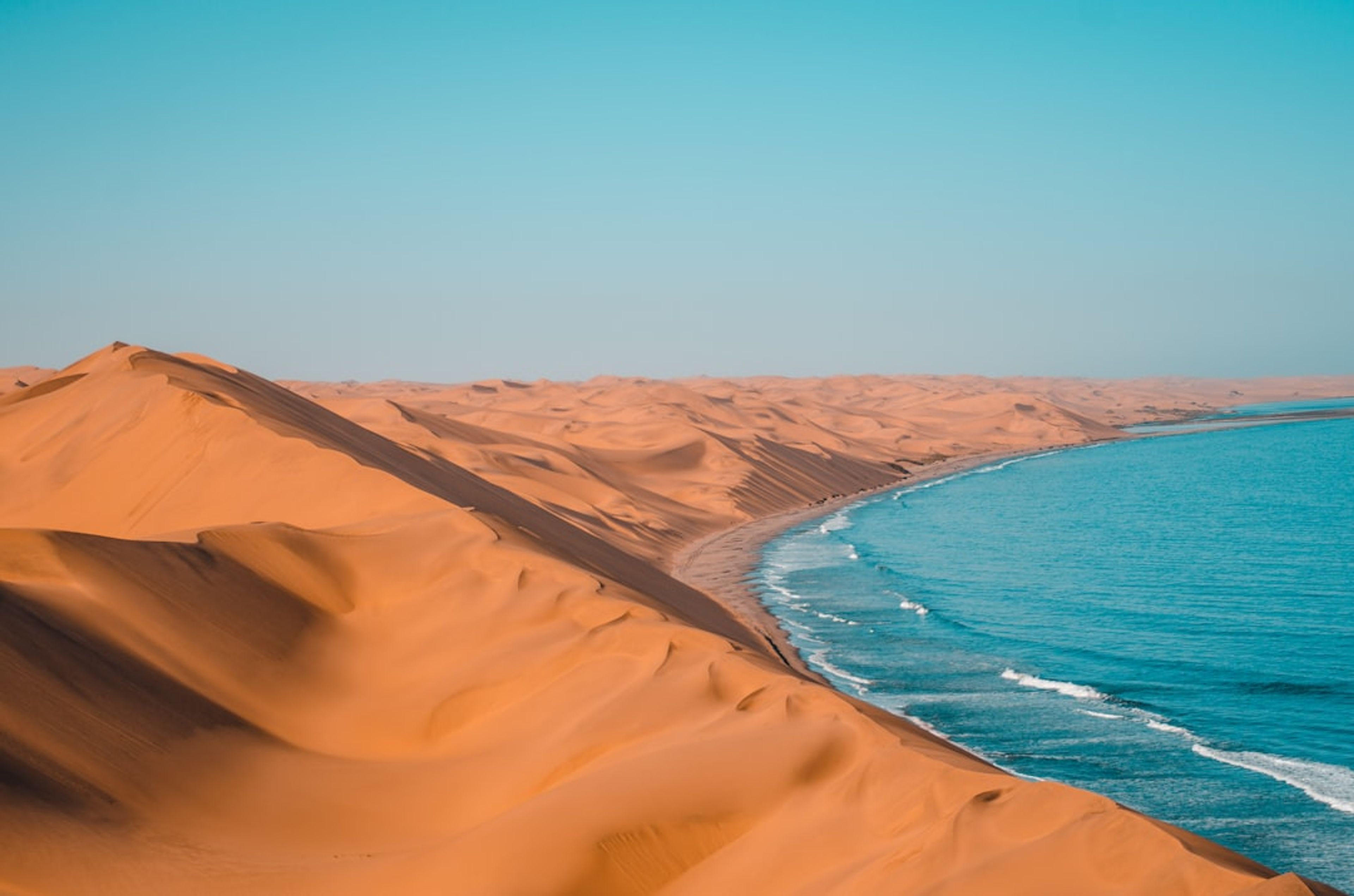
Namibia is emptier than almost anywhere else on earth, with under three million people spread across an area three times the size of the United Kingdom, and it is the classic African self-drive country. The rust-red dunes at Sossusvlei rise 300 metres above the dead camel-thorn trees of Deadvlei, Etosha's waterholes concentrate game around a vast salt pan, and the Skeleton Coast strands shipwrecks where the desert meets the cold Atlantic. Good gravel roads, German colonial architecture in Swakopmund and reliable dry weather make it unusually easy to travel independently.
Capital
Windhoek
Population
~2.6 million
Area
825,615 km²
Time Zone
CAT (UTC+2), no daylight saving
Currency
Namibian Dollar (NAD), pegged 1:1 to the South African Rand, which is also legal tender
Languages
English (official); Afrikaans, German and Oshiwambo widely spoken
Main Airports
WDH (Hosea Kutako International, Windhoek), WVB (Walvis Bay)
Visa
Since April 2025, 33 previously visa-free nationalities including the UK, US, Germany and France need a paid visa on arrival
Best For
Sossusvlei dunes, Etosha wildlife, self-drive road trips, Skeleton Coast
Typical Cost Level
Mid-range
Get the latest deals, new destinations, and travel tips delivered straight to your inbox.
No spam, unsubscribe anytime.
This changed in April 2025 and catches many travellers out. Namibia introduced a paid visa on arrival for 33 nationalities that previously entered visa-free, including the UK, US, Germany, France, Canada and Australia. The fee is payable on arrival in Namibian dollars or rand, and pre-application online is possible and recommended to avoid airport delays. Passports need six months of validity and blank pages. Check the current position before travelling, as the list has been revised more than once.
May to October is the dry season and the best period overall, with clear skies, cool nights and excellent game viewing at Etosha's waterholes as animals concentrate around scarce water. July and August are peak months and book out early. November to April is hotter with occasional dramatic thunderstorms, but the desert greens up, birdlife improves and rates drop. Note that desert nights in winter can fall below freezing, which surprises people packing only for heat.
Yes, and self-driving is how most visitors experience Namibia. Roads are well signposted, traffic is minimal and the main routes are good gravel, though a 4x4 with two spare tyres is strongly advised. Punctures are the single most common problem: keep speeds down on gravel, around 80 km/h, and never brake hard or oversteer on loose surfaces. Distances are long and fuel stations sparse, so fill up whenever you can and carry water. Avoid driving after dark because of wildlife.
Twelve to fourteen days suits the classic loop, because driving days are long. A typical route runs Windhoek to Sossusvlei for two nights, on to Swakopmund for two, then Damaraland for two and Etosha for three, before returning to Windhoek. Ten days is possible but rushed. Three weeks lets you add the Caprivi Strip, Fish River Canyon in the far south or the remote Kaokoveld. Book Sossusvlei and Etosha accommodation months ahead for peak season.
The Namibian Dollar (NAD) is the currency, pegged one-to-one with the South African Rand, and rand is accepted everywhere in Namibia as legal tender. Namibian dollars are not accepted in South Africa, so spend or change them before you leave. Cards work in towns, lodges and supermarkets, but carry cash for fuel stations in remote areas, park entry, tips and craft markets, where card facilities are unreliable or absent.
On trip1, you can book hotels across Namibia and pay with over 120 cryptocurrencies including Bitcoin, Ethereum, and USDC. trip1 covers 3 million+ hotels in 190+ countries, making it easy to find and book accommodation with crypto.
Entry rules, stay length and passport validity by nationality.