
Get up to €50 off your staySubscribe and get up to €50 off your next stay
Browse and explore the best travel guides in Uzbekistan.
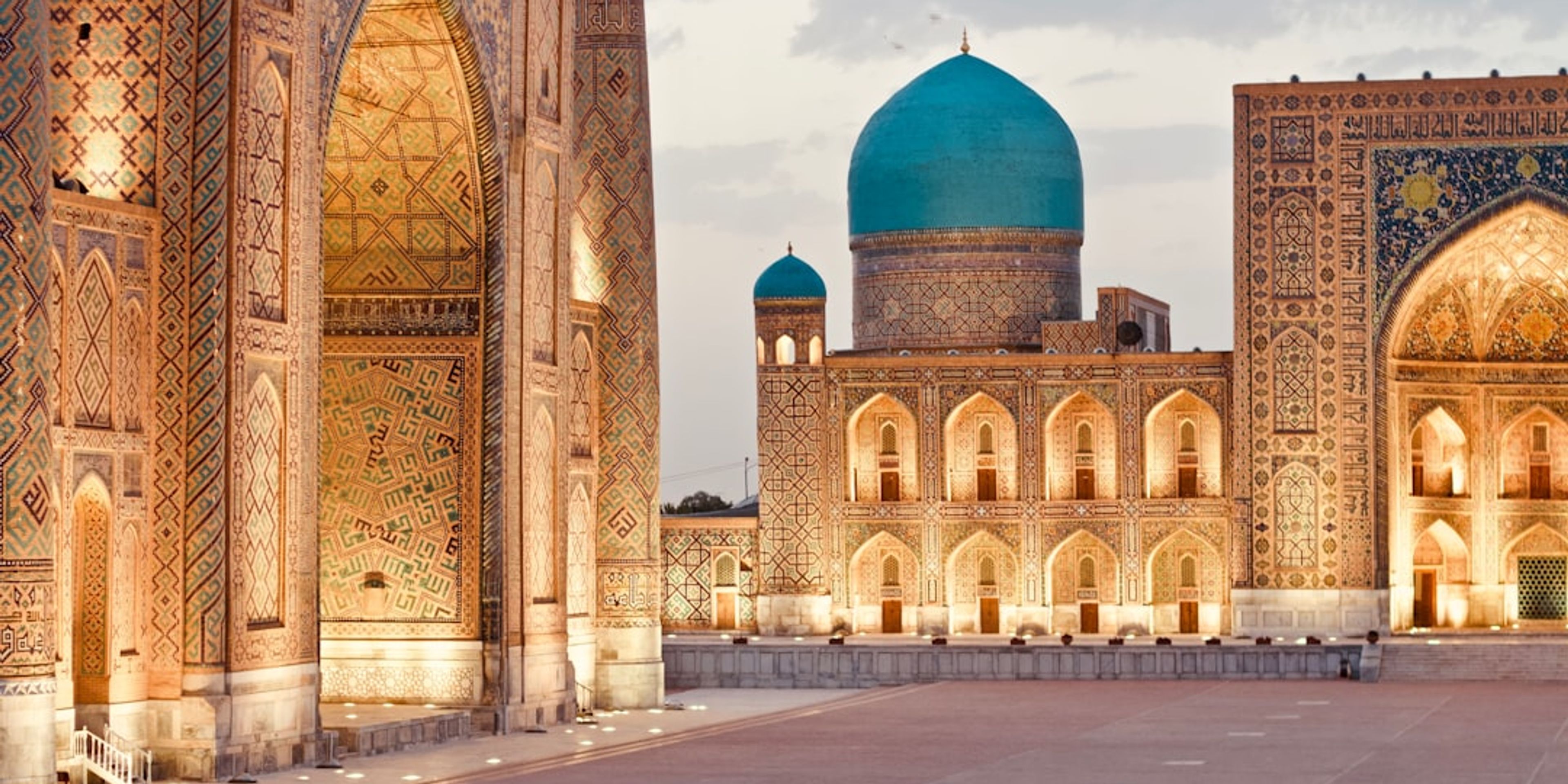
Uzbekistan holds the greatest concentration of Silk Road architecture anywhere, and the three cities do the heavy lifting: Samarkand's Registan, a square framed by three tilted madrasas covered in blue majolica; Bukhara's still-lived-in old town of trading domes, minarets and a working caravanserai; and Khiva's walled inner city of Ichan Kala, preserved almost whole. The country has opened up dramatically over the past decade, with visa-free entry for most of Europe, a high-speed rail line linking the main sites, and prices that remain very low.
Capital
Tashkent
Population
~37 million
Area
448,978 km²
Time Zone
UZT (UTC+5), no daylight saving
Currency
Uzbekistani Som (UZS)
Languages
Uzbek; Russian very widely spoken, English growing in tourism
Main Airports
TAS (Tashkent), SKD (Samarkand), BHK (Bukhara), UGC (Urgench, for Khiva)
Visa
Visa-free up to 30 days for 90+ nationalities including EU, UK and Japan; e-visa for US, Canada and Australia
Best For
Silk Road architecture, Samarkand, Bukhara, Khiva, plov and bazaars
Typical Cost Level
Budget
Get the latest deals, new destinations, and travel tips delivered straight to your inbox.
No spam, unsubscribe anytime.
Entry rules, stay length and passport validity by nationality.
Citizens of more than 90 countries can enter Uzbekistan visa-free for up to 30 days, including all EU states, the UK, Japan and South Korea. US, Canadian and Australian passport holders need an e-visa, which is applied for online, costs around USD 20 and is usually issued within two working days. The old requirement for a letter of invitation has been abolished. Keep hotel registration slips, as they can occasionally be requested on departure.
April to early June and September to October are the ideal windows, with warm days, cool evenings and comfortable conditions for walking around Samarkand and Bukhara. Summer is punishing, with July and August regularly above 40°C in the desert cities and little shade among the monuments. Winter is cold but atmospheric, with snow occasionally dusting the tiled domes and very few other visitors. Navruz in late March is a lively time to arrive.
The Afrosiyob high-speed train is the best way to link the main cities, covering Tashkent to Samarkand in about two hours and continuing to Bukhara. Book several days ahead, as seats sell out in peak season. Khiva is further west and reached by a slower overnight train to Urgench or a domestic flight. Within cities, taxis are cheap and the Yandex Go app works well; Tashkent's metro is worth riding for the ornate Soviet-era station architecture alone.
The Uzbekistani Som (UZS) is the currency, and because the largest notes are relatively small in value you will end up carrying thick bundles of cash. Cards are increasingly accepted in Tashkent and tourist hotels but cash remains essential for bazaars, taxis, small restaurants and rural areas. The currency was liberalised in 2017, so the old black market has largely disappeared and banks now give fair rates. Uzbekistan is very inexpensive for food, transport and accommodation.
Eight to ten days covers the classic Silk Road route properly. Allow two days in Tashkent, two to three in Samarkand for the Registan, Shah-i-Zinda and Gur-e-Amir, two to three in Bukhara, and two in Khiva. A rushed five-day trip can hit Samarkand and Bukhara only. Add days for the Fergana Valley's ceramics and silk workshops, or the Aral Sea ship graveyard at Moynaq, which is a long haul from anywhere.
On trip1, you can book hotels across Uzbekistan and pay with over 120 cryptocurrencies including Bitcoin, Ethereum, and USDC. trip1 covers 3 million+ hotels in 190+ countries, making it easy to find and book accommodation with crypto.