
Get up to €50 off your staySubscribe and get up to €50 off your next stay

Browse and explore the best travel guides in Curacao.
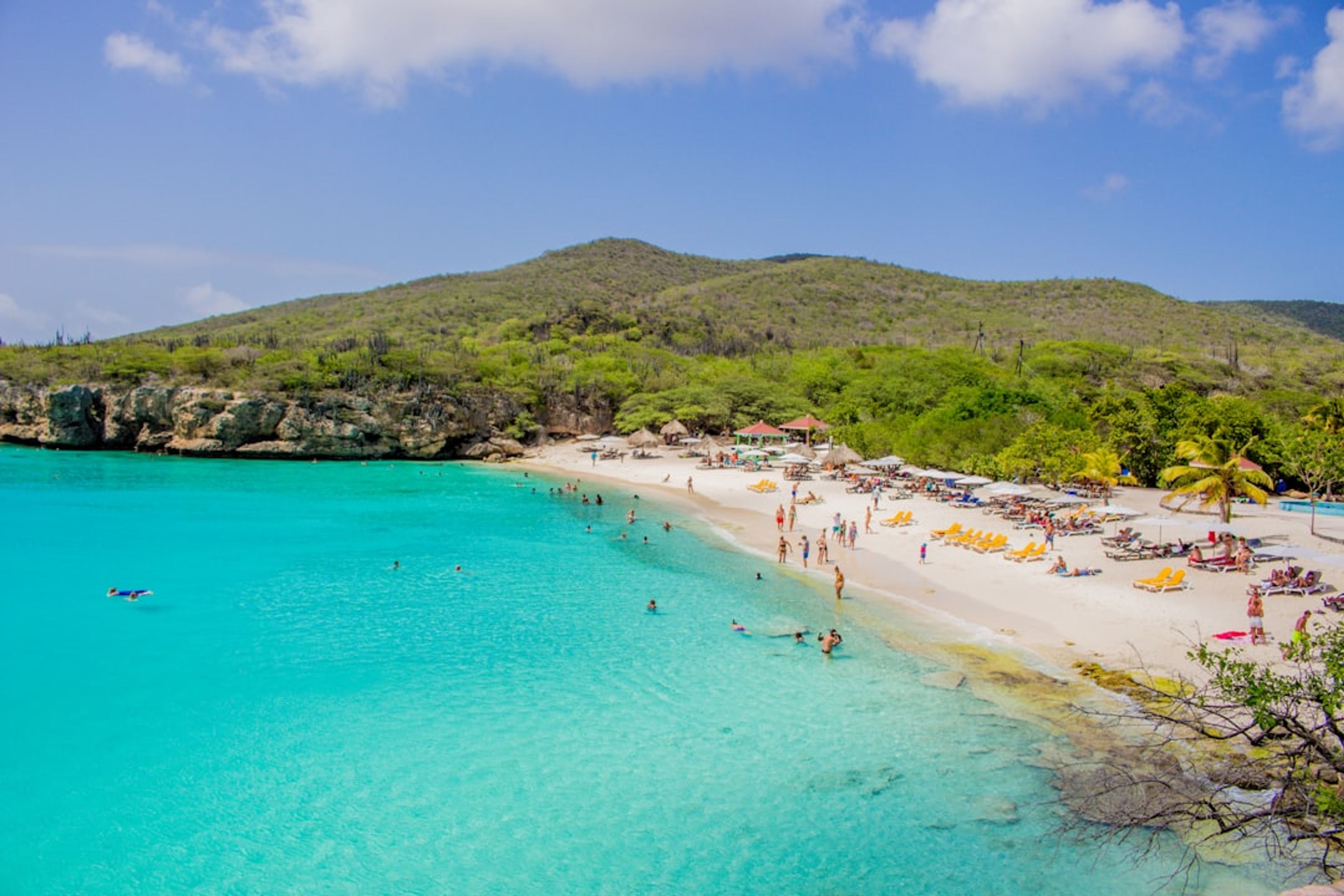
Curacao's calling card is Willemstad, a UNESCO World Heritage waterfront of Dutch gabled townhouses painted in sherbet colours, split by a harbour channel crossed on a floating pontoon bridge that swings open for ships. Beyond the capital, the island's western end is a string of small coves tucked between limestone cliffs, with reef within swimming distance of shore that makes Curacao one of the Caribbean's best and least crowded shore-diving destinations. Like Aruba and Bonaire it sits outside the hurricane belt, so the weather is dependable year-round.

Get the latest deals, new destinations, and travel tips delivered straight to your inbox.
No spam, unsubscribe anytime.
Entry rules, stay length and passport validity by nationality.
EU, UK, US and Canadian passport holders do not need a visa and typically receive up to 30 days on arrival, extendable to 90. Curacao is a constituent country of the Kingdom of the Netherlands but sits outside the Schengen Area, so a Schengen visa does not apply here. All arrivals must complete an online immigration card before travelling, and you will need proof of onward travel and accommodation.
Curacao is a year-round destination, sitting outside the hurricane belt with warm, dry weather and temperatures around 28 to 31°C throughout. October to December sees slightly more rain, though showers are brief. High season runs December to April with the highest prices, while May to November is quieter and better value with essentially the same conditions. Carnival, running from January through to the Grand Parade before Lent, is the island's biggest event.
Curacao is one of the Caribbean's best shore-diving destinations, with fringing reef often just 10 to 30 metres from the beach and a drop-off close behind it. That means you can dive without a boat, at your own pace, from dozens of marked entry points along the leeward coast. Highlights include the Superior Producer wreck, the Mushroom Forest and the protected Curacao Marine Park in the east. Visibility is consistently good and the water stays around 27°C year-round.
The Caribbean Guilder (XCG) became the official currency in 2025, replacing the Netherlands Antillean guilder at the same value and shared with Sint Maarten. In practice US dollars are accepted almost everywhere at a rate of roughly 1.79 guilders to the dollar, and cards work widely in Willemstad and resort areas. Euros are less useful than you might expect given the Dutch connection. Carry some cash for beach kiosks and small local restaurants.
On trip1, you can book hotels across Curacao and pay with over 120 cryptocurrencies including Bitcoin, Ethereum, and USDC. trip1 covers 3 million+ hotels in 190+ countries, making it easy to find and book accommodation with crypto.