
Get up to €50 off your staySubscribe and get up to €50 off your next stay
Browse and explore the best travel guides in Bora Bora.
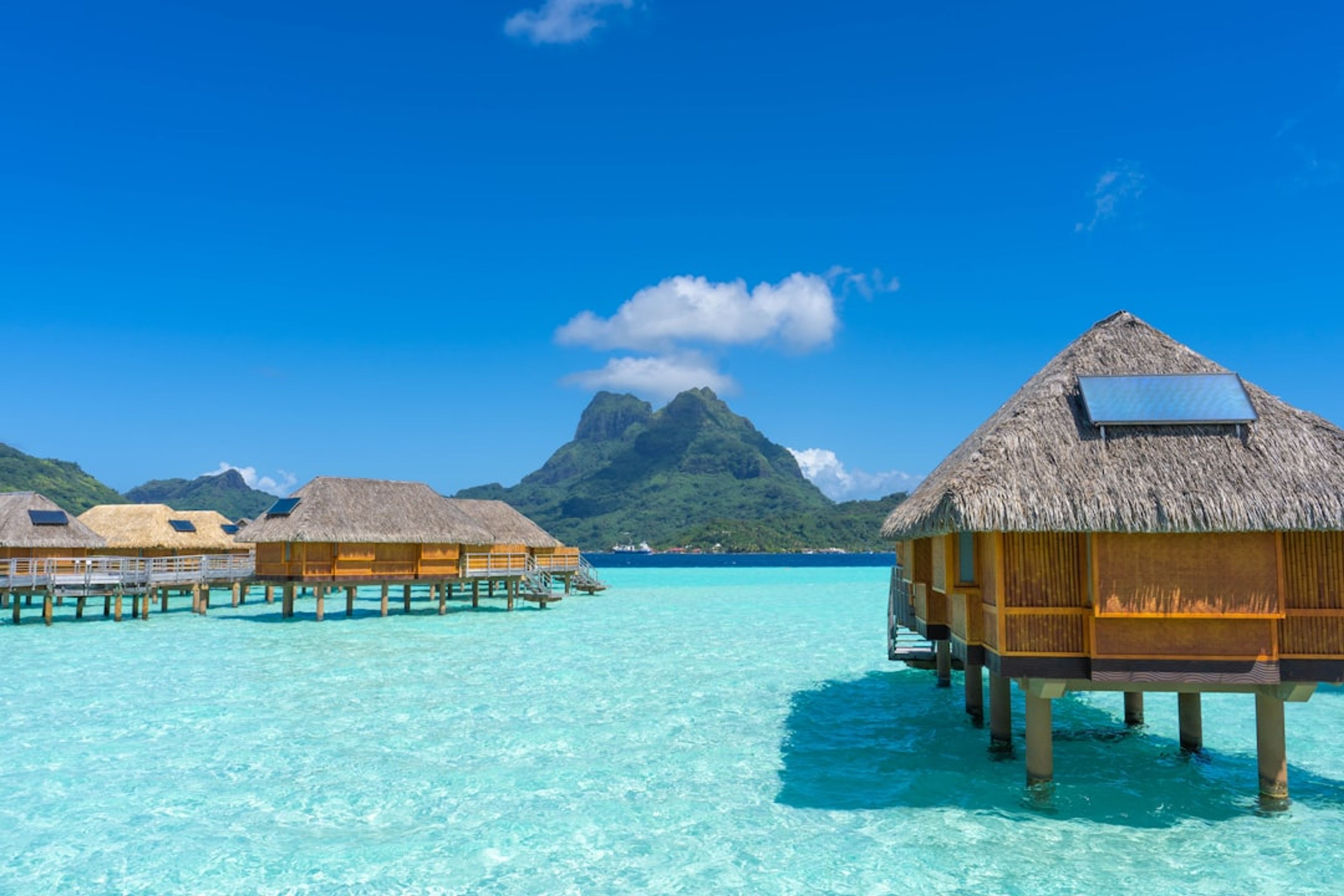
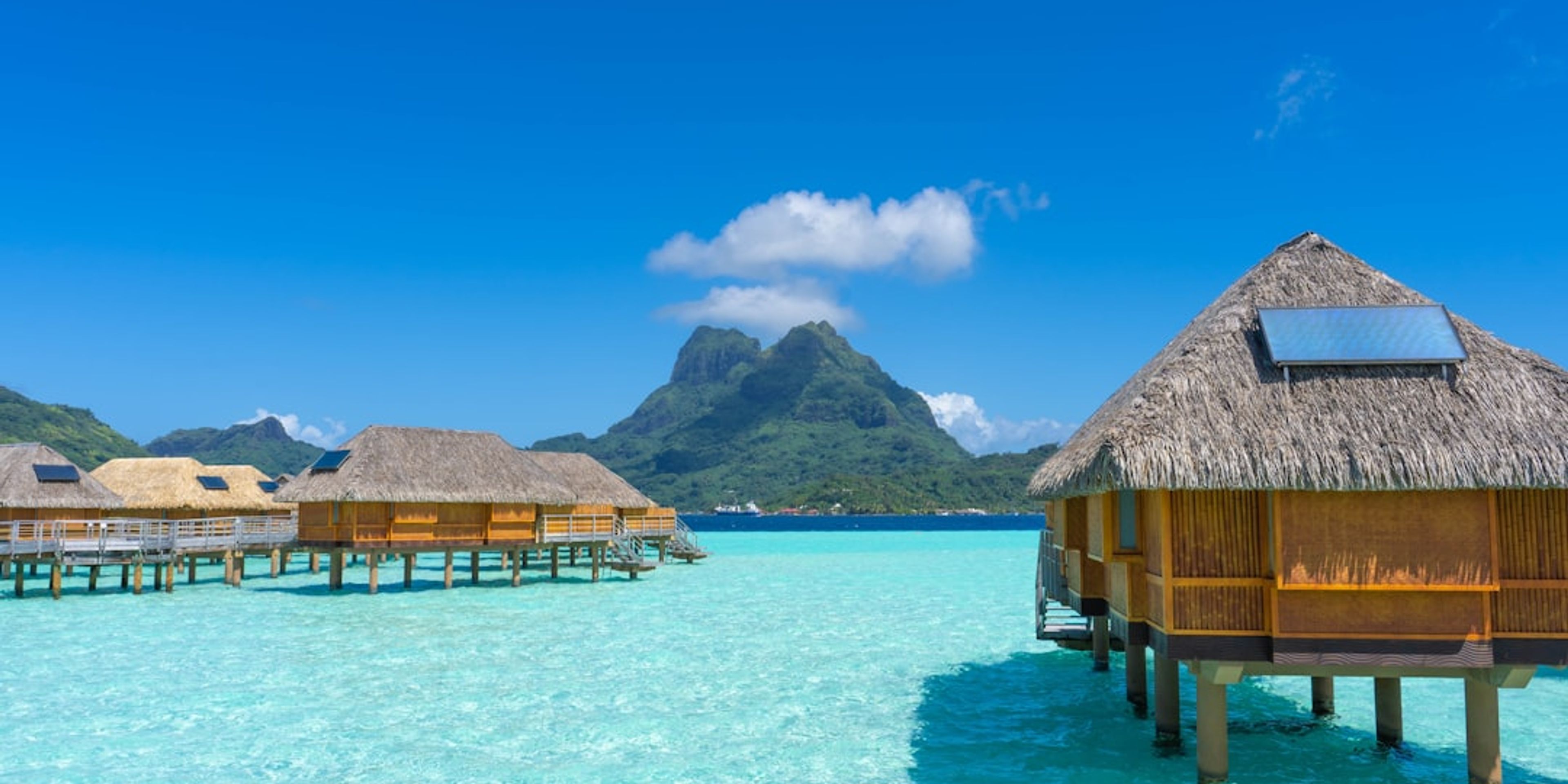
Bora Bora is the image most people carry of the South Pacific: a sunken volcano whose twin peaks, Otemanu and Pahia, rise 727 metres from the centre of a lagoon so vivid it looks retouched. A near-continuous ring of coral motu encircles that lagoon, and it is on these low sand islets that the overwater bungalow was effectively invented in the 1960s.
The island itself is small, about 30 km to circle by road, with the main village of Vaitape holding the shops, banks and pearl dealers. Most visitors stay on a motu and cross to the main island by boat, which means the lagoon functions as the road network. Snorkelling with rays and blacktip reef sharks, lagoon tours and diving on the outer reef fill most itineraries.
Bora Bora is expensive by any standard, and there is no realistic budget version of the overwater experience. Family-run pensions on the main island cost a fraction of the resorts and give a more grounded sense of Polynesian life, with the same lagoon a few steps away.
Country
French Polynesia
Region
Leeward Islands, Society Islands archipelago
Population
~10,600
Elevation
0-727 m at the summit of Mount Otemanu
Time Zone
Tahiti Time (UTC-10), no daylight saving
Currency
CFP Franc (XPF), pegged to the Euro
Language
French and Tahitian; English widely spoken in resorts
Nearest Airport
BOB (Bora Bora Motu Mute), a 50-minute flight from Tahiti (PPT)
Airport to City Centre
Free public boat shuttle to Vaitape in ~15 min; resorts run their own boat transfers
Typical Cost Level
Expensive
Transport Pass
None; the island uses rental cars, bicycles, scooters and boat shuttles
Spring (Mar-May)
24-30°C, end of the wet season, becoming drier through May
Summer (Jun-Aug)
22-28°C, the dry, cooler season and peak travel period
Autumn (Sep-Nov)
23-29°C, dry and less crowded, good value
Winter (Dec-Feb)
24-31°C, hot, humid and the wettest months
Get the latest deals, new destinations, and travel tips delivered straight to your inbox.
No spam, unsubscribe anytime.
May to October is the dry season and the best time to visit, with lower humidity, clear lagoon visibility and comfortable temperatures around 25°C. July and August are peak months with the highest rates. November to April is the wet season, hotter and more humid with heavy but usually short downpours, and it carries a small cyclone risk. September, October and May are the sweet spots for good weather at slightly lower prices.
Bora Bora's airport sits on its own islet, Motu Mute, so every arrival continues by boat. If you are staying at a resort, its own boat meets your flight and takes you directly to the property, usually 10 to 30 minutes depending on location. If you are staying on the main island, a free public shuttle boat runs to Vaitape in about 15 minutes. There is no road from the airport, so confirm your transfer with your accommodation before arriving.
All routes go through Tahiti. Fly into Faa'a International (PPT) in Papeete on a long-haul service, then take a 50-minute Air Tahiti domestic flight to Bora Bora. Book the domestic leg early, as flights fill in peak season and schedules are limited. Allow a comfortable connection or an overnight in Tahiti, because most long-haul flights arrive late at night and the first Bora Bora departures are in the morning. A slow inter-island ferry also runs but takes many hours.
Four to five nights is the sweet spot. That allows a full-day lagoon tour with snorkelling among rays and reef sharks, a circle-island trip or 4x4 excursion to the wartime gun emplacements, a diving day on the outer reef, and genuine downtime in your bungalow, which is largely the point. Fewer than three nights is dominated by transfers given how far you have travelled. Many visitors pair Bora Bora with a few nights on Moorea or a Tuamotu atoll.
Bora Bora will never be cheap, but it is more flexible than its reputation suggests. Family-run pensions on the main island cost a small fraction of resort rates and put you closer to everyday Polynesian life. Matira Beach is public and one of the finest beaches in the Pacific, costing nothing to use. Self-catering from the Vaitape supermarkets avoids resort dining prices, and shared lagoon tours are far cheaper than private charters. Renting a bicycle to circle the island is inexpensive and enjoyable.
Bora Bora is very safe, with negligible crime and a small, close-knit population. The realistic hazards are all in the water: strong currents in the reef passes, stonefish and sea urchins on the shallow lagoon floor, which is why reef shoes are worth wearing, and sunburn amplified by reflection off the water. Snorkelling with blacktip reef sharks and rays is a standard excursion and safe when done with a guide. Medical facilities are basic, with serious cases transferred to Tahiti.
On trip1, you can book hotels across Bora Bora and pay with over 120 cryptocurrencies including Bitcoin, Ethereum, and USDC. trip1 covers 3 million+ hotels in 190+ countries, making it easy to find and book accommodation with crypto.