Get up to €50 off your staySubscribe and get up to €50 off your next stay
Browse and explore the best travel guides in Oslo.
Oslo, Norway's capital, sits at the head of the Oslofjord, surrounded by forested hills and islands. It is a compact, green city where you can visit world-class museums in the morning and be swimming in the fjord or hiking in the forest by afternoon.
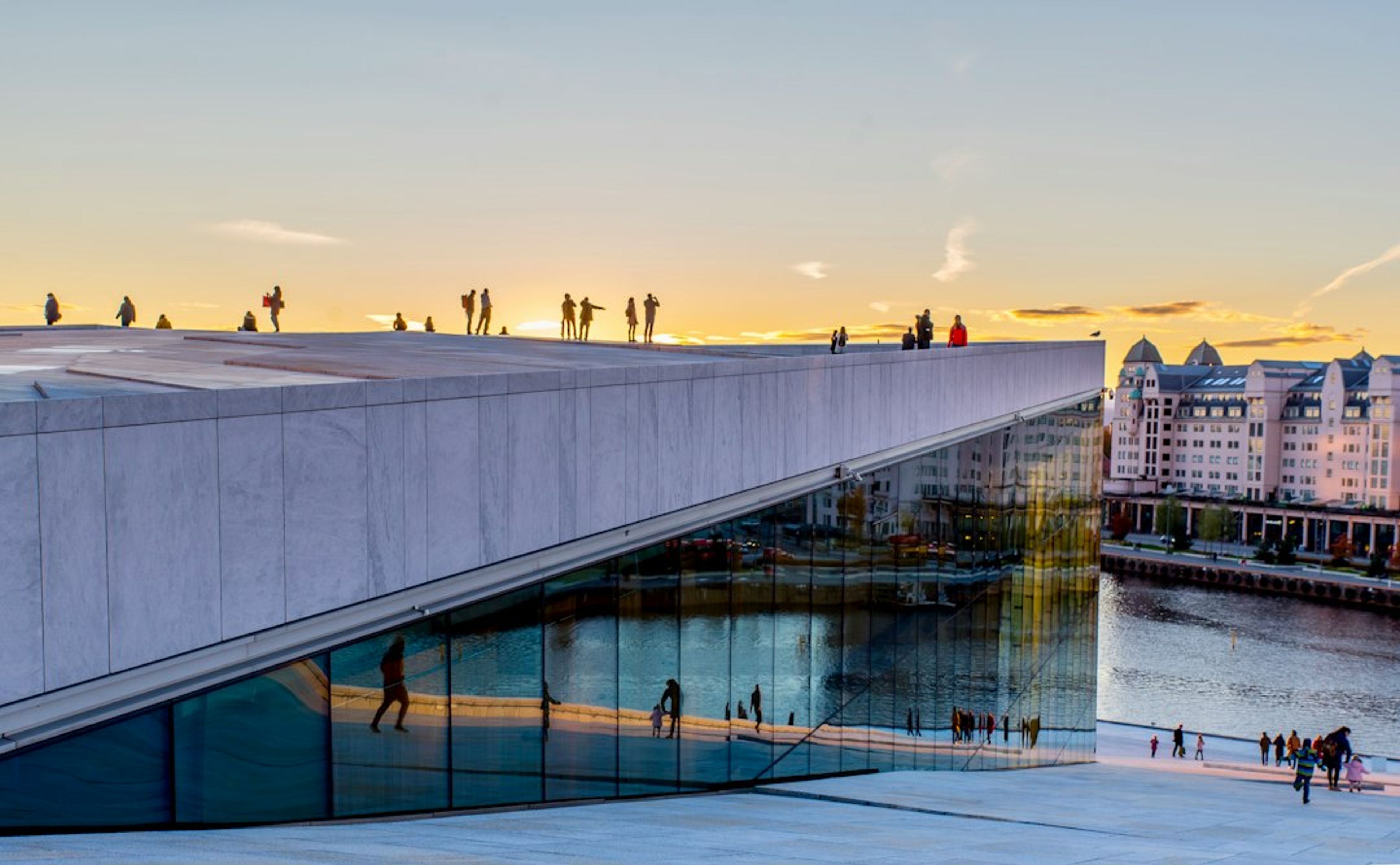
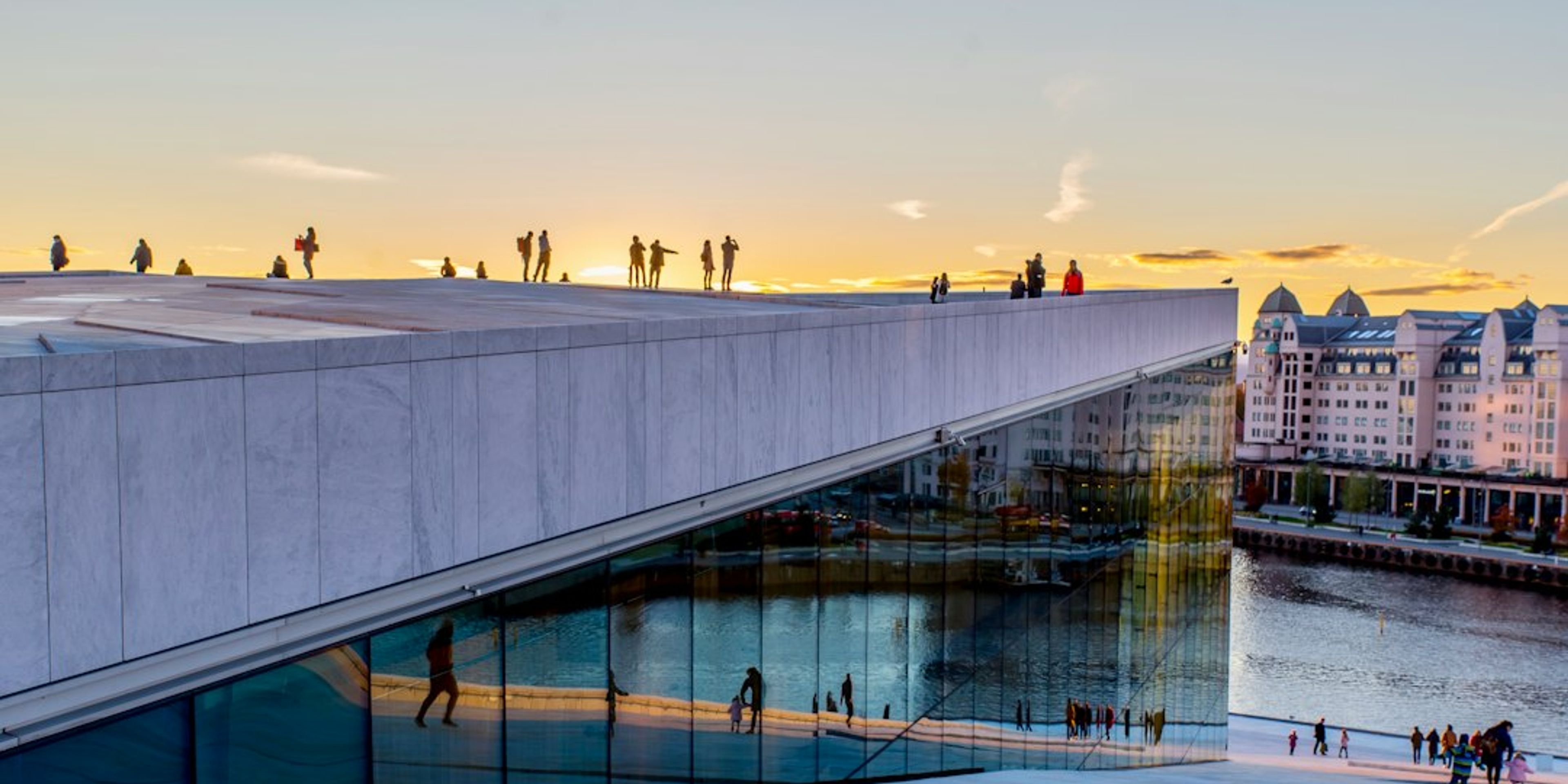
The waterfront has been transformed in recent years. You can walk on the sloping marble roof of the Opera House, see The Scream at the MUNCH museum and explore the vast National Museum. Vigeland Park displays more than 200 sculptures, Akershus Fortress guards the harbour, and the Bygdøy peninsula holds museums dedicated to polar exploration, the Kon-Tiki expedition and Norwegian folk life.
Oslo is expensive, but excellent public transport, free parks and walkable neighbourhoods such as Grünerløkka and Aker Brygge make it easy to enjoy. The Holmenkollen ski jump, floating saunas and ferries to the fjord islands show off the city's love of the outdoors in every season.
Country
Norway
Region
Oslo (capital), Eastern Norway
Population
~720,000 (city), ~1.1 million metro
Elevation
~23 m above sea level
Time Zone
CET (UTC+1), CEST (UTC+2) in summer
Currency
Norwegian Krone (NOK)
Language
Norwegian (English widely spoken)
Nearest Airport
OSL (Oslo Gardermoen), ~50 km
Airport to City Centre
~20 min by Flytoget airport express train
Typical Cost Level
High
Transport Pass
Ruter tickets via app; Oslo Pass (transport and museums)
Spring (Mar-May)
-3 to 16°C
Summer (Jun-Aug)
12-22°C
Autumn (Sep-Nov)
1-15°C
Winter (Dec-Feb)
-7 to 1°C

Get the latest deals, new destinations, and travel tips delivered straight to your inbox.
No spam, unsubscribe anytime.
May to September is the best time to visit Oslo, with long days, outdoor dining and island-hopping on the fjord. June and July bring near-endless daylight. Winter is cold and dark but offers skiing in the forests above the city and cosy Christmas markets.
The Flytoget airport express train is the fastest way from Oslo Airport Gardermoen to the city centre, reaching Oslo Central Station in about 20 minutes. Regional Vy trains take a few minutes longer and cost less. A taxi is expensive and takes 40-50 minutes.
You do not need a car in Oslo. The metro, trams, buses and local ferries are all covered by the same Ruter tickets, which you can buy in the Ruter app. Much of the centre and the waterfront is easy to walk, and city bikes are widely available.
Two to three days is ideal for Oslo. That covers the Opera House, MUNCH, the National Museum, Vigeland Park and the Bygdøy museums. Add a day for a fjord cruise or hiking in Nordmarka.
Yes, Oslo is a safe city for tourists. Violent crime against visitors is rare. Watch for pickpockets around Oslo Central Station and on busy shopping streets, and take normal care late at night.
On trip1, you can book hotels across Oslo and pay with over 50 cryptocurrencies including Bitcoin, Ethereum, and USDC. trip1 covers 3 million+ hotels in 190+ countries, making it easy to find and book accommodation with crypto.
Sentrum, around Karl Johans gate, is the most convenient area to stay in Oslo. Aker Brygge and Tjuvholmen offer waterfront dining and modern hotels, Bjørvika is home to the Opera House and MUNCH, Grünerløkka is the hip district for cafes and vintage shops, and Frogner is elegant and residential.
The Oslo Pass gives free public transport and entry to most major museums for 24, 48 or 72 hours. It is worth buying if you plan to visit several paid museums in a short time, especially on Bygdøy. If you mainly want to walk and see free sights like the Opera House roof and Vigeland Park, a Ruter travel pass alone may be cheaper.
Entry rules, stay length and passport validity by nationality.