
Get up to €50 off your staySubscribe and get up to €50 off your next stay
Browse and explore the best travel guides in Pamukkale.
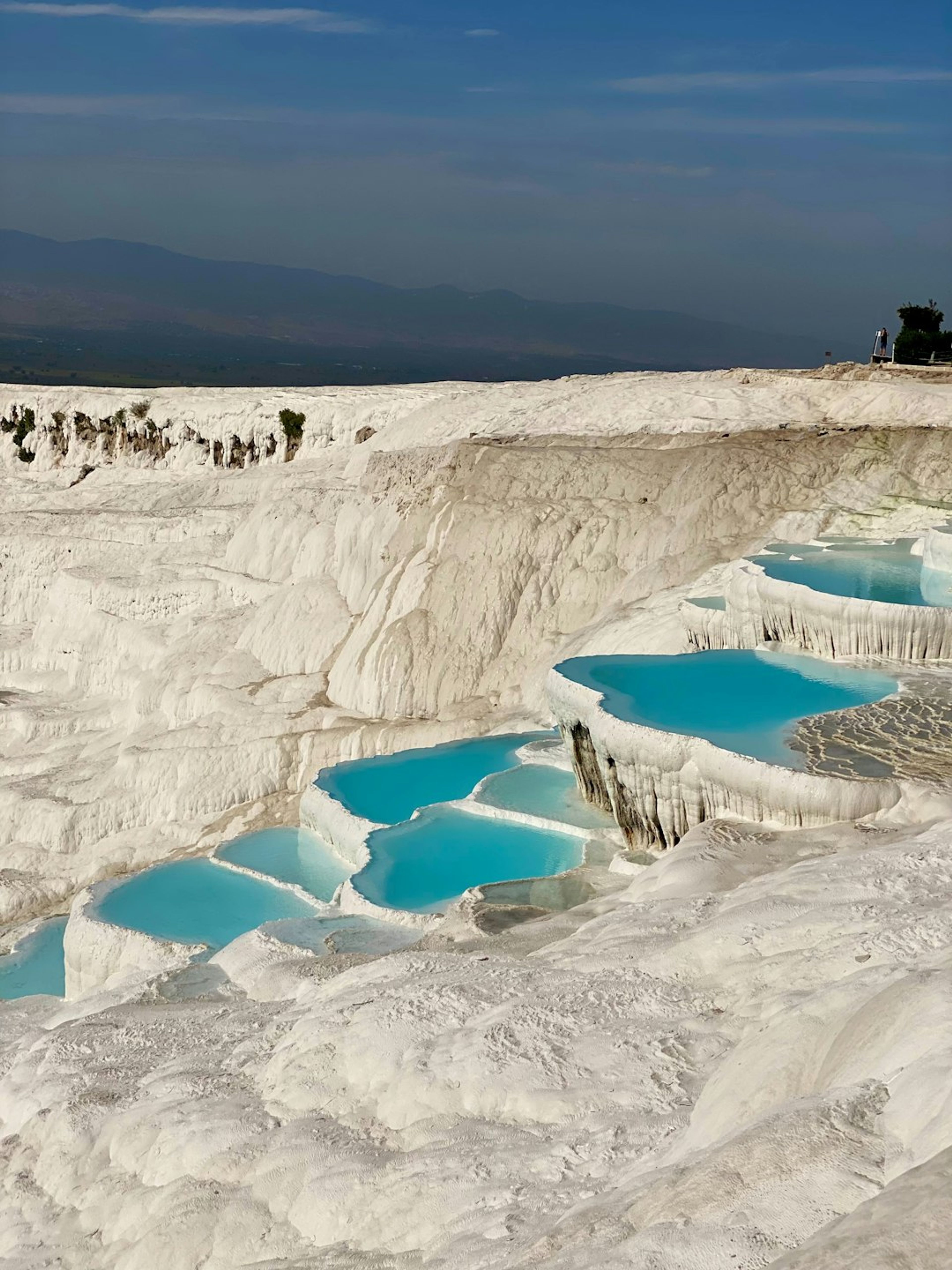
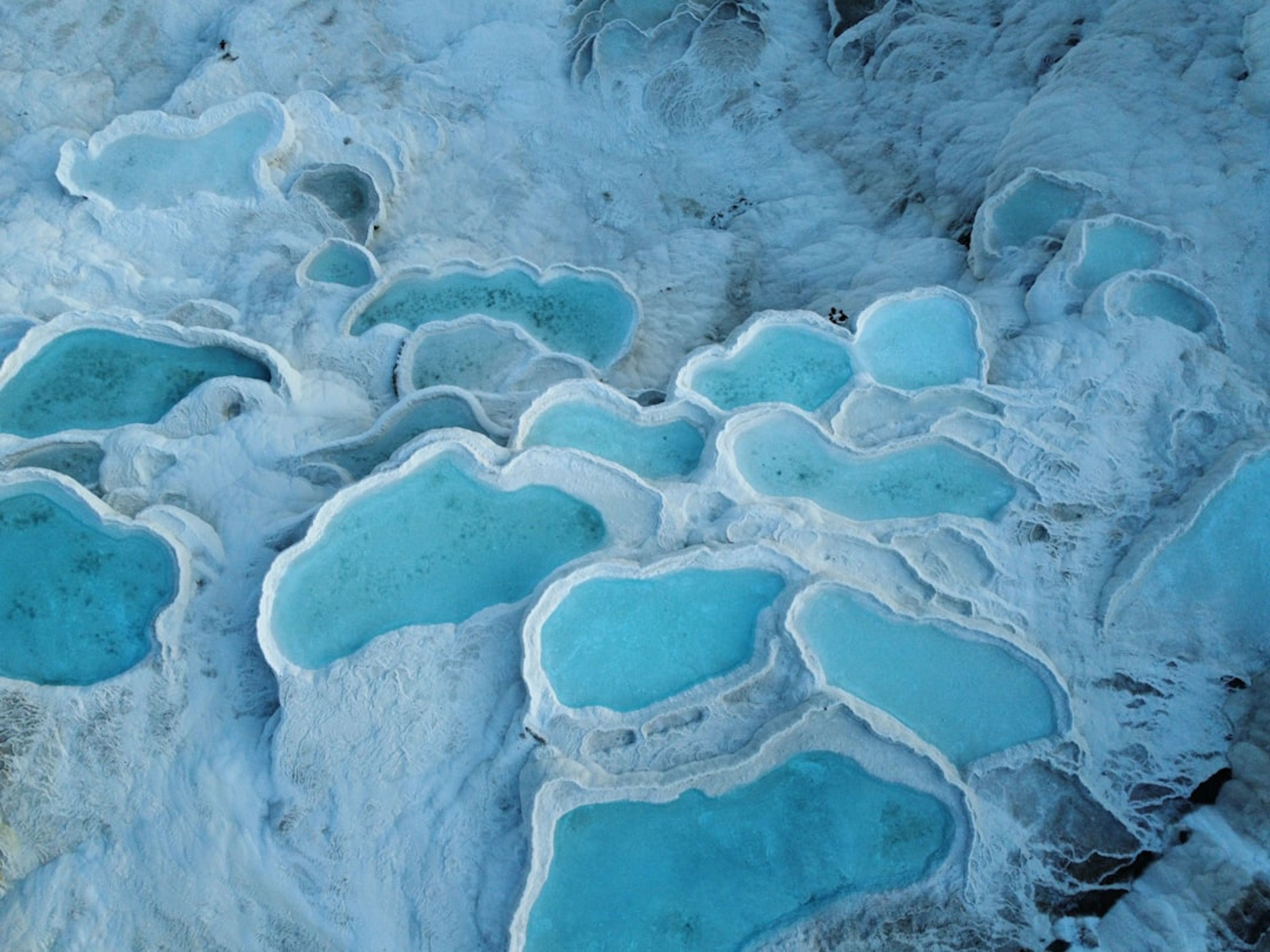
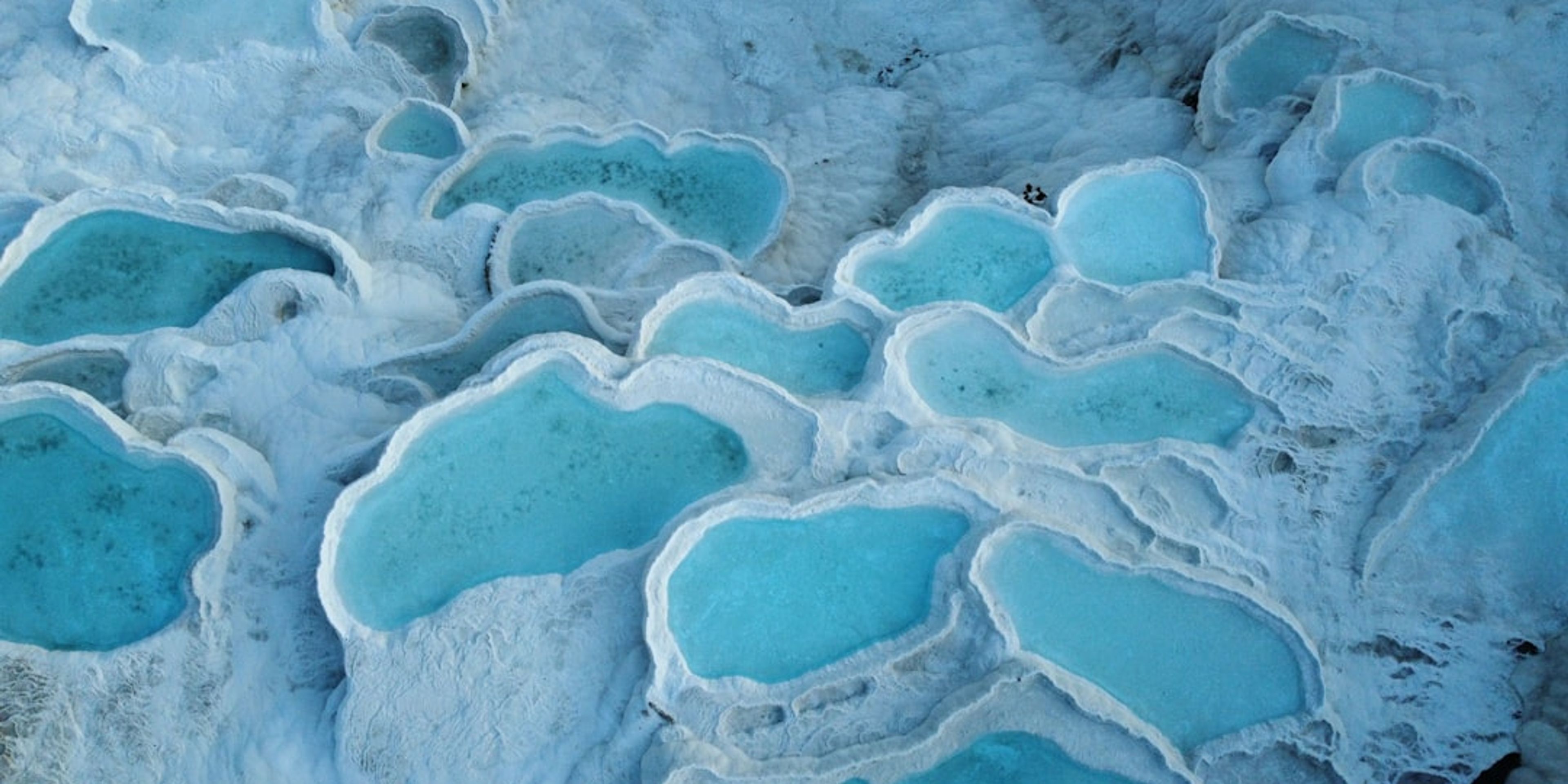
Pamukkale, meaning "cotton castle" in Turkish, is a UNESCO World Heritage site in Denizli Province where mineral-rich thermal water has spilled over a hillside for millennia, creating a cascade of blindingly white travertine terraces and warm turquoise pools. Above the terraces sits Hierapolis, an extensive Greco-Roman spa city with a well-preserved theatre, necropolis, and the antique Cleopatra's Pool where visitors can swim among submerged Roman columns.
The small village of Pamukkale below the site offers guesthouses, hot-spring hotels, and family-run restaurants serving Aegean and Anatolian classics. Nearby day trips reach the ruins of Laodicea, the honey villages of the Denizli hills, and the paragliding hub of Buldan.
Pamukkale is best combined with other Turkish highlights on a longer itinerary, whether you fly into Denizli directly or come as a day trip from Antalya, Fethiye, or Kusadasi. Visit early morning or late afternoon for softer light and thinner crowds on the terraces.
Country
Turkey
Region
Denizli Province (Aegean Region)
Population
~2,700 village; part of Denizli metro (~1M)
Elevation
~370 m (village); ~530 m (terraces)
Time Zone
TRT (UTC+3)
Currency
Turkish Lira (TRY)
Language
Turkish (English in tourist areas)
Nearest Airport
DNZ (Denizli-Cardak); AYT (Antalya) ~4 hrs
Airport to Pamukkale
~65 km / ~1 hr from DNZ
Typical Cost Level
Budget to Mid-range
Transport
Dolmus minibus from Denizli, taxi, organised tours
Spring (Mar-May)
8-22°C, wildflowers, pleasant hikes
Summer (Jun-Aug)
18-33°C, hot and dry; terraces bright
Autumn (Sep-Nov)
8-26°C, softer light and thinner crowds
Winter (Dec-Feb)
1-11°C, quiet, occasional snow around terraces
Get the latest deals, new destinations, and travel tips delivered straight to your inbox.
No spam, unsubscribe anytime.
Entry rules, stay length and passport validity by nationality.
April to June and September to October are ideal, with mild weather and moderate crowds. Summer visits are possible but the white terraces reflect harsh sun, so go at opening or before sunset. Winter is quiet and photogenic but cold, with limited daylight and occasional snow around the pools.
The closest airport is Denizli-Cardak (DNZ), about 65 km east and roughly one hour by car. Shuttle services and taxis connect to Pamukkale village directly, or take a Havas bus to Denizli otogar and switch to a dolmus. From Antalya (AYT), buses take 3.5-4 hours; from Izmir (ADB), around 4-5 hours.
Pamukkale village is compact and walkable, and the entrance to the travertines is a short walk from most hotels. For visiting Laodicea, Karahayit, or Buldan, use a taxi, dolmus minibus, or an organised tour. Renting a car in Denizli or Antalya is convenient if you plan to combine Pamukkale with wider Aegean travel.
One full day is enough to see the travertines and Hierapolis at a comfortable pace, with a swim in Cleopatra's Pool. Two days let you spread the visit across a sunrise and a sunset, add Laodicea or Karahayit's red springs, and enjoy the thermal-water hotels without rushing.
Yes, Pamukkale is a safe, well-visited tourist site. Standard travel precautions apply. The main things to watch for are slippery terrace surfaces (you must walk barefoot to protect the calcium deposits), strong sun, and pushy tour touts around the entrance. Stick to marked paths on the terraces.
Yes. A single ticket covers the travertines and Hierapolis and can be bought at the gate or via the Muzekart app. Cleopatra's antique pool has a separate additional fee. Swimming among submerged Roman columns in the 36°C mineral water is a memorable experience and worth the extra cost for most visitors.
On trip1, you can book hotels across Pamukkale and pay with over 120 cryptocurrencies including Bitcoin, Ethereum, and USDC. trip1 covers 3 million+ hotels in 190+ countries, making it easy to find and book accommodation with crypto.