

Guides · Pamukkale
10 Top Places to Visit in Pamukkale

CEO and co-founder
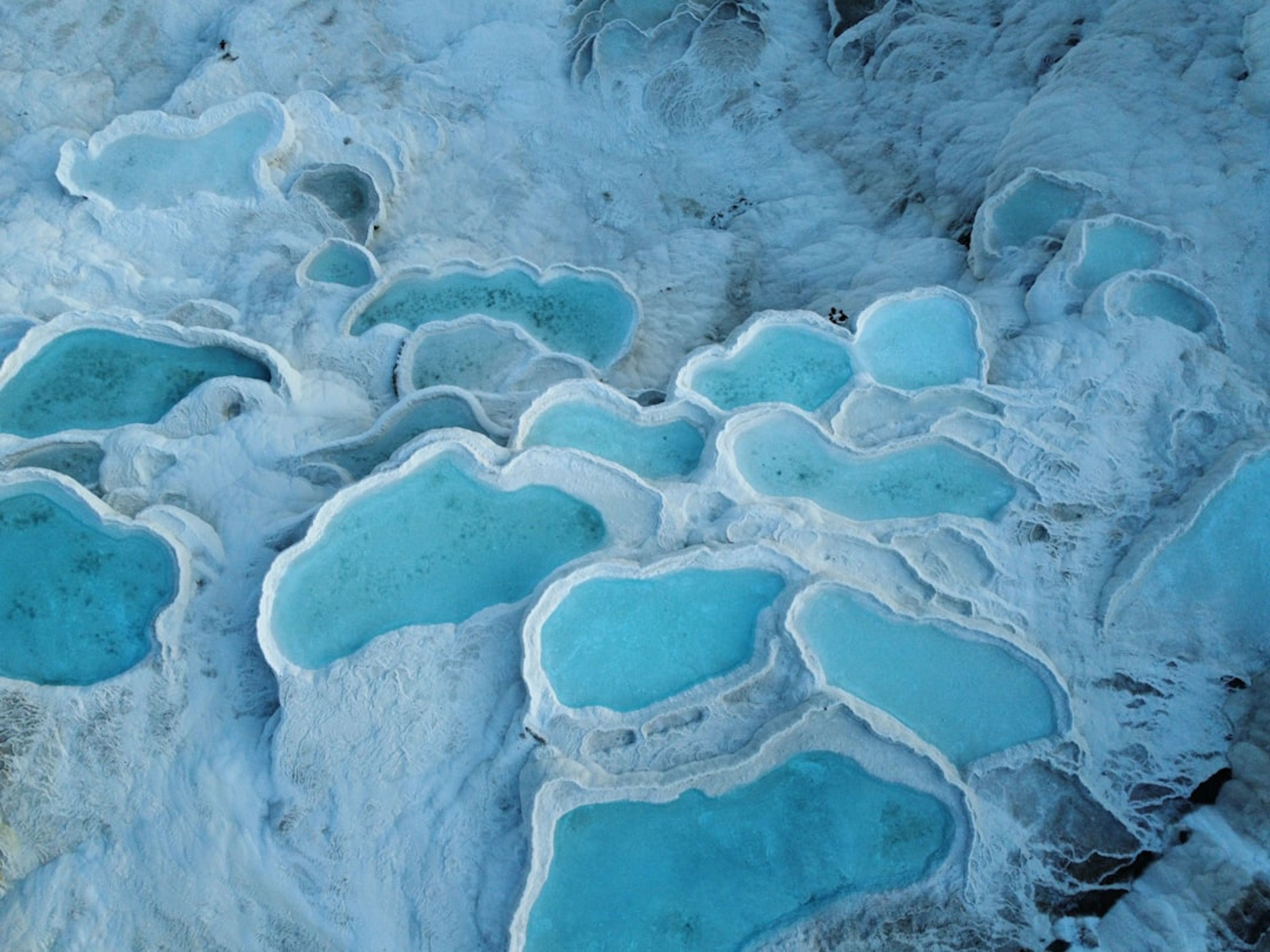
Pamukkale looks like nowhere else on earth. Terraces of gleaming white travertine spill down a hillside in Denizli Province, filled with warm turquoise water and crowned by the ruins of an ancient Roman spa city. This guide covers the 10 essential places to visit in Pamukkale in 2026, from the famous Cotton Castle terraces to Hierapolis and lesser-known day-trip sites that give the region its full context. Each stop below lists a full address, coordinates, dolmuş transit notes, distance from Pamukkale village, and a Pro Tip drawn from local practice.
The route is designed to flow logically. Start with the Hierapolis-Pamukkale UNESCO World Heritage Site itself - travertines, ancient city, thermal pool, theatre, and necropolis - then move outward to Karahayıt's red springs and the free Pamukkale Natural Park at the foot of the hillside. Day-trip picks include Laodicea on the Lycus, Kaklık Cave near Honaz, and the weaving town of Buldan. Plan two days if you want to cover everything without rushing; a single full day works for the top five if you enter through the South Gate at 6:30 AM and pace yourself through the heat.
1Travertine Terraces - Turkey's Cotton Castle

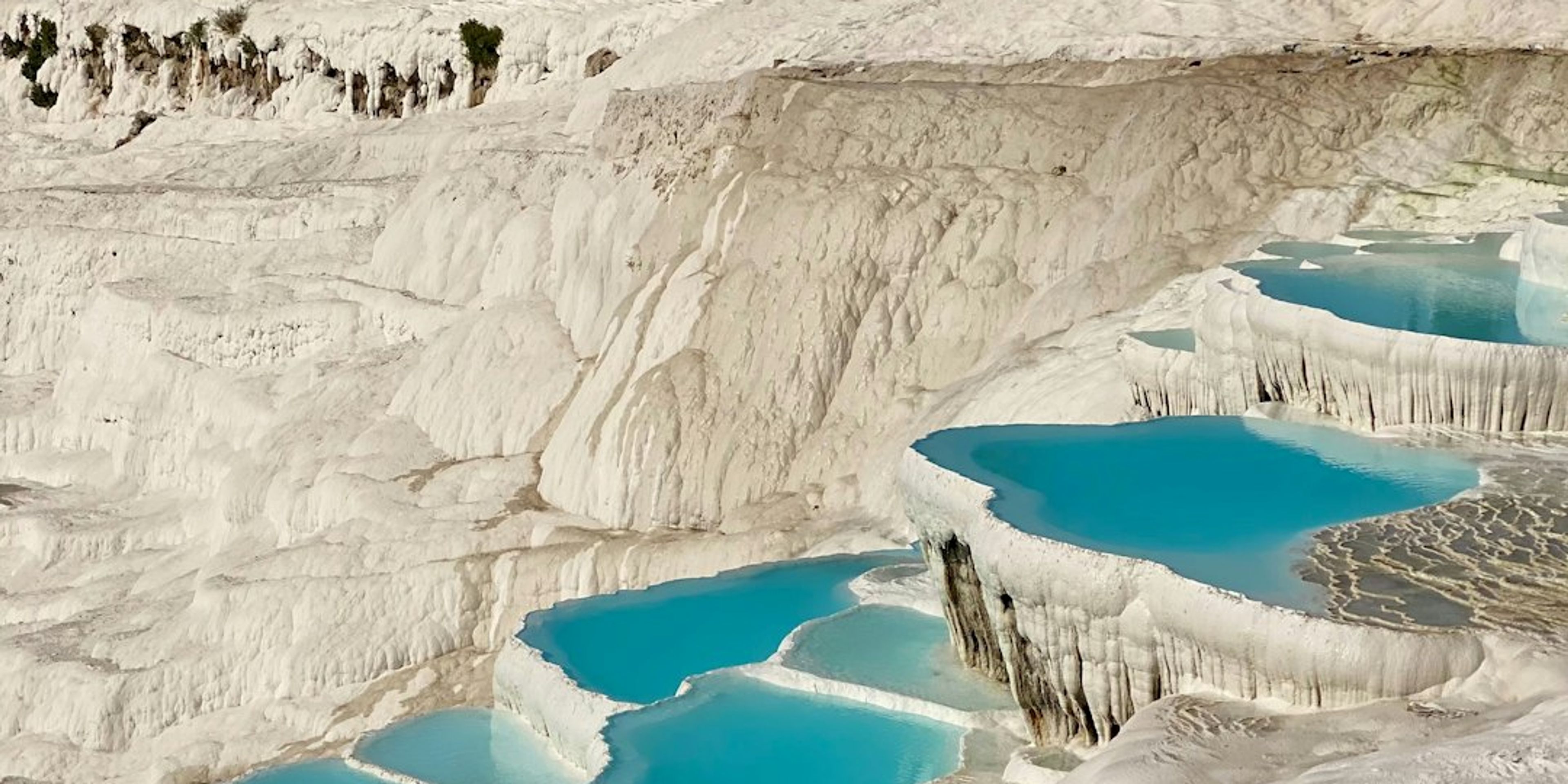
The travertines are the reason Pamukkale sits on every Turkey itinerary. Calcium-rich thermal water has flowed down this hillside for thousands of years, depositing calcium carbonate that hardened into terraces of blinding white travertine filled with warm turquoise pools. The Hierapolis-Pamukkale UNESCO World Heritage Site was inscribed in 1988, and the terraces form the natural half of that dual listing. Walking is mandatory barefoot on the designated route to protect the surface, with water temperatures between 33 and 36°C. The 2026 combined ticket covers both the pamukkale travertines and Hierapolis ruins for €30 per adult, with under-8 foreign nationals free and ages 8 to 12 at a reduced rate. Enter through the South Gate to reach the terraces first without a long climb, or through the North Gate if you want to walk down through them from the plateau. Conservation efforts rotate water flow across sections, so not every pool is full at once.
Pro Tip: Carry a small drawstring bag for your shoes and pack quick-dry sandals for the walk between the terraces and Hierapolis, where the ancient paving is warm underfoot in summer.
2Hierapolis Ancient City - Greco-Roman Spa on the Plateau
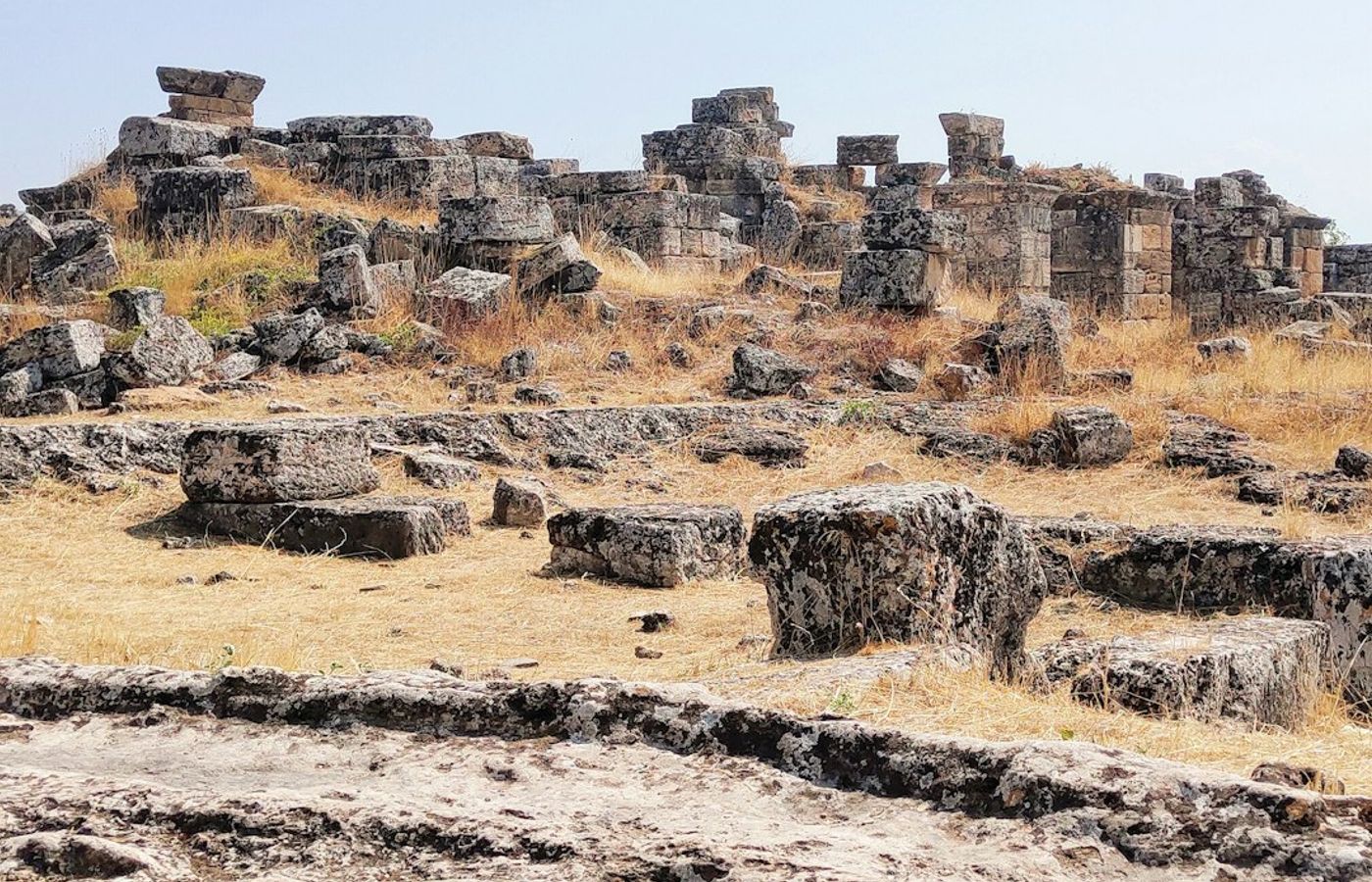

Founded around 190 BC by the Attalid kings of Pergamon and later absorbed into the Roman Empire, Hierapolis grew into one of the most important healing and spa cities of antiquity. Its remains stretch across the plateau directly above the travertines, and access is included in the same €30 combined ticket. Highlights along the Colonnaded Street include the Frontinus Gate at the northern end, the Temple of Apollo, and the Plutonium - a small cave releasing carbon dioxide that ancient priests treated as a portal to the underworld. Italian archaeologist Francesco D'Andria's team identified the exact Plutonium shrine in 2013, confirming descriptions written by the Greek geographer Strabo nearly 2,000 years earlier. The full Hierapolis-Pamukkale UNESCO World Heritage listing covers a large section of the plateau and the terraces as a single inscribed property. Allow at least 2 to 3 hours to walk the main avenues, and remember there is very little shade on the plateau in summer.
Pro Tip: Walk the site from the South Gate down to the Frontinus Gate rather than the reverse - the long descent past the theatre and along the main street is easier on the knees than climbing back up in afternoon heat.

3Cleopatra's Antique Pool - Swim Among Roman Columns
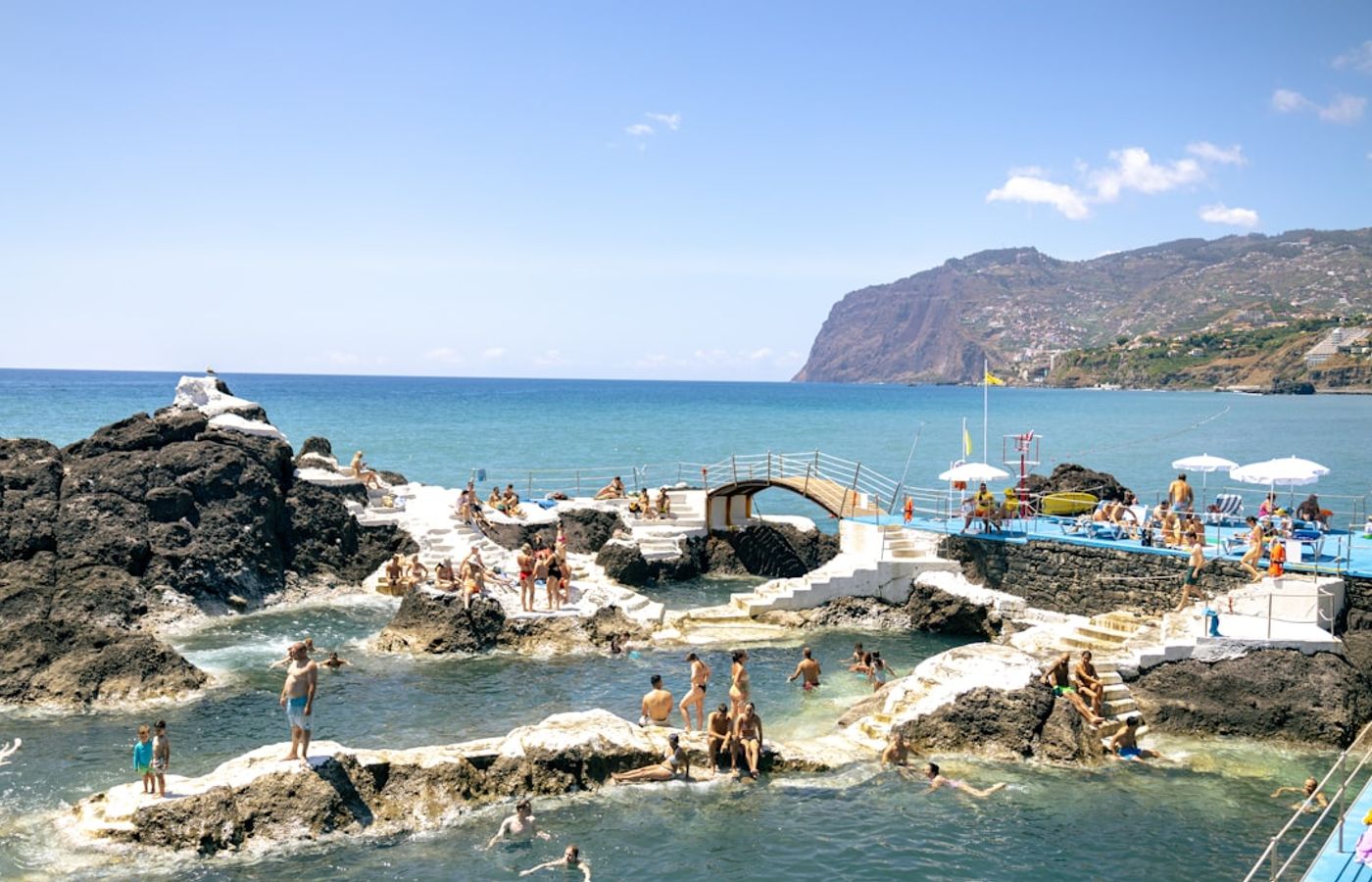

Cleopatra's Antique Pool, officially known as the Antique Pool or Sacred Pool, sits at the centre of the Hierapolis plateau and holds warm, naturally carbonated thermal water at a constant 36°C. Sunken marble columns from a Roman temple lie on the pool floor, having toppled during one of the earthquakes that reshaped Hierapolis; swimming among them is one of the few chances anywhere to bathe inside genuine antique ruins. Local legend claims Marc Antony gifted the spring to Cleopatra, though the connection is unproven. The cleopatra pool pamukkale entry costs an extra €6 to €13 on top of the main €30 combined ticket in 2026, and operating hours run 8:00 AM to 8:00 PM in summer (last entry 7:00 PM), closing at 5:00 PM in winter. Changing rooms and lockers are provided on-site; bring a swimsuit, towel, and flip-flops. The pool reopened in early May 2026 after a maintenance closure, so verify current status on muze.gov.tr before your visit.
Pro Tip: Arrive between 8:30 and 9:30 AM before the tour buses land, or after 4:00 PM when day-trippers leave - the queues at midday can add 30 to 45 minutes to your visit.
4Hierapolis Theatre - Roman Amphitheatre with 12,000 Seats
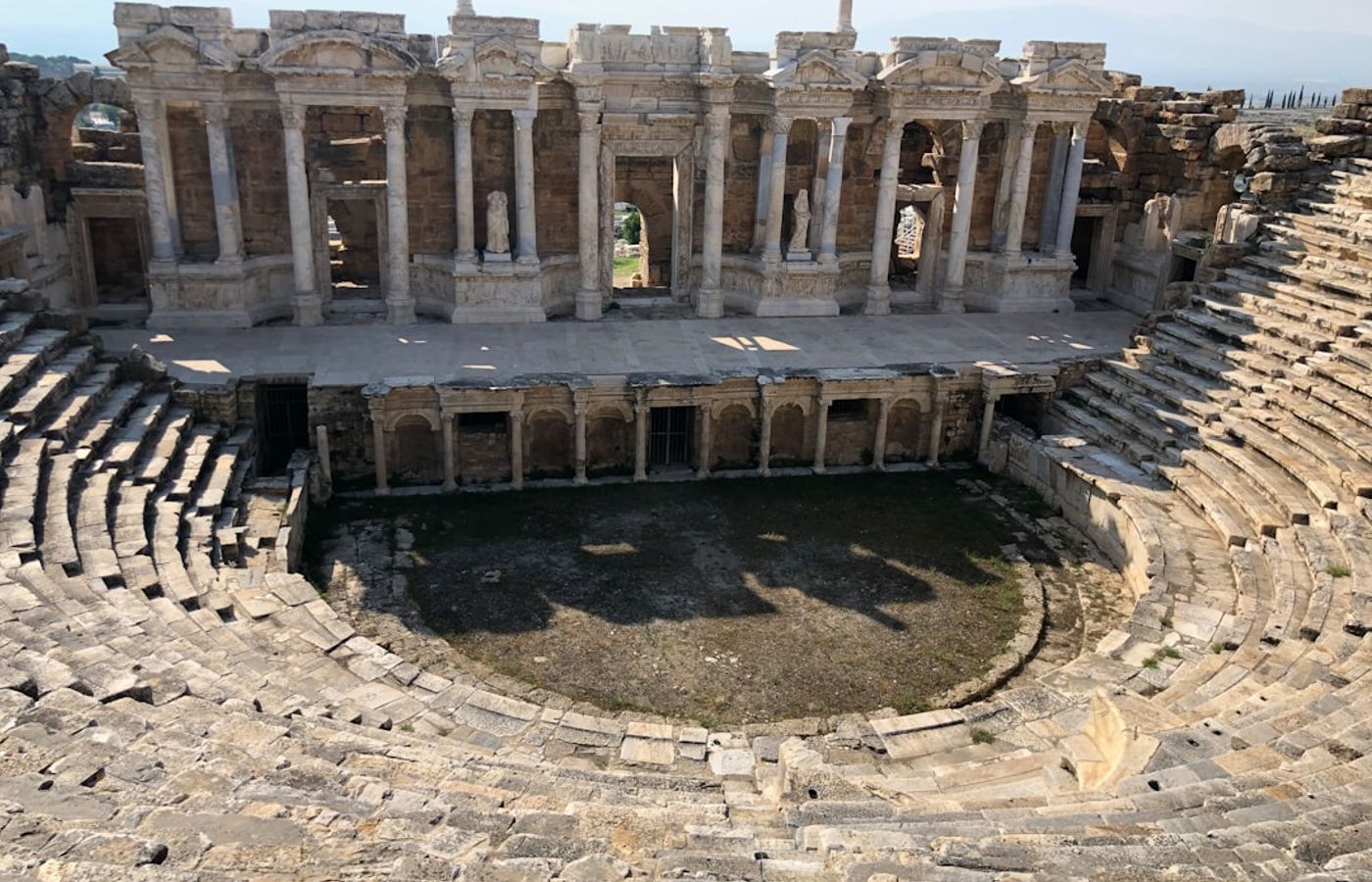
Built into the natural slope of the plateau, the Hierapolis Theatre is one of the best-preserved Roman theatres in Turkey. The structure dates in its current form to the 2nd century AD under Emperor Hadrian, with later restoration under Septimius Severus in the early 3rd century. Its cavea originally seated about 12,000 spectators for drama, music, and public ceremonies. The stage building (scaenae frons) still stands two storeys high and retains carved reliefs of Apollo, Dionysus, and imperial figures - many of which are now displayed in the on-site Hierapolis Archaeology Museum. Entry is included in the €30 Hierapolis-Pamukkale combined ticket. Unlike the theatre at Ephesus, this one rarely feels crowded, and the upper rows deliver a sweeping view across the ruins and the travertine cliff below. The theatre sits toward the eastern edge of the plateau, about a 10-minute walk from the North Gate up a gentle rise.
Pro Tip: Climb to the upper tier for the best photographs - the wide-angle view captures the entire archaeological zone plus the white terraces cascading beyond.
5Necropolis of Hierapolis - Ancient Cemetery Along the North Road
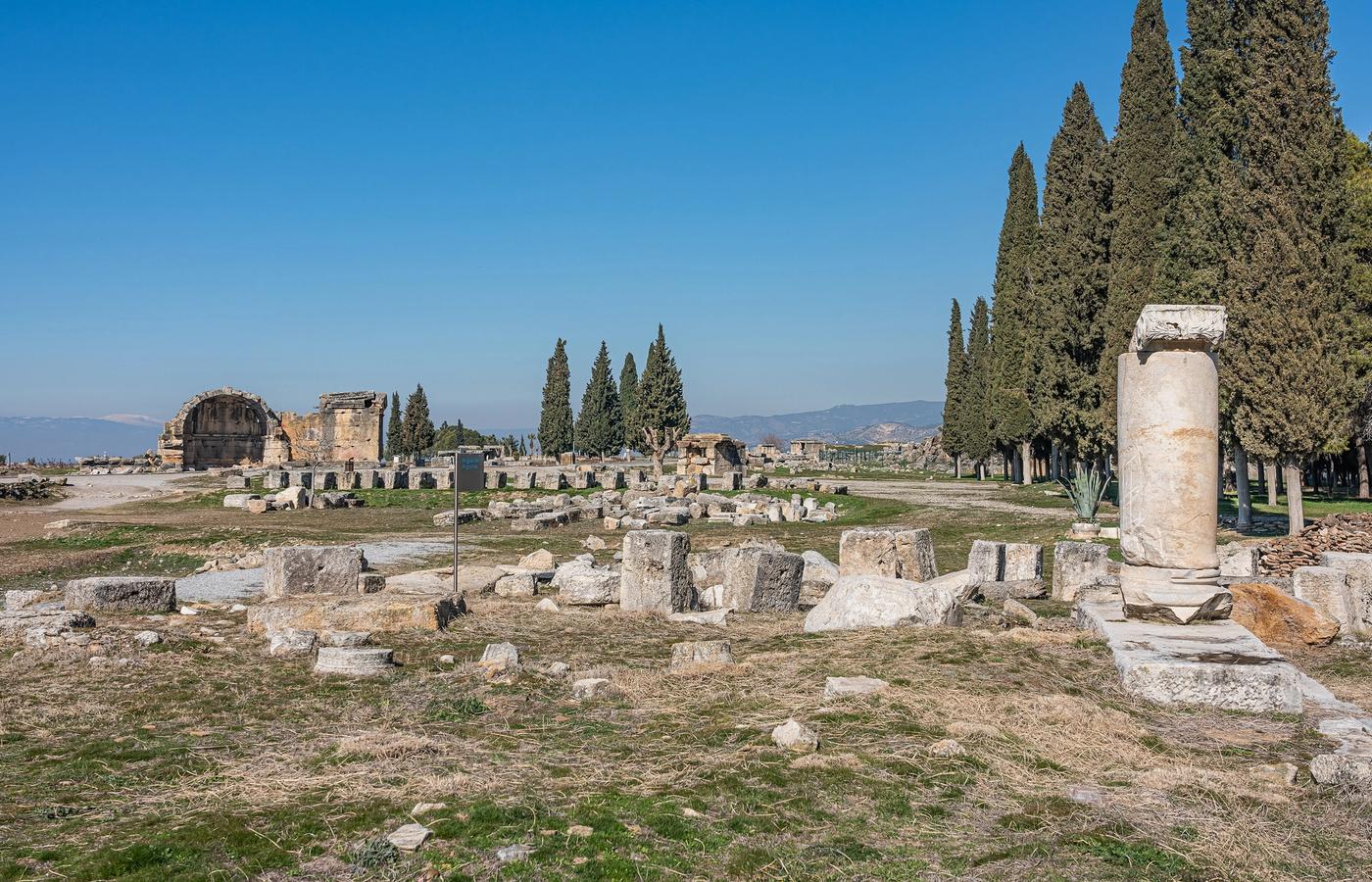
The Necropolis of Hierapolis stretches for more than 2 kilometres along the road leading north from the Frontinus Gate and is among the largest ancient cemeteries in the Mediterranean. Estimates put the total number of tombs, sarcophagi, tumuli, and mausoleums at well over 1,200, spanning the Hellenistic, Roman, and early Byzantine periods. Because Hierapolis was a healing destination, many people who travelled here for the thermal waters died in the city rather than at home, and their families built elaborate funerary monuments in the surrounding fields. Access is included in the standard €30 combined ticket. The site is open-air with almost no shade, so morning light works best for both temperature and photography. Look for the circular tumulus tombs at the western edge - they represent the earliest phase of burial at the site, from the 2nd and 1st centuries BC. The nearby tomb inscriptions in Greek and Latin remain among the most detailed sources for daily life in Roman Asia Minor.
Pro Tip: Walk out to the tomb of Flavius Zeuxis, a merchant who recorded on his tombstone that he had sailed around Cape Malea to Italy 72 times - it sits along the main necropolis road and is signposted in Turkish and English.
6Karahayıt Red Springs - Iron-Rich Thermal Waters
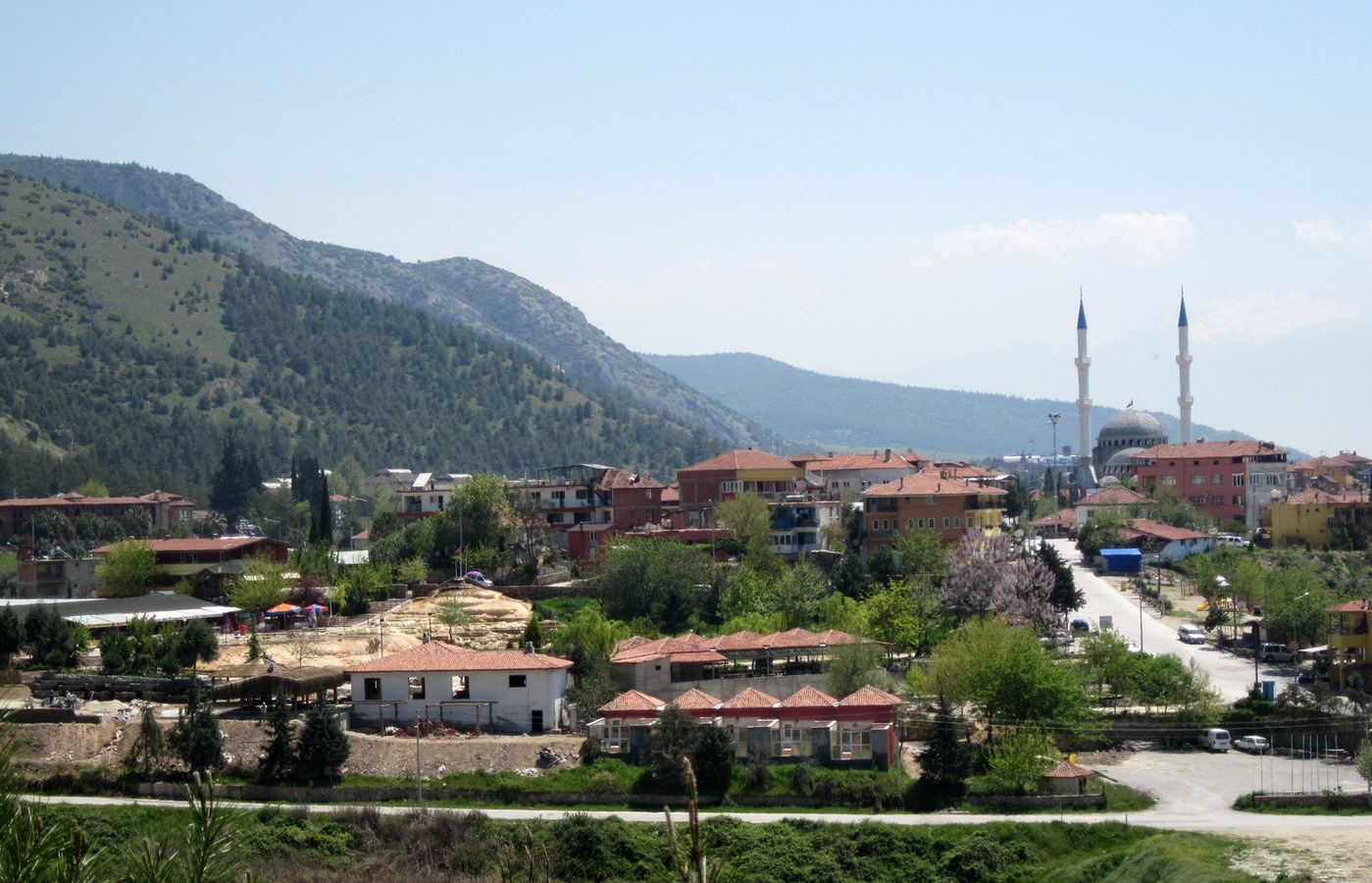
Karahayıt village lies 5 kilometres north of Pamukkale and offers a completely different thermal experience. The water rising from the springs here is loaded with iron oxide, which stains the travertine formations rust-red, orange, and brown - a striking counterpoint to the snow-white terraces of the main site. Local health tradition attributes benefits for skin conditions, rheumatism, and circulation, and several spa hotels in the village channel the water into private thermal pools open to day-pass guests. Public access to the small central spring is free of charge, though most travellers combine a visit with lunch or a soak at a hotel day-pass costing €10 to €25. Karahayıt hosts an annual carrot festival each June, reflecting the region's other main agricultural product alongside cotton and pomegranates. The village is quieter than Pamukkale itself and works well for an evening soak once the main archaeological site closes.
Pro Tip: Pair Karahayıt with your late afternoon - it works well after Cleopatra's Pool, when a second thermal soak in the redder, less crowded water rounds out the day.
7Pamukkale Natural Park - Lake and Gardens at the Foot of the Terraces
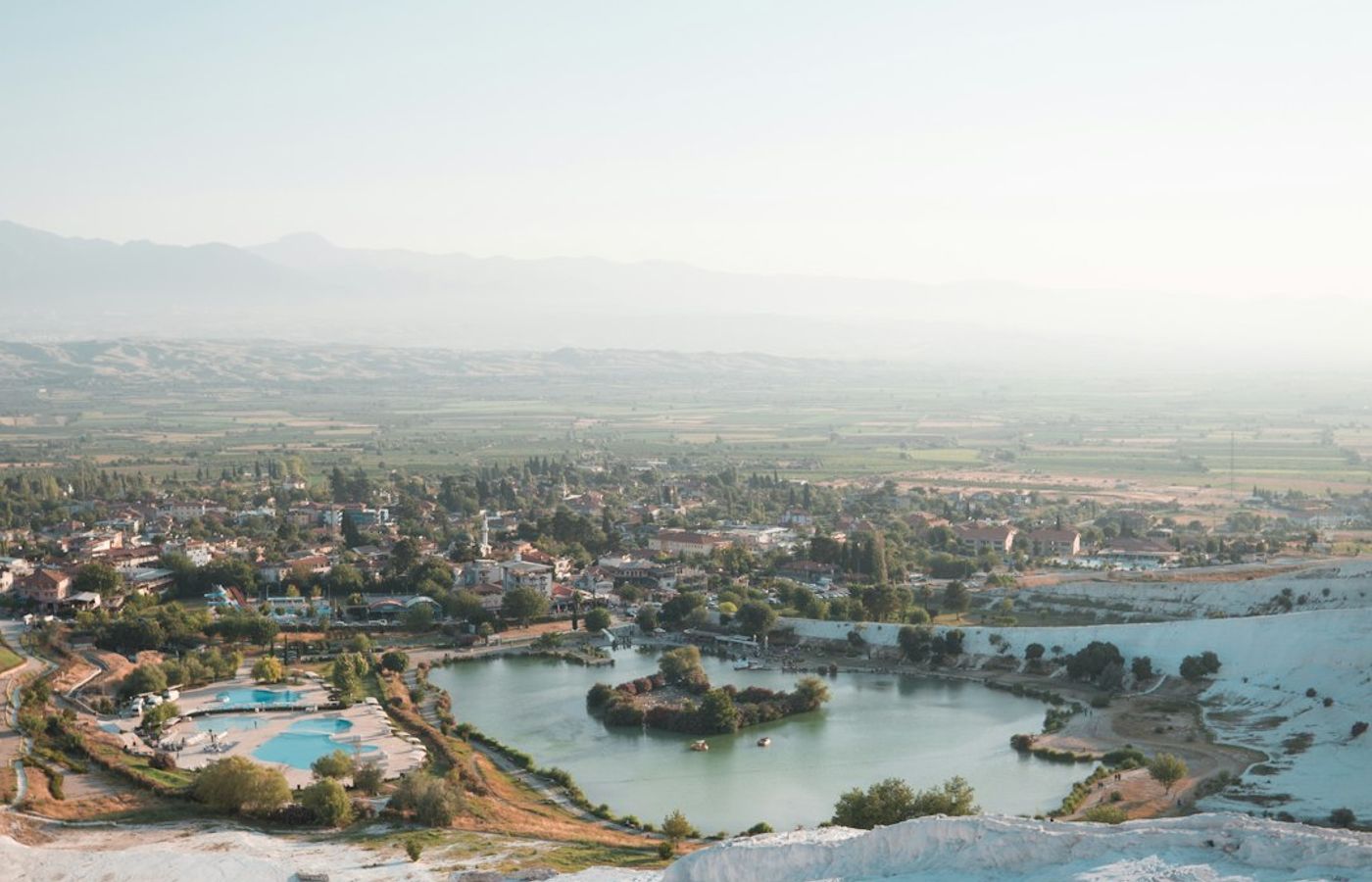
Pamukkale Natural Park sits directly below the travertine cliff and contains a small artificial lake, shaded picnic areas, cafés, and rowing boats for hire. Entry is free of charge, making it the best zero-cost sightseeing stop in the area, and the wider views of the terraces from lake level are the ones featured on most postcards of the region. The lake surface reflects the white hillside on calm mornings, and photographers gather here around sunrise and again at the golden hour before sunset. Facilities include children's play areas, snack kiosks, and public restrooms. The park sits inside Pamukkale village and is about a 5-minute walk from the main village square. It stays open from early morning until late evening year-round, and there is no gate closing time strictly enforced. Bring cash in small denominations for boat rental (around ₺100 to ₺150 for 30 minutes) and drinks at the lakeside kiosks.
Pro Tip: Rent a rowing boat for 20 to 30 minutes in the last hour of daylight - the reflections of the terraces on the lake at sunset are worth every lira.
8Laodicea on the Lycus - Biblical City of the Seven Churches
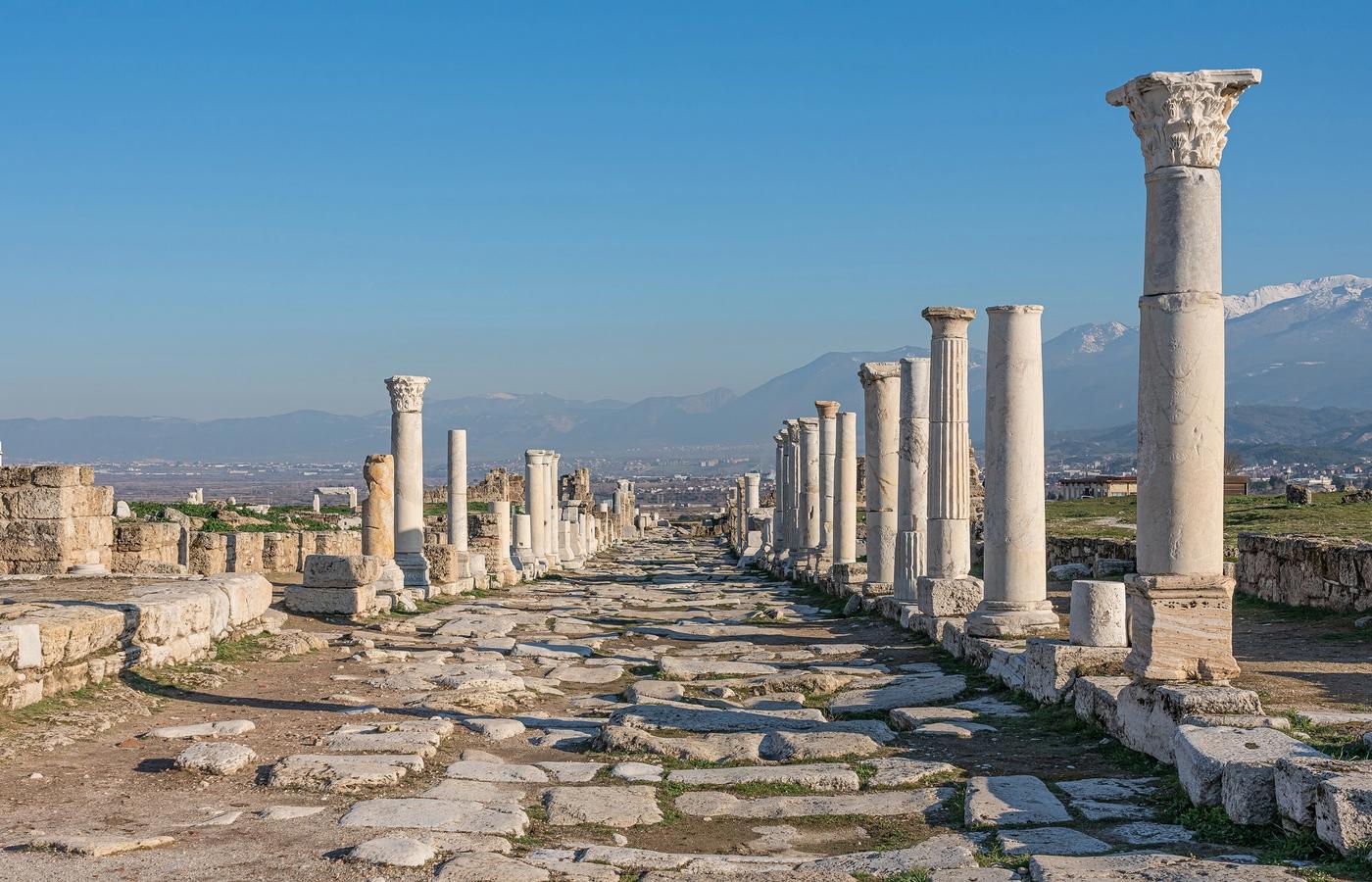
Laodicea on the Lycus lies about 10 kilometres south of Pamukkale and rewards travellers willing to venture off the main tourist route. The city was founded in the mid-3rd century BC by the Seleucid king Antiochus II and named for his wife Laodice. Under Roman rule it grew wealthy from banking, black wool textiles, and a medical school known for its eye salve. Laodicea is one of the Seven Churches of Asia named in the Book of Revelation, giving it particular significance for Christian pilgrims. Recent Turkish excavation and reconstruction have revealed two theatres, the first known stadium in Anatolia, a temple of Zeus, a monumental fountain, and long stretches of the original aqueduct with the calcified pipes still visible. The site's entry fee in 2026 is around ₺200 (roughly €5). Because Laodicea receives only a fraction of the visitors seen at Hierapolis, you can often walk entire streets without meeting another traveller.
Pro Tip: Combine Laodicea with Kaklık Cave in a half-day taxi tour - many drivers offer a fixed price of ₺1,500 to ₺2,000 to cover both stops with waiting time included.
9Kaklık Cave - Underground Pamukkale
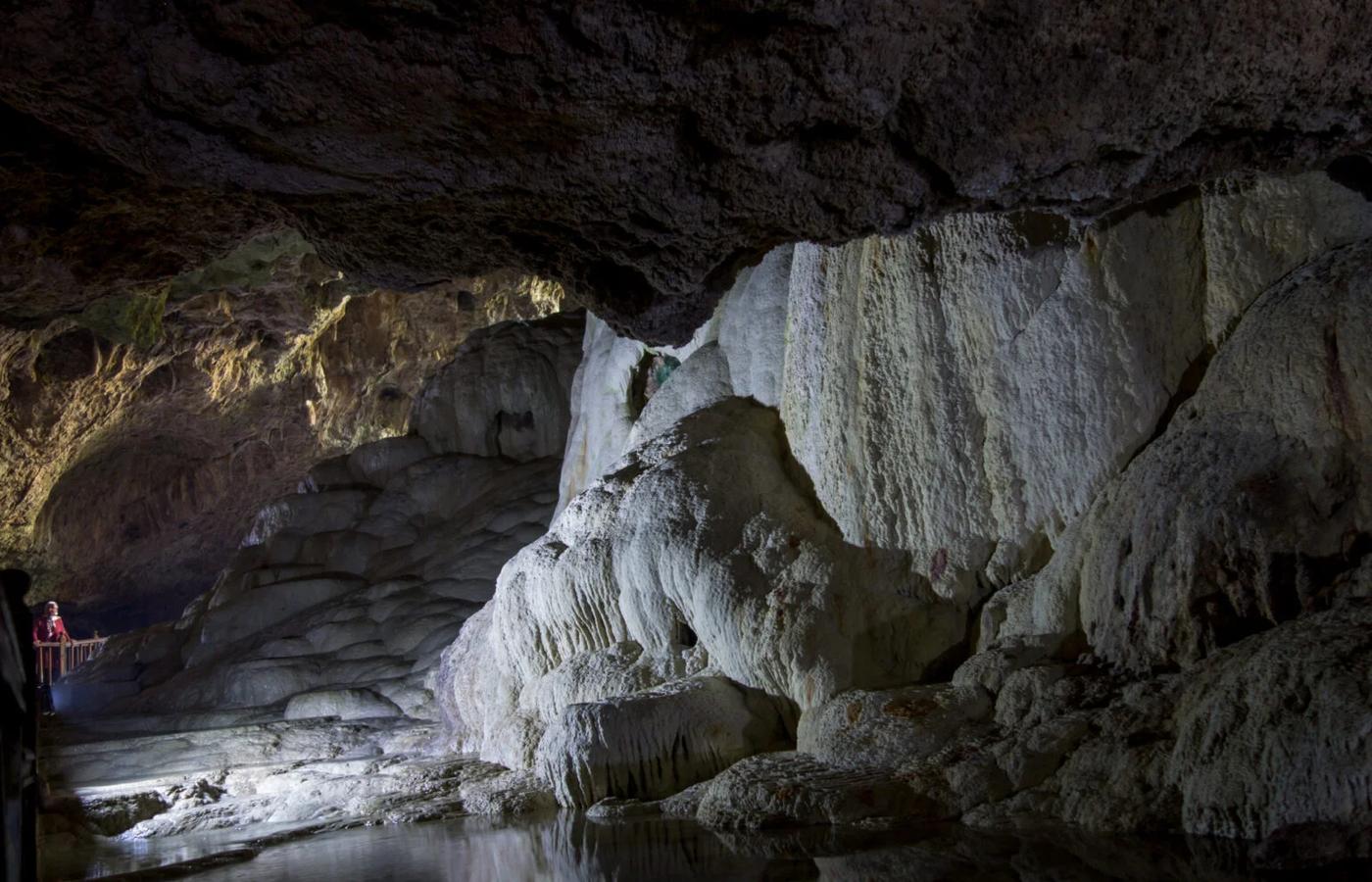
Kaklık Cave, often called Underground Pamukkale, lies about 40 kilometres east of Pamukkale in the Honaz district of Denizli Province. The cave formed over roughly 2 million years as a subterranean stream carved through limestone and sulphurous rock. When part of the roof collapsed, it revealed thermal springs and small white travertine formations inside the cavern, together with stalactites, stalagmites, and a shallow bathing pool. A wooden walkway now loops through the illuminated chamber, and steam rises constantly from the mineral pools. Entry is ₺100 to ₺200 in 2026 (roughly €3 to €5). The cave is open daily from 08:00 to 18:00 in summer, closing earlier in winter (usually by 17:00). There is no direct public transport, so plan on a taxi or an organised half-day tour. The sulphur smell inside is strong but ventilation is good on the walkway sections, and most travellers find 20 to 30 minutes plenty of time to see the whole route.
Pro Tip: People sensitive to sulphur should keep their visit to 15 or 20 minutes and step back outside if the air becomes uncomfortable - the visitor centre courtyard has picnic tables for a break.
10Buldan - Traditional Weaving Town in Denizli Province
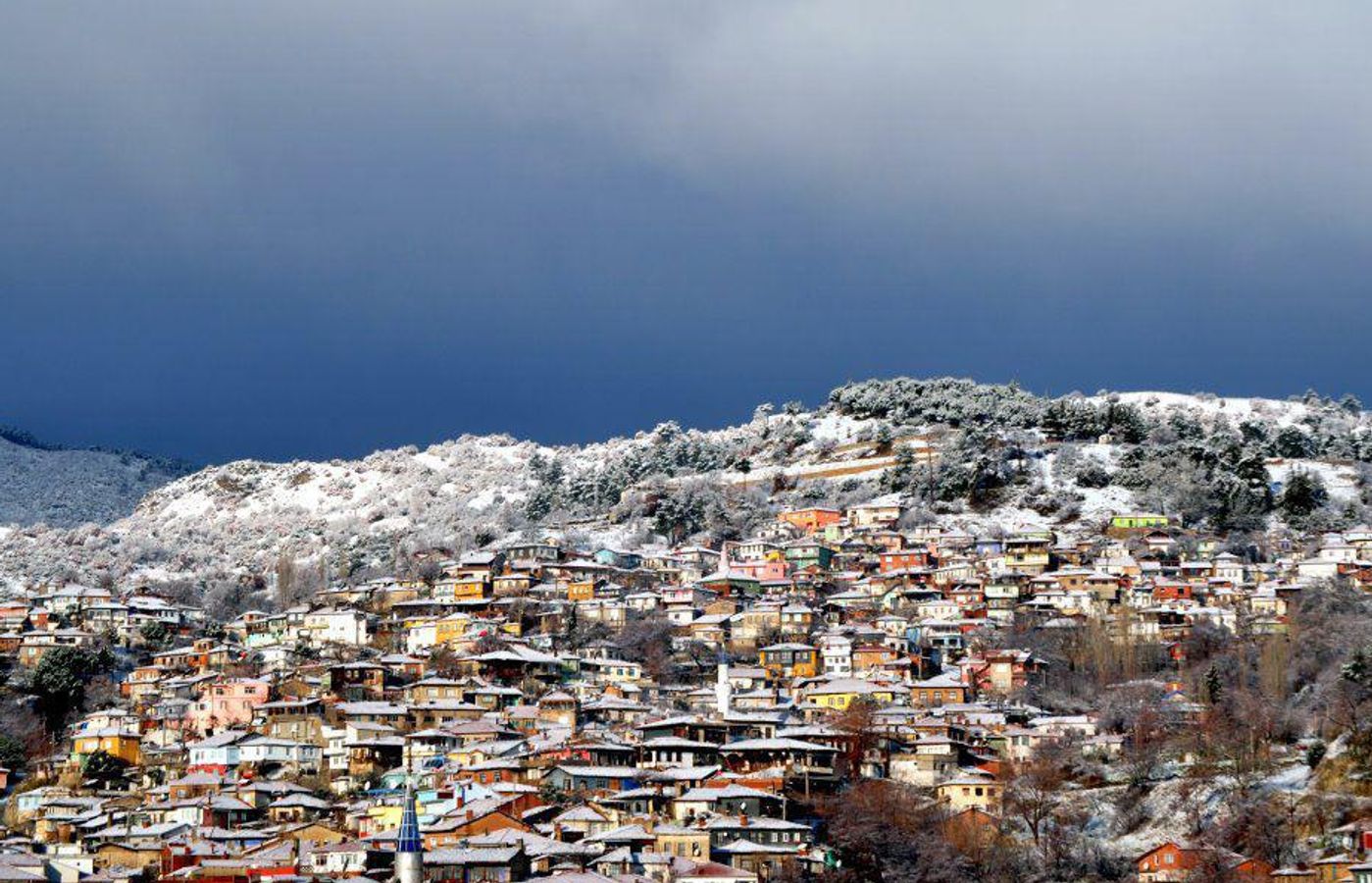
Buldan is a hillside town about 45 kilometres northwest of Pamukkale, known for centuries for its handloom weaving and cotton textiles. Ottoman-era travellers wrote about Buldan cloth being sold in the imperial court, and the town continues to produce lightweight buldan bezi (Buldan cloth), silk scarves, and traditional women's dresses. The old town centre keeps narrow lanes lined with weavers' workshops where you can watch looms in operation and buy fabric direct from the maker at prices well below Istanbul shops. Buldan is also close to the ancient site of Tripolis on the Meander (about 15 minutes further north), giving a two-in-one option for an easy half-day trip. Public dolmuş runs from Denizli otogar to Buldan roughly hourly and takes about an hour. A taxi tour from Pamukkale village costs approximately ₺1,200 to ₺1,500 return with two to three hours of waiting time. The town sits at 700 metres elevation, so afternoons are noticeably cooler than the plateau below.
Pro Tip: Visit on a Wednesday or Saturday when the weekly market fills the town square - it is the easiest place to compare textile prices and quality from multiple weavers in one stop.
Get hotel deals for Pamukkale
Price drops, new stays and local tips for Pamukkale, straight to your inbox.
No spam, unsubscribe anytime.

CEO and co-founder
Tomas is the co-founder and director of trip1, an European company specializing in reservation services. He launched the company in 2025 with a focus on building scalable, efficient operations.
10 Top Places to Visit in Pamukkale, Turkey - FAQ
Yes, in Cleopatra's Antique Pool, which costs extra on top of the main ticket. Its warm, naturally fizzy water stays at about 36C, and you swim over fallen marble columns. On the travertine terraces you can only paddle, barefoot on the marked route, in shallow pools at 33 to 36C. Water is rotated between sections, so not every pool is full.
Yes. One ticket covers the white travertine terraces and the ruins of Hierapolis above them, a Roman spa city with a theatre that seated about 12,000 people and a vast necropolis. You can also swim among ancient columns in the Antique Pool. One full day covers the main site; a second day adds Laodicea, Kaklik Cave and the weaving town of Buldan.
For its terraces of white travertine filled with warm turquoise water, which earned it the name Cotton Castle. Calcium-rich thermal springs built them over thousands of years, and the Greco-Roman spa city of Hierapolis sits on the plateau above. Together they form the Hierapolis-Pamukkale UNESCO World Heritage Site, inscribed in 1988 for both its nature and its history.
Natural. Thermal water rich in calcium flows down the hillside, and as it reaches the air it loses carbon dioxide and leaves calcium carbonate behind, which hardens into white terraces. People do manage it today: the water flow is rotated across sections so the travertine can recover, and visitors must walk barefoot on a set route to protect the surface.
30 euros per adult in 2026, for one ticket covering the travertine terraces, Hierapolis, its theatre and the necropolis. Cleopatra's Antique Pool is paid separately at the pool. Tickets are sold at both gates on the day, or online through the Turkish museums site muze.gov.tr. Pamukkale Natural Park, at the foot of the terraces, is free.
One full day for the main site, two to see the region. Enter through the South Gate at opening time, walk up the terraces, then cover Hierapolis, the theatre, the necropolis and the Antique Pool before the midday heat. Add Karahayit's red springs in the evening, and use a second day for Laodicea, Kaklik Cave and Buldan by taxi or tour.