What Is a Capsule Hotel? Prices, Rules and Capsule vs Hostel
What a capsule hotel is, what it costs in Japan, the house rules to check before you book, and how capsules compare with hostels and business hotels.

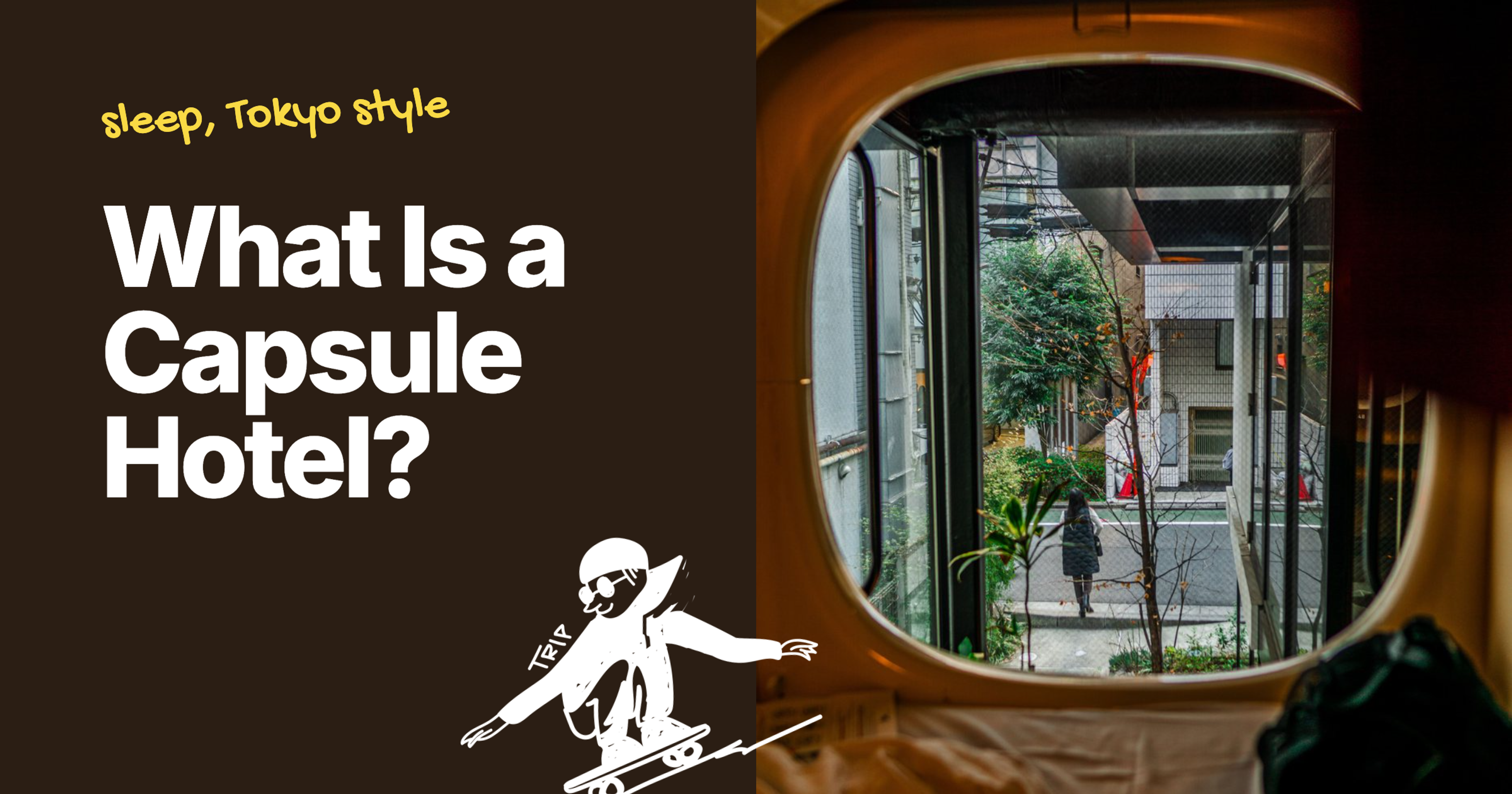
A capsule hotel is a budget stay where you rent a bed-sized sleeping pod instead of a room, and share bathrooms, lockers and lounges with other guests. In Japan, a night typically costs about ¥3,000 to ¥5,000 (around $20 to $30). It suits solo travellers who mainly need somewhere to sleep, as long as you’re fine with thin screens, shared showers and a few house rules that regular hotels don’t have.
This guide covers what a stay is really like, what it costs, the rules to check before you book and how capsules compare with hostels and business hotels. When you’re ready, you can compare hotels in Tokyo on trip1 and pay with crypto.
What Is a Capsule Hotel?
A capsule hotel, also called a pod hotel or capsule inn, swaps bedrooms for compact sleeping compartments, usually stacked two high in rows, with a curtain or screen across each entrance. You sleep in your own capsule and share everything else.
Inside, expect a mattress, pillow, reading light and somewhere to charge your phone. Wi-Fi is common and some pods have a small TV, but equipment varies, so check the property’s photos and room details. Think of the capsule as a place to sleep, not somewhere to unpack or spend an afternoon.
The biggest adjustment is that a screen gives you visual privacy, not quiet. You’ll still hear people moving and snoring nearby. First Cabin, a Japanese capsule chain, warns guests that sound carries through its curtains and hands out free earplugs at the front desk.
Space matters too. Japan’s national tourism organisation notes that capsules can feel cramped, especially for tall guests or anyone prone to claustrophobia. If you’re unsure, book one night first and keep a refundable option for the rest of your trip.
How Much Does a Capsule Hotel Cost?
Budget around ¥3,000 to ¥5,000 (around $20 to $30) per person per night in Japan, then check live prices for your dates. That’s the typical range for a standard capsule. Basic capsules can cost less, while newer design-led chains often charge more, especially in peak season.
Don’t assume a capsule always beats a business hotel on price. Compare real quotes in the same area, for the same dates and with the same cancellation terms. A cheap rate only helps if the location works for your trip.
Before you choose, check these details:
- Who the price covers: one capsule sleeps one person, so for two travellers, compare two capsules with the total for a double room.
- What’s included: confirm whether towels, showers and any bath or sauna access come with your rate.
- Where your luggage goes: ask whether there’s storage for large suitcases and whether it costs extra.
- How flexible the rate is: read the cancellation deadline and late check-in rules before you pick the cheapest option.
In Tokyo, shortlist capsules near the places you actually plan to visit, and do the same for hotels in Osaka or Kyoto. A slightly pricier capsule can be the better deal if it saves a late-night train ride or an early trip across the city. Our guide to the top places to visit in Tokyo can help you pick an area.
Pros and Cons of Staying in a Capsule Hotel
The main advantages are price, location and having your own bed space. The main drawbacks are noise, tight space and rules that can lock you out during the day. Here’s how they compare:
| Pros | Cons |
|---|---|
| Much cheaper than a private hotel room in the same area | Curtains and screens don’t block snoring or alarms |
| Your own enclosed bed, unlike an open hostel bunk | Little space: in most capsules you can sit up but not stand |
| Often right next to major train stations | The capsule itself usually can’t be locked |
| Easy for a single night, a late arrival or an early start | Daily cleaning can lock you out of your capsule and locker |
| Many include towels, loungewear and toiletries | Shared bathrooms, and not suitable for couples or families |
If most of the cons don’t bother you, a capsule can save you a lot over a week. If two or three of them would ruin your sleep, compare a small business hotel room in the same area before you book.
Capsule Hotel vs Hostel vs Business Hotel: Which Is Better?
Pick a capsule if a screened bed and shared bathrooms are all you need, a hostel if you want common spaces and other travellers, and a business hotel if you want a private room. The lines blur, so compare the actual room layout, not just the label.
| Option | What You Get | What to Check |
|---|---|---|
| Capsule hotel | Your own sleeping pod, with shared bathrooms and lockers | Screen type, luggage storage and daytime access |
| Hostel dorm | A bed in a shared room; many hostels add kitchens and lounges | Bed curtains, number of beds per room and common areas |
| Business hotel | A small private room with its own bathroom in most cases | Room size, bathroom setup and the total price |
These are starting points, not fixed rules. Many hostels offer private rooms alongside dorms, and capsule hotels vary a lot in their shared facilities. Always check the exact room type you’re booking.
For a solo trip, think about how much time you’ll spend indoors. If you want to cook or meet people, look at a hostel’s common areas. If you need to take calls, spread out your luggage or rest between outings, a private room may be better value than a capsule.
Capsule Hotel Rules to Check Before You Book
Capsule hotels have house rules that regular hotels don’t, and they differ from one property to the next. These four matter most.
Daily Cleaning and Daytime Access
Booking several nights doesn’t always mean you can use your capsule all day. Nine Hours, for example, cleans its whole facility every day from 11am to 3pm (10am to 2pm at Narita Airport). Capsules and lockers are off limits during that time, and only some branches have a lounge where you can wait.
Others work differently: at First Cabin, guests booked for consecutive nights only check out on their last day. Ask about daytime access, whether you can leave your belongings and any late check-in rules, especially if you’re arriving on an overnight flight.
Gender Rules and Who Can Book
Some capsule hotels are men-only or women-only, others separate guests by floor, and a few have mixed sleeping areas. Read the room description carefully, as people on one booking may not sleep in the same section. If the policy doesn’t clearly cover your situation, contact the property before you pay.
Lockers, Luggage and Security
Don’t expect your capsule to lock. Most use curtains or screens; First Cabin, for example, says its cabin entrances can’t be locked and gives each cabin a locked safety box instead. Keep valuables in a locker or safety box. Large suitcases are often banned from the capsule area too, so check the luggage storage before you arrive.
If you travel with bulky bags or equipment, ask about locker sizes. Pack a small pouch with what you need for the night, so you don’t have to dig through your suitcase before bed.
Shared Bathrooms and Tattoo Policies
Bathrooms range from private shower stalls in a shared washroom to Japanese-style communal baths. If there’s a shared tub, wash and rinse fully before you get in. If bathing in front of others would make you uncomfortable, confirm the setup first.
Check the tattoo policy directly. Some properties only restrict the bath, while others turn away guests with tattoos altogether, and covering them up isn’t always accepted.
Are There Capsule Hotels Outside Japan?
Yes, but outside Japan a “capsule” or “pod” hotel often means something different. Search for “capsule hotel NYC”, for example, and you’ll mostly find compact private rooms with their own bathrooms, sometimes with bunk beds, rather than curtained pods on a shared floor.
So read the room description before comparing prices across cities. Check whether you’re booking an enclosed room or just a bed, whether the bathroom is private and how many people the rate covers. Use real quotes from New York City hotels for your dates instead of a Japanese capsule budget. Planning the rest of the trip? See our top things to do in New York City.
Your First Night in a Capsule Hotel
A little preparation makes the first night much easier. Once you’ve checked the house rules:
- Keep bedtime essentials separate. Put your charger, toiletries, sleepwear and tomorrow’s clothes in one small bag before you store your suitcase.
- Learn the layout early. Find your locker, the bathrooms, the lounge and the exits before you settle in.
- Plan for quiet. Bring earplugs, silence your phone and take calls away from the sleeping area.
- Eat in the right place. Many capsule hotels don’t allow food in the pods, so use the lounge or dining area.
- Get ready to leave the night before. Pack your bags in advance and keep alarms short and quiet.
Japan’s national tourism organisation also asks guests to use headphones, keep alarms considerate and take care when photographing shared areas, since other guests may be resting.
Our Suggestion: Try One Night First
A capsule hotel is a smart pick if you’re travelling solo, mostly need a bed and don’t mind shared bathrooms and some noise. It’s a weaker fit if you’re tall, a light sleeper, travelling as a couple or need a private space to work.
If you’re not sure, book one night on a flexible rate and see how you sleep. Before you book, check who handles hotel cancellations and, for Japan, the visa requirements for your passport.
Ready to plan your stay? Compare hotels in Japan on trip1 and pay with Bitcoin, USDC or other cryptocurrencies.
Stay in the loop
Get the latest deals, new destinations, and travel tips delivered straight to your inbox.
No spam, unsubscribe anytime.
What is a capsule hotel - FAQ
Not usually. Capsule hotels work best for a few nights. At many properties, daily cleaning locks you out of your capsule and locker for several hours, there’s little room for luggage, and the pod is too small to work or relax in. For a week or more, a small business hotel or a private room in a hostel is usually more comfortable.
Often not. Many capsule hotels close the sleeping area, and sometimes the lockers, for cleaning from late morning to mid-afternoon. Some have lounges or day-use plans, so check before you book if you need daytime rest.
Generally, yes, but your capsule itself usually doesn’t lock. Keep valuables in the locker or valuables box the property provides, and choose a single-gender floor if that makes you more comfortable.
Yes, but they’re shared. Expect shower stalls in a communal washroom or a Japanese-style shared bath. Check whether towels and toiletries are included in your rate.
Yes, but they’re rare and usually different from Japanese ones. In New York City, most “pod” hotels sell compact private rooms with their own bathrooms, sometimes with bunk beds, rather than curtained pods on a shared floor. Read the room description before you book.
- Capsule Hotels
- Pod Hotels
- Hostels
- Accommodation
- Hotels
- Budget Travel
- Solo Travel
- Japan
- Tokyo
- Kyoto
- Comparison
- New York City