
Guides · Shanghai
10 Top Places to Visit in Shanghai, China

CEO and co-founder
This guide covers the 10 top places to visit in Shanghai, from a Ming dynasty garden hidden behind a bazaar to the second-tallest building in the world. Each entry lists the exact street address, the Shanghai Metro line and station that serves it, and a Pro Tip aimed at avoiding the specific queue or the specific hour that ruins the visit.
The order groups the list by river bank rather than ranking it strictly. Entries one to seven sit in Puxi on the west side, close enough to chain across two days on foot and by metro: the Bund and Nanjing Road together, Yu Garden and Xintiandi together, the Former French Concession and Tianzifang together. Entry three crosses the Huangpu to Pudong. The last two, Jing'an Temple and the Zhujiajiao water town, sit west and far west on Metro Lines 2 and 17.
Five of the ten cost nothing to enter. Three days is the realistic minimum, and almost every journey between entries takes under 40 minutes on the metro. Bring a payment app linked to an international card before you arrive - cash is increasingly awkward here. Which side of the river you sleep on shapes the days more than the metro map suggests, and the hotels in Shanghai along the Bund or in the former French Concession put most of this list within two stops. The waterfront and the garden entries are the ones that rain spoils rather than merely dampens, so check Shanghai weather before fixing the order. Travellers doing more of the country usually add Hong Kong, which is a short flight and an entirely different city.
1The Bund - Shanghai's Colonial Waterfront and Best-Known View
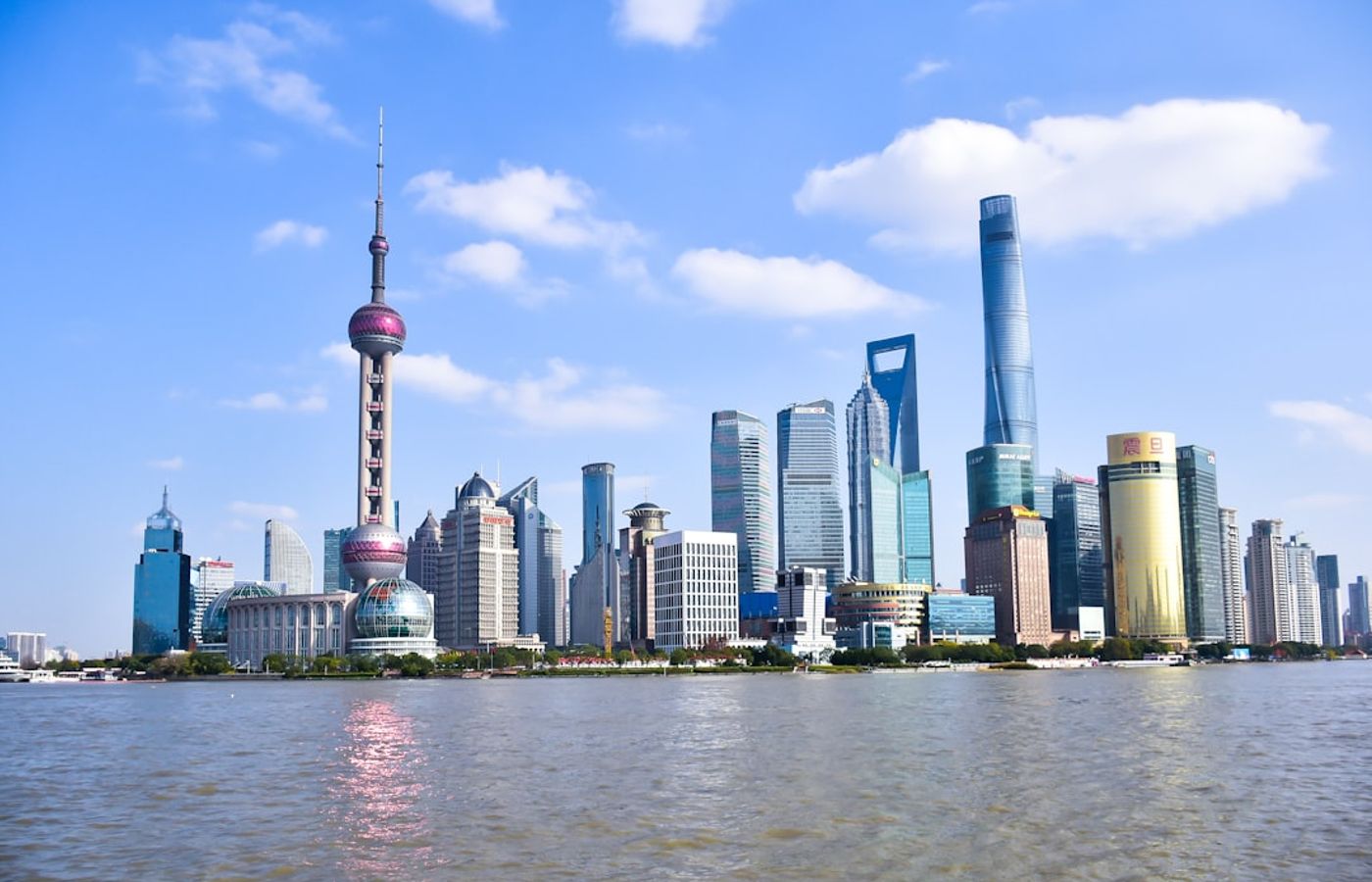

The Bund is a 1.5 km stretch of waterfront lined with 52 buildings raised between the 1880s and the 1930s, when Shanghai was divided into foreign concessions and this row held the banks, trading houses and consulates that ran them. The styles run from Gothic Revival to Art Deco, and the former Hongkong and Shanghai Bank building at number 12 still has its 1923 mosaic dome.
The elevated promenade faces Pudong across the water, which is the reason most people come. The contrast between the 1920s stone on one bank and the Oriental Pearl Tower and Shanghai Tower on the other is the single image the city is known for. Illumination on both sides typically switches on around 6pm and off before midnight.
Pro Tip: Come twice. Walk the western pavement at 7am when the promenade holds only tai chi groups, then return around 7pm for the lights. The crowd between 8pm and 10pm at weekends makes photography from the railing close to impossible.
2Yu Garden - A Ming Dynasty Garden Behind the Bazaar
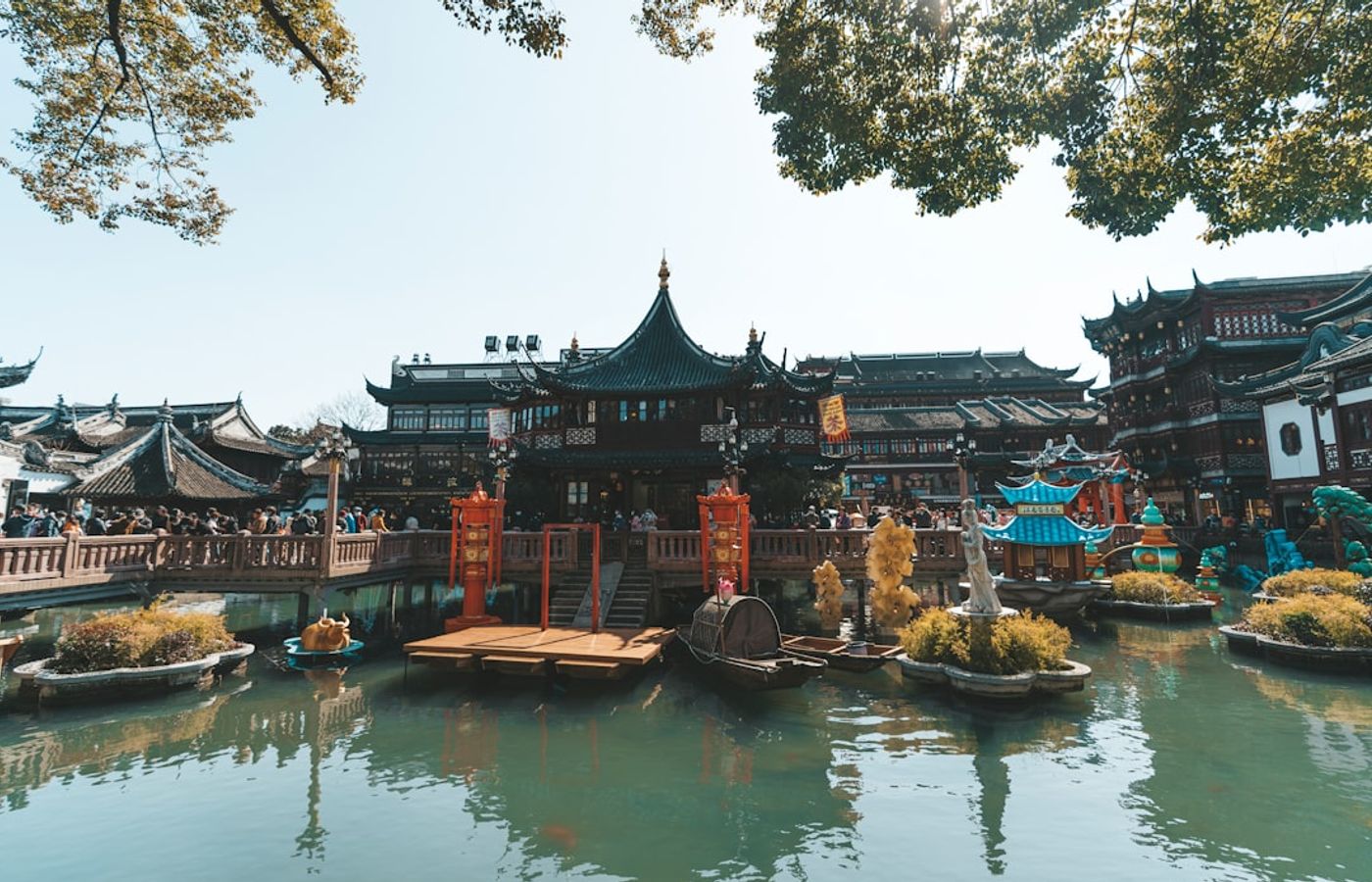

Yu Garden was begun in 1559 by Pan Yunduan, a Ming dynasty official, as a private retirement garden for his father, and took nearly 20 years to complete. It covers two hectares of pavilions, carp ponds, rockeries and zigzag bridges, arranged on the classical principle that no visitor should see the whole garden from any single point. The Exquisite Jade Rock, a perforated boulder said to have been salvaged from a Song dynasty shipment, is the centrepiece.
The surrounding Yuyuan Bazaar is a separate matter - a dense grid of reconstructed traditional shopfronts selling souvenirs, silk and street food. Nanxiang Steamed Bun Restaurant here has been making xiaolongbao since 1900 and the ground-floor takeaway queue moves faster than the upstairs dining rooms.
Pro Tip: Arrive at 8:30am for the garden opening and do the garden before the bazaar. By 11am the bazaar alleys are shoulder to shoulder and the garden's narrow corridors turn into a queue that moves in one direction only.

3Shanghai Tower and Lujiazui - The View From 546 Metres
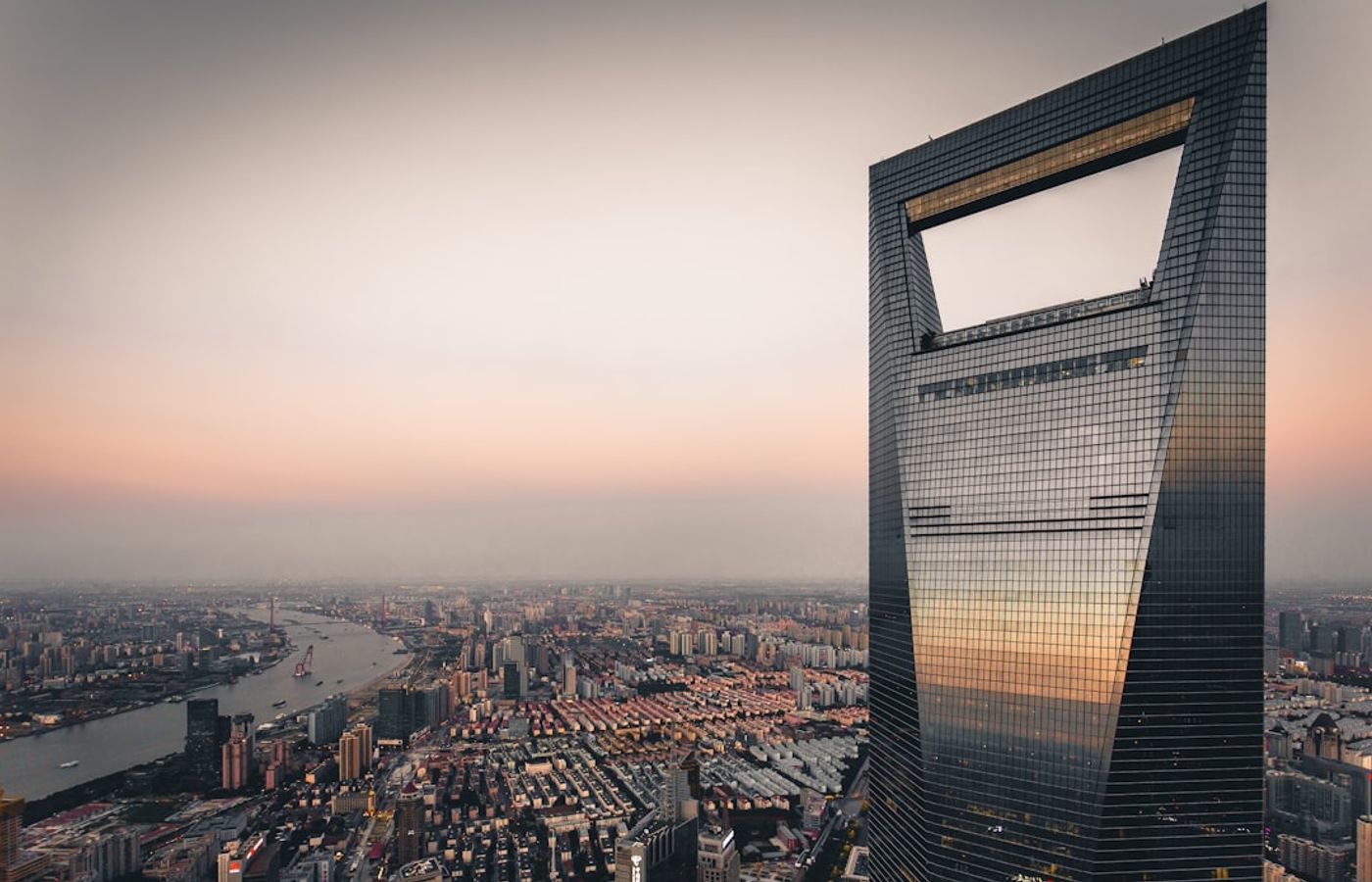

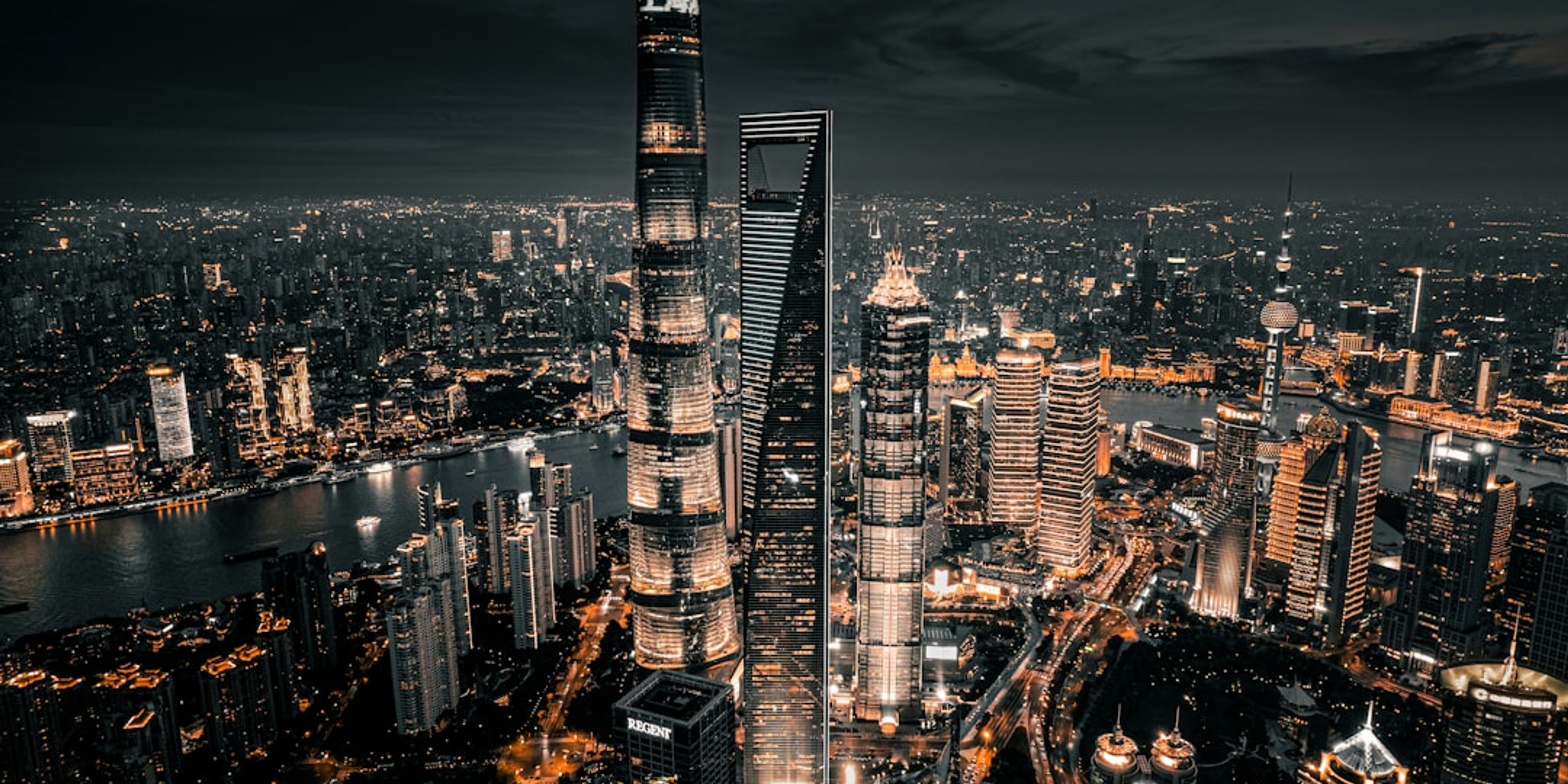
Shanghai Tower rises 632 metres, making it the tallest building in China and the second tallest in the world. Its observation deck on floor 118 sits at 546 metres and is reached by a lift that covers the distance in under a minute at 20.5 metres per second. The twisted facade is functional rather than decorative - the 120-degree rotation cuts wind load by around a quarter.
It stands in Lujiazui alongside the Jin Mao Tower and the Shanghai World Financial Center, the flat-topped building with the trapezoid opening near its summit. Thirty years ago this entire district was farmland and warehouses. Tickets for the Shanghai Tower deck run around CNY 180, and the Oriental Pearl Tower nearby is the cheaper and more dated alternative.
Pro Tip: Check visibility before buying. Shanghai haze regularly reduces the view to grey, and the ticket is non-refundable. Clear days most often follow rain or a cold front, and the hour before sunset gives you the city lit and unlit in one visit.
4The Former French Concession - Plane Trees and 1930s Villas
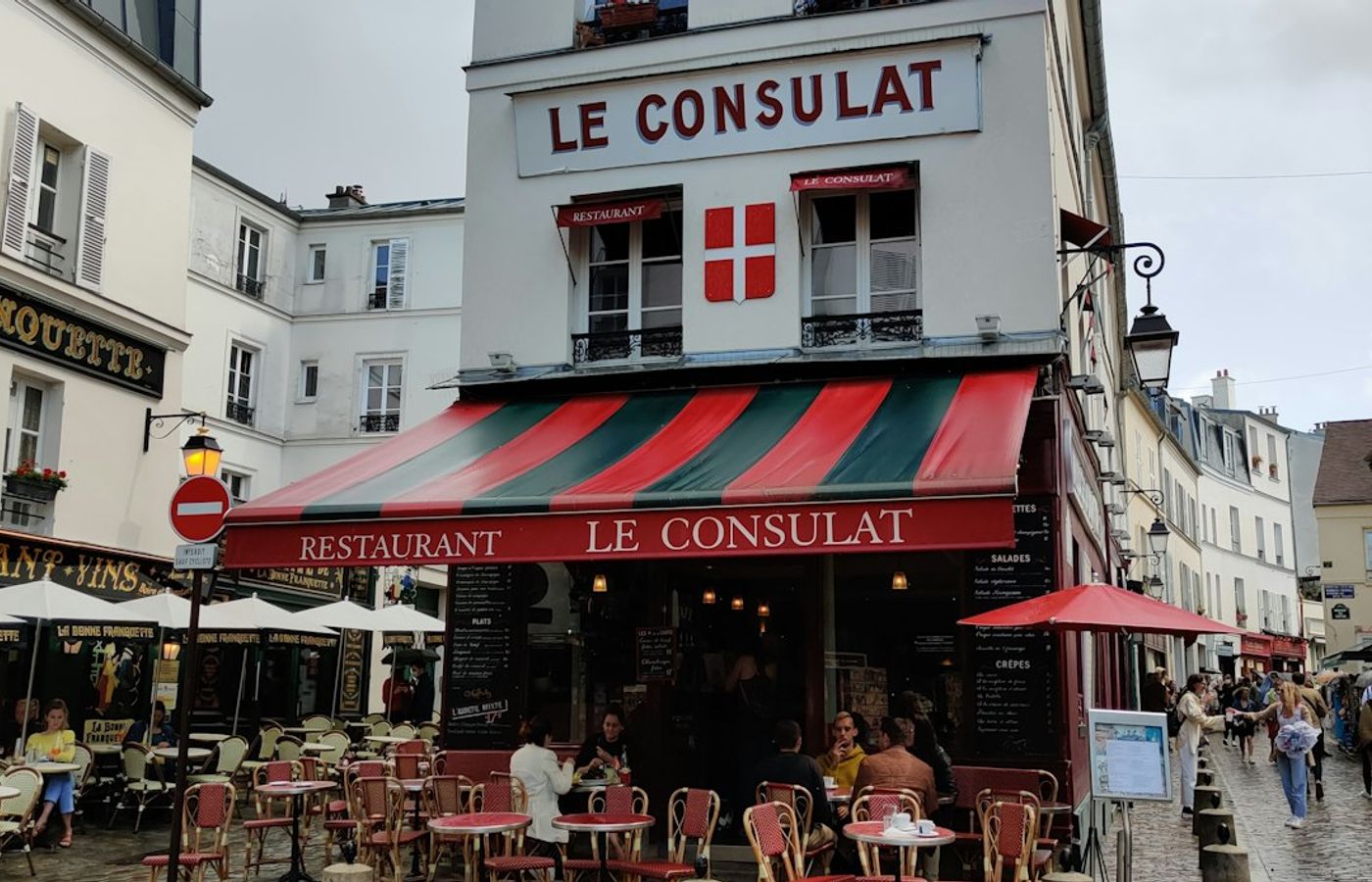
The Former French Concession was administered by France from 1849 until 1943, and the physical legacy is a district of low-rise villas, garden apartments and avenues lined with London plane trees that the French planted. It covers parts of Xuhui and Huangpu, and it looks and feels unlike anywhere else in the city.
Wukang Road is the best single street, anchored by the wedge-shaped Wukang Mansion of 1924, designed by the Hungarian-Slovak architect Laszlo Hudec. Anfu Road and Wuyuan Road carry independent coffee shops, wine bars and small galleries. Fuxing Park, laid out by the French in 1909, is where locals dance and play cards in the early morning.
Pro Tip: Walk this district rather than plan it. Start at Wukang Mansion, head east along Wukang Road and turn wherever the trees look best. Sunday mornings are quietest and the light through the plane trees between 8am and 10am is the reason photographers come here.
5Shanghai Museum - The Best Collection of Chinese Antiquities in the Country
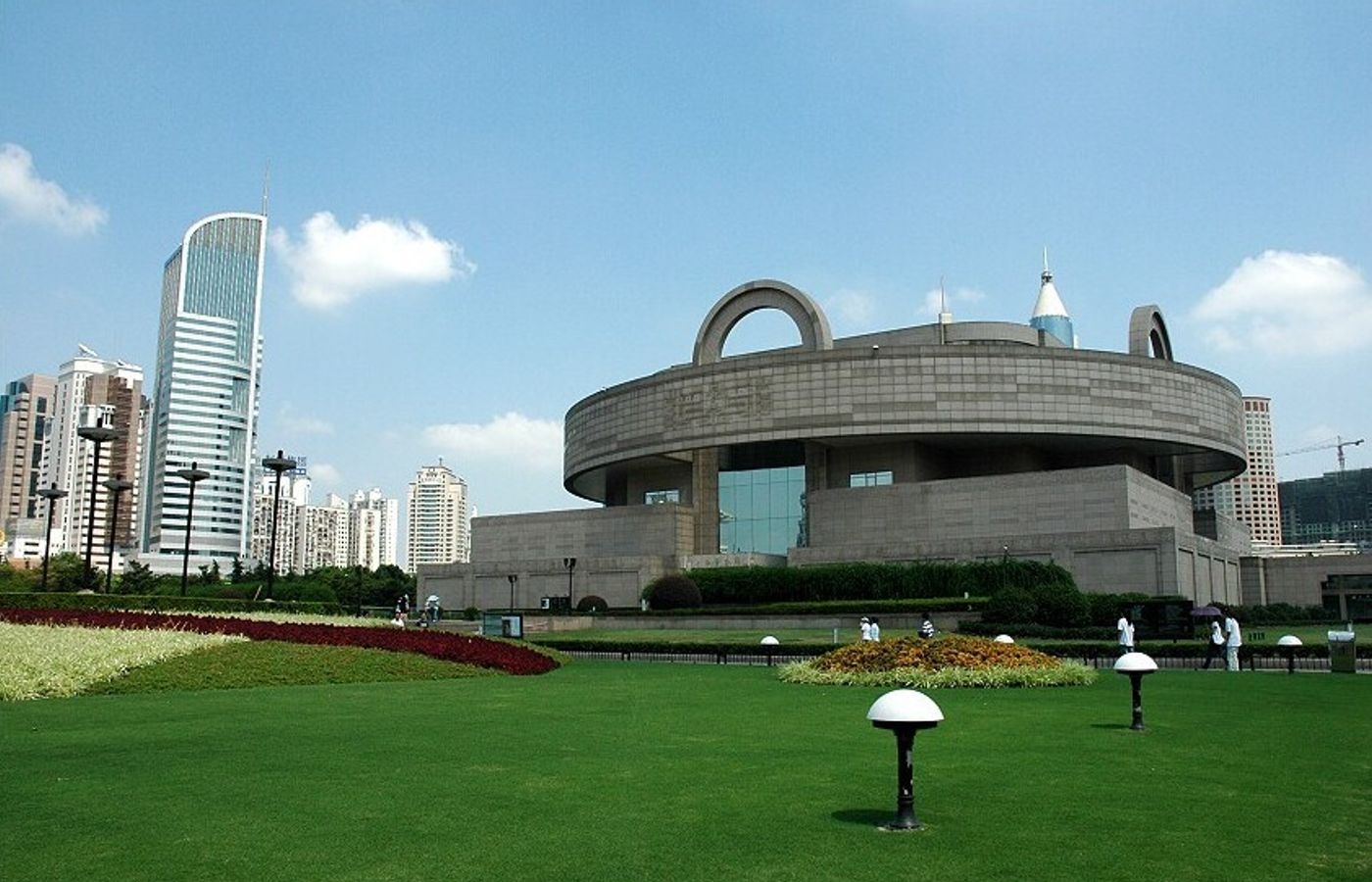
The Shanghai Museum holds around 140,000 objects across bronzes, ceramics, calligraphy, painting, jade, coins, seals and furniture. The ancient bronze gallery is the strongest of its kind anywhere, running from the Shang dynasty through to the Warring States period, and the ceramics gallery traces 8,000 years of Chinese pottery in a single circuit.
The 1996 building on People's Square was designed as a ding, the round-topped, square-based ritual cooking vessel that dominates the bronze collection. Entry is free but requires advance reservation through the museum's official channels, and daily numbers are capped. A newer and much larger East branch has opened in Pudong, so check which site holds the gallery you want.
Pro Tip: Book the reservation slot several days out and pick two galleries rather than attempting all eleven. Bronzes on the ground floor and painting on the third are the two that reward a slow visit; the rest can be walked in 20 minutes.
6Nanjing Road - China's Busiest Shopping Street
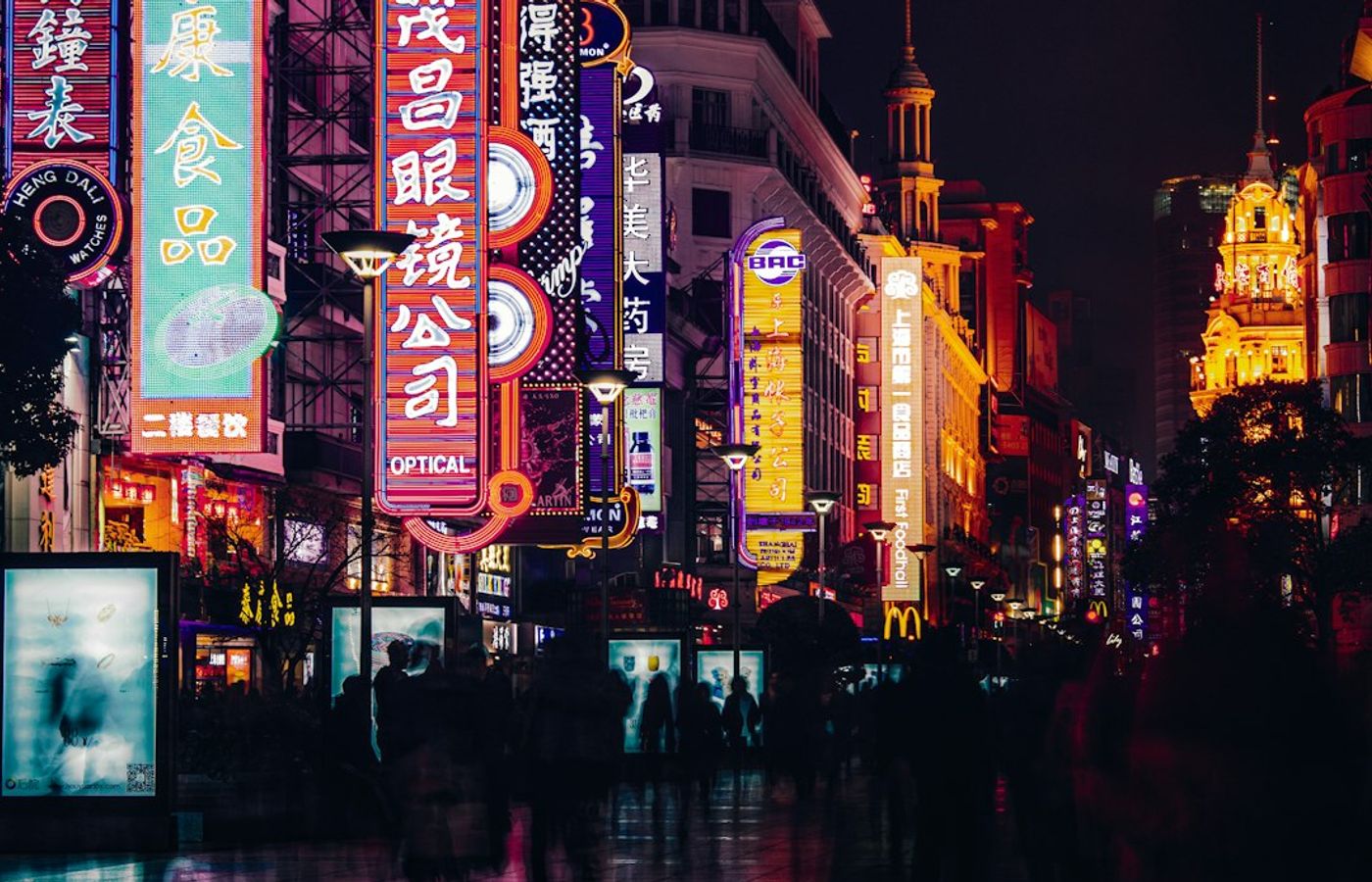
Nanjing Road has been the main commercial street of Shanghai since the 1850s and now carries close to a million visitors a day at peak periods. The eastern section between People's Square and the Bund is pedestrianised for 1.2 km, lined with department stores that date to the 1920s, neon signage stacked several storeys high, and a small tourist trolley that runs the length of it.
The western section beyond People's Square is a different street entirely - wider, less crowded and given over to luxury malls around Jing'an. For most visitors Nanjing East Road works best as the walking route between the Shanghai Museum and the Bund rather than as a shopping destination in its own right.
Pro Tip: Ignore anyone who approaches you in English offering a tea ceremony, an art student exhibition or a bar recommendation. Both scams operate heavily on this street and on the Bund approach, and the bill arrives at the end. A polite refusal without stopping ends it.
7Tianzifang and Xintiandi - Lane Houses Turned Into Galleries and Bars
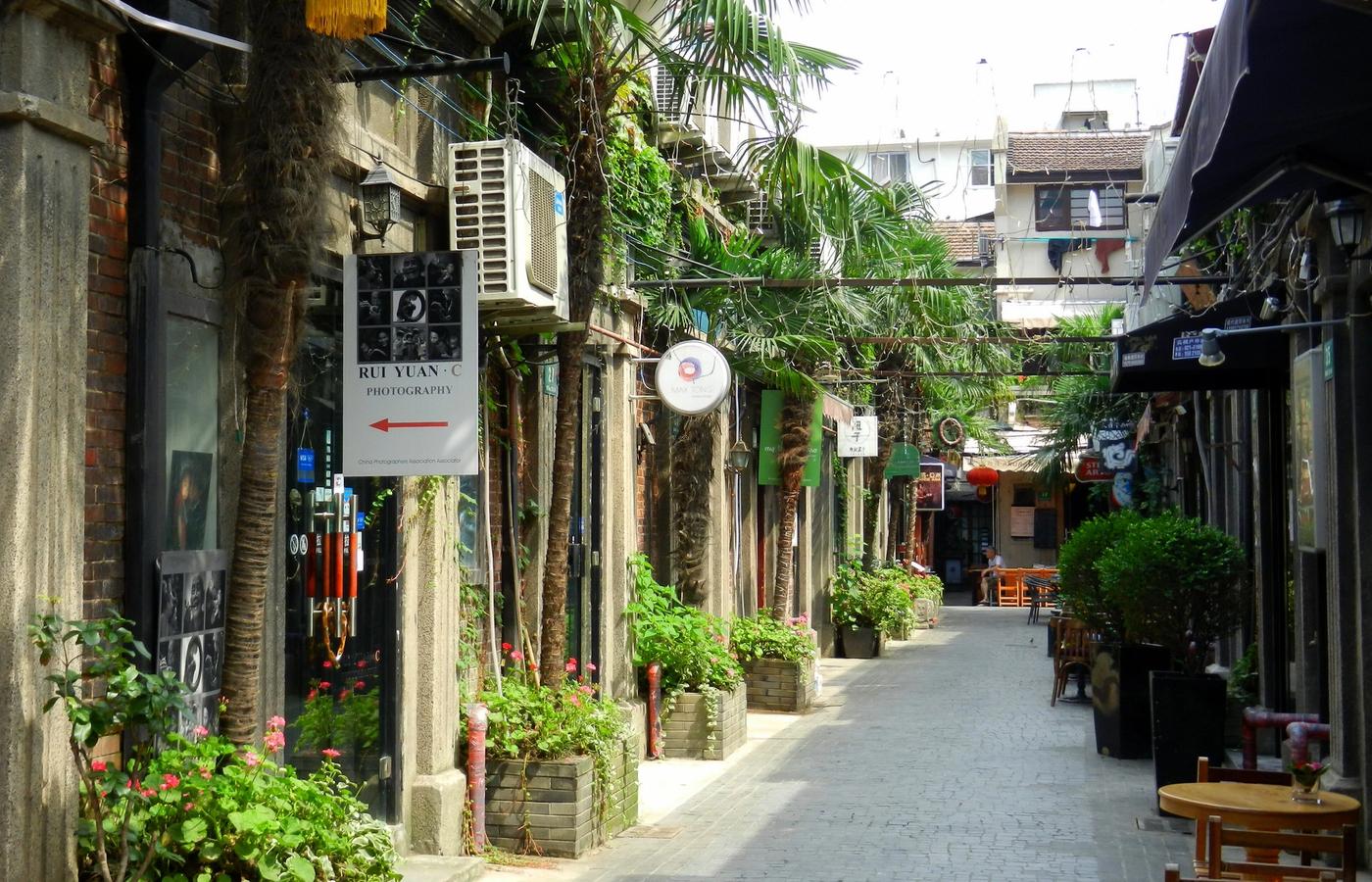
Tianzifang occupies a block of shikumen lane housing off Taikang Road, the stone-gate terraces that housed most of Shanghai's population in the early twentieth century. Artists began renting studios here in the late 1990s and the alleys now hold several hundred small galleries, craft shops, tea rooms and bars, squeezed into lanes barely two metres wide. Residents still live above many of them.
Xintiandi, 15 minutes north on foot, is the polished version of the same idea: shikumen facades rebuilt around a pedestrian plaza of restaurants and international brands. It is more comfortable and considerably less atmospheric. The Site of the First National Congress of the Communist Party of China sits on its southern edge and is free to enter.
Pro Tip: Enter Tianzifang from the Taikang Road No. 248 lane rather than the main No. 210 entrance, which absorbs the coach groups. Go on a weekday afternoon; weekend crowds make the narrower alleys single-file.
8Jing'an Temple - A Gilded Buddhist Complex Ringed by Skyscrapers
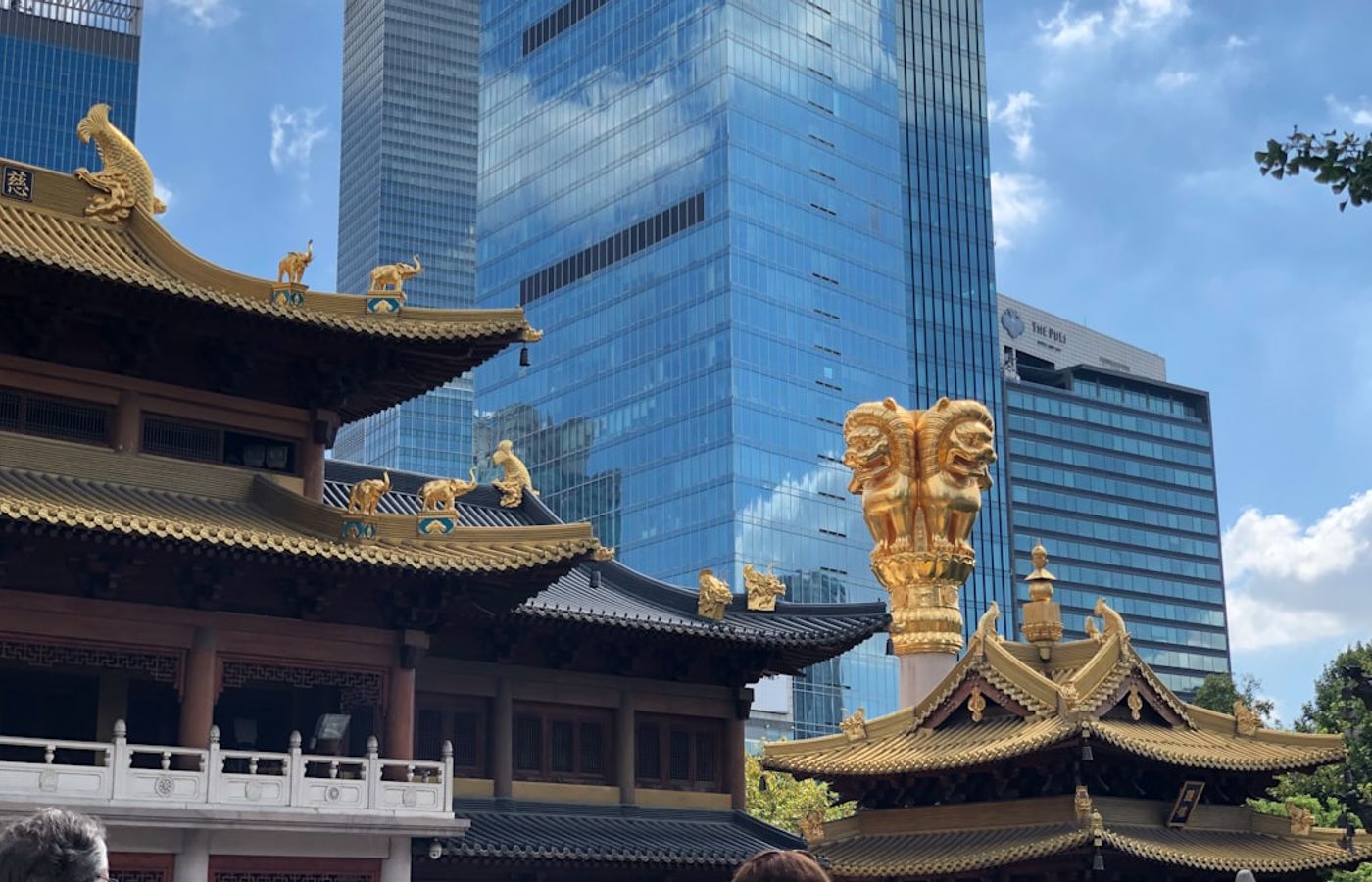
Jing'an Temple traces its founding to 247 AD, though it moved to this site in 1216 and the current buildings are a reconstruction completed in the 2000s after the temple served as a plastics factory during the Cultural Revolution. The rebuild used Burmese teak and traditional joinery, and the result is deliberately opulent - gold-leaf roofs, a 15-metre silver Guanyin statue and a 3.8-metre jade Buddha weighing 11 tonnes.
The setting is the point. The temple sits directly on top of a metro station in the middle of the Jing'an business district, with glass towers rising on all four sides and traffic on Nanjing West Road running past the gate. Admission is around CNY 50 and the complex takes 45 minutes to walk properly.
Pro Tip: The best photograph is from the pedestrian overpass at the Nanjing West Road junction, which lines up the golden roofs against the office towers behind. Late afternoon puts the sun behind the temple and lights the gold.
9Zhujiajiao Water Town - Ming Canals at the End of Metro Line 17
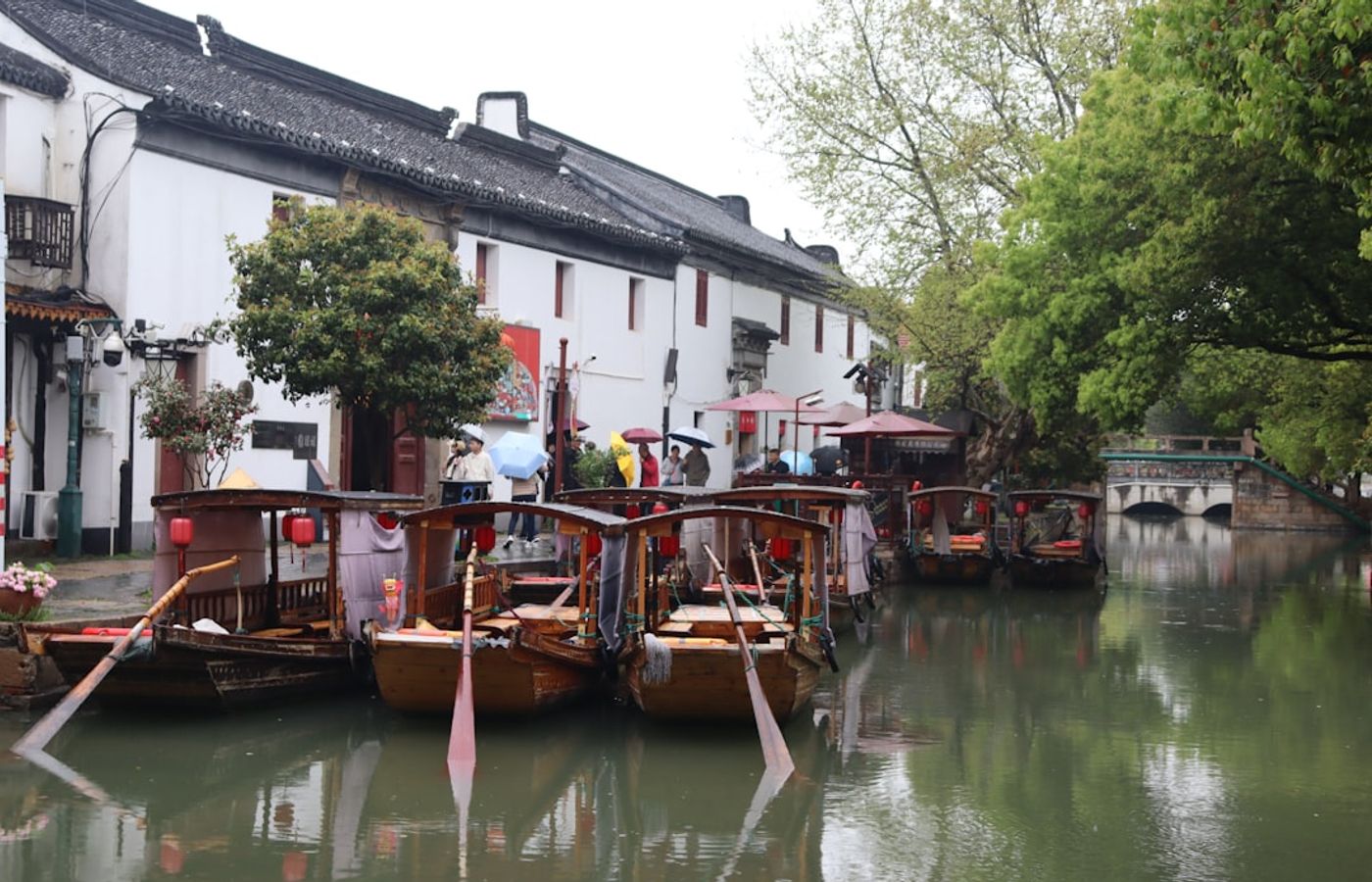
Zhujiajiao is a canal town of around 1,700 years standing, with 36 stone bridges and a grid of waterways lined by Ming and Qing dynasty houses. The five-arch Fangsheng Bridge from 1571 is the largest and the most photographed. Unlike the better-known canal towns further out in Jiangsu and Zhejiang, Zhujiajiao sits inside the Shanghai municipality and connects directly to the metro.
The old town is compact enough to walk in two hours. Wooden boats work the main canal for around CNY 60 to 150 depending on the route, and the Kezhi Garden and the Qing dynasty post office are the two paid sites worth the entry. Beyond the central lanes, ordinary residential canals carry on with washing hung over the water.
Pro Tip: Take the first Line 17 train and arrive before 9am, ahead of the coach tours from central Shanghai. Cross to the north bank within ten minutes of arriving - the southern lanes hold the souvenir stalls, the northern ones hold the residents.
10The Huangpu River Ferry - The Cheapest Crossing in Shanghai
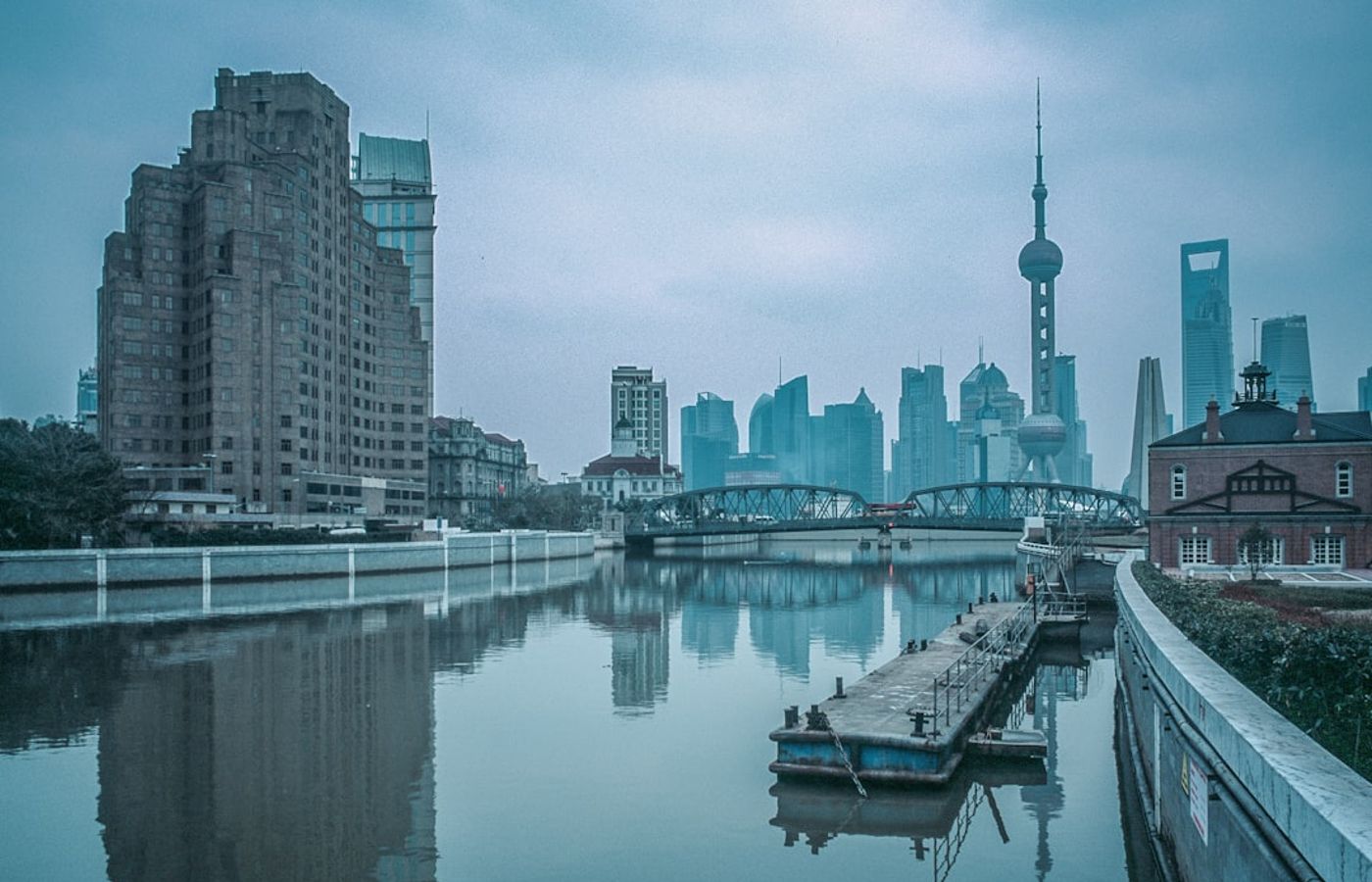
Public ferries have crossed the Huangpu River since 1911 and still run as ordinary commuter transport rather than as a tourist service. The Jinling East Road to Dongchang Road crossing takes about eight minutes, costs CNY 2 with a transport card, and delivers the same Pudong and Bund skyline that the sightseeing cruises charge upwards of CNY 120 for.
The boats are working vessels with scooters parked on the lower deck and commuters reading on the upper one. Services run roughly every 15 minutes from early morning until around 10pm. It is the most efficient way to combine the Bund and Lujiazui in one afternoon without doubling back through the Bund Sightseeing Tunnel or the metro.
Pro Tip: Ride eastward at dusk with the light behind you and the Pudong towers ahead. Stand at the bow rail on the upper deck rather than sitting inside, and avoid the 8am and 6pm commuter peaks when the deck fills with scooters.

CEO and co-founder
Tomas is the co-founder and director of trip1, an European company specializing in reservation services. He launched the company in 2025 with a focus on building scalable, efficient operations.
10 Top Places to Visit in Shanghai, China - FAQ
No. Four attractions a day is a realistic ceiling in Shanghai. The Bund, Nanjing Road and Yu Garden sit close enough to combine, but the Shanghai Museum needs two hours on its own and Zhujiajiao is a half-day round trip. Three days covers the list comfortably.
Group by river bank. Day one stays in Puxi: Yu Garden, Nanjing Road, the Shanghai Museum and the Bund at dusk. Day two crosses to Pudong for the Shanghai Tower, then back for Tianzifang and the Former French Concession. Day three takes Metro Line 17 out to Zhujiajiao and finishes at Jing'an Temple.
Two are worth booking. The Shanghai Tower observation deck sells timed slots that fill on clear days, and the Shanghai Museum requires free advance reservation through its official channels. Yu Garden and Jing'an Temple sell tickets at the gate with short queues on weekdays.
Around CNY 400 per person, or roughly EUR 50. The Bund, Nanjing Road, the Former French Concession, Tianzifang and the Shanghai Museum are free. The Shanghai Tower deck is the largest cost at about CNY 180, Yu Garden around CNY 40, Jing'an Temple CNY 50, and Zhujiajiao entry plus a boat about CNY 100.
All ten are. The Shanghai Metro is one of the largest networks in the world and every entry on this list sits within a 10-minute walk of a station, including Zhujiajiao at the end of Line 17. Signage and announcements are bilingual, and a single ride rarely exceeds CNY 7.
A few strong alternatives. The Power Station of Art in a converted riverside plant is the best contemporary gallery in the city and free to enter. The Shanghai Propaganda Poster Art Centre in a residential basement is small and unusual. Suzhou and Hangzhou are both under an hour away by high-speed rail if you have a spare day.