

Guides · Prague
10 Top Things to Do in Prague
By Tomas Achmedovas · CEO and co-founder

CEO and co-founder
Prague rewards the visitor who slows down. This guide covers the 10 top things to do in Prague - the sights that genuinely earn a place on your itinerary whether you have two days or a full week. Each entry includes the exact address with postal code, nearest tram or metro stop, distance from the Old Town centre, and a practical Pro Tip drawn from on-the-ground experience. The attractions are arranged to support efficient route planning: the Castle District entries group together on the west bank, Old Town and Jewish Quarter attractions cluster within a few minutes' walk of each other, and the two escapes from the tourist core (Vysehrad and Petrin Hill) sit at opposite ends of the river.
Prague in 2026 remains one of Europe's best-value capitals for sightseeing. A half-litre of Czech lager costs 50 to 70 CZK (EUR 2-3), a 24-hour transit pass is 120 CZK (EUR 5), and several of the most impressive sights on this list - Charles Bridge, Old Town Square, the Lennon Wall - cost nothing at all. Prices below are quoted in CZK with EUR equivalents, and transit directions reference Prague Metro lines A, B, and C plus tram route numbers.
Check dates for Prague
See what is available on your dates.
1Prague Castle - The Largest Ancient Castle Complex in the World


Founded around 870 CE by Prince Borivoj, Prague Castle holds the Guinness record as the largest ancient castle complex in the world, covering 70,000 square metres. The complex houses St. Vitus Cathedral, the Old Royal Palace, St. George's Basilica, and Golden Lane - a row of tiny, colourful houses built into the castle fortifications where Franz Kafka once lived at number 22. The castle remains the official residence of the Czech president, and the ceremonial changing of the guard happens at noon daily at the main gate.
The Circuit B ticket (250 CZK / EUR 10) covers St. Vitus Cathedral interior, Old Royal Palace, St. George's Basilica, and Golden Lane - the most useful combination for a first visit. The castle grounds themselves are free to enter and open from 6am, offering sweeping views over Prague's rooftops before the ticket offices open at 9am. St. Vitus Cathedral's stained-glass windows, including one by Art Nouveau master Alphonse Mucha, are reason enough for the ticket.
2Charles Bridge - A 14th-Century Gothic Crossing with 30 Baroque Statues


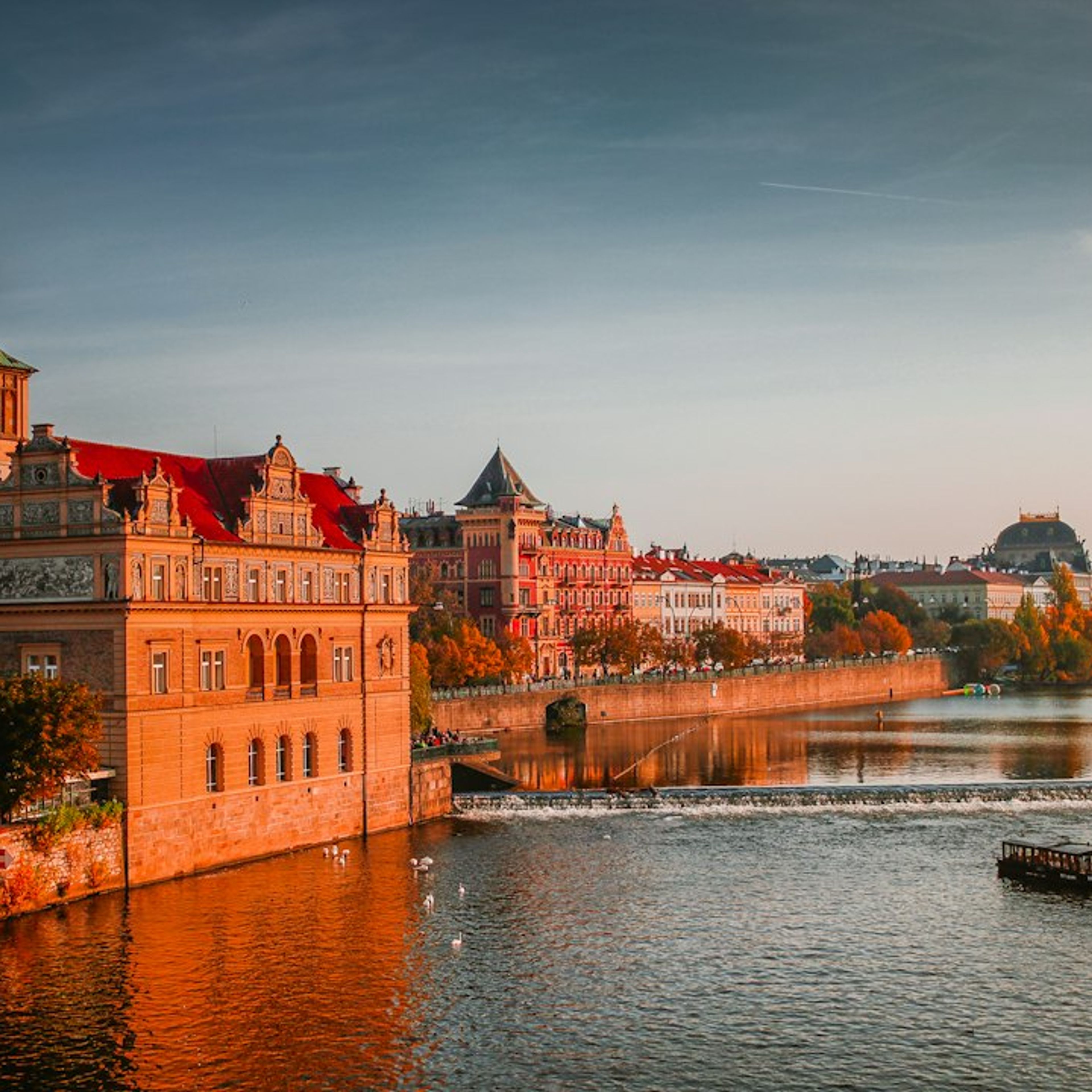
Charles Bridge (Karluv most) was commissioned by King Charles IV in 1357 and served as the only crossing over the Vltava River until 1841. The 516-metre stone bridge is lined with 30 Baroque statues, the most famous being the bronze figure of St. John of Nepomuk - touch the plaque beneath it and local tradition says you will return to Prague. At each end, Gothic bridge towers frame the crossing: the Old Town Bridge Tower on the east bank is one of the finest Gothic structures in Europe, and its observation gallery (100 CZK / EUR 4) gives a straight-line view down the bridge toward the Castle.
During daylight hours in high season, the bridge carries a thick stream of tourists, portrait artists, and souvenir vendors. The atmosphere is livelier than peaceful, but the bridge remains a must-see for its engineering, its statues, and the river-and-castle panorama it offers. Crossing the bridge on foot takes about 10 minutes without stops.
3Old Town Square - Prague's Medieval Heart and Gathering Place


Old Town Square (Staromestske namesti) has been the civic centre of Prague since the 10th century, when it served as a marketplace at the crossroads of European trade routes. The square is ringed by architectural landmarks: the Gothic Church of Our Lady before Tyn with its distinctive twin spires, the Baroque St. Nicholas Church, the Rococo Kinsky Palace, and the medieval Old Town Hall. A monument to religious reformer Jan Hus stands at the centre, unveiled in 1915 on the 500th anniversary of his execution.
The square is free to access and filled with activity throughout the day - street musicians, cafe terraces, and seasonal markets (Christmas and Easter). The surrounding streets radiate outward in a medieval pattern, each offering a slightly different character. Celetna leads east toward Powder Tower, Parizska runs north through the luxury shopping strip toward the Jewish Quarter, and narrow lanes south lead to the river.
Check dates for Prague
See what is available on your dates.
4Astronomical Clock - The Oldest Operating Astronomical Clock in the World

The Prague Astronomical Clock (Orloj) was first installed on the Old Town Hall tower in 1410, making it the oldest astronomical clock still in operation. The clock face displays three different types of time - old Czech time, standard Central European time, and Babylonian time - alongside an astronomical dial showing the position of the sun and moon against the zodiac. Every hour from 9am to 11pm, the Procession of the Twelve Apostles appears through small windows above the clock face, drawing crowds that gather in the square below.
The show itself lasts about 45 seconds and is, honestly, a bit underwhelming by modern standards - but the clock's mechanical complexity and 600-year survival make it remarkable. Climbing the Old Town Hall tower (250 CZK / EUR 10) rewards you with the best elevated view of Old Town Square and the Tyn Church spires. The small museum inside explains the clock's mechanism in detail.
5Jewish Quarter (Josefov) - Six Synagogues and the Old Jewish Cemetery

Josefov, Prague's Jewish Quarter, preserves one of Europe's most significant collections of Jewish heritage sites. The neighbourhood dates to the 10th century and was the birthplace of writer Franz Kafka. Six synagogues - including the Old-New Synagogue (Staronova), the oldest active synagogue in Europe, built around 1270 - and the Old Jewish Cemetery survive. The cemetery contains approximately 12,000 tombstones layered up to 12 deep, as expansion was impossible within the ghetto walls.
A combined ticket (200 CZK / EUR 8) covers entry to six sites: the Maisel Synagogue, Pinkas Synagogue (with names of 77,297 Czech Holocaust victims inscribed on its walls), the Spanish Synagogue, the Klausen Synagogue, the Ceremonial Hall, and the Old Jewish Cemetery. The Old-New Synagogue requires a separate ticket (200 CZK). Allow two to three hours to visit the full circuit. Josefov also contains the most upscale shopping street in Prague - Parizska - lined with luxury boutiques.
6Petrin Hill - A Forested Hilltop with a Mini Eiffel Tower and City Views

Petrin Hill rises 327 metres on the west bank of the Vltava, covered in orchards, gardens, and forested paths. A funicular railway (valid with any Prague transit ticket) climbs from the Ujezd tram stop to the summit in four minutes. At the top, the 63.5-metre Petrin Lookout Tower - built in 1891 as a smaller replica of the Eiffel Tower - offers panoramic views in every direction. On clear days, you can see as far as Snezka, the highest peak of the Giant Mountains, 150 km to the northeast.
The tower charges 150 CZK (EUR 6) for adults. Adjacent attractions include the Mirror Maze (75 CZK) and the Stefanik Observatory (free for daytime exhibitions). Walking down from the summit through the gardens toward Strahov Monastery takes about 30 minutes and passes through some of the quietest green space in central Prague. The hill is also popular with joggers and picnickers.
7Lennon Wall - A Graffiti-Covered Tribute to Peace and Free Expression

Since John Lennon's death in 1980, this otherwise ordinary wall opposite the French Embassy in Mala Strana has been continuously repainted with Beatles lyrics, political messages, and peace symbols. During the communist era, Czech youth used the wall as an outlet for dissent and free expression at a time when both were dangerous. Authorities repeatedly whitewashed the wall, but new art always reappeared. Today it is the only place in Prague where graffiti is legal, and visitors are encouraged to add their own messages.
The wall changes constantly - what you see one month will be painted over by the next. It occupies a small square alongside a canal with a waterwheel, creating a surprisingly peaceful setting. The Grand Priory Square in front hosts occasional buskers playing Beatles songs. Visiting takes only 10 to 15 minutes, but the wall's history as a symbol of resistance adds weight to the colourful surface.
8Vysehrad Fortress - Prague's Less-Visited Castle with Panoramic River Views

Vysehrad sits on a rocky hill above the Vltava River, roughly 3 km south of Old Town. Built around the 10th century, this fortress was once the rival seat of power to Prague Castle. Today it is far quieter than its famous counterpart and sees a fraction of the tourist traffic. The grounds are free to enter and include the Romanesque Rotunda of St. Martin (Prague's oldest surviving building, from the 11th century), the neo-Gothic Basilica of St. Peter and St. Paul, and the Vysehrad Cemetery where Czech composers Dvorak and Smetana are buried.
The fortress walls and ramparts offer some of Prague's best panoramic views - the Vltava winding through the city with the Castle and Cathedral skyline to the north. The casemates (underground passages) can be visited for 60 CZK (EUR 2.50). The surrounding park is a favourite of local families and joggers, with wide paths, benches, and green lawns.
9Wenceslas Square - The Boulevard of Czech History and Modern Commerce

Wenceslas Square is less a square and more a 750-metre boulevard, stretching from the National Museum at the top to the Na Prikope shopping street at the bottom. Named after the patron saint of Bohemia, whose equestrian statue stands at the museum end, the square has been the stage for defining moments in Czech history - the declaration of Czechoslovak independence in 1918, the Prague Spring protests of 1968, and the Velvet Revolution rallies of 1989 that ended communist rule.
Today the square is a commercial strip with shops, cinemas, and restaurants. The National Museum at the upper end reopened in 2019 after an eight-year renovation - the Neo-Renaissance building itself is worth seeing even from the outside. Entry to the main building is 260 CZK (EUR 10). The square is also a useful transit hub - Mustek metro station (A and B lines) sits at the bottom, and Muzeum station (A and C lines) is at the top.
10National Museum - A Neo-Renaissance Monument to Czech Science and Culture

The National Museum (Narodni muzeum) was founded in 1818 and occupies a commanding Neo-Renaissance building at the top of Wenceslas Square. The main building reopened in 2019 after an extensive eight-year reconstruction and houses over 14 million items across natural history, archaeology, music, and ethnography collections. The grand entrance hall and staircase, with marble columns and painted ceilings, are worth the admission price for the architecture alone.
General admission is 260 CZK (EUR 10). The mineralogy collection and the hall of prehistoric animals are particular highlights. A modern glass corridor connects the main building to the former Federal Assembly next door, which hosts temporary exhibitions (separate ticket, 50 to 170 CZK). The building's facade still bears visible bullet marks from the 1968 Warsaw Pact invasion - a reminder of the square's historical weight.
Take this guide with you
Get every place in this guide, with addresses and map links, in your inbox — easy to open on your phone during the trip.
One email to the address on your account. No newsletter.

CEO and co-founder
Tomas is the co-founder and director of trip1, an European company specializing in reservation services. He launched the company in 2025 with a focus on building scalable, efficient operations.
10 Top Things to Do in Prague - FAQ
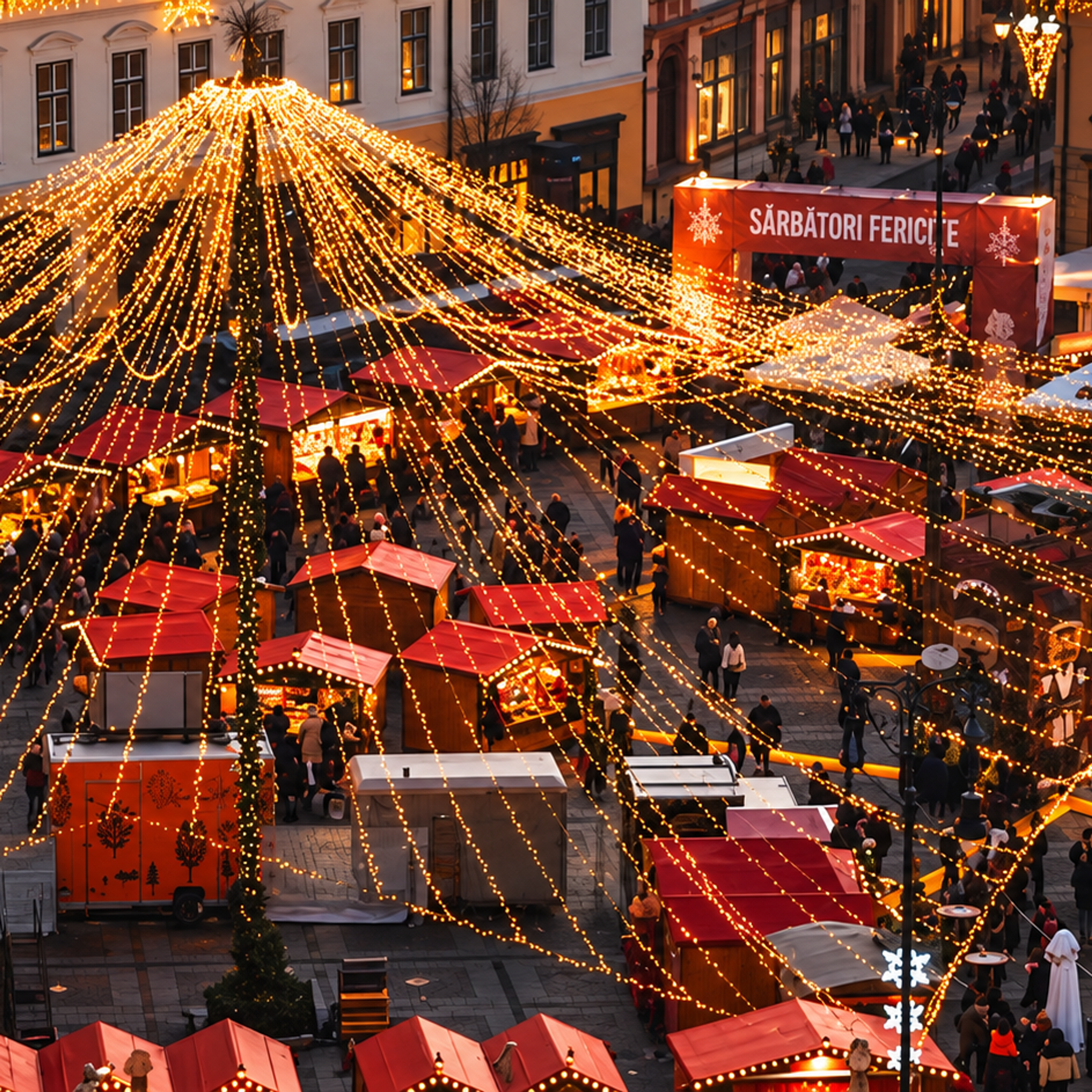
Give three days to the core: Prague Castle and Charles Bridge, then Old Town Square, the Astronomical Clock and the Jewish Quarter. Use day four for Petrin Hill and the Lennon Wall, day five for Vysehrad and Wenceslas Square, then take day trips, such as the train to Karlstejn Castle. From 28 November 2026 to 6 January 2027, Christmas markets fill Old Town Square and Wenceslas Square.
Only in some places, and usually at a poor rate. The currency is the Czech koruna (CZK), and some shops and restaurants in the centre take euros but give change in korunas. Cards are accepted almost everywhere, including on public transport, so paying by card or taking korunas from a bank ATM is the simplest choice. Avoid street exchange booths.
Good value for a European capital. Charles Bridge, Old Town Square, the Lennon Wall and the Vysehrad grounds are free. A 24-hour transit pass costs 150 CZK on paper or 140 CZK in the PID Litacka app, and the Prague Castle Main Circuit ticket is 450 CZK. Restaurants on Old Town Square charge about double, so eat two blocks away.
No, but tipping is expected for good service. In restaurants, around 10% is normal, and the tip is not included in the bill. Tell the server the total you want to pay when they bring the card machine or take your cash, rather than leaving money on the table. In cafes and pubs, rounding up to the next round number is enough.
Do visit Charles Bridge at dawn and Prague Castle before 9am, and wear comfortable shoes for the cobblestones. Do validate a paper transit ticket when you first board. Don't eat on Old Town Square, where prices double. Don't plan the Jewish Quarter for a Saturday or a Jewish holiday, when its sites are closed. Don't change money at street booths.
The Main Circuit ticket costs 450 CZK for adults and is valid for two days. It covers St. Vitus Cathedral, the Old Royal Palace, St. George's Basilica and Golden Lane, where Kafka lived at number 22. The castle grounds are free and open early, so walk them before the ticket offices open at 9am, and use the eastern gate to avoid queues.