

Guides · Helsinki
10 Top Things to Do in Helsinki

CEO and co-founder
This guide covers the 10 top attractions and things to do in Helsinki in 2026 - the landmarks, museums, islands and Finnish saunas that genuinely earn a place on your Helsinki itinerary whether you have a weekend or a full week. Each entry lists the exact street address, nearest tram or metro line, walking time to the pier or door, distance from Senate Square, and a concrete Pro Tip you can act on.
We have ordered the list to help you plan efficient walking routes. The Old Helsinki cluster - Helsinki Cathedral and Senate Square, Market Square with the Old Market Hall, Uspenski Cathedral and Esplanadi Park - sits inside a 400-metre radius and works as a single morning loop. Kiasma, Oodi and Ateneum together form the culture triangle around the Central Railway Station. Temppeliaukio Church (Rock Church) sits 15 minutes north-west of the centre. Suomenlinna Sea Fortress is a full 4-hour block including the ferry crossing. A public sauna at Loyly or Allas Sea Pool works as an end-of-day treat.
Helsinki is small, walkable and honest about its weather. The main peninsula is only 5 km across, so most sights are within 30 minutes on foot. In summer daylight runs from 04:00 to 23:00 and the city moves outdoors to the sea; in winter the sun sets before 15:30 and the sauna sessions become the point. Public transport (HSL) runs trams 1, 2, 3, 4, 6, 7, 8, 9, 10 across the centre with a single AB ticket at 3.10 EUR.
1Helsinki Cathedral and Senate Square - The Neo-Classical Symbol of the City
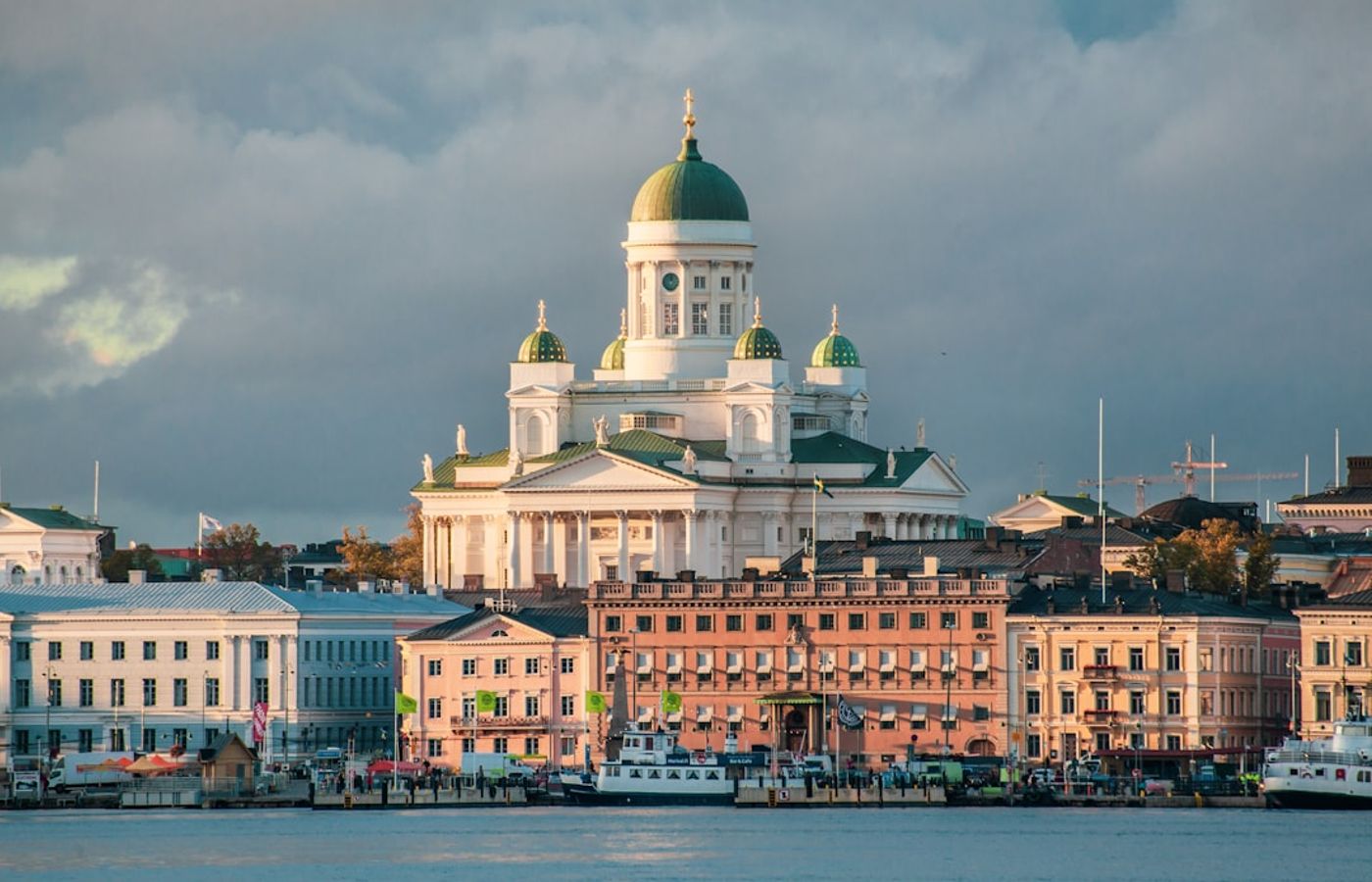

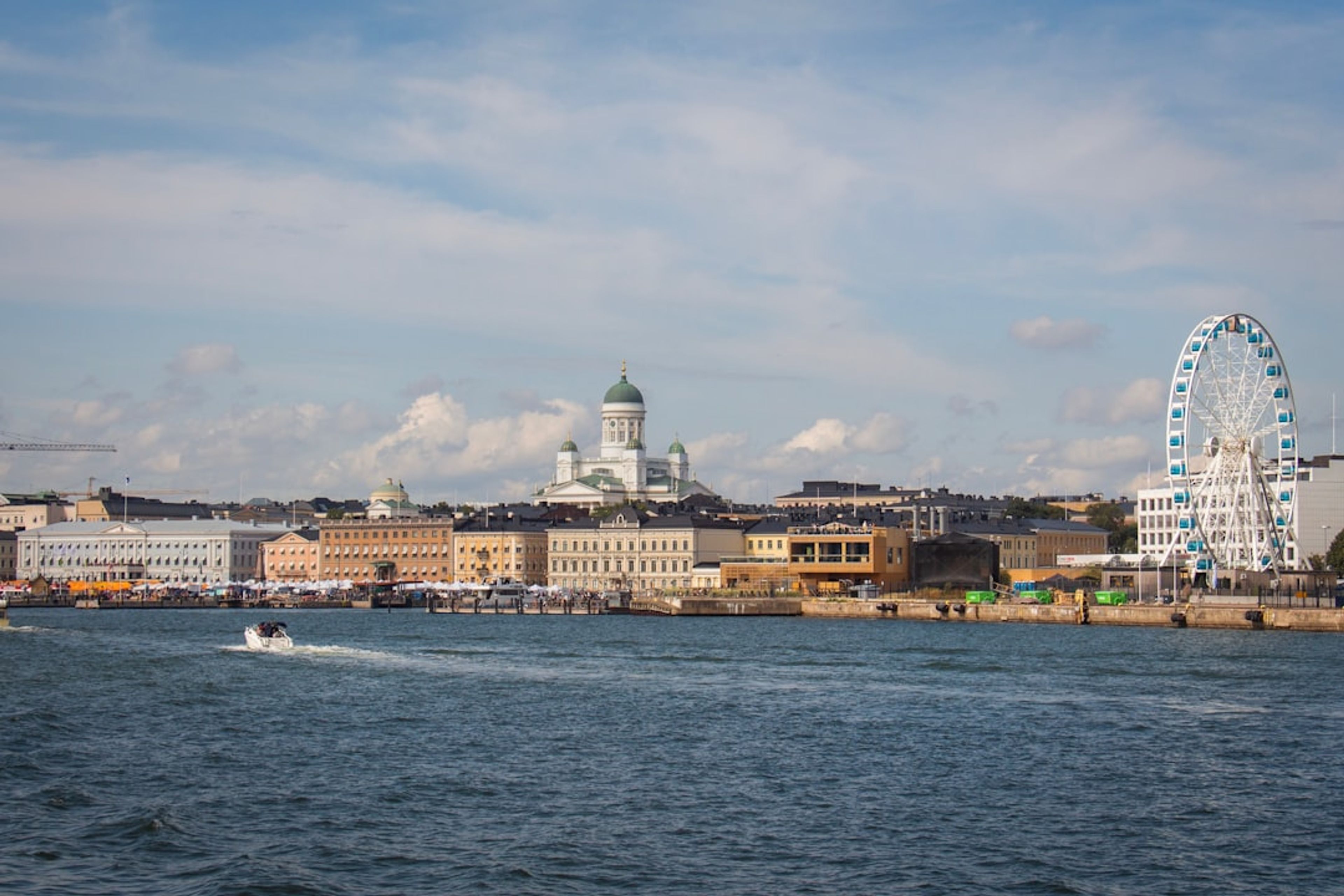
Topping every list of things to do in Helsinki, Helsinki Cathedral (Tuomiokirkko) crowns Senate Square (Senaatintori) on a granite plinth 50 steps above the city. The Evangelical Lutheran cathedral was designed by German architect Carl Ludwig Engel and completed in 1852, 12 years after Engel's death, by his student Ernst Lohrmann. Its bright-white neo-Classical facade with a green central dome and four smaller corner cupolas is the postcard image of Finland.
Senate Square below is the historic heart of Helsinki, laid out by Engel and Johan Albrecht Ehrenstrom after the Russian Grand Duchy moved the Finnish capital from Turku in 1812 (both architects also worked on Saint Petersburg, which explains the family resemblance). The 1894 bronze statue of Tsar Alexander II stands in the middle. Around the square are the Government Palace, Helsinki University main building and the Sederholm House (the city's oldest stone house, 1757). Entry to the cathedral is free, open daily 09:00-18:00 with slightly extended hours in summer. Winter Christmas market fills Senate Square in December.
Pro Tip: Climb the 50 exterior steps for a photo of Senate Square below and the market square in the distance - it is a set piece for every Instagram post from Helsinki. Come at 20:00 in summer for the low golden light, or at 15:00 in December for the market square, glogi (mulled wine) and gingerbread biscuits.
2Suomenlinna Sea Fortress - The UNESCO-Listed Island Complex Guarding Helsinki
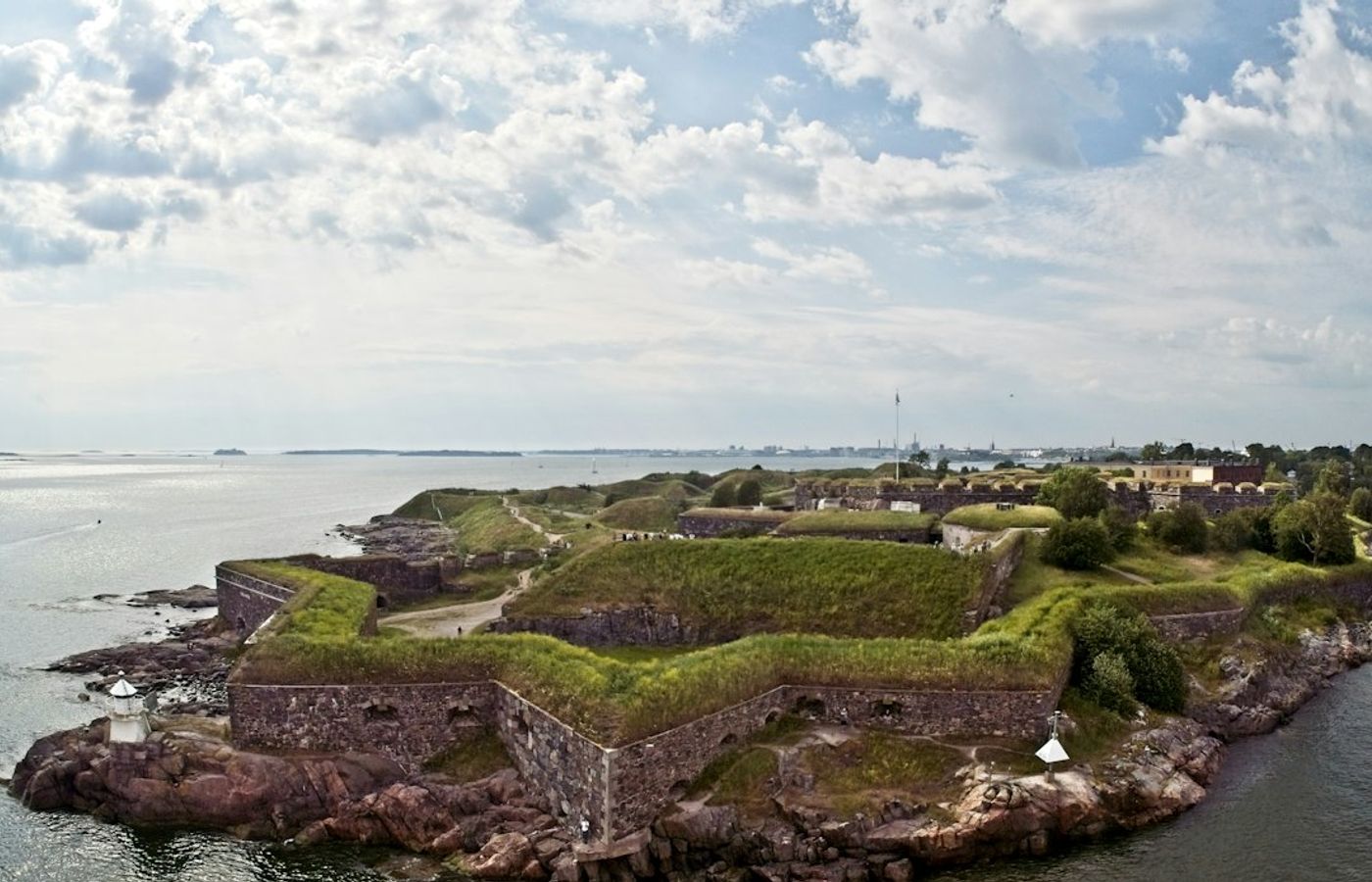

Suomenlinna Sea Fortress (Swedish: Sveaborg) spreads across six connected islands at the entrance to Helsinki harbour and is the single unmissable Helsinki attraction. Sweden began building the fortress in 1748 to counter Russian expansion; it was surrendered to Russia in 1808, transferred to Finland in 1918, and demilitarised in 1973. UNESCO added Suomenlinna to the World Heritage List in 1991 as a unique example of 18th-century European military architecture. Today it is an inhabited district of Helsinki with 800 residents.
The island grounds - 6 km of walls, cannon batteries, dry docks and grassy bastions - are free to walk at any hour. Five museums cluster near the main pier: the Suomenlinna Museum (the introduction hall, entry 10 EUR), the Vesikko Submarine (a 1930s Finnish sub, seasonal), the Military Museum's Manege collection, the Customs Museum and the Toy Museum. Summer hours (May-September) are 10:00-18:00; winter hours (October-April) 11:00-16:00. The HSL ferry from Market Square costs 5 EUR return with a 12-hour tourist ticket, or is included in any HSL Day Ticket (11 EUR).
Pro Tip: Take the 10:00 ferry (before the tour groups arrive), walk directly to the King's Gate on the far south of Kustaanmiekka island in 40 minutes, then loop back through the dry docks and eat lunch at Suomenlinnan Panimo craft brewery in the old barracks. Bring a windproof layer - the exposed bastions are 4-6 degrees colder than the city.

3Market Square (Kauppatori) and the Old Market Hall - Waterfront Food and Crafts
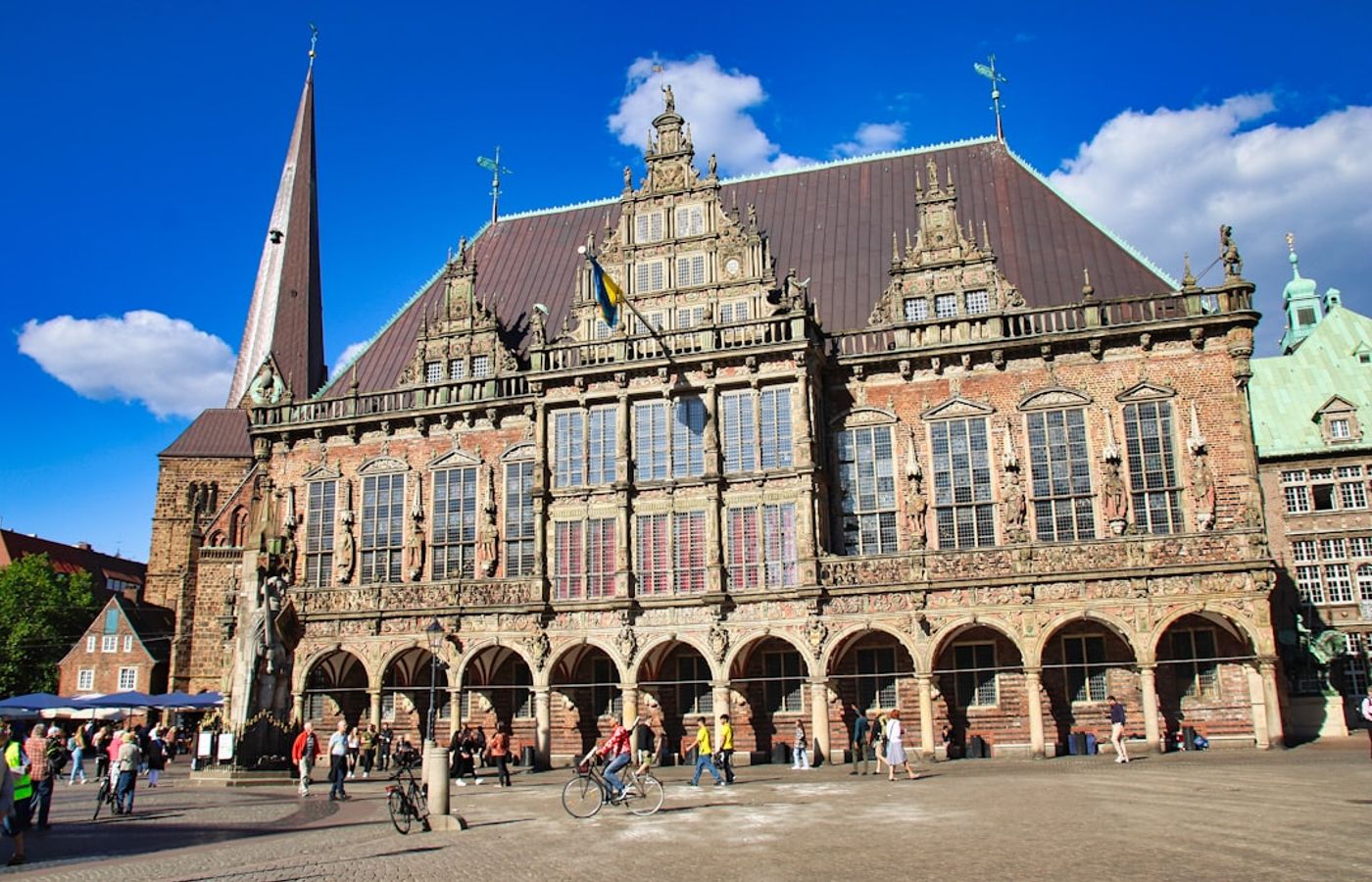

Market Square (Kauppatori) is Helsinki's outdoor waterfront market and the departure pier for every Suomenlinna ferry and every archipelago sightseeing cruise. The square runs along the South Harbour in front of City Hall, the Presidential Palace and the Swedish Embassy. Stalls open daily from 08:00 to 16:00 (extended to 18:00 in summer, closed most Sundays in winter) with grilled salmon, fish and chips, cloudberry jam, reindeer sausage and wool hats. The bronze Havis Amanda mermaid fountain by Ville Vallgren (1908) is the square's mascot - crowned with a student cap on Vappu (30 April) at 18:00.
One street west, on the same waterfront, sits the Old Market Hall (Vanha Kauppahalli), Helsinki's oldest indoor market hall, opened in 1889. Its neat rows of dark-wood counters carry Finnish specialities: reindeer meat and pate at Poroherkku, salmon soup at Soppakeittio, licorice at Pariisin Ville. Opening hours are Monday to Saturday 08:00-18:00, closed Sunday. The Old Market Hall complements Hakaniemi Market Hall (500 m north on tram 3B) and Hietalahti Market Hall (500 m west near Loyly).
Pro Tip: Eat the 12 EUR salmon soup at Soppakeittio in the Old Market Hall for the definitive Helsinki lunch - locals queue at 12:30. Outside, buy a paper cone of muikku (crispy fried freshwater smelt) from Kauppatori's grill stalls for the same price. Avoid the mid-priced tourist buffets on the north side of the square.
4Temppeliaukio Church (Rock Church) - A Lutheran Church Cut into Solid Granite
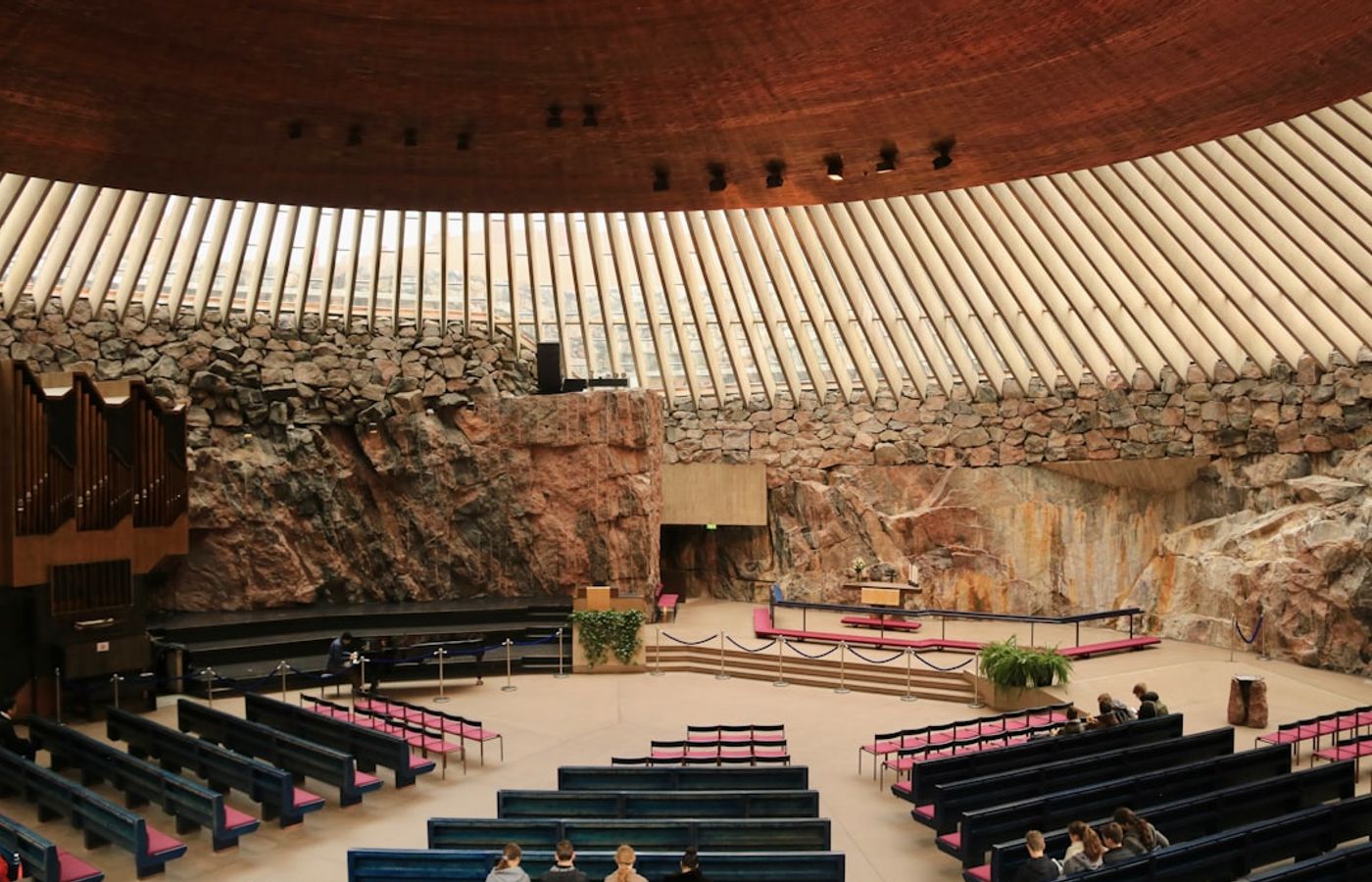
Temppeliaukio Church (the Rock Church) is one of the most photographed pieces of modern Finnish architecture and Helsinki's most visited church, with roughly 500,000 visitors a year. The Evangelical Lutheran church was designed by brothers Timo and Tuomo Suomalainen and consecrated in 1969. Rather than being built above ground, the interior was excavated directly from a granite outcrop in the middle of Etu-Toolo residential district, leaving the rough exposed rock walls as the entire interior finish. A 24-metre copper-clad glazed dome rests on a ring of 180 concrete beams and pours daylight down the rock.
Acoustics are outstanding, which is why the church programs regular chamber music and organ concerts (Wednesday evenings in summer, Sunday afternoons in winter, tickets from 15-25 EUR). Opening hours for tourists vary but are typically Monday-Friday 10:00-17:00, Saturday 10:00-17:45, Sunday 12:00-17:45 with closures for services. Admission is 5 EUR for adults, free for under-18s. The exterior looks unremarkable - a low grey concrete wall on top of the rock - which is why most first-time visitors nearly walk past the entrance.
Pro Tip: Time your visit for a lunchtime organ concert (usually Wednesday 12:00) so you get the church at its acoustic best. Sit on the far side under the dome for direct sightlines to the pipes. The souvenir Bible in Finnish, Swedish and English sells for 8 EUR at the small shop and makes a genuine gift.
5Uspenski Cathedral - The Largest Orthodox Cathedral in Western Europe
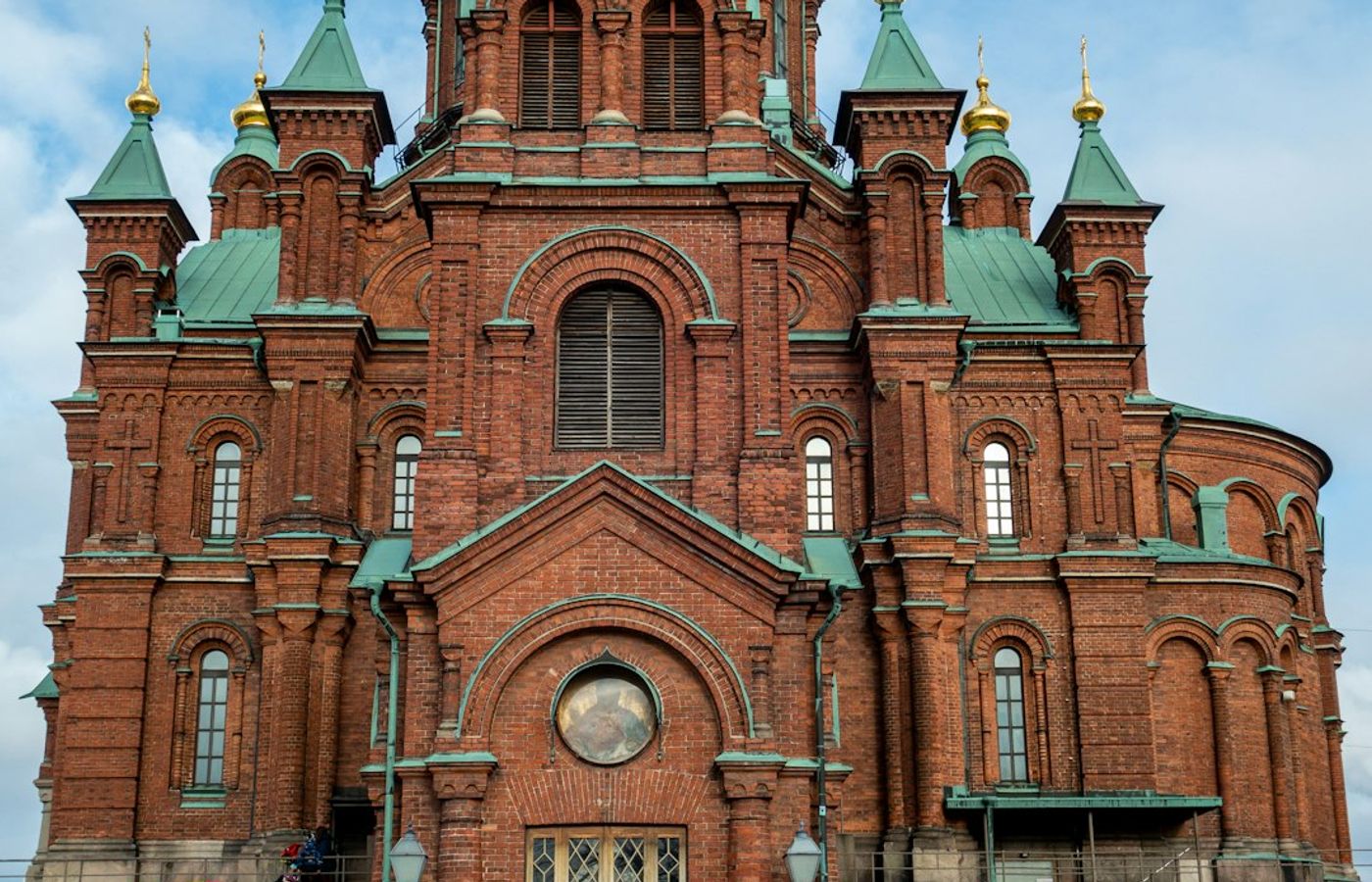
Uspenski Cathedral (Uspenskin katedraali) is the main cathedral of the Finnish Orthodox Church and the largest Orthodox cathedral in Western Europe. Designed by Russian architect Aleksey Gornostayev and consecrated in 1868 while Finland was still a Grand Duchy of the Russian Empire, the red-brick basilica with 13 gold onion domes stands on a granite outcrop on the Katajanokka peninsula. From the terrace you look straight down onto Market Square, the South Harbour and the Ferris wheel of SkyWheel Helsinki.
The interior is a five-domed basilica in the traditional Russo-Byzantine plan. The iconostasis is polished Kanev sandstone painted in green and gold; the icon of the Dormition of the Theotokos above the royal doors is a 1868 gift from the Tsar Alexander II. The four huge polished granite columns supporting the central dome weigh 30 tonnes each. Opening hours are Tuesday to Friday 09:30-16:00, Saturday 10:00-15:00, Sunday 12:00-15:00, closed Monday. Admission is free but donations for candles are encouraged.
Pro Tip: Combine Uspenski with the walk back across Katajanokka to Kanavaranta for the Art Nouveau apartment blocks (numbers 4, 6, 7 are the classics from 1900-1905). If a Divine Liturgy is running, stay for 20 minutes at the back - the Slavonic chant is worth the pause.
6Kiasma and Oodi - Contemporary Art Museum and the Central Library
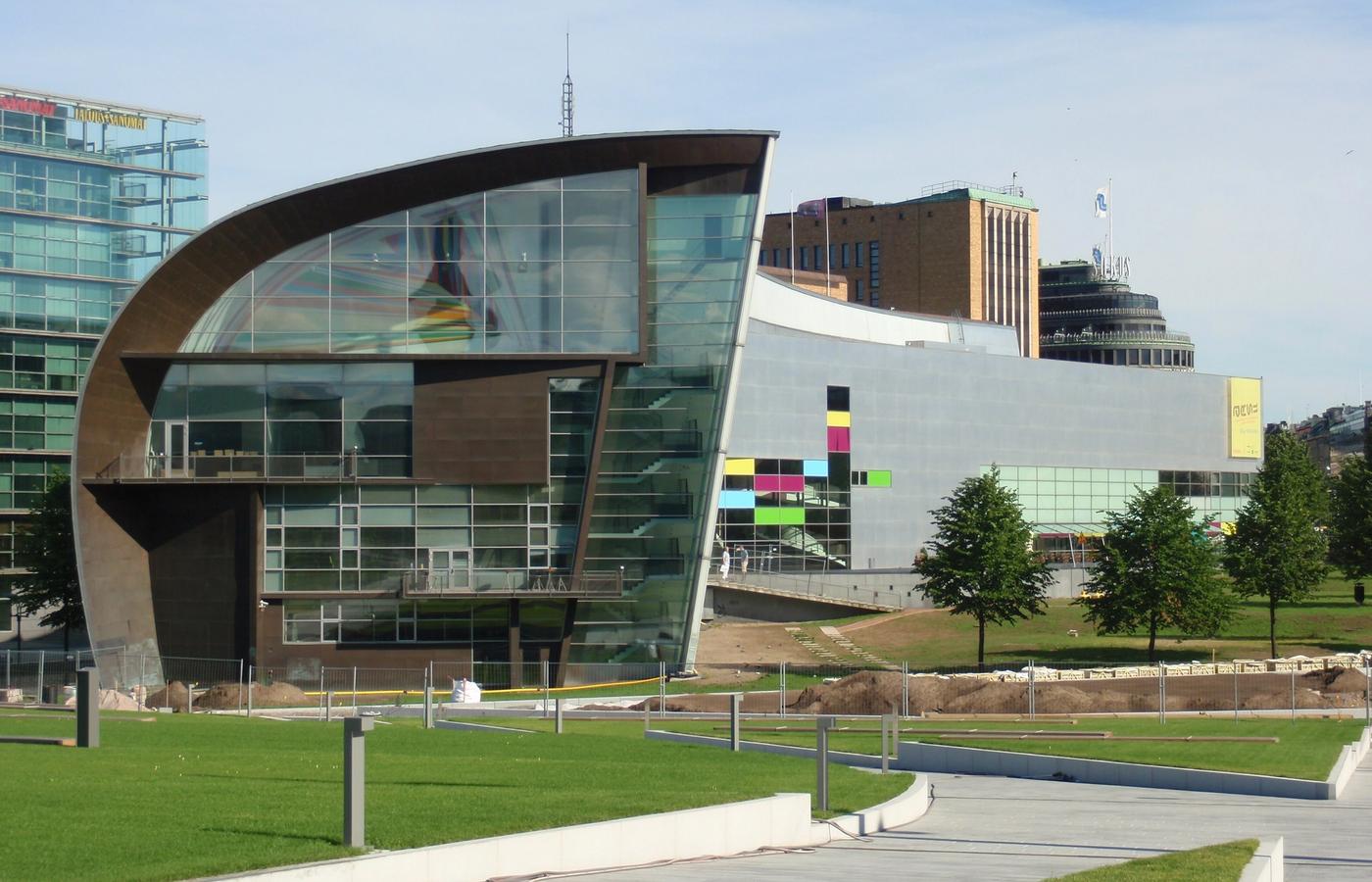
Kiasma Museum of Contemporary Art and the Oodi Central Library sit 100 metres apart on Mannerheimintie and together anchor Helsinki's cultural axis opposite the Central Station. Kiasma was designed by American architect Steven Holl and opened in 1998 in a curved white asymmetric building that itself is the exhibit. Its five floors host rotating contemporary art from the 9,600-work national collection: painting, video, sculpture, performance. Opening hours are Tuesday-Friday 10:00-20:30, Saturday-Sunday 10:00-18:00, closed Monday. Admission is 22 EUR.
Oodi Central Library (Toolonlahdenkatu 4, 00100), opened in 2018 and designed by ALA Architects, is the physical answer to what a modern public library should be. Three floors of laminated timber, glass and steel hold reading rooms, sound studios, 3D printers, sewing machines, a cinema, a cafe and 100,000 books. Opening hours are Monday-Friday 08:00-22:00, Saturday-Sunday 10:00-20:00 and admission is free. From the third-floor Book Heaven balcony you look straight across Kansalaistori Square at the Parliament House, the Music Centre and the Sanoma newspaper HQ. Ateneum Art Museum (Kaivokatu 2) is opposite the Central Station.
Pro Tip: Buy the Museum Card (Museokortti, 79 EUR for 12 months or 39 EUR for a year student rate) if you plan to visit Kiasma, Ateneum, National Museum, Design Museum and Amos Rex - it pays back after any two paid museums. Oodi is free and open till 22:00 on weekdays, ideal for a quiet late afternoon coffee on the timber-clad third floor.
7Design District Helsinki - The 25-Block Creative Quarter of Punavuori
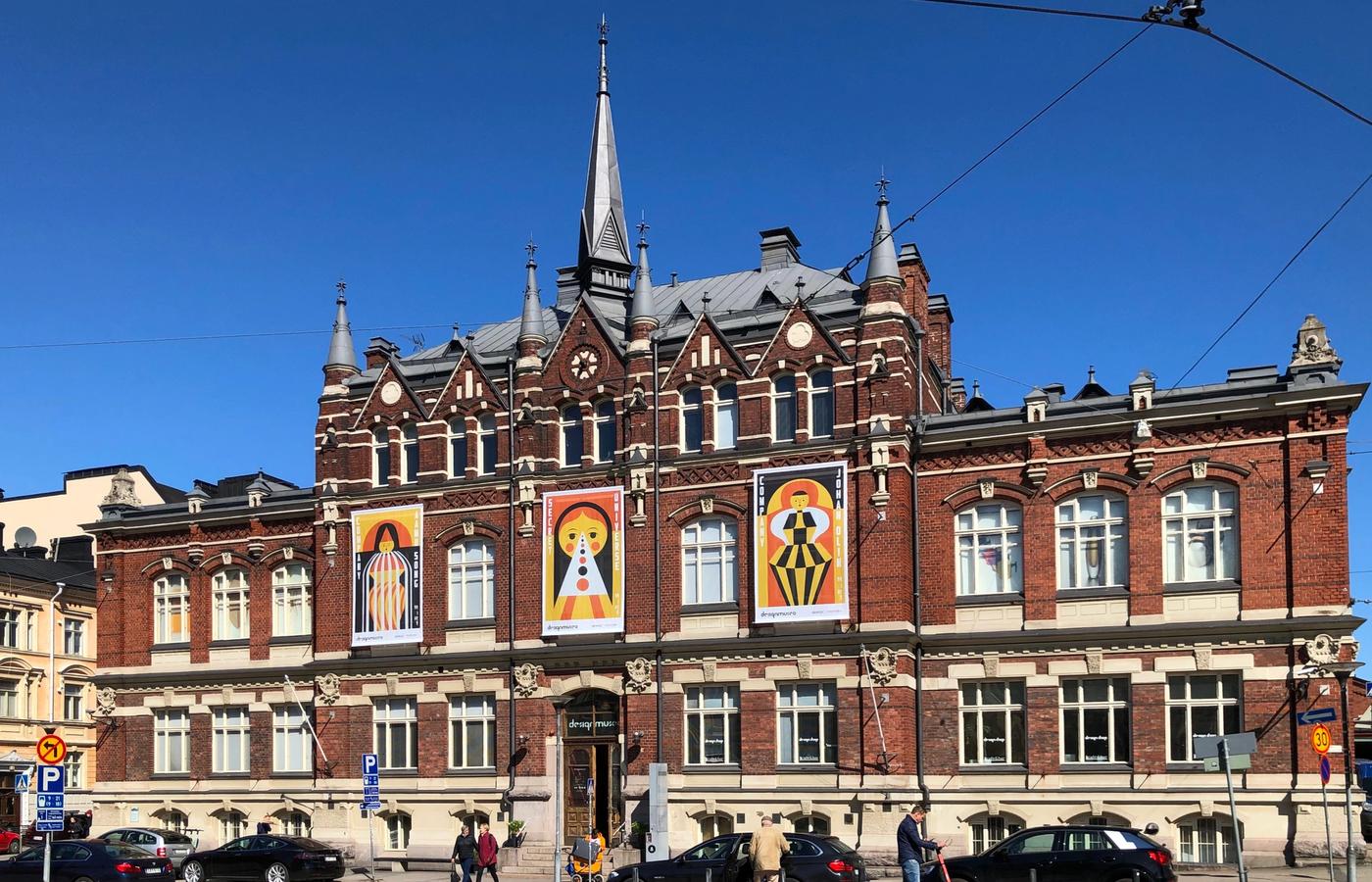
The Design District is a 25-block area of central Helsinki that concentrates 200+ design shops, galleries, studios, museums and restaurants. The district was formally mapped in 2005 to make Helsinki's Nordic design ecosystem legible to visitors. It covers the Punavuori and Kaartinkaupunki neighbourhoods, roughly bounded by Uudenmaankatu in the north, Iso Roobertinkatu in the middle, Fredrikinkatu in the west and Kasarmikatu in the east. Iittala, Marimekko, Artek, Lokal, Nikari, Vessel and Papershop all have their flagship stores here.
The Design Museum at Korkeavuorenkatu 23 (Tuesday-Sunday 11:00-18:00, admission 15 EUR) is the anchor institution - the permanent exhibition traces 150 years of Finnish design from Aalto glassware to Nokia phones. Design Forum Finland at Erottajankatu 7 is the free-entry visitor centre where you pick up the official Design District map. The best cluster of independent shops is on Fredrikinkatu between numbers 22 and 34. In September the district hosts Helsinki Design Week, Northern Europe's biggest design festival, with 250+ open events.
Pro Tip: Pick up the free Design District paper map at Design Forum Finland (Erottajankatu 7) before you start - it flags 200 numbered stops. Save the flagship Iittala + Arabia store on Pohjoisesplanadi 25 for the end - the outlet corner in the basement carries factory seconds at 30-50 percent off retail.
8Esplanadi Park - The Central Promenade with Summer Concerts
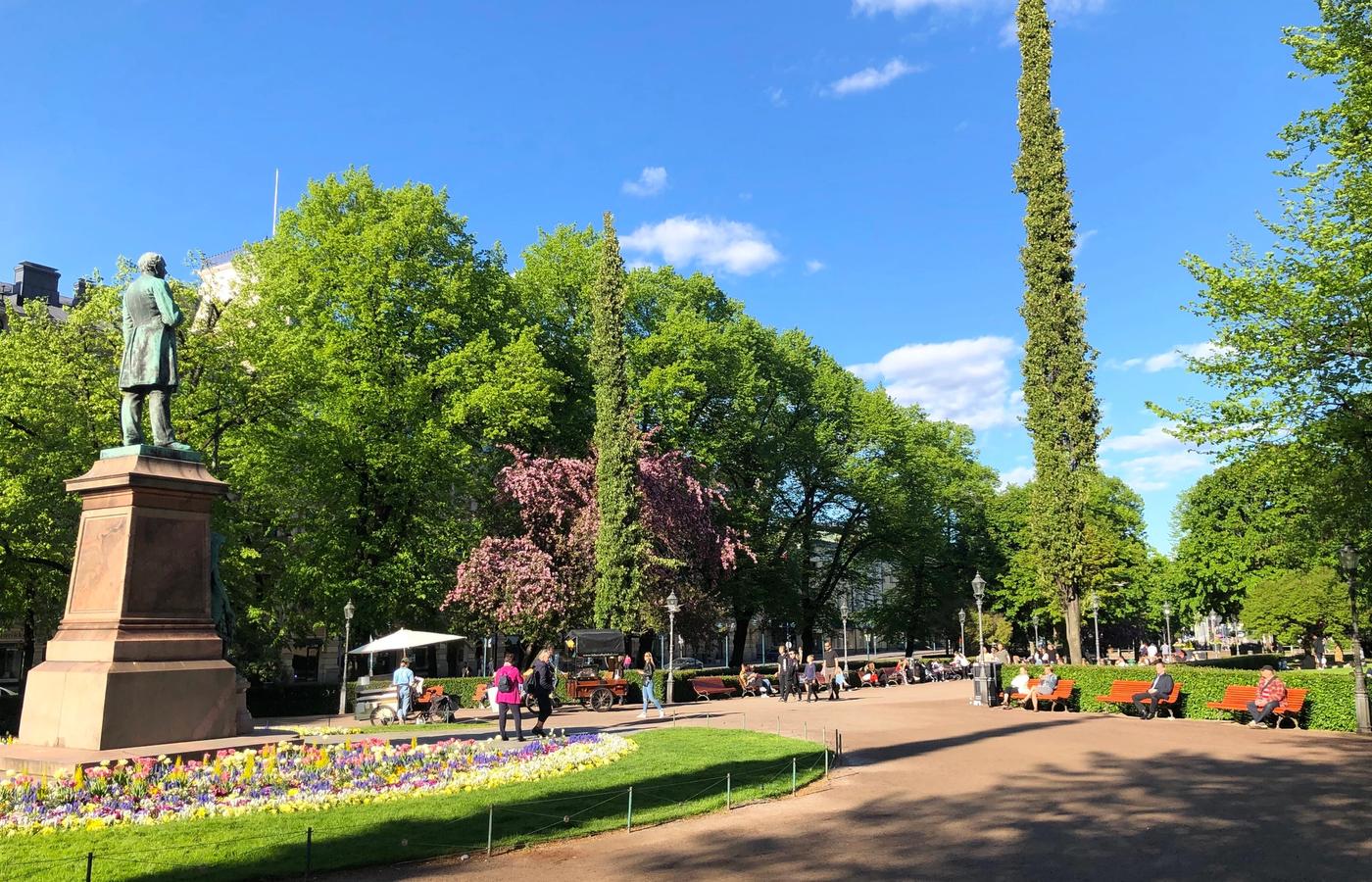
Esplanadi Park (locals shorten it to Espa) is the 400-metre linear park that runs from Market Square west to Erottaja Square between Pohjoisesplanadi and Etelaesplanadi streets. Laid out in 1818 by Carl Ludwig Engel, Espa is the classic Helsinki promenade - a shaded lawn dotted with lime trees, sculptures of Finnish national poet J L Runeberg (1885) and playwright Zacharias Topelius, and the small Espa Stage (Espan lava) that hosts free open-air concerts throughout the summer from mid-May to end-August.
The Espa Stage runs the Espa Jazz festival every year in mid-July (roughly two weeks of daily free performances at 12:00, 16:00 and 20:00) and the Esplanadi Wappufest on May Day. Around the park sit the flagship stores of Marimekko (Pohjoisesplanadi 33), Aarikka jewellery, Iittala/Arabia, the Cafe Kappeli (a preserved 1867 pavilion with a summer terrace), and the Swedish Theatre (Svenska Teatern) at the western end. Pohjoisesplanadi 19 hides the Helsinki City Tourist Information office (Monday-Friday 09:00-18:00, weekends 10:00-16:00).
Pro Tip: Come at 12:00 in July for the free Espa Jazz lunchtime set with a takeaway salmon sandwich from Story cafe in the Old Market Hall. In winter, Cafe Kappeli's cinnamon buns and hot cocoa on the enclosed veranda are worth the 8 EUR - the interior has not been redecorated since 1867.
9Ateneum Art Museum and the National Museum of Finland - Two Essential Collections
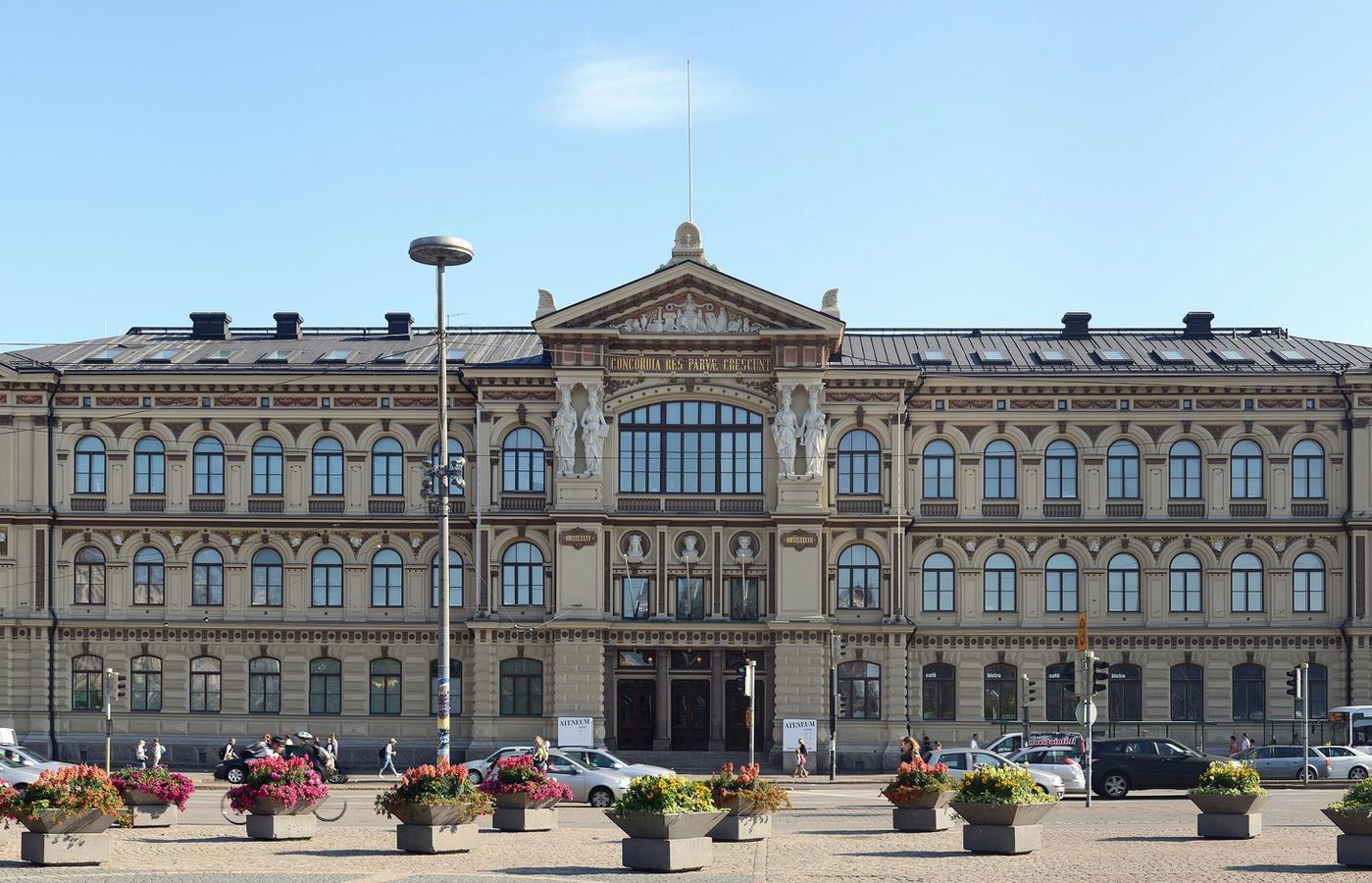
The Ateneum Art Museum on Rautatientori Square holds the largest collection of classical art in Finland - 28,000 works from the 18th century to the 1960s. This is where you see the entire canon of Finnish national painting: Akseli Gallen-Kallela's Kalevala scenes (Aino, Lemminkainen's Mother, The Defense of Sampo), Albert Edelfelt's Louis Pasteur portrait, Helene Schjerfbeck's Convalescent, Hugo Simberg's The Wounded Angel and Eero Jarnefelt's Under the Yoke. The neo-Renaissance 1887 building by Theodor Hoijer stands directly across from Central Station. Opening hours are Tuesday-Friday 10:00-20:00, Saturday-Sunday 10:00-17:00, closed Monday, admission 22 EUR.
The National Museum of Finland at Mannerheimintie 34 (700 m north-west of Central Station on trams 4, 7 or 10) is the country's principal history museum. Housed in a 1910 National Romantic-style granite castle designed by the Gesellius-Lindgren-Saarinen partnership (yes, that Eliel Saarinen), the collection traces 10,000 years of Finnish life from the Stone Age through Swedish and Russian rule to independence in 1917 and the modern republic. Opening hours are Tuesday-Sunday 11:00-18:00, closed Monday, admission 18 EUR. The tower cafe on the fifth floor is worth the extra 5 EUR.
Pro Tip: Go to Ateneum first for the Golden Age of Finnish art (Gallen-Kallela is in the second-floor hall) and time it for Wednesday evening when hours extend to 20:00 and prices drop after 17:00. The Museokortti (Museum Card, 79 EUR annual) pays for itself if you also plan to visit Kiasma, National Museum and the Design Museum.
10Public Sauna at Loyly or Allas Sea Pool - The Essential Finnish Experience
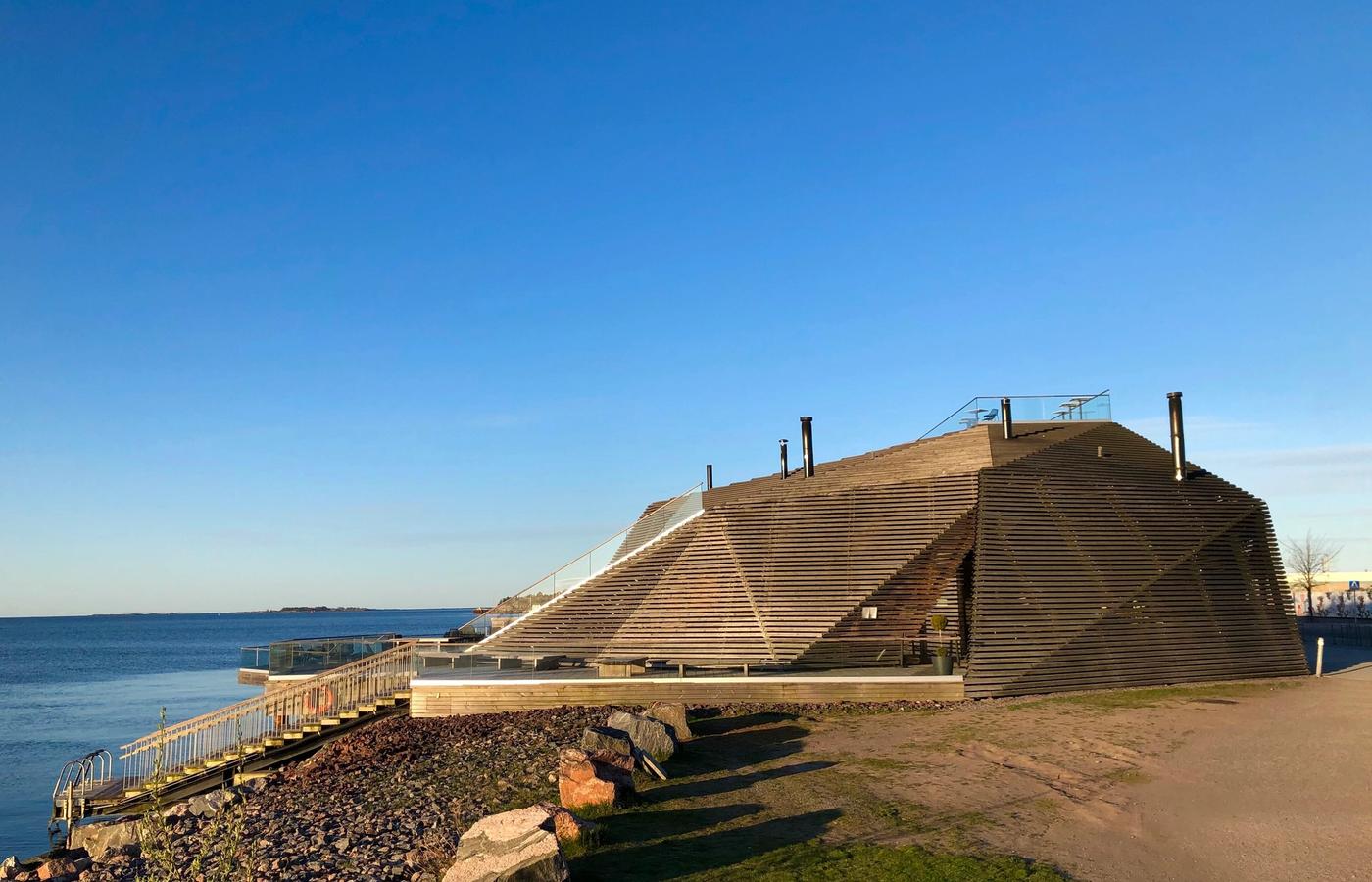
Finland has 3 million saunas for a population of 5.6 million and no Helsinki trip is complete without one. Loyly (Hernesaarenranta 4) is the flagship modern public sauna, opened in 2016 by designer Anu Puustinen and Ville Hara in a striking timber-lattice building at the tip of Hernesaari peninsula. It combines a wood-fired smoke sauna, a continuous wood-fired sauna and an electric sauna with a wooden pier that steps directly into the Baltic Sea for the ice-cold plunge. Sessions run 2 hours (22 EUR adult) and swimwear is required in the mixed-gender saunas. Opening hours are Monday-Thursday 16:00-22:00, Friday 13:00-23:00, Saturday-Sunday 11:00-22:00.
Allas Sea Pool (Katajanokanlaituri 2a, at the ferry terminal next to Market Square) is the alternative on the waterfront - three heated pools (one filtered sea water pool at Baltic ambient temperature, two heated pools) plus three saunas overlooking the harbour and Uspenski Cathedral. Admission is 20 EUR for a 2-hour block; a swimsuit is required. Opening hours are Monday-Friday 06:30-21:00, Saturday-Sunday 09:00-21:00. Both venues are gender-mixed (with private changing rooms) and rent out towels and sauna hats.
Pro Tip: Book Loyly online at least 1-2 weeks ahead in July-August - Saturday evening slots sell out first. Bring your own swimsuit and flip-flops (rental adds 5 EUR each). Do the ice plunge 3 times minimum; residents insist that fewer counts as a warm-up, not a swim.
Get hotel deals for Helsinki
Price drops, new stays and local tips for Helsinki, straight to your inbox.
No spam, unsubscribe anytime.

CEO and co-founder
Tomas is the co-founder and director of trip1, an European company specializing in reservation services. He launched the company in 2025 with a focus on building scalable, efficient operations.
10 Top Attractions & Things to Do in Helsinki, Finland - FAQ
Suomenlinna Sea Fortress, the UNESCO-listed island fortress 15 minutes by ferry from Market Square, is the one sight not to skip. In the centre, see Helsinki Cathedral on Senate Square, Uspenski Cathedral, Market Square with the Old Market Hall and the Rock Church cut into granite. End the day the Finnish way, with a public sauna and a Baltic plunge at Loyly or Allas Sea Pool.
Yes, for the main sights. The central peninsula is only about 5 km across, so day one can cover the cathedral, Senate Square, Market Square, Uspenski Cathedral, Esplanadi and the museums around the Central Station. Give day two to Suomenlinna, which needs about four hours with the ferry, then the Rock Church and an evening sauna. A third day adds the Design District.
Start at Helsinki Cathedral and Senate Square, walk down to Market Square and eat salmon soup in the Old Market Hall, then cross to Uspenski Cathedral. Take an afternoon ferry to Suomenlinna and walk the bastions. Back in town, stroll Esplanadi Park and finish with a sauna at Allas Sea Pool beside Market Square. Most of the centre sits within a 400-metre radius.
June to August. Daylight runs from about 04:00 to 23:00, the city moves outdoors to the sea, and Esplanadi's stage hosts free concerts from mid-May to the end of August. December is the pick for winter, with the Christmas market on Senate Square and glogi, but the sun sets before 15:30, so plan around museums and saunas.
Yes. Suomenlinna is an 18th-century sea fortress spread across six islands, UNESCO-listed since 1991 and still home to about 800 residents. The grounds, walls and cannon batteries are free to walk at any hour. The HSL ferry leaves Market Square all year, takes about 15 minutes and uses a regular AB ticket. Bring a windproof layer for the exposed bastions.
Yes, especially for a concert. The Rock Church was excavated straight into a granite outcrop in 1969, with bare rock walls and a copper dome that pours in daylight, and its acoustics are outstanding. Entry is 8 euros for adults and free for under-18s. Opening hours change weekly around services, so check the official site, and look for the low entrance, which is easy to miss.