

Guides · Rio de Janeiro
5 Best Things to Do in Rio de Janeiro During Carnival

CEO and co-founder
Rio Carnival 2027 runs from Friday 5 February to Ash Wednesday 10 February, with the Special Group parading at the Sambodromo Marques de Sapucai on the nights of Sunday 7, Monday 8 and Tuesday 9 February. Twelve schools compete, four a night, each given 70 to 80 minutes on 570 metres of concrete. Around it the city licensed 462 street blocos in 2026 and expected 6.8 million people. The best things to do in Rio de Janeiro during Carnival are not a separate list from the city's normal sights: they are the same places, transformed and occasionally ruined by those numbers.
The five below are ordered by how many people you will be standing next to, calmest first: the Feira de Sao Cristovao, a roofed forro market that ignores samba; Cidade do Samba in Gamboa, where the floats are built; Pedra do Sal in Saude, the stone slope where samba was worked out; the Cordao da Bola Preta, a bloco from 1918 that pulled roughly 700,000 people through Centro in 2026; and the Sambodromo itself, official capacity 72,500.
Every entry carries an exact address with its CEP, the nearest MetroRio or VLT Carioca stop, and a specific hour to turn up. Cidade do Samba and Pedra do Sal sit 800 metres apart in the port zone and fold into one afternoon, with the Cais do Valongo between them. Bola Preta is in Centro, 1.2 km east; the Sambodromo 2.6 km southwest of Praca XV. Both sit on a metro running 24 hours through Carnival. The Feira, 5 km north, deserves its own night. Bloco routes are confirmed only weeks ahead, so cross-check the programme Riotur publishes before fixing anything.
1Feira de Sao Cristovao - Where to Go When You Have Had Enough Samba
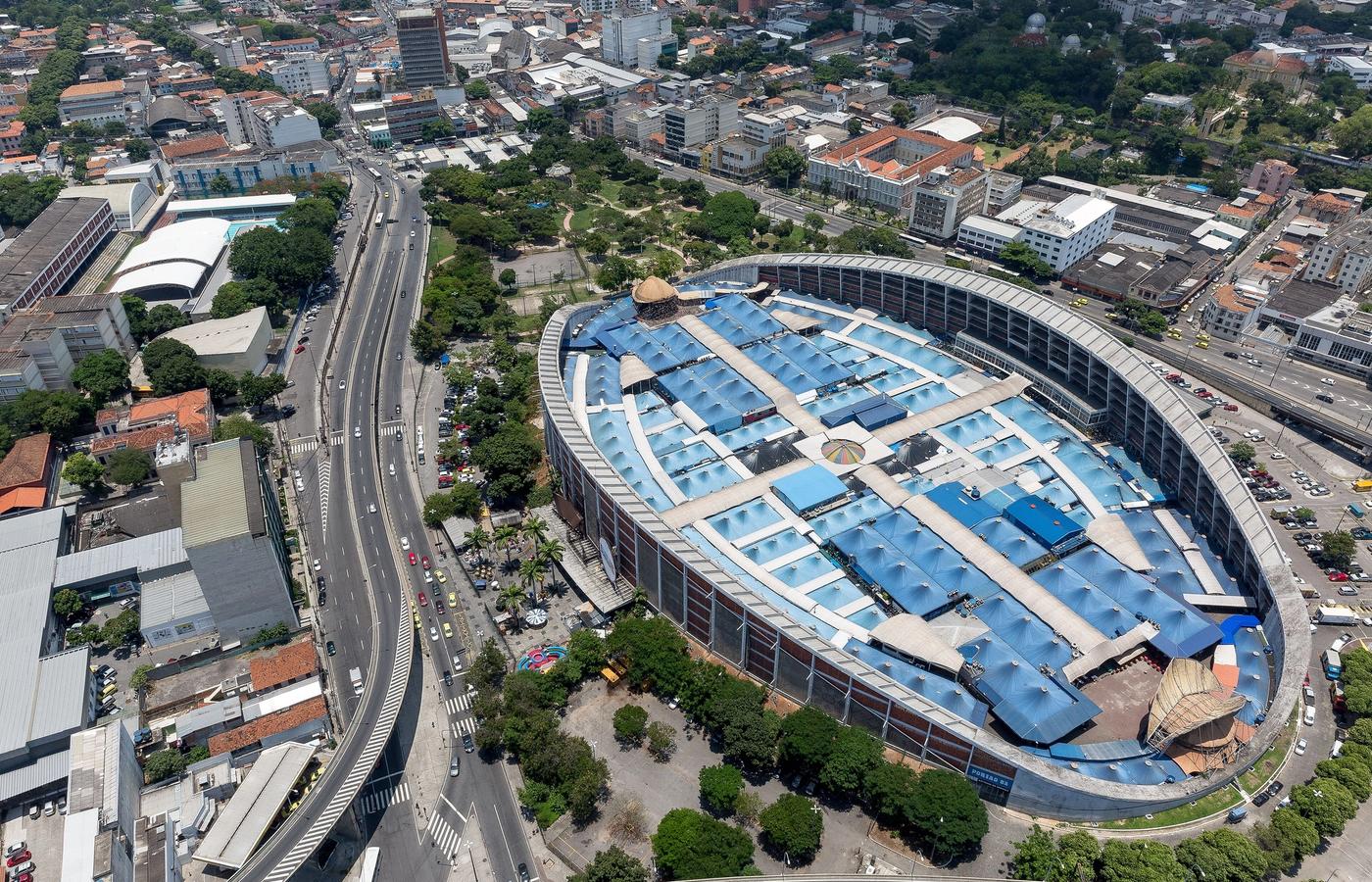

The Centro Luiz Gonzaga de Tradicoes Nordestinas, which everyone in Rio calls the Feira de Sao Cristovao, is northeastern Brazil packed into a pavilion the architect Sergio Bernardes completed in 1962. The design took first prize for architecture and structure at the 1958 Brussels International Exposition and was then among the largest beam-free covered spans built anywhere. Inside are hundreds of stalls selling carne de sol, tapioca, cachaca and leather vaqueiro hats, and two main stages that play forro - accordion, triangle, zabumba - and almost never samba.
That last detail is why it belongs on a Carnival list. The fair keeps ordinary hours right through the week: Tuesday to Thursday 10:00 to 18:00, Friday and Saturday 10:00 to 04:00, Sunday 10:00 to 20:00. Entry is R$10 on Friday, Saturday and Sunday, around EUR 1.60, paid in cash at the box office or ahead through the fair's own ticketing site. While Centro is sealed off for blocos, this is a roof, a chair, a plate of food and a live band for pocket change, and the crowd is families from Pernambuco and Ceara who live in Rio rather than visitors working through a list.
The trade-off is distance and heat. The pavilion sits roughly 5 km north of Praca XV, outside every bloco circuit, so you commit an evening rather than dropping in between things. February under that roof is punishing before sunset, and on Carnival Saturday the road closures downtown make driving north slower than the metro.
Pro Tip: Come on the Friday of Carnival week and arrive at 22:00 rather than at opening. The two main stages only hit their stride after midnight and the pavilion runs until 04:00. Bring R$10 in small notes because the gate takes cash, and ride MetroRio Line 2 back from Sao Cristovao station instead of waiting for a car on Campo de Sao Cristovao.
2Cidade do Samba - The Float Factory, and Why February Is the Wrong Month to Tour It
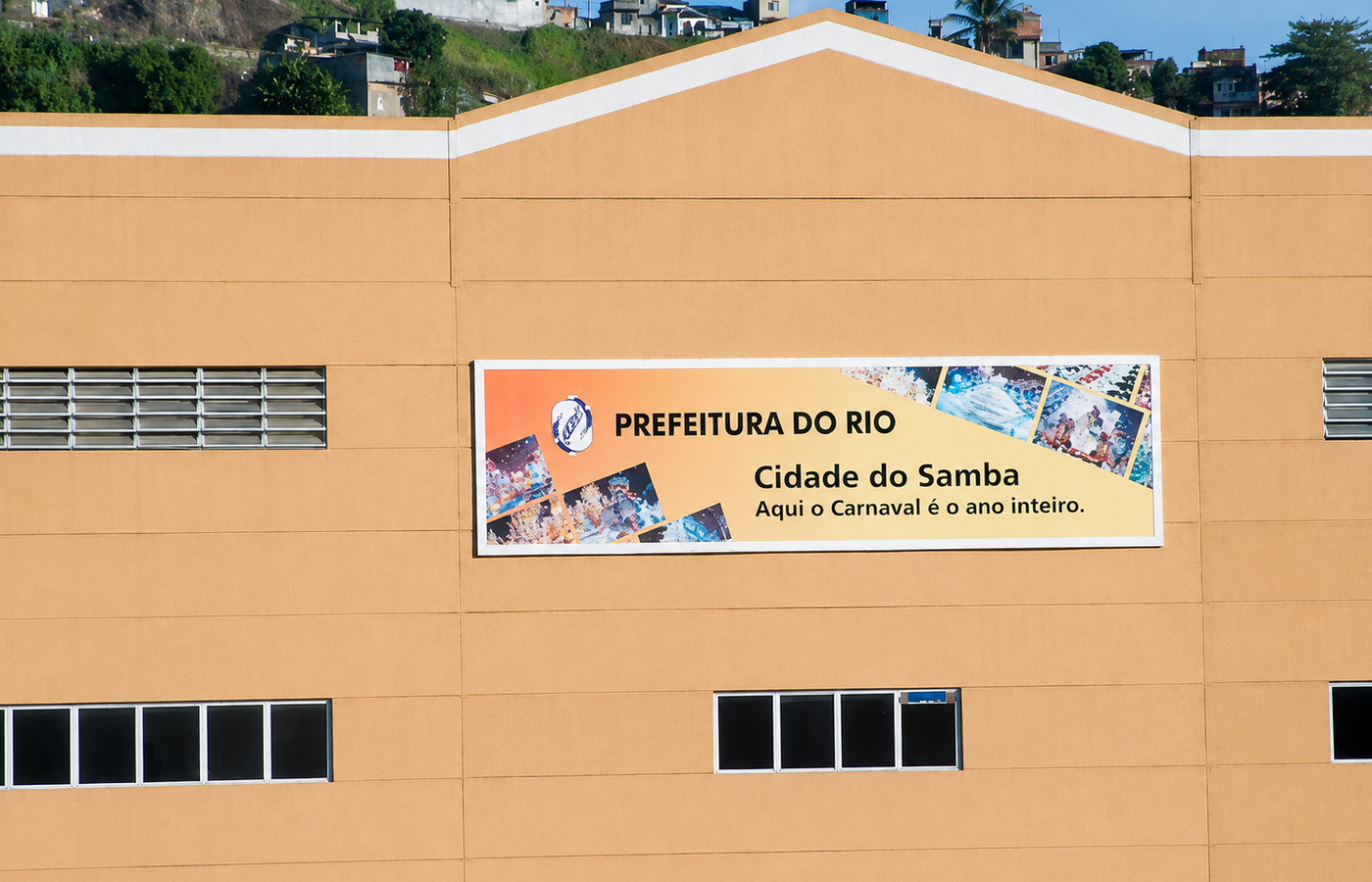

Fourteen warehouses in Gamboa produce the entire Special Group parade. Cidade do Samba Joaosinho Trinta has been in use since September 2005, built for the 2006 Carnival and renamed in 2011 for the designer who rewrote what a Rio float could be. Each elite school gets a four-storey barracao with a 12-metre ceiling on the ground floor and roughly 2,700 square metres on the top level. Carpenters, sculptors, electricians and seamstresses work inside on allegorical floats too tall for any normal door.
Be honest about access. This is not a museum with a turnstile and a posted admission price. Visits run as pre-booked guided tours of one school's barracao, availability moves from season to season, and in August 2026 at least one established Rio operator still listed its Cidade do Samba tour as unavailable. In the fortnight before the parades the barracoes work night shifts and outsiders are largely shut out. If a tour is running while you are in town, take it: a float being wired up two weeks before judging beats the finished thing at 40 metres.
The consolation prize is free and reliable. On each parade day the floats are towed out of Gamboa to the Sambodromo, and the convoy crawls through the port zone in the late afternoon with school crews walking alongside to fold antennas and lift cables. Rua Rivadavia Correa outside the gates is where to stand. VLT Carioca Line 1 has a stop named Cidade do Samba directly there, which makes this a 20-minute detour rather than an expedition.
Pro Tip: On Sunday 7 February 2027, stand at the Rua Rivadavia Correa gates from 16:00 to watch the first floats leave for the Sambodromo. It costs nothing, and the VLT Carioca Line 1 platform is on the same street, so you can be back in Centro within a few stops if the convoy runs late.

3Pedra do Sal - Samba's Birthplace, and the One Monday That Cannot Be Assumed
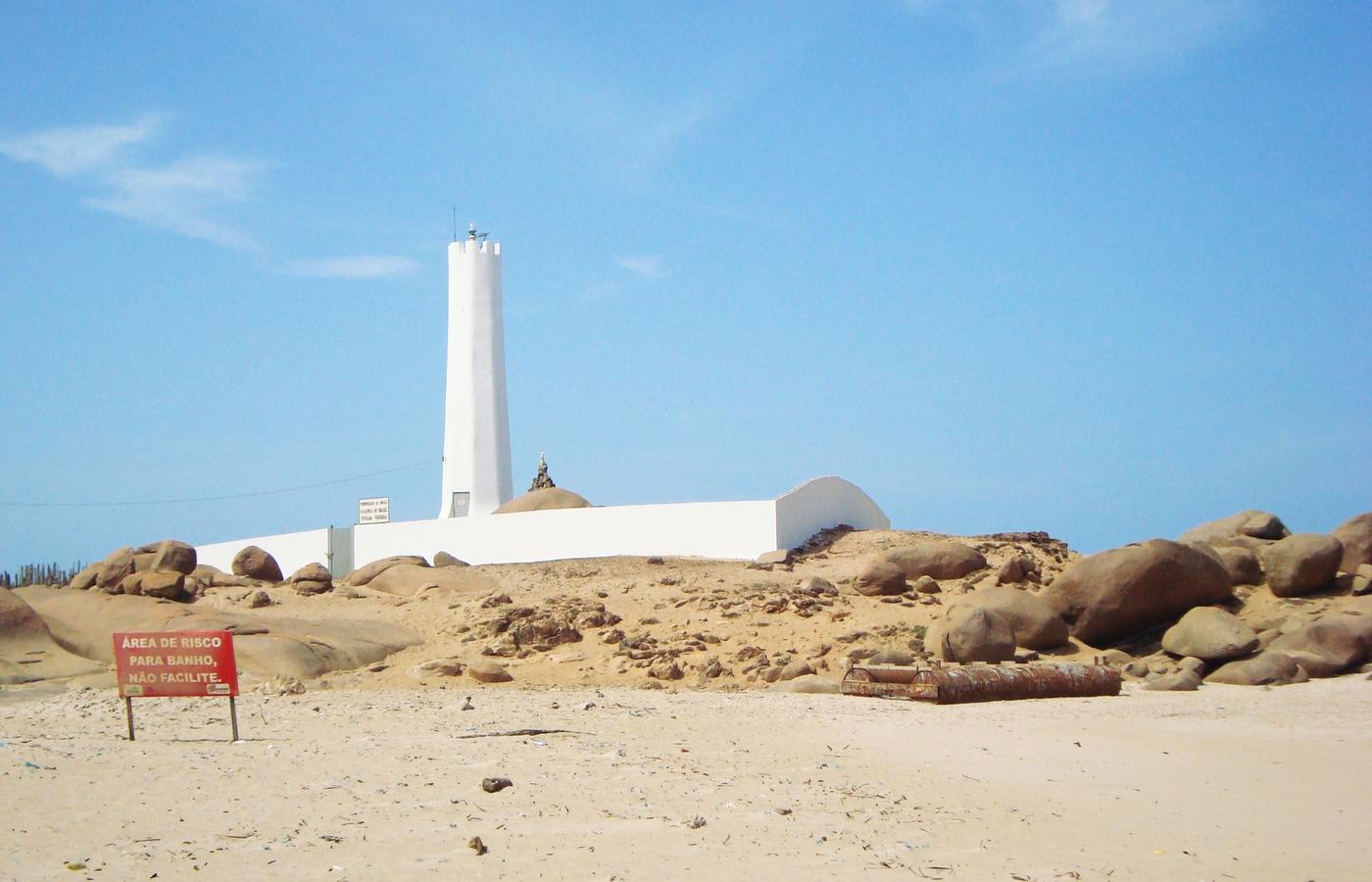

Pedra do Sal is a slab of granite with steps cut into it at the foot of Morro da Conceicao in Saude. INEPAC, the state heritage institute, listed it in 1984, and the surrounding territory belongs to a recognised quilombo community descended from Africans who settled the port. Salt was unloaded here, hence the name. In the 1910s the households around the rock, Tia Ciata's above all, hosted the gatherings where samba was codified; Donga, Pixinguinha and Joao da Baiana all played on it.
In an ordinary week the draw is the roda de samba every Monday, free, from 19:00 until around midnight, played at a table at the bottom of the slope. Carnival week is not ordinary. Monday 8 February 2027 is a Special Group night at the Sambodromo, and the fixed Monday roda cannot be assumed to keep its usual timetable: the port zone swings to daytime blocos and the slope fills on several days rather than one. Ask locally that week rather than trusting a year-round listing.
Two warnings. There is no seating, no barrier and no ticket, so the crush at the bottom of the steps is where phones disappear; keep yours in a front pocket. Drinks come from coolers on the pavement, cash only. Then walk 500 metres to the Cais do Valongo on Avenida Barao de Tefe, the excavated wharf where roughly 900,000 enslaved Africans landed from 1811 and which UNESCO inscribed as a World Heritage Site in 2017. Ten minutes on foot explains more about this music than any parade can.
Pro Tip: Arrive at 18:30 and take the upper steps to the left of the slope, above the sound system. You can see the roda, you are out of the crush at the bottom, and you keep a clear exit line to Rua Sacadura Cabral. VLT Carioca Line 1 to Praca Maua is a 400-metre walk from there.
4Cordao da Bola Preta - Be on Rua Primeiro de Marco by 06:45 or Do Not Bother
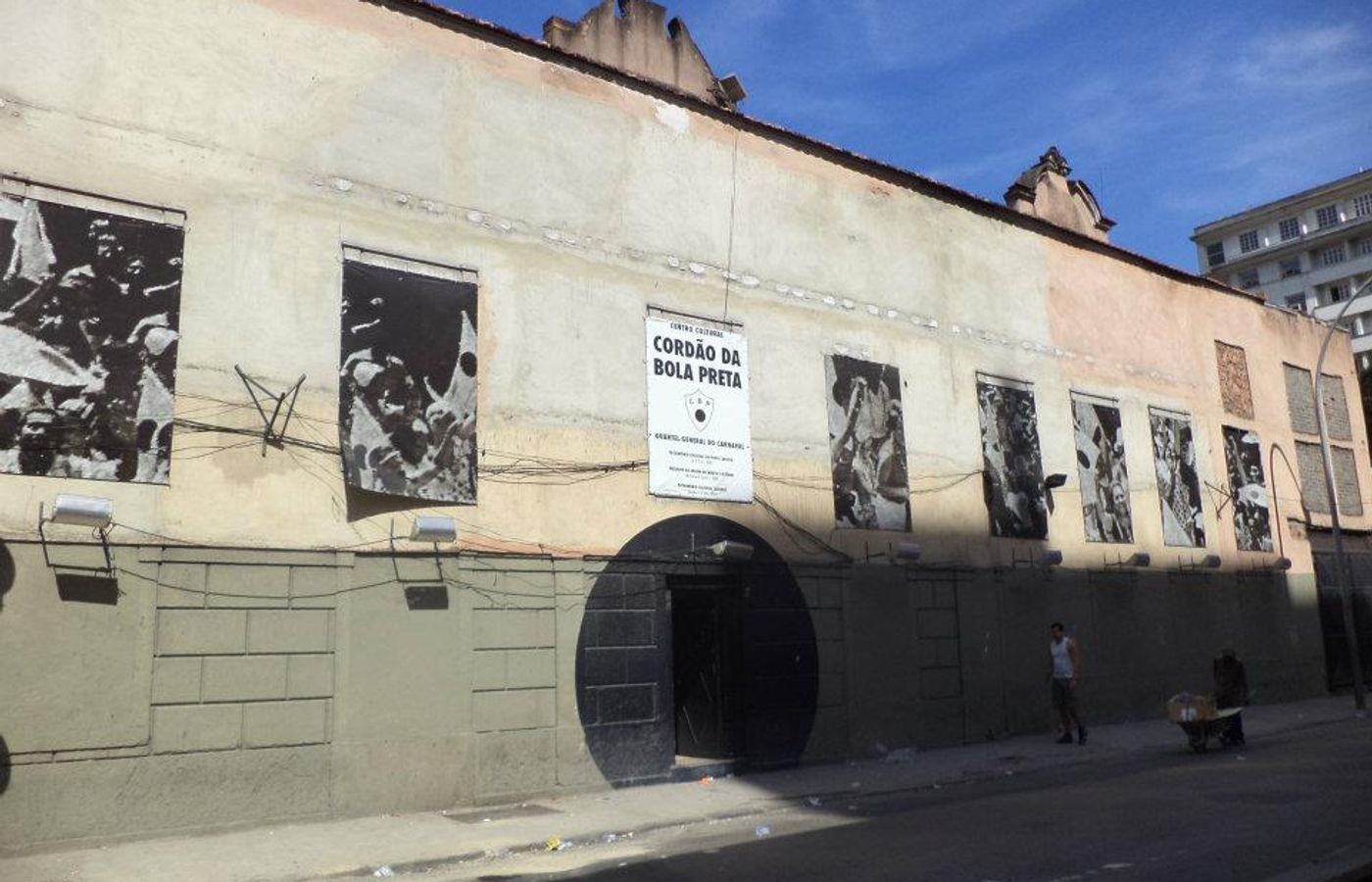
The Cordao da Bola Preta was founded on 31 December 1918 and is the oldest street bloco still parading anywhere. Its uniform is the black polka dot, its band is brass and percussion on a slow-moving truck, and its songbook is marchinhas, the pre-war Carnival marches, rather than the samba-enredo you hear at the Sambodromo. Riotur put the 2026 crowd at around 700,000 people: roughly the population of Frankfurt walking down one avenue in a single morning.
Timing is everything and it is brutally early. The 2026 edition concentrated at Rua Primeiro de Marco, 33 in Centro at 07:00 on Carnival Saturday and moved onto Avenida Presidente Antonio Carlos, with CET-Rio closing streets from 05:00: Rua da Alfandega, Rua Buenos Aires, Rua do Rosario, Rua do Ouvidor, Rua Sete de Setembro and Antonio Carlos in its entirety between Rua da Assembleia and Avenida Beira Mar, all reopening after 13:00. Expect the same shape on Carnival Saturday 2027, 6 February, though the city confirms the route only weeks out.
The honest version: by 09:00 you cannot move, you cannot leave the middle of the crowd quickly, and the portable toilets are outnumbered several hundred to one. Rio licensed 462 blocos in 2026 for an expected 6.8 million revellers and this is the largest of them. Take the first two hours, when there is room to dance and the marchinhas carry, then walk east toward Praca XV before the barriers fill. Against a Sambodromo seat the economics are unbeatable, because the bloco is free.
Pro Tip: Be standing within 50 metres of Rua Primeiro de Marco, 33 by 06:45, before the band truck starts its engine. Carry no bag, keep R$50 in a front pocket, and bring one 500 ml water bottle: there is no shade on Avenida Presidente Antonio Carlos and the parade runs until the sun is directly overhead at 13:00.
5Sambodromo Marques de Sapucai - Buy Sector 12 and Carry Two Bottles of Water
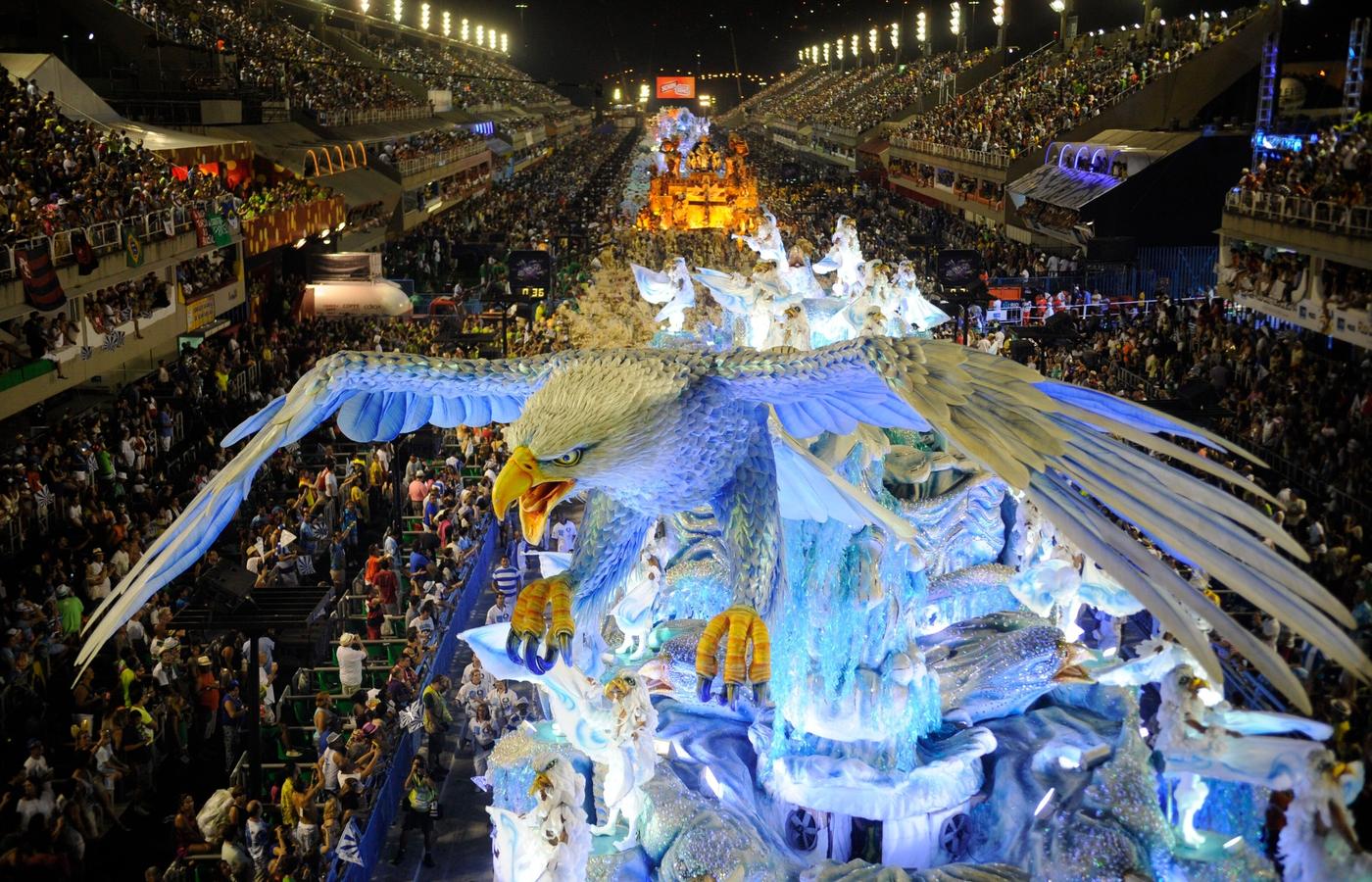
Oscar Niemeyer drew the Sambodromo in 1983 and it opened a year later; since 18 February 1987 it has officially been the Passarela Professor Darcy Ribeiro. The strip runs 570 metres by 12 metres between concrete grandstands, ending under the three-legged Praca da Apoteose arch; capacity has been 72,500 since the 2011 and 2012 works. For 2027 the Serie Ouro parades Friday 5 and Saturday 6 February from 21:00; the Special Group takes Sunday 7, Monday 8 and Tuesday 9 February, four of its twelve schools a night from 22:00; the champions parade again on Saturday 13 February.
Sector choice matters more than price. Sectors 2, 4, 6 and 8 are unreserved concrete grandstands: claim a slab of step early. Sector 9 sells numbered seats with multilingual staff near the percussion. Sector 12, at the strip's end, has theatre-style seating and is the one cariocas name for value. Even sectors use Praca Onze on MetroRio Line 1, exit B; odd sectors mean Central and a 700-metre walk past the assembling floats.
Tickets are the ugly part. Official sales run through Ticketmaster Brasil: 2027 grandstand seats opened at 19:00 Brasilia time on 10 August 2026 from about USD 50 (EUR 45), with camarote packages near USD 480 (EUR 430). No official table of prices in Brazilian reais by night and sector had been published at the time of writing, so treat anything outside Ticketmaster as resale. Gates admit two 500 ml plastic bottles and two food items per person; glass, cans and umbrellas are refused, and under-16s need an adult.
Pro Tip: Do not book a car home. MetroRio runs 24 hours a day through the Carnival period, so leave at the Praca Onze end and take Line 1. Slipping out before the fourth school of the night finishes beats most of your sector to the platform, but it also costs you the parade the judges usually remember, so decide which you want before you sit down at 22:00.
Get hotel deals for Rio de Janeiro
Price drops, new stays and local tips for Rio de Janeiro, straight to your inbox.
No spam, unsubscribe anytime.

CEO and co-founder
Tomas is the co-founder and director of trip1, an European company specializing in reservation services. He launched the company in 2025 with a focus on building scalable, efficient operations.
5 Best Things to Do in Rio de Janeiro During Carnival - FAQ
From Friday 5 February to Ash Wednesday 10 February 2027. The Serie Ouro schools parade at the Sambadrome on 5 and 6 February, and the 12 Special Group schools on Sunday 7, Monday 8 and Tuesday 9 February, four a night from 22:00. The champions parade again on Saturday 13 February. Street blocos run all week, with Cordao da Bola Preta expected on Saturday 6 February.
Yes, if you plan around the fixed dates. The Special Group parade at the Sambadrome, with 70 to 80 minutes per school on a 570-metre runway, is like nothing else, and the street blocos are free: Cordao da Bola Preta, founded in 1918, draws hundreds of thousands of people. Expect heat, huge crowds and street closures, and use the metro, which runs 24 hours through Carnival.
The street side is cheap; the Sambadrome is where the money goes. Blocos and the samba at Pedra do Sal are free, and the Feira de Sao Cristovao charges R$10 (about 1.60 euros) at weekends. Official 2027 grandstand tickets cost R$250 (about 40 euros) a night, while camarote packages run to around $480 (about 430 euros). Add a few metro and VLT fares.
Three to four days covers the essentials. Give one night to the Sambadrome on 7, 8 or 9 February 2027, one early morning to Cordao da Bola Preta on Carnival Saturday, one afternoon to Cidade do Samba and Pedra do Sal, which are 800 metres apart in the port zone, and one Friday night to the Feira de Sao Cristovao. Stay the whole week for more blocos.
It is the festival before Lent, the 40 days leading up to Easter, so it always ends on Ash Wednesday and its dates move each year with Easter. In Rio that means a week of free street parties called blocos and the samba school competition at the Sambadrome, rooted in the samba first played around Pedra do Sal in the port zone in the 1910s.
Through Ticketmaster Brasil, the official seller. General sales for the 2027 parades opened on 10 August 2026 for the grandstand sectors and the seats in sector 12, so treat anything sold elsewhere as resale. Only the Sambadrome needs a ticket: the blocos and Pedra do Sal are free, and the Feira de Sao Cristovao sells its entry at the gate, cash only.