


Guides · Rio de Janeiro
10 Top Things to Do in Rio de Janeiro

CEO and co-founder
This guide ranks 10 things to do in Rio de Janeiro that earn their place on a first or second visit, from the statue on Corcovado to the botanical garden at the foot of the forest. Every entry below gives you the exact street address with its CEP, the closest Rio Metro station or tram stop, and roughly how far the site sits from Centro. Each one closes with a Pro Tip that names a time, a price in Brazilian reais, or a specific entrance.
The order is geographic as much as it is a ranking. Numbers one and two are the two summits, Corcovado and Sugarloaf. Then come the South Zone beaches - Copacabana, Ipanema and the rocks at Arpoador - which sit in one long strip you can walk end to end in about two hours. Escadaria Selaron, Santa Teresa and Lapa form a second cluster around the centre and the hills just above it. Tijuca National Park and the Jardim Botanico are the green half of the city, and Praca Maua belongs to the redeveloped port.
Weather decides more of your itinerary here than any planning app will. Cloud sits on Corcovado for days at a time in the wet season between December and March, and a viewpoint day in fog is a wasted 110 reais (around 17 EUR). Keep the two summits flexible, check the webcams on the morning itself, and swap in a beach or a museum when the peaks disappear. On the street, keep your phone in a pocket rather than in your hand, and use a ride-hailing app after dark instead of walking between neighbourhoods. Where you sleep matters more here than in most cities for exactly that reason, and the hotels in Rio de Janeiro along the Copacabana and Ipanema front keep you in the well-lit, well-served strip. Beyond the webcams, check Rio de Janeiro weather across the whole week before you decide which days to hold for the summits. Travellers doing more of the continent usually pair this with Buenos Aires, which is a very different city in temperament.
1Christ the Redeemer - The Statue on Corcovado Mountain


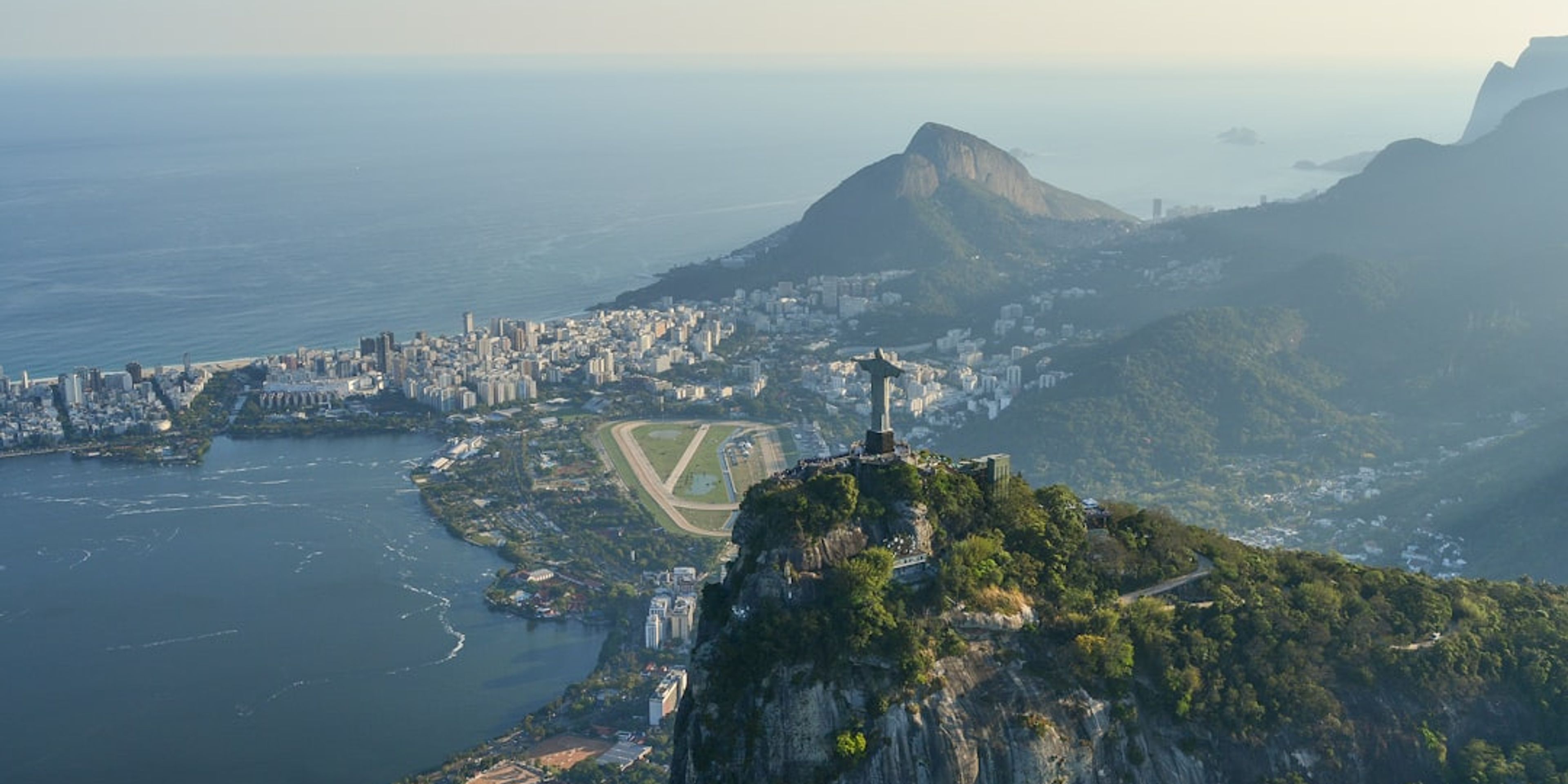
The most photographed of all things to do in Rio de Janeiro sits 710 metres up Corcovado mountain, arms open over the South Zone. Christ the Redeemer is 30 metres tall on an 8-metre pedestal, was finished in 1931, and is clad in thousands of small soapstone tiles that a maintenance crew still replaces by hand. Two routes go up: the Trem do Corcovado cog train from Cosme Velho, a 20-minute climb through forest, or an official van from Largo do Machado, Copacabana or Paineiras.
Combined train and entry runs about R$ 110 (roughly 17 EUR) on weekdays and more at weekends, and slots are timed - you book a specific half hour and turn up for it. The summit sits inside the Tijuca massif, protected under the UNESCO Carioca Landscapes between the Mountain and the Sea listing. Crowds peak between 10:00 and 14:00. Cloud, not the queue, is the real problem.
Pro Tip: Check the Corcovado webcam before you leave and book the 08:00 train slot. The platform is quieter, the light is better facing east, and if cloud rolls in you still have the whole day to reshuffle.
2Sugarloaf Mountain - The Two-Stage Cable Car Over Guanabara Bay


Sugarloaf Mountain, or Pao de Acucar, is a 396-metre granite plug at the mouth of Guanabara Bay. You reach it in two cable car stages from Praia Vermelha in Urca: first to Morro da Urca at 220 metres, then across to the main summit. The original line opened in 1912 and was the third aerial cableway built anywhere in the world. Cars leave every 20 minutes or so and the full ride takes under 10 minutes.
A return ticket costs around R$ 190 (about 30 EUR), with lower rates for Brazilian residents. Morro da Urca has a cafe, a small stage and a bar; the upper summit has decks facing Copacabana on one side and the bay on the other. Fit walkers can take the marked trail up to Morro da Urca for free and buy a single-stage ticket for the second leg, which cuts the cost roughly in half. Allow two hours.
Pro Tip: Go up about 90 minutes before sunset. You get the bay in daylight, the sun setting behind Corcovado, and the city lit up on the way down, all on one ticket. The last car leaves the summit at 21:00, so do not cut it fine.

3Copacabana Beach - Four Kilometres of Sand and the Wave Promenade
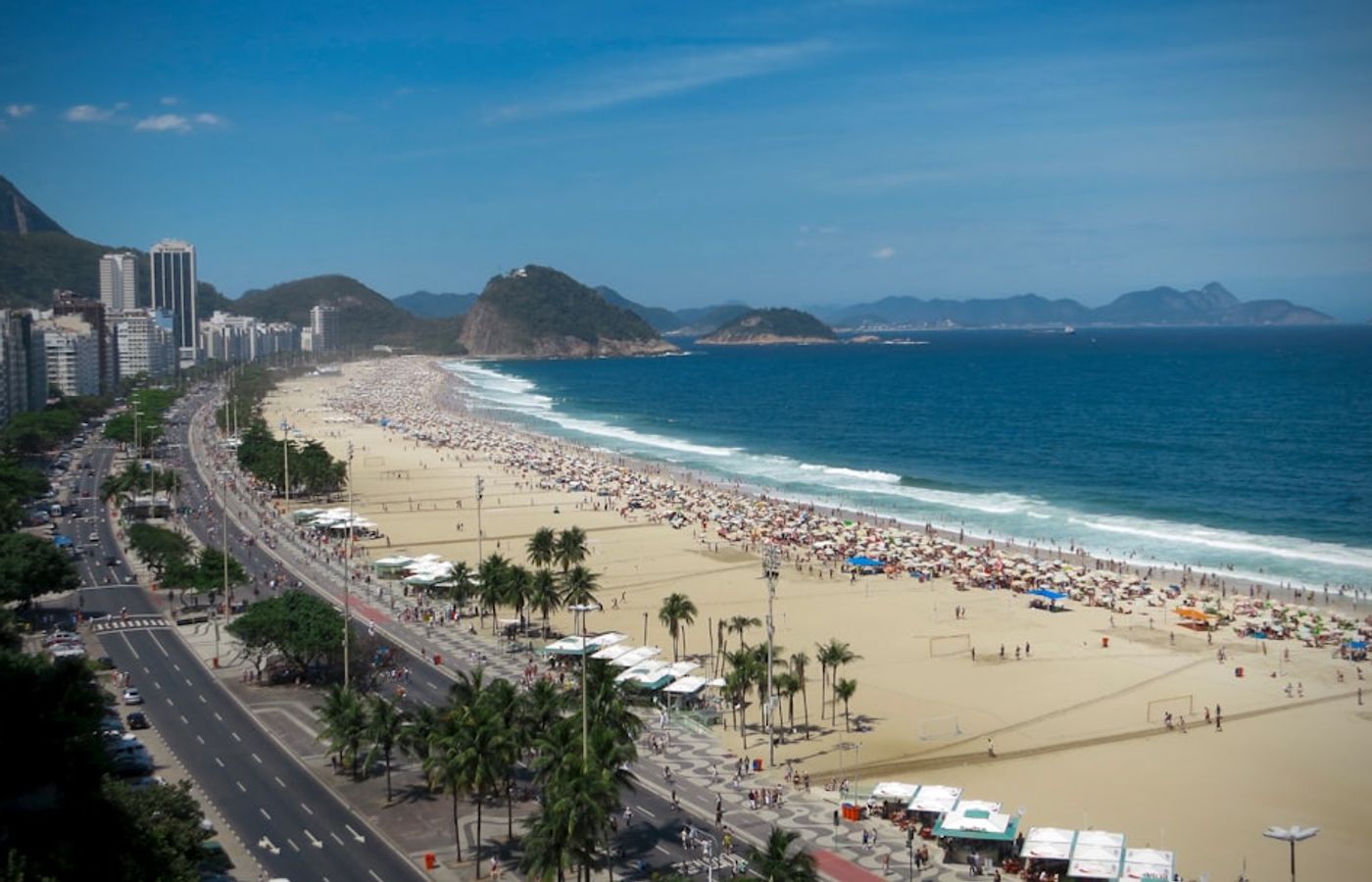

Copacabana Beach runs roughly 4 km from the Leme end down to Forte de Copacabana, backed by Roberto Burle Marx's black-and-white wave paving along Avenida Atlantica. The sand is split by numbered lifeguard postos and each stretch has its own regulars: families and kiosks around Posto 4, footvolley courts nearer Posto 5, fishing boats pulled up on the sand at the Leme end. A kiosk chair and umbrella for the day costs around R$ 30 (roughly 5 EUR).
Forte de Copacabana at the southern tip is worth the R$ 10 (about 2 EUR) entry for the terrace view back along the whole curve. On Sunday mornings the seaward lane of Avenida Atlantica closes to traffic and fills with runners and cyclists. The undertow is genuine, so swim between the flags. Take what you need to the sand and leave the rest where you are staying.
Pro Tip: Buy from the licensed kiosks and agree a price before you accept anything from a roaming vendor. A mate gelado on the beach is about R$ 8 (just over 1 EUR) - if the number quoted sounds odd, it is.
4Ipanema Beach and Arpoador - The Sunset Rock at the End of the Sand
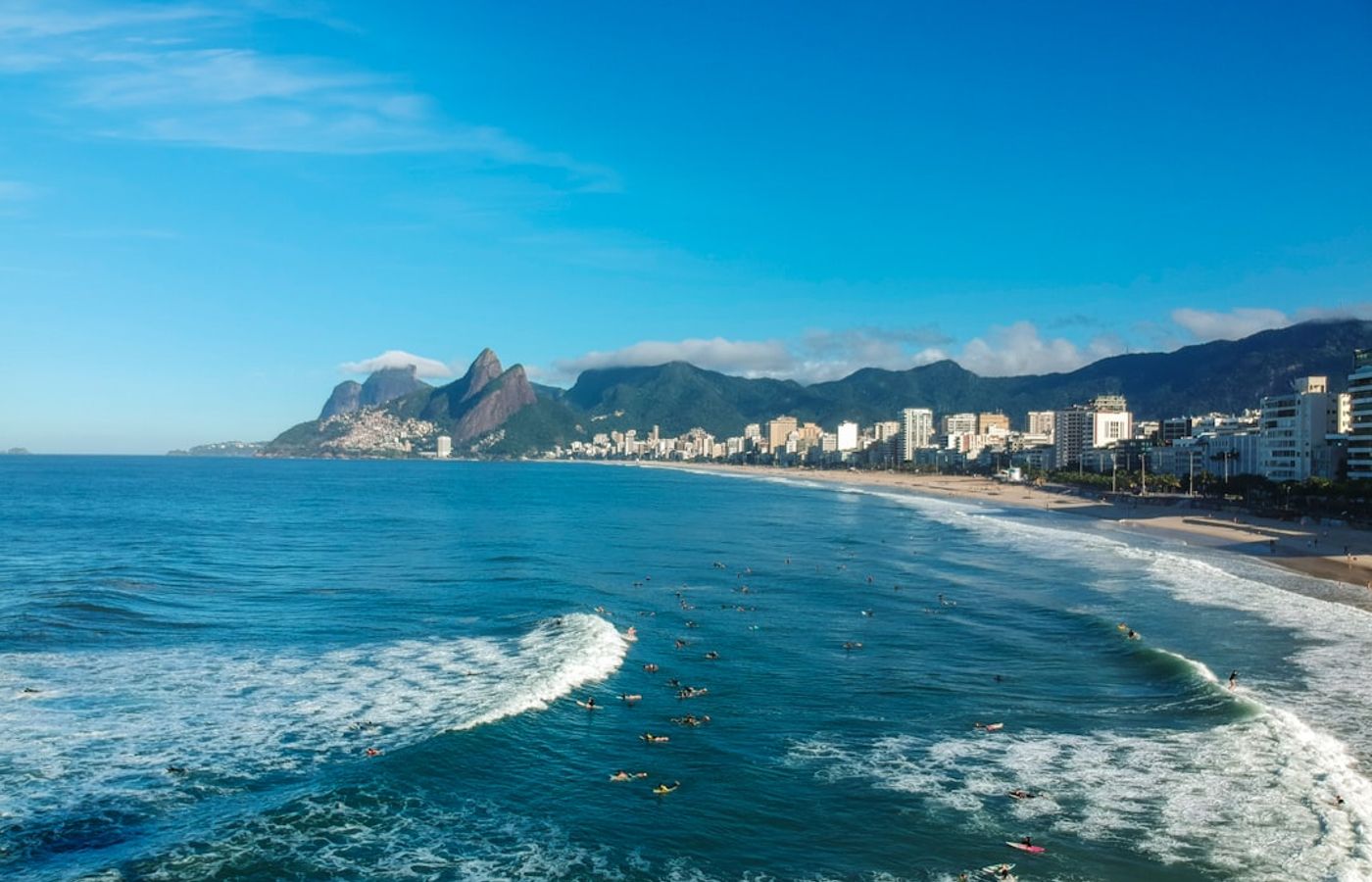
Ipanema picks up where Copacabana leaves off, on the far side of the Arpoador headland. The mood is calmer, the water is often clearer, and the postos again mark the tribes: Posto 9 for the young crowd, Posto 8 at Rua Farme de Amoedo for the LGBTQ+ scene, the Leblon end for families. Behind the sand, Rua Visconde de Piraja is the main shopping street, and the Feira Hippie de Ipanema fills Praca General Osorio every Sunday.
Arpoador is the rock at the eastern end and the best free viewpoint in the South Zone. People climb it in the last hour of daylight, watch the sun drop behind the Dois Irmaos peaks, and applaud when it goes. Surfers work the break below all year. The climb takes four minutes on a paved path from Praca Garota de Ipanema and costs nothing.
Pro Tip: Get onto Arpoador rock 40 minutes before sunset to claim a flat spot, then come down with the crowd rather than after it. The path is unlit once the light goes.
5Escadaria Selaron - The Tiled Staircase Between Lapa and Santa Teresa
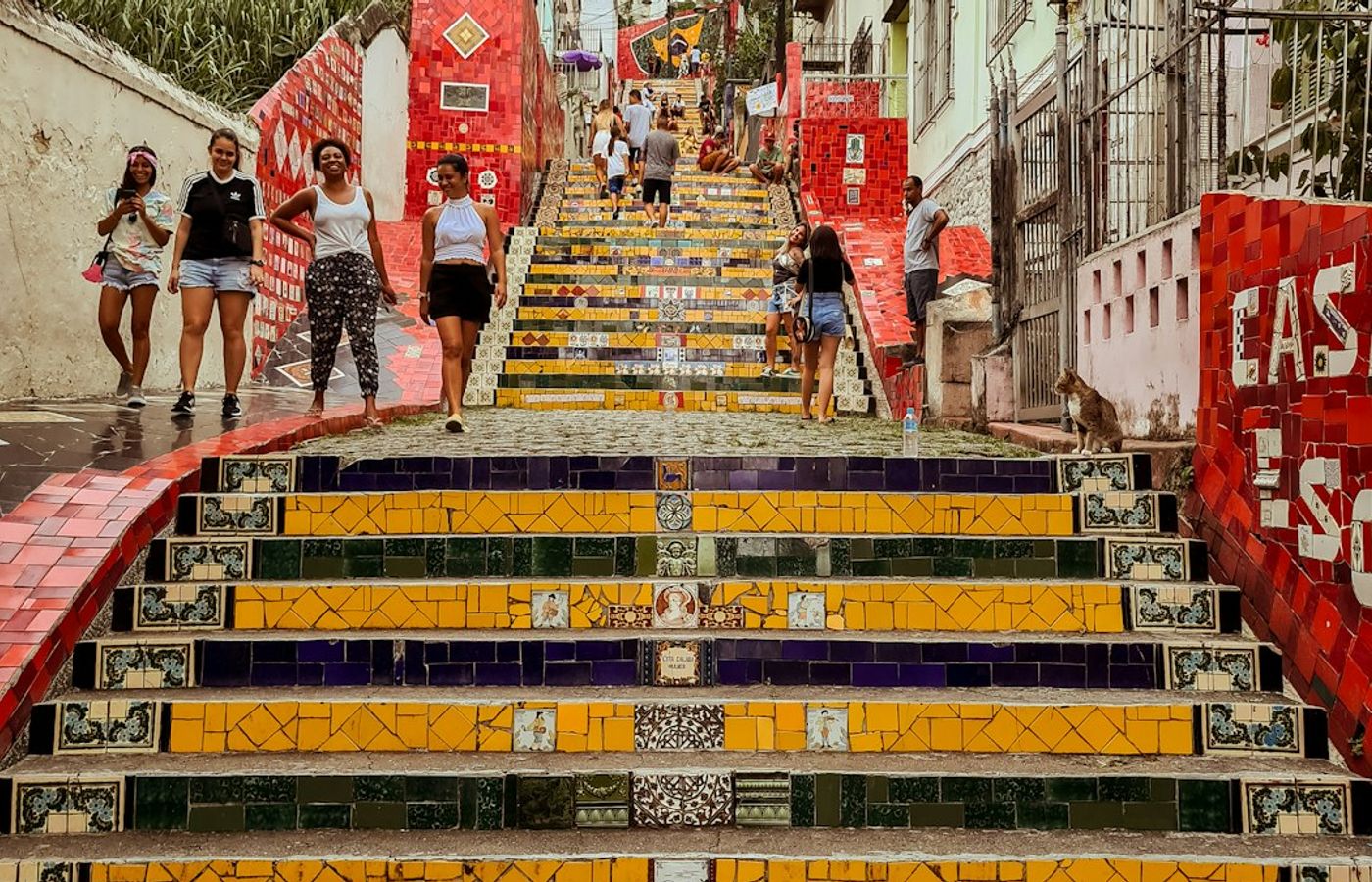
Escadaria Selaron is a 125-step staircase climbing from Rua Joaquim Silva in Lapa toward Santa Teresa, covered in more than 2,000 ceramic tiles. The Chilean artist Jorge Selaron started tiling the steps outside his house in 1990 and kept at it for 23 years, swapping tiles as visitors posted them from home. Around 60 countries are represented somewhere on the risers. Green, yellow and blue dominate, the colours of the Brazilian flag.
Entry is free, the steps are open at all hours, and 20 minutes covers the walk up and back with photo stops. Early morning is the only quiet window - by 10:00 the lower flight is a queue of tripods. This is a working residential street rather than an enclosed site, and the top end opens onto much calmer lanes.
Pro Tip: Arrive before 08:30 and start from the top on Rua Pinto Martins, walking down. You get the tile detail without other visitors in frame, and the early light hits the lower steps square on.
6Santa Teresa and the Bondinho - The Hill Neighbourhood and Its Yellow Tram
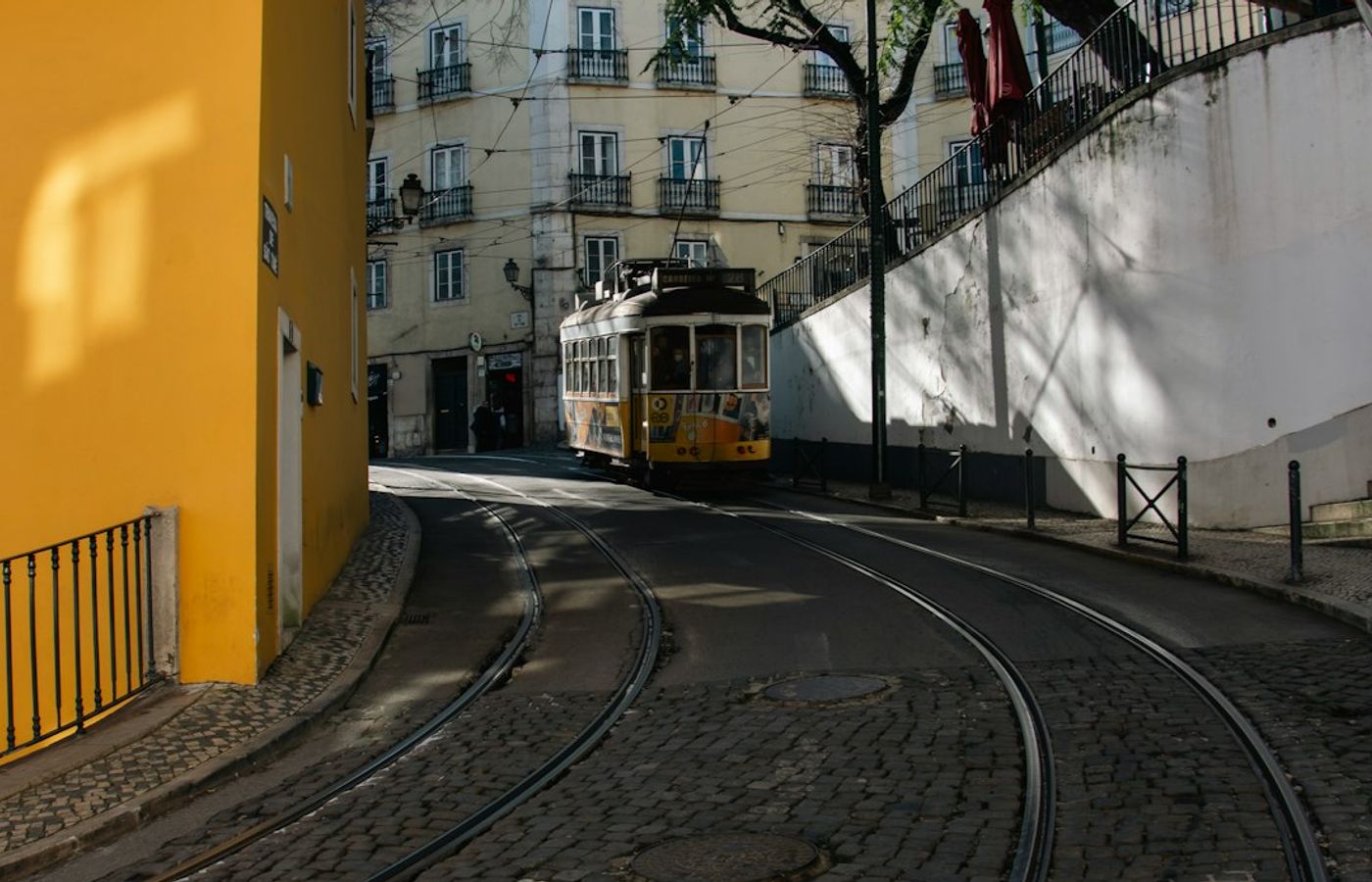
Santa Teresa sits on a hill above Lapa - cobbled lanes, colonial houses, artist studios and small restaurants clustered around Largo do Guimaraes and Largo das Neves. The way to arrive is the bonde, the yellow open-sided tram running since 1877, which crosses the Arcos da Lapa aqueduct on its way up. It leaves from Estacao Carioca on Rua Lelio Gama and the fare is R$ 20 (about 3 EUR) return.
Departures run roughly every 30 minutes from 09:00. Since the line was rebuilt, only seated passengers are carried, so a midday queue at Carioca can mean a 40-minute wait. Two branches operate, one to Dois Irmaos and one to Paula Mattos. Get off at Largo do Guimaraes for most of the restaurants and for the Museu Chacara do Ceu, a small collection with a garden that looks straight over the bay.
Pro Tip: Ride up on the tram in the morning and take a ride-hailing car back down, particularly if you stay for dinner. The lanes are steep, badly lit and easy to misread on foot after dark.
7Tijuca National Park - The Urban Rainforest Above the City
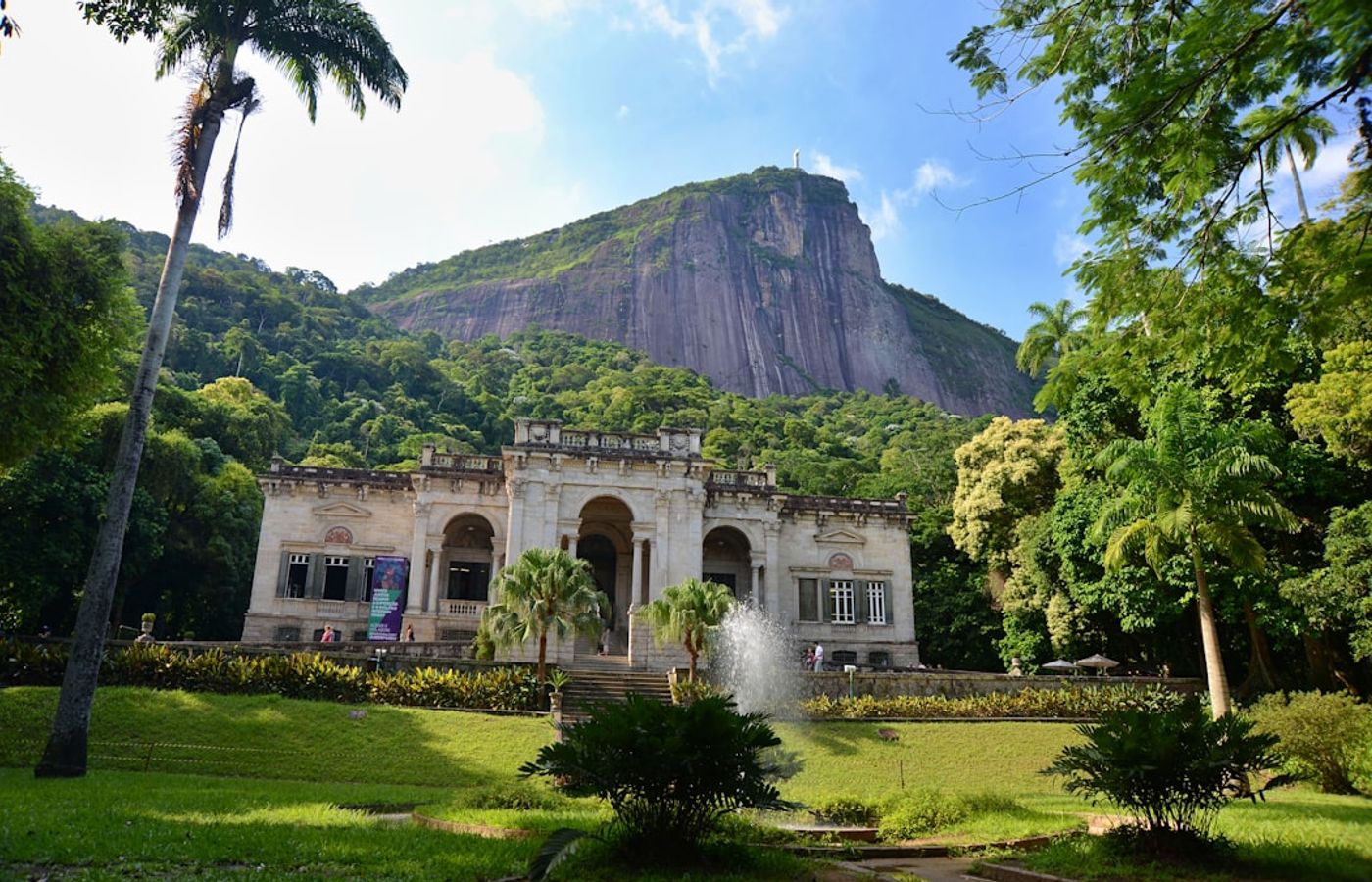
Tijuca National Park covers roughly 40 square kilometres of Atlantic forest inside the city limits, one of the largest urban forests anywhere. Most of it was replanted by hand from 1861 onward after coffee clearing stripped the slopes, which makes it a 160-year-old restoration project as much as a wilderness. Entry is free. The Alto da Boa Vista sector holds the Cascatinha Taunay waterfall, the Mayrink chapel and the Vista Chinesa lookout.
Pico da Tijuca is the serious walk here: about 5 km return from Bom Retiro, finishing on a chain-assisted scramble to a 1,021-metre summit with both Corcovado and Sugarloaf in one view. Allow three to four hours. Shorter options include the 40-minute loop to Cascatinha Taunay. Gates open at 08:00 and close at 17:00, with last entry well before that.
Pro Tip: Start the Pico da Tijuca trail by 08:30. Summer cloud builds fast in the afternoon and the final scramble is unpleasant on wet rock. Carry two litres of water, because nothing is sold past the trailhead.
8Museu do Amanha and Praca Maua - The Rebuilt Port District
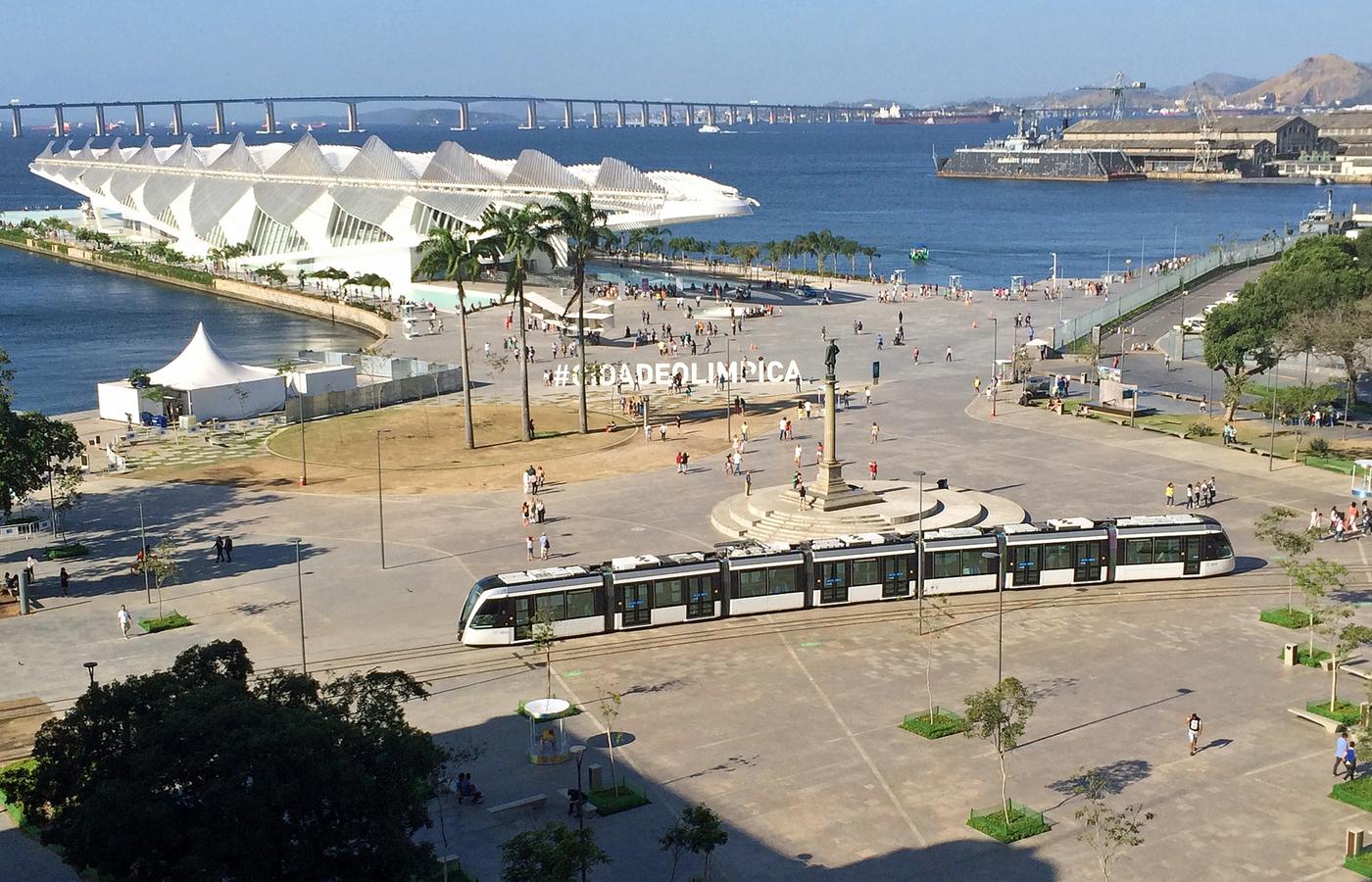
Museu do Amanha, the Museum of Tomorrow, opened in 2015 on a pier at Praca Maua as the centrepiece of the port regeneration. Santiago Calatrava designed it: a 75-metre cantilever over the water, solar spines that track the sun, and a cooling system drawing on bay water. Inside, it is a science museum about climate, demography and the next 50 years, built around projections and data rather than objects in cases.
Entry is around R$ 30 (roughly 5 EUR) and Tuesdays are free. Next door, the Museu de Arte do Rio occupies two joined buildings on the same square. Between them runs Eduardo Kobra's Etnias mural, 190 metres of painted faces from five continents and the largest spray-painted mural in the world when it was finished for the 2016 Olympics. The square works as one two-hour stop.
Pro Tip: Book the Museu do Amanha timed slot online the night before. Tuesday is free but also the busiest day of the week - if your schedule allows, pay the 30 reais on a Thursday morning and walk straight in.
9Lapa and the Arcos da Lapa - The Aqueduct Arches and the Streets Below
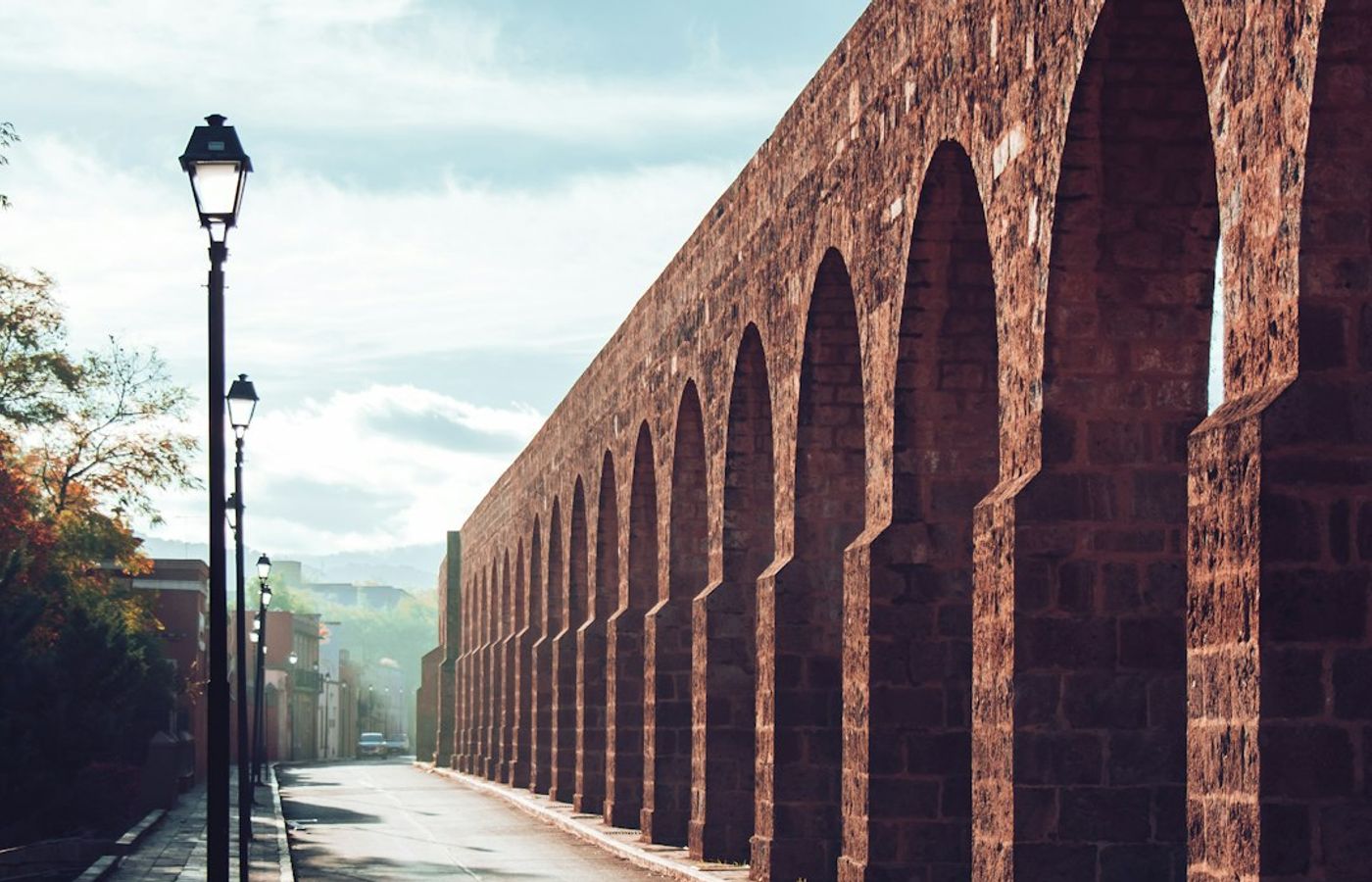
The Arcos da Lapa are the 18th-century aqueduct that defines the neighbourhood: 42 arches, 270 metres long, 17.6 metres high, completed in 1750 to carry water from the Carioca river into the city. Water stopped running through them in 1896 and the tram took over the upper deck instead. They are floodlit at night and the Santa Teresa bonde still crosses them, which keeps the structure a working piece of infrastructure rather than a monument.
Below the arches, Lapa is the live music district. Friday and Saturday nights fill Rua do Lavradio and Avenida Mem de Sa with samba clubs, gafieira dance halls and street bars, and the crowd spills into the road. Rio Scenarium and Carioca da Gema are the long-running rooms, with cover charges of R$ 40 to R$ 80 (roughly 6 to 13 EUR). Once a month an antiques fair takes over Rua do Lavradio.
Pro Tip: Take a ride-hailing car to the door of the venue you want and leave the same way. It is a busy street scene, phones stay in pockets, and the walk back to Cinelandia at 02:00 is not worth doing.
10Jardim Botanico - The 1808 Botanical Garden Under Corcovado
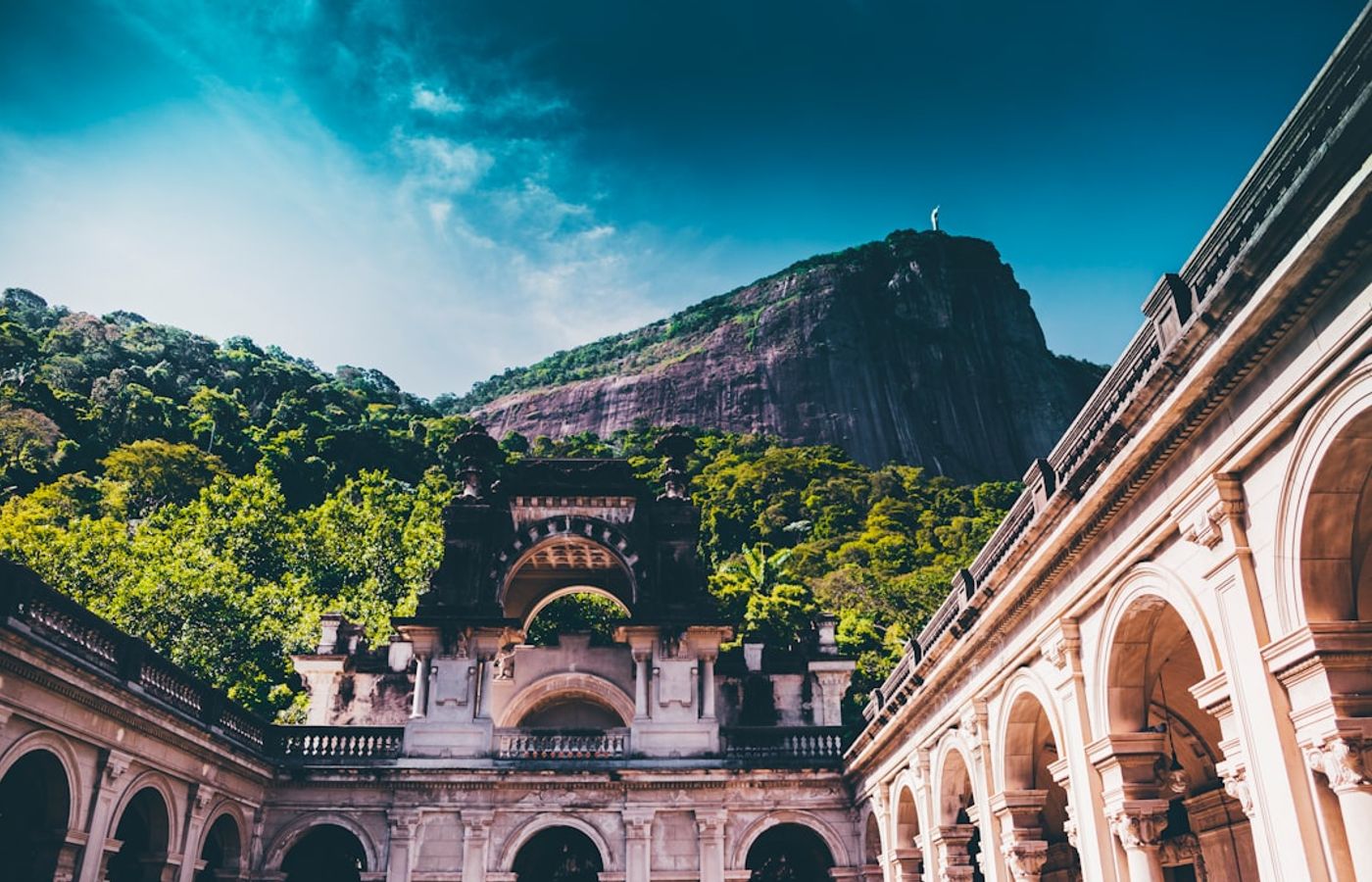
The Jardim Botanico was laid out in 1808 under Dom Joao VI and now holds about 6,500 species across 54 hectares at the foot of Corcovado. Its signature is the Avenida das Palmeiras Imperiais, a double row of imperial palms 30 metres tall, all descended from a single original tree. There is an orchid house with more than 600 species, a Japanese garden, an Amazon section and a greenhouse of insectivorous plants.
Toucans, marmosets and capuchin monkeys are routine sightings rather than lucky ones. Entry is around R$ 79 (about 12 EUR) for non-residents, and the garden opens 08:00 to 17:00, Mondays from 12:00. Two hours covers the main paths at a slow pace. Neighbouring Parque Lage, five minutes away, is free and has a mansion courtyard cafe looking straight up at the statue.
Pro Tip: Pair the garden with Parque Lage in one morning and be at the Jardim Botanico gate for opening. Birds are active before 10:00 and the palm avenue is empty enough to photograph end to end.

CEO and co-founder
Tomas is the co-founder and director of trip1, an European company specializing in reservation services. He launched the company in 2025 with a focus on building scalable, efficient operations.

Climate averages · 1991–2020
When is the best time to visit Rio de Janeiro?
Monthly temperatures, rainfall and sunshine — not a live forecast.
See Rio de Janeiro weather10 Top Attractions & Things to Do in Rio de Janeiro, Brazil - FAQ
No, ten attractions in one day is not realistic in Rio de Janeiro. Christ the Redeemer on Corcovado and Sugarloaf Mountain alone will eat most of a day once you add timed entry queues and the transfer between them. Three full days covers this list comfortably. Four gives you actual beach time rather than a photo stop.
Group them by zone, not by ranking. Day one takes the forest side: Christ the Redeemer on Corcovado, Tijuca National Park and Jardim Botanico, which all sit on the same ridge. Day two runs the South Zone: Sugarloaf Mountain in the morning, Copacabana Beach in the afternoon, Ipanema Beach and Arpoador for sunset. Day three covers the centre on foot, linking the Selaron Steps, Santa Teresa, Lapa and the Museum of Tomorrow at Praca Maua.
Three of them need booking ahead. Christ the Redeemer on Corcovado uses timed entry through the official Trem do Corcovado cog train and the Paineiras van service, and morning slots sell out weeks in advance during January, July and around Carnival. The Sugarloaf Mountain cable car is faster and cheaper booked online. The Museum of Tomorrow also runs timed slots, especially for its free Tuesdays. Everything else on the list is walk-up.
Budget roughly R$ 450 per adult, about EUR 75, for admissions across all 10. The Sugarloaf Mountain cable car is the single biggest line at around R$ 200 (about EUR 33), followed by the Trem do Corcovado at R$ 110 to R$ 135 (about EUR 18 to 22) and Jardim Botanico at about R$ 79 (about EUR 13). The Museum of Tomorrow is R$ 30 (about EUR 5), the Santa Teresa tram R$ 20 (about EUR 3.30). Copacabana Beach, Ipanema Beach and Arpoador, the Selaron Steps, Lapa and walking entry to Tijuca National Park cost nothing.
All 10 are visited by large numbers of people every day and normal city awareness covers most of it. Keep your phone out of sight while you are walking rather than filming as you go, take only what you need onto the sand, and use ride-hailing apps instead of walking after dark, particularly around Lapa, Santa Teresa and the quieter streets behind Praca Maua. The Rio Metro is clean, air-conditioned and the fastest link between Copacabana, Ipanema and the centre. Corcovado, Tijuca National Park and Jardim Botanico have no metro access, so plan a car or the official transport for those.
Several things, deliberately, because 10 entries cannot hold a city this size. Maracana Stadium is the obvious omission and matchday there is a genuine experience rather than a tour. Serious hikers should look at Pedra da Gavea and Pedra Bonita, both far tougher than anything in Tijuca National Park. Add the Museu de Arte Contemporanea across the bay in Niteroi for the building alone, the quieter western beaches at Prainha and Grumari, and the Feira de Sao Cristovao for northeastern food and forro.

Related travel guides
5 Best Things to Do in Rio de Janeiro During Carnival
The 5 best things to do in Rio de Janeiro during Carnival, from the Sambadrome to Pedra do Sal, with confirmed 2027 dates, prices and metro tips.

5 Best Ski Slopes Near Innsbruck
Best ski slopes near Innsbruck for 2026/27: the Nordkette Karrinne, two Olympic downhills, the Stubai Glacier Daunhill and Kühtai, with ski bus lines.