
Guides · Siem Reap
10 Best Things to Do in Siem Reap

CEO and co-founder
This guide covers the 10 best things to do in Siem Reap, Cambodia - the temples, the lake and the town attractions that earn a place on a three-day itinerary. Siem Reap Province holds the Angkor Archaeological Park, and most first-time visitors underestimate how much driving sits between the famous stones. We have ordered the list so you can group your days sensibly instead of criss-crossing the park in a tuk-tuk.
Six of the entries below are temples inside Angkor, a UNESCO World Heritage Site since 1992, and they split into two standard driving routes. The small circuit runs about 17 km and links Angkor Wat, Angkor Thom, the Bayon, Ta Prohm and Phnom Bakheng - one full day, comfortable by tuk-tuk or bicycle. The grand circuit adds roughly 26 km and picks up Preah Khan along with the quieter northern temples. Banteay Srei sits off both loops, 37 km northeast of town, so pair it with a grand circuit morning.
Each entry carries an exact address or the nearest identifiable point, the tuk-tuk time from Siem Reap town centre, the distance from the centre, and a Pro Tip based on how the site actually behaves at different hours. Prices are quoted in US dollars, which Cambodia uses alongside the riel for almost every visitor transaction. Four of the ten sit outside the park - the Tonle Sap villages, the Angkor National Museum, the Old Market area and Phare the Cambodian Circus - and they fill the afternoons and evenings when the temple light goes flat. Sunrise starts are the whole point of an Angkor trip and they are brutal from the wrong side of town, so the hotels in Siem Reap along the river or near the Old Market are the ones that make a 4:30 departure survivable. The wet season turns the outer temple roads and the Tonle Sap access to mud, so check Siem Reap weather before booking rather than trusting the dry-season dates. Many itineraries pair this with Bangkok, which is the usual arrival point overland.
1Angkor Wat - The Largest Religious Monument in the World
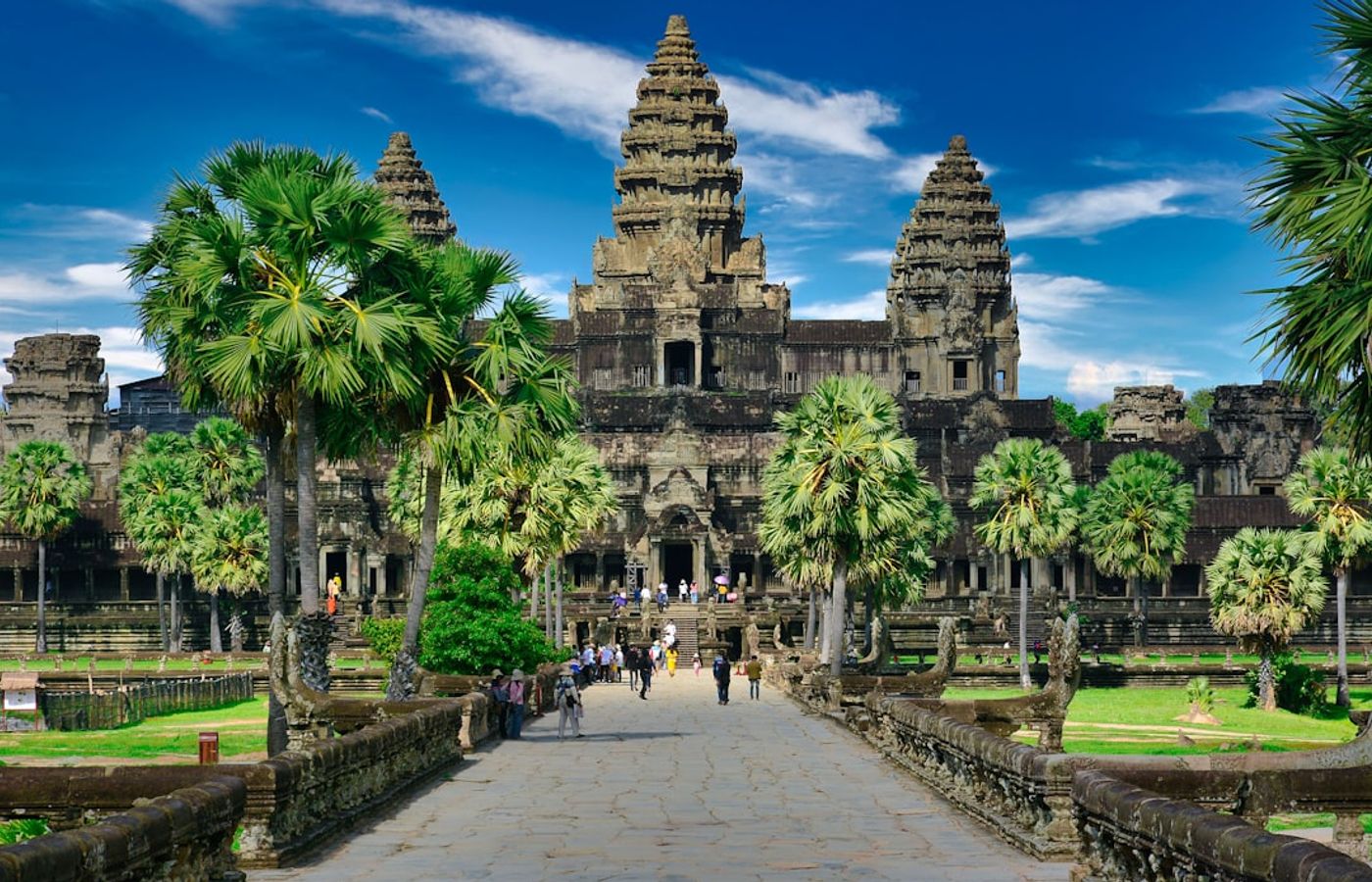

Angkor Wat is the reason most people fly into Siem Reap, and it holds up. Built for King Suryavarman II in the first half of the 12th century, the temple covers 162 hectares inside a moat 190 metres wide, and the central tower rises 65 metres above the western causeway. It began as a Hindu temple dedicated to Vishnu, shifted to Buddhist use by the end of the 12th century, and has never been fully abandoned since.
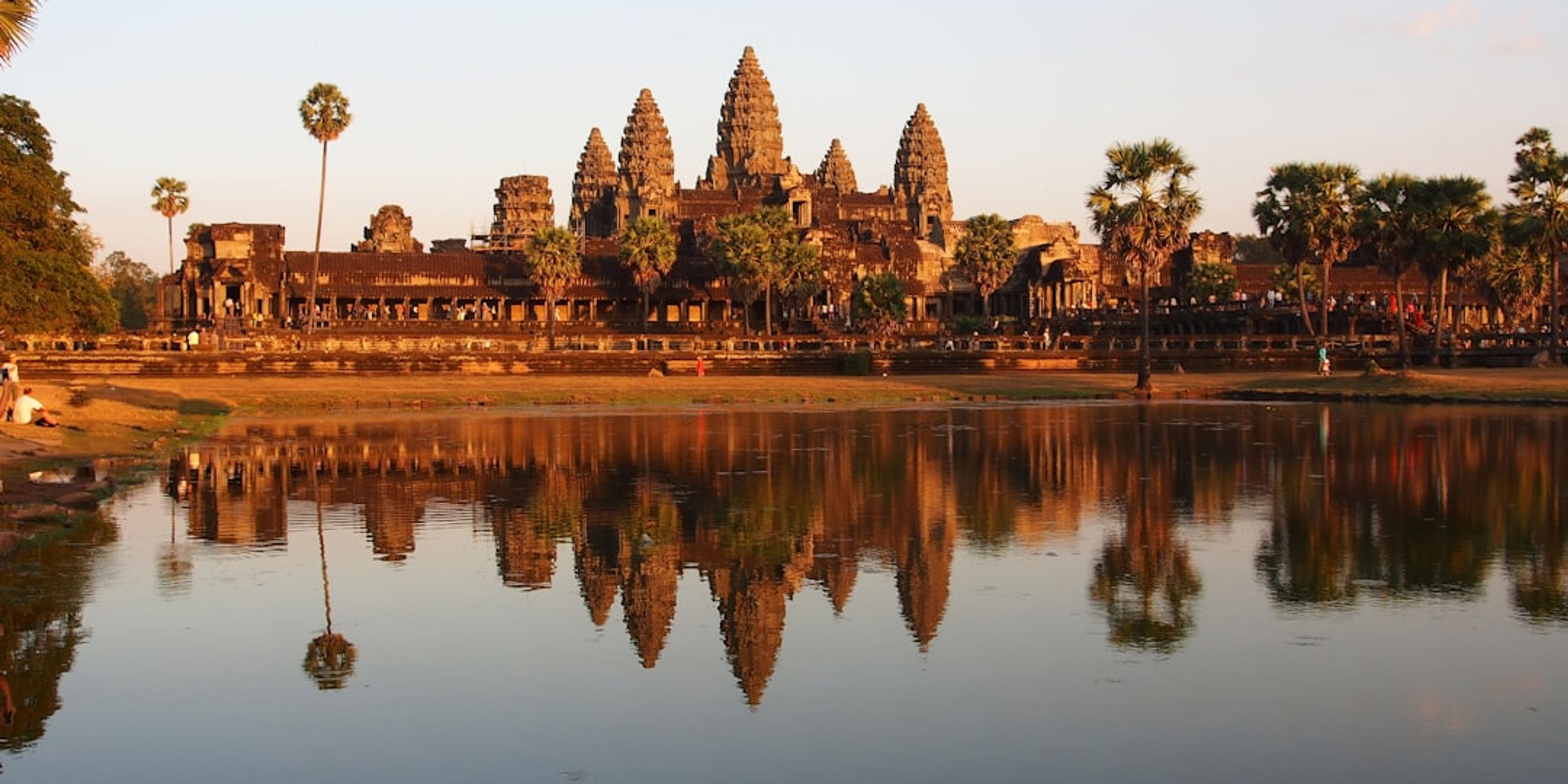
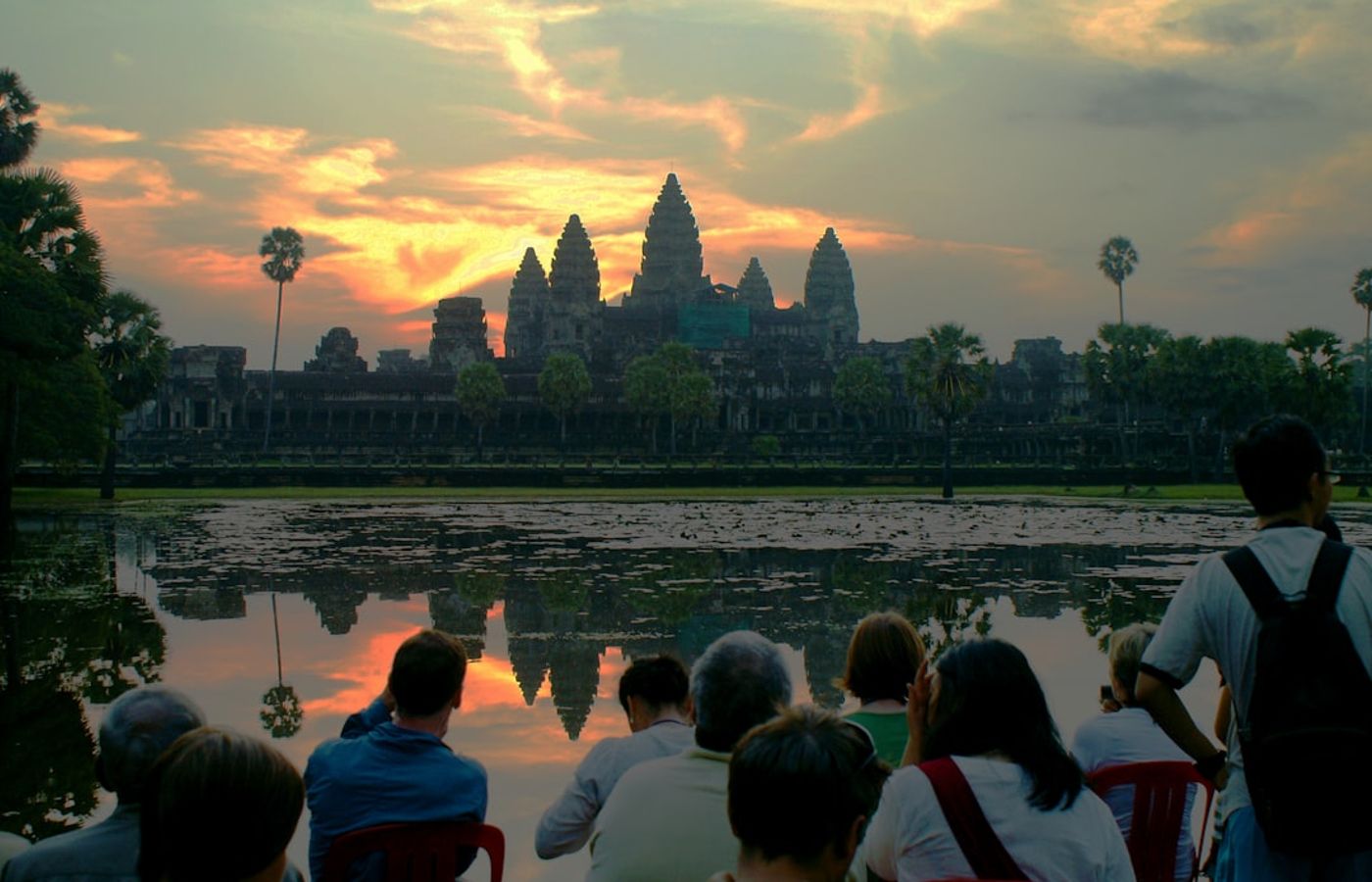
The bas-relief gallery on the outer enclosure runs roughly 600 metres, and the Churning of the Sea of Milk panel on the eastern wing is the one to find. Upper-level access to the Bakan towers opens at 07:30 with a dress code covering shoulders and knees, and the queue is long by 09:00. Sunrise crowds gather at the northern reflecting pond from about 05:15. Construction and restoration history is set out in detail in the Wikipedia entry for Angkor Wat.
Pro Tip: Skip the famous northern pond and walk five minutes to the southern one for the same silhouette with a fraction of the tripods. Then reverse the usual route and enter through the east gate around 09:00, as the sunrise groups head out.
2Angkor Thom and the Bayon - The Walled City and Its Stone Faces
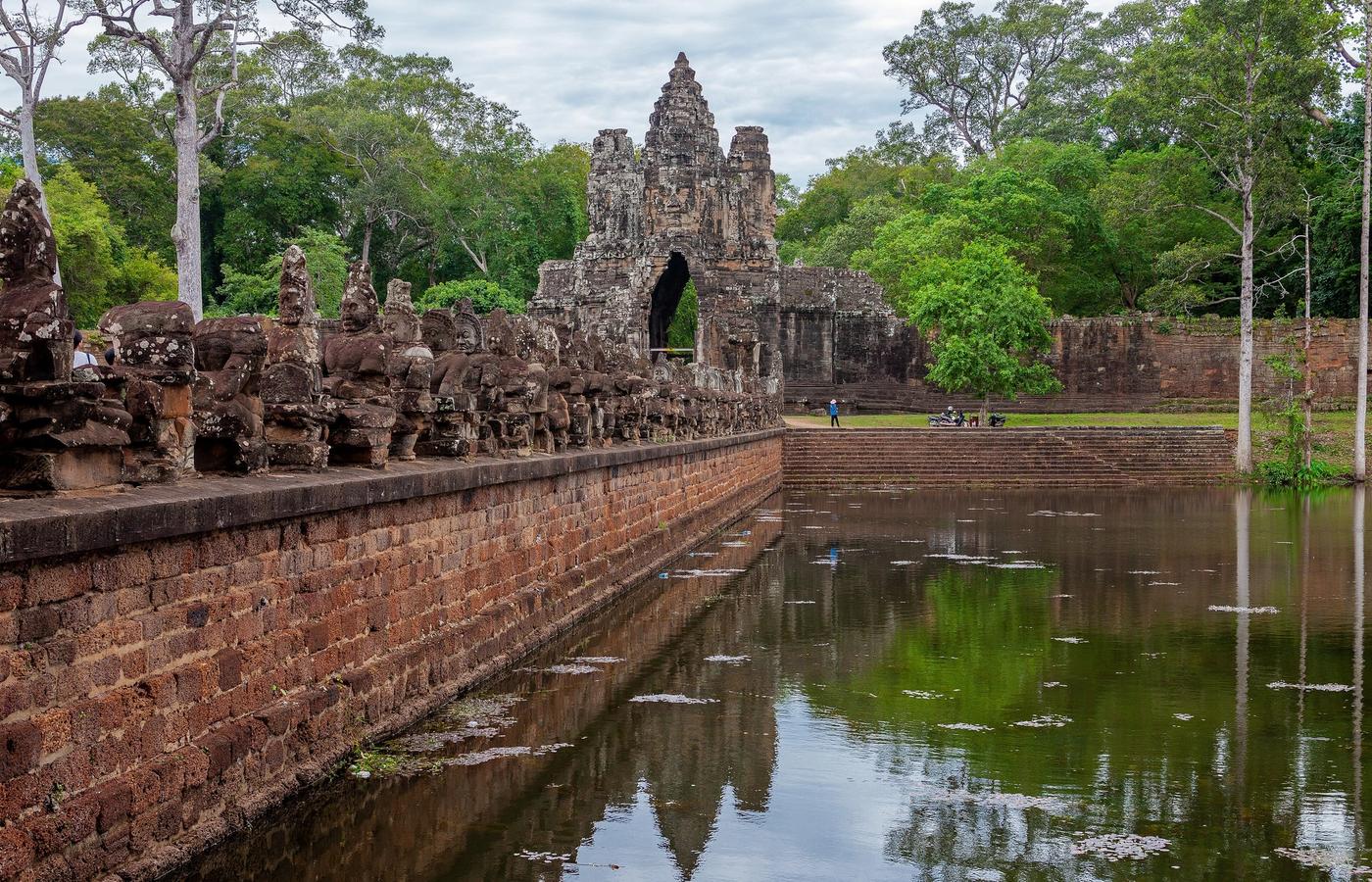

Angkor Thom was the last capital of the Khmer Empire, laid out by Jayavarman VII around 1200 and enclosed by a square wall 3 km on each side with a moat all the way round. Five gates lead in, each approached over a causeway lined with 54 gods on one side and 54 demons on the other, all hauling on a giant naga. The south gate is the best preserved and the standard way in.
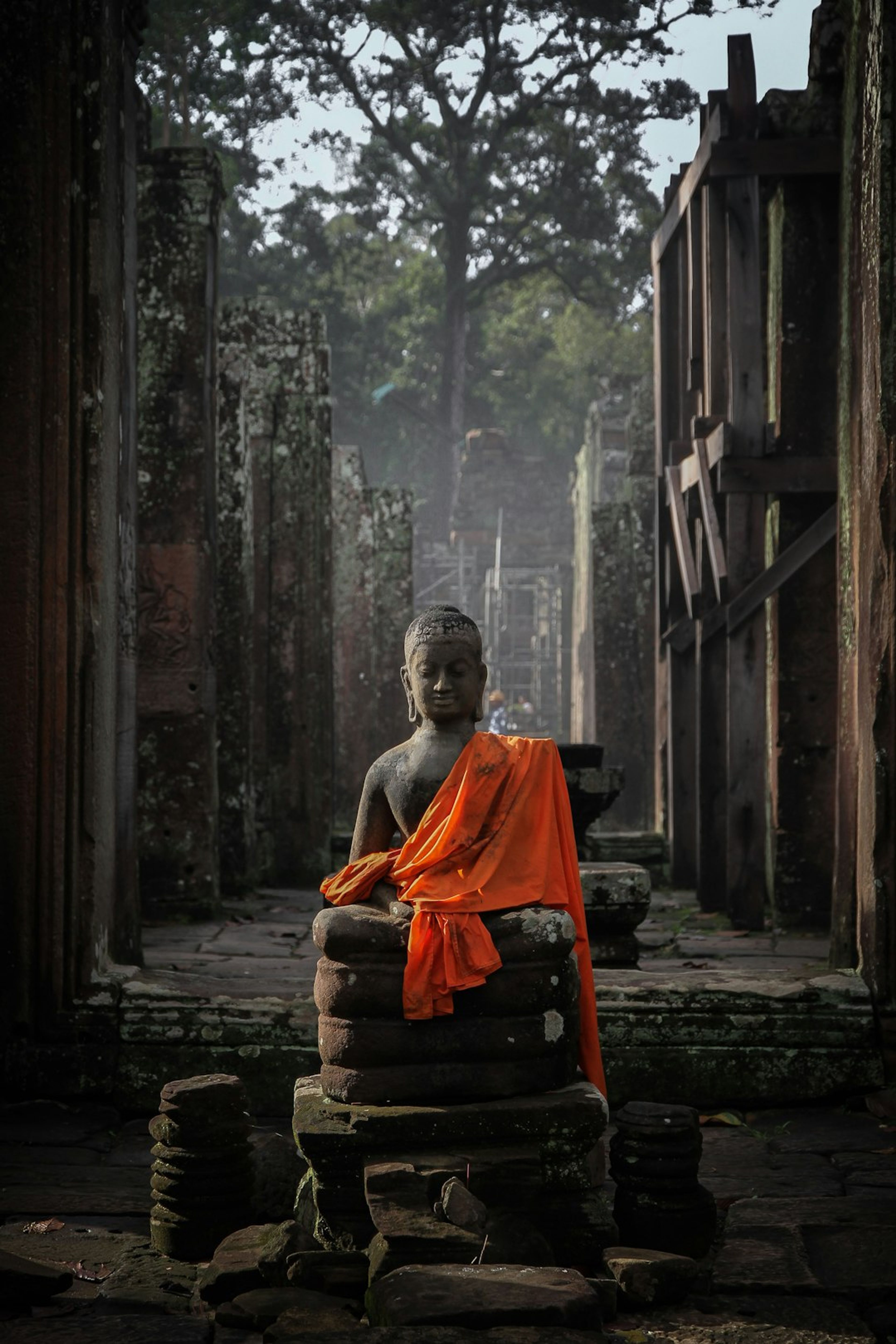
At the exact centre stands the Bayon, a temple of 37 surviving towers carrying more than 200 serene stone faces. Its outer gallery holds 1.2 km of bas-reliefs showing naval battles against the Cham, market scenes, cockfights and cooks at work - everyday Khmer life rather than mythology. North of the Bayon, the Baphuon, the Terrace of the Elephants and the Terrace of the Leper King run in a line and take another hour on foot.
Pro Tip: Reach the Bayon before 08:00 or after 15:30. The faces need side light to read properly, and midday sun flattens them into grey blocks. Walk the upper terrace clockwise so the best-lit faces come last.

3Ta Prohm - The Temple Left to the Trees
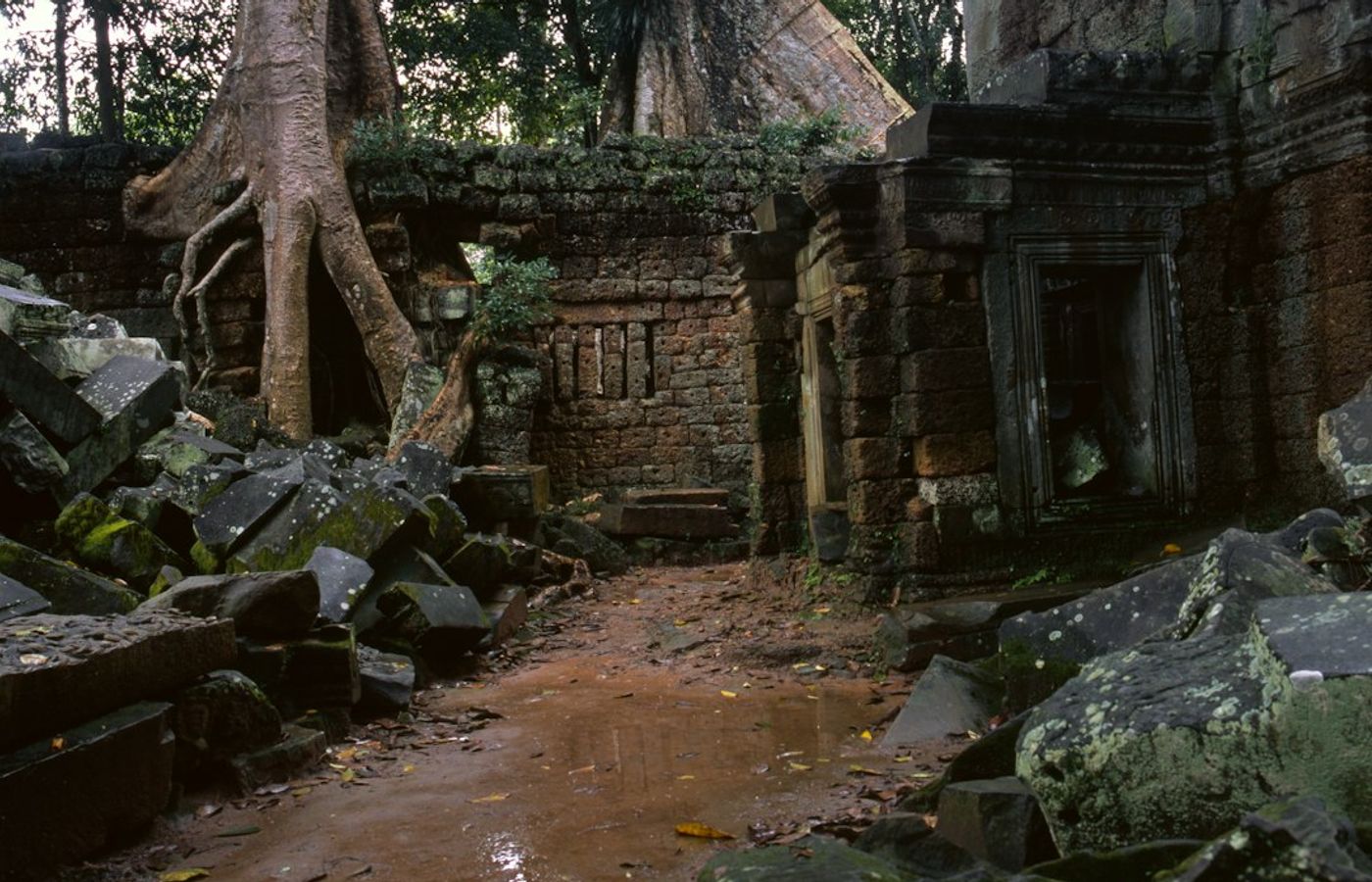

Ta Prohm was founded in 1186 as a Buddhist monastery and university. A Sanskrit foundation stele records 12,640 people living inside its walls and another 79,365 in surrounding villages supporting it. Restorers deliberately left much of the jungle in place, so silk-cotton and strangler fig roots still pour over the galleries and lever the stone blocks apart.
The most photographed roots sit near the eastern entrance and in the inner courtyard by the Hall of Dancers. A one-way walking route now runs east to west, with timber walkways over the collapsed sections, and 45 minutes inside is enough. The Archaeological Survey of India and APSARA have stabilised several galleries since 2013, so a few of the famous frames now carry scaffolding. Go in expecting a working conservation site, not a film set.
Pro Tip: Arrive at 07:30 when the gates open, or after 16:00. Coach groups cluster between 09:00 and 11:00, and the narrow courtyards mean you will queue several minutes for each tree frame. The west entrance is consistently quieter than the east.
4Banteay Srei - The Pink Sandstone Carvings Worth the Drive
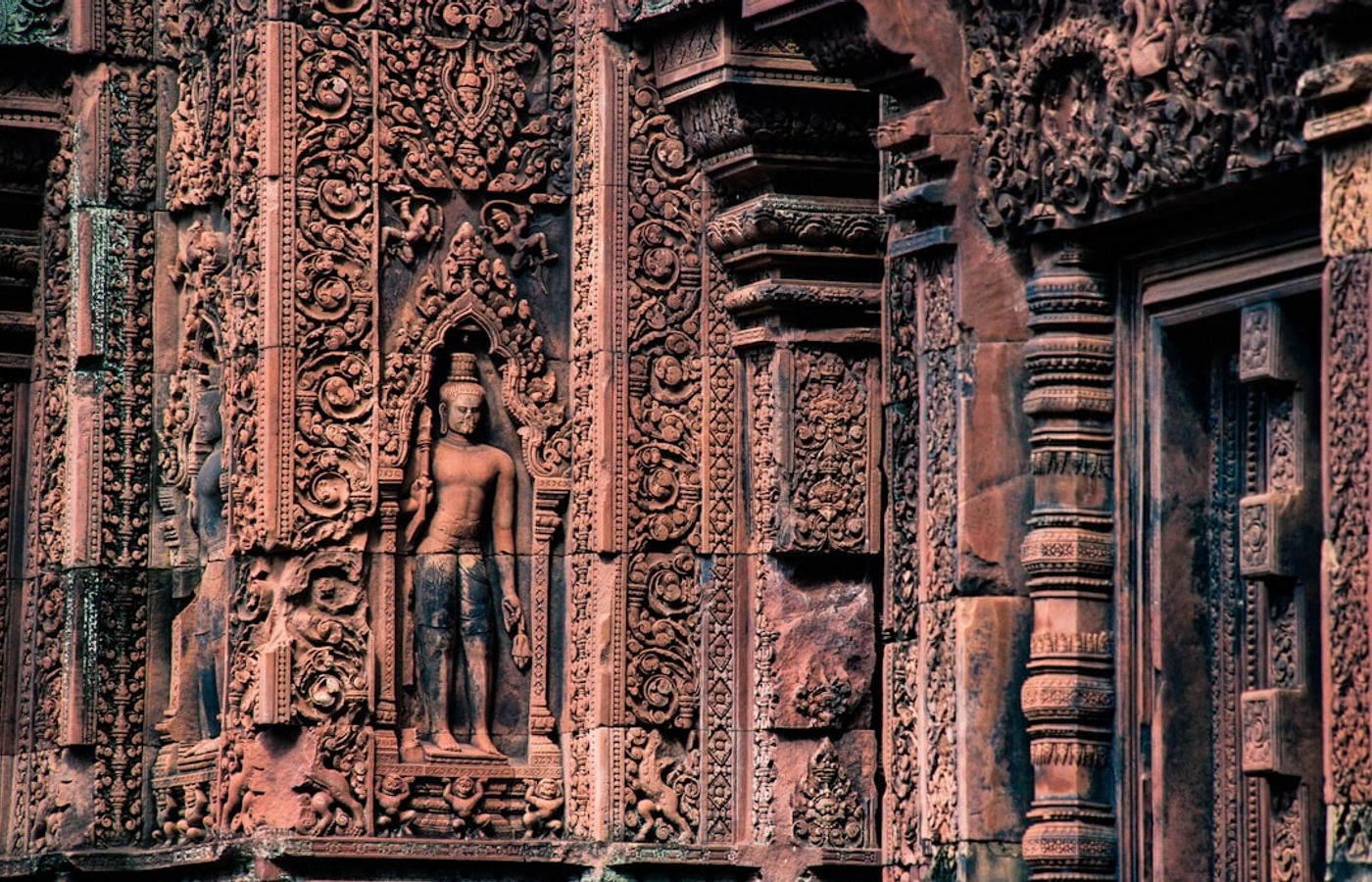
Banteay Srei repays the drive. Consecrated in 967 and built not by a king but by a Brahmin counsellor named Yajnavaraha, it is cut from fine-grained red sandstone that holds detail no other Angkor temple matches. The carvings stand several centimetres proud of the wall and remain crisp after more than a thousand years of monsoon.
The temple is small, and you can walk the whole enclosure in 40 minutes. The pediments are the reason to come: look for Shiva and Uma seated on the bull Nandi, and the scene of Kama firing his arrow at Shiva. Entry is included in the standard Angkor Pass. The road out passes rice paddies and palm-sugar stalls, and most drivers will fold in Banteay Samre or the Cambodia Landmine Museum on the way back.
Pro Tip: Go at 07:00 or after 15:30. The red stone reads deepest in low sun, and midday tour groups fill the narrow inner courtyard where the best carvings are. Agree 30 to 35 dollars for the return tuk-tuk before you set off.
5Preah Khan - The Grand Circuit's Best Ruin
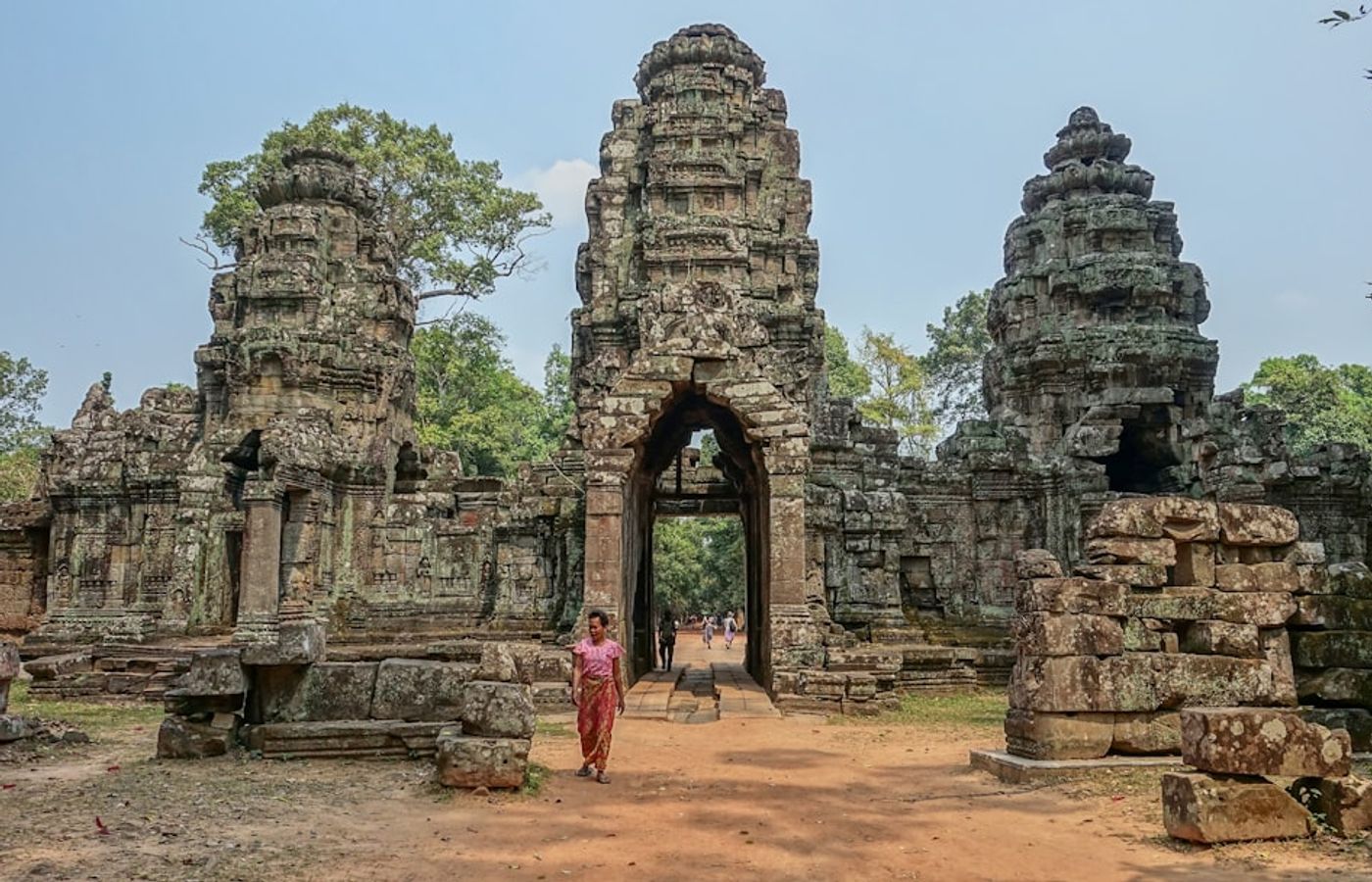
Preah Khan covers 56 hectares and was dedicated in 1191 by Jayavarman VII to his father. Like Ta Prohm it is only partly cleared of jungle, but it is larger, far quieter, and laid out on a long east-west axis you can walk from end to end. Its inscribed stele records 97,840 people attached to the temple and a resident troupe of 1,000 dancers.
The corridors narrow as you move inward, doorways shrinking until you are stooping by the time you reach the central sanctuary. That was deliberate. On the north side stands a two-storey building with round columns, unusual anywhere in Khmer architecture and still unexplained. The World Monuments Fund has worked here since 1991, and its approach keeps the ruin looking found rather than rebuilt, which is much of the appeal.
Pro Tip: Enter through the west gate and have your driver collect you at the east, so you walk straight through instead of doubling back. The crossing takes about 50 minutes at a slow pace and you will pass almost nobody.
6Phnom Bakheng at Sunset - The Hilltop View Over Angkor Wat
Phnom Bakheng predates Angkor Wat by two centuries. Built around the year 900 for Yasovarman I as the state temple of the first capital at Angkor, it stands on a 65-metre hill and once carried 108 subsidiary towers arranged around a five-tier pyramid. The climb from the road takes 15 to 20 minutes on a graded path that switches back through forest.
APSARA caps the upper terrace at 300 people and hands out numbered passes at the base from mid-afternoon, so the queue forms well before the light turns. From the top you look southeast across unbroken canopy to the five towers of Angkor Wat, and west over the West Baray reservoir. The site closes at 19:00 and rangers begin clearing the terrace at 18:30. Bring a torch: the descent path is unlit and uneven.
Pro Tip: Arrive by 16:15 in high season to be sure of a terrace pass. If the count is already full, the West Baray or Srah Srang reservoir give you an easier sunset with no climb, no queue and a clear water horizon.
7Tonle Sap Floating Villages (Kampong Phluk) - Stilt Houses Over the Lake
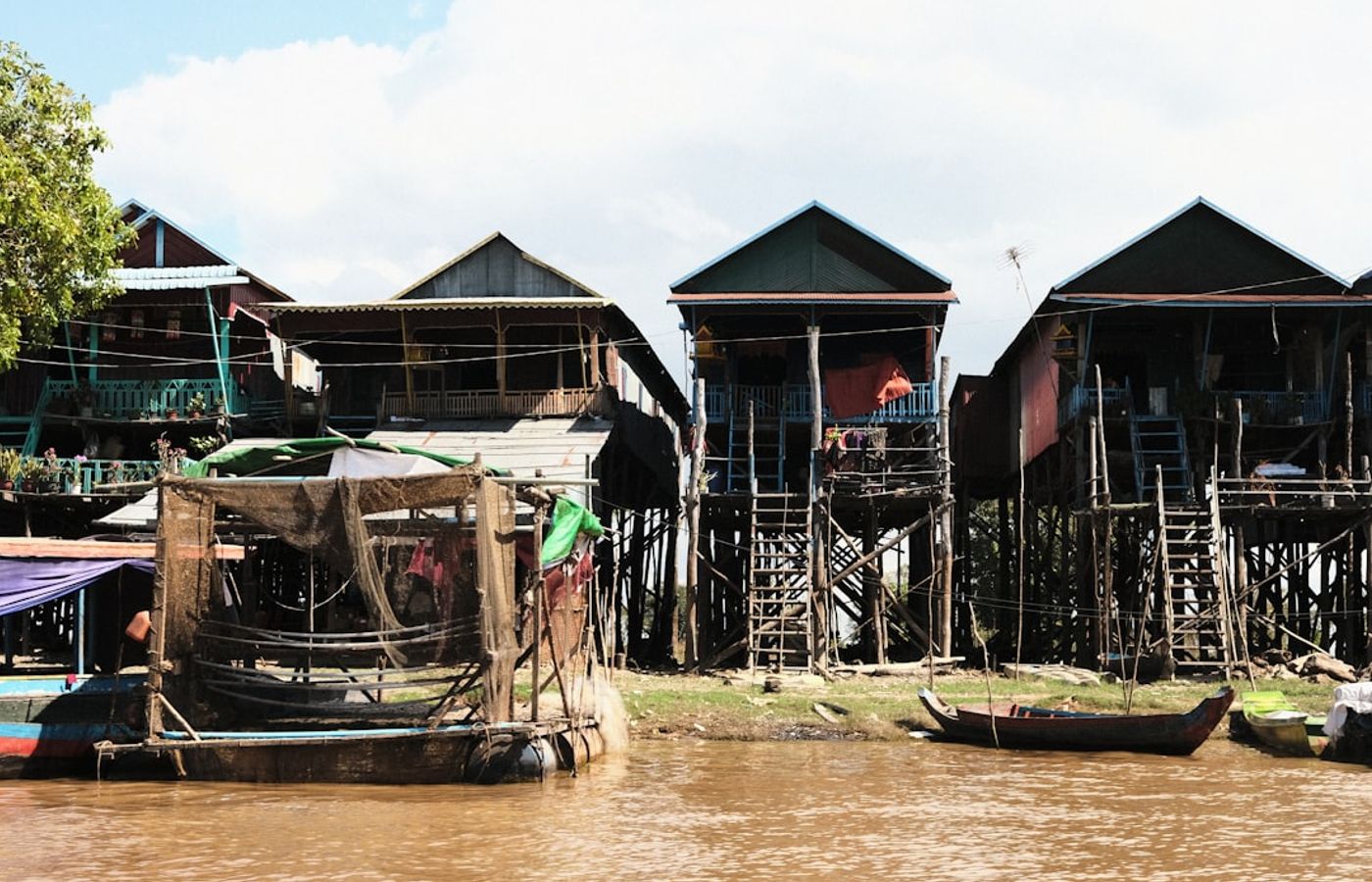
Tonle Sap is the largest freshwater lake in Southeast Asia, and it does something no other lake does. Each monsoon the Tonle Sap River reverses direction, swelling the lake from roughly 2,500 square kilometres to around 16,000. Kampong Phluk is a village of about 3,000 people built on stilts six to eight metres tall specifically to survive that annual rise.
Boats leave from the Kampong Phluk pier and run about 90 minutes, threading between the houses, a floating school and a flooded mangrove forest you paddle through in a small canoe. Expect 18 to 35 dollars per person depending on group size and season. Water is highest from September to November. By March the channels are shallow and the boats sometimes cannot reach the mangroves at all, so ask before you commit.
Pro Tip: Choose Kampong Phluk over Chong Kneas, which sits closer to town and has a long-standing reputation for add-on charges once you are on the water. Take the late departure around 15:30 so the return leg lands at sunset.
8Angkor National Museum - The Context You Need Before the Temples
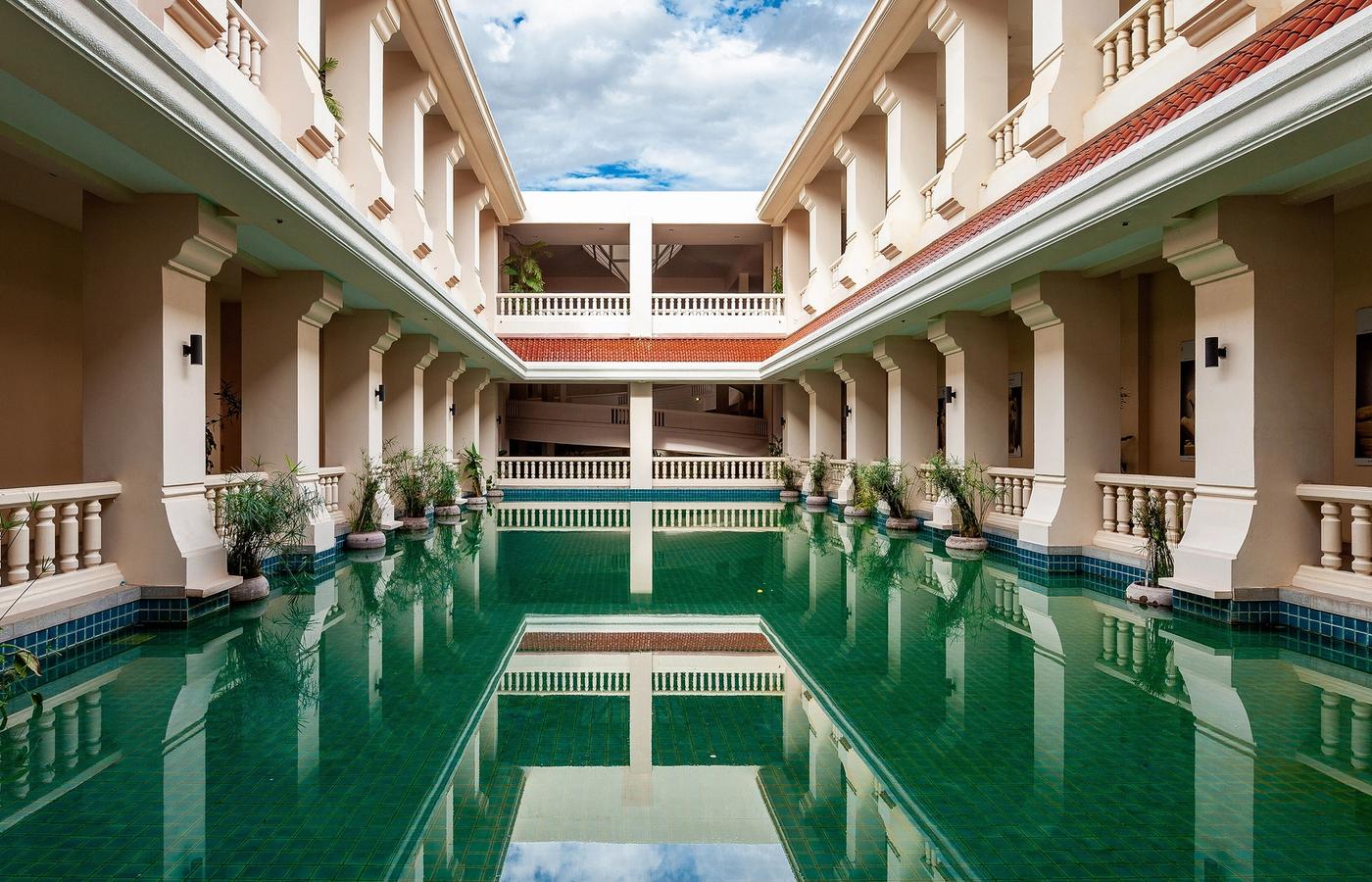
The Angkor National Museum opened in 2007 on Charles de Gaulle Avenue and runs eight themed galleries across two floors. The Gallery of 1,000 Buddhas is the standout, and the rooms on Khmer religion, the great kings and the evolution of temple architecture explain what you are about to walk through in the field. Labels are in English and Khmer throughout.
Admission is 12 dollars for adults, with an audio guide at 5 dollars in several languages. The building is air-conditioned, which matters in April when Siem Reap regularly passes 36C. Allow 90 minutes to two hours. Photography is not permitted in the galleries and bags go into lockers at the entrance. Opening hours are 08:30 to 18:00 daily, and the last entry is at 17:30.
Pro Tip: Come on your arrival afternoon, before the first temple day rather than after it. The Jayavarman VII gallery makes the Bayon faces legible, and knowing which king built what turns the park into a sequence instead of a blur of grey stone.
9Pub Street and the Old Market - Where Siem Reap Eats After Dark
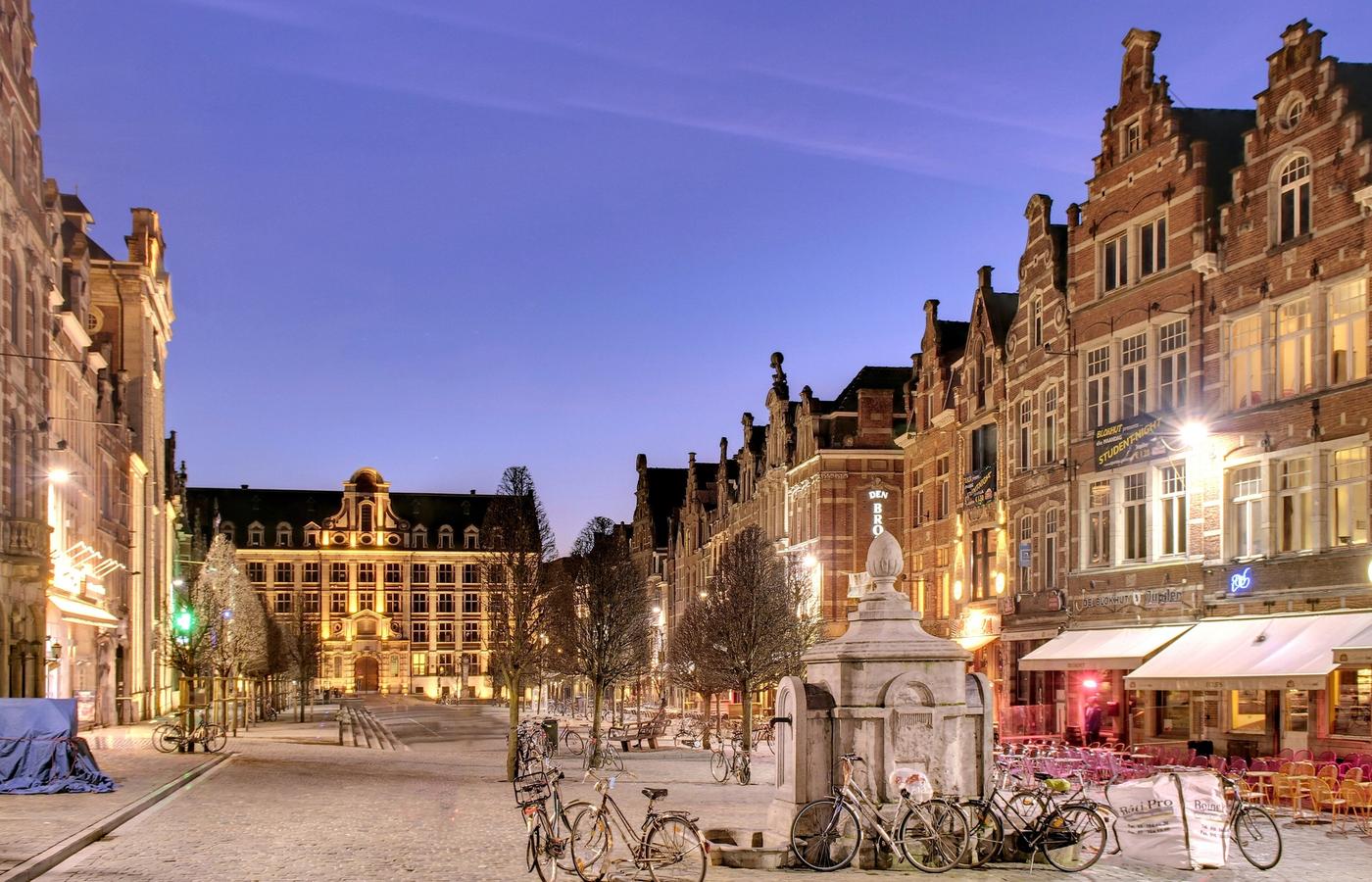
Pub Street runs one block through the old French quarter and closes to traffic each evening from around 17:00. It is loud, cheap and unapologetically aimed at visitors: draught Angkor beer at 50 cents during happy hour, wood-fired barbecue on the pavement, and half a dozen sound systems competing. The side lanes hold the better cooking.
Psar Chas, the Old Market, sits a two-minute walk south and trades from about 07:00 to 20:00 - fruit, dried fish, kramas, silverwork and spices, with the produce end busiest before 09:00. The Alley West and Lane 2 have quieter bars and Khmer kitchens serving fish amok and lok lak for 4 to 7 dollars. US dollars work everywhere; change under a dollar comes back in riel at roughly 4,000 to the dollar.
Pro Tip: Eat in the alleys, drink on Pub Street. Prices one lane back run 30 to 40 percent lower for noticeably better cooking, and you are still 40 seconds from the noise whenever you want it.
10Phare the Cambodian Circus - Khmer Storytelling Without Animals
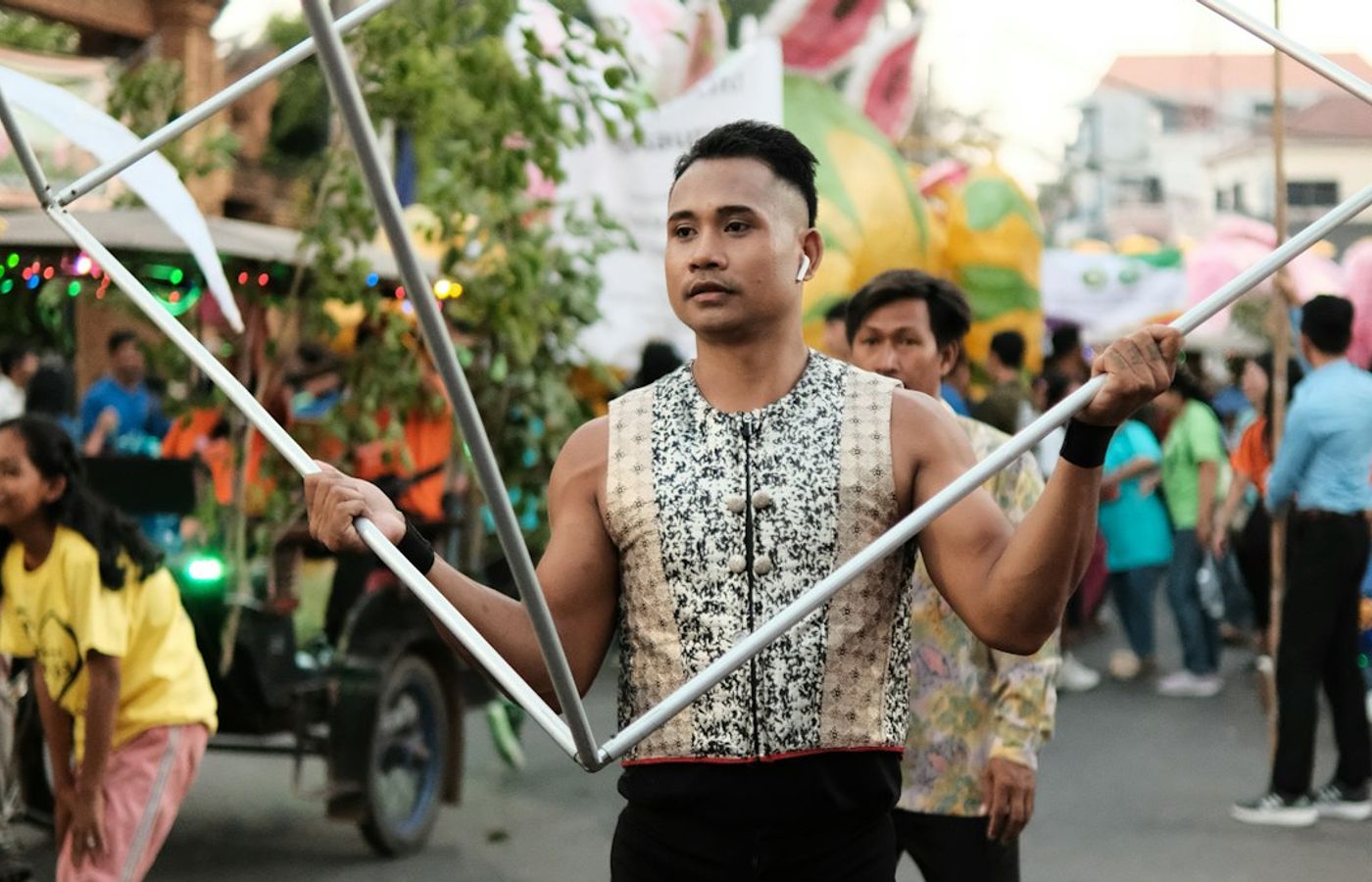
Phare the Cambodian Circus is run by Phare Ponleu Selpak, a Battambang arts school founded in 1994 by young Cambodians returning from a refugee camp on the Thai border. Every performer comes through its free training programme, and ticket revenue funds the school. There are no animals in the show. Acrobatics, juggling, live music, live painting and theatre are built around Cambodian stories.
Performances start at 20:00 nightly under a big top on Ring Road and run about 70 minutes with no interval. The programme rotates between several productions, including Sokha, which deals with the Khmer Rouge years, and Khmer Metal, set in a roadside bar. Tickets start near 18 dollars for adults and 10 dollars for children under 12, with premium tiers above that. Doors open at 19:00.
Pro Tip: Turn up at 19:15. Seating within each tier is unallocated, so walking in early puts you front and centre for the standard price. Sokha is the strongest of the rotating shows if the schedule gives you a choice.

CEO and co-founder
Tomas is the co-founder and director of trip1, an European company specializing in reservation services. He launched the company in 2025 with a focus on building scalable, efficient operations.
10 Best Things to Do in Siem Reap, Cambodia - FAQ
No, one day is not enough. A realistic pace covers three or four of these places per day. The Angkor temples alone need two full days, and Kampong Phluk sits 31 km in the opposite direction from the park. Plan on three days in Siem Reap, four if you want an unhurried Banteay Srei morning.
Run the small circuit first. Day one takes Angkor Wat at sunrise, then Angkor Thom and the Bayon, then Ta Prohm, finishing at Phnom Bakheng for sunset. Day two covers Preah Khan on the grand circuit plus the drive out to Banteay Srei. Day three is Tonle Sap, with the Angkor National Museum, Pub Street and Phare filling the remaining afternoons and evenings.
The Angkor Pass is sold only at the official Angkor Enterprise ticket centre on Street 60, about 4 km from town. One day costs 37 dollars, three days 62 dollars and seven days 72 dollars, and the multi-day passes are valid across a longer window rather than on consecutive days. The pass covers Angkor Wat, Angkor Thom, the Bayon, Ta Prohm, Preah Khan, Phnom Bakheng and Banteay Srei. Tonle Sap boat trips, the Angkor National Museum and Phare are all charged separately.
Budget roughly 150 to 200 dollars per person over three days, excluding food and accommodation. A three-day Angkor Pass is 62 dollars, the Angkor National Museum is 12 dollars, a Kampong Phluk boat trip runs 18 to 35 dollars, and Phare tickets start near 18 dollars. Tuk-tuk hire adds 18 to 35 dollars per day depending on the circuit. Pub Street and the Old Market cost nothing to walk.
Hire a tuk-tuk with a driver for the day. Expect 18 to 25 dollars for the small circuit, 25 to 30 dollars for the grand circuit and 30 to 35 dollars for Banteay Srei, which sits 37 km out. Bicycles handle the 17 km small circuit well between November and February. An air-conditioned car with driver starts around 45 dollars and makes sense in the April heat or during heavy rain.
Several worthwhile sites sit outside this list of ten. Beng Mealea and the Koh Ker pyramid each need a half day or more of driving. Banteay Kdei, Ta Som, Neak Pean and the Roluos group reward anyone holding a seven-day Angkor Pass. Closer to town, the Cambodia Landmine Museum, an Angkor Centre for Conservation of Biodiversity tour and a half-day Khmer cooking class round out a longer stay.