Guides · Reykjavik
12 Best Things to Do in Reykjavik, Iceland: Northern Lights, Culture & Nature
By Tomas Achmedovas · CEO and co-founder

CEO and co-founder
Reykjavik: The World's Northernmost Capital
Perched on the southwestern coast of Iceland where the North Atlantic meets volcanic terrain, Reykjavik is a city that punches far above its size. With a population of around 140,000, this compact capital manages to pack in world-class museums, cutting-edge architecture, a thriving food scene, and some of the most dramatic natural landscapes accessible from any European city. If you are planning a trip and wondering about the best things to do in Reykjavik, you are in for a destination that blends Nordic cool with raw, untamed nature in a way no other capital can match.
From chasing the Northern Lights on a crisp winter evening to soaking in geothermal pools under the midnight sun, Reykjavik serves as both a destination and a launchpad. The city itself rewards a good wander - colourful corrugated-iron houses line streets dotted with independent coffee shops, galleries, and restaurants serving lamb stew and fermented shark to the adventurous. Beyond the city limits, the Golden Circle, Blue Lagoon, and South Coast waterfalls are all within easy day-trip distance.
This guide covers the 12 best things to do in Reykjavik in 2026, from iconic landmarks and geothermal spas to cultural experiences and unforgettable day trips. Whether you have two days or a full week, these Reykjavik attractions will help you make the most of Iceland's extraordinary capital.
Check dates for Reykjavik
See what is available on your dates.
1Hallgrimskirkja - Reykjavik's Iconic Church and Observation Tower


Towering 74.5 metres above the city, Hallgrimskirkja is the landmark that defines the Reykjavik skyline and the first thing on most visitors' lists of things to do in Reykjavik. Designed by architect Gudjon Samuelsson and inspired by the basalt column formations of Svartifoss waterfall, this Expressionist Lutheran church took 41 years to build (1945-1986). The soaring concrete facade looks like a cascade of frozen lava columns - divisive when it was first proposed, now universally beloved.
Entering the church is free and the interior is striking in its simplicity - clean white walls, a vaulted ceiling, and a massive 5,275-pipe organ by Johannes Klais that fills the nave. But the main draw is the observation deck at the top. For ISK 1,200 (~€8), you take a lift to the top of the tower for a 360-degree panorama of the colourful corrugated-iron rooftops, Mount Esja across the bay, and on clear days, Snaefellsjokull glacier to the northwest. In front of the church stands a bronze statue of Leifur Eiriksson (Leif Erikson), a gift from the United States in 1930.
2Harpa Concert Hall - Award-Winning Waterfront Architecture


Sitting at the edge of the Old Harbour, Harpa is a masterpiece of modern architecture and one of the most visually stunning Reykjavik attractions. Designed by Henning Larsen Architects in collaboration with artist Olafur Eliasson, the building's facade is a honeycomb of multi-coloured glass panels that shift in colour with the Arctic light - it looks completely different at sunrise, midday, and under the winter Northern Lights. Harpa won the European Union Prize for Contemporary Architecture (Mies van der Rohe Award) in 2013.
Inside, Harpa serves as the home of the Iceland Symphony Orchestra and the Icelandic Opera. Even if you do not attend a performance, the building is free to enter and explore. The ground-floor lobby offers sweeping harbour views through the glass walls, a shop selling Icelandic design, and a cafe. Guided architecture tours run daily at 15:30 (ISK 2,750/~€18). Check the events calendar for everything from classical concerts to indie gigs - this is the cultural heartbeat of the city.
3Blue Lagoon - Iceland's Most Famous Geothermal Spa


The Blue Lagoon is not technically in Reykjavik - it sits on the Reykjanes Peninsula about 50 km from the city and 20 km from Keflavik Airport - but it is on virtually every visitor's Reykjavik itinerary and impossible to leave off any list of things to do in Reykjavik. The milky-blue geothermal waters sit at a constant 37-40°C, rich in silica and minerals, surrounded by a surreal landscape of black lava fields and rising steam.
The Comfort package starts at ISK 12,990 (~€87) and includes entry, a silica mud mask, a towel, and a drink of your choice at the in-water bar. The Premium package (ISK 16,990/~€113) adds a bathrobe, slippers, and a second mask. Booking in advance is essential as the lagoon operates on timed entry slots that regularly sell out, sometimes weeks ahead in summer. The on-site Lava Restaurant serves excellent Icelandic cuisine if you want to make a half-day of it.
Check dates for Reykjavik
See what is available on your dates.
4Northern Lights Tours - Chasing the Aurora Borealis from Reykjavik

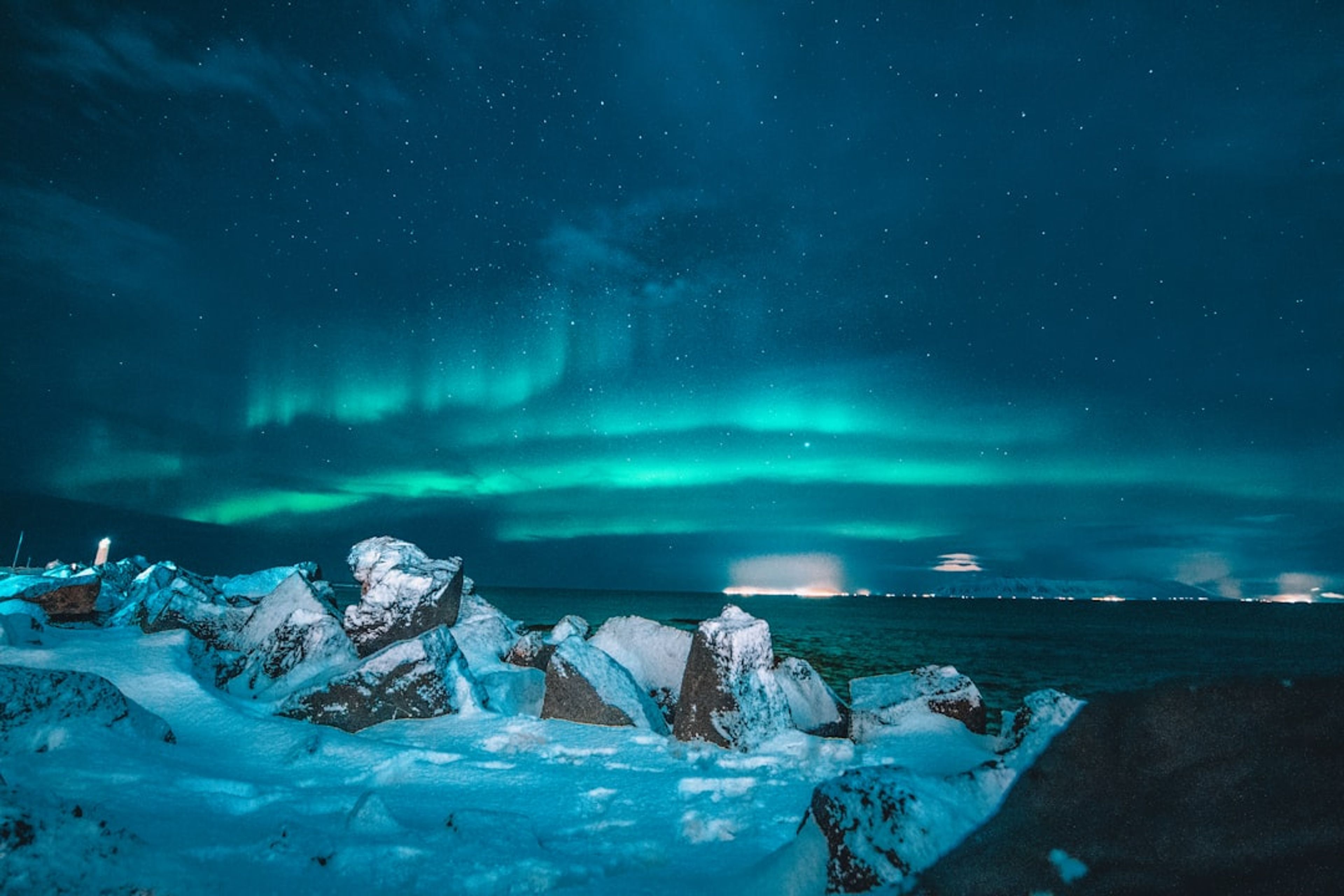
Seeing the Northern Lights dancing across the Arctic sky is one of the most unforgettable things to do in Reykjavik. The aurora season runs from September through March, with the darkest months (October to February) offering the best chances. Tours depart from Reykjavik most evenings and drive to locations away from the city's light pollution where conditions are optimal - the exact spot changes nightly based on cloud cover and aurora forecasts.
Standard bus tours cost ISK 7,000-10,000 (~€47-67) and last 3-4 hours, while small-group super-jeep tours run ISK 15,000-25,000 (~€100-167) and venture further into remote landscapes. Most operators offer free rebooking if the aurora does not appear or conditions cancel the trip. You can also try spotting them independently from Grotta lighthouse on the western tip of Reykjavik (free, no tour needed) or from the Seltjarnarnes peninsula on clear nights.
5Perlan - Interactive Nature Exhibition Under a Glass Dome

Built on top of six enormous former hot water tanks on Oskjuhlid hill, Perlan ("The Pearl") is one of the most distinctive buildings in Reykjavik and houses a world-class nature exhibition. The Wonders of Iceland exhibition takes you through the country's geology and natural phenomena using immersive technology - including a real indoor ice cave made from recycled ice and snow, a planetarium showing Northern Lights films, and interactive displays on volcanoes, glaciers, and marine life.
The observation deck on the fourth floor offers a free 360-degree panoramic view of Reykjavik, the mountains, and the ocean (you only need a ticket for the exhibitions). Full exhibition entry costs ISK 4,900 (~€33) for adults and ISK 2,200 (~€15) for children 6-17. The planetarium show alone is ISK 2,490 (~€17). Perlan also houses a fine-dining restaurant under the glass dome with rotating views - a great spot for a special dinner. Allow at least 2 hours for the full exhibition.
6Sun Voyager - Reykjavik's Most Photographed Sculpture

Standing on the waterfront promenade Saebraut, the Sun Voyager (Solfarid) is a gleaming stainless steel sculpture by Jon Gunnar Arnason that has become one of the most recognisable symbols of Reykjavik. Unveiled in 1990, the piece resembles a Viking longship skeleton pointing north across the bay toward Mount Esja - though the artist described it as a dreamboat and an ode to the sun, not a literal ship. It is one of the most photographed things to do in Reykjavik and completely free to visit.
The sculpture catches light differently throughout the day, which is part of its genius. At sunrise or sunset it glows golden, and in winter the Northern Lights can occasionally be seen directly behind it - a photographer's dream shot. The seafront path in both directions is perfect for a stroll; heading east takes you toward Harpa Concert Hall and the harbour, while heading west leads to Grotta lighthouse.
7Golden Circle - Iceland's Essential Day Trip from Reykjavik

The Golden Circle is a 300 km loop from Reykjavik that passes through three of Iceland's most spectacular natural sites, and it is the single most popular day trip in the country. Thingvellir National Park is where the Eurasian and North American tectonic plates visibly drift apart - you can walk between the continents in a rift valley that also served as the site of Iceland's Viking-age parliament (Althingi) from 930 AD. It is a UNESCO World Heritage Site.
Next is the Geysir geothermal area, where Strokkur geyser erupts a column of boiling water 20-30 metres into the air every 5-10 minutes. Finally, Gullfoss ("Golden Waterfall") thunders down two tiers into a 32-metre-deep canyon in a display of raw natural power that will leave you speechless. Self-driving the Golden Circle takes 5-7 hours with stops. Guided bus tours cost ISK 8,000-12,000 (~€53-80) and typically run 8-9 hours, while small-group or super-jeep tours with extras like Silfra snorkelling or Fontana geothermal baths cost ISK 18,000-35,000 (~€120-233).
8Old Harbour and Whale Watching - Reykjavik's Maritime Heart

Reykjavik's Old Harbour (Grandi) has transformed from a working fishing port into one of the most vibrant parts of the city, and a whale watching tour departing from its docks is one of the top things to do in Reykjavik. Faxafloi Bay is home to minke whales, humpback whales, white-beaked dolphins, and harbour porpoises. Sighting rates run around 95-99% in summer (June-August) and 80-90% in winter.
Operators like Elding and Special Tours run 3-hour classic whale watching tours from ISK 12,990 (~€87), while express RIB boat tours take 1-2 hours for ISK 17,990 (~€120) with a more thrilling ride. Puffin watching tours (mid-April to mid-August) visit Akurey and Lundey islands and cost ISK 6,990 (~€47). On land, the harbour area rewards a good explore - the Whales of Iceland exhibition (ISK 3,500/~€23) features life-size whale models, the Marshall House hosts contemporary art galleries, and the Grandi Matholl food hall serves everything from fresh lobster soup to craft beer.
9Laugavegur - Reykjavik's Main Shopping and Dining Street

Laugavegur is the beating heart of Reykjavik and the oldest shopping street in the city, dating back to 1885 when it served as the path to the hot springs in Laugardalur where locals washed their laundry. Today it is a colourful strip of independent boutiques, Icelandic design shops, vintage stores, bookshops, cafes, restaurants, and bars. For Reykjavik sightseeing on foot, this is where you start and where you will keep returning.
Browse Icelandic wool sweaters (lopapeysa) at Handknitting Association of Iceland (Skolavordustigur 19), pick up design souvenirs at Kraum or Fischer, and fuel up with a pylsur (Icelandic hot dog) from Baejarins Beztu - the famous harbour-side stand operating since 1937. The street extends into Bankastraeti and Austurstraeti toward the harbour. Side streets like Hverfisgata and Skolavordustigur hold galleries, record shops, and some of the best restaurants in the city. The nightlife scene is concentrated here too - Reykjavik's legendary weekend bar crawl ("rúntur") takes over from around 23:00 on Friday and Saturday nights.
10Tjornin and Reykjavik City Hall - The City's Green Heart

Tjornin ("The Pond") is a serene lake right in the centre of Reykjavik that serves as the city's green lung and one of the most pleasant spots for a stroll at any time of year. Over 40 species of birds nest here, including Arctic terns, greylag geese, eider ducks, and whooper swans - making it something of an urban birdwatching paradise. In winter, part of the lake freezes over and locals (and visitors) ice skate on it.
On the north shore sits Reykjavik City Hall (Radhusid), a modernist building partly extending over the water. Inside is a free exhibition and a large 3D topographical map of Iceland that is worth a quick visit - it gives excellent context for planning day trips. The surrounding Hljomskalagarour park has walking paths, sculptures, and benches. The National Gallery of Iceland is a short walk south, and the residential streets around the pond are some of the most photogenic in the city with traditional corrugated-iron houses in every colour.
11National Museum of Iceland - A Journey Through Viking History

If you want to understand Iceland's extraordinary story from Viking settlement to modern independence, the National Museum of Iceland (Thjodminjasafn Islands) is a must. The permanent exhibition "Making of a Nation" traces 1,200 years of Icelandic history through over 2,000 artefacts, starting with a 10th-century Viking longboat and an original copy of the medieval Sagas, through the centuries of Norwegian and Danish rule, to the country's 1944 independence.
The highlight is the Valthjofsstadir church door from around 1200 AD, an intricately carved Romanesque masterpiece depicting a knight fighting a dragon - one of Iceland's most treasured artefacts. The museum also covers modern Icelandic culture, DNA research, and rotating temporary exhibitions. Admission is ISK 2,500 (~€17) for adults, free for under-18s. Allow 1.5-2 hours. The museum is housed in a handsome building on Sudurgata in the Vesturbjaer neighbourhood, a short walk from the University of Iceland campus.
12Reykjavik Street Art - An Open-Air Gallery Walk

Reykjavik has one of the most vibrant street art scenes of any small city in the world, with murals covering building facades across the downtown area. The tradition took off with the Wall Poetry project and Iceland Airwaves festival commissions, and today works by Icelandic and international artists transform blank walls into large-scale artworks. You will stumble across them constantly while walking, but a dedicated street art walk is one of the most rewarding free things to do in Reykjavik.
Key murals include the rainbow street painting on Skolavordustigur (permanently painted since 2020), the monumental works on Laugavegur and Hverfisgata, and several striking pieces around Grandi and the harbour area. The style ranges from photorealistic portraits to abstract geometric designs and political commentary. Self-guided walks take about 1-2 hours; I Love Reykjavik and the Reykjavik Grapevine publish updated street art maps. Guided walking tours focusing on street art and design run for ISK 5,000-7,000 (~€33-47) and typically last 2 hours.
Take this guide with you
Get every place in this guide, with addresses and map links, in your inbox — easy to open on your phone during the trip.
One email to the address on your account. No newsletter.

CEO and co-founder
Tomas is the co-founder and director of trip1, an European company specializing in reservation services. He launched the company in 2025 with a focus on building scalable, efficient operations.
Reykjavik Travel Guide FAQ
The view from the Hallgrimskirkja tower, Harpa's glass facade on the harbour, the Sun Voyager sculpture on the seafront, and a whale watching trip from the Old Harbour. In the evening, walk Laugavegur. Beyond the city, plan a day for the Golden Circle, a soak in the Blue Lagoon, and a Northern Lights trip between September and March.
Yes, three days is the sweet spot. Spend two on the city: Hallgrimskirkja, Harpa, the Old Harbour, Laugavegur and a museum or two. Use the third for the Golden Circle, and fit the Blue Lagoon into your arrival or departure day, since it lies between Keflavik Airport and Reykjavik. Add a fourth day for a Northern Lights tour or the South Coast.
Rarely. The currency is the Icelandic krona, and US dollars are not accepted as standard, though a few tourist sites such as the Hallgrimskirkja tower take them and give change in krona. You hardly need cash: Visa and Mastercard work almost everywhere in Reykjavik, including taxis, cafes and small purchases, and contactless payment is common.
Yes, between September and March, with the best chances from October to February. City lights get in the way, so go to Grotta lighthouse on the western tip, free and easy to reach, or take a tour out of town. Check the Icelandic Met Office forecast at vedur.is: a rating of 3 or more on its 0 to 9 scale with clear skies gives decent odds.
Yes. Entry is by timed slot, and slots sell out, sometimes weeks ahead in summer. The lagoon is about 50 km from Reykjavik and 20 km from Keflavik Airport, so book it for your arrival or departure day. The 08:00 slot is usually the cheapest and quietest, and in winter you soak in the dark under the stars.
Yes. On trip1 you can book hotels in Reykjavik, from the streets around Laugavegur and Hallgrimskirkja to the Old Harbour, and pay with over 120 cryptocurrencies, including Bitcoin, Ethereum and USDC, or by Visa and Mastercard.