
Get up to €50 off your staySubscribe and get up to €50 off your next stay
Browse and explore the best travel guides in Busan.
Busan is South Korea's second city and its main port, spread along a mountainous stretch of the southeastern coast where the urban grid keeps running into hills and beaches. It is noticeably more relaxed than Seoul, and the sea is never far from view.
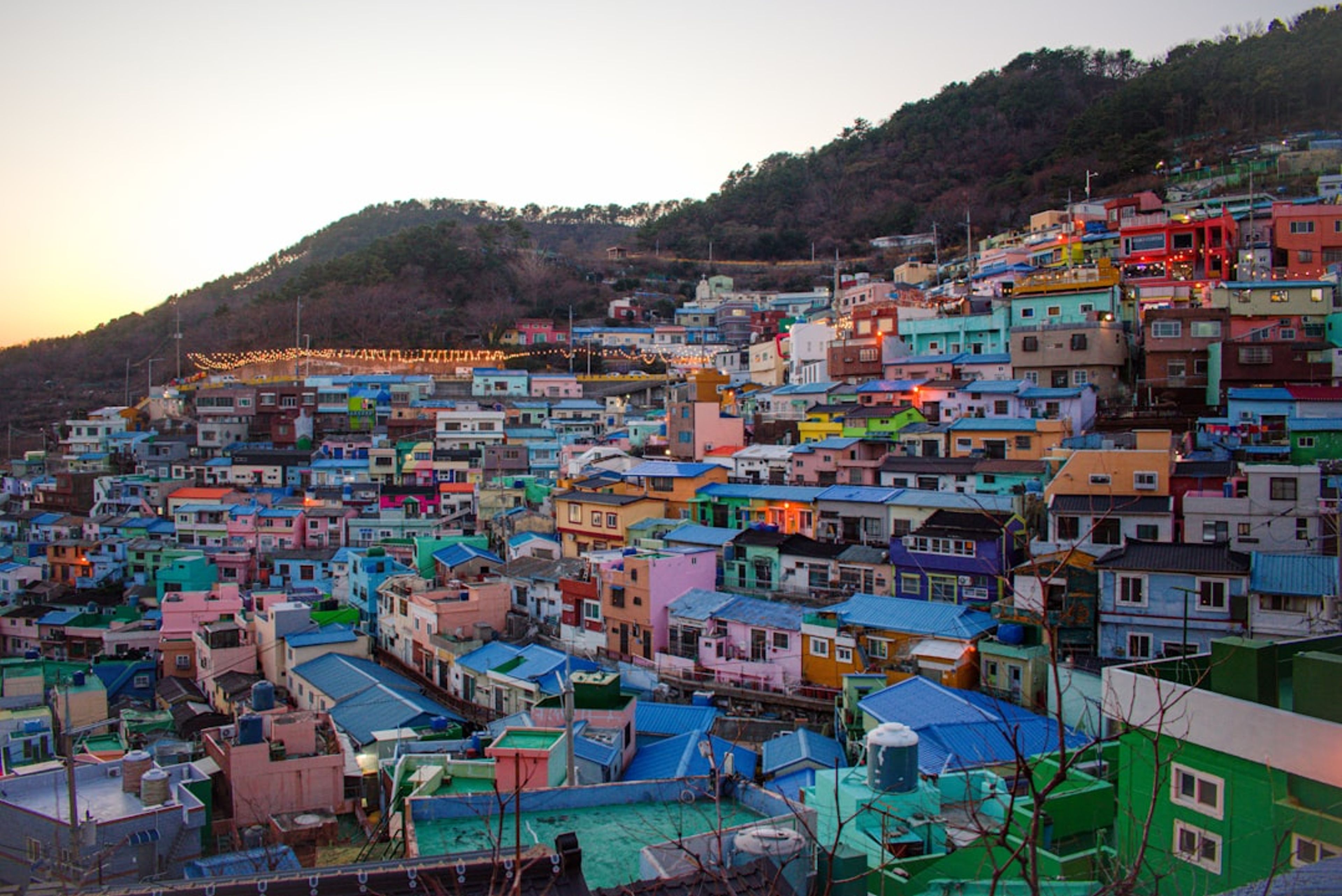
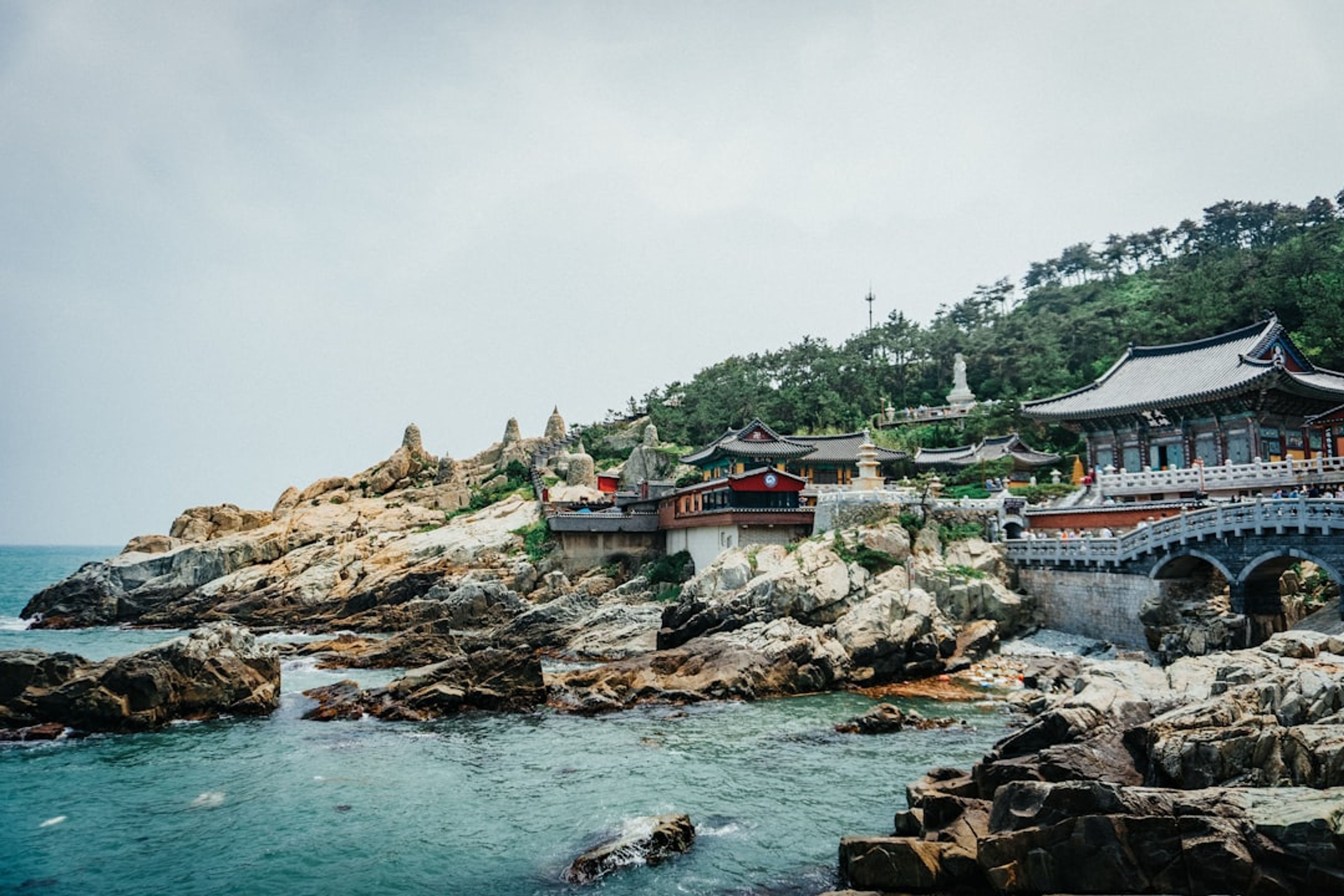
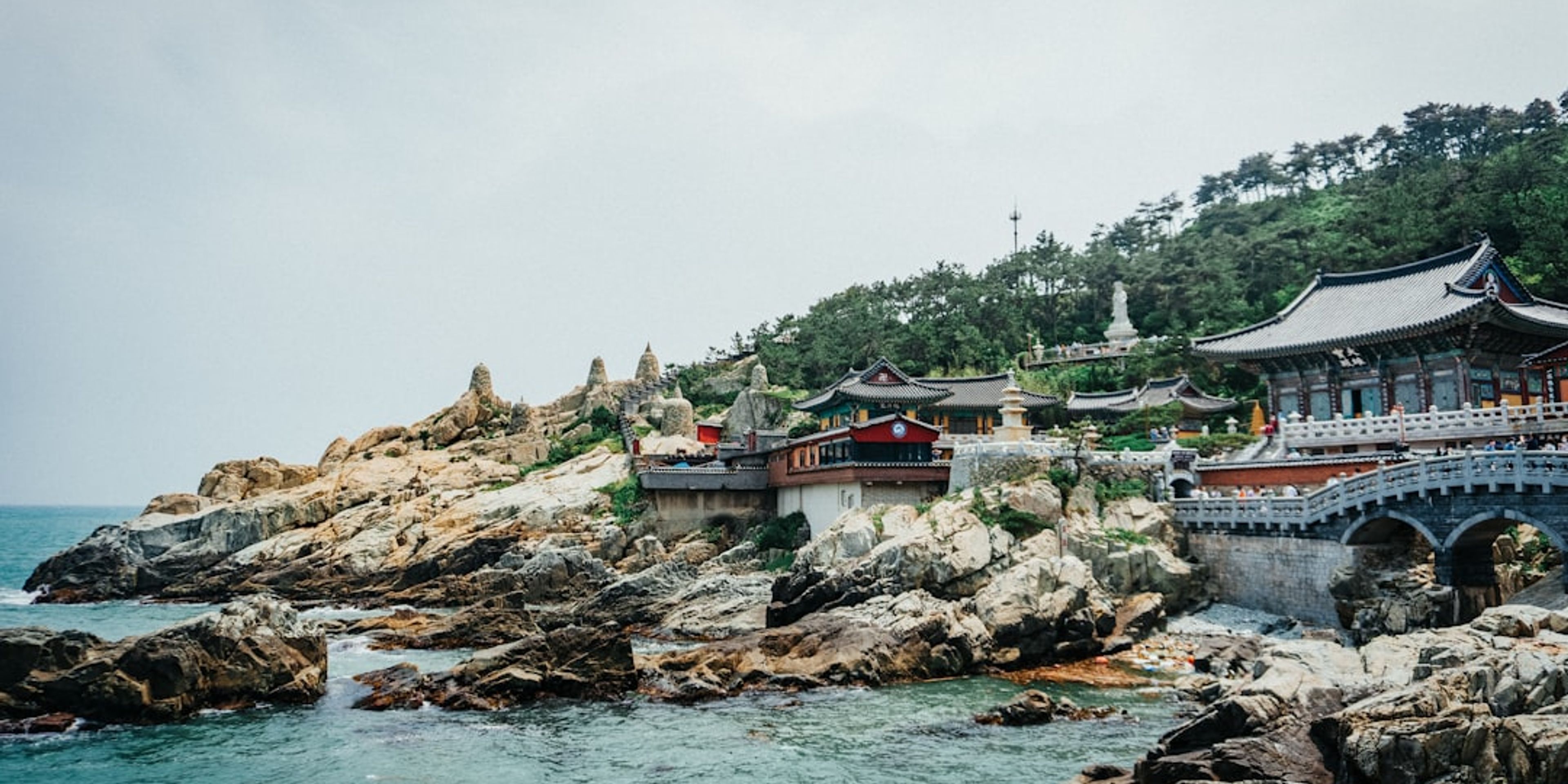
Haeundae and Gwangalli are the headline beaches, backed by high-rises and a night skyline framed by the Gwangan Bridge. Jagalchi is the country's largest fish market, the Gamcheon Culture Village stacks painted houses up a hillside, and Beomeosa and the cliffside Haedong Yonggungsa provide the temple counterpoint. Food here means raw fish, pork-broth dwaeji gukbap and ssiat hotteok from street stalls.
KTX trains reach Seoul in about two and a half hours, and Gyeongju — the ancient Silla capital — is under an hour away. Busan also hosts Asia's leading film festival each October, when the city fills quickly.
Country
South Korea
Region
Southeastern coast, near South Gyeongsang Province
Population
~3.3 million
Elevation
5 m above sea level
Time Zone
KST (UTC+9)
Currency
South Korean Won (KRW)
Language
Korean
Nearest Airport
PUS (Gimhae International), 20 km
Airport to City Centre
~25-40 min via Busan-Gimhae Light Rail and metro
Typical Cost Level
Mid-range
Transport Pass
Cashbee or T-money card for metro and buses
Spring (Mar-May)
13-20°C
Summer (Jun-Aug)
24-29°C
Autumn (Sep-Nov)
17-26°C
Winter (Dec-Feb)
3-10°C
Get the latest deals, new destinations, and travel tips delivered straight to your inbox.
No spam, unsubscribe anytime.
Entry rules, stay length and passport validity by nationality.
May, June, September and October are the best months in Busan. Beach season runs from July to August but coincides with the monsoon and enormous domestic crowds at Haeundae. Winters are mild by Korean standards, rarely dropping far below freezing.
Take the Busan-Gimhae Light Rail and change onto Metro Line 2 or 3, which takes 25-40 minutes depending on your destination. Limousine buses run direct to Haeundae and Seomyeon. Taxis take about 30 minutes and are reasonably priced.
Buy a Cashbee or T-money card and use the metro, which is signed in English and covers most attractions. Buses fill the gaps to places like Gamcheon and Haedong Yonggungsa. The city is long and hilly, so walking between districts is rarely practical.
Three days is right for Busan. One for the beaches and Gwangalli, one for Gamcheon, Jagalchi and the old centre, and one for the temples or a day trip to Gyeongju. Two days works if you skip the excursions.
Haeundae suits a beach-focused trip and has the widest range of hotels. Seomyeon is the transport and shopping hub in the middle of the city, and Nampo-dong puts you next to Jagalchi market and the older streets. Gwangalli is the best compromise between beach and nightlife.
Busan is very safe, with low crime rates and reliable public transport late into the night. Solo travellers, including women, generally report no problems. Summer typhoons are the main seasonal disruption.
On trip1, you can book hotels across Busan and pay with over 120 cryptocurrencies including Bitcoin, Ethereum, and USDC. trip1 covers 3 million+ hotels in 190+ countries, making it easy to find and book accommodation with crypto.